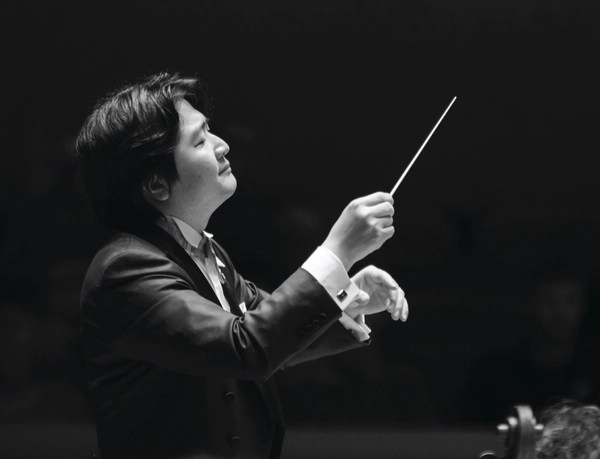
In concert – CBSO / Kazuki Yamada: Mahler Symphony no.9 & Takemitsu

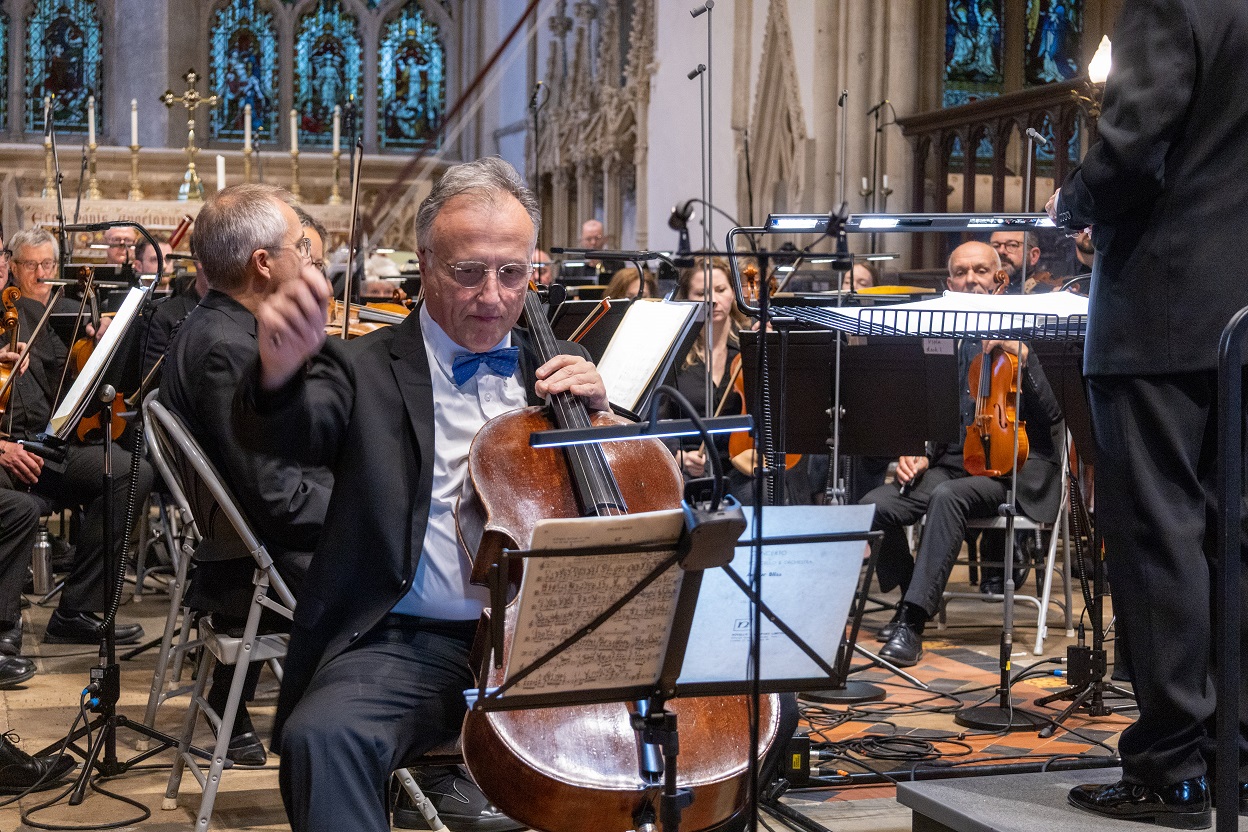
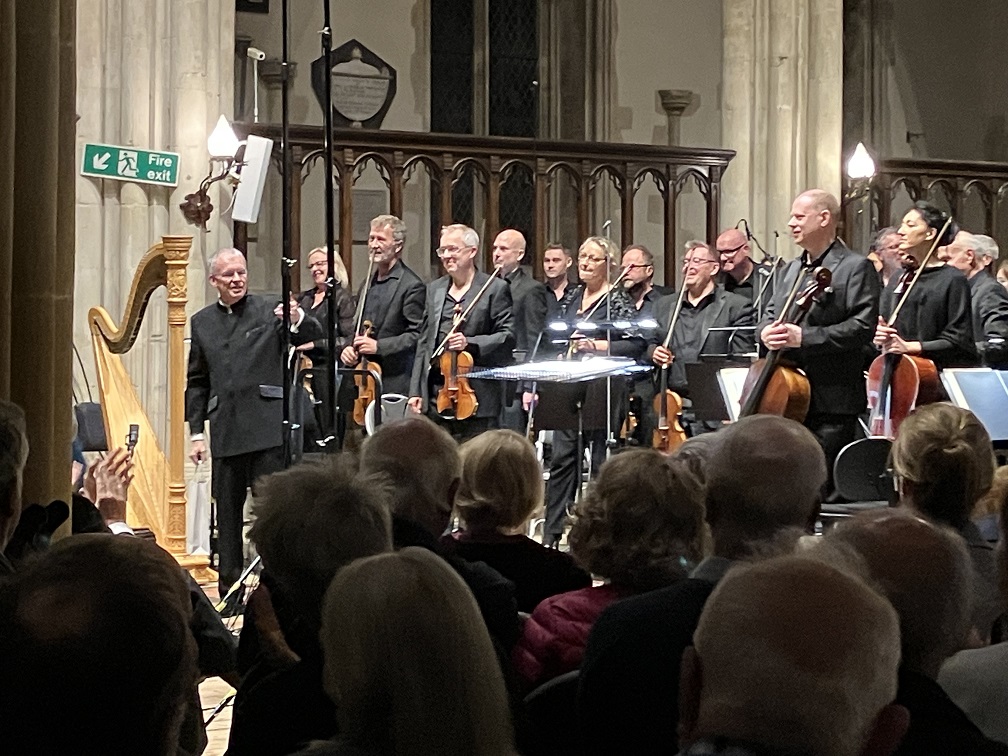
City of Birmingham Symphony Orchestra / Kazuki Yamada (above)

Takemitsu Requiem (1957)
Mahler Symphony no.9 in D major (1908-09)

Symphony Hall, Birmingham
Thursday 10 April 2025

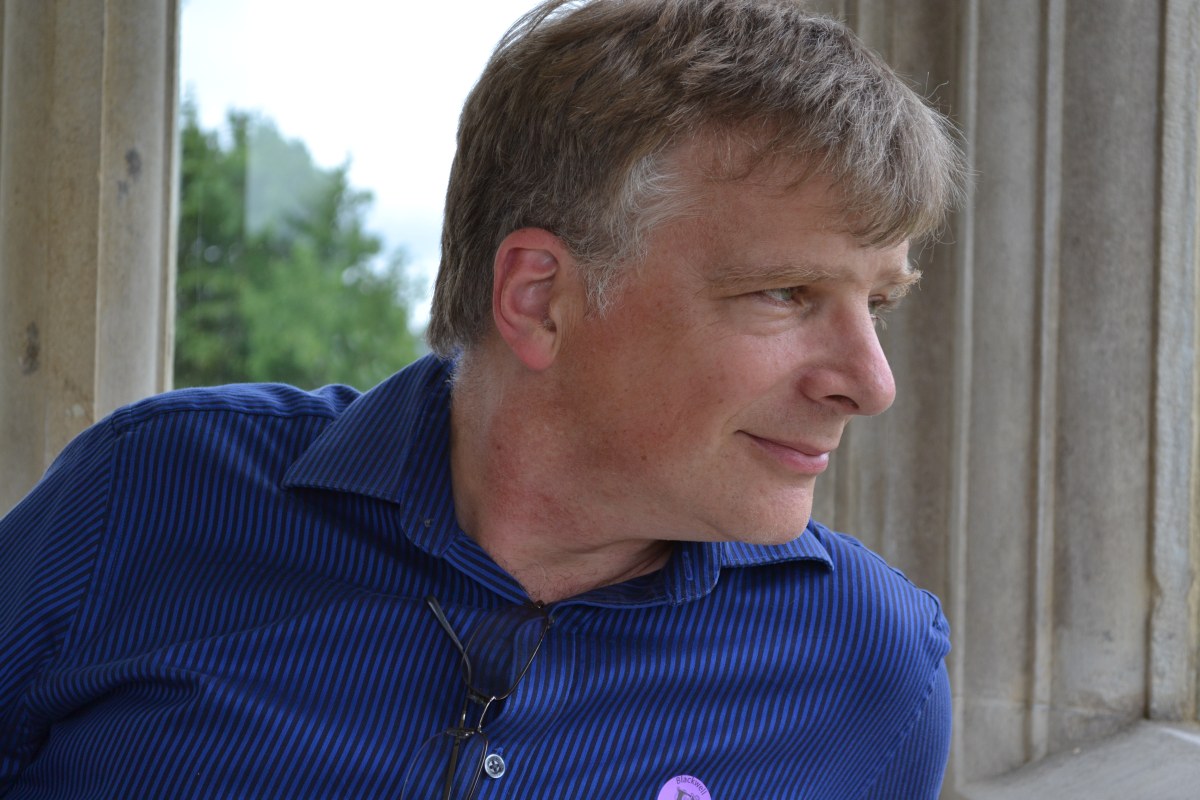
Reviewed by Richard Whitehouse Picture of Kazuki Yamada (c) Hannah Fathers

Ninth Symphonies have been a recurrent feature of this season from the City of Birmingham Symphony Orchestra and Kazuki Yamada. Tonight’s concert brought this to a culmination of sorts with that by Mahler and which naturally occupied almost the whole of the programme.

Whatever else, it was a performance whose scope matched the music’s ambition and not least in an opening Andante as lays claim to being its composer’s greatest achievement. Admittedly this took a few minutes to find focus, those initial bars not so much speculative as halting, but an overall sense of the movement unfolding seamlessly across its strategic peaks and troughs was undeniable, and Yamada was mindful to underline Mahler’s holding back of its expected culmination so the closing minutes mused eloquently if uncertainly on what might have been.

The middle movements can often emerge as incidental to the formal scheme, and Yamada’s take on the Ländler gave some pause for thought. Each of its constituents was vividly shaped and articulated, but a stop-start discontinuity arguably denied it that innocence to experience trajectory which, in turn, makes tangible the fatalistic humour at its end. The Rondo-Burleske was the undoubted highlight – its abrasiveness spilling over into violence towards the close, but not before Yamada had summoned the requisite anguish from its yearning trio section.

It might have been better to continue directly into the Adagio. As it was, a relatively lengthy pause left this finale sounding less a direct reaction to what had gone before than a delayed avoidance of the issues raised. Yamada’s overall handling of this movement was fine if not exceptionally so. Such as the twilit episode prior to the main climax was lucidity itself, but the conductor having already slowed to near-stasis then made it difficult to reduce the tempo further, so that the closing bars risked feeling emotionally gratuitous rather than inevitable.

What could hardly be gainsaid was the commitment of the CBSO’s response over what, for all its latter-day familiarity, remains a testing challenge whether individually or collectively. Wisely, Yamada has resisted any temptation to fashion a self-consciously virtuoso orchestra; emphasis seems to be instead on encouraging flexibility and sensitivity of response in terms of the music at hand – a more circumspect though productive approach which suggests he is happy to stay the course in terms of a partnership which is still in its relatively early stages.

Not a few performances of Mahler Nine opt for a scene-setting piece rather than first half as such. Yamada did so with Takemitsu’s Requiem – if not this composer’s first or even earliest acknowledged work, then certainly the one that established his wider reputation. The CBSO strings did justice to its subtle interplay of expressive threnody and more angular elements in a reading that fulfilled its purpose ideally. Hopefully the coming seasons will revive some of the more innovative pieces to have languished in the three decades since Takemitsu’s death.

This was the latest in what is becoming a tradition and rightly so – a page in the programme listing those ‘‘friends, members and colleagues’’ whom the CBSO Remembers with no little gratitude. From this perspective, tonight’s programme could hardly have been more fitting.

For details on the 2024-25 season A Season of Joy, head to the City of Birmingham Symphony Orchestra website. Click on the name to read more about conductor Kazuki Yamada

Published post no.2,502 – Monday 14 April 2025

In concert – Ex Cathedra, CBSO / Robert Ames: Northern Lights

Ex Cathedra (George Parris, chorus-master), City of Birmingham Symphony Orchestra / Robert Ames

Arnalds arr. Geoff Lawson Momentary (2018)
Jóhansson arr. Robert Ames Kanguru (2016)
Guðnadóttir arr. Ames For Petra (2022) [UK Premiere]
Jóhansson arr. Anthony Weeden Arrival – Suite No.1 (2016)
Guðnadóttir arr. Ames Ascent (2009)
Arnalds Og Lengra (2009)
Jónsi & Somers arr. David Handler Boy 1904 (2009)
Björk arr. Ian Anderson Jóga (1997)
Sveinsson Der Klang Der Offenbarung des Göttlichen (2014) [UK Premiere]

Symphony Hall, Birmingham
Saturday 5 April 2025

Reviewed by Richard Whitehouse

Saturday’s concerts often ring the changes in the City of Birmingham Symphony Orchestra’s season and this evening proved no exception – Northern Lights comprising a programme by the younger generation of Icelandic composers that has come to the fore of European music.

Much has been made of the inclusivity and non-conformism of music in Iceland – spurred on, no doubt, by that country’s geographical isolation well into the 20th century with its lack of a classical tradition as regards composing or performance. Yet the main impression left by what was heard tonight was its overall lack of diversity in terms of sound and, as a consequence, its uniformity as regards expression. For a country which is synonymous with spectacular natural phenomena as well as its off-the-wall attitude, this was surprising and not a little disconcerting.

Any such trend was largely bucked by the late Jóhann Jóhansson, whose numerous film scores were represented by two extracts from that to sci-fi drama Arrival – the first enlivened with its quirky vocal syllabics, then the second building up an ominous and ever more menacing aura. They were preceded by a track from Ólafur Arnalds’s album Re:member that set the sombrely evocative scene, and each of them followed with music by Hildur Guðnadóttir – a simmering extract from the ambitious while overwrought film Tár, then a track from her album Without Sinking that ended rather less arrestingly than it began. An excerpt from Arnalds’ ballet score Dyad 1909 has atrophied even before its close, and the Jónsi / Alez Somers collaborative track from their album Riceboy Sleeps was appreciably less than the sum of its intriguing parts. At least the first half closed on a relative high with a track from Björk’s Homogenic – one of her finest achievements here given an arresting twist by Ian Anderson, whose album reworkings with his outfit Wooden Elephant should have garnered more attention in the classical domain.

Little of Björk’s bracing idiosyncrasy – let alone the eruptive physicality of Iceland’s musical ‘father’ Jón Leifs – was evident during Kjartan Sveinsson’s Der Klang Der Offenbarung des Göttlichen occupying the second half. A former member of that (over?) influential post-rock band Sigur Rós, his ‘opera’ inspired by Halldór Laxness’s seminal novel World Light eschews individual characters and specific actions, though its presumed scenario of acceptance within the midst of adversity feels vestigial at best. Admittedly its opening threnody unfolded with a Górecki-like eloquence, but the ensuing dialogue between choir and strings sounded akin to a Germanic liturgical setting by a forgotten composer of the later 19th century – far from those expressionist canvasses by Ragnar Kjartansson that formed a backdrop at its Berlin premiere.

It should be added that the members of Ex Cathedra gave their collective all for what was an all too rare appearance with the CBSO. As, moreover, did the orchestra itself when conducted with such expertise by Robert Ames who, as a violist with whom to reckon and founding co-director of the enterprising London Contemporary Orchestra, is nothing if not well-versed in this music. What a pity that the outcome as experienced tonight was music often uninvolving, sometimes dull and conformist in a way that contemporary Icelandic culture should never be.

For details on the 2024-25 season A Season of Joy, head to the City of Birmingham Symphony Orchestra website. Click on the names to read more about conductor Robert Ames and the choir Ex Cathedra

Published post no.2,498 – Tuesday 8 April 2025

In concert – Alina Ibragimova, CBSO / Dinis Sousa: Sibelius, Dvořák & Arvo Pärt

Alina Ibragimova (violin, above), City of Birmingham Symphony Orchestra / Dinis Sousa (below)

Pärt Our Garden (1959, rev. 2003)
Sibelius Violin Concerto in D minor Op.47 (1903-04, rev. 1905)
Dvořák Symphony no.8 in G major Op.88/B163 (1889)

Symphony Hall, Birmingham
Thursday 3 April 2025

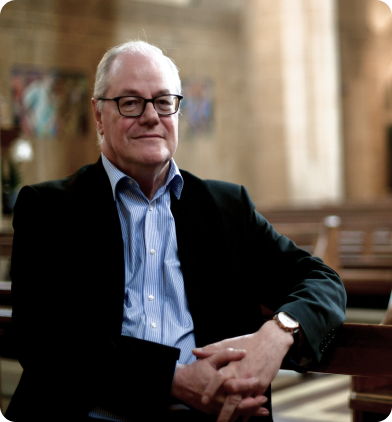
Reviewed by Richard Whitehouse Picture of Alina Ibragimova (c) Joss McKinley; Dinis Sousa (c)

In what was an auspicious first appearance with the City of Birmingham Symphony Orchestra, Dinis Sousa presided over an appealing programme that featured repertoire staples by Sibelius and Dvořák alongside welcome revival of an uncharacteristic early choral piece by Arvo Pärt.

Uncharacteristic but highly enjoyable, Our Garden seems relatively untypical of the Estonian composer even in his mid-twenties – its winning an award at a Soviet-sponsored competition in 1962 bringing plaudits at a time when Pärt’s was very much an ‘unofficial’ presence on the new-music scene. Six decades on this can be enjoyed simply for what it is – an unpretentious celebration of youthful endeavour whose unaffected setting of four not overly polemical texts is as cohesive as it is sincere. Certainly, the CBSO Youth Chorus did justice to writing whose rhythmic unison was offset with some deft harmonic twists and enhanced by the resourceful contribution of a sizable orchestra. An obvious candidate for inclusion in music quizzes, Our Garden is never less than effective on its own terms and made for an attractive curtain-raiser.

Geographical proximity aside, there was little connection between Pärt’s cantata or Sibelius’s Violin Concerto, and while a performance of the latter rarely fails to impress it rarely catches fire as it did here. Alina Ibragimova has given some memorable performances in Birmingham over recent seasons, but this account got to the heart of a piece that, for all its indebtedness to Romantic-era virtuosity, is no less original in form or content than its composer’s symphonies and tone poems of this period. Most notable were Ibragimova’s fusing of the first movement’s central cadenza with developmental impetus, her building of cumulative momentum over the course of the Adagio or a final Allegro which, though this may all but have eschewed the ‘ma non tanto’ marking, exuded a drive and panache maintained through to the scintillating close.

A first-rate accompanist, Sousa (above) brought out much of interest from the orchestral texture – not least its writing for low woodwind and horns which frequently underpins the soloist in a way that could only be Sibelius. Such attention to detail was equally evident in his performance of Dvořák’s Eighth Symphony – music easy to take for granted in its warmth and affability, yet whose opening Allegro is a masterclass in formal innovation as benefitted from the incisive if never overdriven energy Sousa brought to this movement as a whole and its coda in particular.

Even finer was the Adagio, its pathos shot through with an ominous import which came to the surface at its brief if forceful climaxes and so confirmed this as music of rare eloquence. The intermezzo’s twin themes unfolded with an ideal lilt that made its boisterous pay-off the more fitting, while the finale made the most of Dvořák’s putting his trenchant folk-dance through a set of variations whose rapidly growing excitement could always be sensed even as the music subsided towards virtual stasis, from where the peroration made for a truly uproarious QED.

Those expecting Finlandia at the start of the second half (as indicated in this season’s guide) were disappointed, but Sousa did offer the second (in G) of Dvořák’s Legends as an apposite encore – its fluid interplay of poise and humour the ideal way to end this memorable concert.

For details on the 2024-25 season A Season of Joy, head to the City of Birmingham Symphony Orchestra website. Click on the names to read more about conductor Dinis Sousa, violinist Alina Ibragimova and the CBSO Youth Chorus

Published post no.2,496 – Sunday 6 April 2025

In concert – Matthew McKinney & Roelof Temmingh @ Bechstein Hall, London

Matthew McKinney (tenor), Roelof Temmingh (piano)

Program including songs by Robert and Clara Schumann, Richard Strauss. Full repertoire list at the bottom of this review

Bechstein Hall, London, 28 March 2025

by John Earls. Photo credit below (c) John Earls

Scottish tenor Matthew McKinney is the winner of the 2024 Kathleen Ferrier Awards and there was quite a sense of anticipation for this recital with pianist Roelof Temmingh at the suitably intimate Bechstein Hall.

Performance is of course the key element in voice and piano recitals such as this. But it is also exciting to be presented with a programme that has clearly been put together with such thought and care. Under the theme of Finding Freedom this programme consisted of two parts. The first was an alternating Clara and Robert Schumann affair, the second a more eclectic but no less engaging mix.

The Schumanns’ set consisted of rotating Clara and Robert Schumann songs neatly threaded together in a lovers’ exchange. It demonstrated not only the consideration and skill of the programming but the quality of Clara’s as well as Robert’s songwriting. McKinney’s singing was beautiful throughout.

The set also included two pieces of recited poetry, Afrikaans poet Breyten Breytenbach’s Red-breasted Dove and Rabindranath Tagore’s Unending Love, both of which deftly complimented the sentiment.

For the first half the audience was requested to save applause until the end of the set, entirely appropriate for the mood and respectfully observed. For the second half however McKinney advised “please do clap any time you want to”. And just as well as this was a much more varied affair including a couple of Robert Schumann solo piano pieces for Temmingh to shine.

Opening with Frank Bridge’s Love Went A-Riding it also included two Benjamin Britten songs, a forceful Batter My Heart (from The Holy Sonnets of John Donne) immediately followed by a tender Sonnetto XXX (from Seven Sonnets of Michelangelo), and a rendition of Tosti’s Marechiare that was full of brio and panache.

There then followed a lovely and affecting sequence. Rebecca Clarke’s I’ll Bid My Heart Be Still (originally composed for viola but ‘reimagined’ here for voice), Robbie BurnsAe Fond Kiss (McKinney unaccompanied) and Temmingh’s own Verjaarsdagbrief (Birthday Letter) based on a letter written by his grandfather to his grandmother and sang in Afrikaans by McKinney who then looped back to Ae Fond Kiss. The audience silence afterwards was marked and sincere.

The set concluded with a couple of well delivered Richard Strauss songs which led to the inevitable and deserved calls for an encore which McKinney admitted they didn’t have so we got a repeat of the magnificent Marechiare which was gratefully received.

Matthew McKinney and Roelof Temmingh performed the following repertoire:

Breytenbach Red-breasted dove
Clara Schumann and Robert Schumann songs interspersed:
Clara Ich stand in dunkeln Träumen Op.13/1, Liebeszauber Op.13/3, Volkslied, Lorelei,
Robert Der Nussbaum Op.25/3, Volksliedchen Op.51/2, Zwielicht Op.39/10, Kreisleriana Op.16/8 (solo piano), Mondnacht Op.39/5
Tagore Unending love
Clara Der Mond kommt still gegangen Op.13/4, Die stille Lotosblume Op.13/6
Robert Die Lotosblume Op.25/7, Widmung Op.25/1

Bridge Love went a-riding H.114
Weir Sweet Little Red Feet (from The Voice of Desire)
Robert Schumann Ritter vom Steckenpferd Op.15/9
Auden What’s in your mind, my dove, my coney?
Britten Batter my heart Op.35/2, Sonnetto XXX Op.22/3
Robert Schumann Vogel als Prophet Op.82/7
Tosti Marechiare
Clarke I’ll bid my heart be still (reimagined); Trad Scots Ae fond kiss
Temmingh Verjaarsdagbrief
Richard Strauss Befreit Op.39/4, Zueignung Op.10/1

John Earls is Director of Research at Unite the Union. He posts on Bluesky and tweets / updates his ‘X’ content at @john_earls

Published post no.2,489 – Sunday 30 March 2025

In concert – John Cale @ Royal Festival Hall

John Cale (vocals, keyboards, guitar), Dustin Boyer (lead guitar/samples), Joey Maramba (bass guitar), Alex Thomas (drums, synths)

Royal Festival Hall, London
Friday 21 March 2025

Reviewed by Richard Whitehouse Picture (c) Madeline McManus

It feels reassuring to know, whatever else may be happening, that John Cale is still making music as only he can. Tonight saw him return to the Royal Festival Hall, the scene of some memorable gigs over the past four decades, during the course of his POPtical Illusion Tour.

A tour where his trusty viola has been absent found Cale playing guitar on just the opening track, the sardonically catchy Shark-Shark, before he took his place behind keyboards for the remainder. An album which does not so much defy time as channel it his way, last year’s POPtical Illusion was understandably much in evidence with the deadpan levity of Setting Fires, the unalloyed sassiness of Davies and Wales or the ominous edginess of Company Commander all featured. A further number, unheard until making it onto the setlist just last month, the imperious and intense Long Way Out Of Pain is evidently one of those 50 or so songs which, created during lockdown, has still to find an official release and leads one to hope Cale’s recent productivity in terms of studio albums will continue for some while yet.

Tonight’s set ranged thoughtfully across the greater part of Cale’s output. From 2023’s Mercy, (happily a valediction no more) came the stark Out Your Window with Cale’s voice thrown into stark relief against the fugitive backing vocals. Otherwise, it was back to 1996’s Walking on Locusts for the eloquent Set Me Free, surely among the most affecting songs from that or any other decade, then 1989’s Words for the Dying for the deceptively carefree treatment of Dylan Thomas’ Do Not Go Gentle Into That Good Night which emerged unscathed shorn of its classical stylings. What seemed an overly diffuse number heard on 1979’s Sabotage/Live, Captain Hook became a gripping band workout centred on Cale’s bitingly accusatory lyric, while 1980’s baleful Rosegarden Funeral Of Sores remains the ultimate B-side from hell.

Nor was Cale’s classic singer-songwriter era overlooked – 1975’s Helen of Troy represented by the glancing pathos of My Maria, that same year’s Slow Dazzle by his world-weary take on the Elvis standard Heartbreak Hotel that ever since has accompanied him through thick and thin, and from 1974’s Fear the hard-driving Barracuda which has never sounded more power-pop than now. From 1973’s Paris 1919, The Endless Plain Of Fortune here swapped pathos for pertness in what is among the most interventionist and intriguing of Cale rethinks.

Cale was heard within a band that has largely stayed intact since his return to active gigging – with the inventive lead of Dustin Boyer, resonant underpinning of bassist Joey Maramba and forceful impetus of drummer Alex Thomas. These proved the collective soul of discretion in Frozen Warnings, most confiding number from Nico’s 1968 The Marble Index where Cale honed his formidable skills as a producer and an oasis of intimacy prior to Villa Albani from 1984’s Caribbean Sunset whose new-wave knowingness afforded the expected rounding-off.

More surprising was their no-show for the Velvet Underground 1967 classic Waiting For The Man, a regular encore during this tour. That said, Cale’s departure with ‘‘We’ll see you again soon I hope’’ suggested we may have not seen the last of him on stage. Don’t stop now John! Support was provided by Tom McRae, whose songs had caught the attention of both Cale and Bowie three decades ago. Voice and guitar enhanced by subtle atmospherics, his set suggested his dozen studio albums and almost as many live releases should be worth exploring at leisure.

John Cale and his band played: Shark-Shark, Captain Hook, The Endless Plain of Fortune, Heartbreak Hotel, Setting Fires, Davies and Wales, Rosegarden Funeral of Sores, Set Me Free, My Maria, Do Not Go Gentle Into That Good Night, Company Commander, Out Your Window, Long Way Out Of Pain, Frozen Warnings, Barracuda, Villa Albani

Published post no.2,484 – Tuesday 24 March 2025