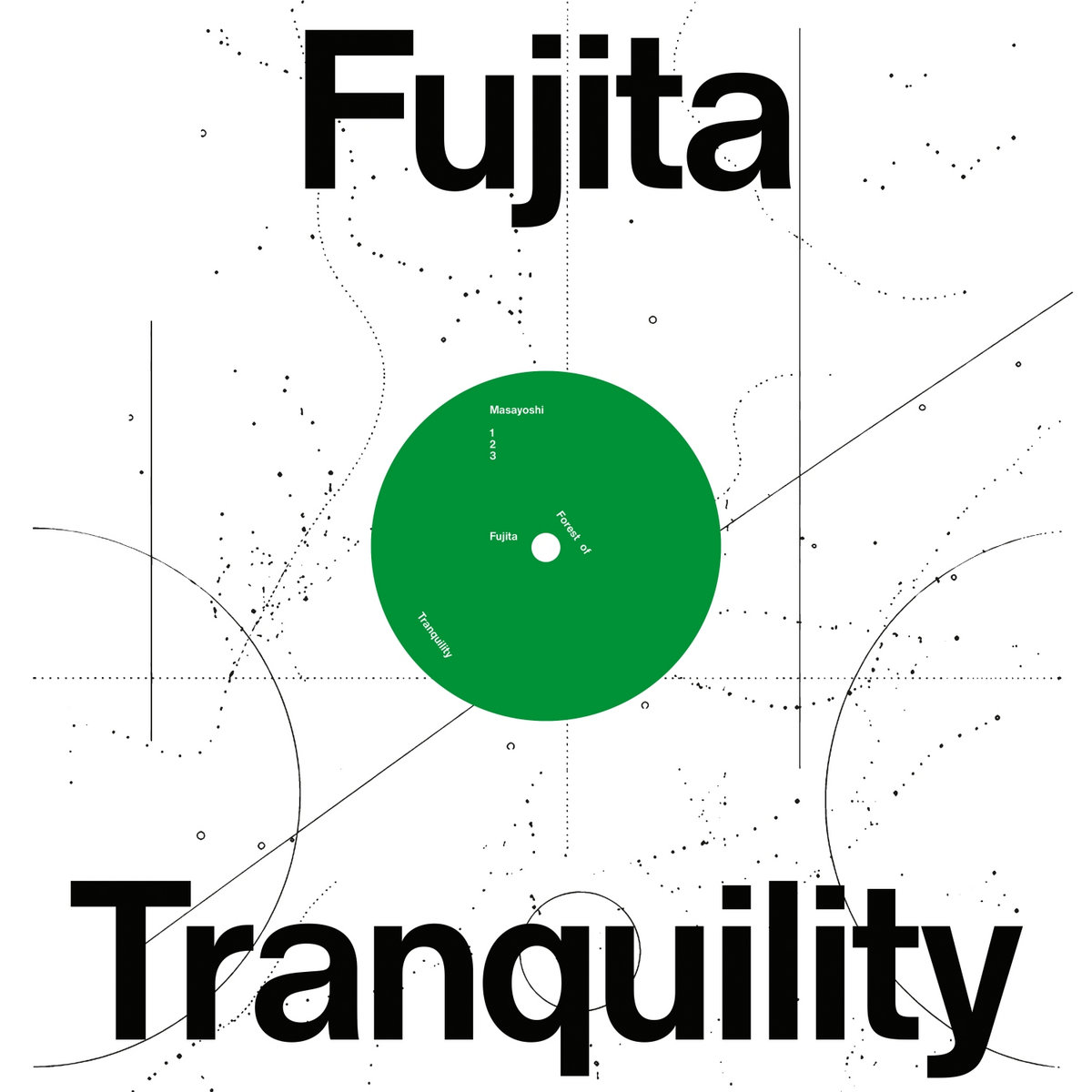
New music – Masayoshi Fujita: Forest of Tranquility (Erased Tapes)

posted by Ben Hogwood, incorporating text from the publicity material written by April Clare Welsh. Cover artwork by Bernd Kuchenbeiser

Japanese artist Masayoshi Fujita will release new album Forest of Tranquility on November 13th via Erased Tapes and is today sharing the first single from the record Portal To The Universe.

When Masayoshi Fujita was invited to create the soundtrack for Expo 2025’s vast living nature installation, he immediately envisioned a relaxing public space in which visitors could tune out the noise and restore their energies. Inside this green open-air sanctuary – visited by millions of people during the landmark Osaka event, which ran for six months – stood a central pond and 1,500 real trees, all rescued and repurposed from Expo’s former ‘70 site and other parks in Osaka. Fujita set about deepening the listener’s connection to the complementary ebbs and flows of the natural world using dynamic shifts and gentle arcs to shift the mood. The result was a living tapestry that mirrored the surrounding forest, with nonlinear patterns and textural twists and turns — creating a portal into the unexpected.

It’s from this honourable commission that Fujita’s new album for Erased Tapes, Forest of Tranquility, grew. Like the Japanese kankyō ongaku (environmental music) pioneers Hiroshi Yoshimura, Midori Takada and Haruomi Hosono before him, Fujita makes gentle, mind-massaging music intended to blend harmoniously with its environment. For Expo ‘25 visitors, this synchronicity – the forest setting intertwined with its associated sounds – would have bettered their experience of being outdoors; for at-home listeners, this synergy now takes the form of a serene transportive pod, capable of taking you anywhere you wish.

On first single Portal To The Universe Fujita said, “This song was made as the last song of a day. It feels like you are slowly drifting in the vast universe and the sea of memory.”

On the follow-up to 2024’s Migratory LP, the organic resonance of Fujita’s acoustic instruments – marimba, vibraphone, and percussion, with Armenian duduk from Hayk Karoyi and Japanese shō from Mattias Hållsten – acts as a showcase of nature’s design. Field recordings of birds and frogs make a hidden home among its branches and broad leaves, and bring the album’s biomimicry and ecological quality into even sharper focus. As do the atmospheric drones and burrs of white noise that evoke the wind whipping through the mountains. But, mainly, the objective was to carve out a roomy soundworld for reflective thought. “I wanted to have a lot of space in between the sounds,” says Fujita.

Having lived in Berlin for 13 years, Fujita moved to rural Japan in 2020, aiming to make music in nature. Now he is as close as one can be, living with his family high up in a mountain village along the coast of Kami-cho, Hyōgo, three hours west of Kyoto – surrounded by water and the occasional bear – and working out of a former kindergarten. For that reason, coursing through the leafy veins of Forest of Tranquility is the distinct feeling that you, too, might wander off into the wilderness someday and never return to the city.

Forest of Tranquility blooms across seven long-form trails; each shifting subtly in tone according to the time of day. “They had a biorhythm – in the morning you start a little bit slowly and with a little bit more space, and then around noon you get a little bit more active. Then in the afternoon you get more settled and calm, and around 6 o’clock you are more active, before revisiting calm,” explains Fujita of the concept behind the original commission.

Early morning reveries, characterised by brighter mallet percussion, and afternoon pick-me-ups sit alongside quieter nocturnes, while every hour on the clock is guided by the hand of something bigger than ourselves. “I had this image of nature being a portal to the universe,” says Fujita. “The idea I have lately about nature is that it makes us aware of the universe that exists beyond it.”

Themed around this idea, Portal to the Universe is an immersive listen, building its own sound journey from a toolkit of cicadas, chimes, and woodwinds – strewn with the distant chatter of children – all while coaxing the brain into thinking relaxation is attainable. The track was intended to work as the very last song of the day. “I had the image of a very dark night sky in my head for that one… It feels like you are slowly drifting in the vast universe and the sea of memory”, says Fujita. Iterations of this emerge throughout the record, which is where you can hear the artist’s bucolic dream come to life over and over: on the title track – true to its namesake in its embrace of stillness, rooted in “a feeling of birth, the soft beginning of a day in the forest”, according to Fujita – on the duduk-steeped Light, Wind, and Water – a paean to the elemental forces, gently dappled with marimba and flute – and on All Creatures Bow to Evening – a track leavened with hand percussion, unfurling itself as languidly as a cat stretching out in the golden-hour sun: comfortable tiredness, if you like.

Fujita paints other points of the record with bolder strokes of the marimba, pairing its subtle sustain with blankets of starry synths or sparkling idiophone on ‘Departure’ and ‘Komorebi Dance’, the latter referencing a Japanese word that loosely translates to “sunlight filtering through the leaves of trees.” For the original commission, Fujita was tasked with making compositions that react to the weather using a sensor system installed at the exhibit. This meant creating three versions of each two-hour piece – sunny, cloudy and rainy – with the textures modified depending on the climate, and with frog calls representing the rain.

But whatever the weather, whatever the time of day, or wherever you are in the world, Forest of Tranquility places value on silence, offering a break from the noise and a blank canvas for filling with your own thoughts – or for simply gazing into the cosmos.

Published post no.3,017 – Tuesday 15 September 2026
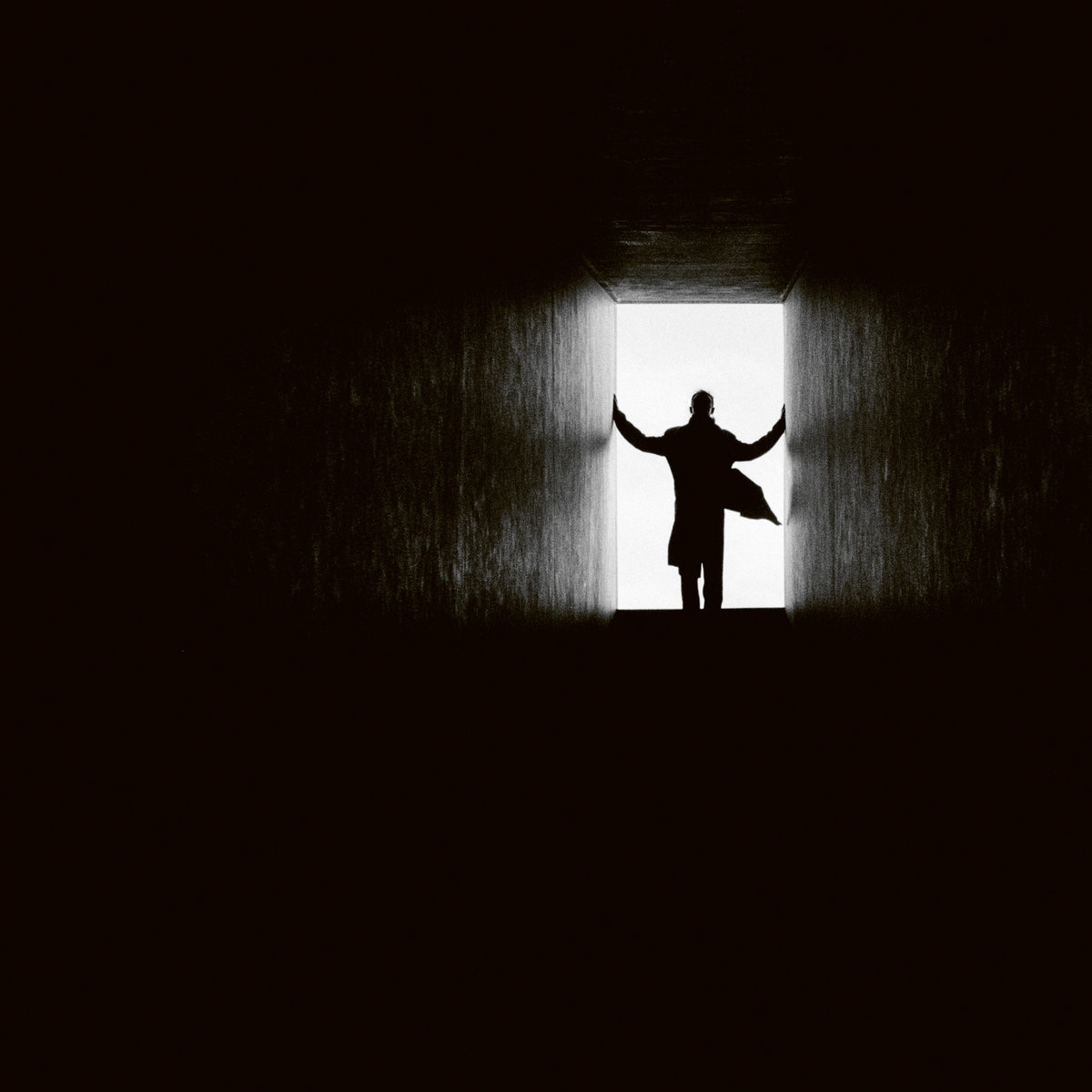
New music – Gaspar Claus: Cells (InFiné)

by Ben Hogwood, incorporating text from the press release

Relentlessly exploring deeply moving sonic territories, Gaspar Claus — cellist, composer, and producer — has followed a highly stimulating path since the early 2010s.

From one creation to the next, he has forged a singular, primarily instrumental language at the crossroads of multiple worlds and artistic encounters: his father, flamenco guitarist Pedro Soler; international indie rock figures such as Bryce Dessner (The National), Casper Clausen (Efterklang), and Sufjan Stevens; Japanese noise icon Keiji Haino; or closer to him, French electronic producer Rone; or songwriter Malik Djoudi, to name but a few.

The album bears a very short title, leaving — like its musical content — maximum space for the listener’s imagination. The term evokes a fundamental biological unit, a place of meditation or confinement, a computing unit, a component of a social organism, as well as the three letters that form the name of his instrument of choice: the cello.

“I like the idea that each track is a musical cell, both autonomous and connected to the others. However, the album is not based on any particular concept. Music, especially instrumental music, doesn’t necessarily need a narrative or discourse imposed on it.”

Gaspar’s music takes the form of contemporary chamber music, deeply marked by the American minimalist wave and threaded with subtle echoes of traditional music from the Mediterranean basin, as well as the laboratory-like experimentation of modern electronic music. Fully unfolding in the silent folds of the night, it exudes a rare emotional density driven by intellectual rigor, without ever slipping into ostentation.

“I had my dream studio built in Banyuls-sur-Mer, where I live part of the year, because I couldn’t manage to work in Paris,” the musician explains. “I spent about a year and a half there working on Cells. The creative process was complicated. The album resisted a lot before taking shape. I went through doubts and questioning, even moments where I considered giving up.”

Clear and direct, with no audible trace of that difficult gestation, the final result — seemingly flowing effortlessly — appears all the more striking. To overcome this long period of inner turbulence, Gaspar Claus relied on a steadfast credo: “It’s simply precious to make music.”

Published post no.3,011 – Tuesday 8 September 2026

Wigmore Hall – Monday lunchtime concerts returning next week

posted by Ben Hogwood

Next week sees the start of Autumn programming for classical concert venues – among them London’s much-loved Wigmore Hall.

Once again they will be presenting a series of weekly Monday lunchtime concerts, broadcast live on BBC Radio 3 and featuring much-loved international artists and young, up-and-coming performers from the BBC New Generation Artists scheme.

Starting on Monday 14 September, the series can be viewed on the Wigmore Hall website but is spearheaded by an opening concert of Mahler and Tchaikovsky, from mezzo-soprano Alice Coote and pianist Sergey Rybin.

Further highlights include Barry Douglas playing Mussorgsky’s Pictures at an Exhibition, recitals by pianists Elisabeth Brauss and Richard Goode and performances from tenor Mark Padmore and pianist Jonathan Biss, wife-and-husband duo Elena Urioste and Tom Poster, the NOVO and Modigliani Quartets, the Orsino Ensemble, cellist Steven Isserlis and pianist Connie Shih, mezzo-soprano Helen Charlston and pianist Sholto Kynoch, violinist Bomsori Kim and pianist Thomas Hoppe, the Leonore Piano Trio and Lawrence Power, clarinettist Olga Shebeta-Dragan and pianist Kristoffer Hyldig and finally a Christmas carol music from The Cardinall’s Musick. And that’s just for starters!

Published post no.3,010 – Monday 7 September 2026

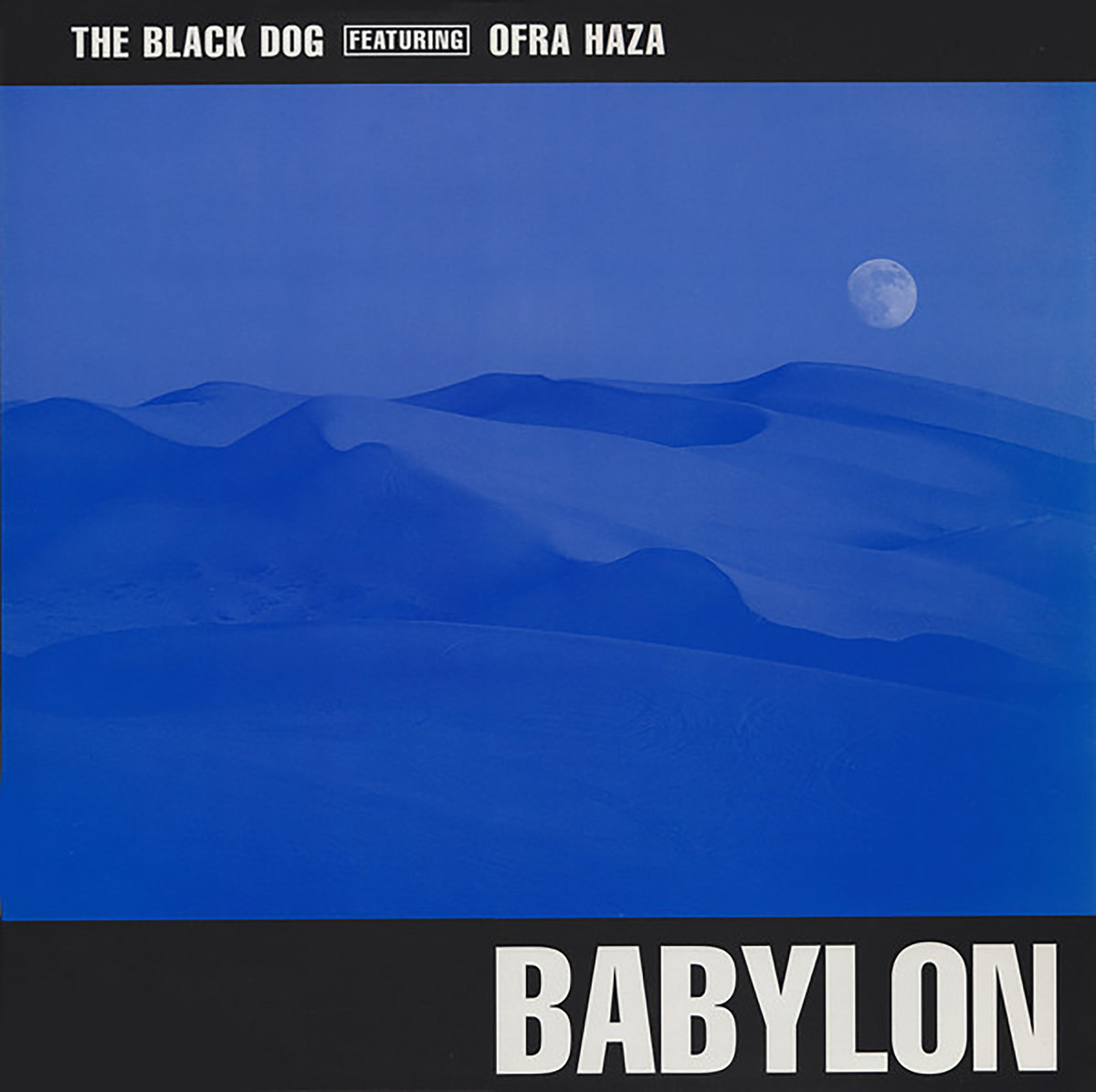
New music – Black Dog Productions featuring Ofra Haza – Babylon (Remastered)

posted by Ben Hogwood, with text from Bandcamp

This poignant re-release of a long-lost track is a fitting memorial to Ken Downie, the much-missed founder of The Black Dog.

Its Bandcamp commentary, from The Black Dog members Martin and Richard Dust, reads as follows: “I don’t remember talking to Ken about this album very much. I do remember his manager sending me the album and singles, along with a bit of chat about the quality of Jimmy Cauty’s remixes. Beyond that, it was one of those records that quietly appeared and then slowly disappeared again.

Looking back, this feels like Ken’s second solo Black Dog album. It has always sat slightly outside the main Black Dog story and, because of that, it never seemed to receive the attention it deserved. Over the years it became increasingly difficult to find, and for many people it simply vanished.

We’re making it available again because it deserves to be heard. We also want Ken’s work to remain available as a complete archive, rather than leaving important releases scattered across deleted CDs, out of print vinyl and disappearing digital services.

One thing that has always puzzled us is why the release ended up consisting mostly of remixes of Ken’s original recordings. We’ve spoken to people involved at the time, but nobody seems able to remember exactly how or why that decision was made. The original DAT tapes are still safely stored away and, one rainy day, we may return to them and finally release the original versions as they were first recorded.

Originally released on Warner ESP in 1998, Babylon became one of the last projects that Ofra Haza worked on before her untimely death on 23 February 2000. Her voice, combined with Ken’s production, created something that still sounds unlike anything else from that period.

A few years after its release, Ken reflected on the project and said: “Out of everything I’ve ever done, I think the Babylon project is the one thing that I’m most proud of.” 

Published post no.3,008 – Saturday 5 September 2026

New music – Dave Angel – A Time And Place (R&S)

posted by Ben Hogwood, with text from the press release.

British electronic music pioneer Dave Angel returns to R&S Records with A Time And Place, his first full-length album release for the seminal Belgian label. Arriving thirty-five years after Dave first joined the R&S family, the album reunites one of UK techno’s defining voices with the imprint that helped launch his career, renewing one of electronic music’s most enduring creative partnerships.

The first track to be made available from A Time And Place is Reflexion, featuring trumpeter Steve Waterman, an airy and jazz-inflected number that you can watch below:

A Time And Place feels less like a return than the continuation of a conversation left unfinished. Rather than revisiting former achievements, the album reflects the perspective of an artist whose creative journey has continued to evolve. Reconnecting with the label that first championed his work, Angel delivers his most personal and musically expansive statement to date.

Across fifteen compositions, the album reaches beyond the conventions of techno to reveal the full breadth of Angel’s musical identity. Drawing on jazz, soul, improvisation and richly textured electronic production, the album balances rhythmic precision with warmth, melody and emotional depth. Reflections on family, heritage, nature and the communities that have shaped his life sit alongside broader observations of the world around him, creating a body of work that feels both intimate and expansive.

That openness is reflected in a carefully chosen cast of collaborators. Celebrated trumpeter Steve Waterman features on both Réflexion and The Yellow Butterfly, bringing a lyrical, Miles Davis-inspired voice to the album after first catching Angel’s attention through his work on Paul Hazel’s Out Of This World. Elsewhere, legendary Chicago vocalist Robert Owens appears on Harmony Serenade, while guitarist Merv Carswell and vocalist Aurii Sky (Dave’s daughter, adding a poignant family connection) add further colour and texture to a record rooted in musicianship and shared expression.

While Dave Angel’s influence on British electronic music has long been established, A Time And Place reveals another dimension of an artist whose foundations were laid long before techno. Raised in a household immersed in live music and jazz culture, Angel has spent a lifetime absorbing sounds beyond the club, allowing those influences to surface naturally throughout a career defined by curiosity rather than convention.

For R&S Records, the album renews a relationship that stretches back to the label’s formative years. For Dave Angel, it reflects both the path travelled and the road ahead. Thirty-five years after 1st Voyage first announced his arrival, A Time And Place reunites artist and label with the same forward-looking spirit that brought them together in 1991, proof that the strongest creative partnerships continue to evolve.

Published post no.2,964 – Friday 31 July 2026