Switched On – Roger Eno: The Turning Year (Deutsche Grammophon)

by Ben Hogwood

What’s the story?

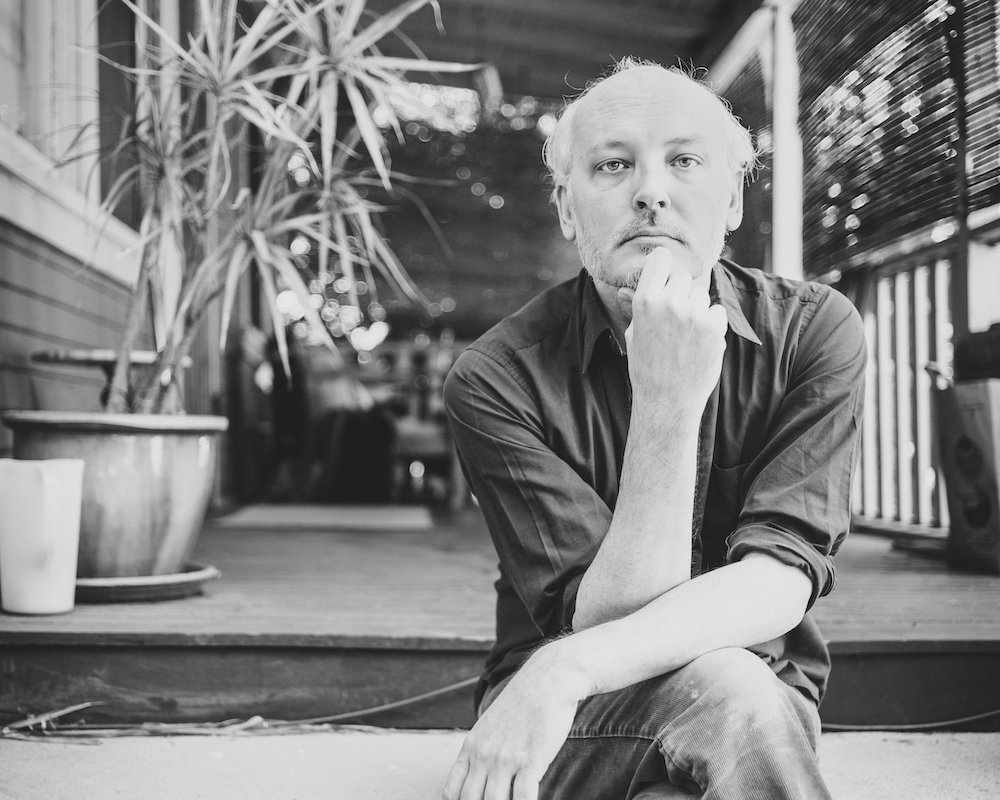
Roger Eno has been recording music for nearly 40 years. We first heard from him in the form of a shared credit with brother Brian and Daniel Lanois in their Apollo soundtrack, after which he wrote a series of albums for the revered All Saints Records, either in a solo capacity, in collaboration with the likes of Kate St John or Peter Hammill, or as part of ambient supergroup Channel Light Vessel.

Now he has moved to Deutsche Grammophon, Eno is taking the chance to assess some of his solo work while making new compositions too. He describes The Turning Year as, “A collection of short stories or photographs of individual scenes, each with its own character but somehow closely related to the other”. It is an album of observation, describing a natural cycle but also effectively documenting his own musical evolution. For example the oldest work, Stars and Wheels, is a solo organ piece of 20+ years, but was re-imagined for this album as Roger worked with producer Christian Badzura.

What’s the music like?

Eno is a consistent composer, and his brand of pastoral ambience is very easy on the ear but surprisingly difficult to imitate. The Turning Year captures his voice beautifully, unfolding at an easy pace. The creation of mood takes greater importance than that of melody, but the two nonetheless work closely together, with simple phrases that undergo development to produce music of subtly powerful feeling.

It is to Eno’s credit that he never crosses the line into sugary sentiment. Right from the start, the evocative A Place We Once Walked is attractively coloured and slightly wistful in its contemplation. The title track has a greater sense of purpose, while Bells is deeply personal, its slow piano revealing intimate thoughts and designs. On The Horizon is notable for a really nice clarinet colouring, while a slight chill lies in store on the autumnal Something Made Out Of Nothing.

Stars and Wheels is rather beautiful in its new clothing, panning out with some remote sounds that at the same time are extremely comforting, recreating the feeling Apollo gave of travelling slowly through deep space.

Does it all work?

Yes. Eno really flourishes in this company, and the scoring really does his keyboard-sourced music a good deal of favours.

Is it recommended?

It is. Although arguably Roger Eno’s best work remains in his earlier albums for All Saints, the move to Deutsche Grammophon has really given him the opportunity to blossom, a chance he is taking with both hands.

Listen

Buy

There are several options for purchasing and streaming The Turning Year, which you can explore here

In Appreciation – David Lloyd-Jones

by Ben Hogwood

This week we have learned the sad news of the death of conductor David Lloyd-Jones, at the age of 87. David was instrumental in founding Opera North in 1978, and there is a heartfelt tribute on their website in his honour.

While Lloyd-Jones was a highly respected opera conductor, I have chosen to focus on his many and pioneering recordings of English music by way of a tribute. These include extensive surveys of the orchestral music of Stanford (including a symphony cycle), Alwyn, Bliss, Rawsthorne and Arnold Bax, including another survey of his symphonies, and Holst – with an important disc of his orchestral music released in 1998. Here is just a hint of his discography for Naxos, with highlights from some very impressive recordings:

In Appreciation – Julee Cruise

by Ben Hogwood

Yesterday we learned the sad news of the death of Julee Cruise, at the age of 65.

Cruise will forever be associated with director David Lynch and the cult TV show Twin Peaks, which made its debut in 1990. Four years prior to that, when looking for a song for his equally influential film Blue Velvet, Lynch was looking for a song instead of his initial target, This Mortal Coil’s Song to the Siren. Composer Angelo Badalamenti stepped in, enlisting Cruise as the voice for his remarkable song Mysteries of Love, where the voice is supported by airy, padded synthesizers:

Four years later Badalamenti and Cruise collaborated again, this time on the theme for one of the most influential of all TV series. Twin Peaks‘ calling card was its remarkable music, and Falling embodied its glamour but also its darkness. Even now Badalamenti’s score is regarded as one of the most influential small screen soundtracks, its dark but luminous writing an utterly compelling blend – topped, of course, by the breathy control of Cruise, whose voice commands the work with remarkable subtlety.

You can listen to Falling below, but for a thorough appreciation of Cruise’s life and work I would direct you to an excellent obituary for The Guardian by Dorian Lynskey

Switched On – Erland Cooper: Music for Growing Flowers (Mercury KX)

by Ben Hogwood

What’s the story?

Once again the Tower of London has played host to a major project honouring Queen Elizabeth II. This one, entitled Superbloom, is an installation running from June to September. It is named after a rare phenomenon that occurs only once every few decades, where whole landscapes can become carpeted with flowers thanks to favourable weather and the activation of previously dormant seeds.

Twenty million seeds were sown at the Tower in spring, and are expected to flower through until September, with colours and patterns set to change each day as you would anticipate in the wild. Accompanying this gradual change will be the music of Erland Cooper, who releases the first ‘side’ of Music For Growing Flowers to coincide with the Jubilee itself. The second ‘side’ – and complete LP – will be released in August.

What’s the music like?

As everything above implies, the music is deeply ambient, thoughtful and incredibly restful. It is ideal when experienced either end of the day or in the middle of a particularly busy pattern of events, where it is most effective as it would be at the Tower, right in the middle of the City of London.

Set in a pure C major, it begins with warm drones that act as a supportive bed to the more primitive evocations of bloom, which evolve slowly but sure. When the third part of four is reached the flowering is depicted through warm cello (Clare O’Connell), bright violin (Daniel Pioro), sonorous harp (Olivia Jageurs) and otherworldly voice (Josephine Stephenson)

The last of the four parts hangs on the air beautifully, pinned on a pure harmony, and the cello line takes hold again, its breathy tones lovingly sculpted by O’Connell.

Does it all work?

Yes – Cooper has a gift for stopping time in even the busiest scenario, so do put this on when you’re at the busiest point of the day. I guarantee your wears and cares will be realigned!

Is it recommended?

Without hesitation. A beautiful and timeless piece of music, providing surprisingly sharp perspective from its slow-moving ambience.

Listen

Buy

There are several options for purchasing and streaming Music for Growing Flowers, which you can explore here

In Appreciation – Alan White & Andy Fletcher

by Ben Hogwood

Yesterday was a sad day for fans of pop music, with Alan White and Andy Fletcher, two members of Britain’s biggest and finest rock bands, sadly leaving these shores.

Alan White, drummer with Yes from 1972, died on 26 May at the age of 72. White was very different from Bill Bruford, who many fans would name in their fantasy Yes line-up, but he had an incredibly strong rock aesthetic in contrast to Bruford’s jazzier leanings. Both more then proved their worth as indispensable members of the group, with the often unsung White providing drums for landmark albums Going For The One, Fragile and Tales From Topographic Oceans. White also enjoyed session work with John Lennon and George Harrison in their solo careers.

A personal memory from seeing Yes live in Hammersmith in 1998 is that White was the lynchpin, forming an incredibly solid and dynamic rhythm section with Chris Squire, also sadly departed. The pair providing some unexpected funk to much-loved tracks like I’ve Seen All Good People. Here is the studio version:

The band’s new material in that decade was also notable for bringing out White’s rock attributes, as the opening track The Calling, from 1994’s Talk, illustrates:

The Fish (Schindleria Praematurus), from the Fragile album, shows White’s ability to underpin a track with the most unwavering pulse, no matter how tricky its rhythmic profile:

Meanwhile here is a track from 1974’s Relayer, a chance to appreciate White’s virtuosity and musicality:

Also announced yesterday was the sad death at 60 of ‘Fletch’, a founding member of Depeche Mode. The Essex group have been going for a remarkable 42 years, with Andy Fletcher an ever-present on keyboards. In a moving social media post yesterday, the band paid tribute to a much-loved friend:

Here are two stand-out performances from Depeche Mode’s early years, beginning with their first appearance on Top of the Pops in 1981 with New Life, from outstanding debut album Speak and Spell. This first incarnation of the band presented a new sound with synthesizers that was only just breaking into the mainstream, and the fresh faced pioneers were clearly enjoying their art:

By the time Just Can’t Get Enough came around, the band were regulars in the charts with a succession of brilliant pop songs. This one in particular has lasted the distance, introduced by a jabbing riff from the keyboard section that is a proper mind-worm! In both visuals ‘Fletch’ can be seen getting the most out of the music:

Finally a lesser-known example from the Mode’s singles back catalogue, the exquisitely shaded Everything Counts, seen here from the legendary Pasadena Rose Bowl concert in 1988, part of the 101 tour. Here, keyboards and an electronically treated oboe create some unusual and unexpectedly graceful treble lines: