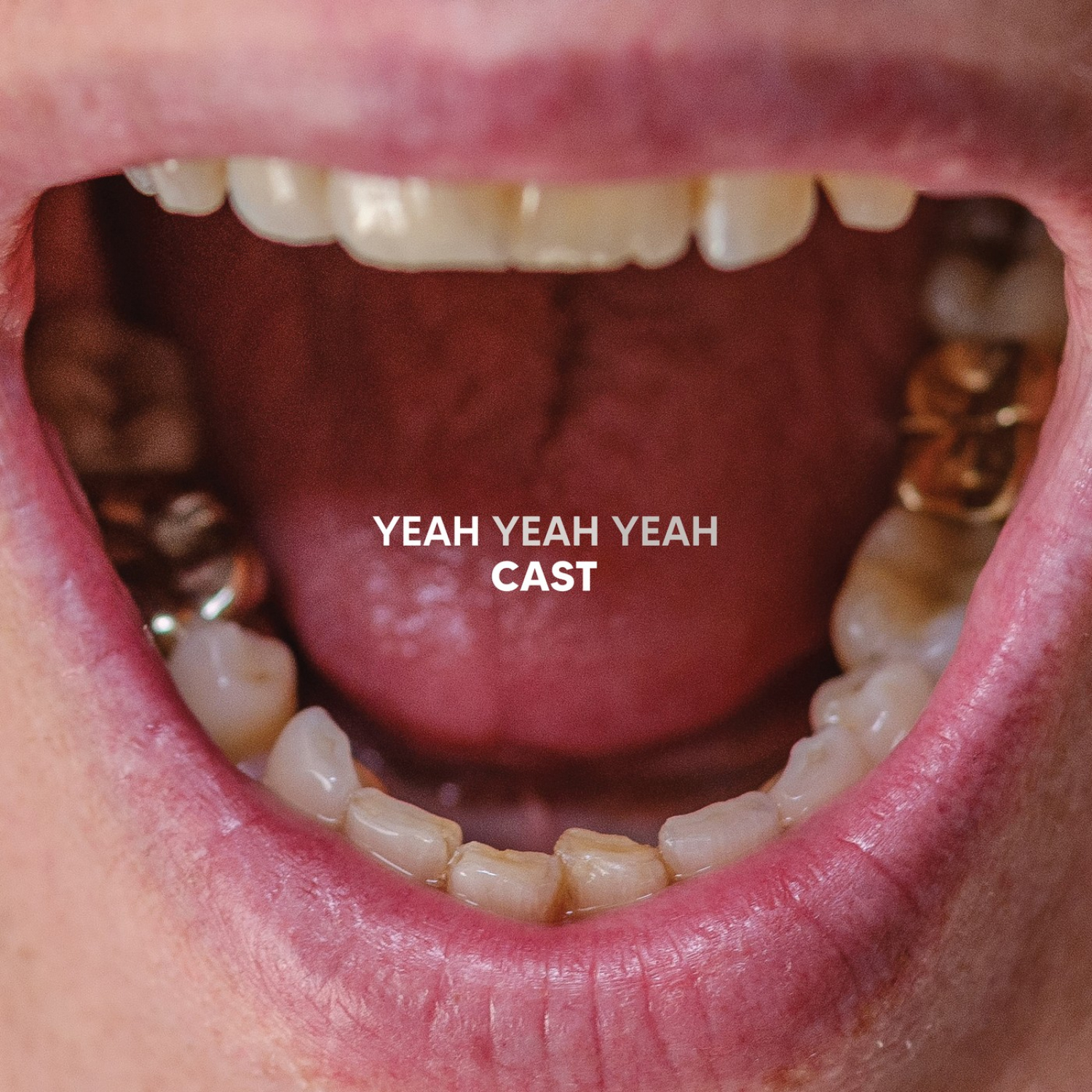
Cast are celebrating 30 years as a band by building up an impressive momentum. Fresh from the high of supporting Oasis on their UK tour, the Liverpool band follow up Love Is The Call from 2024 by renewing their acquaintance with Youth, who produced that album.
What’s the music like?
Affirmative, upbeat and positive! There is a swagger to John Power and his band that really suits them, and Youth has added a low-slung funk that they rarely had even in their mid-1990s heyday. Now they have gone with both barrels on production, adding spiritual undertones to the early Primal Scream groove of 2, then packing in the harmonies and distortion on single Poison Vine, where P. P. Arnold adds a thrilling top line and Jay Lewis a fulsome bass.
John Power’s vocals are also a strong feature, lending songs like Free Love an extra dash of feeling. Say Something New is typical cast – straight to the point, but with the added bonus of one of the many catchy melodies this album holds. At the other end, Way It’s Gotta Be is entirely bass-driven, reeking of Second Coming-era Stone Roses – in a good way. As if that isn’t enough, Weight Of The World has an excellent chorus and Birds Heading South is a warm-hearted closing track.
Does it all work?
It does. Yeah Yeah Yeah is no-frills and all the better for it!
Is it recommended?
If you like Cast, then this is a no-brainer, and if you’re approaching from the direction of early 1990s Manchester, then it’s also a recommended stopping point. John Power sounds more confident than ever, and the ten songs here are guaranteed to raise the mood, as Cast continue to strengthen their hand.
Listen / Buy
Published post no.2,784 – Saturday 31 January 2026
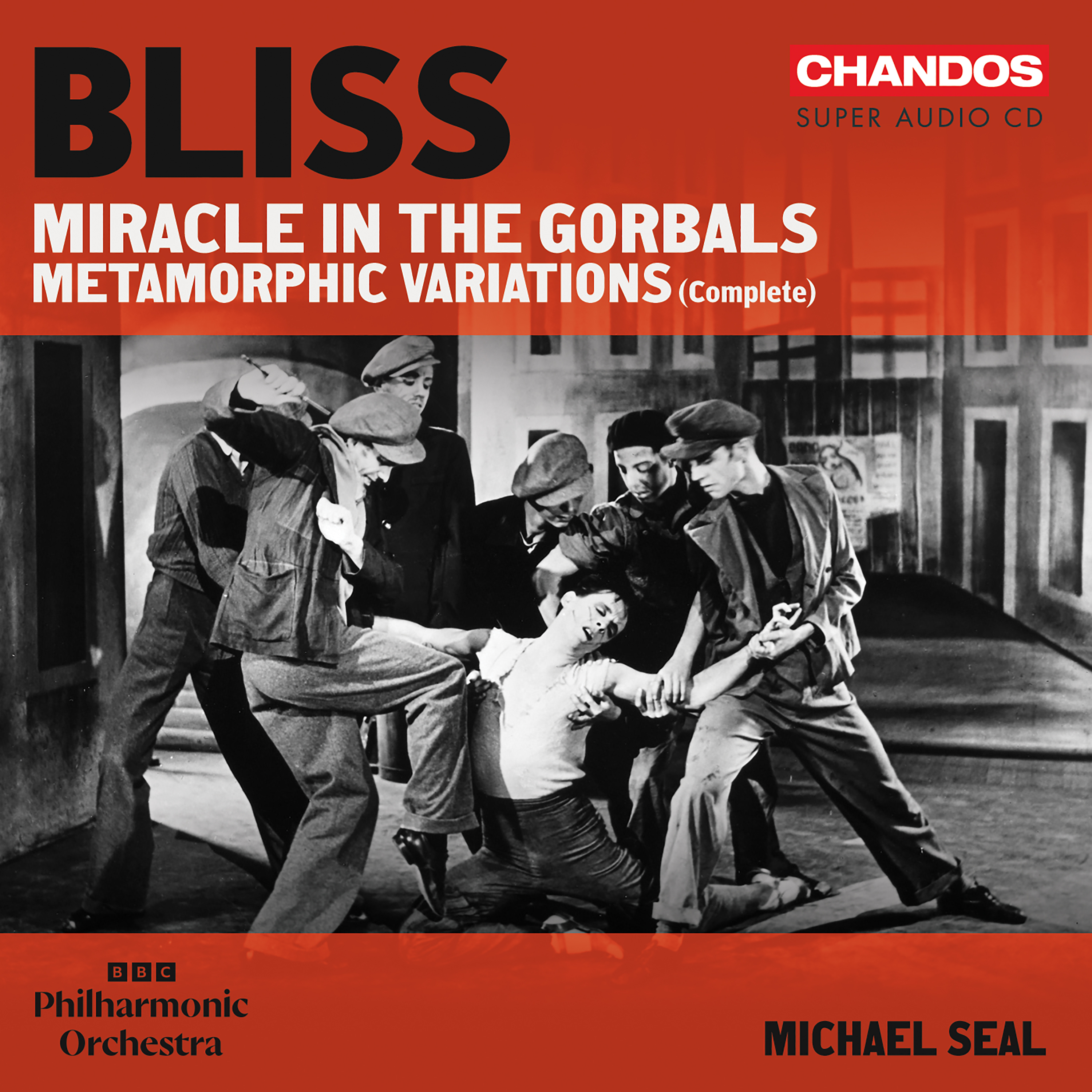
Bliss Miracle in the Gorbals, F6 (1944) Metamorphic Variations, F122 (1972)
Chandos CHSA5370 [79’57”] Producer Brian Pidgeon Engineers Stephen Rinker, Owain Williams (Miracle in the Gorbals), Amy Brennan (Metamorphic Variations)
Recorded 27 February 2025 (Metamorphic Variations), 1 March 2025 (Miracle in the Gorbals), MediaCity UK, Salford, Manchester
Reviewed by Richard Whitehouse
What’s the story?
Chandos issues the most important release of music by Arthur Bliss for the 50th anniversary of his death – coupling the second of his four ballets, in its new critical edition, with the last as well as the most ambitious of his orchestral works in what is its first complete recording
What’s the music like?
With its striking choreography from Robert Helpmann (after the story by Robert Benthall), Miracle in the Gorbals was initially even more successful than its predecessor Checkmate – being revived annually between 1944 and 1950. Other than a 1958 revival, however, there was no more stagings until that by Birmingham Royal Ballet in 2014; not least because the magic realism that transcends an otherwise grimly realistic scenario and struck a resonance in wartime Britain became passé soon afterward. Yet the quality of a score as finds Bliss at his most populist but also most uncompromising cannot be denied, and this new recording conveys these extremes in full measure. Hearing sections III (The Girl Suicide), X (Dance of Deliverance) and XV (The Killing of the Stranger) ought to banish any lingering doubts.
Premiered at Croydon’s Fairfield Halls during April 1973, Metamorphic Variations is Bliss’s lengthiest orchestral work. Shorter than intended, even so, with two sections being omitted at its first hearing and subsequently. This recording sees their belated and rightful reinstatement.
The three primary ideas are outlined in Elements: an oboe cantilena, a phrase for horns then strings, and a cluster from woodwind – melodic, rhythmic and harmonic possibilities that are explored intensively in what follows. The additional sections are an atmospheric Contrasts, whose absence has been to the detriment of overall balance, then a Children’s March which pivots from innocence to experience. Highlights include an increasingly animated Polonaise and Funeral Processions with its anguished culmination. Towards the close, a proclamatory Dedication duly underlines the inscription to artist George Dannatt and his wife Ann, then Affirmation draws those initial elements into a sustained peroration that pointedly subsides into a return of the oboe cantilena which, in turn, brings the closing withdrawal into silence.
Do the performances work?
Although the concert suite from Miracle in the Gorbals has received persuasive accounts by the composer (EMI/Warner) and Paavo Berglund (Warner), the complete ballet has only been recorded by Christopher Lyndon-Gee with the Queensland Symphony (Naxos) – compared to which this latest version, aside from its using the critical edition by Ben Earle, is superior in playing and recording. Here, as in Metamorphic Variations, the BBC Philharmonic responds assuredly to Michael Seal whose interpretative stance is distinctively his own. This latter has been recorded by Barry Wordsworth (Nimbus) and David Lloyd-Jones (Naxos), along with a broadcast from Vernon Handley (BBC Radio Classics), but the newcomer’s conviction gives it an advantage apart from those variations whose reinstatement enhances the work’s stature.
Is it recommended?
Very much so, not least given the spaciousness and realism of its SACD sound, together with informative notes from Ben Earle and Andrew Burn. Is it too much to hope Chandos will yet tackle either of Bliss’s operas which, along with The Golden Cantata, are his only significant works still to be commercially recorded? Michael Seal would be the ideal candidate to do so.
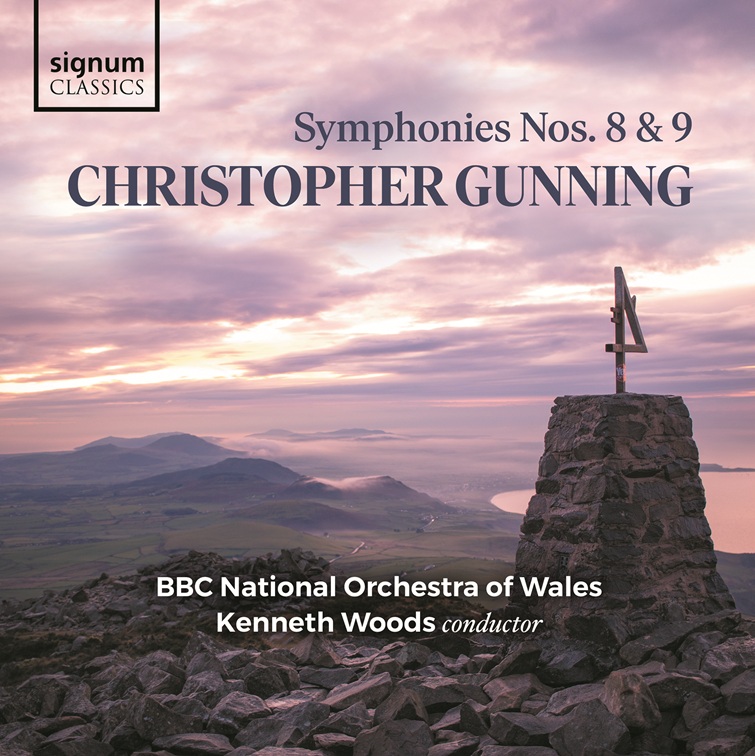
Christopher Gunning Symphony no.8 (2015) Symphony no.9 (2016)
Signum Classics SIGCD949 [67’33”] Producer Phil Rowlands Engineer Mike Hatch
Recorded 11-13 March 2024, Hoddinott Hall, Wales Millennium Centre, Cardiff
Reviewed by Richard Whitehouse
What’s the story?
Signum Classics continues its coverage of the late Christopher Gunning with this coupling of two symphonies, a genre that dominated the composer’s thinking in later years, and which get the advocacy they deserve from the BBC National Orchestra of Wales with Kenneth Woods.
What’s the music like?
Although he studied at London’s Guildhall School of Music and Drama with early ambitions as a symphonist, Gunning’s subsequent career was centred on scores for film and television with successful excursions into popular music. Not until 2001, when he was nearing 58, did he complete his First Symphony that was followed by a further 12 over the next two decades, along with several concertos and other orchestral pieces, in what is among the more notable instances of a composer moving between very different disciplines with comparable success.
Written for modest and what might be called ‘late-Classical’ forces, both symphonies are as integrated formally as they are resourceful motivically while, in both instances, movements are merely numbered rather than designated by tempo or expression. The Eighth Symphony consists of three movements unfolding from a sonata design of deft formal proportions with a slower introduction, via a slow movement whose ruminative cast is enhanced by plaintive contributions from flute and cor anglais, to a finale whose scherzo inclinations afford it an impetus and lightness maintained through to the decisive close. An earlier era of American symphonism (ostensibly that of Walter Piston or Randall Thompson) can be detected in its harmonic colouring and melodic contours, but Gunning’s personality is audible throughout.
Scored for slightly larger forces and with four movements, the Ninth Symphony feels no less focussed formally while admitting a wider range of or, at least, of more ambivalent emotions. Thus the opening movement again adheres to sonata design, with a more discursive (though never rhapsodic) take on its primary ideas. This is followed by a speculative or even fugitive scherzo, then a slow movement whose sustained eloquence arguably makes for the highlight of either symphony. It only remains for the finale, its progress as purposeful as it is eventful, to afford a conclusiveness that feels not at all premeditated, let alone predictable. If, in both these works, there is a tangible inner drama which is being played out, Gunning is first and foremost a symphonist for whom abstract concerns override any more subjective tendencies.
Does it all work?
It does indeed – thanks, above all, to Gunning’s unstinting focus on what symphonic form is and can be. Those familiar with any of his other symphonies will know that there is nothing anecdotal or half-baked about his handling of the genre, which emerges as the self-sufficient concept it ideally should be. It helps, of course, that Woods renders both these works with the insight expected from a conductor whose 21st Century Symphony Project has been crucial in rehabilitating the symphony in the UK, and who secures committed playing from BBCNOW.
Is it recommended?
Very much so. Recorded with all the necessary definition, and informatively annotated, this is well worth acquiring by those who are not yet acquainted with Gunning’s symphonic odyssey. Only recordings of the 11th, 13th and the revised First remain to complete an important cycle.
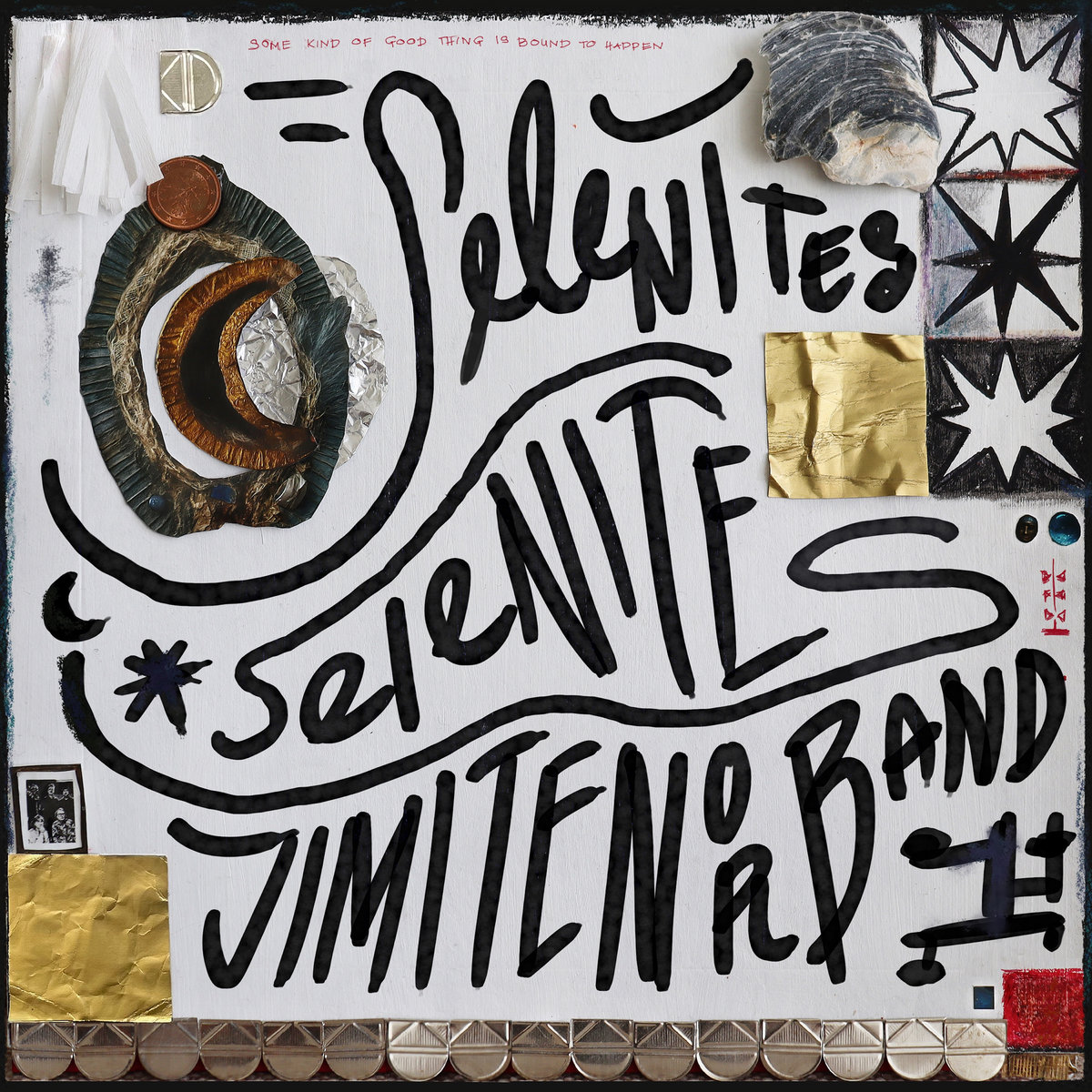
The Jimi Tenor Band has its roots in the early years of this decade, and a group of msuicians rehearsing in Jimi’s kitchen while rehearsal venues were unavailable during the pandemic.
Initially a live concern, the group of Eeti Nieminen, Heikki Tuhkanen, Ekow Alabi Savage and Lauri Kallio honed their craft in Helsinki, in thrall to Afro-jazz but leaning on their experience in a myriad of musical forms. The album was recorded in Kiikala, Finland, then finished at producer Tobias Levin’s Hamburg studio.
What’s the music like?
Jazz is certainly the prevalent style here, but there is a refreshing freedom that allows the music to evolve naturally.
The title track and Some Kind Of Good Thing both delight in joyful singalongs, while Shine All Night brings in Ghanaian vocalist Florence Adooni to front a song full of persuasive rhythms.
Universal Harmony sings of brighter hopes for humanity – something we can all get behind – while Alice In Kumasi has some lovely, grainy textures to the slow introduction from the band, before branching out into syncopated exchanges – which Furry Dice picks up, while heavy on the funk.
Does it all work?
Yes, thanks to the instinctive approach the instrumentalists bring to the table, and the airy choruses that raise a smile.
Is it recommended?
It is – and though released in November, the Jimi Tenor Band make music to bring light to the darker months.
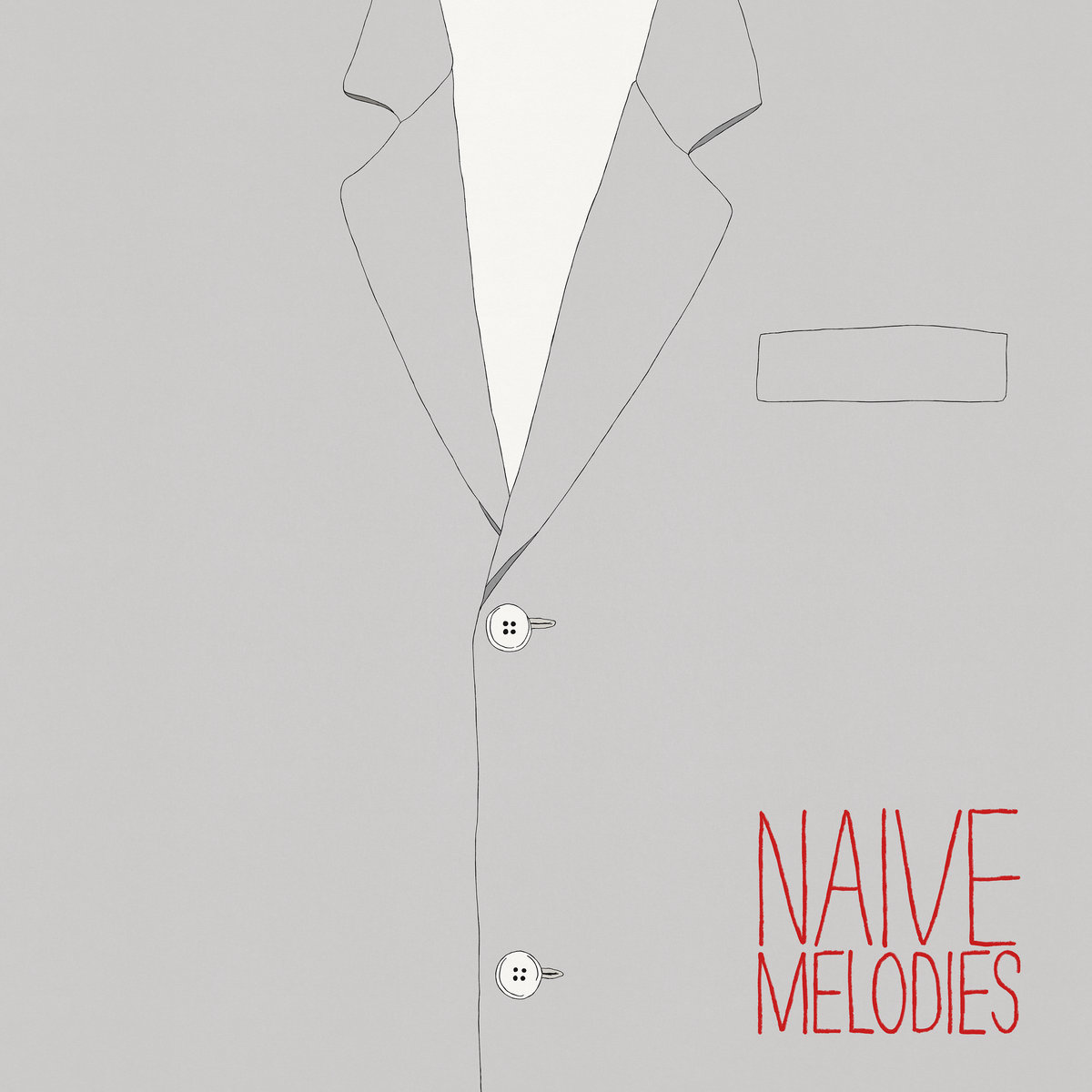
Talking Heads songs have always been ripe for cover versions, but Naïve Melodies is going one step further. It is curated by Drew McFadden, who has previous with an imaginative Modern Love tribute to David Bowie, also on BBE. In his own words, he is looking to “spotlight the deep and often overlooked influence of Black music on the sound of Talking Heads, drawing from the rhythmic foundations of Afro- diasporic traditions, soul, gospel, Latin, and spiritual jazz.”
The artists are drawn from far and wide, reflecting a ‘no musical rules’ policy as McFadden’s cast are let loose on one song each.
What’s the music like?
Invigorating. This is a fascinating musical project, and the rewards are frequent and many. Risks are encouraged in these versions; no stone is left unturned not just to highlight the influence of Black music but also to celebrate the group’s powers of invention.
As a consequence, songs we thought we knew are reframed and given fresh perspective. The best known songs get some startling treatment, with W.I.T.C.H. taking Once In A Lifetime to the cleaners, off beat and unexpectedly thrilling. And She Was becomes an unexpectedly tender R&B ballad in the hands and voice of Vicky Farewell, while Rogê offers an airy Road To Nowhere that works really well.
Of the many other highlights, Georgia Anne Muldrow’s questioning take on Girlfriend Is Better brings squelchy bass and an oblique vocal together, while there is a big space for the electro dub of Liv.e, taking on I Zimbra. The warm hearted EBBA version of Uh-Oh Love Comes To Town is a delight, while the scattered beats and bright vocals / guitar combination of Florence Adooni work well on Crosseyed And Painless. Meanwhile the dreamy Bilal cover of Seen And Not Seen is a rich reward.
Does it all work?
In the main, though not all the versions are immediately successful. Miguel Atwood-Ferguson’s breezy string arrangement of Heaven makes an effective prelude but is musically restless, while Astrønne’s version of Psycho Killer begins promisingly but loses focus.
Is it recommended?
Yes. Naïve Melodies is an eye-opening compilation, whichever musical direction you approach it from, and the artists clearly had a lot of fun making it. Should David Byrne and his fellow-Talking Heads hear it, they are bound to be impressed and charmed in equal measure.

 Arcana.fm