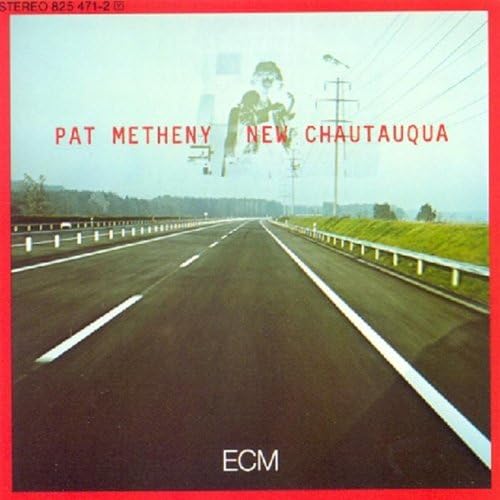
I still know far too little of Pat Metheny‘s work, but a very good friend – whose musical taste I trust implicitly – introduced me to some of his work made for ECM in the late 1970s. It has stuck with me, but in particular the New Chautauqua album of 1978, which contains this sunny yet hypnotic composition:
Akusmi, the vehicle of London-based French composer Pascal Bideau, looks to match the impact and ambition of its first two albums with a third instalment.
The press release promises a great deal, namely an invitation to “seven faraway sonic imaginariums fusing global and spiritual jazz with life affirming minimalism into a hypnotic, polyrhythmic odyssey”.
Joining Bideau on this odyssey are a host of musicians, even though he himself is something of a one-man band. Terra Incognita features Sarathy Korwar (tabla), Dudú Kouate (percussion, ngoni and flutes), Levitation Orchestra’s Marysia Osu (harp) and Lluís Domènech Plana (flutes) and Daniel Brandt, providing electronics on Anima.
What’s the music like?
Richly colourful. There is a lot going on in Akusmi’s music, a hive of activity that rewards repeated listening, where the intricate inner parts and the freedom of the outer voices can be fully appreciated. The methods and techniques have deepened since previous album Fleeting Future, so the sound is more intricate, but the joy and warmth that make his music so attractive are here again in generous measures.
A Waking Dream is indeed like the start of a new day, starting with nocturnal rustlings but settling into a groove of crossrhythms and bright instrumental colours. Anima and Pleine Lune build on this, the latter especially a riot of colour, with the saxophone flying free up above. Rain Dance is even more propulsive, the ensemble swaying in a dazzling show of unity, while everything comes to a head in Dawning Dusk, an exhilarating track topped by Dudú Kouate’s multi-layered vocal. Kouate it is who secures the swagger to Drongo’s Flute, where the saxophone enjoys further freedom above the groove set by the Senegalese percussionist.
While jazz and Afrobeat are obvious influences here the musical processes Bideau uses are aligned closer to Reich or Glass, taking minimal riffs and developing them through communal means that build the musical intensity. The instrumental colours charm and bewitch, the musical equivalent of throwing open the windows on a sunny day.
Does it all work?
It really does, as Terra Incognita becomes an album of enduring positivity.
Is it recommended?
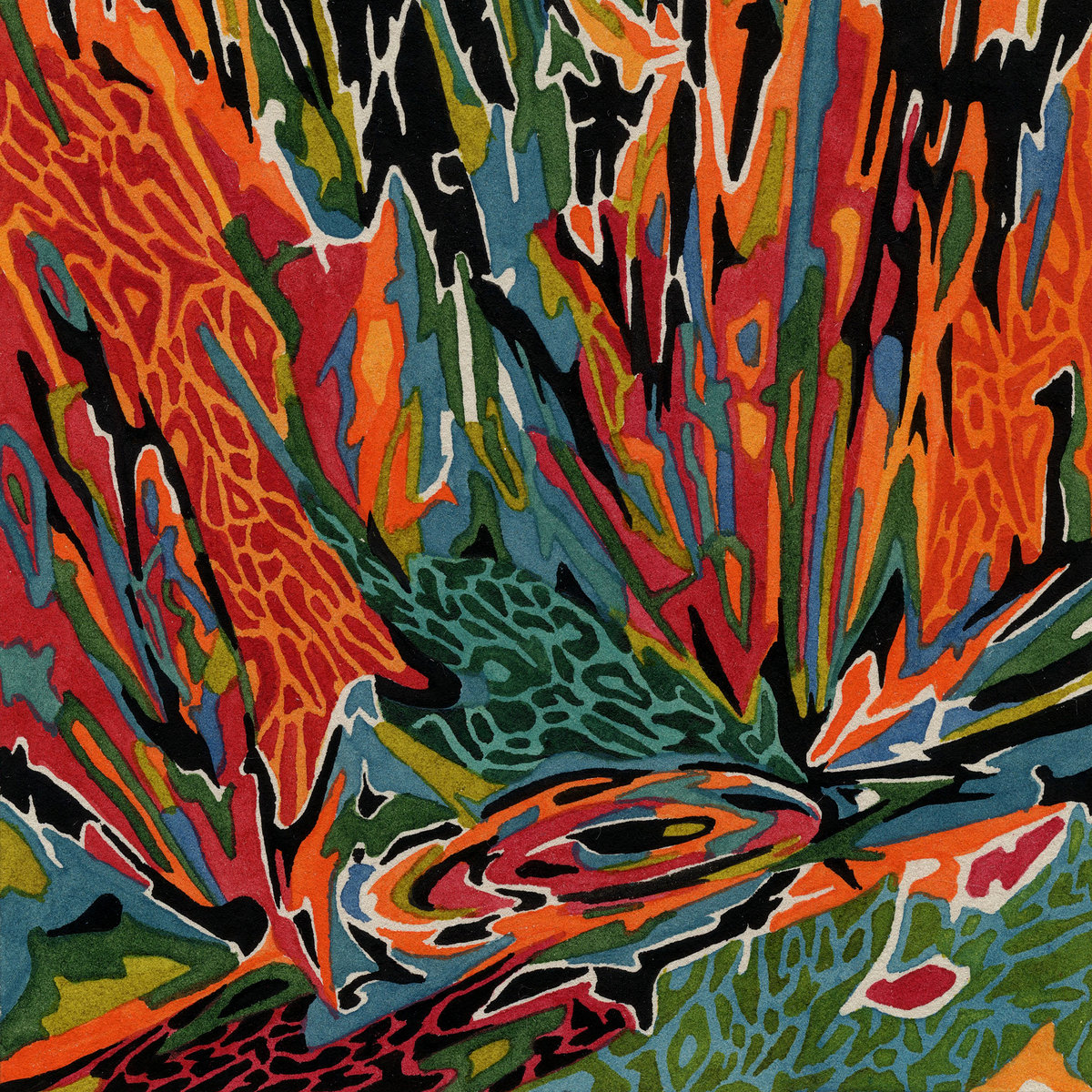
Yes, wholeheartedly. This is music with the most vibrant colours, reflecting its cover through grooves that sing and dance in unity. A life-affirming album reaffirming Pascal Bideau as a composer who knows no boundaries.
For fans of… Floating Points, Brandt Brauer Frick, Christian Prommer, Philip Glass, Terry Riley
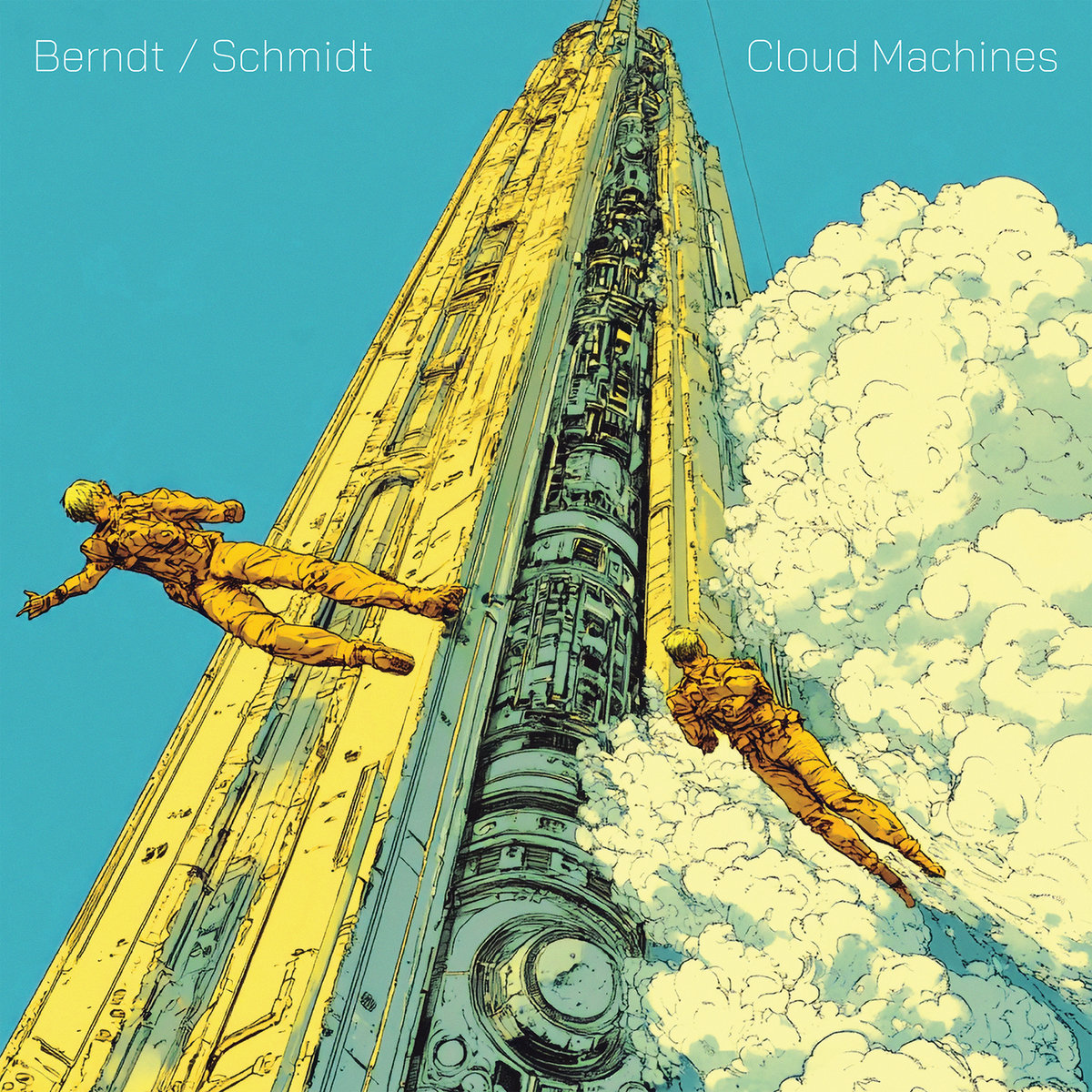
This is the first collaboration between John Berndt, the Baltimore band leader, and M.C. Schmidt, one half of the celebrated duo Matmos. Both have pooled their considertable expertise in avant garde and experimental music in celebration of the comic books of Jean Giraud (aka Moebius) and “the beautiful miniatures of the SKY Records Cluster/Eno/Conny Plank collaborations”.
The result is an electronic record looking simultaneously backwards and forwards.
What’s the music like?
Packed with incident across an eventful three-quarters of an hour. There is so much going on here that repeated listening is essential to absorb and appreciate the sheer scale of the pair’s inventions.
At times their music sounds like an update of Anton Webern or John Cage, so compressed is its thinking, while the pair cast the net ever wider in search of extra instrumental colour. Humour abounds, with witty thoughts bubbling under the surface as the music ebbs and flows. Especially notable are Our Theme, which behaves like the tuning process of an analogue radio, the descriptive Gecko Lazzaro, featuring trombonist Patrick Crossland and guitarist Owen Gardner, and The Analysis of Joel, a playful and colourful shredding of lines from guitarist Joel Knispel.
3000 is typical of the warmth coursing through the album, its percussion suggesting African influences.
Does it all work?
Yes, in a way that makes you want to return often to Cloud Machines to see what else you can spot. There are so many musical happenings it can be difficult to keep up at first, but as the secrets reveal themselves so too does the pair’s full invention.
Is it recommended?
Yes, without a doubt – fans of the pair’s previous work will lap this up. Be assured, the music is every bit as colourful and as far out as the wonderful cover art!
“She was my savior. And that was the problem. What was I to her? An empty prayer. A hollow hand.”
This quote comes from Kevin Brooks’ short film, For Goodbyes, and it resonated with pianist and producer Emil Friis, providing the inspiration and the title for this new EP of compositions.
As the press release describes, Friis uses “a carefully assembled recording chain consisting of Extinct Audio ribbon microphones, a vintage U47 and additional FET microphones — alongside processing through Moog filters and a Wellspring reverb unit”. To this he adds field recordings captured in Italy during the summer of 2025.
What’s the music like?
Hands, Hollowed proceeds with a steady toll from the piano, though surrounding it are clouds and watery ripples that reflect and refract the music. Some Fine Afternoon is drowsy in a really appealing way, a languid piano arpeggio dressed with something more ornate but equally calming.
Hands, Remembered is a slow memorial piece, stately in the progress of its piano chords but rather beautiful in the muffled chorale that surrounds them. As Sun I Meet You Now is an extended composition, which through its insistent electronic ticking initially sounds as though someone left a machine on by accident, at a distance of a quarter tone to the music. It introduces a blend of comfort and unease, resolved in the toll for the right hand with which the piece ends, a powerful and affirmative statement.
Does it all work?
It does – the four movements taken together provide a distinctive and valuable time out.
Is it recommended?
Yes. Dreamy escapism is on offer with this EP, but look closer and the detail is equally there to enjoy in subsequent listens. Recommended.
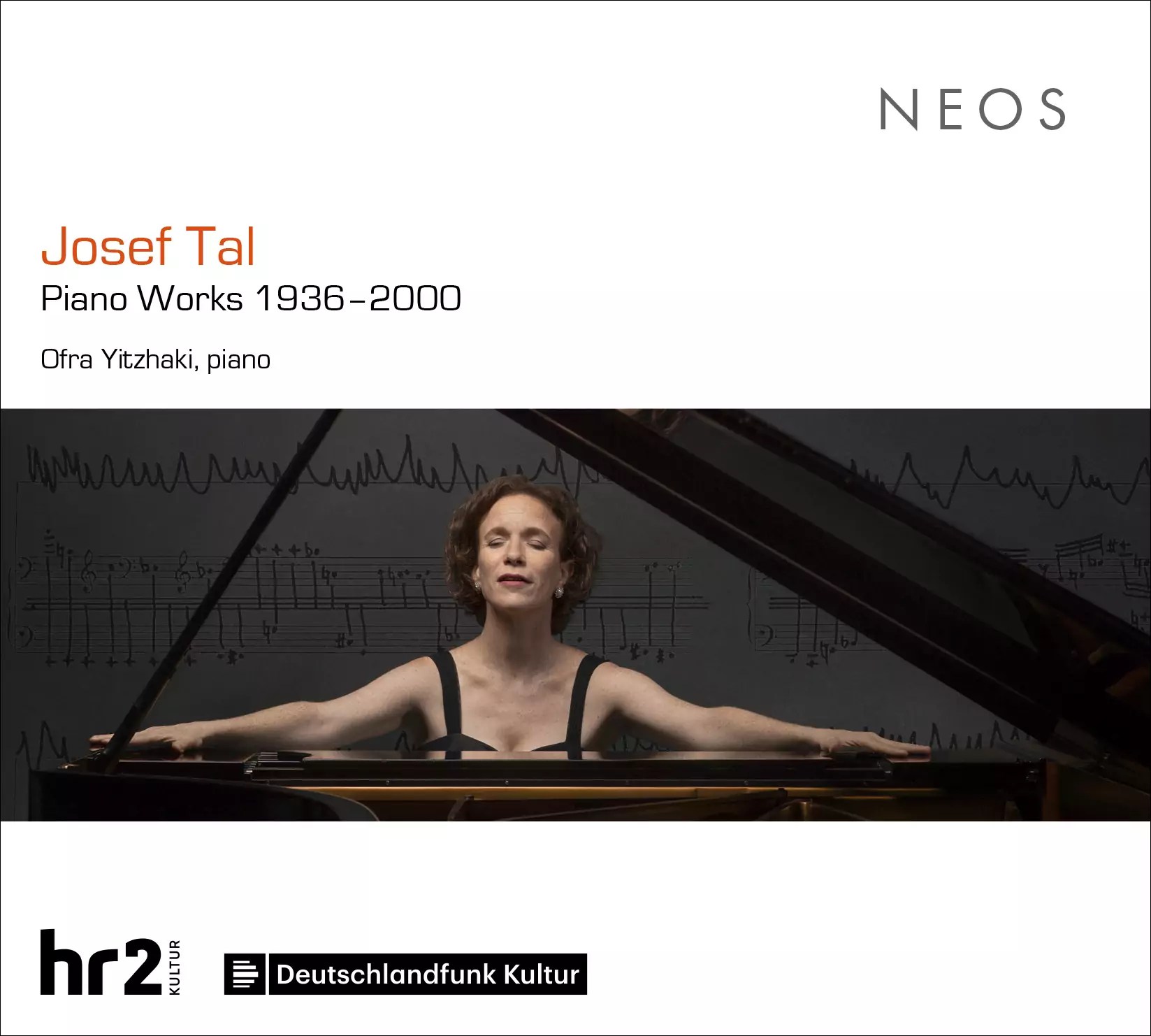
Josef Tal Sonata for Piano (1949) Five Densities (1975) Three Pieces (1937) Concerto no.5 for Piano and Magnetic Tape (1964) By the Rivers of Babylon (1951) Six Sonnets (1946) Essay IV (1997) Essay V (2000) Chaconne (1936)
NEOS Music 12520 [82’04”] Producers Alexander Hainz and Dominik Weinmann Engineer Robin Bös
Recorded 1-3 September 2022 at Hessian Radio Studio, Frankfurt am Main
Reviewed by Richard Whitehouse
What’s the story?
The enterprising NEOS Music label releases an anthology of piano music by Josef Tal (2010-2008), the German-born Israeli composer who did much to advance the cause of new music in Israel during the post-war era and whose varied output confirms him as a significant creative figure.
What’s the music like?
Little heard in the UK (his Third Symphony featured at the 1979 Proms and his chamber opera The Garden at South Bank Centre in 1998), Tal wrote in all the main genres. His piano music, moving from overt Expressionism to innate Atonalism, is accorded focus by its motivic rigour.
This is evident from the earliest piece here – Chaconne being a consummate study in ‘less is more’ such that its variations on an austerely rhetorical theme merge into an intensifying and cumulative whole, capped by an epiphanic calm prior to the inevitability of a final onslaught. Elements of this language are further explored by the Three Pieces which, in their respective volatility, impetuousness or introspection, denote the influence of Schoenberg’s piano pieces -albeit less those emotional extremes of his Op. 11 than that fastidious subtlety of his Op. 23.
A subtlety duly refined in the Six Sonnets, miniatures of a formal ingenuity and expressive poise out of all proportion to their brevity. From there to the Sonata is to emerge at a crucial stylistic juncture in Tal’s output: again, the modest dimensions (each of its three movements lasting around four minutes) only makes more acute that growing ominousness of its initial movement, the plangency of its central Basso Ostinato (a favoured device throughout Tal’s career) then the mounting impetus of its final Rondo toward a viscerally unequivocal close.
Arranged from a theatrical work, By the Rivers of Babylon conveys a measure of eloquence prior to what became the most radical phase of Tal’s composing. Hence the Concerto No. 5 as replaces orchestra with electronics in a substantial single movement which, whatever the timbral limitations of its magnetic tape, ensures a tense while often combative interplay of mutually opposing forces. This intensity is channelled into the Five Densities, such that its starkly contrasted first four pieces find unlikely yet convincing rapprochement in the fifth.
The remaining works form part of a sequence that extends across Tal’s final creative decades. Essay IV moves stealthily between sharply distinct ideas to an ending which does not resolve but simply cease, and Essay V is more demonstrative as it heads to its terse yet forceful close.
Does it all work?
Indeed it does. A figure nowadays admired more for what his music represents than for what it achieves, Tal left a legacy which is highly significant in or of itself (and one which, unlike almost all Israeli composers of his generation, audibly transcends the idiom of Ernest Bloch). His piano output exemplifies that technical precision, underpinning a creative spontaneity, as are hallmarks of his maturity and which help make this music as relevant to our day as to his own. It also makes for an engrossing and sometimes even entertaining listen in its own right.
Is it recommended?
Indeed it is. Only the Sonata has previously been recorded, and Ofra Yitzhaki’s empathy with this music cannot be denied. Superbly recorded and informatively annotated, this deserves an enthusiastic recommendation, with hopefully a follow-up of Tal’s other piano works to come.
Listen / Buy
You can hear excerpts from the album and explore purchase options at the NEOS Music website. Click on the names to read more about pianist Ofra Yitzhaki and composer Josef Tal