On record: BBC Symphony Orchestra / Martyn Brabbins – Vaughan Williams: Symphony no.5 & Scenes adapted from Bunyan’s Pilgrim’s Progress

*Emily Portman (singer); *Kitty Whatley (mezzo-soprano); *Marcus Farnsworth (baritone), *BBC Singers; *BBC Symphony Chorus, BBC Symphony Orchestra / Martyn Brabbins

Vaughan Williams
Symphony no.5 in D major (1938-43)
Scenes adapted from Bunyan’s Pilgrim’s Progress (1906)*

Hyperion CDA68325 [66’59”]
English text included
Producer Andrew Keener
Engineer Simon Eadon

Recorded 2 December 2018* & 4-5 November 2019 (Symphony 5), Watford Colosseum, UK

Reviewed by Richard Whitehouse

What’s the story?

Martyn Brabbins’s traversal of Vaughan Williams symphonies continues with the Fifth, long the most widely regarded of this cycle, alongside music written for a dramatized production which effectively launched the composer’s lifelong obsession with John Bunyan’s ‘allegory’.

What’s the music like?

Premiered in June 1943, the Fifth Symphony poses a challenge or even provocation through that inwardness all too easily regarded as escapism. A ‘less is more’ concept which Brabbins clearly appreciates – not least in a Preludio as builds incrementally, with little overt rapture going into the radiant second theme or a development understatedly accruing energy, toward a reprise whose climactic restatement of the second theme is (purposely?) less arresting than a coda in which any tonal ambiguity feels the more real for happening almost out of earshot. Easy to skate over, the Scherzo emerges with not a little malevolence in the deftness of its cross-rhythms – the chorale-like aspect of its trio questioning rather than affirming, then the return of the opening music exuding a sardonic quality left unresolved by the spectral close.

That the Romanza is the emotional heart of this work only increases a need for its contrast of moods to be (subtly) underlined. Brabbins achieves exactly so through an adroit interplay of the melodic and harmonic components whose cumulative yet unforced evolution accords the central phase of the movement an encroaching anxiety barely pacified at its culmination, before being more wholly transcended by a coda that is luminous in its simplicity and poise. Often thought unsatisfactory as a formal design, the final Passacaglia seems of a piece with what went before; its theme stated simply while purposefully before the variations build to a resolute central climax – after which, those conflicting elements of negation and affirmation are sublimated into a postlude which reaches out as though at once entreaty and benediction.

As a coupling, Scenes adapted from Bunyan’s Pilgrim’s Progress could not be more apposite. Written for a staging at Reigate Priory, the 13 short items unfold well as a continual sequence at the outset of an involvement with Bunyan’s novel that resulted in an evening-length drama 45 years on. Highlights are Emily Portman’s disarming take on the ‘Flower-girl’s song’, ‘The angel’s song’ eloquently rendered by Kitty Whately (her contribution an undoubted highpoint of ENO’s uneven 2012 production), Marcus Farnsworth’s fervour in a setting of Psalm 23 as constitutes the Shepherd’s Song, and lusty response from the BBC Symphony Chorus in The arming of Christian (best known as the hymn To be a Pilgrim) then a rapturous Final scene music which also serves as reminder that VW’s Tallis Fantasia was merely four years hence.

Does it all work?

It does. Brabbins’s Fifth may not be the most fervent or powerful but has the work’s measure as a cohesive and integrated entity. The Pilgrim’s Progress ‘Scenes’ makes for a fascinating comparison with subsequent versions in VW’s decades-long quest for a satisfying realization.

Is it recommended?

Indeed. The sound is on a par with previous instalments in its clarity and realism, and Robert Matthew-Walker’s booklet note expertly clears up any uncertainty over the genesis of VW’s Bunyan-related projects. Those remaining symphonies will hopefully not be long in coming.

For further information on this release, visit the Hyperion website, or the BBC Symphony Orchestra. You can also read Arcana’s interview with the conductor here
On record – Holst: Christmas Music (Godwine Choir) (EM Records)

Holst
In the Bleak Midwinter H71 (1904)
Four Old English Carols H82 (1907)
Two Carols H91 (1907/16)
Christmas Day H109 (1910)a
Lullay my Liking H129 (1916)
This Have I Done for My True Love H128 (1916)
Of One that is so Fair and Bright H130 (1916)
Bring us in Good Ale H131 (1916)
Three Carols H133 (1916/17)a
A Dream of Christmas H139 (1917)a
Wassail Song H182 (c1931)
Scherzo H192 (1933, arr. Brasier)**
Four Organ Voluntaries HApp8-11 (1890/1, transc. John Wright)*

*John Wright (organ); **Richard Brasier, **Tom Bell (organ duet); Godwine Choir / Alex Davon Wetton, Edward Hughes with a Douglas Tang (organ); b Charlotte Evans (oboe); c Alison Moncrieff-Kelly (cello)

EM Records EMR CD0062 [82’42”]

Producer / Engineer Myles Eastwood

Recorded 13 & 14 July 2019 at St Jude-on-the-Hill, London; **22 August 2019 at Hereford Cathedral

Written by Richard Whitehouse

What’s the story?

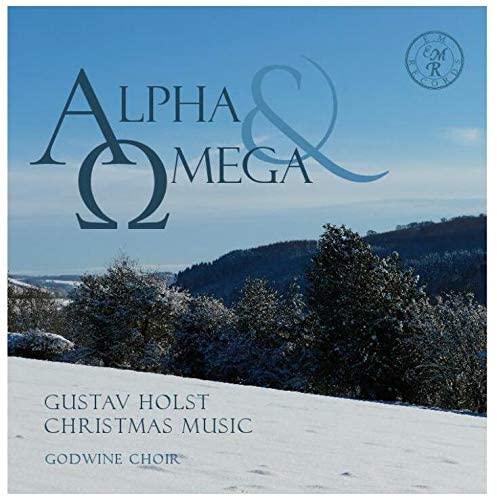
EM Records continues its enterprising release schedule with this anthology of seemingly all Holst’s choral music written for or with Christmas in mind, along with first recorded outings of original pieces plus a transcription for organ that in themselves explain this album’s title.

What’s the music like?

As incrementally wide-ranging as might be expected from a composer whose never wore his distinctive personality on his sleeve. Earliest of the choral works is also the most famous – a setting of In the Bleak Midwinter that will be heard the Christian world over these next few weeks (no comment as to a preference between this and Harold Darke’s setting!). Intricately wrought in rhythm and texture, the Four Old English Carols exude a luminously Medieval atmosphere, as also the Two Carols with their modally evocative harmony. Most ambitious among these earlier items, Christmas Day alternates before superimposing its four carols in this heady and engaging medley – of which Holst’s subsequently dismissive view says more about his constantly changing stylistic preoccupations than any intrinsic failing of this work.

Almost all the latter choral pieces date from around the time of Holst’s move to Thaxted and the festival he initiated there. The call-and-response of Lullay my Liking retains its enduring charm, but how surprising I Saw Three Ships has not previously been recorded, its vivacity as appealing as the purposefulness of Personent hodie or gaiety of Masters in this Hall. Holst’s view that Of One that is so Fair and Bright ‘‘should be done simply like a good village choir’’ might give pause for thought, its rhythmic flow as exacting as the cumulative vocal weave of This Have I Done for My True Love or the accelerating part-writing of Bring us in Good Ale. There is an almost impressionistic allure to the little-known A Dream of Christmas, with the Wassail Song a reminder of the ribald element that often surfaces in this composer’s music.

Even Holst’s admirers are likely unfamiliar with his output for solo organ, if only because the four voluntaries in question have gone unheard since the teenage composer tried them out in his Cheltenham schooldays. Modest in scope, the first three are an intriguing parallel to what his contemporary Ives was coming up with across the Atlantic – thus the resolute March, the whimsical Allegretto Pastorale and the capering Postlude. Much more ambitious, the Funeral March is an animated processional whose opulent climaxes and quirky registrations admit of more personal traits. From Alpha to Omega – the Scherzo being the only movement realized of the symphony upon which Holst was working at his death, arranged here for organ duet by Richard Brasier such that its contrapuntal dexterity and fluid evolution are acutely conveyed.

Does it all work?

Absolutely. Holst was a master of many guises; his Christmas output is unfailingly evocative for all its technical demands. It helps that performances by the London-based Godwine Choir are so attentive to this music’s spirit, as are Brasier and Tom Bell in the Scherzo transcription.

Is it recommended?

Very much so. The Hampstead and Hereford venues are ideal acoustics, and the booklet note includes an overview of choral items by Chris Cope – Chairman of the Holst Society, whose extensive recording programme will result in much unfamiliar music being brought to light.

Listen and Buy

You can discover more about this release at the EM Records website, where you can hear clips from the recording and also purchase.

On record – Persian Autumn: Mary Dullea plays piano music by Farhat and Tafreshipour (Métier)

Mary Dullea (piano)

Farhat
Toccata (1952)
Piano Sonata no.1 (1955-7)
Piano Sonata no.2 (2010)
Tafreshipour
Yasna (1999)
Pendar (2013)
Shabahang (2017)
Celebration at Pasargadae (2006)

Métier MSV28610  [72’32”]

Producers Adaq Khan, Amir Mahyar Tafreshipour

Recorded 20-21 December 2019 at Menuhin Hall, Cobham

Written by Richard Whitehouse

What’s the story?

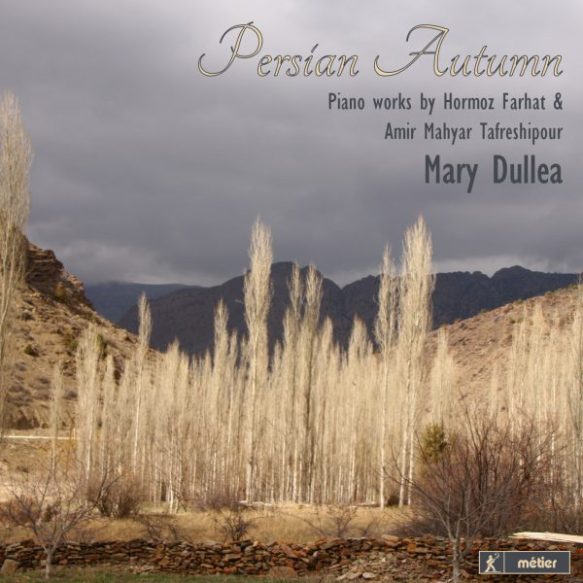
The always enterprising Mary Dullea releases an album of piano music by Iranian composers of the older and middle generations, both having been acclaimed on either side of the Atlantic for their highly contrasted yet equally imaginative amalgam of Eastern and Western sources.

What’s the music like?

Hormoz Farhat (b1928) received his musical education in the USA and has resided in Ireland over four decades. Composing in all the main genres, he has also researched extensively into the Persian modal system, whose influence is evident throughout those works of his maturity.

Premiered by pianist and composer Alexander Tcherepnin, Toccata is among Farhat’s earliest acknowledged works – its alternating declamatory and ruminative manner resulting in music whose virtuosity gained widespread attention. Farhat was fortunate in his exponents, the First Piano Sonata being premiered and advocated by his teacher Lukas Foss – doubtless attracted by its formal rigour and tensile emotional trajectory. A restive opening Allegretto is followed by a subdued if hardly serene Adagio then a Moderato that quizzically elides between scherzo and intermezzo, before the final Rondo draws on motivic elements from earlier movements in its oblique while purposeful course toward the peremptory close. Coming over a half-century later, the Second Piano Sonata is more expansive but never unfocussed in its conception. The initial Allegretto outlines without articulating a sonata design, in what feels closer to a freely unfolding fantasia, then the central Largo yields an improvisatory and often confessional aura, countered by the final Animato in waves of tension and release on the way to a pensive close.

Having pursued musical studies in Esbjerg and London, Amir Mahyar Tafreshipour (b1974) has written a significant amount of chamber and instrumental music – as well as the first harp concerto by an Iranian composer. Recently, he has turned his attention to the operatic domain.

The four pieces recorded here attest to their composer’s acute sense of evocation and formal cohesion. Yasna refers to the Zoroastrian act of worship over an intensifying span as is both hieratic and incantatory, while Pendar – a term implying ‘thought’ and which is also the title of a series of pieces for solo instruments – unfolds as though a stream of consciousness that plays on listeners’ expectations in numerous and intriguing ways. Its title meaning ‘nocturne’, Shabahang was inspired by the crashing of waves against the coasts of the west of Ireland as also the south-east of Iran; its encroaching remoteness finding contrast with the often festive spirit, tempered by more contemplative aspects, of Celebration at Pasargadae – whose outer sections finding this composer at his most emotionally outgoing and uninhibitedly virtuosic.

Does it all work?

Yes, given the highly differentiated yet inherently personal manner by which both composers channel aspects of their heritage via overtly if never inflexibly European means. It helps that Dullea is so attuned to the musical idioms of these composers as also their technical demands.

Is it recommended?

Indeed. Sound is a little hard in more forceful or energetic passages, while remaining clear and well balanced throughout. Notes on each of these pieces are succinct but informative, and this is music which inquiring listeners and pianists alike should certainly find worth investigation.

Listen & Buy

You can get more information on the disc at the Divine Art website, where you can also purchase the recording. Meanwhile for more information on Amir Mahyar Tafreshipour, head to the composer’s website. For more on Mary Dullea click here

Switched On – Ralph Kinsella: Lessening (8D Industries)

reviewed by Ben Hogwood

What’s the story?

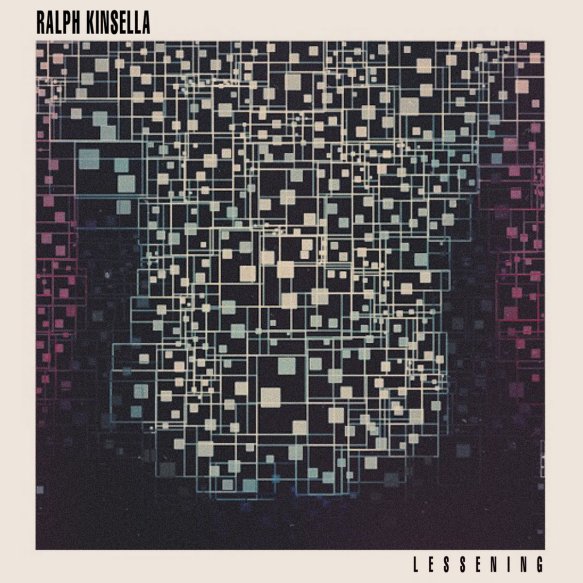
If you are a home producer you will immediately relate to the thoughts behind Ralph Kinsella’s debut album Lessening. Kinsella refers to ‘the poetics of the bedroom’, capturing the intimacy of our most private room for listening to and creating music.

The confined space is the stimulus for the ten tracks of Lessening, all recorded through lockdown in Kinsella’s Dumfries and Galloway. He talks of ‘the boondocks, interspersed with fragments of debris and flickering housing scheme street lights.’

What’s the music like?

Lessening is a set of ten tableaus with varying degrees of ambience and animation. Kinsella’s guitar is the main instrument, but he uses it sensitively among more ambient effects that often give a much bigger sound picture.

The subtly varied guitar sounds provide close up attention to detail or far off wisps of colour, and when the two elements come together, as they do in The Angel Of Raasay, the listener has the feeling of becoming airborne, especially with the ambient surrounds on headphones. That feeling is heightened on In The In-Between Light, where the music soars overhead on a bank of slowly changing effects, panning out to even wider vistas.

On the darker side the slow moving Suffuse has a similarly wide picture to go with its brooding harmonic backdrop, while the expansive Lung Noise, the album’s emotional centre, is similarly introspective but has a lovely mixture of cloudy keyboards to complement the bowed instrument in the foreground.

The layers of white noise laced around T(h)reads work as a comforting blanket, an explicit suggestion of shoegaze acts such as Slowdive, while Born On The Cusp works well with widescreen reverberation. Conversely the studied ambience of Gallows Hill has beautiful details for the ear to focus in on, with intricately picked guitar and woozy atmospherics working together.

Does it all work?

It does, because the structure of Lessening is ideal, giving the music a natural ebb and flow. Kinsella creates a winning mixture of blurred forms and much more studied portraits, portraying both the intimacy of the bedroom where the music will have been made but also the Dumfries and Galloway vistas outside.

Is it recommended?

Very much so. Any lovers of 1990s shoegaze will find much to dive into here, but so will those admiring more recent, post-classical efforts from the likes of Nils Frahm or A Winged Victory For The Sullen. It will be interesting to see what Kinsella turns his guitar to next, for his form of localized ambience creates memorable images of both time and place.

Stream

Buy

On record – Dario Salvi conducts Humperdinck: Music for the Stage (Naxos)

a Andrea Chudak (soprano); b Ruxandra Voda van der Plas (contralto); c Harrie van der Plas (tenor); d Robert Bennesh (organ); Malmö Opera Chorus and Orchestra / Dario Salvi

Humperdinck
Die Heirat wider Willen (1905) – Prelude to Act Two
Der Kaufmann von Venedig (1905) – Incidental Music (abce)
Das Wunder (1912) – Suite (arr. Lotter) (d)
Die Wallfahrt nach Kevlaar (1878) (acd)
Lysistrata (1908) – Incidental Music (e)

Naxos 8.574177 [73’27”] German texts can be found here: http://www.naxos.com/libretti/574177.htm

Producer / Engineer Sean Lewis

Recorded 13-17 August 2019 at Bengt Hall-salen, Malmö, Sweden

Written by Richard Whitehouse

What’s the story?

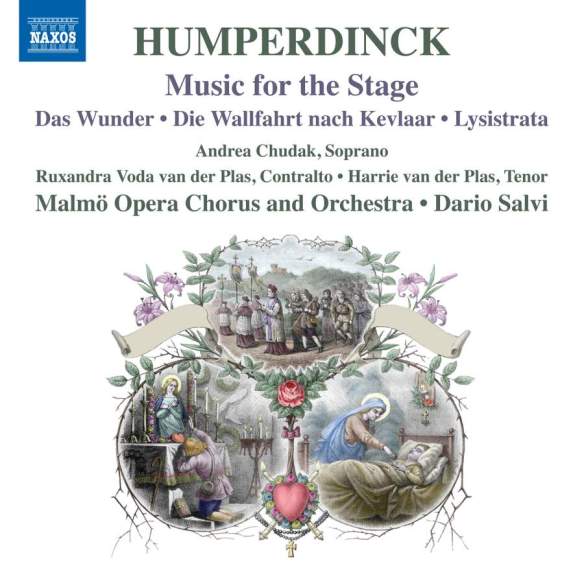
Naxos continues its exploration into late-Romantic byways with this selection of theatre and choral works by Engelbert Humperdinck, presented so as to confirm a composer whose music more than makes up for what it might lack in overall individuality with expressive generosity.

What’s the music like?

The recent appearance of William Melton’s biography (Toccata Press) was of great value in conveying Humperdinck as a figure both selfless and humane; and a composer whose output reflects these qualities so that a personable and appealing musical idiom is always to the fore.

The selection gets underway with the Prelude to the second act of The Forced Marriage, after Alexandre Dumas, and the most likely among Humperdinck’s ‘forgotten’ operas to be worthy of revival. At least, the glowering intensity of this music set in the Bastille suggests as much.

Humperdinck contributed music to several productions by Max Reinhardt, with that for The Merchant of Venice running the gamut from very brief vocal or instrumental cues to such as a lilting Sarabande and a Procession of Masks which exude an engaging verve. The Casket Song draws a winsome response from female soloists and chorus, while the most extended item is an orchestral commentary on the text In such a night whose (not unduly) Wagnerian overtones and gently emergent rapture ought to secure more regular hearings in its own right.

Despite a lavish ‘multi-media’ premiere at Covent Garden, the sanctimonious scenario of the film The Miracle sealed its fate. Adolf Lotter’s suite deserves better – the evocative Prelude for organ leading into the lively Procession and Children’s Dance, then a festive ‘Banquet Scene’ finds contrast with the chaste Dance of the Nuns. A whimsical March of the Army is itself juxtaposed with the plangent Death Motif, before the Christmas Scene bestows a typically glowing atmosphere which the Finale to Act One builds to an eloquent apotheosis.

Much the earliest work, the cantata after Heine’s ballad The Pilgrimage to Kevlaar established Humperdinck’s reputation and is still occasionally revived – though not in the original version recorded here. If those swirling textures of the first section remind one that Humperdinck was soon to prove an invaluable amanuensis for Wagner, the central section renders the brunt of the narrative with considerable fervency, before the final section tempers the ostensibly tragic turn of events with a forceful reaffirmation of belief prior to its warmly consoling conclusion.

Finally, to incidental music for Aristophanes’ Lysistrata – comprising a perky Entr’acte for brass and woodwind, a vaunting Festal Procession that juxtaposes then combines male and female voices, then a Closing Song that elaborates its woodwind melodies to piquant effect.

Does it all work?

Yes, bearing in mind that Humperdinck never sought to impress his personality on the task at hand. Within its self-imposed limits, the theatre music is always suited to what is portrayed on stage, with the Heine setting among the most persuasive instances of a much-maligned genre.

Is it recommended?

Indeed. The various vocal and choral contributions have all the requisite limpidity and poise, while the Malmö Opera forces acquit themselves with verve and elegance under the capable guidance of Dario Salvi – whose efforts in raising the profile of this music compels respect.

Listen & Buy

You can get more information on the disc at the Capriccio website, or purchase from Naxos Direct. Meanwhile for more information on the recent Toccata Press book on Humperdinck, you can head to their website