Cio-Cio San – Maki Mori (soprano), Pinkerton – Pene Pati (tenor), Suzuki – Hiroka Yamashita (mezzo-soprano), Sharpless – Christopher Purves (baritone), Goro – Christopher Lemmings (tenor), Kate – Carolyn Holt (mezzo-soprano), Yamadori/Bonze – Sanuel Pantcheff (baritone), Imperial Commissionaire – Jonathan Gunthorpe (bass), Yakuside – Matthew Pandya (bass), Cousin – Abigail Baylis (soprano), Mother – Hannah Morley (mezzo-soprano), Aunt – Abigail Kelly (soprano), Ufficiale – Oliver Barker (bass)
Thomas Henderson (director), Laura Jane Stanfield (costumes), Charlotte Corderoy (assistant conductor), Charlotte Forrest (repetiteur), Daniel Aguirre Evans (surtitles)
CBSO Chorus, City of Birmingham Symphony Orchestra / Kazuki Yamada
Symphony Hall, Birmingham Saturday 29 June 2024
reviewed by Richard Whitehouse Photo (c) Yuji Hori
The current season by the City of Birmingham Symphony Orchestra ended on an undoubted high with this performance of Madama Butterfly – if not Puccini’s greatest opera, then likely his most affecting and one with which Kazuki Yamada demonstrably feels an acute empathy.
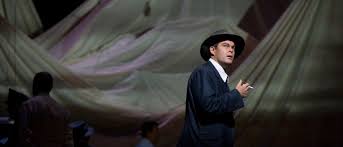
Semi-stagings can be a mixed blessing, but Thomas Henderson fulfilled this task admirably through several strategically placed screens at either end and across the rear of the stage that enabled the singers to enter or exit without detriment to musical continuity. The costumes by Laura Jane Stanfield brought authenticity without risk of caricature, while whoever handled the lighting should be commended for so discreetly intensifying those emotional highpoints – notably when the ‘heroine’ meets her end in what felt as powerful visually as it did aurally.
The cast was a fine one and dominated (as it needed to be) by the Cio-Cio San of Maki Mori – her unforced eloquence and innate goodness evident throughout, while her only occasionally being overwhelmed by the orchestra underlined her technical assurance. A pity that Pene Pati was not on this level as, apart from his rather cramped tessitura in its higher register, his was a Pinkerton neither suave not alluring but precious and self-regarding – with barely a hint of remorse when forced to recognize the consequences of his actions. Hiroka Yamashita had all the necessary empathy as Suzuki, while Christopher Purves gave a memorable rendering of Sharpless – unsympathetic as to profession yet emerging as a hapless participant conveying real humanity, if unable to prevent what could hardly be other than a tragedy in the making.
Smaller roles were well taken, not least Carolyn Holt as a well-intentioned Kate and Samuel Pantcheff as a yearning if not over-wrought Yamadori. The CBSO Chorus gave its collective all in a contribution that goes a long way to defining the culture and atmosphere in a turn-of-century Nagasaki riven between its Oriental tradition and Occidental intervention. Otherwise, the CBSO was the star of this show in responding to Yamada’s direction, as disciplined as it was impulsive, with a precision and finesse maintained over even the most opulently scored passages. It is often overlooked just how wide-ranging Puccini’s idiom had by then become, with its impressionist and even modal elements duly subsumed into music whose Italianate essence is consistently enhanced while without sacrificing any of its immediacy or fervour.
Some 120 years on and attitudes to what this opera represents have inevitably changed, but it is a measure of Puccini’s theatrical acumen that anti-imperialist sentiment abounds in the narrative without drawing attention to itself conceptually or musically. Conducting with an audible belief in every bar, Yamada ably maintained underlying momentum – not least those potential longueurs in the initial two acts, while his handling of the third act made an already compact entity the more devastating in its visceral drama and ultimately unresolved anguish.
Overall, a gripping account of an opera too easy to take for granted as well as an impressive demonstration of the CBSO’s musicianship after just a year with Yamada at the helm. And, if ‘joy’ was in relatively short supply this evening, next season should more than make amends.
For information on the new CBSO season for 2024-25, click here
Melodramma giocoso in Two Acts – music by Giuseppe Verdi; Libretto by Felice Romani (revised by the composer)
Sung in Italian with English surtitles
Il Cavaliere di Belfiore – Joshua Hopkins (baritone), Il Barone di Kelbar – Henry Waddington (bass-baritone), La Marchesa del Poggio – Christine Rice (mezzo-soprano), Giulietta di Kelbar – Maddison Leonard (soprano), Edoardo di Sanval – Oliver Sewell (tenor), La Rocca – Grant Doyle (baritone), Il Conte Ivrea – Robert Murray (tenor), Delmonte – James Micklethwaite (tenor), Servant – Daniel Vening (bass)
Christopher Alden (director), Charles Edwards (sets), Sue Willmington (costumes), Ben Pickersgill (lighting), Illuminos (Matt and Rob Vale) (video), Tim Claydon (choreographer)
Garsington Opera Chorus, Philharmonia Orchestra / Chris Hopkins
Garsington Opera, Wormsley Monday 1 July 2024
review by Richard Whitehouse Photos by (c) Julian Guidera and Richard Hubert Smith (as marked)
Garsington Opera has a laudable track-record in presenting rarities or supposed ‘also-rans’ to best advantage, with this new production of Un giorno di regno no exception. Verdi’s second opera fell flat on its premiere at La Scala in September 1840, though the death of his wife and both of his children over the previous two years meant his heart was simply not in the writing of a comic opera: one of several extenuating circumstances that included a dearth of suitable singers for the main roles plus the demonstrably backward-looking nature of the work itself.
All credit to Christopher Alden for creating a production which, whatever its modishness of appearance, is rarely less then relevant and always entertaining. Verdi’s hurried refashioning of a 22-year-old libretto – concerning real-life impersonation of King Stanislaus prior to his briefly regaining the Polish crown in 1733 – was never likely to thrill the Milanese audience, but it does provide a lively context for this sequence of increasingly inane goings-on such as respond well to being situated in an authoritarian state swamped by ‘fake news’ and political one-upmanship. Just occasionally the deluge of video imagery threatens to overwhelm what is being enacted on stage but, overall, what can seem a needlessly involved and diffuse plot is, if not simplified, thrown into sharper focus so as to maintain the interest of those present.
In so doing, Alden is abetted by the faux-stylishness of Charles Edwards’s sets and the no less eye-catching costumes of Sue Willmington – their combined effect enhanced by the dextrous lighting of Ben Pickersgill and a video component from the Illuminos duo that adds greatly to the effect of immersive decadence. Nor is the choreography of Tim Claydon found wanting in its physicality and convincing use of all available stage-space, not least those gangways in the auditorium that function briefly if vividly as its extension for certain highpoints of the action.
Madison Leonard in Un giorno di regno Garsington Opera
opens Garsington 29.06.24
photo credit: Richard Hubert Smith
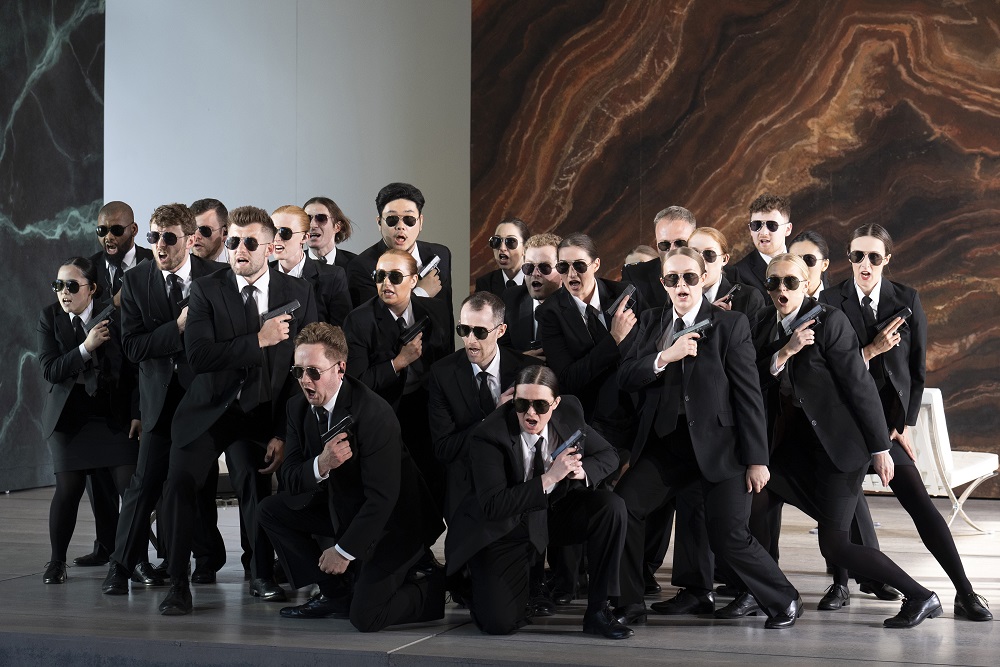
An opera production is arguably only as good as its singers, and the present cast could hardly be bettered. As the false king Belfiore, Joshua Hopkins brings style and suavity to a role that could easily become insipid – and with his ‘Freddie Mercury’ cameo carried off to perfection. Teasing out the cowardliness behind his thuggery, Henry Waddington is ideally cast as Kelbar and Grant Doyle hardly less so as the scheming La Rocca – his ‘sparring partner’ made literal during their uproarious breakfast confrontation. Oliver Sewell overcame initial unsteadiness to deliver an Edoardo of resolve and eloquence, with Robert Murray the stealthily insinuating Ivrea. Neither female role leaves anything to be desired – Madison Leonard vulnerable for all her minx-like persona; Christine Rice stealing the show as the Marchesa whose solo spots are the opera’s likely highlights. James Micklethwaite and Daniel Vening both acquit themselves ably, while Garsington Opera Chorus evidently enjoys its collective function as those ‘people in black’ who variously comment on the action then intervene often forcibly when necessary.
Stepping in at the eleventh hour (for an indisposed Tobias Ringborg), Chris Hopkins directed with verve and real sense of musical continuity – not least when Verdi (seemingly for the only time in his career) made recourse to ‘recitativo secco’ which here furthers the action without impeding its progress. Otherwise, the Philharmonia Orchestra despatches with relish a score which, for all that this lacks the sophistication and urbanity of Rossini’s or Donizetti’s mature comedies, crackles with energy along with an engaging personality for which it has not yet had its due.
Members of the Garsington Opera chorus in Un giorno di regno – opens Garsington 29.06.24
photo credit: Richard Hubert Smith
Although a lesser opera in the Verdi canon, Un giorno di regno met with modest success even in his lifetime and its later revivals were well received. Thanks to this Garsington production, his ‘King for a Day’ finds itself more than able to enjoy a timely 15 minutes in the spotlight.
The conductor talks to Ben Hogwood about his forthcoming debut at Garsington Opera, where he will conduct Rameau‘s Platée – a work in which he has also sung the title role. Agnew talks about Rameau but also Handel, considering why now is a good time for British audiences to embrace the music of the French Baroque.
On a dark, dank winter’s day there is something incredibly heartening in having a discussion about the prospect of a summer opera season. Arcana has teamed up with conductor (and former tenor) Paul Agnew to do exactly that, and he is in optimistic mood. “It will arrive quickly, with the spring and the daffodils, and then we’ll find ourselves in Garsington!” he says. It will be his first visit to Wormsley Park, and to the festival. “I’m really looking forward to it. It’s one of those very original places, and it isn’t a dark theatre. It has windows, and so each production has to take into account that you’re going to have a part of that show in the light. I’ve never done that sort of thing, and the team is very nice. We had the model showing so we’ve seen the set, and the concepts, and it looks great. It will be a lot of fun, which it should be – but with that hint of tragedy, which is always lurking in Platée.”
He is talking about Rameau’s comic-tragic opera, which he will lead with a new team of soloists and The English Concert. It is the first excursion for Garsington into the world of French Baroque opera, but Agnew is returning to a piece he knows well. Indeed, he first encountered Platée as a singer. “I didn’t sing Platée – I sang Thespis in the Prologue. I was quite a young thing, and it was a production with the Opera de Paris. It’s a really hard role, extremely high – and obviously you go on at the top of the show. It’s a bit nervy. Then almost immediately I took on the role of Platée in that same production in Japan. That was released on DVD, which had a lot of success.”
He explains why. “Laurent Pelly did a genius job – and they found just the right balance in order that when we get to the end, where the audience have been cheerleading with the rest of the chorus and these horrible characters, and they find themselves in fact implicated in this terrible humiliation. I think he just found the right click. There was a gasp from the audience when they understood quite what a terrible thing this is. I wouldn’t want to exaggerate, but there is something political about it, and within the operas of Rameau – Les Indes galantes and certainly Les Boréades. They tend to have slightly monarchical reflections, and there’s a sense – if you know the film Ridicule – about how close you can get to the king but then you know you made a mistake, you didn’t use the right wig and so on, and you get sent straight back to the back of the queue. There’s a sense of that in Platée and the ridicule, as you would expect Jupiter – who essentially is Louis XIV – to be the hero. In fact, he’s the villain! It’s not exactly dangerous, but not politic either – Louis XV by then.”
Agnew has enjoyed a close affinity with Rameau throughout his career. “The very first thing I did in France, with William Christie and Les Arts Florissants, was record the Rameau Grands Motets. They’re relatively youthful pieces compared with the operas, which he didn’t start until he was about 50 years old. I love Les Grands Motets, partly because it’s surprising to find such incredibly sensual music for the church. They just seemed to suit my voice, and in fact it was one of the very first French Baroque things I did at all. You know you have those lucky things in in a long career where you ‘meet’ a music and you think, “Oh, my goodness, I’m really made for this!” I love the sentimentality of it, in the best sense of the term, I love the melody and I love the sensuality of the harmonies. That leads you through the line and tells you where you’re going constantly, so you can make the music into such a strong experience.”
Things moved quickly. “Almost immediately we started on the operas in the Opera de Paris, so we did Hippolyte et Aricie, then various roles in Les Indes galantes, and then we did Platée, which was with Marc Minkowski and Les Musiciens du Louvre. Then we did Les Boréades, the last opera, which was never staged in his lifetime – he was 80 when he wrote it. It’s amazing to think he lived to 80, but happily he did! It’s an astonishing journey, very much like Platée but in a much more heroic way – he’s a real prince. So I did all those operas, and I’ve sung others – Castor et Pollux for instance – in concert. I’ve done a lot of the ballets, too. I’m a big fan, as you would expect! It’s the most extreme the Baroque gets, even more complicated in some ways than Bach. He was an amazing technician, and he’s stating things relatively clearly, whereas there’s a complexity of emotions in Rameau which really predate going into Gluck and then early Mozart. He didn’t die until 1764, so Mozart has already composed his first piece before Rameau dies. There is a big influence on Gluck, and everything that he says about the reform operas is what Rameau has been trying to do for years.”
Performing the operas as both a singer and a conductor has given Agnew a unique perspective. “It’s very helpful”, he agrees, “for the singers too. I’m naturally a singer’s conductor, as I want them to be able to breathe and recover and so on, because that’s the best for us. I’m not going to push them into a tempo which they can’t do, so we want to find the right tempo for the singer. If you’re a singer you understand that more clearly. It’s a good place to have been, whatever the music – I’ve sung a lot of Handel and Purcell, and now I conduct a lot of Handel and Purcell too. Having sung Platée itself, it makes me smile and I’m not in the least bit jealous about being on stage. I wouldn’t want to sing it again or go through that experience. It’s a long evening, and you’re on stage a lot. There’s a lot to sing, it’s quite hard, and it’s quite physical because it’s a comedy. There’s a lot of running around, and jumping – if you’re a frog! – and I’m happy to leave that to other people. I still absolutely love the piece, and to have that long association is very useful.”
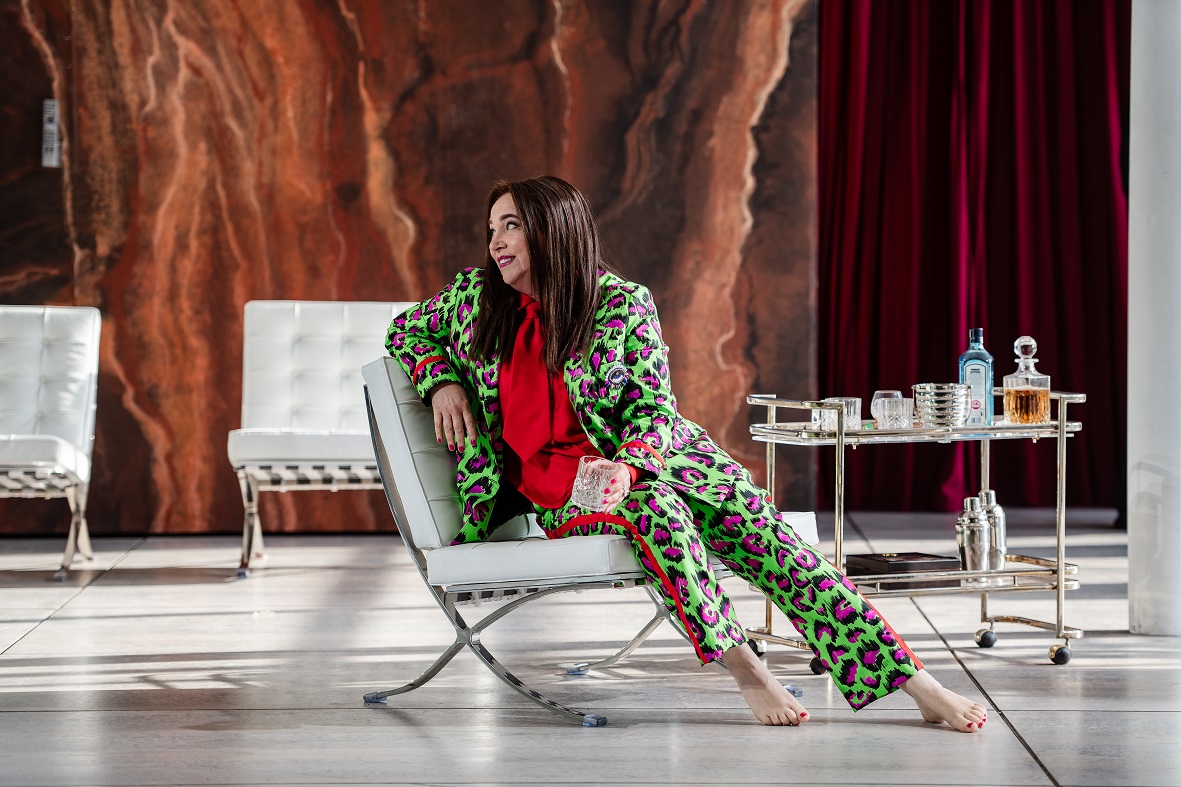
Visitors to Platée’s page on the Garsington Opera website are presented with the image of a flamingo and a beachball (above), an immediately appealing prospect in the depths of winter. “I think it’s going to be a lot of fun. I really like the way it’s being approached. We’re quite used to women playing men – that’s been around in Handel‘s Rinaldo, for instance, but the other way round is very much rarer. The only way in which the piece works is if she’s just a woman, you just get over it. I think Rameau’s idea was to define the strangeness to that person. It’s not about sexual politics, but not a woman as the gods would know – maybe asexual thing rather than being particularly transvestite or drag. I think we’re in the right direction in this production, where we just need to forget that the singer is a man, and just accept that this is a strange woman. She’s a nymph from the marshlands – we don’t know really what she is, a creature from the blue lagoon.”
It is the first time Agnew has encountered the work of director Louisa Miller and designer Christopher Oram. “I’m not sure they’ve done much Baroque before, so I wouldn’t have encountered them as that’s more or less my world. I like them very much. It’s not a very easy piece to approach dry – just to get your head around what Rameau could possibly be thinking about is quite hard. Right from the very first meetings we were clearly on the same page, and Louisa clearly knows the piece, which is very reassuring. As a singer you often get to the first rehearsal and find out the director doesn’t really know the piece very well, and you find yourself having to subtly guide the director through towards a good solution. That’s definitely not the case here! Chris’s designs are very good, it’s funny and relevant and they work throughout the piece. Sometimes at a first rehearsal you think, “This will work great in Act One, and Act Three, but Acts Two and Four will be a disaster because it just simply won’t work in this concept. This concept will work the whole way through, so I’m really encouraged. We’ve got a lovely cast, and also decided at the beginning we would take a cast where nobody had sung it before. Nobody arrives with preconceptions about how their role is, or how they would like to play it.”
There is a sense of great excitement that this is Garsington’s first foray into Rameau’s output. “Yes, and they’ve chosen well!” he says enthusiastically. “We’ve got a great band in the English Concert. I sang with them in my 20s, with Trevor Pinnock, and what an honour it is to direct them.” He expands on the repertoire at hand. “I’ve done French Baroque music with English bands before, and it is quite tricky. They’re technically such fantastic players, but it has a tricky accent, and you can’t get it just by reading the books. Again, it’s useful to be a singer in those situations because you can sing the sensuality of the line much more easily than you can describe it. I always end up singing quite a lot of rehearsals because it’s a visceral, physical reaction to what you hear, which makes it much easier. It will be a challenge for the band to get that accent right, but they’re eminently capable, and I’m massively looking forward to working with them.”
They are complemented by a strong team of soloists, who have equivalent challenges. “Equally, the singers are all English, so we need to get that right – and that’s not just question of pronunciation. There are all sorts of things about how the phrases are constructed, and how the ornamentation helps the grammar of the music. We will have time and we have a good cast, so that doesn’t worry me. You have to go quite deep into these pieces, especially doing this repertoire for the very first time in an opera house. It’s very rare to hear Rameau at all in the UK. I think Platée is the only piece that has been properly staged in the past, and that was a long time ago with the Royal Opera House. It’s very exciting, and there is a lot of interest from the public in French baroque music, so I look forward to that encounter! It is very complicated to put on, you need a ballet, an orchestra that knows their beans, and a cast willing to take risks with the ornamentation. It’s a courageous choice, but not an impossible one.”
Is the boundless supply of great music by Handel (below) in some ways to blame for the relative lack of French baroque music in the UK? Agnew smiles. “Handel’s an interesting one, because he would say, “You do get French Baroque – because if you look at the dances in Alcina, the overtures – you’re not missing out, I’ve written it myself!” In some ways, yes – but you could never say Handel’s at fault, because a house without Handel would be a disaster. You have to think as well that if Purcell had lived longer than the whole history of English music would have been very different. He died in 1695, and then they had a few abortive attempts to create English opera. Then there was an extraordinary moment where Handel arrives, and he creates this strange bastard form of Italian opera for English people, written by a German! You think it’s never going to work but he has this immense success, at least until the early 1740s.”
He goes into more detail behind Handel’s successful formula. “He is much more straightforward, he has the advantage – and I don’t mean to be disrespectful – that what you see on the page is what you get. Twenty to thirty years earlier, the ‘affect’ is everything. Once you start an aria you stay in that in that emotion until the end of the aria, and then a recitative will tell you what kind of emotion you’re going to go to in the next one. With Rameau it’s much, much more fluid than that, because things are changing very fast, and he goes towards complications where the likes of Pergolesi go towards simplicity. You get that break that comes around the time of French Revolution, a time of an immense social and cultural change. Handel is a chancer, isn’t he?! He’s in Italy, and then he knows that George of Hanover is going to be the next king of England, so he immediately goes up and gets a job in Hanover. The first thing the Hanoverians say is go to England, as a sort of spy-come-diplomat or equerry.”
The rest – as they say – is history, and Agnew relishes recounting the events. “And then, of course, George I turns up and it’s all set up for him to have this contact with the nobility, and the prestigious arrival of the king at his operas and so on. He’s bright, and gets it sorted right at the start! The other thing is he turns up in Italy, and produces these works that are effectively for the Catholic nobility and cardinals, and he is a straight, up and up Protestant Lutheran. And yet – business is business, you do what you want! He produces something for a public that don’t know anything about anything. Rameau can produce something much more technically difficult and also psychologically complex, because he’s simply joining the train. We’ve had Lully, Charpentier, Campra, and all the rest – and Handel arrives and takes all that on board, that melange between the original French style – which wasn’t French anyway, because Lully wasn’t French – and then he puts this new Italian virtuosity in. He’s joining this great movement, and dominates England completely!”
We move on from Agnew’s fascinating dissection of Handel and Rameau to talk about one of his mentors and accomplices, conductor William Christie (above). “He’s a theatre man, he wants to pick up the music and shake it and I love that. When you’re a singer, you absolutely want that because you don’t want someone saying, “Careful with the D sharp”, you want someone saying, “Come on, tell me the story!” I always much prefer those people – and John Eliot Gardiner as well – who pick up the music and shake it, and have enough courage to say this music needs interpreters. The composer wants you to take it and make a show of it. That’s what Bill does, and absolutely what I try to do now as a conductor. You should take risks with it! These people were pragmatists, so if you’ve got someone who can sing this note but not that one, go with it. If you look at the history of Handel’s operas, or Messiah – there’s no definitive Messiah. He changed all the time, because he wanted to get the best out of who he had. It wasn’t saying, “This is my definitive work of art, have some respect and do it correctly”, it was, “Today it’s going to be like this, tomorrow it’s going to be different again, because I need to get the best that you have! I need to get great performance out of you. And that’s why it changes constantly. We don’t quite have that variance, but nonetheless you still have to have that attitude that you have to make a show. That goes straight through to Mozart – he is a show man. You want to start Cosi fan tutte with the overture thinking that you are making a show, not a homage. It’s an entertainment. You should laugh and cry and be frightened and happy, and all those things!”
Turning to Rameau again, he considers the composer’s standing. “He can be very funny, in the likes of Les indes galantes – and Platée is genuinely funny too. Rameau is always known as a surly bugger, when you read about him he is not at all a nice person – but he is really genuinely funny. To do comedy, as everyone knows, it’s much harder than just telling a joke – you have to have that special talent. He has that. It doesn’t mean that Boreades or Hippolyte aren’t amazing pieces, but when he wants to be funny he can be very funny.”
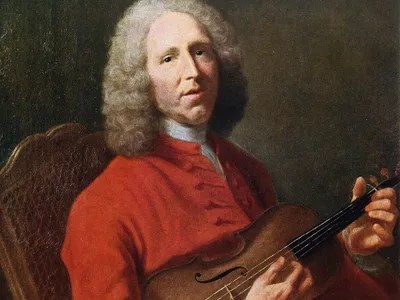
Rameau (above) is a colourful composer, too. “Everything is about colour”, agrees Agnew, “and he’s the first to really properly orchestrate, not just saying to the flutes to play the same as the violins. This is music just for flutes, just for the oboe, and then we’re just going to hear the strings coming in when when we need harmony. And then of course we’ll have a big string moment. It’s the beginning of colour in its best sense, not only harmonic colour but audible colour. The players suddenly find themselves pretty exposed in Rameau, particularly the bassoon parts. He’s a genius of the bassoon writing, and you get these incredible melodies, in Dardanus for example, with these sombre, reedy, mournful qualities. Some amazing colours.”
There is more, too. “And then he’s a great dancer! I think he has to be the best dance composer before Stravinsky. He has this incredible variety, within the ‘stock’ dances. Everyone knows straight away if it’s a Galliard or a Bourree, but they are so incredibly different. It’s a joy when the band understand it, too. I did Platée with the Dresden Staatskapelle, and a more serious orchestra you could not find – but once they got the idea that you could have fun and you could play out and take risks, they really went for it and it ended up great fun. There was a sort of trigger moment where we were doing a dance, and I kept on trying to get them to bow shorter, because they do hugely long bows, with fabulous, resonant instruments – nothing like the English Concert will play in Platée. I was trying to get them to play shorter and closer to the bridge, get a slightly sharper sound out of it. The shorter they got with the bow, the more they understood it and wanted to play out. It took off! Legato is a kind of aberration in this opera, everything else is short – so we charmed them out of certain – very good – habits.”
We bid farewell with one thing clear – Platée is in very good hands and a highly entertaining night is in prospect. “The main thing to say is that it’s a fun evening. You don’t need to worry if you don’t know much about French, or Baroque, or history. Just come and have a ball, it’s a fun evening, a fun piece with some very sharp twists!”
You can read more about the forthcoming production, and book tickets, at the Garsington Opera website
Scenes and monologues; opera in one act by György Kurtág; Libretto by the composer after Samuel Beckett’s Fin de partie
Semi-staged performance; sung in French with English surtitles
Hamm – Fred Olsen (bass), Clov – Morgan Moody (bass-baritone), Nell – Hilary Summers (contralto), Nagg – Leonardo Cortellazzi (tenor), Victoria Newlyn (stage director)
BBC Scottish Symphony Orchestra / Ryan Wigglesworth
Royal Albert Hall, London
Thursday 17th August 2023
Royal Albert Hall, London Friday 11 August 2023
by Richard Whitehouse photos by Sisi Burn / BBC
It may have had to wait three years since being postponed from the 2020 season, but tonight’s Prom brought a first hearing in this country for György Kurtág’s opera Endgame after Samuel Beckett and a performance such as, in the event, delivered at least as much as it had promised.
Although seeing Fin de partie on his first visit to Paris in 1957, it took several decades before Kurtág felt able to tackle a full-length opera and only in 2010 was a formal commission made by La Scala – presaging seven years of sustained (and evidently torturous) activity prior to its Milan premiere in November 2018. The subtitle is ‘Scenes and monologues; opera in one act’ and, having set 60% of the original French text, Kurtág still intends to add further scenes but, now in his 98th year, it would not be surprising were this opera to remain in its present form.
Unfolding continuously (and with no interval) across almost two hours, Endgame consists of 14 scenes which hone Beckett’s already sparse drama down to an unremitting focus on its four characters in their undoubted hopelessness and seeming helplessness. Vocally the predominant idiom is a speech-inflected arioso conveying its text with acute clarity against the backdrop of an orchestra which, despite – perhaps because of – its size and diversity, is almost always used sparingly. Stylistically the music invokes those traits familiar from its composer’s work across six decades which are not diluted as rendered in new and unlikely contexts; one notable aspect is the oblique while always audible allusion to those earlier composers who have accompanied Kurtág over his life’s work, and that here emerge as ‘figures’ all but tangible in their presence.
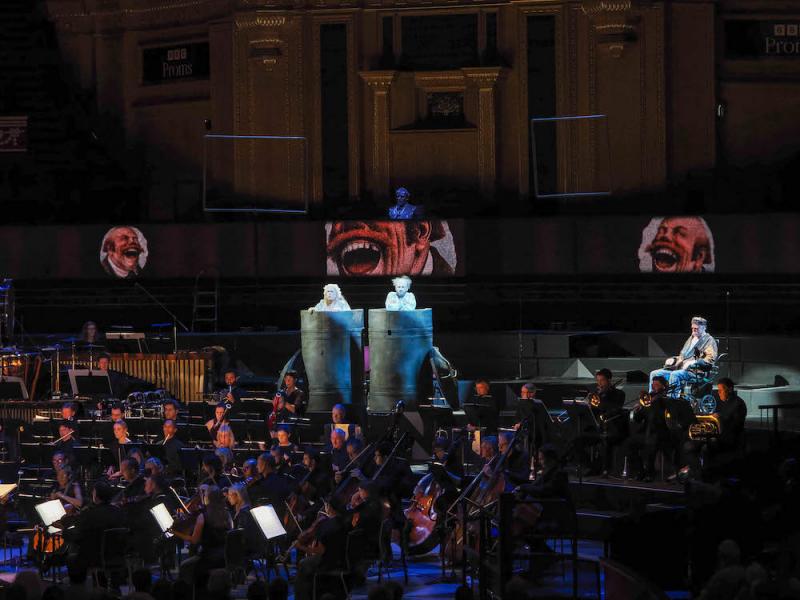
Utilizing three of the four singers from the Milan production, the cast could hardly have been stronger in commitment or insight. His being even more the defining role than with Beckett’s play, Frode Olsen here conveyed the predicament of Hamm with an authority the greater for its restrained vulnerability. He was abetted in this by Morgan Moody, whose Clov was poised between servant and protégé for a portrayal always empathetic however great its exasperation. Leonardo Cortellazzi summoned deftly whimsical humour as Nagg, reconciled to his dustbin-clad fate in contrast to the bittersweet recollections of Nell as taken by Hilary Summers – her eloquence extended by a later Beckett poem in a touching prologue. Victoria Newlyn brought the stark stasis of the drama and expanse of the Albert Hall’s acoustic into persuasive accord.
A versatile and perceptive conductor (and no mean opera composer, witness his ENO drama The Winter’s Tale six years previously), Ryan Wigglesworth duly had the measure of Kurtág’s elusive if inimitable idiom and drew a fastidious response from the BBC Scottish Symphony Orchestra; its playing as attentive to the score’s many subtleties as to its emotional highpoints – not least the closing bars, whose wrenching dissonance speaks of catharsis at least as much as of tragedy. The composer will hopefully have had an opportunity to hear this performance.
One looks forward to an eventual staging of this opera in the UK (following those subsequent productions in Amsterdam and Paris). Whatever else, Endgame is the summative work which Kurtág had to write and as confirmed tonight, the effort in its realization has not been in vain.
With the release of Christopher Nolan’s film Oppenheimer last Friday, it is worth noting that opera also has its own high quality biopic of the scientist.
John Adams wrote Doctor Atomic in 2005 to a libretto by Peter Sellars. It is a compelling tale, bolstered by some of the composer’s best music.
The Metropolitan Opera have made their Penny Woolcock production available online, and you can view it here… it is highly recommended!







 Arcana.fm