As this is our first post of the year, let me take the opportunity to wish all readers of Arcana a very Happy New Year! Thanks for taking the time to visit the site, I hope you will find much of interest.
In a musical sense, 2024 promises much – and offers a great opportunity to celebrate the music of some classical composers whose anniversaries fall this year. Keep visiting for more on Gustav Holst (above, his statue in Cheltenham), Gabriel Fauré, Darius Milhaud and Nick Drake – as well as the continuation of our Beethoven 200 series, which will pick up the composer’s work where we left off, with the opera Lenore. There will also be the usual reviews of concerts and new music, playlists and interviews. The aim is to add a post each day, so if you come back to the site on a daily basis you should find something new to read – and something new to listen to.
We aim to do what Manfred Mann’s Earth Band did to Holst – and bring some joy to our readers. Wishing you a wonderful 2024!
Brahms Violin Sonata no.2 in A major Op.100 (1886) Viola Sonata no.2 in E flat major Op.120/2 (1894) Piano Quartet no.3 in C minor Op.60 (1855-75)
Wigmore Hall, London Thursday 21 December 2023
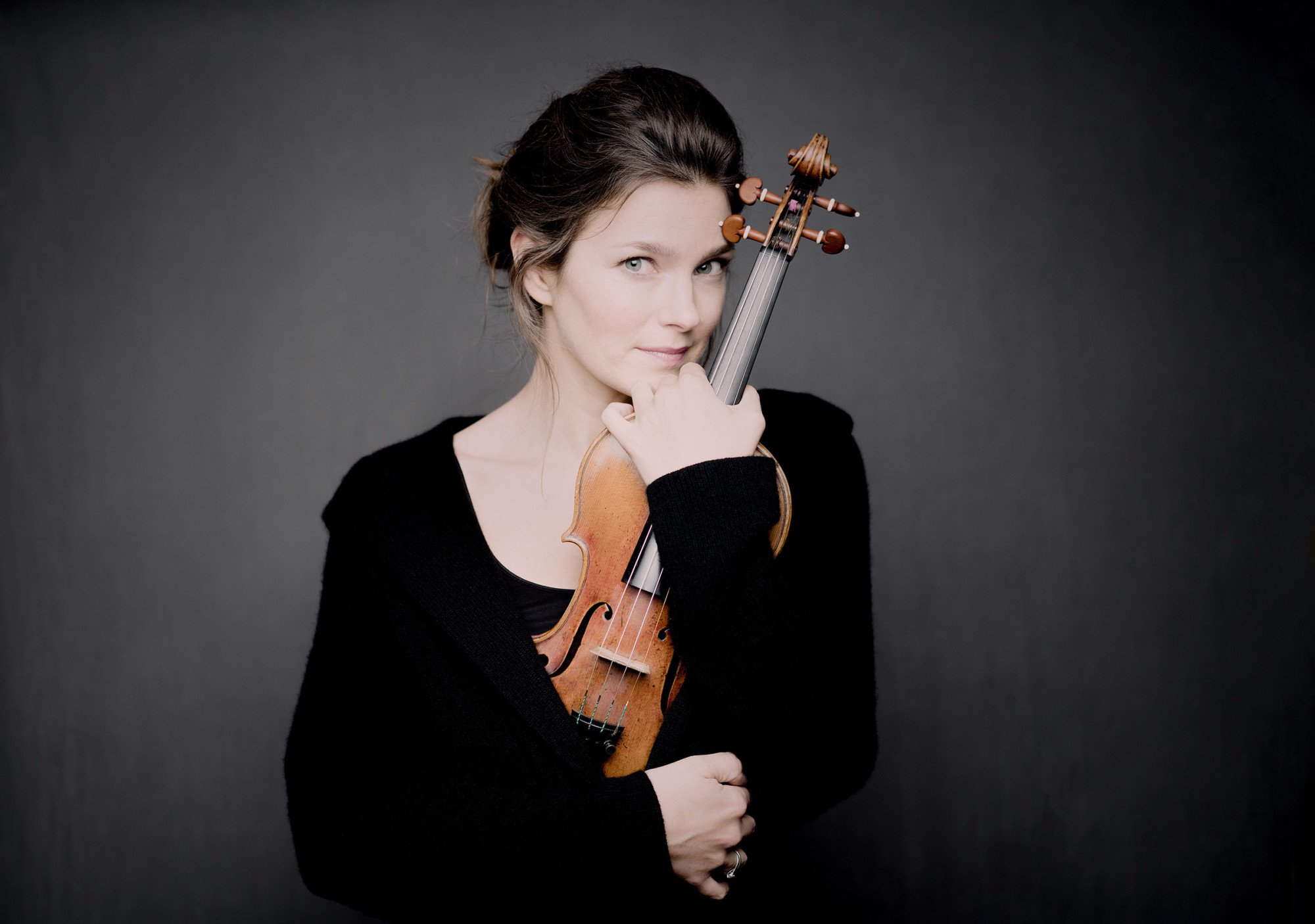
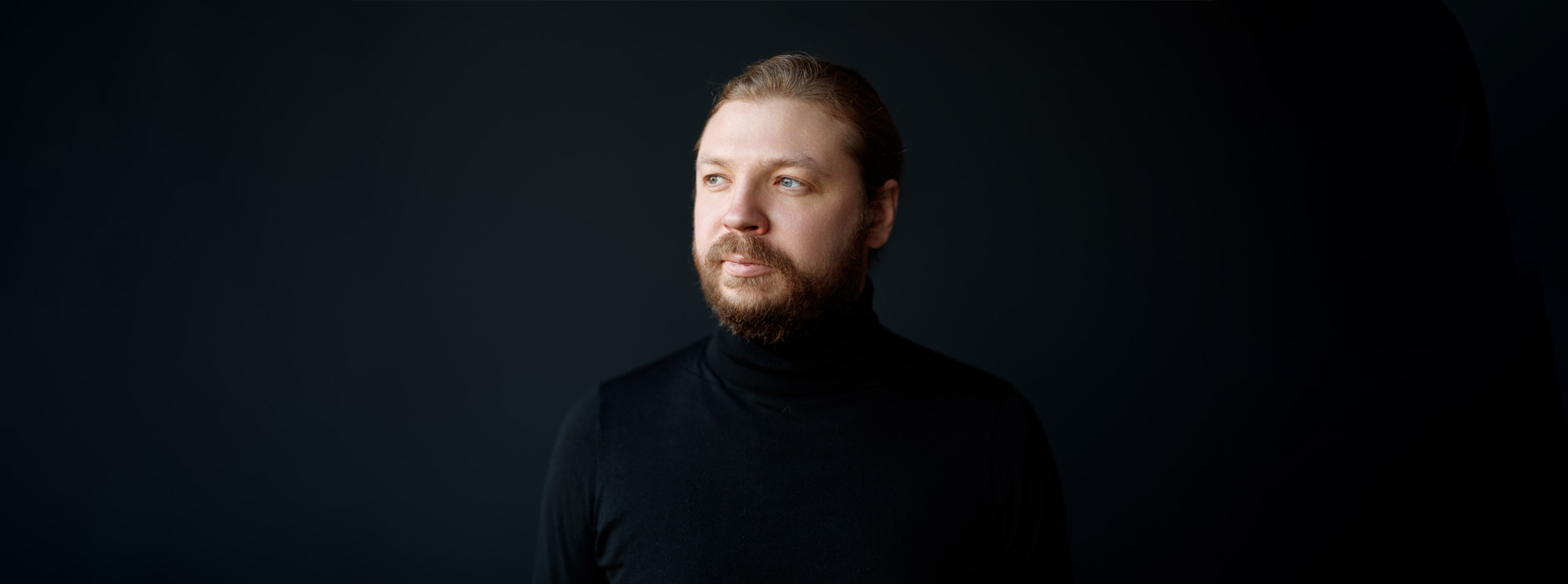
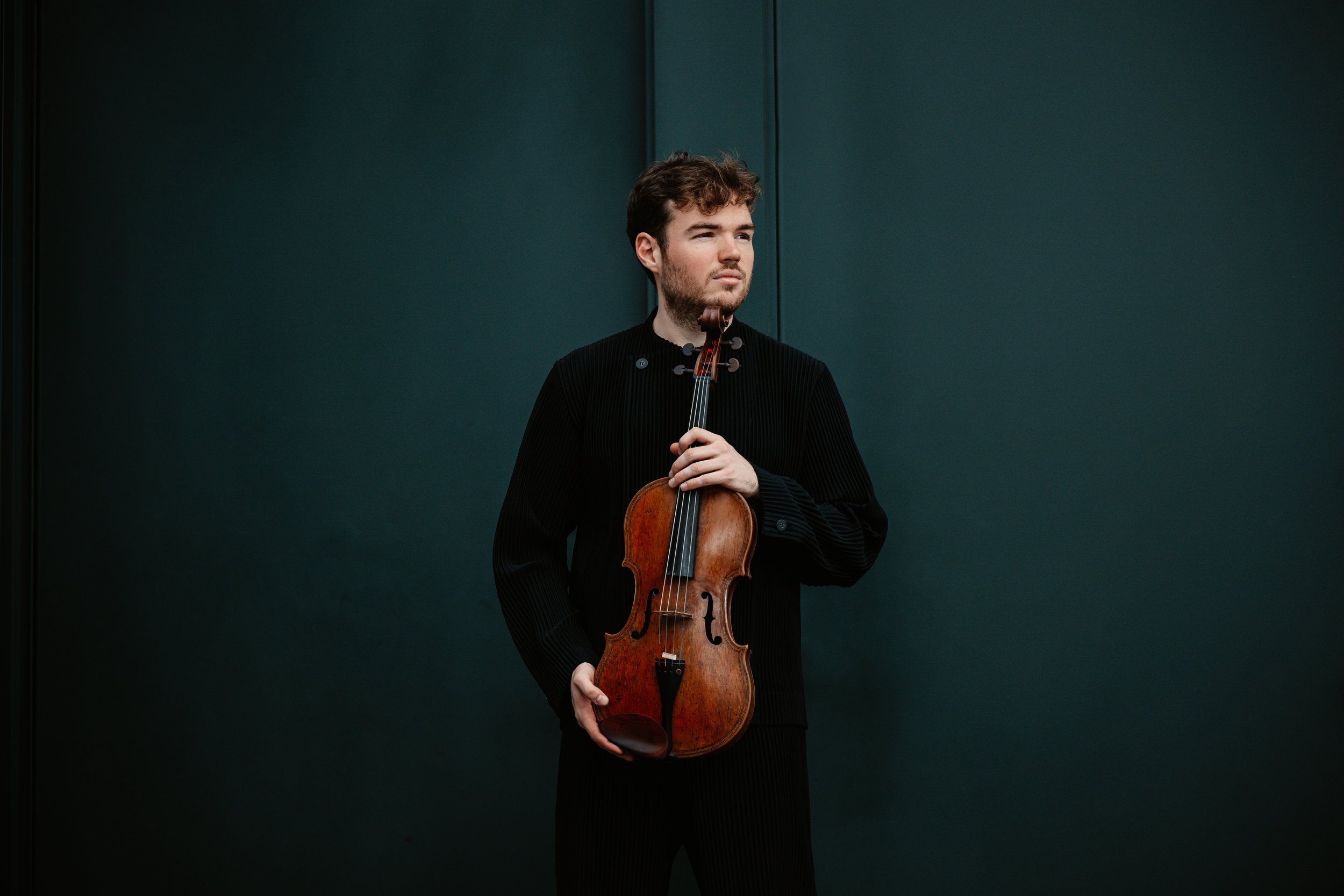
Reviewed by Ben Hogwood. Photos of Janine Jansen & Timothy Ridout (c) Marco Borggreve
After the unfortunate cancellation of a concert in her series the previous week, violinist Janine Jansen and friends returned to health and to a Christmassy Wigmore Hall for another all-Brahms programme.
Jansen (above) and pianist Denis Kozhukhin (below) began with the Violin Sonata no.2, a late substitution for the first sonata but a breath of fresh air on a winter evening. One of Brahms’s best-loved chamber piece, its charming first theme has enough to weaken the hardest heart. So it was here, with Jansen’s affectionate playing. Her creamy tone was complemented by the incisive piano playing of Kozhukhin, who was deceptively relaxed in his body language but very much in tune with Brahms’s intricate rhythms and phrasing. The two excelled in the central section of the second movement, which tripped along with admirable definition of those rhythms, and in the finale, where the two enjoyed a more assertive musical dialogue.
Brahms’s last completed chamber work followed, Kozhukhin joined by violist Timothy Ridout (below) for a performance of the Viola Sonata no.2, arranged by Brahms from the clarinet original. This account exhibited elegance, poise and no little power. Ridout’s burnished tone was ideal for the music, capturing the shadowy outlines of music from a composer in his twilight years, but putting down suitably firm markers in the second movement. Ridout’s high register playing was a treat throughout, his tuning exemplary, and as the two players navigated the theme and five variations of the finale there was an ideal give and take between the part-writing. Particularly memorable was the plaintive stillness of the fourth variation, its mystery dispelled by the affirmative ending.
After the interval we heard the Piano Quartet no.3, competed in 1875 when Brahms was working on the completion of his first symphony. The two works have a good deal in common, beyond sharing the same tonality, for Brahms brings an orchestral dimension to his writing for the four instruments. This grouping needed no invitation to take up the mantle, powering through the first movement with relish, their dramatic account notable for strength of tone and unity of ensemble playing. Jansen and Ridout in particular stood out, their unisons absolutely as one, yet the real hero of the performance was Kozhukhin, elevating the heroic elements of a score closely associated with Goethe’s Werther while keeping the nervousness emanating from Brahms’s syncopated rhythms.
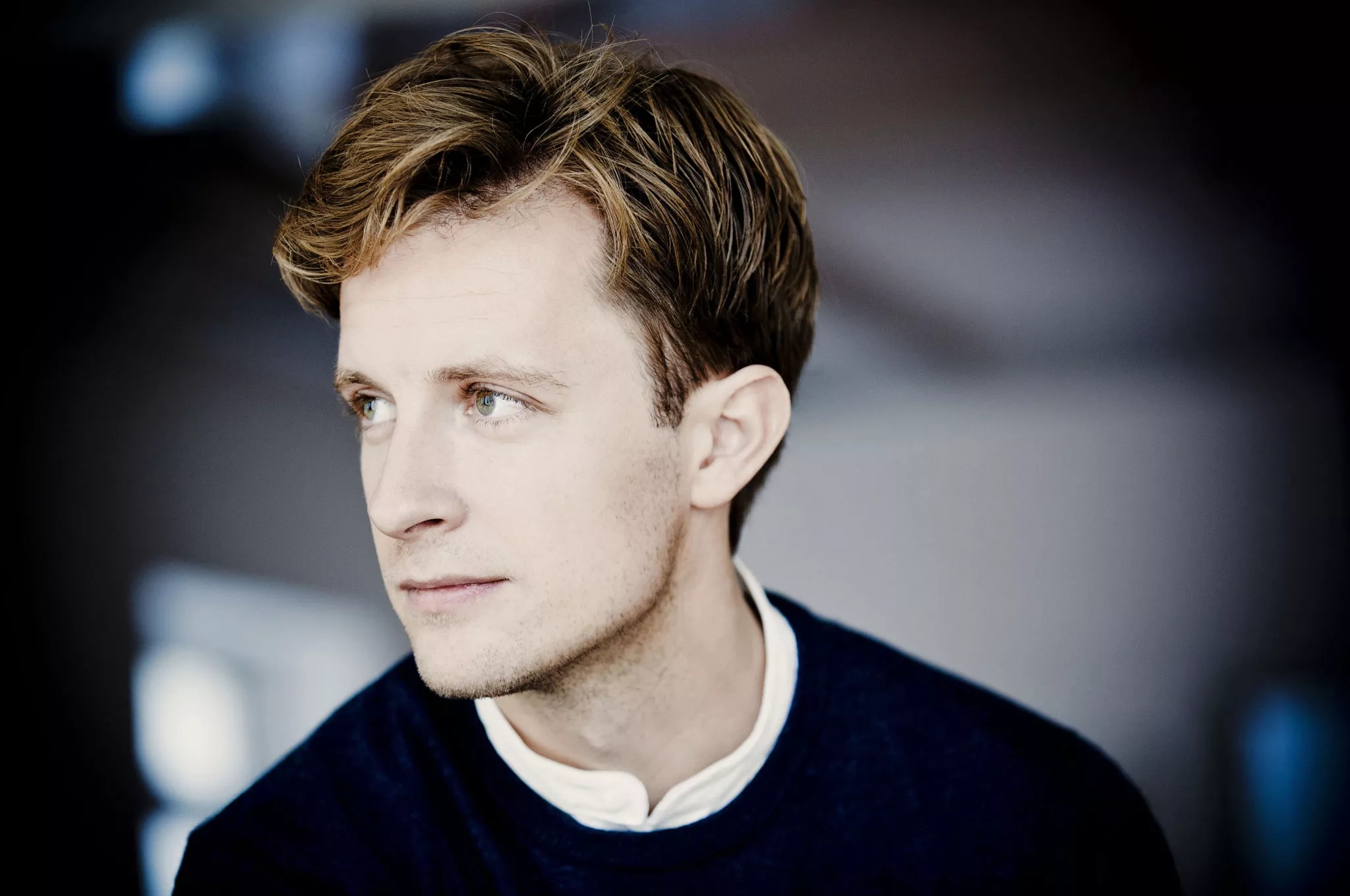
Lest he be forgotten, cellist Daniel Blendulf (above) delivered an understated solo of considerable beauty to begin the Andante, providing respite from the high voltage drama elsewhere but getting to the heart of Brahms’s soulful writing for the instrument. The quartet regrouped for the finale, another show of breathtaking power but with room for reverence in the chorale themes and their development. For all the bravura the air of uneasiness remained as an undercurrent, Brahms never quite at rest even when the quartet reached its emphatic conclusion. This was a truly memorable performance, capping an outstanding evening of music making for which all involved should be immensely proud.
To read the full story behind Eno Piano, you can read Arcana’s recently published interview with Bruce Brubaker. In it he sets out his quest to recreate Brian Eno’s ambient masterpiece Music For Airports, made through tape loops and studio techniques, for a living and breathing musician to play on the piano.
To get the necessary sustain Brubaker has employed a number of intriguing techniques, not least the use of electro-magnetic bows over the piano, enabled by Florent Colautti.
While Music For Airports is the main act, Brubaker places it in the context of shorter works by Eno that have a more descriptive edge – The Chill Air, a collaboration with the late Harold Budd, By This River, co-written with Dieter Moebius and Hans-Joachim Rodelius, and Emerald and Stone, where his collaborators are Jon Hopkins and Leo Abrahams, with whom he still works a great deal.
What’sthemusiclike?
Incredibly restful – which of course is a description you could level at the original Music For Airports. Job done, you would think, but the reproduction of this music in human hands does reveal a slight and unexpected intensity, the performer having to maintain a very high degree of concentration and control to get close to honouring Eno’s original music.
Brubaker certainly does that, and the electro-magnetic bows help the sustain very subtly at the start of Music For Airports 2/1. The whole thing is so carefully thought through that each note feels researched but also instinctive, especially in 2/2 where the angular lines create an extraordinary sense of space.
While Music For Airports is indoors, the other three pieces are very much outside, and have a refreshing clarity. The Chill Air and By This River are bracing, wintry piano music.
Does it all work?
It does. When Bang On A Can released their chamber ensemble version of Music For Airports in 1998 it gave a new dimension to Brian Eno’s thinking. This piano work will have a similar effect, and is even more intimate in its confines.
Is it recommended?
Yes. Any Eno fan will want to hear this, and Bruce Brubaker shows just how imaginatively and thoughtfully he can attend to the music of others. This is a quiet revelation.
Listen & Buy
Published post no.2,046 – Thursday 21 December 2023
Gavin Bryars Ensemble; David Wordsworth (conductor); Sarah Gabriel (soprano); David James (countertenor); Mahan Esfahani (harpsichord); The Addison Chamber Choir
Barbican Hall, London, 19 December 2023
Gavin Bryars Ensemble; The Choir with No Name; Streetwise Opera
St Martin-in-the-Fields, London, 9 November 2023
by John Earls. Photo credit (c) John Earls
To see Gavin Bryars’ classic Jesus’ Blood Never Failed Me Yetperformed twice in the space of six weeks is quite special. But this is the composer and double bassist’s 80th birthday year, and both concerts were celebrations of that milestone.
Jesus’ Blood Never Failed Me Yet is something of a signature composition for Bryars. Many will be familiar with the story of how he was working on a film documentary about people living rough in London in 1971 and was left with an unused tape of a homeless man singing this religious song. He put the 26-second clip on a loop and composed a slowly evolving and haunting orchestral accompaniment that respected the man’s – to use Bryars’ own words – ‘nobility and faith’.
So it was particularly touching to be at a performance on 9th November at London’s St Martin-in-the-Fields church where the Gavin Bryars Ensemble were accompanied by the Choir With No Name, the choir charity for homeless and marginalised people. Starting with the tape of the unnamed man, the ensemble slowly built its accompaniment around it and the choir joined in the refrain to powerful and moving effect.
I should confess that my 1975 Obscure Records version of Jesus’ Blood Never Failed Me Yet has been a long-cherished part of my record collection. It is coupled with The Sinking of the Titanic, a work inspired by the story that the band on the ‘unsinkable’ liner continued to play as it sank in 1912, and was given an absorbing performance in the first half of this concert along with The Open Road, where the ensemble was joined by Streetwise Opera who work with people who have experienced homelessness.
Jesus’ Blood Never Failed Me Yet was also at the centre of another concert by a larger GB Ensemble (extra cello and violas plus piano and percussion) at London’s Barbican Hall on 19th December, where they were joined by the Addison Chamber Choir. Here, the choir were somewhat more refined and restrained in harmonic accompaniment but no less affecting. It was a truly beautiful performance which received a deserved standing ovation.
The Barbican concert also featured Duets from Doctor Ox’s Experiment, five revised duets from Bryars’ 1998 opera sung by soprano Sarah Gabriel and countertenor David James. Whilst musically engaging (particularly the fifth duet) it suffered from the all too familiar issue of not being able to hear Blake Morrison’s libretto clearly enough (the words were printed in the digital programme). There was also a lovely Ramble on Cortona and a dramatic After Handel’s Vesper, a solo harpsichord piece played by Mahan Esfahani. Special mention should be made of James Woodrow on electric guitar whose playing throughout was atmospheric and never obtrusive. Both the concerts concluded joyously with Epilogue from Wonderlawn.
In introducing Jesus’ Blood Never Failed Me Yet at the St Martin-in-the-Fields concert Bryars spoke sincerely about how much the piece still means to him after all these years. These two performances amply demonstrated not only how that unknown man’s voice can still touch one’s heart, but why the piece of music that came from it remains so relevant and powerful today.
John Earls is Director of Research at Unite the Union and tweets / updates his ‘X’ content at @john_earls
Eduardo Vassallo (cello), Chris Yates (viola), City of Birmingham Symphony Orchestra / Kazuki Yamada
Richard Strauss Don Quixote Op.35 (1897) Beethoven Symphony no.3 in E flat major Op.55 ‘Eroica’ (1803-4)
Kazuki Yamada and Tom Morris (concept), Rod Maclachlan (video design), Zeynep Kepekli, lighting design), Gustave Doré (illustrations)
Symphony Hall, Birmingham Wednesday 13 December 2023
Reviewed by Richard Whitehouse. Photos (c) Hannah Fathers
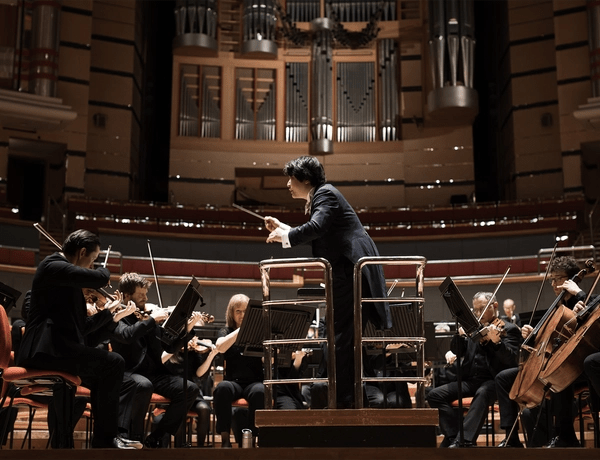
Tonight’s concert from the City of Birmingham Symphony Orchestra was not only the orchestra’s final concert before its Christmas season, but also the first to feature a new concept of presentation with a view to reimagining just what the concertgoing experience might be like in the future.
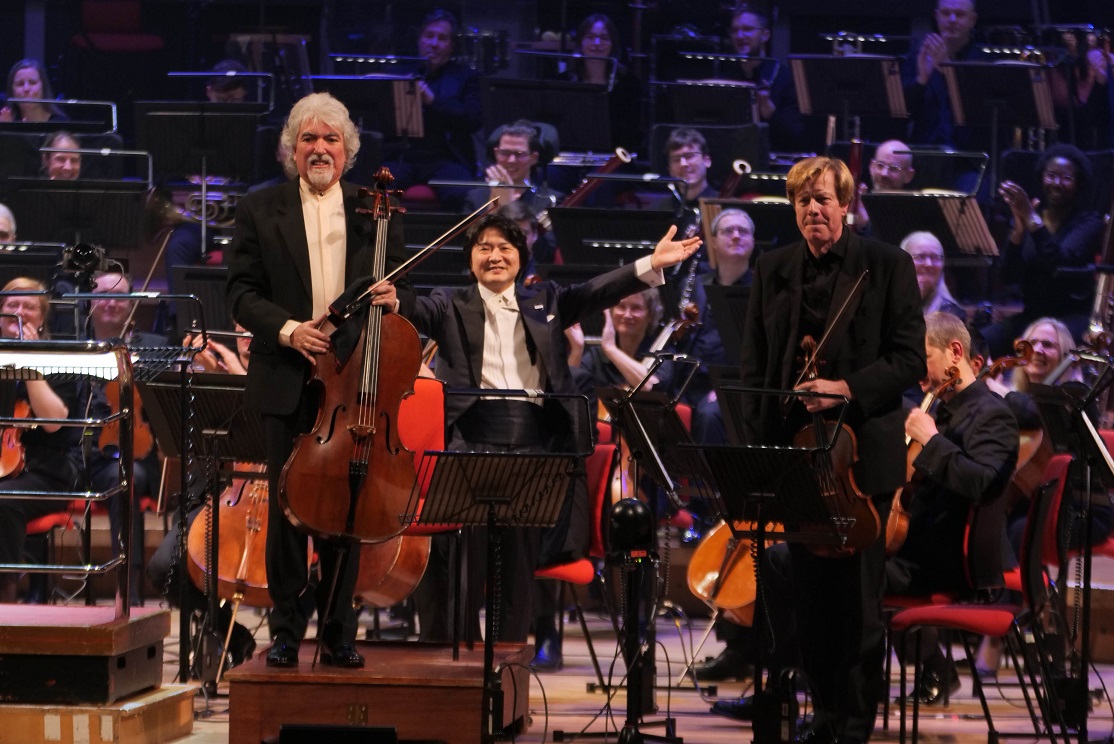
Not that this concept was uniformly applied to the pair of works in question. In the first half, Richard Strauss’s Don Quixote was accompanied by rehearsal and live footage relayed via screens as placed to the left, above and to the right of the platform. They gave passing insight into cellist Eduardo Vassallo’s preparing to take the stage, then kept a close watch on his interaction with violist Chris Yates – their musical repartee informing much of what follows. Less convincing was the selection from Gustave Doré who, while he died over a decade before Strauss’s work, still anticipated its concerns in his illustrations for an 1863 edition of Cervantes. These were rather generally applied over the work’s course with few references to Dulcinea who, while she does not appear in the novel, is yet a pervasive influence on the latter stages of the score.
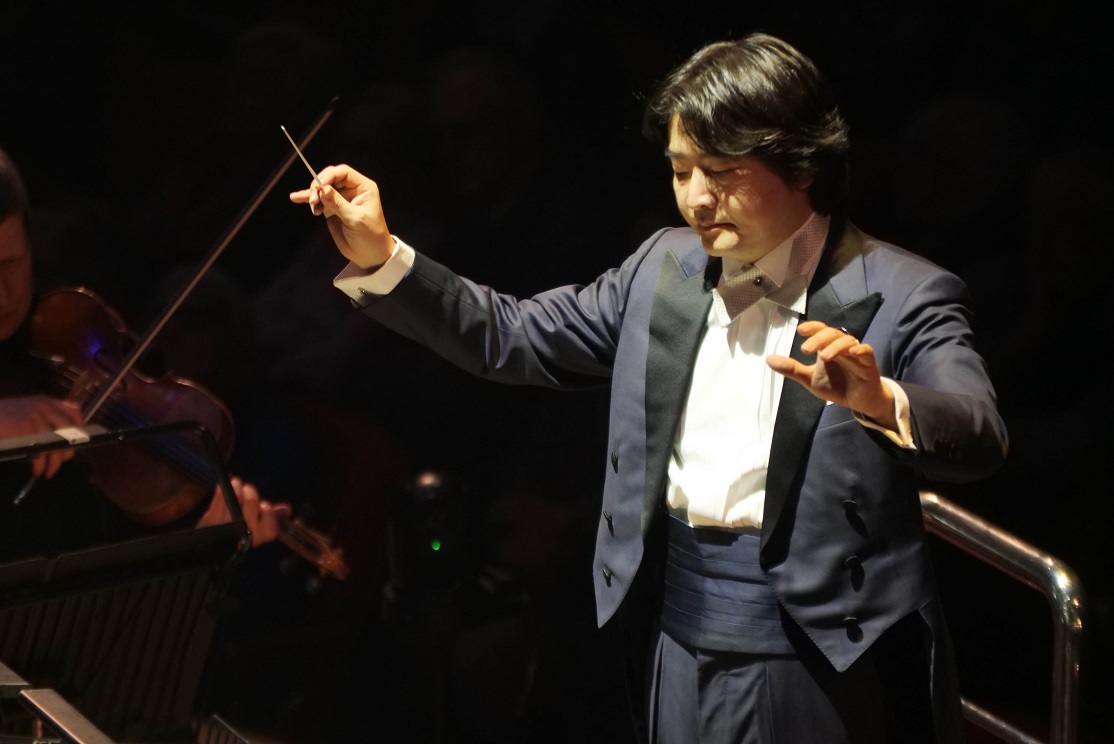
The performance was a notable one in terms of Kazuki Yamada’s surveying this piece as a cumulatively unfolding whole – its 10 variations, each keenly characterized, framed by an increasingly ominous introduction and warmly resigned epilogue. Vassallo had the measure of what, for all its virtuosity, is essentially a concertante rather than solo part and, for which reason, tends to come off best when taken by a section-leader. Not all those frequently dense textures emerged with ideal clarity and motivic unity, which ensures formal and expressive focus as the work proceeds, could have been clearer in its climactic stages, but an essential humanity was always to the fore as Yamada perceived it. Those hearing it for the first time could hardly have failed to be impressed with Strauss’s ambition or moved by his response.
Less so, perhaps, by Beethoven’s Eroica Symphony after the interval. Here the visual element centred largely on the musicians as the account took place – except during the first movement, when a photographic roll-call of the CBSO’s ‘heroes’ (musical and otherwise) was laminated onto the music – thus robbing it of the means to transcend time and place as surely as had the composer those of revolution or Bonaparte. Elsewhere, the standing-up of individual players and sections to highlight salient aspects of the piece was rather inconsistently applied – why, for instance, did the horns not do so with their unison statement of the ‘Prometheus’ theme in the finale (Thomas Beecham did this decades ago) – while the emerging photos of orchestral members mid-way through that movement risked seeming an awkwardly sentimental gesture.
All of this might have mattered less had the reading carried consistent conviction. As it was, the opening Allegro stuck doggedly to a tempo that felt more than a little stolid – its climactic moments undermined by pauses that impeded the musical flow, though the coda yielded the right emotional frisson. The highlight was a Funeral March whose fatalism was leavened by acute pathos at its climax, with a coda whose disintegration audibly left its mark. If the outer sections of the Scherzo seemed just a little deadpan, its trio was rousingly despatched by the three horns, and the initial stages of the finale had a welcome spontaneity as the ‘Prometheus’ theme is put through its paces. A pity Yamada slowed right down for its restatement midway through, resulting in a serious loss of momentum that not even an incisive coda could regain.
Tonight’s concert was a concerted and not unsuccessful attempt to confront the issue of how to attract a younger and more inclusive audience to classical music. Where it foundered was on a misguided premise that bombarding those present with images somehow makes them listen more intently. For this to come about, they need to be encouraged to focus collective attention aurally rather than just visually – a challenge such as Symphony Hall, with its all-round excellence and its many acoustical resources, would seem ideally equipped to fulfil.
This is evidently an experimental phase for the CBSO, as various possibilities are tried out, but an emphasis on sonic enhancement, allied to the subtle if pervasive presence of lighting, is arguably one way forward and could ultimately blaze a trail for the concert of the future.





 Arcana.fm