Today marks 150 years since the birth of the Russian composer Alexander Scriabin, one of the most colourful characters in 20th century music – and one of the most original thinkers too.
A lot of that thinking went beyond his music to embrace the universe itself, culminating in the unfinished Mysterium project. This hugely ambitious concept was to be performed in the Himalayas and followed by the end of the world.
That gives an indication of the scope of the composer’s thinking, and you can trace that in his music too, which moves from Chopin-influenced piano works to increasingly complex and dense music, notable for its rich harmony and unusual rhythms. As Scriabin’s music progressed so did his fascination with colour and in particular synaesthesia, which became a primary stimulation for him in his writing.
Arcana intends to look at his work in more detail this year, particularly the ten piano sonatas which stand as a fascinating and innovative cycle of work. For now, though, you can enjoy Prometheus: The Poem Of Fire. Depending on your viewpoint, this tone poem, set in the composer’s favourite key of F sharp major, could be Scriabin’s Symphony no.5, or a second piano concerto. Either way it is an exotic, unbroken piece of music lasting nearly 25 minutes, rich in colour and certainly rewarding repeated listening!
In February 2010 Anna Gawboy, a Scriabin scholar and doctoral candidate at the Yale School of Music, attempted to realize the composer’s ultimate wish of a colour keyboard which would perform the work. She worked towards this with conductor Toshiyuki Shimada, the Yale Symphony Orchestra and the lighting designer Justin Townsend.
You can watch the lead-up to the concert and the performance itself on the documentary below:
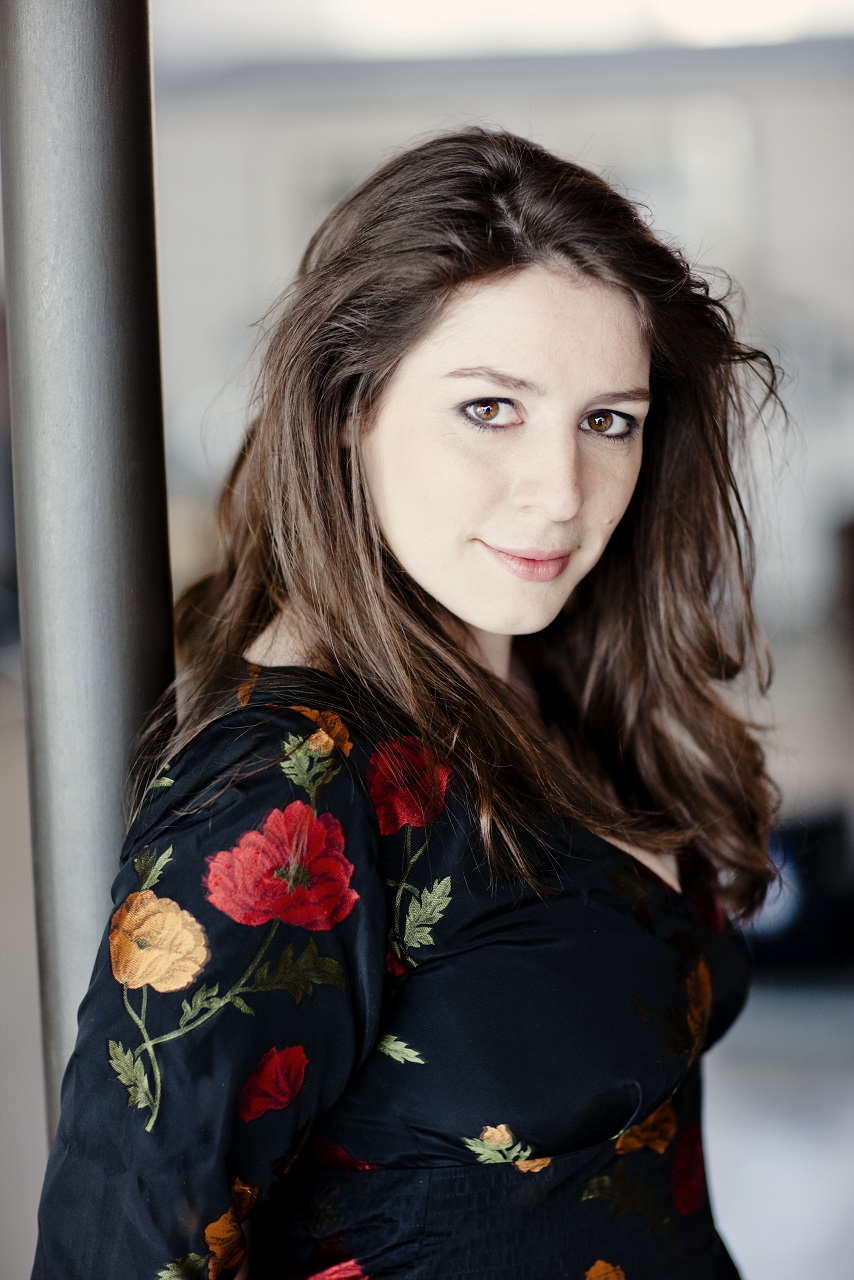
Elizabeth Watts (soprano, above), Julius Drake (piano, below)
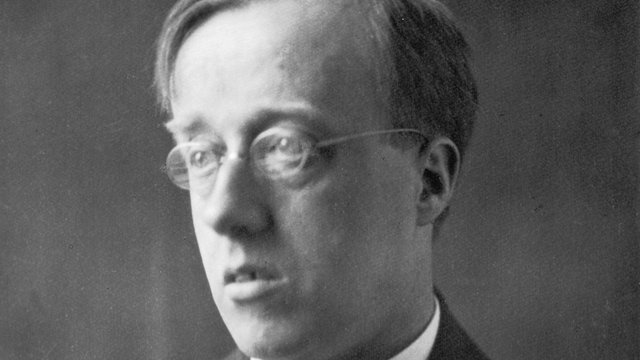
Gustav Holst Calm is the morn Op. 16 No. 1 (1903-4), Persephone Op. 48 No. 1, Betelgeuse Op. 48 No. 12 (1929), The heart worships (1907), The Floral Bandit Op. 48 No. 6 (1929) Imogen Holst Weathers (1926), 4 Songs from Tottel’s Miscellany: Shall I thus ever long, As lawrell leaves (1944), 10 Appalachian Folk Songs: My dearest dear, The brisk young lover, I must and I will get married (1938, world première performances) Gustav Holst Hymns from the Rig Veda Op. 24 (1907-08)
Wigmore Hall, London, 3 January 2022
reviewed by Ben Hogwood from the online broadcast. Artist photos (c) Marco Borggreve
The songs of Gustav Holst have largely eluded British performers and concert audiences over the years, and a quick scan over retail sites reveals just the one recording in the last decade. The songs of Imogen Holst, meanwhile, are even more scarce, so it was doubly welcome that this imaginative recital from soprano Elizabeth Watts and pianist Julius Drake chose to pair works by father and daughter.
Holst senior was a composer capable of finding unusual stillness in music, as the Venus and Neptune movements from his orchestral suite The Planets testify. That talent extended to his songs, and we heard several examples where the composer took his time to set the scene, helped in extremely sympathetic performances from Watts and Drake.
Calm is the morn, a Tennyson setting, found a deep peace tinged with sorrow, though the high notes floated effortlessly by Watts were rather special. These contrasted vividly with the stately Betelgeuse, low in the range while contemplating the end of life – just as Neptune explored the boundaries of the living and the dead at the edge of the solar system. In theory Betelgeuse, with text by Holst’s good friend, the poet Humbert Wolfe, should be more effective with a male voice but Watts found the mysterious depths too. Drake’s tolling chords were the ideal foil, and indeed the pianist proved sensitive to every slight nuance in his scene setting, particularly the slow chorale figure of The heart worships. This was another setting that took its time but was all the more moving for it, with the soprano’s low range well controlled. The Floral Bandit, another Wolfe setting, flitted between quick piano figurations and a restless, high contour from the voice, deliberately uncertain in its direction. Meanwhile Watts’ fretful tones caught the urgency given to Persephone.
Holst was always a keen melodist, a quality that runs through Imogen’s music too. As her father did, she had a keen interest in folk melodies both from this country and further afield, and it was fascinating to compare Watts and Drake’s Anglo-American selection, sourced with help from the Benjamin Britten archive at the Red House, with the songs digitised for performance here.
Imogen’s writing celebrated the open air, its melodies often reaching for the sky. The first song Weathers revelled in its freedom, with a lovely pointed piano part to offset the folksy tune. Drake then enjoyed the trippy syncopations from the piano, combining with a bright soprano line for Shall I thus ever long, Watts keeping clarity in the quick moving words. The slightly elusive As lawrell leaves was next, before the three Appalachian folk settings, collected by Cecil Sharp, exhibited a powerful yearning quality. My Dearest dear kept the folk melody true but turned the melody beautifully. The brisk young lover could almost have been Gustav Holst himself, though Imogen’s piano parts felt more directly connected to the melody. There was an unexpectedly devastating beauty to the simple, sad, final verse, before I must and will get married took a lighter approach.
A rare performance of the complete set of Gustav Holst’s Hymns from the Rig Veda followed. It is remarkable to think these works were published in 1908, for they still sound forward looking today, written as they were after the composer made his own translations of the sacred texts.
Holst’s advanced harmonic thinking was distilled by Drake, while Watts took the longer and more complex melodic phrasing in her stride. The accumulating brightness of Ushas (Dawn) gave way to a stern Varuna I (Sky), where confession of sin was made and ultimately quashed. The sudden movements of Maruts (Stormclouds) came as something of a shock, with the flashing of sword blades, before Indra (God Of Storm and Battle) assumed a regal air with grand chords and a bold melody, strong as an ox under Watts’ delivery. Really impressive power from both in this song. Varuna II explored mysterious and ultimately deathly waters, the listener almost losing a harmonic centre, before Song of the Frogs charmed with its burbling activity. Vac (Speech) gave us another slow and concentrated song, while Creation was even more compelling with its haunting, mostly unaccompanied writing. Finally the wandering piano line for Faith found the soprano ‘rising in silent worship’.
This remarkable set of songs are not only harmonically adventurous but have words that are prescient for today’s climate and particularly the management of the Earth on which we live. Little did Holst know the way in which his work would be thought provoking nearly 115 years on. Watts recognised this, lending a lighter touch to her encore which was Imogen’s arrangement of Henry Carey‘s The Beau’s Lament, brightly sung.
This was a special concert, one of a kind – and a mention should be made for the quality of Wigmore Hall’s camera work, sensitive to both text and performers. Copyright restrictions may prevent them from doing so, but it would be wonderful to see Watts and Drake present this programme in recorded form, for they illuminated aspects of the Holst dynasty rarely glimpsed in the concert hall. Do watch it if you can.
Watch and listen
Sadly the Imogen Holst songs are not yet available in recorded form, but you can the selection from her father Gustav on the Spotify playlist below:
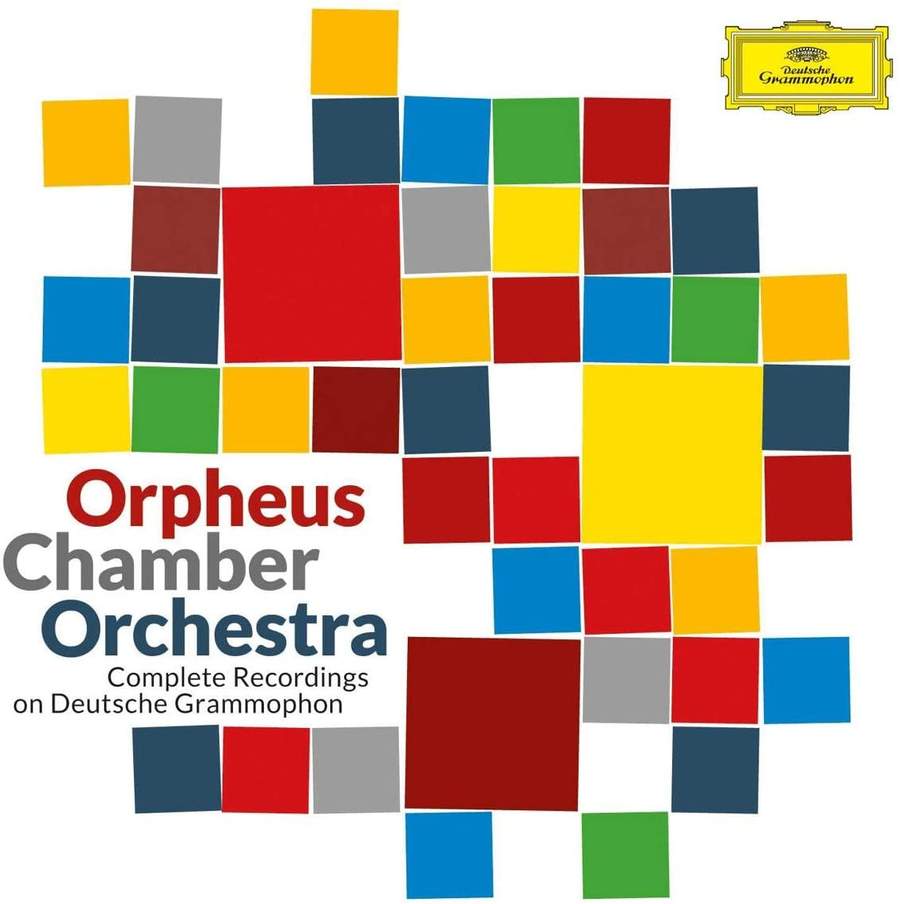
Various works (see DG link below for full repertoire details)
Deutsche Grammophon 4839948 (55 CDs)
Written by Ben Hogwood
What’s the story?
This box set tells the story of the Orpheus Chamber Orchestra – soon to celebrate their 50th anniversary – and the recordings they have made to date for Deutsche Grammophon. Formed in 1972, the conductor-less ensemble from New York have amassed an impressive body of work, spanning repertoire from Handel and Vivaldi to Schoenberg and William Bolcom, examined here across 55 CDs.
The group have enjoyed a fruitful relationship with DG, undertaking several projects. Among these are the Mozart wind concertos, with principals from the orchestra employed as soloists, and a clutch of hand-picked Haydn symphonies. Jed Distler’s booklet introduction, meanwhile, reveals a remarkable agreement which saw them commit the SchoenbergChamber Symphonies and Verklarte Nacht to disc in 1989, in return for a version of Vivaldi’s Four Seasons four years later.
Also included in this set is a previously unavailable account of Mendelssohn’s Italian Symphony, a live recording from Warsaw in 2018.
What’s the music like?
Orpheus Chamber Orchestra records are known for their crisp ensemble and energetic, engaging performances, but also for their poise. While their approach to Baroque music might not appeal to historical purists, nobody can deny the enthusiasm they bring to the Handel Concerti Grossi Op.6, nor their vibrant collection of Vivaldi Cello Concertos with regular collaborator Mischa Maisky, or the Flute Concertos with Patrick Gallois.
Their Mozart is particularly enjoyable, the wind concertos blossoming under the ‘home’ soloists, who have the advantage of an immediate musical rapport with their accompanists. The Sinfonia Concertante, with soloists Todd Phillips (violin) and Maureen Gallagher (viola), is especially good, while horn players William Purvis and David Jolley, clarinettist Charles Neidich, flautist Susan Palma-Nidel, oboist Randall Wolfgang and bassoonist Frank Morelli also excel. The Flute and Harp Concerto, with harpist Nancy Allen, is sublime, while a generous selection of the wind Serenades and string Divertimenti are delightful.
The Haydn symphonies fare particularly well, too, and often have an irresistible zest. The account of the Symphony no.80 in D minor is notable in this respect, but there is restraint and darker feeling in the Symphony no.49 in F minor, ‘La Passione’, its introduction taken at a daringly slow tempo. Meanwhile the disc of Rossini overtures still defies gravity in the absence of a conductor, a remarkable achievement!
The inclusion of Mendelssohn’s Italian symphony boosts an already excellent account of the two piano concertos, with Jan Lisiecki. It is fresh faced and buoyant in the outer movements, with a balletic poise for the inner two. Meanwhile their account of Beethoven’s The Creatures of Prometheus has plenty of spring in its step, as does a wonderful disc devoted to music for strings by Grieg and Tchaikovksy. The DvořákSerenades, too, fare particularly well, and there are two thoroughly engaging discs devoted to the music of Copland and Ives.
Best of all are the orchestra’s Stravinsky and Schoenberg recordings. The Stravinsky selection has excellent accounts of the ballets Pulcinella (the suite) and Orpheus, but equally valuable are the shorter pieces, where the composer’s gruff humour is caught to rhythmic perfection. The performance of Dumbarton Oaks could hardly be bettered. The Schoenberg has some eye-watering virtuosity in the Chamber Symphony no.1, an ideal way in for doubters of the composer – as is a translucent Chamber Symphony no.2 and a velvet-textured Verklarte Nacht.
Finally a mention for the orchestra’s Respighi, a colourful and moving trio of pieces comprising The Birds, a selection of the Ancient Airs and Dances and a particularly vivid account of the Trittico Botticelliano, showing off the composer’s colourful orchestration but also his deeply felt treatment of long-treasured melodies.
Does it all work?
Largely. One could argue that the disc of French orchestral music is a touch too glossy, or that the recordings of Bartók, Kodály and Suk do not quite have the authority a central European ensemble might bring to them. Even with those reservations, however, they are so well played that there is so much to enjoy, the slow movement of the Bartók Divertimento a particularly chilly example.
Is it recommended?
Unreservedly. This is a superb collection from an orchestra who are essentially a single instrument themselves, so together are their interpretations and their virtuosity. Their recording legacy for DG is unlike any other, and it is to be hoped it will blossom still further over – who knows? – maybe the next 50 years. This is a remarkably solid platform on which to build.
Listen and Buy
You can listen to clips and purchase this disc from the Presto website.
Reading
You can read Arcana’s interview with Orpheus Chamber Orchestra violist Dov Scheindlinhere, and listen to a playlist picking out Ben Hogwood’s personal favourites here.
Arcana is paying a visit to the studio of musician and producer Leo Abrahams. We are there to talk primarily about Scene Memory II, his recent solo guitar album – sequel to a first Scene Memory of 2006. Perhaps inevitably discussion wavers during the course of the interview, and we end up talking about a number of the prestigious musical acts with whom Abrahams has worked and about influences on his music, who range far and wide.
We begin, however, in Siberia – which is where Scene Memory II has its musical origins. In what seems an unlikely turn of events, Abrahams was touring the region. “I have a Russian friend, a promoter, and it’s his life’s project to bring obscure music to the far reaches of Russia. For many years he’s organised what are effectively travelling festivals, which start out in the west of Russia, and drive all the way across to Vladivostok, gigging all along the way. It’s quite incredible, and it’s almost like a performance art project. He’s quite a mischievous character, but very passionate about what he does. The tours are called Muzenergo, and back in 2013 I did one of those tours with a project I had called Amoral Avatar, and before that, when I did the Scene Memory album in 2006 he got me over to do some gigs in Moscow. That was where we started our association. The Amoral Avatar tour was a killer, with virtually no sleep – two hours a night on a coach, juddering down these roads. It was really brutal but a wonderful experience.”
The audiences proved engaging, too. “Everywhere you went, even in the very small towns in Siberia, everyone would turn out to hear it. They want to hear challenging music, they’re very interested in it. They’re partly interested because Western musicians have bothered to come to thi very remote place, and partly it’s a legacy of Soviet arts education, or the meaning of art in the Soviet system – it’s kind of a hangover from that. There’s something important, something for everybody that’s worth experiencing. So I started having the idea of making another solo guitar record some time ago, but I was struggling to write it. I thought the best solution would be to actually go on tour and force myself to improvise, and see what comes out. That coincided with my friend Iouri offering me this opportunity to tour together. I don’t think I would have been able to break the block if it hadn’t been for that experience. It was quite difficult, because although I have experience with live improvisation I have no experience with solo live improvisation. It is a whole different ballgame, because you don’t have anyone else to spark off. It was an immensely rewarding experience – it didn’t always go well, but even the failures were instructive.”
There’s no better environment for coming face to face with your limitations, and then finding ways around them. I think a lot of what I found on that tour was that I was trying to be too clever, and trying to hide behind the technology a bit. When I listened back to the recordings, I could hear my nerves. It wasn’t all bad, but it made me what I had to change to make it a viable record, as opposed to a novelty act – like look how many sounds this bloke can make with his guitar! Some nights people came to the show, and because I’d played with Roxy Music people were expecting to hear proper guitar solos. Some guys came up to me at the end and said, “Why didn’t you play guitar? It was all backing tracks!” It was guitar, but they just weren’t ready for that. In one way that validated my sonic aspirations for it, but in another way it was a failure because it felt like there was no performance for the uneducated listener to latch on to. That was also instructive. I did one gig in a Science University, outside Moscow, which was absolutely incredible because all these young students completely understood intuitively all of the structural principles that I was trying to implement. They got all the Morton Feldman-inspired ideas of imperfect symmetry and inaccurate memory, all these playful techniques. I was really not – and still am not able – to execute them properly, but they still saw those principles. and that was astounding. We finished the concert and then they all came up to the stage when we had this little seminar. It was quite amazing, and I thought I’ve finally found my audience after 20 years – science students!”
Some of the material on Scene Memory II, and the space created – for your interviewer at least – harks back to early ECM records, and a sense of time and place that seems to fall in with Pat Metheny’s solo work for the label. Could this be the case with Abrahams, reflecting his Siberian surroundings? “Maybe it was an ingredient, yeah – but even before I was in Russia, I was reaching for some of that sense of space. I would always refer it to the people who work on ECM who were in turn influenced by John Cage and Morton Feldman. It’s in this area, harmonically and structurally, that is in between – I don’t want to say classical and jazz, but more of a liminal space. I think part of that could be related on some level to the wide openness of Siberia, but in the end it’s a holistic feature rather than a linear progression of influences.”
Given the time Abrahams takes to work with other artists, did he need to devote special time to his solo work? “Yeah. I do find it difficult to switch back and forth. I always feel like I need at least five clear days, without even doing a session or mixing for anybody. I need to know I’ve got a week to just go into my own space and to waste time if I have to waste time. That’s important, but
Fortunately it’s always been the case that I’ve had these little pockets of time. Sometimes they don’t come along for a long time because I’m busy working for other people. It means that whenever I run out of work there is a backlog of ideas that I’m keen to jump into. I really love working with other people, and I never work on anything that I don’t like, which is an enormous privilege. It has also meant that I don’t have to make my own music work for me economically. It’s a passion, and it feeds into my work with others, but I’ve never thought of it as a career. It’s always something that I want to investigate for myself. In a way it’s like my little holiday.”
This would seem a relatively unusual spot for a musician to be in, but in a good way. “Yeah. It goes back to seeing one’s career as a sort of ecosystem, in a holistic way. It’s an area that fertilises other areas, a part of the whole. All other things are tangential.” It is possible to imagine a Venn diagram, with the solo work as one element. “Yeah, and to be honest, in future I think I would like it to be a bigger part of the picture. This record is the first one I really wanted to go and promote. I have made all my other records out of curiosity than anything else. Once they were finished, and I could listen to them, and they were released, that was the end of it. This one is more like the beginning of an area I would like to keep exploring, and to do live performances. I feel like I’ve found an area I want to explore again, and making a completely different record next time, which is what I’ve always done before.”
The earlier albums are certainly a different style to Scene Memory II – which is a guitar-only album, if using a number of techniques to secure the sounds. There is one effect that sounds like bowing, but Abrahams reveals how he gets it. “It’s the sustained elements, made with something called the Plus Pedal. It looks like a piano sustain pedal, and it freezes little bits of the sound. There have been pedals that have done that before, based around. granular synthesis, but the way this particular thing does it is very pure, implemented very beautifully. All the predecessors have been somewhat clunky or even a bit abrasive. This pedal opened up a lot of possibilities I hadn’t considered before. The way the pieces on the record are made is through the guitar going directly into the computer on one channel, and then changing the plugins. There’s another channel that goes to the Plus Pedal, and then that goes into another block on the computer – and there’s a whole other set of chains of plugins. It becomes like duetting with oneself, not looping in the sense that you’re playing over the previous idea, but you’re always resampling tiny bits of what you’re playing, sometimes with unexpected results – and that’s the fun bit.”
Abrahams uses the extremities of the guitar’s range, from high harmonics down to glitchy, percussive throbs that sound like drums pads but aren’t – such as the track above, Spiral Trem. “Literally every sound on the record is the guitar”, he confirms, “because it’s so processed. That particular sound is like a distortion gating, which gives you a thud. Then you EQ the thud, and it acts as a kick drum. Some of these things go so far away from the source sound that it’s arguable whether it really is guitar. There is an analogue physical instrument at the start of that chain, which by its nature is inconsistent. Rather than feeding the same thing into that system all the time it’s always changing, and I think that’s what helps give the music a sort of irregularity that relates it to a real instrument, rather than it being a sample.”
He expands further. “I did actually try playing acoustic guitar through those patches, but it was very difficult to make it work live because obviously, being an acoustic instrument, it picks up everything that’s coming back. It became slightly ungainly. I’m still thinking about ways to solve that. A lot of the pieces were made with this Telecaster”, he says, turning to the stand of guitars next to him and picking up a metallic instrument. “It has a hollow metal body and still feeds back quite easily. The body itself is kind of microphonic but feels really alive, but it’s stable enough not to compromise the performance by getting the wrong material into the patches. That’s definitely one of the areas I want to explore, to bring in more acoustic properties.”
The feeling is that Abrahams is at the start of a longer-term project. “I think so, and I feel excited about it. It’s as much the restriction as the openness which is inspiring, because some days I come in and sit down and have lots of synths and piano, and have all these colours. What do you do? It has to be dictated by either the musical idea, which is exciting, and then you orchestrate the idea, or it’s the idea of a framework that’s exciting. It’s like looking through a tiny hole into quite a big world, and that’s how I feel. After a lot of dabbling back and forth I have realised the guitar is my instrument, and I wanted to explore sounds but through the guitar.”
Abrahams has worked with a wide variety of musicians, including Brian Eno, Katie Melua, Jon Hopkins and Paul Simon, to name just four different examples. Has he shared any music with them, or is it a private project? “No, I’m quite shy about it. I think it’s out there, if people want to find it, but I don’t force it on people. I struggle even to use my mailing list. Sometimes I read the press that I’ve done and I come off as being almost pathologically self-effacing. I do think what I’m doing is interesting, but I do struggle to promote myself and I think that’s what differentiates artists from whatever it is I am – maybe artisan. There’s a really positive thing that makes people want to share, and I don’t really have that. I more enjoy just making it, but some artists have an extra gene.
One of Abrahams’ collaborators is former Wild Beasts vocalist Hayden Thorpe – he played the well-received second album for the singer, Moondust For My Diamond, earlier in 2021, and produced the first, Diviner, in 2019. “I’m really lucky because I do believe in all the collaborations that I do, and my heart’s in all of them. I feel like that part of me is quite satisfied, but as I said before, there’s something about this record which has made me want to try and reach out a little bit more. Last year, I did a couple of collaboration records, which I found really rewarding, and it ignited something in me, and gave me the confidence to do something solo again. That was really positive. In terms of sharing, I’ll show people if they’re interested, but if they’re not, I won’t. Brian Eno, for example, constantly has people trying to show him their music. I never wanted to be one of those people. I understand why people do it, but he is actually, after all this time, first and foremost my friend. If he wants to hear what I’m doing he’ll ask, and sometimes he does. I don’t want to impose.”
Sometimes it works the other way round. “I played on the last Harry Styles record, and he was so nice and really engaged. At the end of the session, with a great deal of sincerity, he took me aside and said, “Let me know when you’re doing a gig, I’d really like to come.” He’d heard all these ambient guitar sounds and he was into it. And I will. I could tell he wasn’t just being polite, he was interested, as a human being.” One of the Styles tracks on which Abrahams appears is the single Falling. “The thing is on those sessions, though, is that you do ten tracks or so but don’t know which ones made it through. I did a lot of tracks and I think I got on to three or four on the final mix. Falling is a beautiful song. He (Styles) is definitely in it for the same reason as somebody who maybe isn’t working in such a mass market. He’s fundamentally interested in music, which shouldn’t really need to be said, but it’s obvious.”
It occurs to me that the friendship with Brian Eno is helped by this lack of persistence on Abrahams’ part. “Maybe. I think the more time you spend with someone, the more you come to understand them and consider things.” The two worked closely together on Eno’s 2010 album Small Craft On A Milk Sea, which was billed as Brian Eno with Leo Abrahams and Jon Hopkins. “That was characteristically generous”, he says of the billing, “especially at the time before Jon was quite as huge as he is now. It was a really nice thing to do. He does a lot of jamming with people, and that record came out of jamming, but on this occasion he finished it quite unexpectedly. At that point he was often giving me big batches of files that he’d made with different people, and asking me to help him edit and mix them. Sometimes it would be released and sometimes it wouldn’t, but with the Small Craft record he just e-mailed Jon and I one day and said, “By the way, I finished that record!” We were both really surprised, and glad about it. He must have felt quite strongly about it.”
With the earlier reference to Morton Feldman, it is fascinating that people perceive the music as being ambient because it’s slower, and that it wouldn’t have intensity – but as Small Craft On A Milk Sea shows, that is not the case – and also Scene Memory II. The album could be listened to as an accompaniment, but never as background music. It remains an intense experience. Abrahams agrees. “That’s right. In a way it invites you in to have a different experience. Within the category of quiet music or even within ambient music there is a lot of different kinds of intention on the part of the composer.”
He gives a specific example. “Even the hypnotic quality that Feldman might want to induce as opposed to Brian or Jon is for very different reasons, and by very different means. The thing that really touches me about Feldman is that it is quiet music, but it is also very hyper-focused and dense. Sometimes it is quite fast in terms of its rate of change. It is written music, and sometimes his music is a conversation with the performer, and even quite playful, challenging the performer in playful ways to heighten their attention, so that what the audience experiences is not some kind of blissed-out manifestation, it’s a hyper concentrated and focused performance of something that is quiet and spacious. For example, quite often he will notate the music in a purposefully complicated way because he wants you to count in a certain way that’s more difficult, so that the music comes out sounding a certain way. It’s a little bit like the Rite of Spring. Somebody in 1917 wrote out the Rite of Spring in 4/4! You could do the same with Morton Feldman but you would definitely lose something. That is key, because what I definitely wasn’t trying wasn’t trying to do was make a pad and then disappear in variations to maintain interest, but essentially in a static space. I definitely didn’t want to do that. I think I wanted it to be more like seeing the elements of each patch as being like sculptures in a gallery. You’re moving round and looking at a sculpture from different angles, and I wanted to contemplate this sonic object, without sounding too pretentious! I wanted it to be focused, and not drifty.”
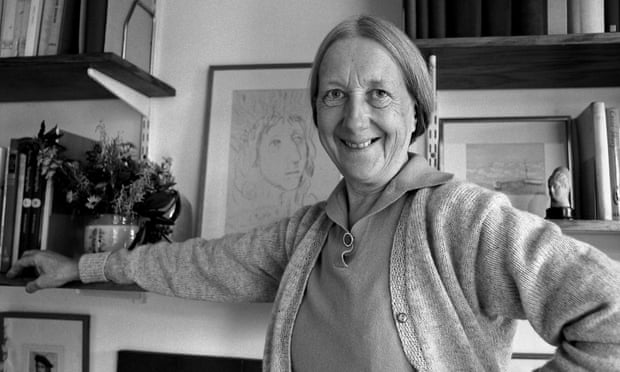
Abrahams talks in a way that suggests he has explored a good deal of modern classical music. “When I was a teenager, I thought I was going to be a ‘classical’ composer. I went to the Royal Academy of Music, and I quite quickly realised when I got there that it probably wasn’t for me – not just because I didn’t want it, but because I wasn’t really good enough. I showed enough promise to get in, but I don’t think I really had what it took to be a professional composer. Also, in those days, there was something called crossover, and my teacher was a wonderful composer and teacher called Steve Martland (above). He was a great person and artist, but he was in this category called crossover, which in a way was a bit unfair. His teacher, Louis Andriessen, had the same thing – because the music was rhythmic, or used ‘band’ instruments, it was termed as crossover. Thankfully, due in large part to their innovations, that term is gone now and it’s just music. That’s definitely a good thing. I think the difference is much more in the composer’s intention rather than the finished results. Experiments in notation and incorporating improvisation, or aleatoric elements, have been around for a very long time – 100 years or so – and I think we’re still playing in that ambiguous world about how much is written and how much isn’t. There is a certain quality that makes some quiet music clearly meditative, and other quiet music is clearly cerebral – and there’s a lot in between.”
Our talk moves to the shorter piano pieces of Schoenberg and Webern, with which Abrahams is familiar. “Those pieces are so, so wonderful”, he exclaims. “It’s really interesting, I think because their compositional philosophy was so intimidating and intellectual that it closed their music off to a lot of people who might enjoy it on a visceral level. They didn’t want people to enjoy their music on a visceral level, it was just that time in early 20th century, when people were ‘manifesto-ised’ to an insane degree. I love that period of art history, Russian Suprematism. In that area there were so many manifestos coming out from artists, but it doesn’t mean we have to experience the art as a manifesto anymore, because it’s part of history. One of the CDs I listen to most is a double CD of Schoenberg and Webern piano music, and I love Berg’s Piano Sonata too. It’s like he had the heart of a romantic and the head of a 20th century composer.”
“It’s moving to think of those days”, says Abrahams. “Because art meant so much, and orchestral music meant so much, people would travel from all over Europe to experience it. The victory of those people who broke the mould is that we now live in a creative world where there aren’t really those borders – but maybe there isn’t quite as much passion either.”
Returning to the inspirational figure of Steve Martland, what did he learn from his teacher? “It’s a very hard question because in a way, I think I was too young (to be kind to myself), or maybe too incompetent (to be unkind to myself), to really have learned compositional things that I might have been able to learn. Maybe he saw that. But what I really remember of him is his passion. He cared so deeply about justice. He had very clear ideas about what was right and wrong in music, and would express them in quite provocative ways. He knew that he was going too far sometimes, but he also did really believe it. He had very passionate views, which was fine and inspiring, even if you disagreed. He set up his own band too. I met him when I was fifteen, on a course called Strikeout. He would take us all to a retreat, and we’d write a piece for two weeks which would be performed by the band. It was an incredible thing to do. He must have had some sort of Arts Council funding, but it was a passion project.”
Things did not always run smoothly, however. “His main gripe with the academy at the time, where he eventually became a visiting professor, was that they didn’t take music seriously enough. He was very frustrated by that. He felt he was supposed to be the enfant terrible of the situation, but he was actually the only one taking education seriously. He sort of stormed out in the end, because one day a student reprimanded him for coming in dressed in a T-shirt and jeans, which tells you a lot about the place because the seriousness of intention and the love for what you’re doing was far exceeding that of anyone else working there. That was a terrible day. He was a wonderful man.”
His hairstyle and disposition are not too dissimilar from another self-professed enfant terrible, Nigel Kennedy. “It’s partly a class thing”, says Abrahams, “but Nigel Kennedy had a sort of a dissolute quality, which isn’t cultivated – that’s just who he is. Steve was more like a Marine, with discipline – discipline with a smile behind it, which you can hear in his music. That was who he was. He was a humanitarian without a doubt, but in art he liked precision and discipline, and sharp edges. When he died, I still felt as if people weren’t getting to the core of the person. He was a mystery, even to some of his closest friends, but I’ve always carried this deep fondness and appreciation for him.”
There is a final, classic, Martland story. “We were on this composition retreat, and I sat down to rehearse with the band. I’d written myself an electric guitar part, and we started playing. I was 15 or 16. He stopped, and said to me, “When you’re playing the guitar, please can you try and look less like you’re having a shit!” That has literally stayed with me until now. Sometimes I’m on stage and I think, have I got that face on?!”
Turning to the future, Abrahams has plenty of irons in the fire. “Yeah, I’ve actually just finished quite a few productions and mixes and stuff like that this week. One of them’s a Syrian composer called Maya Youssef, who plays in Canada – her music is beautiful, and I’m really happy to have worked on that. I’ve got some guitar sessions dotted around, but I want to try and use the next couple of months to work on my own music. I’ve got quite a lot of unfinished ideas in a slightly more ambient or even neoclassical form, than this kind of atonal and abrasive world that I’ve been in. Some of it will be pure synth, and no guitar. I’d like to try and finish those pieces. There is also one of the collaboration records that I did last year called Krononaut, with a jazz drummer Martin France and trumpeter Arve Henriksen on trumpet. We’re going to do another record, I’m not sure if Arve can but Martin and I are going to get together here in January. It’s another one of those times where I’ve got not quite such an intense production schedule, and I want to use it.”
Now the studio is where he wants it, is the writing more fluent? “It’s early days because I’ve only been here since July, and since then it’s been non-stop work. When I used to work from home in a little bedroom studio, I used to sort of fall out of bed and start work. I knew I’d had a good day when I’d not got out of my dressing gown by lunchtime!”
Scene Memory II is out now on figureight records. You can listen to and purchase the album via this Bandcamp embed:
Arcana has time with Kevin Drew, the Canadian musician best known as frontman for the band Broken Social Scene. This discussion, however, will focus on his new solo album Influences, recorded under the pseudonym K.D.A.P. (Kevin Drew A Picture). As we will find out, it was written in lockdown in England – more specifically in London and the Sussex village Slinfold.
Drew is an invigorating presence. “I guess you’re my first English interview!” he notes, “and you’re not far from the town where I was walking.” Today, however, he is in Toronto. “It’s a good town, but it’s expanding quickly. It’s not tun that well, with bad government and city planning. Things are starting to get on top of each other, but there is still is a great community and great restaurant scene. Art is secondary, but I think that’s how it is everywhere now. I always find it’s artists who fight for the ones that don’t have a voice. We have had such a situation here with encampments in the parks and the homeless, and there is no leadership of how to deal with that situation from our city council. A lot of people take it into their own hands to speak and fight for them, and it’s something that the city is trying to deal with right now.”
Listening to Influences is like seeing another side of Drew’s personality, a more intimate and private aspect. For its composition, he used a single app. “It happened through Endless”, he says, “and through being able to have the time that I did in your lovely country. One of the things that came to me was that I called it a ‘vessel’ record. I didn’t set out to do anything and instead of making anything with my piano or acoustic guitar I was injured for a year, and I was coming out of that. I had achieved what I wanted to musically, and rather than keep Broken Social Scene above water I thought ‘I’m just gonna disappear for a little bit’, as one should. I got into this app and realised I had a studio in my pocket. I started getting up early and walking through the woods, and I started figuring it out in ways it would work for me. I love the sounds and the accessibility, and then I love that it’s based on personal intuition and what you want to do. I sketched out all these things and when I came home I just took them to the studio. We started putting all this piano and acoustic guitar on, and I got my friend Evan Tighe to come in and drum. Charles Spearin came in and played bass lines I couldn’t play because I did them on my thumbs!”
Influences feels like a springtime album, with green shoots and positive energy. “The time of release is interesting, because it’s a year ago that I really started getting into it”, he says. “I think with everything you do, or I do, is about trying to create that spring atmosphere, that idea of growth. It’s also about opening something new, and walking through all this shit to get to the glory and the light, all the things that we all strive for as we keep continuing and creating.”
There is an abundance of melodic ideas on the album, with a patchwork approach to knit them together. “I’m a melody junkie!” he confesses, “and the aspect of being able to tell this tale was strong. You have to understand I haven’t done anything really on my own in seven years. I’ve had quite the life, quite the turnaround, and I’ve lost some people too, people that I love, which always makes you reflect. I’ve said before that I didn’t write this record, those who left me wrote this record. All the friends I’ve had in my life wrote this record, all my partners who have come and gone with this record. The records that I have listened to throughout my life wrote this record. We’re neurologically always consuming, whether we think we are or not. Our subconscious is running at full speed most of the time. Original thought is not something prominent in today’s day and age, and a lot of the times when it is, it just has to revolve around greed. I do still believe that what you are influenced by helps you build your identity and helps you find the melody that you love, and that you raised yourself on.”
In his twenties, Drew listened to a lot of music by Brian Eno, along with the early output of Warp Records. What was his listening before then? “My first record I bought was Supertramp, while my brother bought Blondie’s Parallel Lines The first records we received as gifts were Dirty Deeds Done Dirt Cheap by AC/DC and Sgt. Pepper’s Lonely Hearts Club Band by The Beatles. The first cassette I ever got was Men At Work, Business As Usual, my brother was Loverboy, the one with Workin’ For The Weekend on it (Get Lucky). Within that I was very fortunate. My brother got into the whole 1960s and 1970s music scene, while my parents were 1950s and 1960s all the way. It was everything from Linda Ronstadt and Chuck Berry to the Bee Gees and The Beatles, with James Brown and Nina Simone. I then cut my teeth getting into Prince, New Order, Jesus and Mary Chain and Sigue Sigue Sputnik. I always cited My Bloody Valentine as a game changer for me, then Dinosaur Jr and Jeff Buckley came in. Then it was Tortoise, Touch ‘n’ Go, Warp, Ninja Tune. Music was phenomenal in that time, unbelievable! It was innovative, and though it was coming through influences of jazz and DJs and samples and rap, and even rock, it was unreal. We used to walk out of record stores with stacks of CDs! We would go into Rotate This in Toronto.”
He narrows things down slightly. “My favourite bands are stuff like Dirty Three, Do Make Say Think. I love Stars Of The Lid, people like Julianna Barwick. I can just get lost in Jon Hopkins, and I’m a child of Four Tet and Caribou, I adore them. I always started in the instrumental world, and it’s nice to feel like I’ve come full circle. There is also something interesting about how you put out records these days and it’s all focused on your social media which I was never really, I didn’t keep up with that. It didn’t kind of work for me but I’m really trying things. You can’t force that shit, so you realise you’re just making records for your friends again.”
What took him to Slinfold to make the record? “Love, always. Love takes me everywhere. It’s a wonderful thing, isn’t it? It gives you so much opportunity and I’m such a believer in people, and I believe in, moment to moment as well. I just happened to be lucky enough to meet someone that helped me at a time where we were really good for each other and each other’s lives. I went down and hung with her and her family for a few months. I adore the English countryside, and I know that in about 10-15 years, if I’m still alive, I’m going to live there. I have those ghosts in my blood, it’s my heritage and I always feel at home. Last summer, with everything that was happening with the pandemic and the unknown, we all didn’t have an understanding of what was happening and what was going to happen. That’s a scary place for everyone to be feeling at once. Yeah. So it’s a case of finding your heroes and staying close to them.”
Did the pandemic inspire more intense composition? “I think one of the things that really made me attract myself to Endless was the aspect that the application is right here and it is allowing for another way to express. It’s not limited. We have a lot of issues with art in today’s day and age, but imagine if you could get this into schools and prisons and get this in their hands so people can communicate what this is here, inside of them. I remember when those apps came out with the cameras and all the photographers were shooting things like Super 8! I shot a video like that in Mexico City with a wonderful director Katina Medina Mora, and she used real Super 8. A year later, this thing comes out! It’s still about the individual, and what you bring and express to yourself with these things. I wanted to make it a point to talk about this app. I don’t have any stock in it, I was not getting paid by them, and that doesn’t matter to me. I’m not selling anything here, I’m telling you there’s another way for musicians or art programmes, trying to get kids to express themselves. Funding is getting cut all over the world, you know?”
The resultant music from the app is not lacking in emotion, and ties in with Drew’s earlier comments about loss and inspiration from friends. “Everything’s emotional – everything”, he says pointedly, “and political, and personal. I say this all the time. It’s an emotion, and a lot of people don’t want to deal with that. With social media, LinkedIn changed the dopamine game – it is totally different now. It rfeflects differently on who we are as people. I’m in my mid-40s, and happy to be here – and I don’t really give a fuck much anymore. When I do, I feel a bit embarrassed on a level of personal spiritual growth. But we are in this together, and I’m still finding stuff that gets me excited. Kudos to those who are still out there fighting, using melody as their sword. I just want to be on that train, and I believe that soundtracks are important for all of us. Yeah. You need a soundtrack to be your support system, while going through these times!”
For Drew, then, music is as fundamental as breathing. “I’ve always said to people to choose a mantra. I’ve been down, I’ve lost a decade of just trying to figure out and couldn’t quite get it. I’ve had great times, and bad times, and I was a great person and I wasn’t a great person, but in the grounding of moving on with your life, I’m also realising that so much of the struggle is the reflection of what we’ve been taught neurologically. I’m learning how much we’ve governed ourselves into a box, and how we judge our own selves and others if we’re not following the protocol of that box. The divide that we live in right now, it’s winning.”
“Wait a second”, he says. “I’m pretty sure John Carpenter did a movie based on what’s happening right now! Did we not read that? Nobody wins with a divide – each side ends up being a bully!” His tone lightens. “So, Influences – my instrumental record. My reaction to it all.”
There is humour in Influences too, not least the track titles – one of which is Explosive Lip Balm. There is much room for this in humour. “The great thing too was that I wasn’t singing. My parents don’t like it, and a few friends said that they can’t listen but it’s cool, I get it. I didn’t want to sing. There was a massive uprising happening, as there still is, but I certainly had no place to step up to the mic and sing about it. I had a lot of emotion, as I always do, so it was really easy for me to just chuck this all into a record. The coolest part too was going back to the studio called the Bathhouse here in Ontatio, and a gentleman named Niles Spencer who I’ve been working with since 2019. We’d not seen each other in a couple of years, and it did have that feeling like, “You’re coming home kid!” It did take us a while to figure out how to put everything together inside Pro Tools, and then I had all the songs designed in my head so then we had to place these loops in different parts. It was a lot, but we took four or five days to organise it all and it was just wonderful. We worked on the ‘first thought, best thought’ principle.”
The dynamic was very different to his band. “With Broken Social Scene records they take a while, because there’s a committee, and I love it. What I adore more than anything is doing stuff quickly. It’s the most honest way to react to what is happening around you with sound.”
Drew moves on to recount an incident with a cyclist that had an effect on Influences, and its last track Almost Victory (Keep End Going) “I was at the canal in Islington, on the towpath. First of all, why are there bikes on that?! I got into the flow of it, and was working on a beat, and this cyclist brushed by me. It knocked the beat into a different time signature, and I heard it and thought it was pretty nice! If you hear that track there are different types of pitches going on, and if you listen there is a little bit of a shrug.” Is it an example of how mistakes can work in pop music? “They call it jazz!” He laughs. “We don’t say it was a mistake but you’d better do it twice, so you say to people that was what I was doing.”
His connection with the English countryside is worth exploring further, given the natural wonders on his doorstep in Canada. “I love the Canadian countryside”, he says, “but I think it’s the history for me over there with England. I feel the shadows, you see the children and the war, you know. Two world wars. I never met my grandfathers, and even just walking along the train tracks in England where a lot of the young boys would go and get on these trains and not come home, we would ride our bikes along paths all summer. There was a stillness that I like in the aspect of history. As I get older, I have started thinking about just the education of where I came from. I love the Canadian countryside, a lot, but I just didn’t have the opportunity the last few years to be out in the Canadian countryside and Toronto is a sticky city in the summer. It’s patios with sandals and condos, sun visors, a lot of dudes with tattoos, great bodies, and these really decked out bikes going really fast without a helmet, and an awesome haircut. It gets to you after a while. so I really was blessed that I was able to stay out there, sit in the trees and be with the best kind of people. I had the understanding that life wasn’t perfect, but it was a moment. I miss it, but I’m so grateful that I have had it, and will have it again.”
His creative process has been instinctive throughout. “You’re gathering information that is going to interpret itself in a way that’s either like emotional or just very practical. I didn’t have any desire to make an album, until suddenly, the album was being made through me. People said how it was an opportunity for your dead friends – and most of them are musicians – to come down and play. I’ve always looked at it that way because I have sat in studios and said, “Who’s playing that, where did that melody come from?” There’s a part of me that finds comfort in the idea that my friends are coming back and jamming, so in the Bathhouse I allowed that space.” That’s all just a state of mind.”
Kevin is typically mischievous with his beliefs in family life. “I don’t have children, so I don’t have to deal with the questions about monsters, but I’m the uncle so it’s like, “There could be a monster on the bed, let me go check! It always shocked me that there wasn’t actually any unicorns, not even in Greenland. When people tell me Santa Claus is fake I say the Santa Claus that isn’t real is the one down the mall. Yes, he’s not coming down the chimney with your Sony PlayStation V, but he’s a real dude!”
Interview by Ben Hogwood
Influences, Kevin Drew’s solo album as K.D.A.P., is available now on Arts & Crafts Productions. You can hear the music through the Bandcamp embed below:





 Arcana.fm