Live review – Kirill Gerstein, Helsinki Philharmonic Orchestra / Susanna Mälkki: World premiere of Saariaho’s ‘Vista’; Schumann & Debussy

susanna-malkki

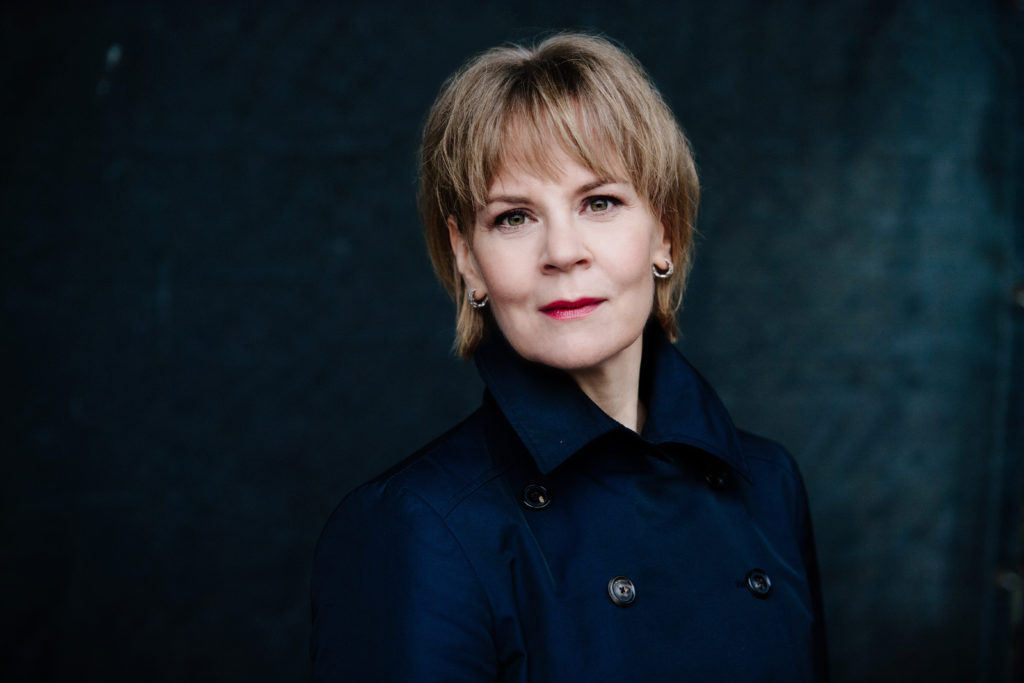
Kirill Gerstein (piano), Helsinki Philharmonic Orchestra / Susanna Mälkki (above, photo (c) Jiyang Chen)

Helsinki Music Centre, Helsinki
Broadcast Wednesday 12 May 2021, available online

Schumann Piano Concerto in A minor Op.54 (1841)
Debussy Pièce pour Le Vêtement du blessé (unknown, publ. 1925); Berceuse héroïque (1914); Les soirs illumines par l’ardeur du charbon (unknown, publ. 2001); Élégie; Étude retrouvée (both 1915)
Saariaho Vista (2019, world premiere)

Written by Ben Hogwood

One of the very few advantages of being restricted to online concerts in the last year has been the chance to enjoy music making on an international scale. This happily gave the opportunity to hear a major world premiere, a new orchestral work from Finnish composer Kaija Saariaho.

A truly international piece, Vista was co-commissioned by the Helsinki Philharmonic Orchestra, the Berlin Philharmonic, the Oslo Philharmonic and the Los Angeles Philharmonic Association. Its title page has the inscription For Susanna – presumably a dedication to the night’s conductor, Susanna Mälkki.

Although scored for a large orchestra, Vista is economical in its use of the forces. Inspired by road signs the composer saw in California – all promising great ‘vistas’ – the work has something of the West Coast about it, a shimmering heat haze and dust on the horizon. In its darker moments the twinkling of the stars, and the metropolis, can be discerned.

Vista impressed from the outset. Its first section, Horizons, began with a high oboe solo, played with very impressive control in this performance. As always with Saariaho’s music, the vivid colours in the orchestra made themselves known early on and after the initial intimacy of the wind instruments the view panned out appreciably, to an expansive picture.

Microtones and almost imperceptible changes in pitch were part of the evocation, and when the music alighted on a particular pitch the effect was striking. Saariaho’s music continuously evolved – shimmering, glistening, darkening, lightening, or casting shadow, as it did in a particularly vivid section where the metallic percussion took centre stage. Here the twinkling of glockenspiel contrasted with the spidery flurries of the strings.

saariaho

Targets, the second section, began with a blast of sound, before brass and strings were involved in dialogue – and we heard a flurry of activity from the whole orchestra, after which all the forces reached the same pitch, the view panning out again. Now the vista was nocturnal, with a shiver in the air.

Saariaho (above) was present, and in a rather moving response to the piece the orchestra and conductor applauded the composer, rather than the other way around. It is always difficult to appraise a major orchestral piece on the basis of its premiere, but on this evidence Vista is a major achievement and a piece to return to as often, Thankfully Mälkki is conducting it with the Berliner Philharmoniker on 22 May, but this was a special performance from the composer’s ‘home’ orchestra.
kirill_gerstein

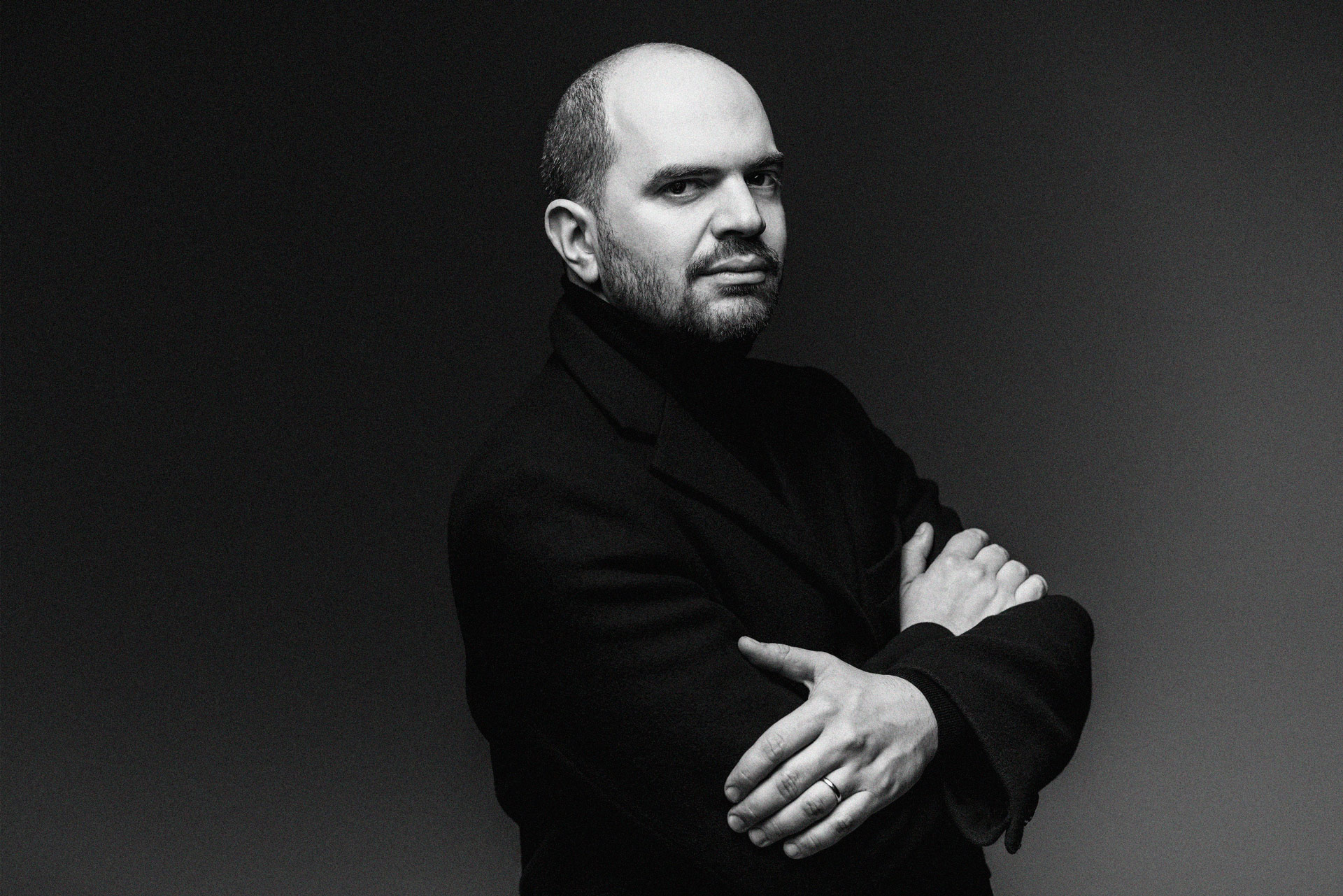
Elsewhere on the program we enjoyed a fresh, vibrant performance of Schumann’s Piano Concerto in which the soloist was Kirill Gerstein (above). He clearly enjoys the piece, and the fast movements were notable for the clarity of their phrasing and lightness of touch. The first movement had an attractive lilt and some very appealing dialogue with the orchestra woodwind, oboe particularly. The slow movement gave plenty of room for Schumann’s softer sentiments, and the finale danced attractively.

The Schumann was complemented by some well-chosen solo Debussy, Gerstein opting for five lesser-known piano works. A palette-cleansing Pièce pour Le Vêtement du blesse, a posthumous publication, was followed by the steady tread of the Berceuse héroïque, given a solemn account. Les soirs illumines par l’ardeur du charbon was next, a piece unearthed in 2001 – sounding like a previously unreleased Prélude in these descriptive hands. The profound Élégie was next, then a rippling Étude retrouvée, a seldom-heard study written prior to the book of Études in 1915.

This was a fine concert, nicely structured and pointed towards the Saariaho – which fully lived up to its billing. Catch it if you can!

You can watch the concert on the Helsinki Philharmonic Orchestra website here

For more information on the Helsinki Philharmonic Orchestra digital season, you can visit their website here
Listening to Beethoven #149 – Septet in E flat major Op.20

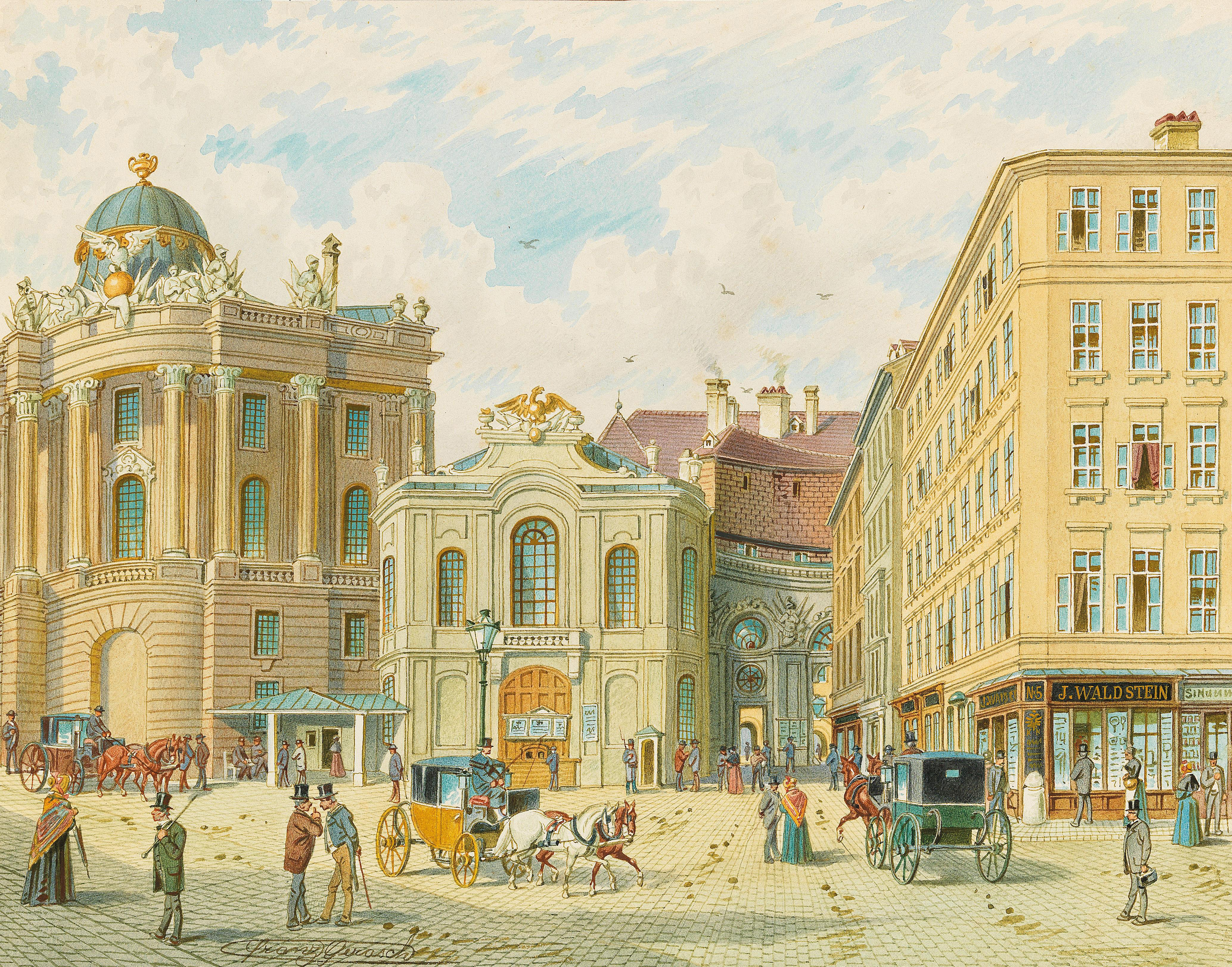
The old Burgtheater in Vienna by Franz Gerasch (before 1906)

Septet in E flat major Op.20 for clarinet, horn, bassoon, violin, viola, cello and double bass (1799, Beethoven aged 28)

  1. Adagio – Allegro con brio
  2. Adagio cantabile
  3. Tempo di menuetto
  4. Tema con variazioni: Andante
  5. Scherzo: Allegro molto e vivace
  6. Andante con moto alla marcia – Presto

written by Ben Hogwood

Background and Critical Reception

Beethoven’s Septet was a novelty work when it first appeared at the Burgtheater in Vienna on 2 April, 1800. The piece, completed by the composer over the winter beforehand, was not breaking any new musical ground particularly. Indeed, Beethoven biographer Lewis Lockwood speaks of it almost dismissively in finding an ‘ambition to please…written all over his Septet, Opus 20, a divertimento companion to the First Symphony intended for salon performance.’

The First Symphony appeared on the same bill at the Burgtheater, but to cast the Septet off as a trifle would be a mistake. Certainly it stays true to the Mozart models used in serenades and divertimenti for wind and strings, in its use of six movements and in the choice of not one but two dance-themed faster movements.

It is the instrumentation where Beethoven’s thoughts are new, the string quartet consisting of violin, viola, cello and now double bass. This adds depth to the scoring, but also frees the bassoon and cello up for more melodic roles. Peter Holman, writing for Hyperion, notes how ‘the relationship between strings and winds is more flexible and varied than before’. He enjoys the ‘mixture of grandeur and intimacy, virtuosity and informality’, while also noting a prominent part for virtuoso violinist Ignaz Schuppanzigh.

Elsewhere it seems almost unfashionable for commentators to give the Septet too much room, as though it is not forward-thinking enough – but its public appeal is clear. Philip Reed, writing in a booklet note for Chandos, makes up for that shortfall, discussing how ‘Beethoven contrives to give the work a quasi-orchestral atmosphere. This quality is most apparent in the tuttis; elsewhere subtle use is made of different instrumental groupings to achieve maximum variety of texture. Nowhere is this more apparent than in the central Theme and Variations’.

Thoughts

It is surely impossible to dislike Beethoven’s Septet. This is a piece full to the brim with good tunes, attractive scoring, persuasive rhythms and a very strong sense of community between all seven players. The scoring is a treat, working to bolster the sound to a small orchestra, in a model that was to be replicated by contemporaries Kreutzer and Berwald, as Holman points out.

The tunes are catchy enough for audiences to be humming them hours after a performance, which I can admit to first hand! The two best in this respect are the first Minuet, a delightfully cheeky tune that just refuses to go away, and the finale,

The first movement has some frothy exchanges when the faster sections arrives, while the slow movement, placed second, has some lovely sonorities, the clarinet coming to the fore in the tune and then the violin given some space to prove its virtuosity.

Placed fourth of the six movements is the Theme and Variations, where Beethoven’s invention is twofold – development of the theme and inclusion for each of the seven instruments, with solos for cello and then a lovely moment where clarinet and bassoon come to the fore. The doleful tones of the woodwind look on in the minor-key fourth variation, with a restless violin, while there are some ghostly timbres towards the end, the double bass growling low in the texture.

The second ‘dance’ movement is next, the horn coming to the front to lead a brisk march, then the cello asserting its new-found prominence as a melody instrument in the ‘trio’ section. Communal fun is the name of the game here, as it is in the finale, Beethoven ensuring all seven protagonists have fun with the abundance of melodic material.

The Septet is a tonic to the most subdued of moods, a true ray of sunshine – and one of Beethoven’s crowning early works.

Recordings used and Spotify Links

Academy of St. Martin-in-the-Fields Chamber Ensemble (Chandos)
Members of the Berlin Philharmonic Octet (Philips)
Nash Ensemble (ASV)
The Melos Ensemble(Eloquence)
Soloists of the Lucerne Festival Orchestra
(Accentus)
Wiener Oktett (Deutsche Grammophon)

There are some lovely versions here, particularly a new release of a live performance from the Soloists of the Lucerne Festival Orchestra. The Wiener Oktett are enjoyably ‘old school’ and full bodied, while versions from the Nash Ensemble, the Melos Ensemble and the Gaudier Ensemble on Hyperion all hold their own. A mention, too, for a recording currently not on streaming services from the Academy of Ancient Music Chamber Ensemble, likely to be the only period instrument recording currently available.

You can chart the Arcana Beethoven playlist as it grows, with one recommended version of each piece we listen to. Catch up here!

Also written in 1799 Haydn String Quartet in G major Op. 77/1

Next up Piano Concerto no.1 in C major Op.15

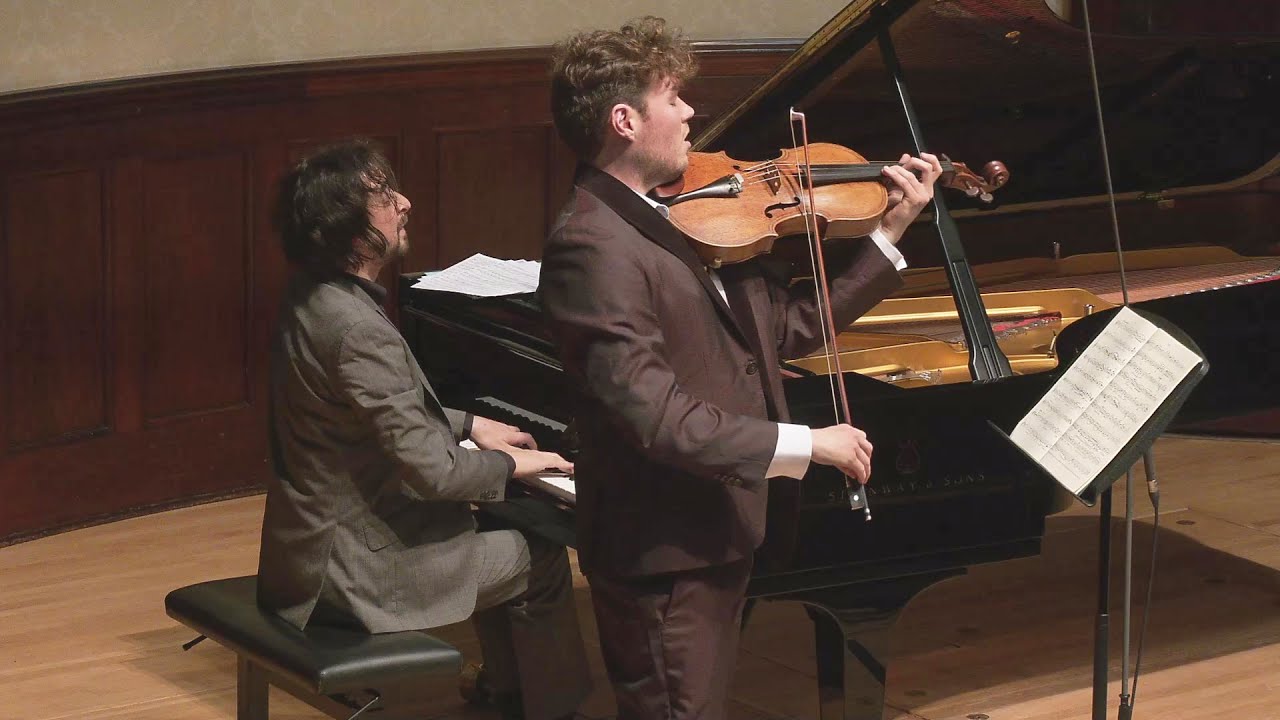
In concert – Timothy Ridout & Tom Poster: Brahms Sonatas & Schwertsik world premiere @ Wigmore Hall

ridout-poster

Timothy Ridout (viola), Tom Poster (piano)

Brahms Sonata for viola and piano in F minor Op.120/1 (1894)
Schwertsik Haydn lived in Eisenstadt (2021, world premiere)
Brahms Sonata for viola and piano no.2 in E flat major Op.120/2 (1894)

Wigmore Hall, London
Monday 10 May (review of the online broadcast)

Written by Ben Hogwood

This was, on paper, an ideal match of repertoire and performers – and it proved that way on screen too, as the Wigmore Hall served us the latest offering in its lunchtime concert program.

Timothy Ridout and Tom Poster are both beneficiaries of the invaluable Young Concert Artists Trust (YCAT) scheme and the BBC’s New Generation Artists program, of which Ridout is still a member. They are both plotting exciting paths as distinctive artists, and as a duo they enjoy an easy rapport, clearly relishing the music they play – an observation which can never be taken for granted!

The two sonatas published as Op.120 are Brahms’ final notes in chamber music, and indeed among his last works altogether. To have younger artists playing them is to reveal the youthful heart amid their autumnal colours, showing off their elusive qualities and winsome melodies.

Both works may have originated for clarinet and piano but work equally well through the burnished tones of the viola. Indeed Ridout proved with the first notes of the Sonata in F minor Op.120/1 that the range is ideal for his instrument, and the tone – not to mention Poster’s complementary piano line – was ideally weighted once he had fully secured the intonation.

The second movement had a cold shiver, thanks to the use of less vibrato, but grew warmer as it progressed. The genial Allegro grazioso was a treat, the finale more celebratory but enjoying its flowing second themes too.

The E flat sonata was if anything even more successful, lighter on its feet and with airy phrases and interplay. The first movement bobbed and weaved beautifully, especially when Ridout was playing in the higher register, which Poster clearly relished. The second movement literally rolled up its sleeves for a powerful outpouring, Ridout’s tone beautifully supple. By contrast the central section benefited from the burnished tones of the double-stopped viola. The finale’s theme and variations were well judged, thoughtful and mellow to begin with but then more capricious as they progressed, finishing with a thoroughly convincing flourish.

Between the two Brahms works was an interesting new piece by Kurt Schwertsik, commissioned by Ridout himself. Schwertsik is a Viennese composer now in his 70s, aware of his place in musical history but making original and intriguing music. This piece was characteristically elusive, under the intriguing title Haydn lived in Eisenstadt. Set in several movements, it posed questions and answers, but remained curiously unsettled. BBC Radio 3 presenter Andrew McGregor thought the piece had ended at one point, only for another two movements to follow – a situation we have all surely experienced as audience members! Ridout swept through the longer phrases of the penultimate movement against softly tolling chords from the piano, before the last movement threw furtive glances into the shadows amid bursts of activity, ending in a similar vein to early Schoenberg.

Poster ensured the harmonies were a point of focus throughout, hinting at exotic late Romanticism but never quite settling in that mood. This was a piece of intriguing thoughts and colours, a substantial utterance well worth hearing again. It proved the ideal complement to the poised Brahms sonatas around it – and the encore of the older composer’s Wie melodien, with which the concert softly concluded.

This concert is available to play for 30 days using the YouTube embedded link above.

Listening to Beethoven #148 – 7 Ländler for piano WoO 11 (1799)

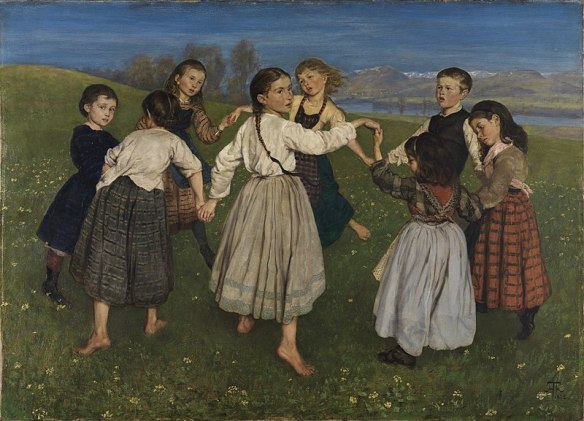
Der Kinderreigen (1872) by Hans Thoma

7 Ländler WoO 11 (1799) for piano (1799, Beethoven aged 28)

Dedication unknown
Duration 4’30”

written by Ben Hogwood

Listen

Background and Critical Reception

As part of his composing role in Vienna Beethoven did on occasion write dance music for the ball. We have already encountered sets of Minuets, written for the annual Redoutensaal balls, a discipline the composer seemed to warm to. This set of Ländler (a folk dance in 3/4 time) is thought to originate for 1798, and, writes Keith Anderson in booklet notes for Naxos, was presumably scored for two violins and bass.

That version is missing, but a piano version was published in Vienna the year after. All seven dances are in the same key, with a short coda added on the end.

Thoughts

The dances are charming and simple in their construction. Beethoven warms to the form with easy, hummable melodies and basic accompaniments often resembling drones. Harmonies are safe, and the rhythms have a nice lilt – ideal for moving easily around a crowded dancefloor. The seventh dance goes slightly offbeat, putting the emphasis on the second rather than the first beat in the bar, before a coda reinforces the drone and ends the dance with a trill.

Recordings used and Spotify links

Olli Mustonen (piano) (Decca)
Jenő Jandó (piano) (Naxos)

Olli Mustonen gives ideal account of these short, winsome pieces – and Jandó, a little faster, is enjoyable too.

Also written in 1799 Benjamin Carr Dead March and Monody

Next up tbc

Switched On – Amongst The Pigeons: Silence Will Be Assumed As Acceptance

atp

reviewed by Ben Hogwood

What’s the story?

‘We need to save humanity, because no one else will’. The stark outlook at the beginning of Daniel Parsons’ third album as Amongst The Pigeons sets the scene for a 12-track salvo against the choppy waters we find ourselves navigating. It is a first-hand response to the pandemic, the destruction of the environment, social and racial injustice, and much more besides. It is delivered through his own inimitable set of gadgetry from a garden shed outside Worthing, with home-produced music whose message travels far and wide.

What’s the music like?

Silence Will Be Assumed As Acceptance has an extremely satisfying structure, featuring a raft of carefully chosen electronics but with Parsons’ own voice opening and closing. Some of the track titles are clearly borne of the last year – N.V.O.D. especially. Standing for Natural Vectors Of Disease, this track collaborates with Richard Wiseman to call out the government on their response to the pandemic, amongst other things. There is barely concealed anger here, channeled through a hard hitting burst of electronics, and it is typical of the album’s ability to make a forceful point without resorting to cliché.

Colour Blind achieves a similar aim, Parsons’ urgent vocal nicely blended with Ollie Barron’s chorus, and while N.V.O.D. is angry, Holding My Breath works an emotive blend of flickering electronics and the well-matched vocals of Tiger Mendoza and Charis Cooper. More tender moments can be enjoyed in Bring The Stars Closer, where the cooing of singer Emma King is complemented by poolside grooves.

Before The Storm Hits is a satisfying blend of stabbing bass and a soulful vocal from Fast Trains, a complement to Megan Lundford’s persuasive tones on the following After The Storm. The beats are busy but never too obtrusive, Parsons working a healthy quotient of riffs and some really effective percussive effects. The balance is ideal, typified by the rich voice of Hannah Katy Lewis, set to quickly turning studio cogs.

The album works like a mix, with each track segued into the next, and the panning effects Parsons works in work really well on headphones. On occasion the bass hits satisfying depths, too, none more so than the fine instrumental Can You Manage? Do You Understand?

However the album’s defining moment proves to be the inspired use of a Charlie Chaplin speech on You The People. Developing like a Chemical Brothers track, it exhorts us to ‘create happiness’, to ‘make this life a wonderful adventure’. Spread Hope, with The Sad Song Co., delivers a similar if more understated message.

Does it all work?

Handsomely. Silence Will Be Assumed As Acceptance is a lean beast, scooting through its dozen tracks in under 40 minutes with no padding at all. Its message is powerful but never ‘preachy’, and the busy electronics complement the vocals rather than smothering them. A word, too, for some striking artwork from Ella Manongdo, matching the album’s impact.

Is it recommended?

Yes, enthusiastically – an album full of incident and heart but with strong underlying messages that are fiercely relevant to today’s world. It is a shot in the arm – or should I say shoulder?!

Stream

Buy