BBC Proms: BBC Singers / Sakari Oramo – Songs of Farewell and Laura Mvula premiere

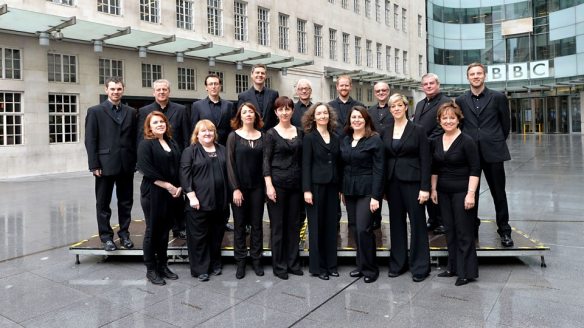
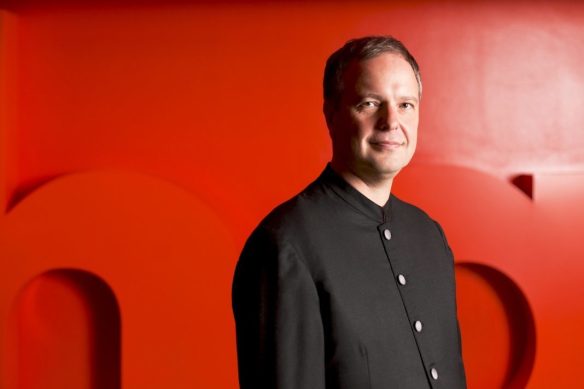
Proms at the Cadogan Hall: BBC Singers (above) / Sakari Oramo (below)

Bridge Music, when soft voices die (1907)
Vaughan Williams Rest (1902)
Holst Nunc dimittis (1915)
Laura Mvula Love Like A Lion (2018, world premiere)
Parry Songs of Farewell (1913-15)

Cadogan Hall, Monday 20 August 2018

You can listen to this Prom by clicking here The times given on this page refer to the starting times on the broadcast itself

Reviewed by Ben Hogwood

Over the last couple of decades the Monday lunchtime strand of the BBC Proms concerts have gone from strength to strength, and the 2018 season looks like being an especially good vintage. English song has fared particularly well, and on the heels of Dame Sarah Connolly and Joseph Middleton’s imaginative recital, here was a choral selection based around rest, sleep and departure.

To be more specific, the form of rest composers Bridge, Vaughan Williams, Holst and Parry had in mind was the Eternal form. Frank Bridge wrote Music when soft voices die (from 1:49 on the broadcast) as his entry for a magazine competition, Vaughan Williams set the text of Rest (6:33) as a deeply felt short song, while Gustav Holst’s setting of the Nunc Dimittis (10:49), made in 1915, was resurrected for publication by his daughter Imogen in 1979.

Pride of place, however, went to Sir Hubert Parry’s Songs of Farewell, one of the crowning glories of his output. Rarely performed as a cycle, this series of unaccompanied motets, completed late in the composer’s life and in the shadow of the First World War, marks some of Parry’s deepest thoughts on mortality. They are every bit as profound in today’s world as they would have been then, and an attentive audience in the Cadogan Hall evidently took plenty from this interpretation.

Sakari Oramo has experience as a choral conductor but this was his first outing with the BBC Singers. He led them in a direct, unfussy manner, shaping the phrases while recognising this experienced group already have the tools at their disposal to make a beautiful sound.

Parry constructed the cycle so that his part writing gains density as the songs unfold, moving from four parts through to eight by the final Lord, let me know thine end.
Oramo took us on that progression with a gradual increase of intensity, helped by purity of tone and unanimity of voice. My soul, there is a country (29:09) began as a lighter, thoughtful account, building in intensity, the parts moving closely together. I know my soul hath power to know all things (32:53) was notable as much for its expressive pauses between words, Oramo’s direction ensuring a tight-knit ensemble. Some of Parry’s musical phrases are of considerable length, but the BBC Singers took them in their stride.

The density grew, from five parts (the beautiful Never weather-beaten sail, 38:35) to six (There is an old belief, ) then seven (a hypnotic account of All round the earth’s imagined corners, 43:15) to ultimately eight (Lord, let me know mine end, 50:04). This was the apex of the performance, notable for its calm acceptance of the final days of life, and in the closing pages the BBC Singers portrayed Parry facing his ultimate departure with an incredibly moving dignity.

The whole concert was structured rather like the Parry cycle, beginning from the small but poignant songs from Vaughan Williams and Bridge. The BBC Singers were excellent, with beautiful phrasing, and a surprise was in store for the Holst. Often the Nunc Dimittis is a softly voiced counterpoint to the Magnificat, but this one grew from small beginnings to become a forceful statement, delivered with impressive surety.

And so to Laura Mvula’s three-part work Love Like A Lion (12:58), written to a commission by the BBC but charting rest and loss in a rather different way. The loss here was a relationship, causing intense pain in Like A Child but with acceptance given in I Will Nor Die (For Him) (20:30), with a penetrating solo from Helen Neeves (21:08) over a gently undulating accompaniment that took us to a special, faraway place. Free from restrictions, Love Like a Lion itself (23:46) revelled in its new freedom, as did Sakari Oramo – who knows Mvula well from their Birmingham days. Love Like A Lion showed her ease with choral writing, and was a deeply expressive voyage from darkness to light. Hopefully we will hear more from her very soon.

Ask the Audience at the BBC Proms – Michael Hubbard on the CBSO concert of Debussy, Ravel & Lili Boulanger

For the latest in Arcana’s Ask The Audience series musicOMH editor Michael Hubbard gives his verdict on the City of Birmingham Orchestra and their Prom of French music.

Prom 31: Inon Barnatan (piano), Minnesota Orchestra / Osmo Vänskä

Debussy Prélude à l’après-midi d’un faune (1894)
Lili Boulanger Psalm 130 ‘Du fond de l’abîme’ (1914-17)
Debussy Nocturnes (1897-99)
Ravel Boléro (1928)

Royal Albert Hall, Wednesday 15 August 2018

You can listen to this Prom on the BBC iPlayer here

ARCANA: Michael, how would you describe your musical upbringing?

There was always a guitar hanging in the lounge, as my father learnt a bit in the 1960s. He used to play things like Islands In The Sun, and then my mother would say “That’s enough!” and hang it up again. When I was in infant school, like anybody else, recorders became a fixture in my life. I had a descant, a tenor and a treble at various points. I never got round to the bass, only one person had that, maybe because her parents were richer.

In terms of the music I used to listen to, that was something else entirely. My mother was deaf, but she could somehow pick out some music more than others. She passed some of that on to me, and some of that was the opera side – especially Puccini – but there was music from King Sunny Adé through to Tina Turner, too. My father’s music taste could be discerned a little from what he used to play on guitar. When I was a little older I was able to go through his music and play some of it, from Johnny Cash to Abba. I know my mother’s teenage fixation was Elvis Presley. So although I had no formal music knowledge before I started learning an instrument, there was I suppose a lot of music around – but I had to look for it.

When were you first aware of classical music?

I was doing things in school, music class – and starting to pick up names like Purcell. When I started flute lessons at the age of 11, more of those composers became names to me, but up until then it was essentially things I heard on the radio. I had very little knowledge at that time.

Name three musical acts you love and why:

I could probably name about 300 and they’d change every time I tried to answer… so this will be the first three that come to mind.

Jean-Michel Jarre was a massive hero of my early teens. He is probably the main reason why the first musical instrument I was really interested in was the synth. I was self taught; when my grandmother died she said in her will, ‘he must have a keyboard’, and my mother stuck to that. She brought me the keyboard I wanted, a Yamaha PSS-680, with its mini keys. I went on to Korgs and Rolands after that, and eventually had a couple of years of piano lessons, which supplemented the flute tuition I’d been persevering with. Knowing my way round a synth – and covering Jarre tracks with it – opened the door to composition, and before long I’d written some rudimentary pieces. I could never have done that with just a flute, on my own – the synth allowed me to play everything. Like Jarre. His enormous Fairlights were of course a world away from my Yamaha, but here was a doorway through which I wished to step.

There was also a sense of drama in what Jarre was doing, it was like ‘I’m taking over Docklands for a concert’, or ‘I’m taking over a space shuttle launch site’. I loved that, that everything stopped because music was that important. The very idea he was putting out there was ‘I AM – LOOK’. The idea that drama could be a thing that is art – something you could express from yourself as opposed to someone scripting it for you, it could be you creating it, and you could take over the whole district of a city with your lights and your sound – was amazing to me. I had videos of the Docklands concert and Rendezvous Houston. I think they helped me become aware that hiding in the corner in the hope of never being seen was a life strategy that I’d already taken too far.
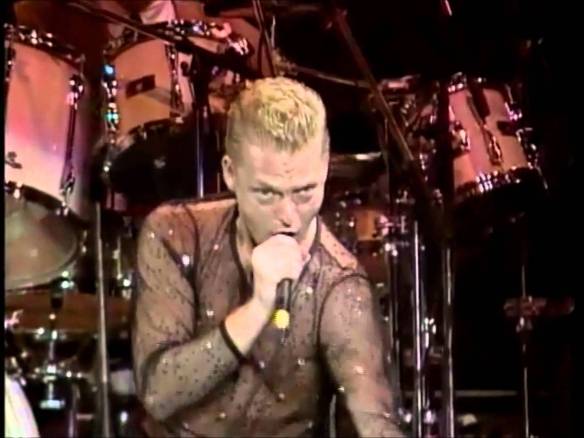
Another very big influence on my life was Erasure. Vince Clarke was composing on guitar but transferring his ideas across to synth. I think I’d pigeonholed synths and guitars in different worlds until I understood his process. You composed on one or the other, and that instrument of composition would then define your music and your artistic statement. Nonsense, of course. 1984 was for me a pivotal year as I discovered the UK Top 40 on Radio 1 and its visual highlights on Top Of The Pops. The charts were, it quickly became apparent, full of gays – as well as (half of) Erasure, there was Pet Shop Boys, Culture Club, and especially Frankie Goes To Hollywood; the list went on.

Through them and their conduit, the BBC, I became aware of a larger world. Andy Bell could appear in gold lamé hotpants to sing Sometimes on prime-time BBC1 and millions of our countrymen – not least my parents – would watch. I began to realise that we probably reacted differently to this performance. With my age still in single figures, the lyrical meaning of Frankie‘s Relax, I confess, passed me by – but Erasure’s songs, beginning with the chorus of Sometimes, had me analysing and reanalysing all sorts of assumptions. It marked at least the beginning of an awakening.

I’d already bought my first album on cassette tape, but my first CD album was for someone of my age not an obvious choice – Delirium by Capercaillie. En route to America for the first time, I was in a duty free shop with my father. He’d been concerned I wouldn’t have enough to occupy me on the plane, and took me into a shop and get me an album to listen to. I could choose from whatever was there. I can’t think what caused me to choose Capercaillie – I didn’t then know the band was named after a bird, or anything about their music. I did know they were Scottish, having scanned the sleeve notes, and somehow I’d lasted this long on the planet without owning any music by Scots, despite most of my family hailing from north of the border. Maybe it was a curiosity to hear if we’d have a shared connection.

Delirium merged synth sounds with their Gaelic folk music, and the latter was an otherworldly thing to my ears – I had no idea what those lyrics were about. I listened to the reels and jigs, and I wanted to listen to more of them. By extension from there started to listen more broadly to folk music. Capercaillie’s Delirium is not pure folk, but they are steeped in its traditions, and it opened that world up to me and gave me landmarks to mark the course of exploration.

The Proms does that too. You go along to see something that, as a piece of sheet music written hundreds of years ago, could be stultifying, but actually it’s alive because people are on stage and giving their own interpretations – like tonight’s Prom, with the trombonist in the orchestra in Boléro.

What did you think of the music in tonight’s Prom?

It was my first time ever hearing Boléro live, although like most people I expect I know it very well. It was my first time hearing anything by Debussy live, and had never heard anything by Lili Boulanger. I’ll work back, because I have Boléro in my mind at the moment.

I think it’s a pivotal piece of music. It’s not that exciting because once you’ve heard it you know where it goes, but that’s also true of most trance singles released on Positiva at the turn of the century. It’s a dance music track in embryonic minimalist form, building layers, reshaping loops, falling back. It’s also a pop music track because it’s instantly memorable. And it’s a classical music track because it uses an orchestra – it’s many different things. I want to know how it affects the broader world beyond classical, not if it was too fast or too slow, or which genre it neatly fits into. It’s probably not Ravel’s best in his own mind, but it’s certainly his big crossover hit from beyond the grave.

With Debussy I found myself not focusing on the musicians, but drifting. Not that it was bad, but I think that’s what it was about. I started thinking of other images the music was putting in my mind, in a way that Boléro didn’t. The first piece (the Prélude à L’apres-midi d’un faune) I thought was better at doing that than the Nocturnes. It was a nice warm-up, and I could see why it was first. Nobody stood out, it was a piece that brought everybody together. There was one thing happening organically. I couldn’t sing you a note of it now, but it engendered thoughts of other things.

With the Boulanger I found it very quiet, despite everything on stage – which felt like a choice that the performers had decided to restrain things. I thought that was odd.

What was your experience of the arena compared to elsewhere in the Royal Albert Hall?

For the Debussy I think I would rather have been sat down, but not for Boléro. It was odd to be standing up for classical, I would have expected to sit down and would rather do that I think.

Verdict: A qualified SUCCESS, even more so with seats!

Prom 44 – CBSO Choruses & Orchestra / Ludovic Morlot – Debussy, Ravel & Lili Boulanger

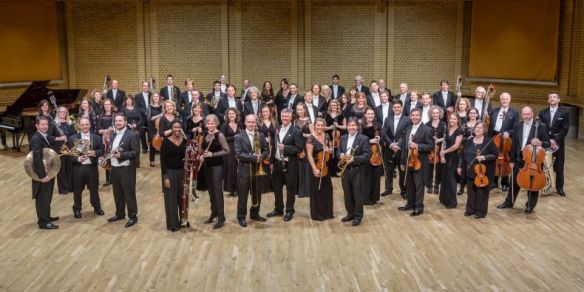
Prom 44 Justina Gringytė (mezzo-soprano), CBSO Youth Chorus, CBSO Chorus, City of Birmingham Symphony Orchestra / Ludovic Morlot (above)
Debussy Prélude à l’après-midi d’un faune (1894)
Lili Boulanger Psalm 130 ‘Du fond de l’abîme’ (1914-17)
Debussy Nocturnes (1897-99)
Ravel Boléro (1928)

Royal Albert Hall, Wednesday 15 August 2018

Reviewed by Ben Hogwood Photo of CBSO (c) Upstream Photography

You can listen to this Prom on the BBC Proms website here

One of the BBC Proms’ most valuable undertakings this season is the music of Lili Boulanger (1893-1918). Her biggest choral work, a setting of Psalm 130 (Du fond de l’abîme) was the centrepiece of this enchanting concert from the City of Birmingham Symphony Orchestra and Ludovic Morlot.

For once the Royal Albert Hall acoustic was ideally suited to the instrumentation of a piece, especially with the amount of detail lit up by this particular interpretation. Beginning with organ and lower strings that seemed to be positioned somewhere underground near the loading bay, the piece grew assuredly in stature and emotion, finding the nub of its text. The assembled throng of the CBSO Chorus sang as one, shaping Boulanger’s phrases beautifully while enjoying the harmonic twists and turns that give this piece – completed a year before its composer’s death – a distinctively modern turn.

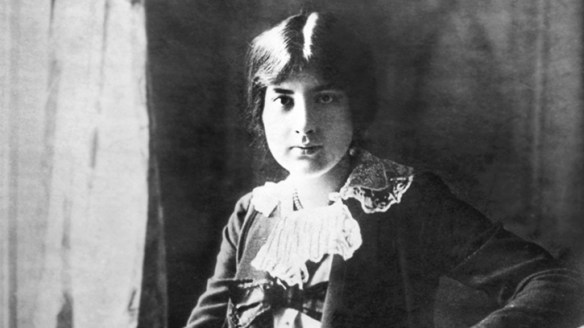
Boulanger (above) was a friend of Debussy but had a tragically short-lived existence, dying from complications of illness at the age of 24. In that brief time she had already served notice as a composer of considerable invention, deep emotion and the ability to extend colour, harmony and melody in particular. All these things were on show in Psalm 130, the performance notable for its exquisite brush strokes.

The only problem was a difficulty in following the text itself from the arena. Although the right notes were undoubtedly there from the chorus, and mezzo-soprano Justina Gringytė was full of tone in her solo passages, the words themselves were difficult to grasp above the texture. Some of the blame for this could go to the Royal Albert Hall acoustic itself – and it certainly wasn’t at the expense of a quite wonderful piece that should occupy a much firmer place in the repertoire.

For the rest of the programme Morlot and his charges gave us popular Debussy and Ravel, beginning in the heat haze of Prélude à l’apres-midi d’un faune and ending with the minimalist Boléro. These pieces were fascinating to contrast, from Marie-Christine Zupancic’s languorous flute solo that led off the Debussy – beautifully played – to the insistent, temple-knocking side drum of Adrian Spillett in the ubiquitous Boléro. Morlot paced both to perfection, giving us a chance in the Ravel to indulge in Matthew Knight’s trombone solo but also bringing out the Spanish rhythms and colour that make the piece a riot. He brought percussion section leader Spillett to the stage for a well-deserved curtain call at the end.

Before Boléro we were treated to the exquisite Nocturnes of Debussy – which would have been even more exquisite were it not for a barrage of coughing around the hall. Still, that did not completely harm a sensuously shaded account of Nuages (Clouds), the first Nocturne, whose softly oscillating chords left their understated mark, before the second and much quicker Fêtes (Festivals) ran lightly on its feet. The central procession episode of this pictorial movement was brilliantly paced by Morlot, with a hallucinogenic effect achieved through to muted trumpets, distant horns and wide open string textures.

While these two movements were special the concluding Sirènes (Sirens) was bewitching, fusing women’s voices and orchestra in an innovative combination that predates Holst’s The Planets by some 20 years. The CBSO Youth Choir were superb here, singing as one and hitting the high notes without fear – and without compromising the colour Debussy so clearly strives for. Morlot portrayed the vast, wide open scope of the sea – but also seemed to be looking beyond, casting his gaze far into space. This worked extremely well in the Royal Albert Hall, though perhaps quelling the coughers at the end was an even greater achievement!

This was an inspirational Prom, giving us familiar classics and the relatively unknown, boosting the profile of Lili Boulanger while reasserting the claims of Debussy and Ravel to be masters of their field. French classical music at its finest.

Ask the Audience at the BBC Proms – Jak Hussain on the Minnesota Orchestra’s concert of American music

For the latest in Arcana’s Ask The Audience series Jak Hussain gives his verdict on the Minnesota Orchestra and their Prom in tribute to Leonard Bernstein.

Prom 31: Inon Barnatan (piano), Minnesota Orchestra / Osmo Vänskä

Bernstein Candide Overture (1989)
Gershwin Piano Concerto in F major (1925)
Ives Symphony no.2 (1897-1902, 1950)

Royal Albert Hall, Monday 6 August 2018

You can listen to this Prom on the BBC iPlayer here

ARCANA: Jak, how would you describe your musical upbringing?

My musical upbringing is Top of the Pops and The Chart Show, on a Thursday and Saturday. When we were all growing up we didn’t have much money to buy albums, and one of my earliest memories is my elder brother borrowing a tape recorder. We had two and he used them to record the Top 40 from one radio to another. Music was something that was in our house but it wasn’t a necessity to buy an album…but I remember my older sister used to listen to George Michael and Wham!, and everyone would gather round the television to watch Top Of The Pops in the early 1980s. We would sit there and watch when they came on, and that’s where I remember music the earliest.

Then The Chart Show on a Saturday morning – those were my outlet for music. It was an actual event to watch on Thursdays who would be the number one!
After that my sister got married, and her husband brought in the rest of it – easy listening, classic rock, and that’s what made me start listening to other genres – classical Indian music too. It all grew from there. My mum listens to traditional classical pieces from Bangladesh and India, and I think she is a lover of classical music, though she decided not to come to the Proms with me – she said no, take your wife!

Name three musical acts you love and why:

One is Jeff Buckley, one of my favourite artists of all time – and I love him because of the sweet and sour of his music. He made one album in his lifetime which is an absolutely sublime masterpiece, and then he passed away tragically. That masterpiece has left a legacy though. I reluctantly listen to the other pieces that have come out, because it’s his unfinished work, so it pains me to listen to it. It’s not how he would have liked it. That one album is sublime though, and fuses Western and Eastern music. One of his heaviest influences on that album is Nusrat Fateh Ali Khan – his Elvis Presley. You’ll notice that his vocal range is based on the Indian Raga scales.

The second one would be the band Queens Of The Stone Age. I think it’s Josh Homme’s voice more than anything, and the productions of his work.

The third would be film scores – they are my thing. I annoy my wife by telling her about composers and what music they’ve done, how they sound. John Williams uses a lot of horns, Thomas Newman a lot of piano, that sort of thing. I love film scores for what they evoke in the actual film they are trying to evoke. For me, film scores are the new classical music – they incorporate absolutely everything.

Where I grew up you were only supposed to like a certain genre of music, like hip hop or street culture. That wasn’t me – I like what I like! It doesn’t matter if it’s classical, pop music – something that evokes an emotion in you. This is what music is for me. You go through phases, and in my twenties I was very heavily into guitar band music, while my friends were listening to hip hop and drum and bass. I’d put a CD on in the car, of people like Jim Croce, Crosby Stills & Nash, stuff like that, and they would be “what are you listening to? This isn’t cool!” I think what’s better is that in my circle of friends their tastes actually grew, and rather than sticking to one genre they are receptive to different types, they’re appreciative of all genres, which I think is great.

Was this your first experience of the Proms in the Arena?

Yes. I had this misconception that it would be high brow, suited and booted – but it is very different to what I thought it would be. It’s absolutely brilliant, and shows you not to be judgemental about how things might me. It’s reverse snobbery! I had this idea of suits and ties, but it’s just people who love music. It sounds better in the arena than the seats, and you’re actually closer to the orchestra. You are a bit more detached in the circle and the boxes, it’s more regulated – but down here you can see what is going on.

What did you think of the Bernstein?

I’m familiar with West Side Story, but to answer that question I would put the first and second pieces as very similar. It reminds me of old Hollywood – and again movies from that era. One of them (the Gershwin Piano Concerto) reminded me of Cleopatra, when the drums were playing it made me think of the beginning credits. I remember watching these old movies with my dad and thinking they were brilliant, and that’s the whole thing with me liking movies, the scores make you remember the actual film. It stays with you, and so this music reminded me of a bygone era.

What did you think of the Ives?

The first couple of movements started off light and got heavier, but the last movement was the one I enjoyed the most. It had elements of Yankee Doodle, an American army tune that starts getting you going, and it ended absolutely brilliantly with the conductor jumping up and down to get the orchestra to make all the emotion he wanted. I loved the crescendo of sound, the military music – and then classical music all coming into it with a huge sound. I love the way they know how to lessen a tone in one part of the orchestra and bring it out elsewhere. I can’t read music so I don’t know how they do it, but it’s just amazing to see it come to life in front of you.

The thing that comes into my head with Ives is an image of a horse cantering. That’s the best way I can describe it! He goes from a minor key to a major key, and you think am I feeling sad or happy? I didn’t understand how some of it would go into a sombre mood and then it would go funny. In my head I have a structure of a piece of music – melancholy, happy or something – but here everything is in together. It works. With Gershwin I could understand the elements of jazz, but I didn’t understand if he was classical too. The music was great – it’s just the understanding of where it was going at the time. That was the first piece of Ives that I have heard though, and I really enjoyed it. I loved the end as well, it was one of those things where you think – should that be there?! I love delving into that sort of thing. Music is great, isn’t it?!

Verdict: SUCCESS

Talking Heads: Damian Iorio

Interviewed by Ben Hogwood

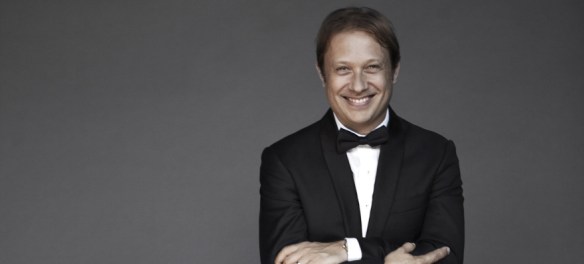
With the divisiveness surrounding these shores on account of Brexit, here is a tale of cross-European collaboration and unity. London-born and Italian based, conductor Damian Iorio has close links with Russia, France – and Milton Keynes. Arcana hooked up with him for a chat about conducting Russia’s flagship opera, bringing classical music to the UK commuter belt and promoting ‘home’ composers via the Naxos label.

We begin by talking about the flagship opera – Musorgsky’s epic, Boris Godunov, which Iorio has conducted at the Opéra Bastille in Paris this summer. He is wholly enthusiastic about the experience. “It has been very good, and what helps is that the production itself was great, and of course the music is marvellous. The cast have been phenomenal too. This is the first time I’ve conducted Boris, and we have done the first version – which isn’t done very often. It is not so well known, and there has been a lot of hard work to get it free and put it on.”

The opera had a complicated genesis, which he takes up. “The potted history is that the first version wasn’t passed by the imperial theatre committee, because they wanted more female roles. There were large-scale scenes, and it was never staged. Then for the second version he added the last act, and it was staged but not ultimately very much. Musorgsky was not a professional composer and his technical abilities were not so great, so Rimsky-Korsakov completed an orchestration, and this was taken as a new edition. We had to tweak it a bit, restoring some of the chamber-like qualities of the first version, especially because in Bastille we had a 15-year-old singing the address, so we had to be very careful balancing that out.”

Iorio has conducted opera in Paris before. “Ten years ago I was there to conduct Smetana’s The Bartered Bride”, he recalls. “From that I learned they have their own characteristics, and I remember the entrance to the pit and feeling the history behind me. There’s a little door near the pit that goes to a lake, a man-made reservoir. I thought I could disappear forever with all the ghosts of the past! It is a very large pit, and when I conduct there I feel a great sense of occasion. It is a real honour and privilege to have been there.”

Boris has more Parisian connections – and has also reaffirmed Iorio’s love for Russia. “It is a very important musical statement that has influenced both Debussy and Ravel”, he asserts. “The Pushkin libretto is based on fact, and so it is a very important historical statement. We worked with some great Russian singers for this production, and they treated me as Russian. I love the country deeply – my wife is Russian, I speak Russian, and it is an honour to be respected like that. I learnt from them of course, not least because the librettos were incredibly complicated. My wife and I translated it word by word to get behind the double meetings. The published version is complicated, and we had to get behind the text to understand the history of certain phrases and sayings.”

First impressions might imply opera in Paris and concerts in Milton Keynes inhabit very different worlds, but Iorio enjoys the contrast between the two. He has been Music Director of the Milton Keynes City Orchestra since 2014, and enjoys it greatly – with music the common ground linking this to his work in Paris. “Milton Keynes is a very different animal but we have had Russian music there too in our recent season, through a programme of operatic music. We have done Mozart and Haydn too, and we have hooked up with some fantastic musicians, including Stephen Hough and Chloe Hanslip.”

He thrives on his dual nationality, as well as a multicultural thread that runs through his family. “I am half English and half Italian, and all my family are musicians. I was born and brought up in the London musical life, but I’ve worked for periods in Italy and lived and studied in Russia. I have a great affinity with Russia and actually feel quite Russian. To add to that I played in a Danish orchestra for six years, and still speak Danish now. It’s very important to know languages I think, to relate to the people you work with and the environment you’re in.”

The conductor is keen to further the cause of a number of Italian composers from the turn of the century, in the process of being rescued from comparative obscurity. Respighi is already relatively well-known, and Iorio has explored the trilogy of Roman symphonic poems with several orchestras, most recently the Kyoto Symphony Orchestra in April. The cause of Pizzetti and his contemporaries, however, is lesser known – and Iorio has recorded a disc for Naxos of the composer’s Symphony in A major and Harp Concerto.

“There are a lot of Italian composers who are not so well known,” he explains. “The list includes Malipiero and Casella as well as Pizzetti. These were all important figures at the time, but they had a rather different relationship with Fascism, and relating with the opera became more important in Italy. What I have been trying to do recently is to discover and record the repertoire of these composers. When my father was growing up, Italy was a great place for the Avant-garde. Last for a few decades but very interesting looking back. The Pizzetti symphony was written for the 2600th anniversary of the accession of the first Emperor of Japan. Britten wrote the Sinfonia Da Requiem for the same festival but it was turned down – and yet he had written this incredible piece. Pizzetti was considered on the same level as Britten and the Soprano and Harp Concerto are beautiful pieces.

Iorio speaks passionately about his work in this area. “It is important that people have access to this music, because in the past it has been recorded either badly or not at all. There is a whole world to be discovered, and I believe it’s the right time to program it again. I have a family link, as my grandfather’s wife was principal at the conservatoire in Naples and Rome. She had links to all these composers, and that gives the recording a personal edge for me.

It is of course pleasing to Arcana’s ears to learn that Iorio does not restrict himself to classical music – and does in fact have a deep love of progressive rock. Flitting between the styles comes naturally. “I’m trying to educate my kids properly, and that includes listening to Planet Rock. When I was 13-14 and living in London, there was a guy called Tony that I got to know. I had a cheap guitar so we did twelve-bar blues in the play centre, and he would let me play along. I used to play along to the music of Queen and Metallica – amongst many others! – and I used to go to Hammersmith Odeon and see concerts.”

Iorio highlights the pianist Gabriele Baldocci, with whom he performed Chopin’s Piano Concerto no.2 with the Milton Keynes City Orchestra – as a classical artist who also loves rock music, and has written his own Queen tribute.

“It is not a coincidence that in a lot of classical musicians listen to rock”, he affirms. “They work hard, they’ve got technique and a lot of musicians can relate to that. A lot of pigeon holing goes on in music and it would be nice to move between these areas more freely.”

He has a lot to look forward to in the coming months of 2018. “We have a new season at Milton Keynes, where we will have some very good soloists, and I will be going back to orchestras in Holland and Spain. I have my National Youth String Orchestra here in London, and they will be playing at Kings Place on 12 August. We have some amazingly talented kids in Britain, and some choose to come to us instead of the National Youth Orchestra. Then from February onwards I will be with the Welsh National Opera and we will be doing Mozart‘s The Magic Flute. I also have Holst‘s The Planets with the Royal Philharmonic Orchestra at the Albert Hall. There is plenty to look forward to!”

Damian Iorio conducts the National Youth String Orchestra in a program of Mendelssohn, Strauss, Britten and Tchaikovsky over three dates in York, Ambleside and London – appearing at Kings Place on 12 August. For ticket information click here. For more information on Iorio’s forthcoming dates, you can visit his website