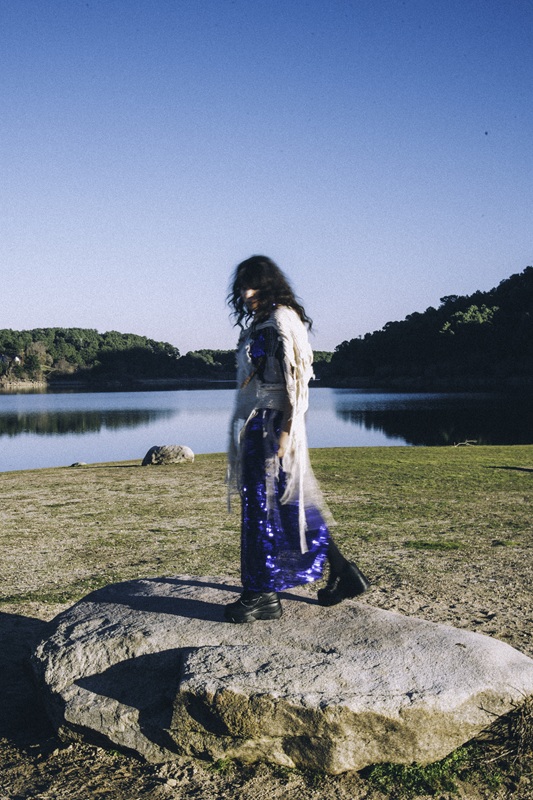
Arcana are delighted to present a playlist from the Spanish cellist, singer and producer Yamila, who is on the verge of releasing her new album Noor, due on 6 February through Mexico City label Umor Rex.
Noor is a work with intertwined strings and electronics, sculpting landscapes where, in the words of the press release, “listening expands toward territories of dusky beauty. The album was born under the shelter of a secret ecological community. There, among damp meadows and the song of a blackbird, Yamila feels an ancient urge—to sing to the bees. Inspired by ancestral rituals in which sound served as a bridge between species—to summon herds or soothe the trembling sky – the artist listens to the wind and reimagines that lost practice through a contemporary language: titanic harmonies dissolving into fragile microtones, rhythms that pulse not merely as measure, but as breath that stirs the body.”
This playlist could be subtitled Cello and Beyond, for on it Yamila curates an hour of listening bringing the instrument into healthy contrast with sounds around. You can listen on Spotify here:
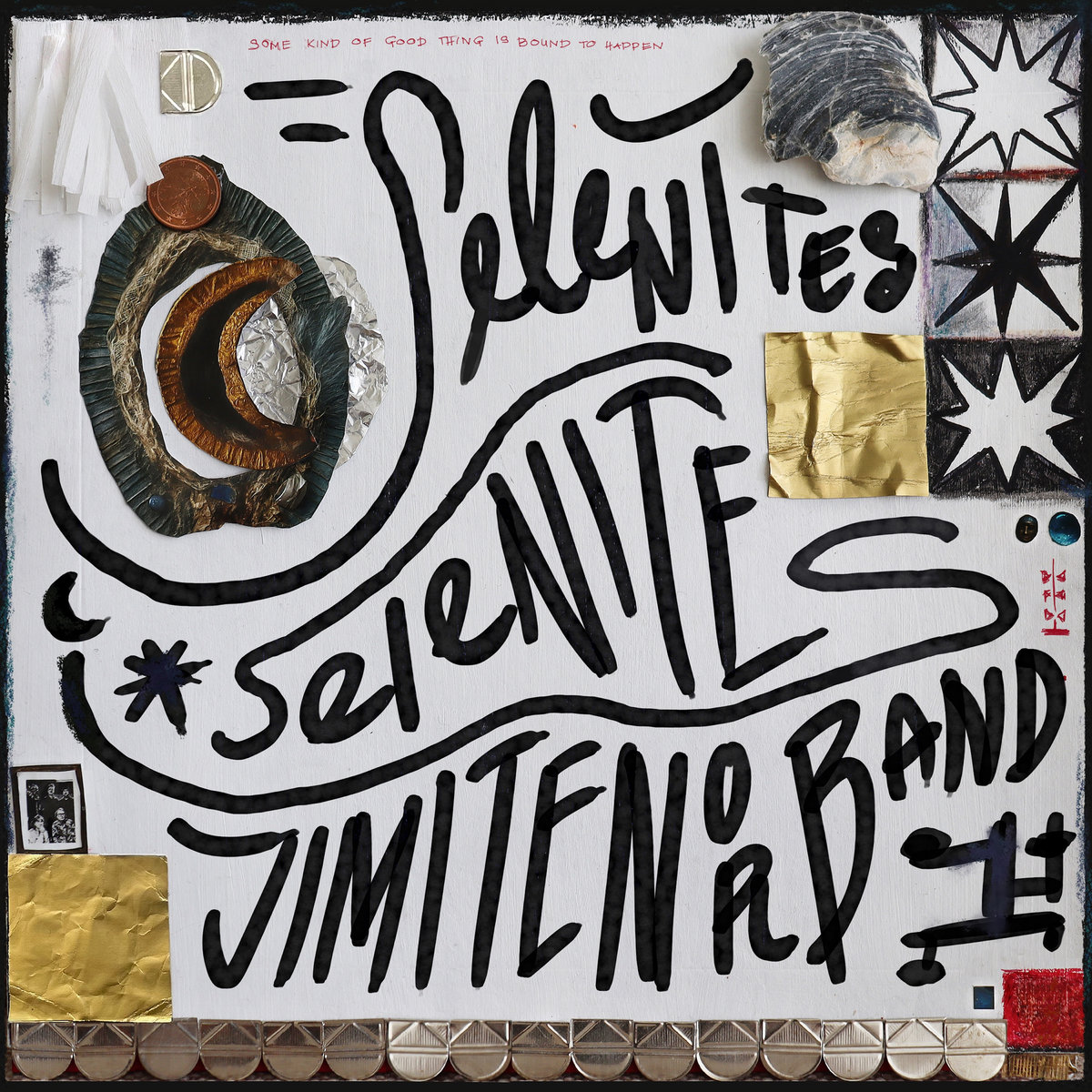
The Jimi Tenor Band has its roots in the early years of this decade, and a group of msuicians rehearsing in Jimi’s kitchen while rehearsal venues were unavailable during the pandemic.
Initially a live concern, the group of Eeti Nieminen, Heikki Tuhkanen, Ekow Alabi Savage and Lauri Kallio honed their craft in Helsinki, in thrall to Afro-jazz but leaning on their experience in a myriad of musical forms. The album was recorded in Kiikala, Finland, then finished at producer Tobias Levin’s Hamburg studio.
What’s the music like?
Jazz is certainly the prevalent style here, but there is a refreshing freedom that allows the music to evolve naturally.
The title track and Some Kind Of Good Thing both delight in joyful singalongs, while Shine All Night brings in Ghanaian vocalist Florence Adooni to front a song full of persuasive rhythms.
Universal Harmony sings of brighter hopes for humanity – something we can all get behind – while Alice In Kumasi has some lovely, grainy textures to the slow introduction from the band, before branching out into syncopated exchanges – which Furry Dice picks up, while heavy on the funk.
Does it all work?
Yes, thanks to the instinctive approach the instrumentalists bring to the table, and the airy choruses that raise a smile.
Is it recommended?
It is – and though released in November, the Jimi Tenor Band make music to bring light to the darker months.
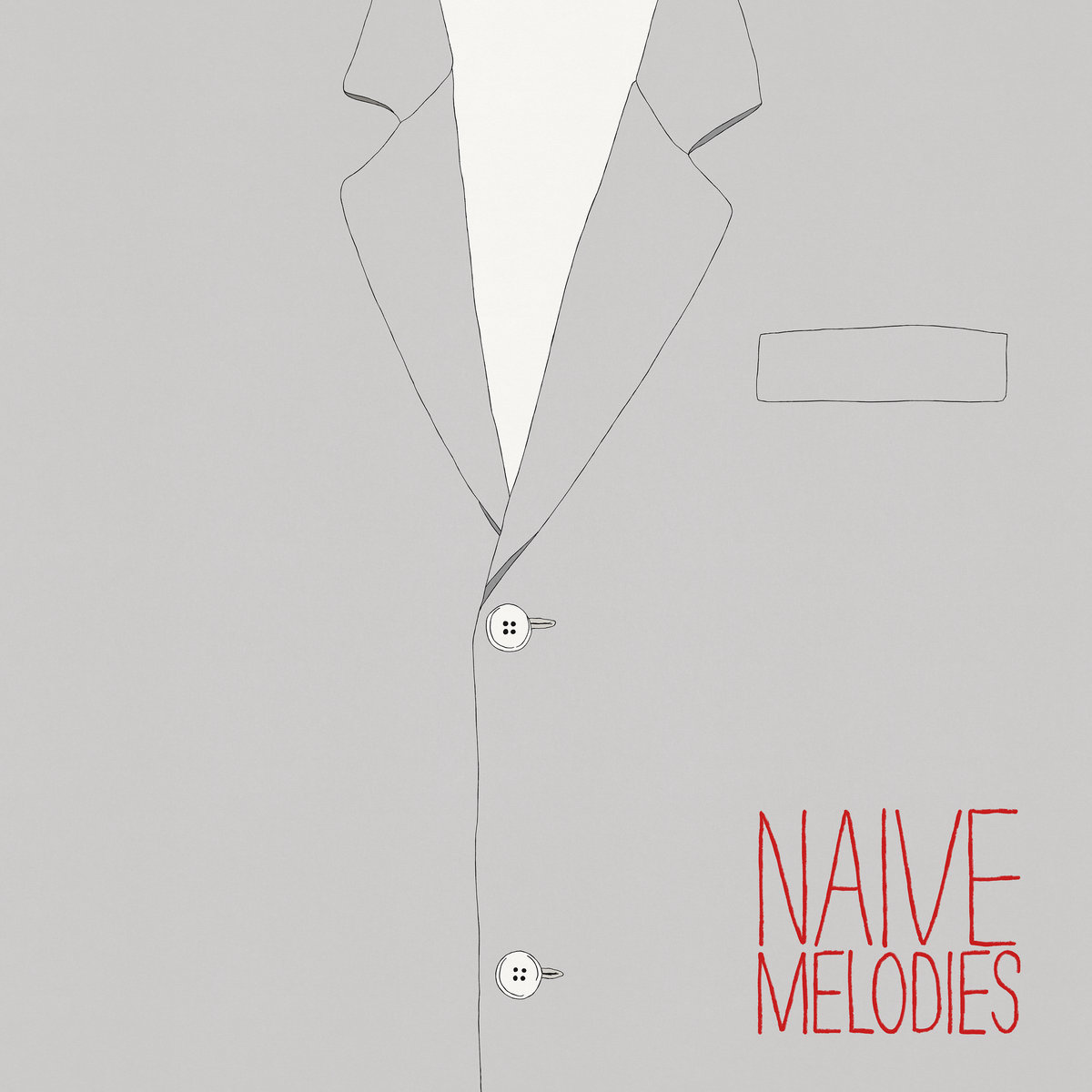
Talking Heads songs have always been ripe for cover versions, but Naïve Melodies is going one step further. It is curated by Drew McFadden, who has previous with an imaginative Modern Love tribute to David Bowie, also on BBE. In his own words, he is looking to “spotlight the deep and often overlooked influence of Black music on the sound of Talking Heads, drawing from the rhythmic foundations of Afro- diasporic traditions, soul, gospel, Latin, and spiritual jazz.”
The artists are drawn from far and wide, reflecting a ‘no musical rules’ policy as McFadden’s cast are let loose on one song each.
What’s the music like?
Invigorating. This is a fascinating musical project, and the rewards are frequent and many. Risks are encouraged in these versions; no stone is left unturned not just to highlight the influence of Black music but also to celebrate the group’s powers of invention.
As a consequence, songs we thought we knew are reframed and given fresh perspective. The best known songs get some startling treatment, with W.I.T.C.H. taking Once In A Lifetime to the cleaners, off beat and unexpectedly thrilling. And She Was becomes an unexpectedly tender R&B ballad in the hands and voice of Vicky Farewell, while Rogê offers an airy Road To Nowhere that works really well.
Of the many other highlights, Georgia Anne Muldrow’s questioning take on Girlfriend Is Better brings squelchy bass and an oblique vocal together, while there is a big space for the electro dub of Liv.e, taking on I Zimbra. The warm hearted EBBA version of Uh-Oh Love Comes To Town is a delight, while the scattered beats and bright vocals / guitar combination of Florence Adooni work well on Crosseyed And Painless. Meanwhile the dreamy Bilal cover of Seen And Not Seen is a rich reward.
Does it all work?
In the main, though not all the versions are immediately successful. Miguel Atwood-Ferguson’s breezy string arrangement of Heaven makes an effective prelude but is musically restless, while Astrønne’s version of Psycho Killer begins promisingly but loses focus.
Is it recommended?
Yes. Naïve Melodies is an eye-opening compilation, whichever musical direction you approach it from, and the artists clearly had a lot of fun making it. Should David Byrne and his fellow-Talking Heads hear it, they are bound to be impressed and charmed in equal measure.
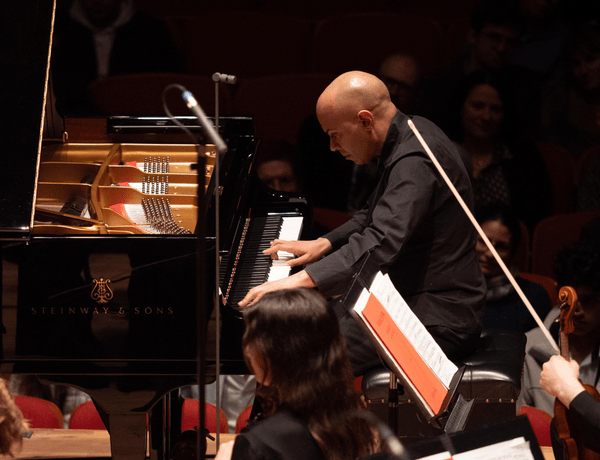
Stewart Goodyear (piano, above), City of Birmingham Symphony Orchestra / Kazuki Yamada
Simon Hellfighters’ Blues (2024) Mazzoli Sinfonia (for Orbiting Spheres) (2014) Gershwin Rhapsody in Blue (1924) Ives ed. Sinclair Three Places in New England (1911-14) Gershwin An American in Paris (1928)
Symphony Hall, Birmingham Wednesday 21 January 2026
Reviewed by Richard Whitehouse
The heady interplay of jazz and blues idioms (with a little help from pioneer W. C. Handy) of Carlos Simon’s Hellfighter’s Blues launched in exhilarating fashion this City of Birmingham Symphony Orchestra concert, pertinent as the 250th anniversary of American Independence approaches.
Missy Mazzoli’sSinfonia (for Orbiting Spheres) could not have been further removed with its formal parallel to that of the solar system; an abstraction offset by the ‘sinfonia’ connotations of a Medieval hurdy-gurdy whose modal drone, recreated here with harmonicas played by the horns and woodwind, underlies the piece’s increasing velocity. That this suggested a tangible connection with the past and, at the same time, absorbed accrued influences into an idiom of today said much about the effectiveness of Mazzoli’s modus operandi these past two decades.
It could have been a conceptual leap too far from here to Gershwin’s galvanizing of the ‘jazz age’ aesthetic almost a century earlier yet Rhapsody in Blue has lost but little of its edge in the interim, especially as Stewart Goodyear rendered its solo part with almost reckless enjoyment. With almost every focal point either underlined or rendered in inverted commas, this was not the subtlest of performance, but Kazuki Yamada was at one with his pianist in conveying the breezy excitement of this music, with the final stages emerging as a high-octane apotheosis. Goodyear is evidently a pianist with whom to reckon – maybe his next appearance will find him tackling Gershwin’s Piano Concerto in F? For the present, he gave the slow movement of his own Piano Sonata (1996), poised midway between Copland and Piston, as plaintive encore.
Whatever his radical tendencies, Charles Ives embodies the ethos of an earlier age (Michael Tilson Thomas aptly described him as America’s greatest late-Romantic composer), such as felt uppermost with Yamada’s take on Three Places in New England. So the intensifying of feeling in The ‘St. Gaudens’ at Boston Common was secondary to a distanced recollection of time, while the elaborate march-fantasy that is Putnam’s Camp, Redding, Connecticut was genial rather than boisterous – albeit until its accumulation of activity for an ending of visceral abandon. The Housatonic at Stockbridge yet which left the deepest impression – its fervent evocation of place from the vantage of marital bliss duly inspiring a welling-up of emotion which not even Yamada’s slight over-hastiness could rob of its sheer eloquence.
An American in Paris might have been an awkward piece with which to close, but succeeded well on its own terms. Something between tone poem and symphonic rhapsody. Gershwin’s evocation of a compatriot (himself?) a little lost in the French capital received an impulsive yet perceptive reading. There was a start-stop feel to its earlier stages, but what ensued was rarely less than persuasive – not least those final bars with their tangible sense of resolution.
It certainly brought to a resounding close a concert which conveyed much of the sheer variety of American music across little more than a century. Hopefully Yamada will programme more of this repertoire – perhaps an Ives symphony or music by the late, great Christopher Rouse?
Craven Faults is proving to be a particularly fertile source of long-form instrumental music. Created by a single, anonymous hand, its pictorial approach leans on industry for inspiration but looks beyond that, creating an intriguing form of descriptive ambience. This has already been shown in double-length albums Erratics & Unconformities and Standers, and a number of EPs.
“The journey on Sidings isn’t made with people in mind. It begins in an isolated community which has built up around one of the great engineering projects of its age. The work is slow and perilous – thousands of men at the mercy of the elements. The ground is frozen or flooded for months on end, while red kites circle overhead. 14 tunnels and 22 viaducts to open up the north. The on-beat and the off-beat interchange. Recorded in 1969, Olympic Studios – a precursor to the ships we built.
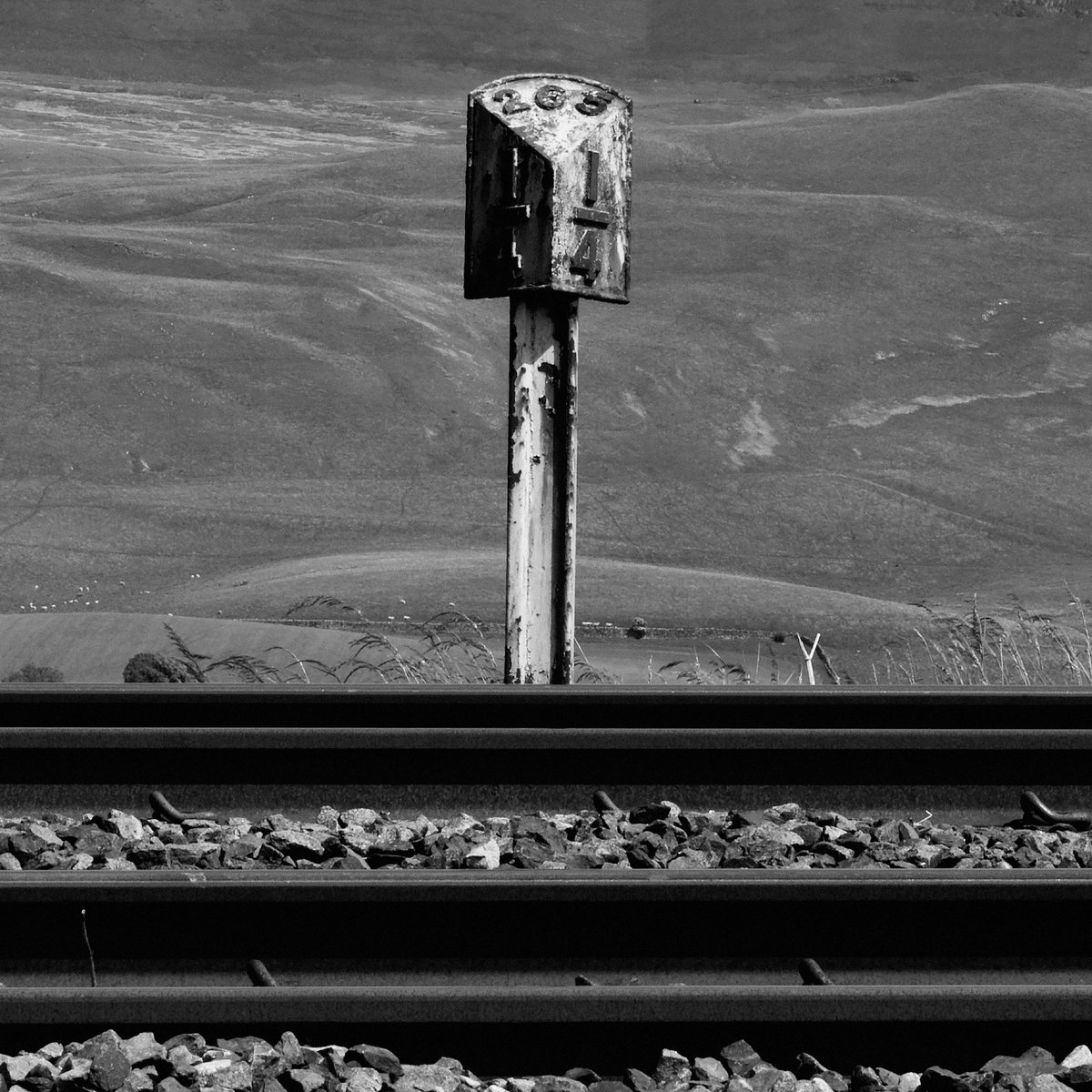
We walk northeast in search of a distance marker. When it first comes into view, it looks similar to where we commenced our journey on ‘Bounds.’ The open moorland gives it away. This particular trip will take considerably longer, by foot and packhorse, before the land and power is redistributed by order of parliament. Just shy of fifteen minutes between 1952 and 1964 – from J&M Studio, New Orleans to the San Francisco Tape Music Centre. Rapid progress and consistently fertile ground.
As the sun rises, we make our way by road to a junction. There is a livestock market and an inn for travellers. It’s important to make the journey before the seasons change and this area becomes inaccessible. An idea almost lost in the mists of time – a West German prototype unearthed twelve years later. A little way due south, we arrive at another crossroads. We find a maestro labouring over his masterwork – Gold Star Studios, United Western Recorders, Columbia Studios and Capitol Studios. October 3rd, 1966 to November 20th, 1968. Inspired by the story of another community building the railways. The circle is complete and encompasses continents.
We continue south, hitching a ride on a finely turned-out cart. We help to unload the churns onto the platform and wait for the train to arrive. Our cargo will head east before switching tracks to be delivered into urban areas. Hundreds of thousands of gallons per year. The Black Ark, 1977.
From there we head north and west a little way and find ourselves near to where we began. Another temporary settlement built up along the line, where each chord occupies its own space. Wally Heider in 1967 and finished off at home a year later. Spikes driven into the frozen ground and the Kirkstall Forge hammer in the dead of night. Finding order in the chaos.
We strike a deal with the local farm and walk a thousand heads of cattle to market. The ground is heavy and it’s slow going – it will take the best part of a week. We stop to graze at Suma Recording Studio, 1978 and then Sunwest, 1969. We reach the end of our journey via a final rest stop – an enclosed field on the moor we hovered over on ‘Standers.’ 1858. An outgrown coda and proof that two chords will suffice. Three is a luxury. A radio enthusiast intercepts government secrets – Cargo Studios, 1980.
What’s the music like?
Once again, the music matches the story – and Sidings unfolds in subtle yet compelling form, finding a meditative sweet spot on Ganger that never lets up, with shimmering figures in the half-light above a supportive, broadly phrased drone.
The start of Stoneyman is initially like the summons of a bell, above a drum with an ominous tread, while Three Loaning End slows the tempo, with an oddly persuasive lilt. Incline is scattered with melodic fragments that have the quality of settling snow, again over the reassurance of a supportive bass drone. Far Closes, meanwhile, operates with a steadying kick drum pulse beneath subtly shifting figures.
Does it all work?
It does. This is an album to get thoroughly engrossed in, rewarding its listeners with vivid and captivating imagery.
Is it recommended?
Very much so. Craven Faults’ music is distinctive and forward looking, yet extremely conscious of its recent past. The blend is both fascinating and rewarding, becoming a form of 21st century English electronica with an uncanny awareness of its surroundings.