
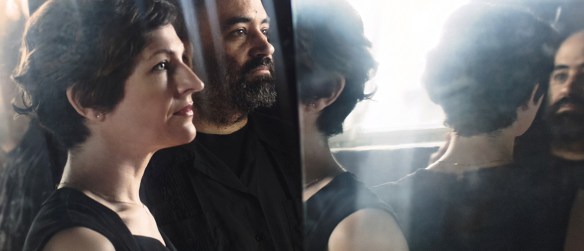
Vanessa Wagner – Expanding the piano

vanessa-wagner

We’ve already spoken to Murcof about his collaboration with pianist Vanessa Wagner – and now it’s time for her side of the story. She describes how she found classical music and how her meeting with Murcof opened up all sorts of electronic possibilities. Here they are on their work together:

Vanessa, can you remember your first encounter with classical music?

My parents were not listening to a lot of classical music. They were rather into jazz and the French chanson. Then one day, the piano of my great-grandmother came home, and I started to play. My childhood idol was a wonderful Romanian pianist named Clara Haskil, far away from the glamour girls are usually dreaming of! She is still an artist that I love.

Who are the composers you have grown to particularly admire?

I grew up with the music of Bach, Schubert, Schumann, Mozart, Rachmaninov, Brahms and Janáček, who are still my favourites, Schubert especially. His melancholy, and the time stretched in his music touches me enormously. Die Schöne Müllerin and Winterreise are pieces that never leave me.

What was it that appealed to you about working with Murcof?

I was the one to initiate this encounter. I have listened to his music for a long time. I met him at the workshop of the Infiné label, and we made an improvised test. Then I had the chance to have a residency in a room of the Arsenal of Metz. They gave me carte blanche to develop new projects, I invited Murcof to play with me, and Statea was born.

How did you make sure you got a good balance between the piano and the electronics?

I always asked Murcof to pay attention to the acoustic piano sound. The piano is the starting point of this project, and it was important that the electronic effects do not swallow its sound even if it is sometimes distorted. Similarly, it also seemed very important to stay true to the scores of composers that I interpret. That’s why the album is called Statea, which means balance in ancient Italian.

Had you listened to much electronic music prior to working with him?

I have listened to electronic music for 20 years. At that time, in my classical circles, it was frowned upon. I had never heard of the big techno anthems, and I went right back to ambient/IDM artists – the likes of Autechre, Aphex Twin, Model 500, Maurizio, UR etc.

Do you think there are other albums or pieces of music that bring classical and electronic together well?

Max Richter´s Four Seasons of Vivaldi works pretty well. Brian Eno also has a beautiful piece called Fullness of Wind, taking its lead from Pachelbel.

Do you think classical and electronic music have a lot more in common than one would expect?

I think meetings of the two styles are quite possible, if one avoids falling into the mainstream that we call crossover classical. The approach focuses on the sound result. We must respect the original script. Adding a beat onto a piece of Mozart or Beethoven cannot be a creative artistic process in itself.

Moreover, music known as ‘contemporary classical’ and art music has a lot in common with experimental electronic. Bridges are possible and desirable between these universes.

Has working with electronic music helped your appreciation of classical?

This does not specifically help me in my classical interpretation. What I greatly appreciate is to exercise out of my classical world, to transform the sound of my instrument, and to experience concerts differently, giving a new fresh perspective to my daily occupation of being a pianist.

For me, it is an interior window that opened itself, and I strongly hope that this is new cornerstone in the musical world which will contribute to the opening of minds and ears!

If you could recommend one piece of classical music to Arcana readers that you’ve been listening to recently, what would it be and why?

I would recommend listening to the Goldberg Variations of Bach (Glenn Gould, for example), the Death and the Maiden String Quartet by Schubert, or Tabula Rasa by Arvo Pärt, especially the second movement Silentium.

Statea, by Murcof and Vanessa Wagner, is out now on Infiné. The pair will appear at the Barbican on Monday 31 October as part of a bill including pianist Lubomyr Melnyk. Tickets can be purchased from the Barbican website. Vanessa will also be giving her thoughts on classical music to Arcana shortly!
Murcof – bringing classical and electronic music together

murcof

Murcof is Mexican musician Fernando Corona, an artist who integrates classical and electronic music. Working with pianist Vanessa Wagner he has recently released the Statea album, an ambient piece of work that takes its source material from John Cage and Erik Satie amongst others. Here he talks to Arcana about his love of classical music, and how the two forms harmonise together. But first, here’s an introduction to their album together:

Can you remember your first encounter with classical music?

It was a long time ago when I was a kid, and it comes from the side of my father in the family. It was an album of Wendy Carlos playing Bach in the late 1970s, I think. He also did some electronic / analogue synthesizer interpretations of Bach’s music, and so that was the first proper marriage of electronic and classical that I heard. I developed an interest in both, and I became much more familiar with 20th century music from composers like Stravinsky, the Schoenberg school, Xenakis, Ligeti and all the people up to Arvo Pärt, Silvestrov and the minimalists. Classical music has been with me all this time from my childhood and this album is a logical place to go because of that.

How did you get to work with Vanessa?

I met her before we started making music, through her husband Alexandre Cazac. He is director of the Infiné label, and I have been friends with him for many years. We’ve worked together, and in that time he has been very supportive. It wasn’t until a week-long workshop that we did a small arrangement together however. We were playing the same night, and Vanessa was the first one on, then me, so we interlinked the two. Statea has been a work in progress since 2010.

In that time we only did 20 or 30 concerts together, so it is still a fresh collaboration, and now with the album done we are adapting it for the stage. Many things have changed, and we have started from scratch again with some of the pieces, but we have always respected what we are doing.

For our Satie work (Gnossienne no.3) the piano sounds have a lot of analogue processes, where we have brought the piano audio signal into the modular system, before messing around with ring modulation, filtering, and experimenting with the possibilities. The piece is not too long, but I recorded around 45 minutes of messing around and cut the most important and interesting bits to fit the final track.

The album is called ‘Statea’. Is that because you achieve the ideal balance between classical and electronic music?

It’s because to make an album is sometimes the hardest part. It was open enough, it wasn’t going to encapsulate us in a direct way, a literal way, but we talked about a good balance between acoustic and digital. You can listen to the piece as one whole, not just the acoustic and not just the digital but something that works together. That is one of the things I am looking for, not getting lost in the sounds and what I have to say. That’s the reason for the name. We were initially going to use the Latin but Alexandre suggested the old Italian way.

Sometimes when classical and electronic music meet the results are a bit cheesy, but there is a very deep emotion to what you do.

That’s good to know, it’s a process and a matter of deciding what works and what doesn’t. It’s telling a story, and each sound needs a reason for existing. Vanessa and I were working together for a common goal. Most of these compositions are well known, and people have an idea about them, but even if it’s an abstract message it’s still there. You can enhance it or steer it off somewhere else.

With Satie, yeah, we wanted to see him a new light, especially as it’s one of the pieces that is most famous. It was tricky to work with it because of what you just said. We wanted to try and prepare a fresh view of the piece, to justify Vanessa and I working on it to contribute something new.

Is your approach in some way similar to that of Satie, a kind of ‘less is more’ viewpoint?

In a way, though I do find it quite a challenge to say when a track is done. I take that step very seriously, and I don’t like to overdo or underdo things. When a piece is finished it is when I have explored so many possibilities! Then I choose the best one, polish it and finish it.

Do you intend to continue working with classical music in this way?

Yeah. There are many things that can be done with classical music, and there are many approaches I would like to try. I would say ‘watch this space’, with compositions old and new. The acoustic instruments are so rich, and it is wonderful to work with them electronically and to open a can of worms with some of the weird harmonics that are peculiar to those instruments.

It has been a really strong emotional passage for me since our early ages, it is a big part of me on a personal level, and it is a natural situation for me to work with it.

You have a very fine ear for orchestration. Have you ever written for a full orchestra?

Yes. I did a small interaction with Jean-Paul Dessy, from Belgium, who is a composer and a director. Musiques Nouvelles is the name of his ensemble, and they adapted a piece of mine for orchestra. I have been sitting with this idea for a long time, and I would love to sit down with a composer / director who is open to the idea. It would be a bit stressful for sure but would be a lot of fun as well.

What does classical music mean to you?

For me personally each kind of music is a whole avenue of expression – classical, jazz and electronic with its many subgenres. Classical is long standing for so many centuries, and for me it is about always keeping with acoustic instruments – the more conservative music.

Classical music is a combination of centuries of studying, developing, trial and error of previous work. It is an emotional world but also a very strict one. The core essence is the compositions, but you need trained interpreters to play it. Because of that it can be stressful and competitive, but I think it is worthwhile to have highly trained interpreters so that we can enjoy the music of the past, from the Baroque to the 20th century twelve-tone music of Schoenberg and his school.

It is always this though – highly emotional and direct. In my case I formed an instant connection with it and because of that I have always found it very emotional.

If you could recommend one piece of classical music to Arcana readers that you’ve been listening to recently, what would it be and why?

I always go to one of my favourite composers of late, Valentin Silvestrov, a composer from the Ukraine. His latest work is amazing and I often go back to his Requiem, written for his wife. One small section of it is also part of a series of songs for piano and voice, but he also did a version for choir and orchestra. It is not a new piece but it is the one that comes to mind right now.

Statea, by Murcof and Vanessa Wagner, is out now on Infiné. The pair will appear at the Barbican on Monday 31 October as part of a bill including pianist Lubomyr Melnyk. Tickets can be purchased from the Barbican website. Vanessa will also be giving her thoughts on classical music to Arcana shortly!

BBC Symphony Orchestra & Semyon Bychkov – Beloved Friend: Tchaikovsky Project

semyon-bychkov

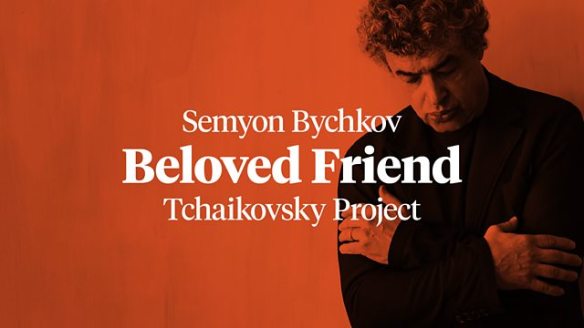
Richard Whitehouse on the BBC Symphony Orchestra, conducted by Semyon Bychkov (above) in the second of their Tchaikovsky-themed concerts

Tchaikovsky Serenade for strings in C major, Op. 48 (1880)

Tchaikovsky Piano Concerto No.3 in E flat major, Op. 75 (1893)

Taneyev Overture: The Oresteia, Op.6 (1889)

Tchaikovsky Francesca da Rimini, Op. 32 (1876)

Kirill Gerstein (piano), BBC Symphony Orchestra / Semyon Bychkov

Barbican Hall, London; Monday 24 October

The Beloved Friend series being curated by Semyon Bychkov provides a revealing overview of Tchaikovsky through some lesser performed works. Not the least of which is the Serenade for strings that, though its individual movements emerge frequently on radio, is not so often encountered in concert. Too short to occupy a second or even first half, it makes for a lengthy yet viable opening item when, as tonight, a full-sized string section is deployed with panache.

Bychkov ensured a fervent response in the first movement, its animated main sections framed by the rhetorical motto theme that ultimately returns as an apotheosis, then found suavity as well as elegance in the Waltz. Despite lack of inwardness, the Elegy yielded real clarity in its denser passages, while the Finale proceeded briskly yet characterfully to its resolute close.

kirill-gersteinNext followed a rare revival of the Third Piano Concerto, itself reworked from an abandoned symphony and what would doubtless have become a three-movement entity had Tchaikovsky completed its Andante and Finale to his satisfaction prior to his death (these latter, as realized posthumously by Taneyev, make an effective whole – as Alexander Markovich demonstrated in a Royal Festival Hall account eight years ago).
As a stand-alone piece, the Allegro brillante (best known in its ballet incarnation by George Balanchine) unfolds a quirky and characterful sonata design – its themes distinctive for their emotional restraint, with a stealthy interplay between piano and orchestra that Kirill Gerstein (above) audibly relished. Momentum faltered marginally after a scintillating cadenza, but the final pages strode onwards to a decisive if peremptory ending.

Overall, a convincing account of music which warrants greater exposure. Hopefully Gerstein will yet tackle this work’s three-movement incarnation: for now, he returned for a reading of Méditation – the fifth of Tchaikovsky’s Op. 72 collection – that oozed eloquence and poise.

More discussed than played in the West, Sergey Taneyev was as least as much a composer as pedagogue; a notable output of orchestral and chamber music capped by his ambitious opera The Oresteia. Beginning life as this latter’s introduction, the present overture expanded into an autonomous entity that surveys the opera’s dramatic content and is an eventful symphonic poem in its own right. Its complementary halves representing an archetypal ‘war and peace’ in dramatic as well as musical terms, the piece is harmonically questing and often texturally adventurous – not least in its extensive though never self-conscious writing for harps. Some 15 years after Taneyev last enjoyed a fair measure of exposure in London, Bychkov directed a fastidious performance to remind listeners that they are the poorer for this music’s neglect.

Even in an era intent on ‘concerto and symphony’ programming, Tchaikovsky’s Francesca da Rimini has never lacked for performances – this symphonic fantasia mingling drama with pathos to a heady degree even for this composer. Bychkov accordingly upped the ante in the tempestuous opening, then secured a suitably rapt response from woodwind and strings in the central section depicting Paolo and Francesca. Its balletic continuation drifted as is often the case, but the final pages portrayed the hapless lovers’ descent into hell with unerring ferocity.

Recorded by BBC Radio 3 for future broadcast in Afternoon on 3, and available for 30 days thereafter via the Radio 3 website

Wigmore Mondays – Nelson Goerner plays Debussy & Chopin

nelson-goerner

Nelson Goerner (piano) © Jean-Baptiste Millot

Chopin Polonaise in F# minor Op.44 (1841) (11 minutes)

2 Nocturnes Op.62 (1846) (12 minutes)

Polonaise in A flat major Op.53 (1842-3) (7 minutes)

Listen to the BBC Radio 3 broadcast here, until 23 November

Arcana’s commentary

For both Chopin and Debussy the piano became arguably their primary means of musical expression. Both used relatively traditional forms – studies, preludes for instance – but stretched them from conventional structures to suit their own means.

Here we heard seven of the twelve Préludes Debussy wrote as a book, the first of two, published in 1909 and 1910. These are character pieces where he was painting a picture or an impression, without always specifying his exact stimulus. Some were more obvious; others were left to the player for interpretation.

Nelson Goerner made each of these his own. The languid, humid atmosphere of Danseuses de Delphes (1:32 on the broadcast), with control and shading, set the scene and led to an enjoyable and mysterious La serenade interrompue (4:35). This was playful but wary too – dancing but not wanting to fully let itself go.

The ‘underwater rolling of pebbles’ from Verlaine’s poem could be sensed in Le vent dans la plaine (7:00), while the simplicity of La fille aux cheveux de lin (9:09) was rather moving. La danse de Puck (11:24) could have found the Midsummer Night’s Dream character in a more playful mood perhaps, while the thick atmospherics of Les sons et les parfums tournent dans l’air du soir (14:02) hung heavy on the air. Finally Les collines d’Anacapri (17:58) danced and shimmered, controlled but letting itself run wild too. The last four high notes were hammered out convincingly (20:37)

Goerner’s Chopin was rather different. The first of the Polonaises (22:14) was Chopin’s most ambitious work to use the dance form, using a Polonaise in its outer sections but a Mazurka in the middle (from 26:56). This central section had more charm but the outer sections were stern, almost obsessive – and brilliantly played. Their return after the Mazurka (30:05) was like two bolts of lightning, the mood almost that of a Tango from Goerner’s native Argentina.

The Nocturnes (33:40) and (40:12) could have done with a bit more air and relaxation; Goerner seemed rather anxious to push on with them. That said the trills of the first (from 37:55) were expertly managed, while the second was really nicely pointed.

The Polonaise (45:53) was heroic indeed, strutting its stuff but frequently dazzling, especially in Goerner’s white hot ostinato (49:02)

There was an encore to finish, an Impromptu of poise and grace (53:48), more of a Nocturne than the other two arguably.

Further listening

There is something rather special about Polish piano music – and to continue from the Chopin the Spotify playlist below offers up some lesser-heard treats in the form of piano concertos by Paderewski and Moszkowski, prefaced by a sprinkling of exotic Mazurkas from Szymanowski.

by Ben Hogwood

Wigmore Mondays – Vilde Frang & Aleksandar Madžar play Bartók and Schubert

vilde-frang-aleksandar-madzar

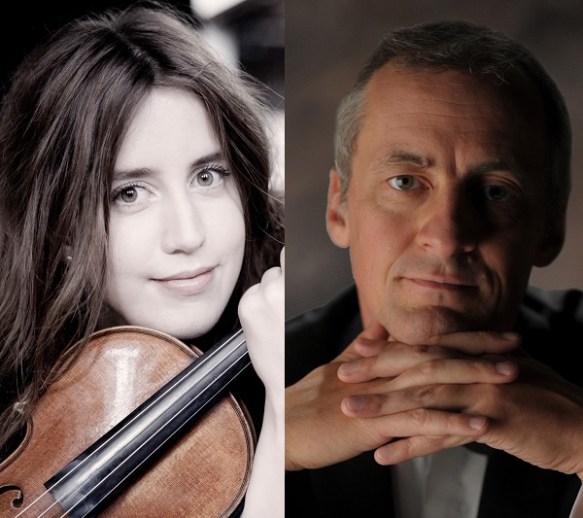
Vilde Frang (left, violin), Aleksandar Madžar (right, piano)

Bartók Violin Sonata no.1 (1921) (33 minutes)

Schubert Fantasy in C major D934 (1827) (21 minutes)

Listen to the BBC Radio 3 broadcast here, until 16 November

Arcana’s commentary

It is easy to see why Vilde Frang is held in such high regard. This contrasting program of Bartók and Schubert showed a steely side to her playing in the former, but also a purity of tone that could be easily appreciated throughout.

These qualities served her well in a powerful rendition of Bartók’s massive Violin Sonata no.1, but she could not have made this impact without Aleksandar Madžar’s superb piano playing, notable for its clarity and rhythmic precision.

Bartók and rhythm are inseparable, and the hold that folk music has on his compositions was all too clear in the syncopations and cross rhythms that Frang and Madžar exploited here. The angular tunes of the first movement (first heard at 2:07) had an assertive mood, brilliantly played.

Richard Bratby’s excellent program note reminded us how modern the music must have sounded in 1922, when Bartók himself played piano with violinist Jelly d’Aranyi, who became an important creative muse. Frang and Madžar powered through the first movement, making light of its technical difficulties, but in the second movement time stood still. Frang’s sweet but thoughtful tune, initially heard alone (from 14:26), was complemented by a solemn and mysterious chorale from Madžar (16:00), the two forces gradually aligning but still lost in a distant world.

The finale arrived with a flourish (25:15), both performers tackling it with some relish and achieving a remarkable unity of ensemble at the end (from 32:30), finishing with a terrifically spicy, bluesy chord.

Schubert’s Fantasy in C major can seem like a long piece in the wrong hands, but here it came alive. Completed in the last year of his life, it is conceived in a single span of four distinct sections, and is a very original piece of writing. Balance between the violin and piano is key, and this was spot on for the moving opening statement, where Madžar had a lot of work to do but was always responsive to Frang’s soft intonation (from 37:09)

A bracing Allegretto section (from 40:23) led to the centrepiece, a Theme & Variations (45:44) The origin of the theme, a Schubert song, was abundantly clear in this lyrical performance, while there was some sparkling playing from Madžar as the variations took hold (try 48:57) This flair and musicality continued to the return of the soft first movement theme, now shaping up in the finale (52:36), an emotional reunion in these hands before a convincing finish (from 57:40).

This was a superb concert, affirming Vilde Frang as one of the best violinists of her generation on the concert circuit, but also illustrating just what a fine pianist Aleksandar Madžar is too. Hear this if you can!

Further listening

You can hear more of Vilde Frang in an early album recorded for Warner Classics with Michail Lifits. Here she brings a sunny tone to violin sonatas by Grieg (no.1) and Richard Strauss, full of youthful exuberance, while there is more Bartók in the form of his Sonata for solo violin, a tour de force:

by Ben Hogwood