
Meta4 play Haydn and Schumann string quartets at Wigmore Hall

The Finnish quartet Meta4 play Haydn and Schumann string quartets at Wigmore Hall
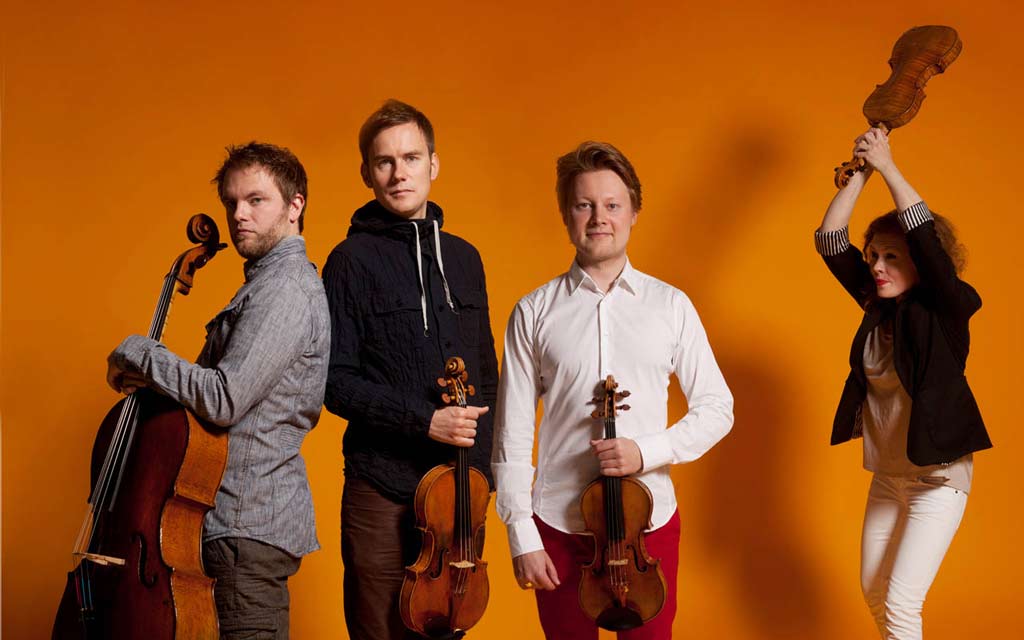
meta-4

Meta4 (Antti Tikkanen & Minna Pensola (violins), Atte Kilpeläinen (viola) & Tomas Djupsjöbacka (cello)) – Wigmore Hall, live on BBC Radio 3, 6 April 2015.

Listening link (opens in a new window):

http://www.bbc.co.uk/programmes/b05pqzdk

on the iPlayer until 6 May

Spotify

This Spotify link is for those unable to gain access to the broadcast. As Meta4 have not recorded any of this music, two alternatives have been chosen in recordings by the Hagen Quartet:


What’s the music?

Haydn – String Quartet in C major Op.20/2 (1772) (20 mins)

Schumann – String Quartet no.1 (1842) (27 mins)

What about the music?

haydn

Haydn string quartets are so often a feature in an hour-long quartet recital that it is easy to forget just how revolutionary they were at the time of composition. The publication of his six ‘Sun’ quartets in 1772 (so-called because an early edition had the sun on its cover) represented a massive step forward in the history of the form towards what it has become today. One of the best quotes about the string quartet comes from Goethe – who referred to Haydn’s mastery of it as ‘’

Before the ‘Sun’ quartets the violins had almost total dominance in the melody – but the gradual development of viola and cello into melody instruments was well underway, and Haydn ensured that in the second of the six works he gave special attention to the cello from the outset – before bringing all four instruments together as equals. The musical language, too, is expressive, the composer moving to unusual keys and harmonies to present music that is far from simple – as C major often suggests it should be.

Schumann, on the other hand, is not really regarded as a string quartet composer – his primary instruments being the voice and the piano. Yet he contributed three very attractive works to the medium, all written in 1842, a year after his so-called ‘year of song’. This was after an intense period of study of the quartets of Haydn, Mozart and Beethoven.

Schumann dedicated the three quartets published as Op.41 to Mendelssohn – who loved them.

Performance verdict

These are spirited performances from Meta4. For the Haydn they bring out some of the revolutionary aspects of the writing by using less vibrato, giving a more austere sound when the harmonies get darker. Some of the tuning here is not perfect, but there is never lack of expression.

The Schumann quartet is extremely enjoyable, vigorous in its faster movements but finding the lyricism Schumann invests in his quartet writing especially in the slow movement.

What should I listen out for?

2:36 – the quartet begins with quite a sinewy sound. There is a sense of discovery here, a little similar in mood to the opening shades of Haydn’s ‘Le Matin’ symphony. A rather more austere section begins at 6:49, darker in mood, before the cello takes up the theme once again at 8:22.

10:01 – a louder attack from Meta4, and a more dramatic section of music from Haydn that seems to hark back towards the Baroque in its stormy implications. It is no coincidence that the music has shifted from C major to C minor, and the emotions are troubled. The movement ends, almost with a whimper.

13:05 – now the music is rather sweet, with an attractive line given to the first violin – but again the ‘sturm and drang’

A relatively genial last movement begins, but still doesn’t sound fully sure of itself until the pace picks up finishes at 22:42

Schumann

25:57 – a subdued beginning to the quartet, with careful interplay between the instruments. After this slow introduction the music speeds up and gets to the heart of its argument.

35:30 – a restless second movement with what is nonetheless quite a catchy tune when heard several times! A contrasting ‘trio’ section begins at 37:03, which has more graceful contours but still sounds a bit on edge with its chromatic nature.

39:53 – a rising line from the cello signals the beginning of the slow movement, with this material used as the basis

46:59 – a brisk last movement begun with three ‘snap’ chords before the music becomes more rustic and outdoors. Rushes to what looks like a false ending at 51:32, but then an extraordinary passage of play starts where the four instruments sound like bagpipes.

Encore

55:06 – the encore chosen by Meta4 is a ‘local’ one – Jusslin by the contemporary Finnish composer Timo Alakotila (5 mins)

Want to hear more?

After hearing one of the Haydn ‘Sun’ quartets, the other five are also strongly recommended. You can hear the Hagen Quartet playing them on Spotify here.

Similarly the other two Schumann quartets of the Op.41 set are recommended, together with the Piano Quintet (for piano and string quartet) written soon after. The Hagen Quartet are once again in action, playing the First String Quartet and Piano Quintet here (pianist Paul Gulda), and quartets nos. 2 & 3 here

For more concerts click here
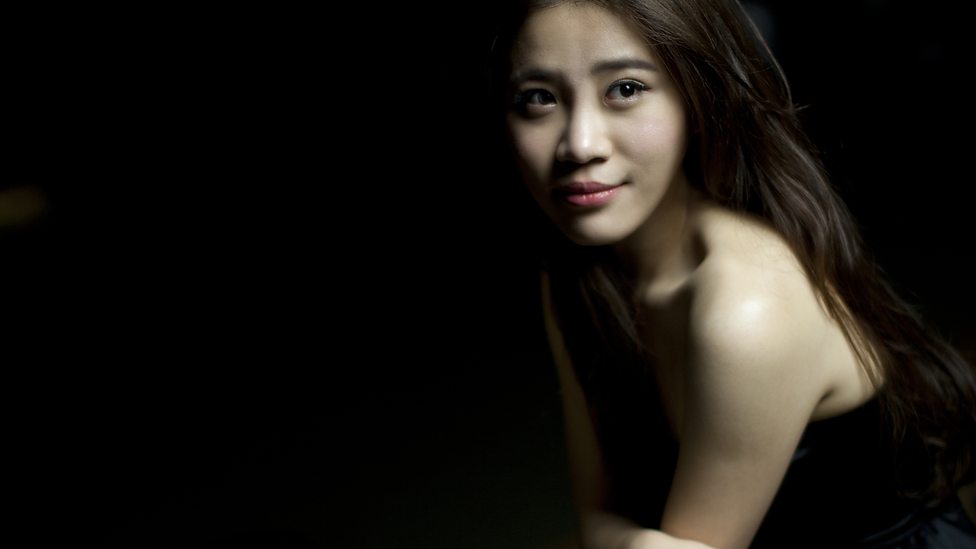
Zhang Zuo – Schumann and Schubert at Wigmore Hall

Zhang Zuo plays contrasting piano works by Schumann and Schubert at the Wigmore Hall

zhang-zuo
Zhang Zuo (piano) – Wigmore Hall, live on BBC Radio 3, 30 March 2015.

Listening link (opens in a new window):

http://www.bbc.co.uk/programmes/b05nsbm7

on the iPlayer until 29 April

Spotify

Zhang Zuo has not recorded either of these works, so this Spotify playlist – for those unable to hear the radio broadcast – includes the Schumann played by Daniel Barenboim and the Schubert by Romanian pianist Radu Lupu.

What’s the music?

Schumann – Faschingsschwank aus Wien, Op.26 (Carnival pranks in Vienna) (1839) (19 minutes)

Schubert – Piano Sonata in C minor D958 (1828) (28 minutes)

What about the music?

Both Schumann and Schubert could proclaim the piano to be their first discipline, and both wrote masterfully for the instrument. These two pieces form a nice contrast in concert, for we hear Schumann at his most exuberant, in the throes of a love affair that was soon to culminate in marriage and the so-called ‘Year of Song’. Written in a brief stay in Vienna, the mischievous ‘carnival pranks’ include a quotation of the ‘Marseillaise’ in the first of the five pieces. This was especially daring as the French national anthem was banned in the Austrian capital at that time.

Schubert, on the other hand, was in the last year of his life and in the knowledge that death was increasingly to hand. His late trio of piano sonatas are remarkable works, reaching an intensity of emotion and accomplishment you can barely comprehend for a composer only just in his thirties. The C minor, the first sonata of the three, is perhaps the most tortured, and is complemented by two even bigger works in the form of the A major and B flat major sonatas, each weighing in around the 40 minute mark.

Yet all three are compelling works in the right performances, for Schubert finds ways of making the music reflect the depths of his thoughts, vividly so in the sudden lightning bolts of anxiety that strike at unexpected points. Time stands still in the slow music, while in faster passages there are almost not enough notes for Schubert to describe his thinking.

Performance verdict

Zhang Zuo – Zee Zee – is a brilliant pianist, of that there is no doubt. Technically assured and very clear in her communication of the notes, she made the music fairly rush out of the Steinway like an endless stream. Yet there were times in this recital where I longed for the music to have a bit more breathing space, because she showed in the slower moments that she has a tender side to her playing.

In some of the Schubert the sonata came across as rather brash. It must be difficult for a pianist in her early twenties to fully probe music written by a composer who knew he was dying. And although at times Zuo communicated some of the anguish Schubert must have been experiencing, the fast music was brittle and at times simply too fast. The finale was certainly thrilling but it raced away, pausing only occasionally for breath.

The Schumann was fun – especially the first of the six pieces – and there were some nice, intimate asides such as the second piece, which felt like a confidential letter between loved ones. But here too the music cut to the bone a little too quickly, especially in the closing piece. It isn’t entirely fair to compare Zuo, a pianist at the start of her career, with the old masters Lupu and Barenboim, who you can hear on the Spotify playlist above, but it is instructive to learn that Lupu spends nearly two minutes longer on the Schubert than Zuo.

I don’t want to be unduly critical – there was an awful lot to admire here after all – but I longed for a bit more light and shade from a pianist who clearly has the technical ability.

What should I listen out for?

Schumann

1:04 – We hear Schumann at his most exuberant as the carnival pranks get underway. This piece takes up half the duration of the collection, returning to its catchy main theme with great gusto each time, but also wandering off into distracted thoughts. The most enjoyable and extravert of these is the march beginning at 5:17 – which ushers in the ‘Marsellaise’ quotation. See if you can spot it!

10:07 – a short and tender romance, in complete contrast to the bluster of the opening piece. A confidential aside in the minor key.

12:36 – the third piece is quicker and flighty, and Schumann surprises his listener by moving to a distant key briefly, before coming back ‘home’.

14:36 – Zee Zee moves straight into the turbulent fourth piece, a torrent of notes that subsides at the end, before almost crashing straight into the fifth…

16:37 – the fifth piece starts with similar vigour and leads to an emphatic conclusion.

Schubert

22:16 – although the first movement is not one of unremitting darkness, the torture of Schubert’s final years is immediately clear to the untrained ear. There is edginess and anxiety here, and you can hear it in Zuo’s right hand right from the off.

There is respite, however, in the form of a second theme that melts under the fingers, especially when Zuo plays it for the second time at 27:10. The music seems set to move into calmer waters but Schubert muddies the textures by introducing a coda with low rumblings in the left hand, bringing the movement to an uncertain close.

30:09 – a soft, thoughtful slow movement with similar contours to the slow movement of Beethoven’s Pathétique sonata. Like Beethoven’s late period, Schubert’s last sonatas are known for their ability to hang suspended in time, but Zuo’s performance is just a bit too quick to capture that consistently – apart from 37:03, where the music reaches new levels of intimacy. A darker strand of music makes itself known at 31:34, and this comes to dominate the louder parts of the movement.

38:21 – an awkward attempt from Schubert to pick up the mood that ultimately ends in darkness. Although a minuet, the main theme does not feel like a piece for dancing – and especially when the stop-start episodes take over. The ‘trio’ section (from 39:31) has a more obvious lilt to its triple time, but is incredibly brief – and the opening returns at 40:40.

41:13 – the last movement, a Tarantelle, begins quickly and urgently, but disruption sets in when Schubert insists on moving to new and distant keys, trying hard it seems to assert some positive music but generally ending up with darker, stormy episodes. An exception to this can be found in a brief excursion to B major for more poetic thoughts at 44:10, while the final two chords – wrapping up at 50:16 – tell of resolution and grit but not release from the darkness.

Encore – J.S. Bach – the Minuet from his Partita for keyboard no.1 in B flat major

51:31 – an attractive, light touch to this encore, nicely detailed. There are two Minuets, the second appearing at 52:17 before the first is repeated at 53:00.

Want to hear more?

The second Schubert sonata has perhaps even more drama, and can be heard on Spotify played by Maurizio Pollini from track 5 of this album

To complement the Schumann, try his set of character pieces Carnaval, which can be heard here, played by Jorge Bolet.

For more concerts click here

Alice Sara Ott – The Chopin Project

alice-sara-ott
Alice Sara Ott

German-Japanese pianist Alice Sara Ott has recorded Chopin before – but not like this. Signed to Deutsche Grammophon, she has recorded the composer’s complete Waltzes for piano – along with discs of Beethoven, Liszt, Tchaikovsky and Musorgsky. Now she returns to Chopin, but with the Broadchurch composer Ólafur Arnalds for company. The Chopin Project is their collaborative album, featuring recordings made by Ott on a less-than-perfect piano, complemented by pieces for strings from Arnalds.

Ott is enthusiastic about the project as we grab a quick phone call in-between her rehearsal schedule – which has just reached the Barbican, where she has selected a piano for a concert. So, as Arcana begins with every interviewee…

Can you remember your first encounter with classical music?

My mother is a professional pianist, so there is always music in our house. That means the first classical music I heard was probably when I was still in her belly! I think my first concert experience was when three years old, and I had to go with my mum as she couldn’t find a babysitters.

At that age, you’re not able to communicate with adults, but every child still wants to be understood. Everybody wants to find a way of expressing themselves other than with the voice, and I was fascinated by the idea of about 200 people listening to someone in a room, playing piano, without talking.

I think I started playing piano as a simple wish for being understood and getting some attention. It goes beyond spoken communication. The music was not necessarily what moved me, it was the situation, and the language everybody listened to and understood.

Can you remember your first encounter with the music of Chopin?

It was around five years old. I had a cassette tape – I think Deutsche Grammophon had a series for children where they got an actor to tell the story of the composer with different recordings. I think it was a birthday or Christmas present, and that was the first time I experienced it. I couldn’t pronounce it!

Where did you meet Ólafur?

I had never really listened to his music before, but I met him through a producer who used to be my producer at DG. When Ólafur started to talk about the idea he came across the Chopin Waltzes disc I had done, and he contacted me through the producer. In the beginning I couldn’t imagine the idea. I’m very careful with these collaborations, as I see myself as a core classical artist.


What did you think of his music?

When I listened to Ólafur’s music it had taste and style, and I really liked it, so we spoke on Skype and I ended up accepting the offer. I play the Chopin pieces as written, but it was good to get a little bit away from the perfect, stereotypical sound we get in recording these days. Everything is so clean and perfect, but in those days before recording it was not so important and everybody was closer to the artist. You don’t hear the pedals or the hammers in piano recordings any more, you just hear when the sound reaches the acoustic.

Nowadays we have great instruments, and great halls, but with The Chopin Project we wanted to bring people back to really listen and get an intimate experience. It was an all-acoustic thing, and it was great for me. We are planning on a tour with the project. It’s so much fun!

How much input did you have into Ólafur’s compositions?

Almost nothing at all, he wrote them separately. The one track where I’m playing is where I play little ornaments, but this is his part of the album – me joining his project, his idea.

I like the idea he didn’t do rearrangements and came up with original pieces, and I think the pieces with strings complement the ones with solo piano. He felt it was more appropriate for strings and the one track where he uses the solo violin.

You said how important the more natural approach to recording was – do you think modern recording can be too clinical sometimes?

It’s a very different sound experience, the concept is different. We tried to distance ourselves from how recordings are made today.

It’s a great thing the technology is so advanced and everything is possible, but sometimes I wish for more live moments, and I like to record something with a natural flow. You will never get the same as experiencing the music live, but it is a lot closer to that.

Will The Chopin Project bring his music to a new audience?

I hope so, and I want it to bring in not just a new audience but the audience that have heard him one thousand times. I think it sits very well with the times we live in. Things are so perfect in those human moments, experiencing live music – these moments are very precious. The old audience gets a new perspective, and at some points in the recording I can even hear myself breathing. It makes it very human.

You have worked and recorded with Francesco Tristano, who also crosses between classical and other forms of music such as techno. How did your collaboration begin?

With Francesco it started out of friendship; and a passion we share for the music of Bach. I grew up with him aside from our passion for food.

I had the idea to invite him on as a guest for a French Baroque album, and then for a Bach double album that didn’t work out. We decided to base a two-piano album around The Rite of Spring (given the title Scandale) and came across the music for the Ballets Russes company. These are some of the major pieces in classical music, so we chose Stravinsky’s Le Sacre du Printemps (The Rite of Spring) and found a couple that went with it. We have now played 30 concerts together, and we’re at a point where we don’t think about most of the music on the disc originally being written for orchestra.

For me you enter a new world. We never can play without energy, and that’s the fun part. It’s very physical and we wouldn’t do it after an espresso or something! It’s all about dance music. It’s rhythmically very challenging but so fun. When we play it you see the audience react physically, moving their shoulders, and that’s so nice to see, that’s what music does and that’s the common language that goes beyond words, and makes you feel very privileged.

What are your future plans?

I’m in London now for my performance of the Liszt Piano Concerto no.2, and then I move on to Shanghai, South America, the United States and then a couple more times to London. Francesco and I will come to London with Scandale.

The Chopin Project is out now on Mercury Classics. You can find out more about Alice and her recordings by visiting her website

Anne Quéffelec plays Scarlatti

Featured recording: Scarlatti – Sonatas played by Anne Quéffelec (Mirare)

scarlatti-queffelec

A disc of keyboard sonatas by Domenico Scarlatti, played by the highly respected French pianist Anne Quéffelec. With 550 of these works to choose from, she has made a thoroughly entertaining recital of 18!

What’s the music like?

You could play ten Scarlatti keyboard sonatas a week and still have 35 left over at the end of the year! The pieces are typically around four minutes in length, and often in two sections, each repeated. In that time Scarlatti explores the development of melodic ideas, the best known sonatas having many. In that sense Scarlatti is one of the first composers to have explored the idea of using the sonata as a principal means of expression.

Scarlatti recital discs are relatively common, but the best ones show off the extraordinary variety and inventiveness within these works, programming them so that they don’t become ‘samey’. It helps to have the key choices worked out well, too – twenty works in C major, for instance, will not a good disc make!

Although Scarlatti works well on the harpsichord, I would maintain the sonatas are more suitable for the piano. As Anne Quéffelec writes in the booklet, “to move from the harpsichord to the piano is already to open the doors to the wide-open spaces of liberty”. Quéffelec clearly loves Scarlatti and here, 45 years on from her recording debut, she returns to his music.

Does it all work?

It does so here – emphatically. Anne Quéffelec is a skilful and stylish player, and Scarlatti comes alive in her hands. A lot of this music is played with a smile on the face, and is beautifully clarified and expressed.

There are many examples of this, but the most enjoyable are the playful tumbling figures in the right hand of the G major Sonata (published as K103), the soft and lightly sorrowful D minor work (K54) and the magical, slow K144, also in G major, and seemingly the forerunner of a Mozart slow movement. This is followed by another G major sonata, K260 – a very odd piece, this, going to weird and unexpected harmonic lengths, delaying its sense of a resolution. The perky figures of the B flat major sonata, K551, anticipate Beethoven with their upward ascents.

Meanwhile the Sonata in D major, K145, is notable for its jarring dissonances and is probably the most enjoyable of all with its faux-politeness and then complete disregard for convention. Only just behind this are the bird-like calls of the first on the album, the C major sonata (K420). Even then the examples listed above are just a hint of what the album contains!

Is it recommended?

Without hesitation. It is not an insult to Scarlatti to say his music is great for working to in the right performances, for it inspires clarity of thought but also a few flights of fancy in its sudden tangents and deviations. Quéffelec channels all these and more in performances of obvious affection and flair.

Listen on Quboz

You can get a preview of Anne Quéffelec’s Scarlatti album here

Musorgsky – Pictures at an Exhibition, Songs and Dances of Death / Gergiev

Featured recording: Musorgsky – Pictures at an Exhibition, Night on Bare Mountain, Songs and Dances of Death (Ferruccio Furlanetto (baritone), Mariinsky Orchestra / Valery Gergiev (Mariinsky)

musorgsky-gergiev

A new all-Musorgsky disc by Valery Gergiev and his Russian charges, returning to the composer whose operas Gergiev has recorded with great success.

What’s the music like?

On paper this release is a brilliant way to start a Musorgsky collection, because it contains his two best loved works. Pictures at an Exhibition, appearing in its celebrated orchestration by Ravel, is a wonderful set of character pieces that fully captures an artistic exhibition and the viewer’s response to it. Night on Bare Mountain is equally vivid in its portrayal of a witches’ sabbath, and the right performance can strike genuine fear into the heart. Finally the Songs and Dances of Death for baritone and orchestra (not as depressing as they sound through opportunities taken for gallows humour!) appear in the orchestral version made by Shostakovich.

Does it all work?

It should do – because this is surely a home banker for Valery Gergiev, conducting both the music of his homeland and a composer in whose music he specialises. Yet something is awry, for two of the three live performances feel routine at best.

Pictures lacks spark and feels very polite, taking its time to reveal plenty of things in the score but rarely getting out of second gear, as though the exhibition has only a few days left to run. There is no edge to Gnomus, which should ideally be unhinged, and no sense of culmination in The Great Gate of Kiev, the work’s crowning glory. The Old Castle, while suitably mournful and featuring a lovely saxophone solo, drags its feet, while Bydlo, the old cart whose machinery lumbers down the track, has a disarmingly smooth passage here.

There are a few exceptions. The characterisation of Samuel Goldenberg and Schmuÿle is brilliant, thanks to a sharp trumpet portraying the latter character, while the clucking of The Ballet of Unhatched Chicks in their Shells is winsome. But overall this version lacks real excitement.

Sadly Night on Bare Mountain is little better, and sounds like a version going through the motions, with an incredibly limp final chord. There are moments where the electric charge is more pronounced, especially when the dance music comes in around 1’45”, but otherwise this is disappointing fayre with little sense of terror.

All this is redeemed by Ferruccio Furlanetto, the commanding singer chosen for Songs and Dances of Death. There is an incredibly strong resonance to his voice, effortlessly taking charge of the Lullaby, while hurling his all into the end of the Serenade and the fatal triumphalism of The Field Marshal. Gopak, the third song, starts with threadbare bass sounding appropriately ghoulish, the sentiments of the poem laid as bare as the orchestration. Gergiev is inspired here, completing a version that stands tall alongside any competition.

Is it recommended?

Overall, no – unless you are desperate for a recording of the Songs and Dances of Death. For Pictures, alternative versions include those conducted by Claudio Abbado and Carlo Maria Giulini, with Abbado again the choice for Night on Bare Mountain.

Listen on Spotify

You can judge for yourself by hearing the album on Spotify here