Under the surface – Stenhammar String Quartets

stenhammar-quartets

Composer: Wilhelm Stenhammar (1871-1927)

Nationality: Swedish

What did he write? Stenhammar was a pianist primarily, but enjoyed a real affinity with the string quartet, publishing six works in all. His two symphonies, piano concertos and a Serenade are also occasionally heard.

What are the works on this new recording? The String Quartet no.1 and String Quartet no.2. Both are in four movements and last about half an hour each. They are the last of the six to have been recorded by the Stenhammar Quartet for the Swedish record company BIS.

What is the music like? On reflection Stenhammar’s early string quartets have a relatively basic musical language but they feature attractive writing for strings, and are really well played in these affectionate performances.

In the String Quartet no.1 there is a nice falling motif that stands out in the second movement, while the fourth sets out with a strong sense of purpose, as if Stenhammar has been listening to Beethoven.

The String Quartet no.2 is a darker piece, with a shadow passing over the music at the end of the first movement in particular. Here too there is some tuneful music though, and the increasingly vigorous last movement has shades of Dvořák, especially in the pentatonic* ending.

What’s the verdict? These two works are by no means demanding but they make for very pleasant listening at either end of the day, even if the attention occasionally wanders. Very pleasant spring time music.

Give this a try if you like… Dvořák, Grieg or Mendelssohn

Spotify Playlist

A Stenhammar playlist is available on Spotify below, including a mature String Quartet no.4, the lovely Serenade, the Piano Concerto no.2 and the choral piece Midwinter.

Glossary

*pentatonic – a form of scale that only has five notes, as opposed to the most commonly used octave in Western music that has eight.

Pictures at an Exhibition – Steven Osborne

Pictures at an Exhibition – Musorgsky’s much loved collection for piano played by Steven Osborne
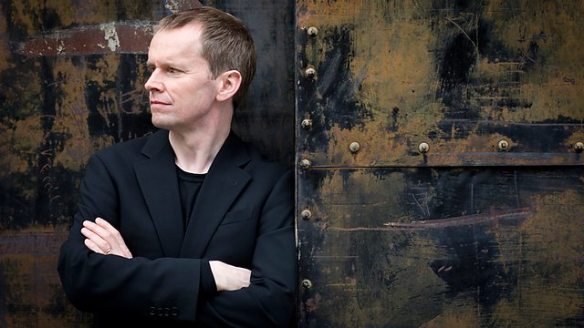
steven-osborneSteven Osborne (piano) – Wigmore Hall, live on BBC Radio 3, 2 February 2015

Listening link (opens in a new window):

http://www.bbc.co.uk/programmes/b04wmjx6

on the iPlayer until 3 March

For non-UK listeners, this Spotify playlist is available:

Please note that recordings of these works by Steven Osborne are not available on Spotify – the Musorgsky however is available to hear on the Hyperion website. I have therefore chosen suitable alternatives and will change the time references below when the BBC iPlayer link expires.

What’s the music?

Rachmaninov – a selection of 4 Etudes-Tableaux (1916-17) (13 minutes)

Musorgsky – Pictures at an Exhibition (1874) (36 minutes)

What about the music?

Musorgsky‘s Pictures at an Exhibition is a much-loved group of pieces, capturing the imagination of performers and arrangers alike. Although written originally for piano it has enjoyed life in several guises, most famously in a tremendous orchestration by Ravel but also through arrangements for all sorts of instrumental combinations, including brass band and even pop group – which Emerson, Lake and Palmer released as a live album in 1971.

The composer wrote it so the listener takes the part of the viewer at an art exhibition – in this case a series of paintings by the Russian artist Viktor Hartmann. Some of the pictures are separated by Promenades, where Musorgsky takes a breather to portray the viewer moving between paintings, reacting to what they have just seen. The pictures often refer to Russian legend, and some of them are grotesque – Gnomus, for instance, a gnome with crooked legs, or The Hut on Fowl’s Legs, a depiction of the terrifying Russian witch Baba-Yagá. There are social interactions – children playing (Tuileries), a rich man meeting a poor man (Samuel Goldberg and Schmüyle) and a violent quarrel (The Market at Limoges) – as well as two striking depictions of buildings in The Old Castle and an imposing Great Gate of Kiev, with which the exhibition ends.

Complementing Pictures are four of Rachmaninov’s Etudes-Tableaux, part of a set of pictorial studies published in 1917. In this case the objects of Rachmaninov’s characterisation were hardly if ever revealed, but the four chosen invite the listener to create an image. They are a brisk march, a contemplation, a scene at a fair (as described by the composer) and a restless mood.

Performance verdict

Steven Osborne won a Gramophone Award for his Hyperion recording of Pictures in 2013, and it was easy to see why here – there was the odd wrong note but this was generally because he was striving for maximum expression, which he found in a compelling performance. His pacing was ideal, so that some of the really loud moments – the old cart Bydlo grinding into action, or The Great Gate of Kiev in all its splendour – built inexorably from start to climax point.

The Rachmaninov was terrific, an indication that Osborne is spending a lot of time at the moment discovering his piano music. The Etudes-Tableaux do not really feature regularly in concert, partly because they are hard to bring off, but Osborne managed it handsomely here.

After the Musorgsky we had the considerable bonus of a serene Rachmaninov Prelude in D major, which tugged at the heart strings in all the right places.

What should I listen out for?

Because they are so well-loved, I have opted to describe each of the Pictures below:

Rachmaninov

6:31 – the second Étude-tableau, a spacious reverie with a particularly beautiful floated central section, where the key changes from C minor to C major (8:44).

11:41 – the third Étude-tableau, brightly voiced with crisp rhythms.

Musorgsky

18:36 – the first Promenade. Musorgsky’s viewer has a quick stride!

19:51 – Gnomus. Dark, grotesque and unpredictable, with a heavy line for the piano’s left hand and some ominous trills (22:11). After this the viewer ambles on to….

23:40 – The Old Castle. The melody is a depiction of a troubadour singing – but the mood is grey and heavy of heart, the harmony almost completely static. A weighty Promenade moves the viewer on to…

28:43 – Tuileries. A delicate description of children’s play, over in a flash!

29:40 – Bydlo. A depiction of a Polish cart grinding into action. The heavy weight of the machinery is supplied by the piano’s left hand, and the cart recedes into the distance at the end. Osborne applies as much weight to this as possible while the vehicle lumbers past! The viewer pauses briefly to take stock, before…

34:10 – The Ballet of Unhatched Chicks in their Shells. An amazingly vivid depiction of the little birds in clipped figures for the piano right hand, played very delicately here.

35:21 – Samuel Goldenberg and Schmuÿle. An imposing dialogue with the grandeur of the rich man (Goldenberg) and the quavering speech of the poor man (Schmüyle). After this the viewer moves on with another Promenade.

38:59 – The Market at Limoges. An excitable cackle of voices from the piano here, tripping over themselves and becoming increasingly out of control as they career into…

catacombs
Catacombs

40:22. Darkness descends as we move underground, Musorgsky conveying the stillness of space. The melodic figure of the Promenade appears (from 43:16), though here it appears shrouded in mist

45:26 – The Hut on Fowl’s Legs. I often think this piece on its own inspired a lot of rock music – it has the sort of figure you would not find out of place on a King Crimson album. The hammering figure on the left hand feels like drums and bass guitar combined while the right hand is almost completely unhinged. This leads straight into…

great-gate-of-kiev

The Great Gate of Kiev

48:40. The massive outlines of the gate are clear in the big block chords Musorgsky writes for the piano, which become ever more imposing as the piece progresses. Towards the end (50:22) a huge peal of bells rings out, then there is another reference to the Promenade (52:01) ahead of an emphatic final set of chords, by which time the pianist is playing as loud as he possibly can!

Encore

56:06 – Rachmaninov – Prelude in D major. A graceful and rather moving complement to Pictures!

Want to hear more?

Excerpts from Steven Osborne’s recording for Hyperion can be heard here

For more Musorgsky, I would suggest the Songs and Dances of Death, for low male voice and orchestra – which is ironically on BBC Radio 3 this Thursday 5 February , with a listener’s guide to come here! For more Rachmaninov I would suggest an earlier work, the Five Morceaux Op.3. This group of five pieces contains the famous Prelude in C sharp minor.

For more concerts click here

Road Trip

Featured recording: Aurora Orchestra – Road Trip (Warner Classics)
road-trip

In which London’s Aurora Orchestra head for the open prairies of America, sampling folk and pop song in between modern classical music from John Adams, Charles Ives and Aaron Copland. The folk and pop arrangements are done by Nico Muhly.

What’s the music like?

Very accessible. There are folk tunes arranged by Nico Muhly, who has worked with US bands like Grizzly Bear in the past, as well as establishing himself as a talented composer blending a love of old church music with a tuneful modern style, and the orchestra’s viola player Max Baillie,

The classical pieces are nicely contrasted – from the hectic Chamber Symphony by Adams to the luminous Appalachian Spring, Copland’s ballet. This features American folk tunes in fresh, open-air orchestral scoring, peaking with an arrangement of the song Simple Gifts.

Added to these we have a piece by Ives, The Housatonic at Stockbridge, taken from his Three Places In New England. Ives is incredibly difficult to describe, as he operates with so many different orchestral styles, but there are always tunes – and the slow beginning to this piece brings a tear to the eye.

Does it all work?

By and large, yes. The performances are excellent, expertly marshalled by Nicholas Collon, and are closely recorded to get the intimacy of the Copland in particular. The Adams is brisk and punchy – a good listen while running, no doubt! – and has bags of rhythmic interest. The Ives is unlike anything else, though, packing into its short duration a lifetime’s worth of feeling.

Sam Amidon and Dawn Landes sings the folksongs well but I found Nico Muhly’s orchestrations had too much going on – in part a deliberate tactic from the composer – but the ear was often distracted from the tunes themselves. The subjects are a bit macabre, too – especially The Brown Girl, with its dark tales of death and divorce.

Is it recommended?

Yes, overall. The Aurora Orchestra do these sort of themed presentations very well, and as a starting point for modern American music this can be either self-contained or open out into further exploration of the composers on the disc.

Listen on Spotify

Four seasons in one hour

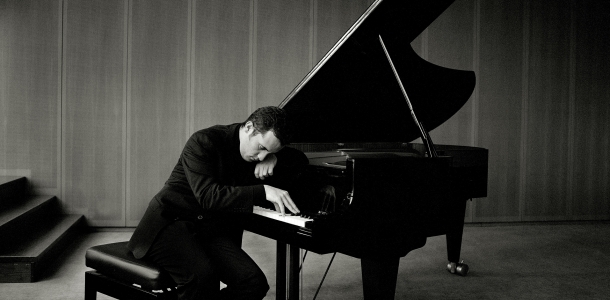
igor-levitAll the seasons in one concert – Igor Levit performs Tchaikovsky’s cycle of twelve months for piano

Igor Levit (piano) – Wigmore Hall, live on BBC Radio 3, 26 January 2015

Listening link (opens in a new window):

http://www.bbc.co.uk/programmes/b0505zfj

on the iPlayer until 28 February

For non-UK listeners, this Spotify playlist is available:

What’s the music?

Tchaikovsky – Méditation (1893) (5 minutes)
Tchaikovsky – The Seasons (1876) (41 minutes)

What about the music?

It might seem like a recent development where music magazines carried CDs on the front, but the idea of the cover mount was given to Tchaikovsky all the way back in 1875 by Nouvellist, a St Petersburg magazine. They commissioned from the composer one piece per month in manuscript form, and these were often published with a short piece of text from the editor Nikolai Bernard.

Although they are separate pieces they work really well as a whole and are perfect easy listening. Closer inspection reveals a wealth of melodic content and some keen characterisation too – especially in the characteristic October gloom with which Autumn begins, dispelling the three bright and incident packed months of summer. Bookending the collection are January in front of the fire, and December – by which time the Christmas hearth is beckoning once again.

The brief Méditation is rather moving, an epitaph to the head of the Conservatoire in Moscow. Tchaikovsky’s response has a noble beauty.

Performance verdict

Igor Levit is ideal for The Seasons, painting each picture with beautiful detail and sensitivity. Sometimes the months run into each other, which is effective when considering the year as a whole – that’s what time does, after all!

What should I listen out for?

1:41 – the soft, contemplative beginning to the Méditation

The Seasons

8:37 – Tchaikovsky paints the comforting warmth of the fireside in January through music that is easy to listen to – though under the surface there are a few worrisome figures
15:48 – The song of the lark in March, possibly the first clue this cycle offers that it is the work of a Russian composer
24:33 – June is the best-loved month of The Seasons, and this reflective Barcarolle is cast in a similar mood to March – until the sun literally comes out in the middle (26:09),as the music changes from minor key to major key
37:25 – After the bracing horn calls of September, the shadows lengthen noticeably for October, the longest of the twelve pieces by far, stretching out like tendrils into the gathering dusk. Tchaikovsky’s music here is appreciably darker in colour, sitting lower in the piano’s register.
42:44 – November puts a brave face on October’s troubles in music that bears more than a little resemblance to Schumann. There is however a very Russian Troika at its heart (from 43:40 and heard in full at 44:20)

Encore

51:22 – Another short Tchaikovsky piano piece, the Chanson triste – a model of simplicity, beautifully played.

Want to hear more?

Tchaikovsky is generally known for his loud orchestral music – 1812 Overture and the like – so why not try something else along the more gentle line practised here? His Symphony no.1, subtitled Winter Daydreams, is well worth trying next.

Schumann’s week of song

Schumann’s week of song – Kitty Whately and Joseph Middleton performs songs written after the composer’s marriage to Clara

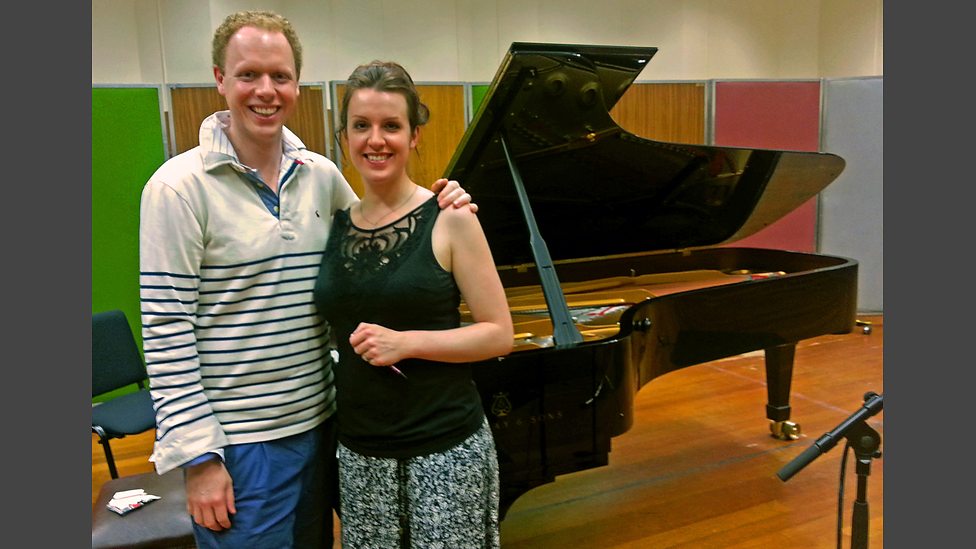
kitty-whately-joseph-middletonKitty Whately (mezzo-soprano)*, Joseph Middleton (piano) – Wigmore Hall, live on BBC Radio 3, 19 January 2015

Listening link (opens in a new window):

http://www.bbc.co.uk/programmes/b04y9rsg

on the iPlayer until 21 February

Download

You can also download the song cycle Frauenliebe und –leben (A Woman’s Life and Love) from this performance. Just right click on the red heart and select ‘Save link as’

For non-UK listeners, this Spotify playlist is available:

What’s the music?

Schumann – 5 Songs, Op.40

Words: http://www.hyperion-records.co.uk/notes/33106-B.pdf

Schumann – 3 Songs, Op.31

Schumann – Frauenliebe und –leben (A Woman’s Life and Love)

Words: http://www.hyperion-records.co.uk/dc.asp?dc=D_CDJ33103

All were written in 1840, and are settings of the poet Adelbert von Chamisso

What about the music?

Schumann’s ‘year of song’ really was a peak of creativity for the composer in 1840, spurred on entirely by his marriage to the elder woman Clara, against her father’s wishes. The songs heard here were all within a single week, and although they capture the breathlessness of recent marriage, they also have a dark side that is fully revealed at the end with the death of the woman’s husband.

The 5 songs that Schumann published as his Op.40 are essentially two lighter songs on the outer edges and three darker, fraut ones on the inside. The three Op.31 are unpredictable and experimental, while Frauenliebe und –leben, a song cycle with a linked theme, is brighter and beautifully structured, with some shorter songs here.

Performance verdict

Kitty Whately sings these beautifully, with a little in reserve that brings out the intimacy of Schumann’s compositions. She is ideally complemented by Joseph Middleton’s sensitive piano playing.

What should I listen out for?

1:36 – the light and fairly heady first song, seemingly setting the scene for some rapturous insights. And yet…

3:07 …the cycle takes a turn for the darker with its second song, ‘Muttertraum’ (‘A mother’s dream’)

13:04 – ‘The lion’s bride’ – the first of the three songs Op.31. The prowling lion is brought uncannily to life by the left hand of the piano, a figure that dominates this long and rather tragic song

24:08 – the third song of the group of three, ‘Die rote Hanne’ (‘Red Hannah’) – with refrains in five part harmony

31:07 The start of the song cycle. The key note here is low in the piano (31:55), giving a hint of the ultimate darkness to come.

38:25 Den ring on my finger. It sounds here as though Kitty is singing in English, but the German is just very similar. This is however the serene high point of the cycle

43:08 really nice singing here, beautifully controlled

49:12 a turn for the darker, with news of the death – which runs into…

51:07 The beautiful piano-only postlude

Want to hear more?

Schumann’s orchestral music is a wealth of good things, with the Symphony no.2 a great next move.

Glossary

*mezzo-soprano – the range just below soprano, which is the highest range a female singer tends to have. Mezzos are often capable of richer, lower notes and tend not to sing as high.