
In concert – Quatuor Danel: Shostakovich & Weinberg #9 with François-Frédéric Guy @ Wigmore Hall

François-Frédéric Guy (piano), Quatuor Danel [Marc Danel & Gilles Millet (violins), Vlad Bogdanas (viola), Yovan Markovitch (cello)]

Weinberg String Quartet no.13 Op.118 (1977)
Shostakovich String Quartet no.13 in B flat minor Op.138 (1970)
Shostakovich Piano Quintet in G minor Op.57 (1940)

Wigmore Hall, London
Thursday 6 March 2025

by Richard Whitehouse Photos (c) Marco Borggreve (Quatuor Danel), Lyodoh Kaneko (François-Frédéric Guy)

Quatuor Danel’s cycle at Wigmore Hall focussing on the string quartets of Shostakovich and Weinberg continued this evening with the Thirteenth Quartets by both composers, alongside the Piano Quintet that has long been among the former’s most representative chamber works.

After his exploratory (while not a little disconcerting) Twelfth Quartet, Weinberg avoided the medium for several years before penning four such pieces in relatively swift succession. Cast in a single movement of barely 15 minutes the Thirteenth Quartet, the shortest of his cycle, is influenced as much by Shostakovich’s late quartets as Weinberg’s own precedents. Facets of sonata form underpin its reticent progress from uncertain inwardness to unwilling animation – a vein of equivocation pervading the whole so that its eventual culmination does little more than lead back towards the initial stasis. Its progress enroute is similarly reticent, though this was hardly the fault of the Danel who unfolded the overall design with unforced conviction. Nor did they underplay the plangency of the ending, with its anguished crying into the void.

Seven years earlier, Shostakovich had essayed an altogether more radical take on the single-movement format with his own Thirteenth Quartet. It is dedicated to Vadim Borisovsky, then violist of the Beethoven Quartet, and the viola is audibly ‘first among equals’ over almost its entirety. Nominally the darkest and most forbidding of this cycle, the hymnic lamentation of its outer Adagio sections is thrown into relief by the Doppio movimento central span whose jazz-inflected impetus is but its most fascinating aspect; added to which, those frequent taps onto the body of each instrument (which evoke a death-rattle or a rhythm-stick according to preference) readily accentuate a sense of time running out. Vlad Bogdanas made the most of his time in the spotlight, not least at the close as viola joins with violins to unnerving effect.
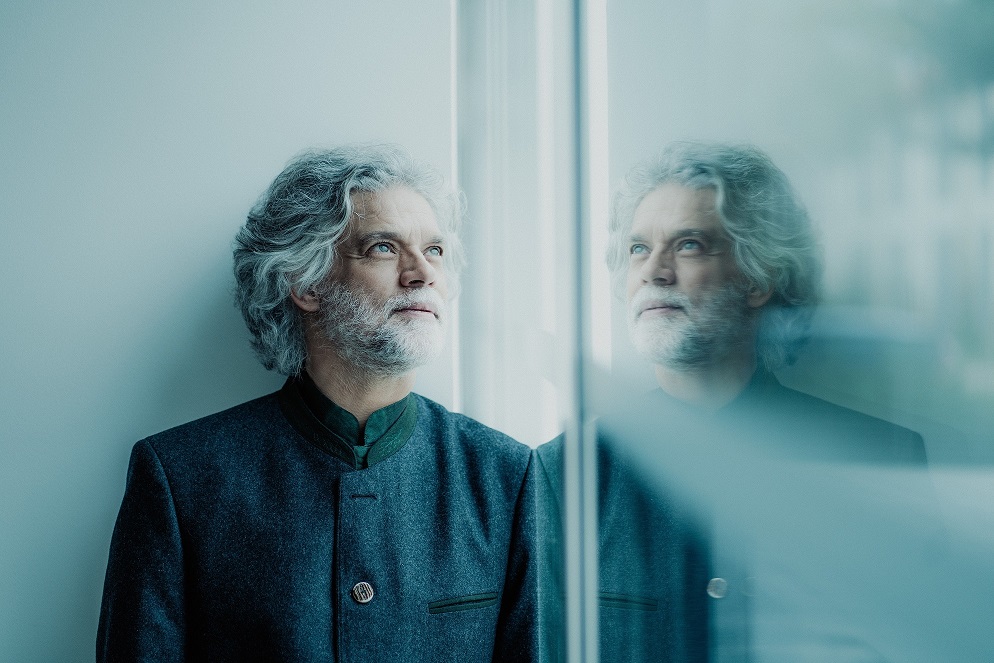
After the interval it was a relief to encounter the younger, resilient Shostakovich of his Piano Quintet. Its piano part conceived as a vehicle for himself, this marked the onset of a creative association with the Beethoven Quartet as lasted almost until the end of his life. It also finds the composer immersed in Bachian precedent – witness the powerfully rhetorical dialogue of piano and strings in its Prelude, then the severe yet never inflexible unfolding of form and texture in a Fugue whose abstraction is informed by a pathos the more acute in its restraint.

Playful and capricious by turns, the Scherzo makes for a striking centrepiece in spite (even because?) of its technical challenge. Suffice to add that François-Frédéric-Guy (above) and the Danel met this head on – after which, the Intermezzo mined a vein of soulfulness as was never less then affecting, while the Finale sounded more than unusually conclusive in the way it drew together aspects from the earlier movements towards a whimsical and even nonchalant close. At this stage, Shostakovich could still afford a measure of levity in his emotional response.

Thanks to Marc Danel’s acrobatics with a flying bow, the third movement stayed on course but it was no hardship to have this movement given even more scintillatingly as an encore. May 6th brings the penultimate recital in what has been an absorbing and revelatory series.

You can hear the music from the concert below, in recordings made by Quatuor Danel -including their most recent cycle of the Shostakovich quartets on Accentus:

For more information on the next concert in the series, visit the Wigmore Hall website. You can click on the names for more on composer Mieczysław Weinberg, Quatuor Danel and pianist François-Frédéric Guy

Published post no.2,467 – Saturday 8 March 2025
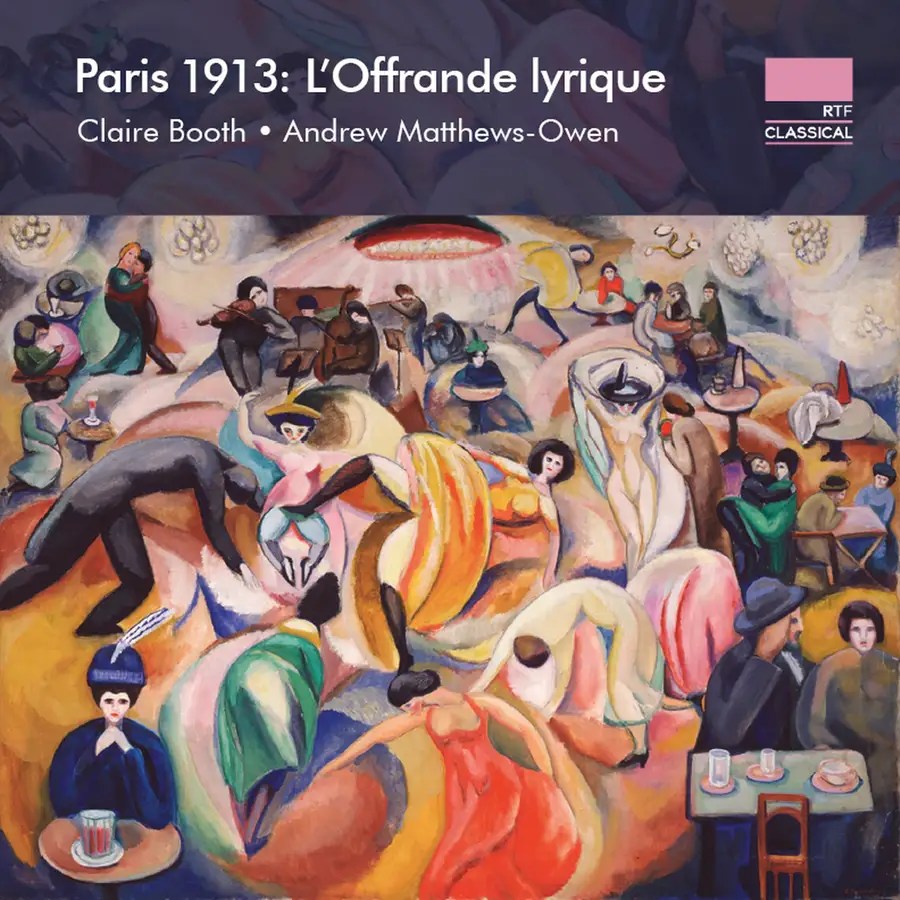
On Record – Claire Booth & Andrew Matthews-Owen: Paris 1913: L’offrande lyrique (Nimbus)

Caplet En regardant ces belles fleurs
Milhaud L’innocence Op. 10/3
Hahn À Chloris
Ravel arr. Stravinsky Trois poèmes de Stéphane Mallarmé M64
Auric Trois Interludes: Le pouf.
Ropartz La Route
Durey L’Offrande lyrique Op. 4
Saint-Saëns Petit main Op.146/9
Fauré Il m’est cher, Amour, le bandeau, Op. 106/7
Chaminade Je voudrais être une fleur
Debussy Trois poèmes de Stéphane Mallarmé L127
Satie ed. Dearden Trois Poèmes d’Amour
Lili Boulanger Clairières dans le Ciel: Vous m’avez regardé avec votre âme
Grovlez Guitares et mandolines

Claire Booth (soprano), Andrew Matthews-Owen (piano)

Nimbus RTF Classical NI6455 [66’23”] French texts included
Producer & Engineer Raphaël Mouterde

Recorded 11/12 March, 4-6 September 2023 at Wyastone Concert Hall, Monmouth

Reviewed by Richard Whitehouse

What’s the story?

Another enterprising song recital from Claire Booth and Andrew Matthews-Owen, this one focussing on songs that were either conceived, composed or premiered in Paris during 1913 and resulting in an absorbing collection best heard as a diverse while unpredictable totality.

What’s the music like?

Interleaving standalone songs and song-cycles, this recital opens with André Caplet’s take on Charles d’Orléans, its limpid modality highly appealing, then continues with an early song by Darius Milhaud as already demonstrates his distinctive and amusing approach to word-setting, while that by Reynaldo Hahn typifies the teasing charm familiar from his vocal music overall. Maurice Ravel’s triptych to texts by Mallarmé is performed in a version by Stravinsky with its accompanying nonet reduced to piano which, in preserving and maybe even accentuating the music’s questing introspection, represents no mean fete of transcription. Still relatively little known, this certainly deserves to be heard as at least an occasional alternative to the original.

Remembered best as a prolific writer of film scores, Georges Auric had shown a precocious talent for song as is evident in his sensuous setting of René Chalupt. A composer who often wrote on a symphonic scale, Guy Ropartz is heard in a setting of his own verse that amounts to a ‘scena’ in its wide expressive ambit. Interest understandably centres on the eponymous cycle by Louis Durey, a member of Les Six whose increasingly far-left conviction tended to marginalize his creativity yet, as these lucid and empathetic settings of Rabindranath Tagore (as translated by André Gide) confirm, had emerged as a protean talent by his mid-twenties. Hopefully these artists will be encouraged to investigate other of his songs from this period. By contrast, a late song by Camille Saint-Saëns exudes a touching poignancy, while that by Gabriel Fauré typifies the elusiveness of those in his last decade. As is evident here, Cécile Chaminade was a songwriter of style and elegance, then the Mallarmé triptych by Debussy (its first two texts identical to those of Ravel) finds this composer probing the inscrutability of these poems while drawing back from any more explicit intervention. The inscrutability conveyed by Erik Satie’s aphoristic settings (edited by Nathan James Dearden) of his own texts is altogether more playful – after which, the recital continues with a pensive offering by Lili Boulanger, with Gabriel Grovlez’s sultrily evocative setting of Saint-Saëns to finish.

Does it all work?

Yes, given the fascination of this collection taken as a whole and, moreover, the quality of these renditions. Booth is not a singer willing to take the easy option in her interpretations, and so it proves here with singing as fastidious as it is refined, while Matthews-Owen duly instils often deceptively spare accompaniments with understated insight. They contribute a succinctly informative note, but the booklet includes only the French texts with the English translations available at https://rtfn.eu/paris1913/: might it have best the other way round?

Is it recommended?

Very much so. There is much to fascinate even those who consider themselves afficionados of the ‘chanson’, and those who are unfamiliar with much of this repertoire could not have a better means of acquainting themselves with certain of its treasures – hidden or otherwise.

Listen & Buy

For purchase options, you can visit the Ulysees Arts website. For information on the performers, click on the names to read more about Claire Booth and Andrew Matthews-Owen

Published post no.2,466 – Friday 7 March 2025

On Record – Gavin Higgins: The Fairie Bride, Horn Concerto (Lyrita)

Gavin Higgins
Horn Concerto (2023)
Fanfare, Air and Flourishes (2021)
The Fairie Bride (2021)

Marta Fontanals-Simmons (mezzo-soprano), Roderick Williams (baritone), Ben Goldscheider (horn), Three Choirs Festival Chorus; BBC National Orchestra of Wales / Jaime Martin (Horn Concerto), Martyn Brabbins (The Fairie Bride)

Lyrita SRCD440 [84’14”] English/Welsh libretto included
Producer Adrian Farmer Engineer Andrew Smilie

Recorded in Hoddinott Hall, 11 January 2024 (Horn Concerto), Concert Hall, Wyastone Leys, Monmouth, 4 April 2024 (Fanfare, Air and Flourishes), live performance from Gloucester Cathedral on 23 July 2023 (The Fairie Bride)

Reviewed by Richard Whitehouse

What’s the story?

Lyrita adds to the already growing discography of Gavin Higgins (b.1983) with this release featuring two recent major works, both of which are heard in their first performances and thereby confirm this composer’s place among the leading British voices of his generation.

What’s the music like?

Listeners may have come across Higgins’s music via the release Ekstasis (see the link below), a collection of chamber pieces which attests to a distinctive and searching personality. Such is equally true of those here, not least the Horn Concerto that takes its place in a notable lineage of such works ‘in E flat’, while taking in Schumann and Ligeti as part of its range of stylistic or conceptual allusions. Its three movements have as their inspiration the Waldhorn – the first, Understorey, duly outlining an emergence from the (Wagnerian) depths to the forest floor in mounting waves of activity. There follow Overstorey with its airily expressive evocation of the forest canopy as builds considerable fervency over its course, then Myelium Rondo with its overtones of the hunt and energetic fanfares which propel this work to an affirmative close.

No stranger to the horn (being his own instrument), Higgins had indirectly prepared for this concerto with Fanfare, Air and Flourishes, a brief but eventful solo triptych which tries out several gestures or motifs to be developed in the larger work as well as in his second opera.

Commissioned by the Three Choirs Festival, The Faerie Bride takes a legend from the Book of Hergest for its synopsis of the coming together but eventual (its being inevitable) disunion between water spirit and earthly man. This is played out over seven scenes divided into two parts – Francesca Simon’s succinct yet artfully constructed libretto moving from their initial encounters at the lake, via the gradual dissolution of their relationship through events during each of the four seasons, to a climactic juncture when the woman returns with her extended family into the depths. Musically the work encompasses the range of Higgins’s idiom up to this point, its richness and variety of texture complemented by an instrumental clarity which ensures vocal audibility throughout – certain discrepancies between the libretto as published and as sung being immediately evident. That this opera keeps its emotions close to its chest much of the time only makes the closing stages the more powerful, not least in the way the ending reaches back to the beginning for a tangible sense of resolution borne of experience.

Does it all work?

Yes, in that Higgins is able to integrate his influences into a coherent and personal language. It helps that these performers are audibly attuned to this music – not least Marta Fontanels-Simmons as an otherworldly Woman and Roderick Williams as the uncomprehending Man – with Ben Goldscheider a consummate exponent of works for horn. The Three Choirs Festival Chorus characterizes the Villagers with suitable aggression, while Jaime Martin and Martyn Brabbins secure idiomatic playing of real finesse from the BBC National Orchestra of Wales.

Is it recommended?

Very much so. Those yet to do so should certainly acquire the earlier release on Nimbus, but the works featured here round out the potency of Higgins’s music accordingly. Detailed and informative notes by Gillian Moore, though watch out for those discrepancies in the libretto.

Listen & Buy

For purchase options, you can visit the Ulysees Arts website. For information on the performers, click on the names to read more about Ben Goldscheider, Marta Fontanals-Simmons, Roderick Williams, Jaime Martin, Martyn Brabbins and the BBC National Orchestra of Wales. Click to read more about composer Gavin Higgins and about Ekstasis

Published post no.2,465 – Thursday 6 March 2025

In concert – Westminster Philharmonic Orchestra / Jonathan Butcher: Bliss: A Colour Symphony

Westminster Philharmonic Orchestra / Jonathan Butcher (below)

Elgar In the South (Alassio) Op.50 (1903-4)
Bernstein On the Waterfront – Suite (1954-5)
Bliss A Colour Symphony (1921-2, rev. 1932)

St John’s Church, Waterloo, London
Saturday 1 March 2025

Reviewed by Richard Whitehouse

The Westminster Philharmonic Orchestra has given any number of well programmed concerts over the 53 years of its existence and tonight’s was no exception, featuring as it did a welcome revival of A Colour Symphony with which Arthur Bliss nonplussed first-night listeners 102 years ago.

Much has been written about the relationship between the colours as referenced in each of the movement headings with the music in question. In fact, the heraldic source from which these are derived was the means to focussing what could otherwise have remained the ‘Symphony in B’ of its working-title. The Purple of its opening movement evokes a processional whose emergence then retreat sets out the salient ideas in its wake, while that of Red is a scherzo with its two trios drawn into a sonata form whose unwavering impetus makes contrast with Blue more potent. Nor is this latter an archetypal slow movement – its expressive eddying an anticipation of that inexorable momentum with which Green traverses its double fugue, towards an apotheosis that sets the seal on the overall design with unmistakable conviction.

A Colour Symphony is not an easy work to make cohere – in which respect, this performance succeeded admirably. Jonathan Butcher ensured that Purple fulfilled its preludial function with sufficient gravitas to launch Red with an energy as amply underpinned its productive thematic elaboration; the work effectively becoming a tale of two halves, with the latter an extended and varied take on the ideas already established. The nervous energy that informs Blue was admirably conveyed, with the WPO giving of its collective best, while Butcher (rightly) did not rush the unfolding of Green – its respectively methodical then impetuous fugal subjects persuasively fused into a coda whose affirmation is far from that of a ‘‘mere paragraphist’’, as Elgar lamented, but of one able to refashion symphonic principals at will.

In the first half, Leonard Bernstein demonstrated a symphonic cohesion far greater than that of his actual symphonies in the suite from his score to Elia Kazan’s film On the Waterfront. For all its violent energy (and lessons well learned from Copland’s ballet Billy the Kid), this is music defined by its wind solos and it was to the credit of horn player Adrian Wheeler, oboist Tony Freer or alto saxophonist Bernie Hunt they were never less than plangently emotional. Whether or not Bernstein’s most ambitious orchestral work, this is by some way his finest.

Music by Elgar had opened the concert. His In the South might be as much a tone poem as a concert overture, but its effective overall design – anticipating those first movements of the symphonies to come – is its own justification. While he eschewed something of this music’s often scenic opulence, Butcher certainly had the measure of its formal ingenuity – with only the final peroration failing to deliver that necessary emotional frisson. Earlier on, Jonathan Welch’s viola playing brought pathos as well as tenderness to its exquisite ‘canto populare’.

Overall, a concert such as matched in execution what it had in ambition and which should equally be the case with the WPO’s next concert, where highly contrasted works by Barber and Tchaikovsky are to be followed by the mighty edifice of Bruckner’s Ninth Symphony.

For more information on the orchestra’s 2024-25 season, head to the Westminster Philharmonic Orchestra website Click on the names to read more about conductor Jonathan Butcher, and about Sir Arthur Bliss himself. You can also find out more about The Bliss Trust

Published post no.2,464 – Wednesday 5 March 2025

In concert – BBC Philharmonic Orchestra / Michael Seal: Discovering Bliss

BBC Philharmonic Orchestra / Michael Seal (above)

Sir Arthur Bliss
Miracle in the Gorbals (1944) – Overture
Things to Come (1934) – March
Metamorphic Variations (1972)

Royal Concert Hall, Nottingham
Wednesday 26 February 2025

Reviewed by Richard Whitehouse

2025 promises no mean retrospective of Arthur Bliss’s music in this 50th anniversary year of his death but no more significant revival than that of Metamorphic Variations, the composer’s late masterpiece that was heard live this evening for the first time in more than three decades.

Completed in December 1972 and premiered at Croydon’s Fairfield Halls the following April, Metamorphic Variations was the last while also the longest of Bliss’s purely orchestral works. Shorter than might have been, even so, as two of its sections were omitted at that first hearing (Leopold Stokowski having requested more rehearsal time for Tchaikovsky’s Pathétique after the interval) and given as an appendix in the published score; being excluded at later hearings as on the two commercial recordings. Tonight brought their reinstatement almost 52 years on.

First performed as ‘Variations for Orchestra’, this work only acquired its definitive title after considerable soul-searching on the composer’s part, though Metamorphic Variations is more accurate in terms of those ideas outlined in the initial Elements: an oboe cantilena, a phrase for horns then strings, and a cluster on woodwind – thereby setting up melodic, rhythmic and harmonic possibilities to be explored intensively over the ensuing 15 sections. The first five comprise a lively Ballet, a brusque Assertion and atmospheric Contrasts whose absence hitherto has been to the detriment of overall balance. Less crucial formally, Children’s March is of considerable fascination for its deft pivoting between innocence and experience, while Speculation marks a crucial expressive juncture through its renewed sense of anticipation.

Such anticipation is fulfilled by the starkness of Interjections then incisiveness of Scherzo I, before Contemplation yields further repose. Next come the two most elaborate sections – an increasingly energetic Polonaise being followed by Funeral Processions which builds to a wrenching, even anguished culmination. A lighter sequence moves from the dextrous Cool Interlude, via the angular Scherzo II, to the ingratiating Duet – an intermezzo prior to the final two sections. A brief yet potent Dedication makes explicit the work’s inscription to the artist George Dannatt and his wide Ann, then Affirmation draws each of the main elements into a sustained peroration thrown into relief through its ultimate subsiding into a return of the oboe cantilena from the opening and which, in its turn, brings a withdrawal into silence.

Scored with real virtuosity for sizable forces, Metamorphic Variations proves no less testing for the players as it is conceptually for the listener, though the BBC Philharmonic responded with assurance to Michael Seal who (given the unavailability of John Wilson) had not merely learnt the score in around 10 days but ensured an interpretation that was distinctively his own. Hopefully a recording from this source (how about it, Chandos?) will follow before too long: meanwhile, however, this performance is being broadcast by BBC Radio 3 in the near future.

Having provided the musical illustrations in Stephen Johnson’s introductory talk, Seal and the BBCPO had framed the first half with the fateful ‘Overture’ to Bliss’s wartime ballet Miracle in the Gorbals then the rousing ‘March’ from his inter-war score to the film Things to Come.

For more information on the orchestra’s 2024-25 season, head to the BBC Philharmonic Orchestra website Click on the names to read more about conductor Michael Seal, and about Sir Arthur Bliss himself. You can also find out more about The Bliss Trust

Published post no.2,463 – Tuesday 4 March 2025