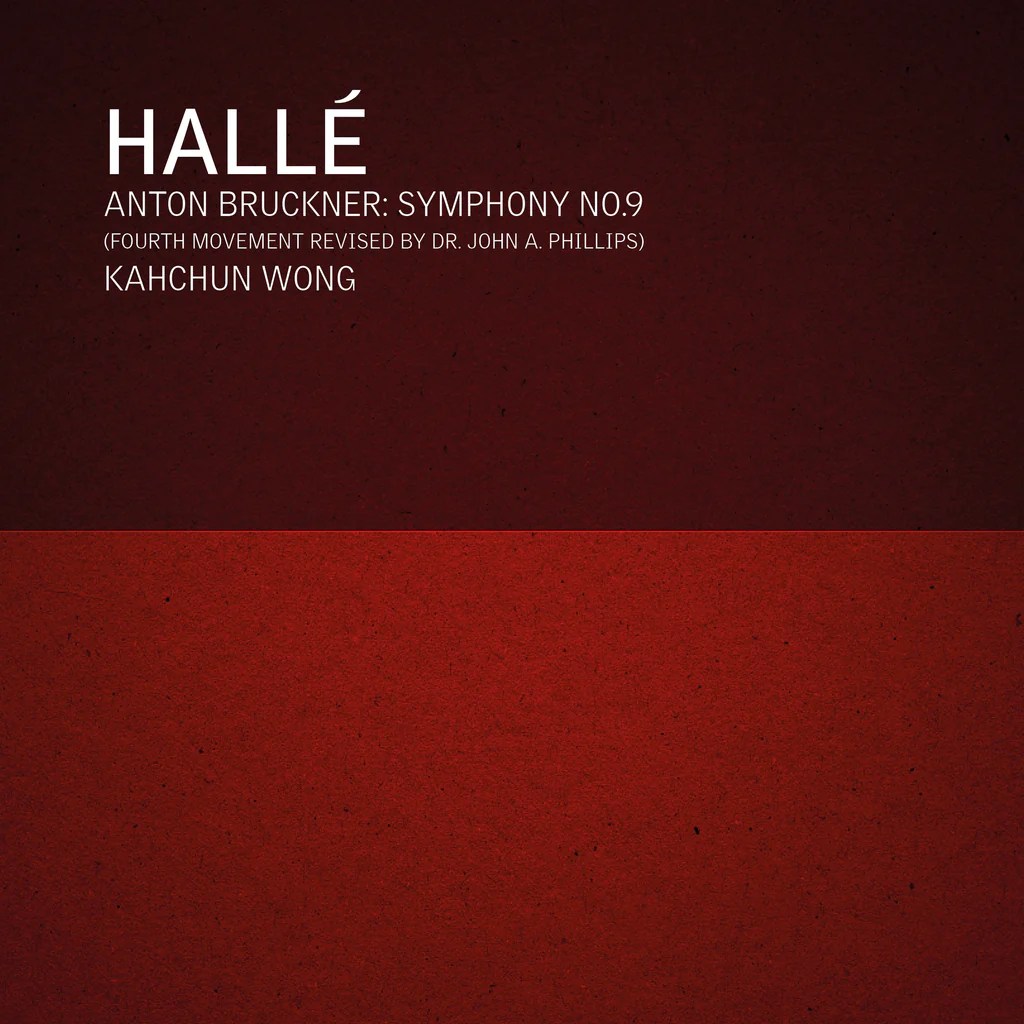
On Record – Hallé / Kahchun Wong: Bruckner: Symphony no.9 (fourth movement revised by Dr. John A. Phillips) (Hallé)

Bruckner, ed. Kito Sakaya Symphony no.9 in D minor WAB109 (1887-96)
with performing edition of finale by Nicole Samale, John A. Phillips, Benjamin-Gunnar Cohrs and Giuseppe Mazzuca (1983-2012) as revised by John A. Phillips (2021-22)

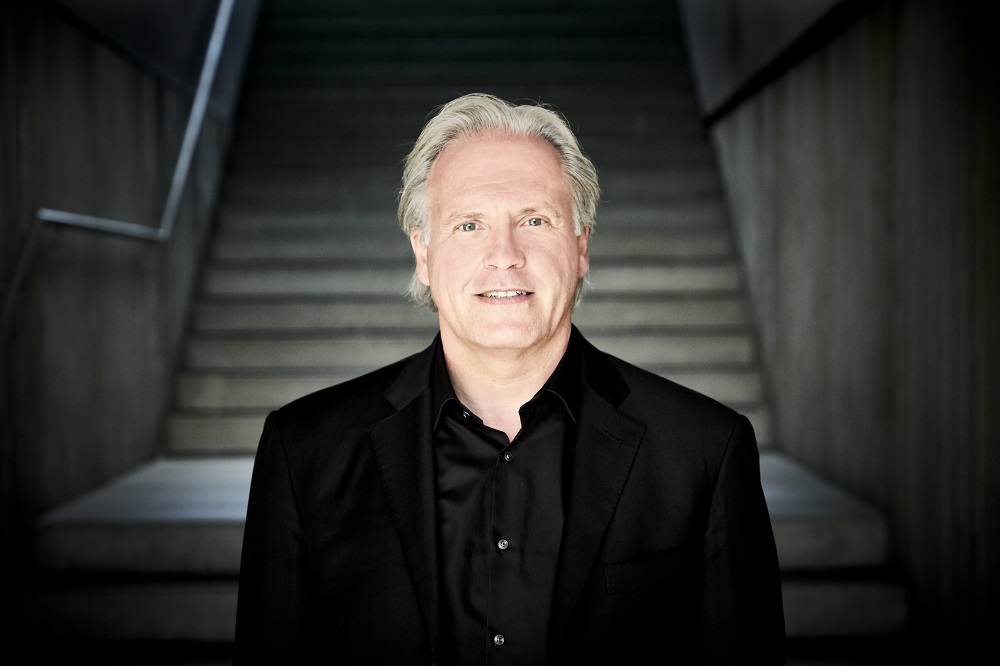
Hallé / Kahchun Wong

Hallé CDHLD7566 [two discs 88’24’’]
Producer Steve Portnoi Engineers Tony Wass, Edward Cittanova

Recorded 26 October 2024 at Bridgewater Hall, Manchester

Reviewed by Richard Whitehouse

What’s the story?

The Hallé furthers its association with principal conductor and artistic advisor Kahchun Wong in this recording of Bruckner’s Ninth Symphony, the finale heard in a new edition prepared by John A. Phillips as the ostensible culmination of a process extending back across four decades.

What’s the music like?

Although his introductory note leaves no doubt as to his advocacy for Bruckner Nine, Wong’s approach is not an unqualified success overall. Doubts such as they are centre on the opening two movements, the first of which lacks that sustained inevitability and cumulative intensity necessary to make its extensive span cohere. Aptly contrasted in themselves, its three themes follow on each other without establishing any greater continuity and while the approach to its development yields tangible ominousness, the ensuing climax conveys less than the ultimate terror, though its coda does attain a fearsome majesty. Wong’s take on the second movement succeeds best in its trio’s speculative flights of fancy, which only makes the relative stolidity and emotional disengagement of its Scherzo sections the more surprising and disappointing.

The highlight is undoubtedly the Adagio. Without intervening unduly in its evolution, Wong ensures cohesion over a movement manifestly riven if not outright fractured by the starkness of its thematic contrasts. The journey towards its seismic culmination feels as eventful as it is absorbing and while that climax is less shattering than it can be, the clarity afforded its dense harmonies could not be bettered. Wong is mindful, moreover, not to allow its coda to broaden into an extended postlude but instead to keep this moving in anticipation of what is to follow.

This is hardly the place to go into the whys or wherefores of the ‘SPCM’ edition of the Finale. Given his intensive research into the issues of what is extant and what Bruckner intended for the crowning movement of his grandest symphonic design, Phillips is ideally placed in making his revisions to a completion which renders some striking yet often disparate material from a focussed and convincing perspective. The main alterations are those made to its latter stages, more streamlined and with less overt rhetoric than in the 2011 revision as recorded by Simon Rattle (Warner) though, to this listener at least, the 2008 revision as recorded by Friedemann Layer (Musikalische Akademie) still remains the most convincing in context. Whatever else, Wong conveys the extent of this gripping torso right through to the elation of its apotheosis.

Does it all work?

How well this performance succeeds depends on how one judges the necessity of that closing movement and the persuasiveness of Wong’s interpretation as a whole. Pertinent comparison might be made with the Hallé’s previous recording (also on its own label) – Cristian Mandeal drawing a response that, in the first two movements, has a power and intensity in advance of this newcomer. Interesting he should eschew the finale while instilling into those three earlier movements a sense of completion which, whether or not intentionally, is its own justification.

Is it recommended?

It is, whatever the reservations here expressed. This is not the final word on a four-movement Bruckner Nine any more than on Wong’s evolving interpretation though, with realistic sound alongside Phillips’s detailed while informative annotations, it is evidently a mandatory listen.

Listen / Buy

You can read more about this release and explore purchase options at the Hallé website

Published post no.2,518 – Wednesday 30 April 2025

In concert – Martin Helmchen, CBSO / Kazuki Yamada: Mozart Piano Concerto no.26 & Bruckner Symphony no.9

Martin Helmchen (piano, below), City of Birmingham Symphony Orchestra / Kazuki Yamada (above)

Mozart Piano Concerto no.26 in D major K537 (1788)
Bruckner Symphony no.9 in D minor WAB109 (1887-96, ed. Nowak)

Symphony Hall, Birmingham
Thursday 12 December 2024

Reviewed by Richard Whitehouse Pictures (c) Beki Smith (Kazuki Yamada), Giorgia Bertazzi (Martin Helmchen)

This last concert before its Christmas and New Year festivities found the City of Birmingham Symphony Orchestra back with music director Kazuki Yamada for a coupling of Mozart and Bruckner that worked well as a programme over and above its D major-D minor framework.

Lauded for decades after his death, Mozart’s Piano Concerto no.26 was then dismissed as one of his few mature failures through a steely brilliance concealing little, if any, more personal expression. While it may lack the pathos or ambivalence that inform its dozen predecessors, its extrovert nature is complemented by a poise to which Martin Helmchen was well attuned. The martial undertow of its opening Allegro was offset by its winsome second theme and by the harmonic freedom of one of Mozart’s most capricious developments, then the Larghetto had a lilting charm cannily offset by the suavity of the closing Allegretto. That the autograph omits much of its piano’s left-hand part has led others to extemporize their own completion, but Helmchen restricted himself to cadenzas that were inventive and never less than apposite.

Yamada and the CBSO were unwavering in support, making for a performance that certainly presented this work to best advantage and reaffirmed Helmchen’s credentials as a Mozartian. Hopefully this soloist’s and conductor’s first Birmingham collaboration will not be their last.

Birmingham audiences had not so far encountered Yamada in Bruckner but, on the basis of his Ninth Symphony, here is a composer for whom he has real affinity. Not that this performance had it all its own way – the first movement, if not lacking either solemnity or mystery, did not quite cohere across its monumental span. Each thematic element was potently characterized, but their underlying follow-through felt less than inevitable such that the development lacked something of the centripetal force needed for a properly seismic impact, though the coda built with due remorselessness to a baleful close. If the Scherzo’s buoyant outer sections eschewed the ultimate violence, Yamada judged almost ideally the contrasting tempo for its trio – which latter emphasized a spectral or even sardonic humour which is surely unique in this composer.

In the absence of a finale (though such a movement was well on its way towards completion, as numerous realizations attest), the Adagio represents this work’s nominal culmination. Here orchestra and conductor gave of their interpretative best. Once again, the issue is how to fuse its almost disparate components into a sustained while cumulative totality and Yamada faced this challenge head on – the music exuding gravitas but with enough flexibility of motion to encompass its textural and emotional extremes right through to an apotheosis numbing in its unrelieved dissonance. Not that it pre-empted the coda’s benedictive quality from endowing closure on this movement as on the work as a ‘whole’, woodwind and strings gradually being drawn into the timbre of horns and Wagner tubas as these resounded eloquently into silence.

It hardly needs to be added that the CBSO’s playing abetted this impression, while Yamada’s placing of the double-bases in a row at the rear of the platform audibly galvanized the music-making and so set the seal on a performance which will doubtless linger long in the memory.

For details on the 2024-25 season A Season of Joy, head to the City of Birmingham Symphony Orchestra website. Click on the names to read more about pianist Martin Helmchen – and the orchestra’s principal conductor Kazuki Yamada

Published post no.2,394 – Sunday 15 December 2024

Bruckner 200 – a quick look beyond the symphonies

by Ben Hogwood picture (c) Linz Tourismus Tom Son

Today marks the 200th anniversary of the birth of composer Anton Bruckner.

Bruckner is a ‘marmite’ figure in classical music. His symphonies, the calling cards of his small but profound output, divide opinion greatly. The later works, I am sure, would appeal to those approaching from the direction of progressive rock, and are fiercely admired by a great many devoted classical music listeners. They create sound worlds unlike any other composer, ‘cathedrals in sound’ in which he uses distinctive themes, deceptively simple techniques, and extended forms that mean most of his symphonic works run for an hour or more. Other ears, however, remain unmoved, immune to the great expanses of texture and intensity.

What cannot be disputed is that Bruckner’s music is instantly recognisable as his, especially when it is one of those nine numbered symphonies. In the last year a host of recordings have appeared of the whole cycle, along with a myriad of different – if authentic – performing versions. A box set round-up of all these versions is due to appear on Naxos on 13 September, collecting all the individual volumes of Bruckner recorded by the Bruckner Orchester Linz under Markus Poschner for the Capriccio label:

My personal favourite among the symphonies is the mighty Eighth, which has received a number of classic recordings. Those by Reginald Goodall, Herbert von Karajan, Carlo Maria Giulini and – especially – Gunter Wand, have all left a mark. The latter is an incredible account, recorded in 1987 in Lübeck Cathedral:

Yet I did also want to draw some attention to Bruckner’s music for voices and for strings, in case you want to try something different. The motets for unaccompanied choir are profound and beautiful – while the Te Deum is a many-splendoured thing, as are the three masses for chorus and orchestra.

Here, too, is the String Quintet in F major, a big-boned piece with music of real poise and power. The slow movement shows how Bruckner can write delicate music, the Scherzo is an elusive dance, while the outer movements show what an unusual yet affective style he has, able to wring every last drop of power from a seemingly small ensemble:

Published post no.2,291 – Wednesday 3 September 2024

In concert – James Ehnes, CBSO / Markus Stenz: Schumann Violin Concerto & Bruckner Symphony no.7

James Ehnes (violin, above), City of Birmingham Symphony Orchestra / Markus Stenz (below)

Schumann Violin Concerto in D minor WoO23 (1853)
Bruckner Symphony no.7 in E major WAB107 (1881-83, ed. Nowak)

Symphony Hall, Birmingham
Thursday 25 April 2024

Reviewed by Richard Whitehouse Picture of James Ehnes (c) Benjamin Ealovega, Markus Stenz (c) Kaupo Kikkas

His appearance here for performances of Mahler’s Second Symphony two years ago had made one hope that Markus Stenz might soon be invited back to the City of Birmingham Symphony Orchestra – such being so tonight for this outstanding programme of Schumann and Bruckner.

Although it now enjoys frequent hearing, Schumann’s Violin Concerto yet remains under the shadow of its eight-decade limbo after the composer’s mental breakdown then decision by its intended soloist Joseph Joachim to withhold performance. Only in 1937 was it given in public, since when it has gradually come to be regarded (as Yehudi Menuhin believed it would be) as the missing link between Beethoven and Brahms. Certainly, there was nothing tentative about James Ehnes’ advocacy, which proved as interpretively acute as it was technically immaculate.

Pacing the initial movement so that its earnest character never becomes unduly sombre is not easy, but Ehnes ensured its halting progress never felt effortful and Stenz drew textures of no mean luminosity from these modest forces. The slow movement seemed more eloquent for its listless pathos, with its terse transition into the finale astutely judged. Its underlying polonaise rhythm deftly inflected, this rather gauche rondo yielded an easy-going momentum in the call and response between soloist and orchestra, through to a conclusion both genial and resolute.

A memorable performance which reinforced Ehnes as among the most consistent (as well as undemonstrative) of present-day virtuosi – something that was no less evident in his account of the Third Sonata (‘Ballade’) by Eugène Ysaÿe which here made for a scintillating encore.

The UK has seen little of Stenz since his tenure with the London Sinfonietta during the mid-1990s, a pity given he has few peers among conductors of his generation in terms of Austro-German repertoire. Such was borne out by Bruckner’s Seventh Symphony – Classical in its lucidity of motion, Romantic in its frequently impulsive emotion. Not least an initial Allegro moderato that elided between its contrasting themes with unforced rightness, the abruptness of certain tempo changes (accentuated by his rare recourse these days to the Nowak edition) channelled into a coda of surging sublimity. Even finer was the Adagio for the inevitability with which this drew respectively elegiac and lyrical themes into a sustained traversal, via an exultant peroration (cymbal and triangle duly outdone by timpani), to a nobly resigned close.

The latter two movements can easily seem anti-climactic, but there was nothing understated about the Scherzo as Stenz heard this – the impetus and acerbity of its outer sections finding accord with a trio whose lilting poise was delectably pointed. As for the Finale, most succinct of Bruckner’s maturity, Stenz emphasized its expressive contrast between themes through his choice of tempi – while managing to mould these into a convincing unity before heading into a coda which revisits that of the first movement with blazing affirmation in the here and now.

The performance would not have made the impact it did without the CBSO playing at or near its best throughout – such Bruckner interpretation having few, if any, equals when it comes to live music-making. One can only hope conductor and orchestra will work together again soon.

Click on the link to read more on the current CBSO concert season, and on the names for more on violinist James Ehnes and conductor Markus Stenz

Published post no.2,161 – Saturday 26 April 2024

BBC Proms 2023 – BBC Symphony Orchestra / Semyon Bychkov: Bruckner Symphony no.8

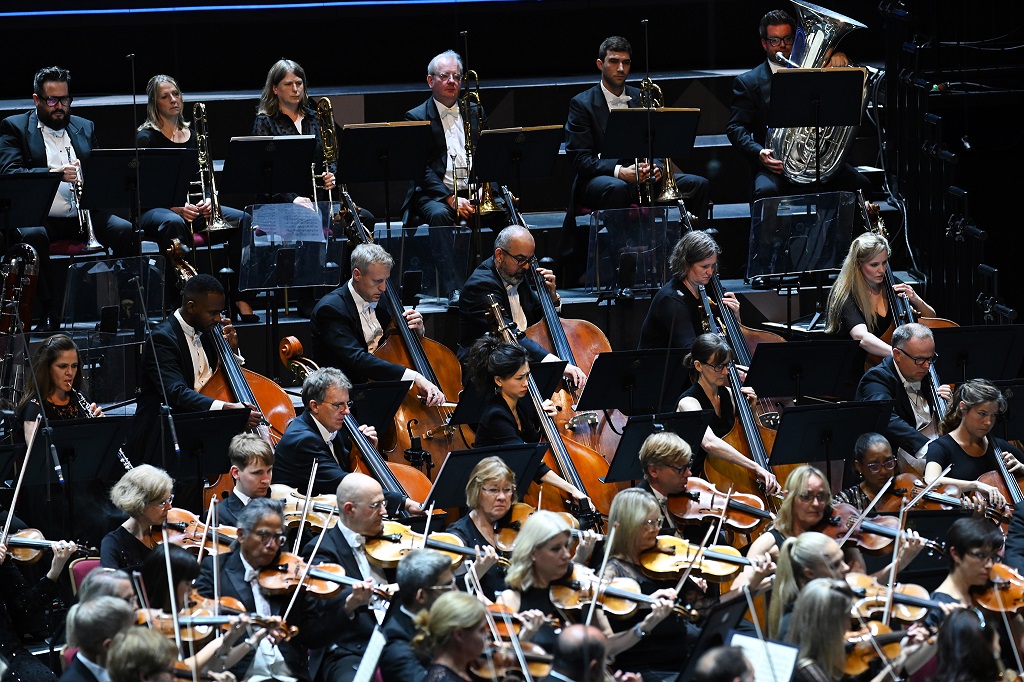
Prom 65 – BBC Symphony Orchestra / Semyon Bychkov

Bruckner Symphony no.8 in C minor WAB108 (1884-7, rev. 1889-90 [ed. Nowak])

Royal Albert Hall, London
Monday 4 September 2023

by Richard Whitehouse photos by Chris Christodoulou / BBC

It may have taken 70 years for its Proms premiere but the Eighth has since become the second most often played of Bruckner’s symphonies (this being its 21st hearing), and a near capacity house greeted tonight’s performance by the BBC Symphony Orchestra with Semyon Bychkov.

At home across a broad repertoire, Bychkov has of yet directed relatively little Bruckner, and the first movement took its time to settle. Fugitive rather than speculative in their emotional import, those distinct motivic elements lacked a final degree of definition and only began to take on greater cumulative focus during a development whose unfolding drama was matched but not exceeded by the climax of the coda – after which, that inexorable winding down into silence was precisely controlled while curiously unevocative in its sense of time running out.

With the outer sections taken at a swift but never headlong tempo that enabled its underlying ostinato pattern to be perceived throughout, the Scherzo exuded energy while also mystery in what remains Bruckner’s most powerful instance of a genre he made his own. The brass was at its most assured, and Bychkov duly avoided any temptation to make the lengthy trio a self-contained episode. Its unforced progress brought winsome contributions from woodwind and harps, the reprise then having audibly greater impetus as it surged towards its decisive close.

As so often in this symphony, the Adagio found the interpretation and its realization in most potent accord. Mindful to draw its continual thematic restatements into a consistent process of developing variation, Bychkov conveyed the music’s expressive but also spatial grandeur with an assurance hardly less evident in its unfolding tonal trajectory. Nor did the excising of material in revision impede its course, even if the sudden appearance of cymbals and triangle at its climax sounded more than usually redundant. A pity, moreover, that momentary failings of intonation among Wagner tubas affected what was otherwise his near perfect rendering of the coda – Bruckner’s distilling of main motifs, underpinned by the halting accompaniment, finding closure only at that point where everything stops as the movement comes full circle.

From here the Finale set out with due purposefulness, even though the occasional rhythmic hesitancy gave notice of an approach in which the whole did not quite match the sum of its admittedly impressive parts. Strategically coinciding with those divisions of the movement overall, the chorale-like main theme brought a resplendent response as left its eloquent then ominous successors sounding incidental within the ongoing formal scheme, and though the extensive development did not lack for variety of content, its discursiveness made for a less than perfect unity. Any remaining tentativeness was none the less dispelled in a coda whose gradual emergence made for an apotheosis of unusual clarity – the superimposing of themes not just ingenious in its technical skill but cathartic in its conveying of a journey completed.

The illustrious rollcall of conductors who have tackled this work at the Proms speaks for itself, and while Bychkov might not yet have joined the ranks of Wand, Haitink and Mehta et al, his belief in and commitment to Bruckner’s Eighth was amply communicated to all those present.

For more on the 2023 BBC Proms, visit the festival’s website at the BBC. Meanwhile click on the names for more information on the BBC Symphony Orchestra and guest conductor Semyon Bychkov – and finally composer Anton Bruckner