
Wigmore Mondays – Kitty Whately & Simon Lepper: From the Pens of Women

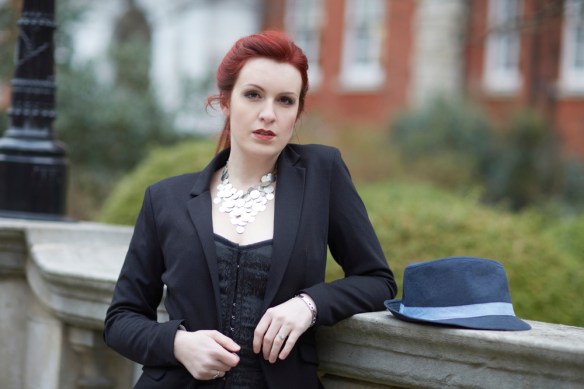
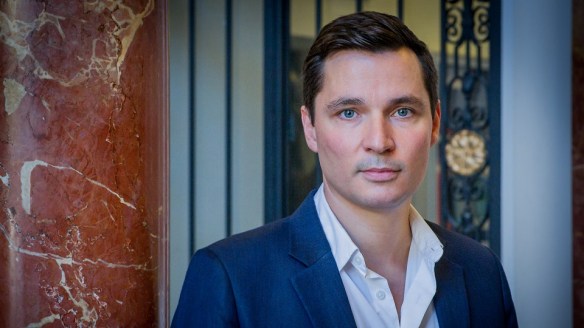
Kitty Whately (mezzo-soprano, above), Simon Lepper (piano, below)

Jonathan Dove All the Future Days (Autobiography; Penelope; The Siren) (2004) (2:11-13:27 on the broadcast link below)
Vaughan Williams 4 Last Songs (1954-8) (13:58-23:27)
Judith Cloud Night Dreams (Variations on the Word Sleep) (2006) (24:58-28:12)
Lori Laitman Orange Afternoon Lover (I Was Reading a Scientific Article) (2006) (28:15-32:24)
Argento From the Diary of Virginia Woolf (Anxiety) (1974) (32:27-34:25)
Rebecca Clarke Lethe (1941) (35:58-39:00)
Juliana Hall Letters from Edna (To Harriet Monroe; To Mother) (1993) (39:05-43:15)
Jonathan Dove Nights Not Spent Alone (2015) (43:34-52:42)

Wigmore Hall, London
Monday 18 February 2019

To hear the BBC broadcast through BBC Sounds, please follow this link

Commentary and Review by Ben Hogwood

What a refreshing hour of music.

With no criticism intended, Mondays at the Wigmore Hall, where BBC Radio 3 hold a lunchtime concert every week, are a reliable way in which to start the week with quality music. They show off some of the very best in chamber, piano and vocal music, often in imaginative programs, but understandably catering for the audience with relatively well-thumbed pieces of music often included.

Not so on this occasion. Mezzo-soprano Kitty Whately always ensures she has an equal balance of male and female composers in her programs, and likes to sing about the stories of both sexes. From the Pens of Women, then, presented an opportunity to sing songs written by women – which in classical music is still not much as a proportion of the whole. She was joined by her regular recital partner Simon Lepper.

Autobiography (2:11 on the broadcast link) was a brave start, Whately straight into the high notes as she flew like the eagle in the text above the rapidly circling figurations of Lepper’s piano. Jonathan Dove’s sound world is fascinating here, clearly on the wing – and then coming down to earth a little for Penelope (4:46), which has a right hand piano figure not dissimilar to Britten, calling out in the right hand before the vocalist brings softer thoughts, then rising to soar with great feeling.

Then, from 8:04, another striking setting – this time The Siren, where Lepper worked overtime to bring a distinctive, treble-rich piano part that dives from the heights as though into a pool of water before cutting off quite suddenly at 13:27 on the broadcast.
Ursula Vaughan Williams‘ text, as set by her husband Ralph, is a very different story. One of her husband’s last works, the Four Last Songs would inevitably invite comparisons with the more famous works of the same name by Richard Strauss, but they are totally different. Vaughan Williams was less obviously heart-on-sleeve with his feelings, but look deeper and they are still there.

The first, Procris (13:58) is a little restless and decides against following the black humour of the story, while Tired (16:32) is a wonderful song, softly rocking its listener as a lullaby. Whately gave an appropriately understated reading here. Hands, Eyes and Heart (18:32) is a short song but then Menelaus (19:42), the most substantial of the four, finishes the brief cycle in a poignant mood.

Three settings of Margaret Attwood follow, with Judith Cloud’s Night Dreams (24:58) a beautifully observed setting of how the author ‘would like to watch you sleeping’. The song is dappled in half light and is shot through with the intimacy of the sleeping hours, while Lori Laitman’s Orange Afternoon Lover (I Was Reading A Scientific Article) (28:15) is similarly personal, set to a flowing accompaniment. Dominick Argento’s setting of Anxiety from From the Diary of Virginia Woolf (32:27) is propelled by the urgent piano part and keeps a high level of agitation throughout.

The text of Edna St Vincent Millay (above) provided the inspiration for the last third of the concert, a remarkable group of song settings. Rebecca Clarke’s Lethe is the very definition of bleakness, the underworld river supplying no comfort but only sorrow and menace (35:58), particularly in its ominous piano part at the end.

Juliana Hall’s settings of Letters from Edna provide some much-needed light relief, Millay asking humorously for payment from her publisher (39:05-40:22), declaring herself ‘awfully broke’, before passionately declaring her love and admiration To Mother (40:25).

Three settings make up Jonathan Dove’s mini-cycle Nights Not Spent Alone – the down to earth text of Recuerdo (43:34), with a quasi-orchestral piano part brilliantly managed by Lepper, the heady What lips my lips have kissed (47:41) and the passionate I too beneath your moon (50:18).

As an encore Whately and Lepper gave another Dove song, All These Dismal Looks (54:13-56:00), the fourth of five songs making up his Five Am’rous Sighs. The humourous song put the seal on an outstanding hour of music making, full of new discoveries and surprises and passionately delivered. The music and verse will I’m sure provide a springboard for listeners to the broadcast to look further afield. Talking of which…

Further listening

Kitty Whately has recorded the Jonathan Dove songs as part of a disc devoted to the composer’s music, including All The Future Days in its entirety, as well as Nights Not Spent Alone:

The below playlist contains all the music heard in this concert in available versions:

https://open.spotify.com/user/arcana.fm/playlist/6ctQO8z0d77IAARv24UoCR?si=JMBLzE4GQ9S7_Ay03k3iTg

Meanwhile you can hear all the songs of Rebecca Clarke on this disc from Patricia Wright, Jonathan Rees and Kathron Sturrock:
Wigmore Mondays – François-Frédéric Guy plays Debussy, Tristan Murail & Brahms

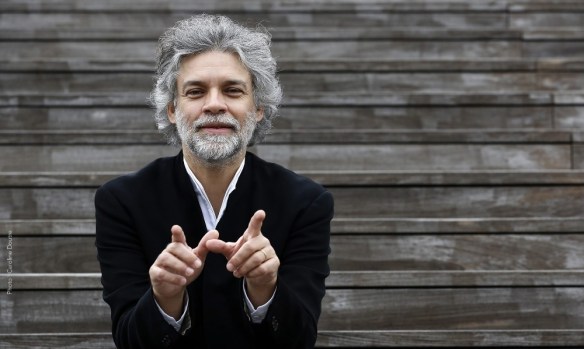
François-Frédéric Guy (piano)

Debussy Préludes, Book 2 (1912-13): Brouillards (1:27-4:25 on the broadcast link below); La puerta del vino (4:31-7:41); Les fées sont d’exquises danseuses (7:46-10:37); La terrasse des audiences du clair de lune (10:42-15:00; Feux d’artifice (15:03-19:07)
Debussy Images, Set 1 (1901-05): Reflets dans l’eau (20:47-25:37)
Tristan Murail Cailloux dans l’eau (2018, UK premiere) (25:40-32:30)
Brahms 4 Piano Pieces, Op.119 (1893) (34:35-48:23)

Wigmore Hall, London
Monday 11 February 2019

To hear the BBC broadcast through BBC Sounds, please follow this link

Commentary and Review by Ben Hogwood

If last year saw a surfeit of Debussy’s music in the composer’s centenary year, it was for a good reason. The composer is rightly revered as one of the leading lights of early 20th century music, and brought with him new approaches to melody and harmony, not to mention sound worlds and textures unlike anything that had been heard before.

His writing for the piano is indispensable and of a consistently high and original quality, whether taking inspiration from older forms or creating new ones. In his Préludes for the piano he builds on an approach perfected by Chopin, who used each key to create 24 such works. Debussy, however, made 24 character pieces, painting portraits either of specific or deliberately vague imagery.

In this lunchtime recital François-Frédéric Guy fully immersed himself in this revolutionary writing, showing a clear affinity with five of the Préludes from the later Book 2. The swirling mists of Brouillards (Mists) (from 1:27 on the broadcast link) are vividly portrayed, with a notable attention to detail on the weighting of the notes. The swagger of the Habanera inhabits La puerta del vino (The wine door) (4:31), with its exotic harmonies matched to a free rhythmic approach.

The parallel chords of Les fées sont d’exquises danseuses (Fairies are exquisite dancers) (7:46) are also beautifully weighted, while La terrasse des audiences du clair de lune (The terrace of moonlit audiences) (10:42) grows from its introduction with a masterful crescendo. Finally Feux d’artifice (Fireworks), 15:03) is captivating, and during it you can practically see sparklers being waved around, thanks to the twinkling figurations in Guy’s right hand.

Reflets dans l’eau, taken from Debussy’s Images Set 1, is another watery wonder (from 20:47), played here with exquisite control from both fingers and feet – the use of the sustain pedal being of great importance in Debussy’s music. The rippling sounds act as the inspiration for Tristan Murail’s tribute to the composer, Cailloux dans l’eau (25:40)

His response begins at a more measured tempo than Debussy’s, savouring the colours for longer and effectively making his water slower moving. Soon, however, the ripplies become much more pronounced and twist upwards to the higher pitches on the piano (c30:00), with frothy trills that gradually subside towards silence. Guy played this with absolute control, fully immersed in Murail’s writing.

To finish, the final works for piano by Brahms. These four pieces were written as the composer reached his 60s, and mark the end of a late creative flowering including a number of chamber works for clarinet and intimate pieces for the piano. Three of Op.119 are classed as Intermezzos, a title essentially giving the composer free rein.

No.1 feels the most free of all, with a soaring right hand line beautifully floated by Guy in this performance. A real song without words, it carries deep emotional impact here. Guy moves straight on to the second piece (38:20), a flowing piece with greater urgency and a sunnier theme in the centre.

Then at 42:27, the short third piece, with repeated notes using the ‘classic’ Brahms triplet rhythms. Guy missed a couple of notes here but gauged the piece just right leading to the heroic Rhapsody (43:51) This piece is a triumphant way to end any concert, but does finish on a darker note. Until then, Brahms develops the theme, moving by 46:30 to a mood that recalls the previous Intermezzo. Then the main tune returns with great force (47:37), and just as it looks like a sunny ending Brahms plunges us into the minor key, signing off with great fire and brimstone.

To calm the waters after this, Guy returned to Debussy, and the first book of Préludes – with the most famous excerpt of all, Clair de lune (49:52-53:55).

Further listening

François-Frédéric Guy has not yet recorded any of the music heard in this concert – however the below Spotify playlist includes some leading versions of the repertoire heard:

Unfortunately the Tristan Murail is not available anywhere yet; however his complete piano music up until 2013 can be heard here in recordings made by Marilyn Nonken:

For more Debussy, Mitsuko Uchida’s album of the Études, another extension of a form pioneered by Chopin, can be heard here in an award-laden disc:

Late Brahms is one of the pinnacles of the Romantic piano repertoire, and few recorded it with the authority of Steven Kovacevich, heard here in a wonderful album for Philips:

Wigmore Mondays – Sophie Pacini plays Chopin, Wagner & Schumann

Sophie Pacini (piano)

Chopin Fantaisie-Impromptu in C sharp minor Op.66 (c1834) (1:27-6:18 on the broadcast link below)
Wagner, transcribed Liszt Overture to Tännhauser S442 (arr.1848) (7:25-22:33)
Schumann Carnaval Op.9 (1834-5) 24:25-47:13

Wigmore Hall, London
Monday 4 February 2019

To hear the BBC broadcast through BBC Sounds, please follow this link

Commentary and Review by Ben Hogwood

Sophie Pacini’s Wigmore Hall recital began with a fast, flowing performance of Chopin’s Fantaisie-Impromptu. As the name implies this is an extremely free piece but there is structure too, with two distinct themes. From 1:27 on the broadcast link above you can hear the main material, then at 2:31 a contrasting and relatively settled theme in the major key. A short development section brings us back to the main material at 4:33, and then Chopin spins a beautiful coda from the second theme at 5:35.

Liszt’s transcription of Wagner’s overture to the opera Tannhäuser (from 7:25) is something of an Everest for pianists; one that Sophie Pacini appeared to have scaled with commendable ease. This was a towering performance but also one that allowed the detail of the parts to come through – only rarely did the tunes threaten to become subsumed by the massive textures, and that certainly wasn’t the fault of Pacini – just a case of Liszt trying to accommodate so much of the orchestra!

In the broadcast the overture builds steadily from soft but noble beginnings, reaching what sounds like a mighty peal of bells at 9:27. This majestic theme dominates the music, coming back at 18:42 with an extraordinary accompaniment of what sounds like circling birds in the right hand part, leading up to a massive statement towards the end.

Carnaval is a favourite among the Schumann piano output, a series of character pieces that present a masked ball. Schumann himself is there, together with wife Clara – and not only that, Schumann invents several characters to depict the very different strains of his personality. There is a grand total of 20 different sections making up this attractive and colourful suite of pieces, and they run as follows (with approximate descriptions):

The very lively Préambule (24:25) begins the piece, cutting to Pierrot (26:36), whose repeated three-note figure reminded me of Musorgsky’s Pictures at an Exhibition. Arlequin (27:47) is a short, playful number, leading to a charming Valse noble (28:32), then Eusebius (29:39), one of the ‘selfies’ in Carnaval that depicts composer’s ‘calm, deliberate’ side. By contrast Florestan (31:26) depicts the composer’s fiery, impetuous nature, and Schumann quotes the main waltz theme from his earlier work Papillons, Op. 2.

The Coquette (32:15) follows, depicting a flirtatious girl, before Réplique (33:18) acts as a reply. There would then be a freely-written section called Sphinxes, which Sophie Pacini chooses not to perform here. Instead we move on to the quick fire Papillons (33:48, no connection to Op.2), then A.S.C.H. – S.C.H.A (34:31), another form of self portrait. Chiarina (35:09) is a depiction of the composer’s wife Clara, while the spacious arpeggios of Chopin (36:03) depict the composer.

Estrella (36:46) depicts Ernestine von Fricken, before Reconnaissance (37:23), a brilliant musical portrayal that is thought to depict Schumann and Ernestine recognizing each other at the ball. Pantalon et Colombine (38:54) are from the commedia dell’arte, then we hear the charming Valse allemande (39:38)

An extremely active Intermezzo: Paganini (40:14) leads into a reprise of the Valse allemande. Then Aveu (41:30) initally feels a bit bashful in its depiction of a confession of love. A Promenade (42:20) moves directly to a Pause (43:58), written out in musical form. After an almost identical reprise of a passage from the opening Préambule, we lead without a break into the final section, the Marche des “Davidsbündler” contre les Philistins (The March of David Against the Philistines) (44:16) It is a rousing finish to a cycle full of character.

Sophie Pacini’s performance is a fast one – most versions clock in just under half an hour, whereas hers is under 23 minutes. This shows the quick tempo choices she makes, and the short pauses between musical numbers. On occasion the music feels a bit too hasty and some of the softer moments and dance scenes could do with a bit more space and charm, some time to breathe between the sections perhaps. That said, a very enjoyable performance of characterful music that ends triumphantly.

As a suitable footnote to the concert, Pacini returned to the key of C sharp minor for Saint-Saëns (48:26-53:33) and his Allegro appassionato.

Further listening

Sophie Pacini has recorded all of the repertoire given in her recital. Her encore piece, the Saint-Saëns Allegro Appassionato, is added in a new recording from Bertrand Chamayou:

Quite where Liszt found the time to transcribe loads of orchestral pieces for piano is a mystery, but he did – including all nine Beethoven symphonies! This collection from Glenn Gould includes the Fifth, as well as more Wagner:

Schumann’s character pieces for piano are greatly loved. Carnaval is one of the most popular, but there are plenty of others – and on this album from Wilhelm Kempff you can enjoy three collections – Kinderszenen (for children), the wonderful Kreisleriana and the Waldszenen (Forest Scenes):

Wigmore Mondays – Simon Höfele & Frank Dupree in 20th century works for trumpet and piano

Simon Höfele (trumpet, above) & Frank Dupree (piano, below)

Enescu Légende (1906) (2:07-8:20)
Takemitsu Paths (In Memoriam Witold Lutoslawski) (1994) (8:39-14:48
Hindemith Trumpet Sonata (1939) (16:56-33:30)
Savard Morceau de Concours (1903) (35:20-41:05)
Gaubert Cantabile et scherzetto (1909) (41:33-46:20)
Charlier Solo de Concours (1900) 47:39-54:26)

Wigmore Hall, London
Monday 28 January 2019

To hear the BBC broadcast through BBC Sounds, please follow this link

Photo credits Sebastian Heck (Simon Höfele)

Commentary and Review by Ben Hogwood

There is more music for the combination of solo trumpet and piano than you might think – and how gratifying for the BBC New Generation Artist Simon Höfele to remind us of that on his debut at the Wigmore Hall. Forming a most impressive partnership with pianist Frank Dupree, he gave us four works from the first decade of the 20th century, three by composers new to Arcana pages – and a masterpiece of the century’s repertoire.

Initially playing a trumpet ‘in C’ (that is, calibrated to sit naturally in the key of C major), Höfele listened to Dupree solemnly intoning the opening chords of the Enescu Légende (from 2:07 on the enclosed BBC Sounds link). A competition piece written by the Romanian composer for the 1906 trumpet competition (concours) at the Paris Conservatoire, it begins in a deceptively languid mood, the trumpet low in its register, but soon begins to stir, Höfele hitting a faultless top ‘C’ around 5:50. Then the thoughtful mood returns, the trumpet using the mute at the very end.

From this soft dynamic comes the beginning of the next piece, Takemitsu’s Paths (8:39). The paths in question are very separate – soft, ruminative phrases using the mute, answered by much bolder and generally higher writing. The piece ascends to the relative heights, the piercing rasp of the mute-inflected phrase brings it towards earth, but it ultimately ends in mid-air contemplation.

Hindemith was an incredibly versatile composer, in his career writing sonatas for no fewer than 16 of the instruments of the orchestra. His Trumpet Sonata is one of the finest examples of this canon, and betrays its 1939 origins with frequent references to the actions of his ‘home’ country Germany. At this point the composer was an exile in Switzerland, and this work effectively shows both his horror and sorrow at the annex of Austria, the occupation of Czechoslovakia and ultimately the invasion of Poland.

Turning to a trumpet ‘in B flat’, Höfele leads a brisk and busy start (from 16:56), though signs of the composer’s tongue-in-cheek writing are never far from the surface, peeking through at 17:50. Once reasserted, however, the main thematic material is impossible to shift.

The second movement (22:26) has a spirit of soft-hearted lazy play about it initially, with light hearted piano comments (ideally voiced by Dupree here) that are punctuated by the trumpet. From 29:19, the last movement, the piano distractedly accompanies the long trumpet phrases in lamentation, using as their source a chorale. Then the music builds to a resentful peak before fading away.

Very little is known of the French composer Augustin Savard – though he did win the coveted Prix de Rome with his oratorio La Vision de Saül in 1886. This Morceau de Concours is a competition piece for the trumpet that shows an impressive grasp of the instrument, not to mention drama in the slow introduction (35:20). By 39:06 the music has worked its way round to a genial theme for the faster section, after which trumpet and piano enjoy some light hearted exchanges.

Philippe Gaubert’s Cantabile et scherzetto, published six years later, enjoys a similar profile. Gaubert’s output is mostly directed towards the flute, but he too wrote a competition piece with a serious introduction (41:33) and a playful counterpart (44:20), packed with repeated triplets.

For the Solo de Concours by Belgian composer Théo Charlier (47:39) a slow introduction is not necessary, the piano firmly setting the scene before the trumpet’s arrival. An attractive slower theme (50:15) gives the other side of the story. A poignant aside from the muted trumpet follows before all the shackles are cast off in the final section (52:44) Just occasionally here Höfele felt as though he was overreaching with some of the more complicated phrases, but this – as with all the other pieces – was brilliantly handled.

The encore was a great choice, a Song Without Words by Russian composer Sofia Gubaidulina (56:03-58:30), a solemn tune spiced with the odd ‘wrong’ note in the piano accompaniment, almost in the manner of Charles Ives.

Further listening

Simon Höfele and Frank Dupree have not yet recorded any of the repertoire performed in this concert. However the playlist below assembles the music in a number of different recordings, headed by Alison Balsom and Tom Poster in the Hindemith Trumpet Sonata:

Höfele does however have an extremely impressive disc of modern works in the bag, including music by HK Gruber, Takemitsu, Jolivet and Iain Hamilton:

Hindemith’s sonatas are intriguing pieces that combine flair and depth with concise writing structures. This disc, commonly linked by pianist Alexander Melnikov, is a winner:

Wigmore Mondays – Leila Josefowicz & John Novacek play Sibelius, Prokofiev, Knussen, Mahler and Bernd Zimmermann

Leila Josefowicz (violin), John Novacek (piano) (photo: Hiroyuki Ito for the New York Times)

Sibelius arr. Friedrich Hermann Valse triste (1903-4) (2:10-6:40)
Prokofiev Violin Sonata no.1 in F minor Op.80: 2nd movement Allegro brusco (1938-46) (6:45-13:21)
Knussen Reflection (2016) (15:17-23:44)
Mahler arr. Otto Wittenbecher Symphony no.5 in C sharp minor: 4th movement Adagietto (1901-2, arr. 1914) (25:45-34:00)
Zimmermann Sonata for violin and piano (1950) (34:51-48:11)

Wigmore Hall, London
Monday 21 January 2019

To hear the BBC broadcast through BBC Sounds, please follow this link

Commentary and Review by Ben Hogwood

On paper, this was a strange programme for an hour-long lunchtime recital at the Wigmore Hall. Yet that in itself is refreshing. Why should programming have to be conventional and fit a particular blueprint all the time? So while I may not have necessarily warmed to their choices initially, on reflection Leila Josefowicz and John Novacek gave us something different. There was a chance for those attending and listening on BBC Radio 3 to hear two very familiar pieces out of context, complemented by music such as the Zimmermann Violin Sonata that we may not have heard before.

Josefowicz and Novacek begin with a highly charged account of Valse triste (2:10 on the broadcast link), the third number from Sibelius’s Kuolema Suite. This is normally heard in the hands of a string orchestra, but the arrangement here – and the ardour with which Josefowicz plays the violin line – especially when doubled with the piano – brings a striking dimension to the piece.

It would have been lovely to hear Josefowicz and Novacek take on the whole of Prokofiev’s Violin Sonata no.1 in F minor Op.80, for this is a dramatic piece indeed with a chill to its writing that would have matched the weather outside. Sadly the second movement was all we had time for (from 6:45), and it felt disjointed outside of its familiar context, despite the passion invested in it by both performers.

Of far greater meaning was Oliver Knussen’s Reflection (15:17), one of his last completed works. Josefowicz was a close acquaintance of the composer, and he wrote his Violin Concerto of 2002 for her. The Reflection is not necessarily what you would expect, a reminder that not all reflections are calm and reflective. It begins urgently, the violin ascending before being joined by the bell-like sonorities of the piano. Some of the reflections are jagged, and most are urgent – and typically for Knussen there is a great deal of interest in the melodies and textures, a style that is compact and extremely listenable but also forward-looking. It finishes abruptly.

The excellent writer Paul Griffiths clearly had trouble finding any information on arranger Otto Wittenbecher, let alone anything to do with his version of the Adagietto from Mahler’s Symphony no.5. This famous excerpt transfers surprisingly well to the reduced forces here, helped by sumptuous tone and control from Josefowicz, whilst Novacek distils the orchestral parts into something surprisingly manageable. Played with soft affection, the main theme leaves its mark, even though the arrangement is taken at quite a quick pace.

The main work of this recital, Bernd Zimmermann’s Violin Sonata made a strong impact. In three concise movements, it manages to explore the outer realms of twelve tone writing without compromising its composer’s folk-inflected style. From the outset at 34:51 Josefowicz and Novacek carry the urgency of the piece as though it were hot in their hands. The inflections are reminiscent of Bartók but have a more jagged melodic style; the punchy percussive approach from the piano is similar however. The slow movement (39:00), is written in a 12-tone form (that is, each of the 12 pitches has to sound before it can be heard again). It is however surprisingly tonal, with its stress on the pitches of ‘C’ and ‘F sharp’ giving the music a restless base. The nocturnal scene again recalls Bartók but is resolutely Zimmermann’s own, with passionate lines from the violin. The busy third movement (44:07) revisits the mood of the first, with terse but meaningful statements from the duo.

As an encore the duo added Charlie Chaplin’s Smile (50:06) in an initially eerie, high-range arrangement made by Claus Ogermann.

Further Listening

Most of the music in this concert (with the exception of the Knussen) can be heard on the Spotify playlist below:

For further insight into Josefowicz’s clever programming, her disc with Novacek For The End Of Time provides ample evidence, bringing together works by Falla, Messiaen, Grieg and Bartók: