In concert – BBC Singers / Martyn Brabbins @ St Paul’s Knightsbridge – Holst, Britten, Garrard, Elgar & Pickard

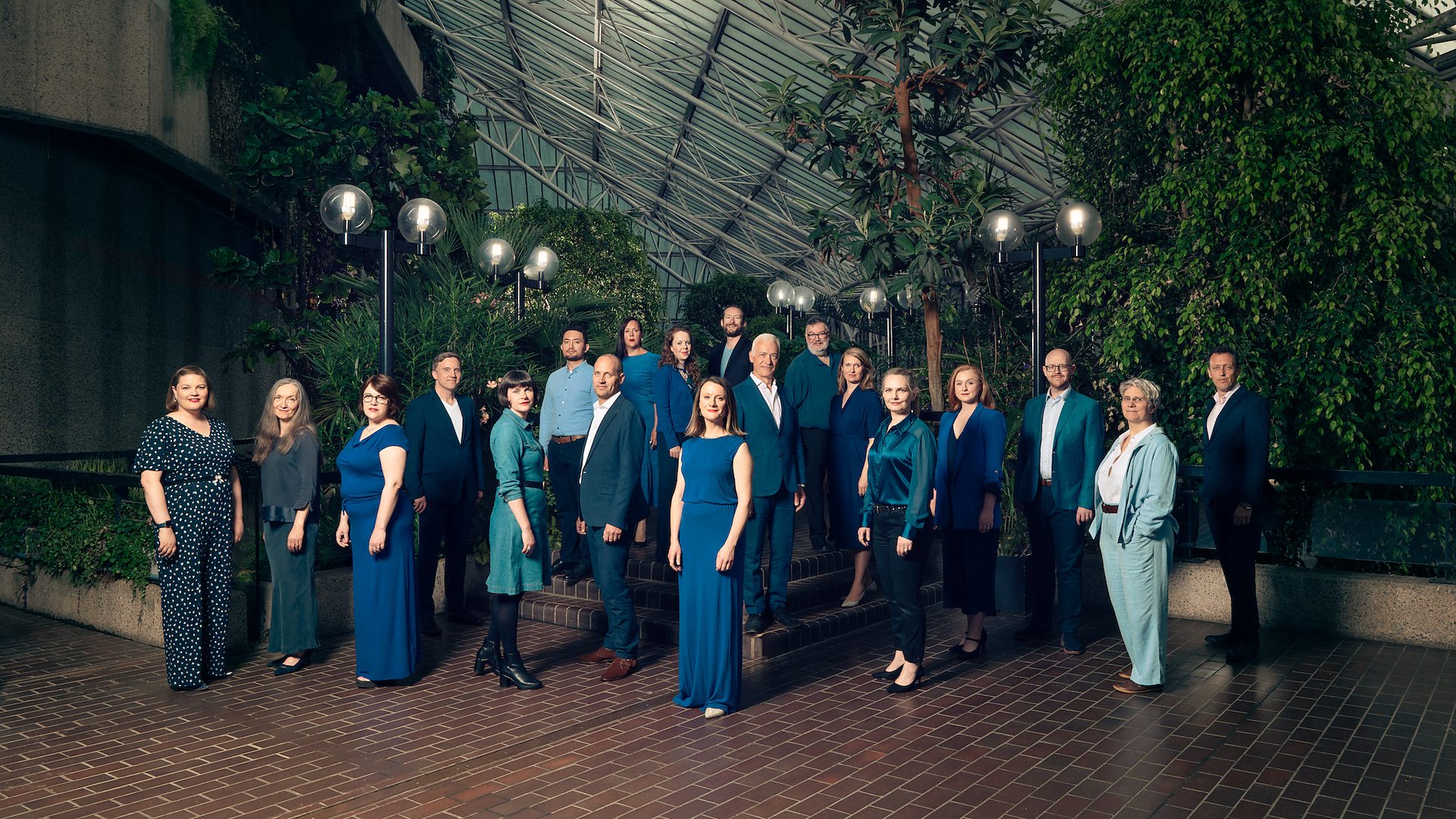
BBC Singers, Elizabeth Bass (harp), Richard Pearce (piano), Andrew Barclay (percussion) / Martyn Brabbins

Holst Choral Hymns from the Rig Veda – Group 3, H90 (1910)
Britten The Ballad of Little Musgrave and Lady Barnard (1943)
Garrard Missa Brevis (2017-18)
Elgar Five Part-Songs from the Greek Anthology Op.45 (1902)
Pickard Elemental (2024-25) (BBC commission: World premiere)

St Paul’s, Knightsbridge, London
Friday 19 September 2025

Reviewed by Richard Whitehouse

The upsurge of interest in and performances by the BBC Singers in the wake of its intended demise shows little sign of abating, and there could be few vocal ensembles able to put on a programme as stylistically inclusive or as technically demanding as that heard this afternoon.

Nowhere more so than Elemental by John Pickard, its first performance occupying the second half. Never absent from the composer’s output, choral music came into own with the powerful Mass in Troubles Times (premiered nearby at St Peter’s, Eaton Square in 2019) and the present work can be heard as a continuation in terms of its underlying concept. A further collaboration with author and theologian Gavin D’Costa, its form is of a journey through the elements such as Pickard had favoured earlier in his output but here with its emphasis firmly on the spiritual arising out of human concerns. Whether individually or collectively, the writing for 18 voices could hardly be more varied and imaginative, while the obbligato roles for harp plus a single percussionist playing across the spectrum of instruments enhances these settings accordingly.

After the evocative Prologue with its Paracelsian take on living matter, Earth draws on the recollections of those in the Tham Luang Cave Rescue – notably teenagers of the Wild Boars football team – in music whose initial bravado gradually assumes a near metaphysical import. Fire integrates its Shakespeare quotations into consideration of this most transformative and cathartic of elements. Air centres on Bessie Coleman with her ambition, racially rather than personally motivated, to become the first professional pilot from African-American ancestry – her combative and ultimately ill-fated career depicted with often graphic immediacy. Water then illustrates the Biblical flood narrative from an oblique and even ambivalent perspective, before Epilogue returns to evocation of the numinous as it builds with a frisson of emotion.

Not that the first half was any mere preparation. Most intimate and alluring of four such sets, the third group of Holst’s Choral Hymns from the Rig Veda traverses the ethereal, the limpid, the hieratic then the questing in the company of female voices and harp. The former were no less attuned to the greater astringency of Sara Garrard’s Missa Brevis – its bracing inclusion of traditional Estonian music offset by the greater introspection elsewhere; these contrasted aspects finding at least a degree of release with the emotional immediacy of the Agnus Dei.

Heard in alternation, the male voices duly came into their own with Britten’s The Ballad of Little Musgrave and Lady Barnard – its folk melody (Matty Groves) stretched through this plangent wartime setting with piano of illicit love, innocent betrayal, desperate revenge and stark lament. Facets that barely feature in Elgar’s Five Part-Songs from the Greek Anthology yet these brief if characterful treatments of translations by Alma Strettell, no less typical than his major choral and orchestral works from this period, were dispatched here with due relish.

Whatever else, this showcase with substance was conducted with unfailing insight by Martyn Brabbins, whose prowess in choral repertoire needs hardly more reiterating than his advocacy of Pickard, and is absolutely worth hearing when broadcast by BBC Radio 3 this Wednesday.

You can hear the BBC Radio 3 broadcast on Wednesday 24 September by clicking here

For more information on the artists, click on the names: BBC Singers, Martyn Brabbins, Elizabeth Bass, Richard Pearce and Andrew Barclay, and composers John Pickard and Sara Garrard

Published post no.2,664 – Sunday 21 September 2025
In concert – Lukas Sternath, BBC Singers, Symphony Chorus & Orchestra / Sakari Oramo @ BBC Proms: Bliss ‘The Beatitudes’, Grieg & Gipps

Lukas Sternath (piano), Elizabeth Watts (soprano), Laurence Kilsby (tenor), BBC Singers, BBC Symphony Chorus, BBC Symphony Orchestra / Sakari Oramo

Gipps Death on the Pale Horse Op.25 (1943) [Proms premiere]
Grieg Piano Concerto in A minor Op.16 (1868 rev.1907)
Bliss The Beatitudes F28 (1961)

Royal Albert Hall, London
Sunday 7 September 2025

Reviewed by Richard Whitehouse Photos (c) BBC / Chris Christodoulou

This evening’s Prom – launching the final week of the present season – was billed as ‘Grieg’s Piano Concerto’, no doubt the reason why many in the audience were attending while hardly being the most interesting aspect of a typically adventurous programme from Sakari Oramo.

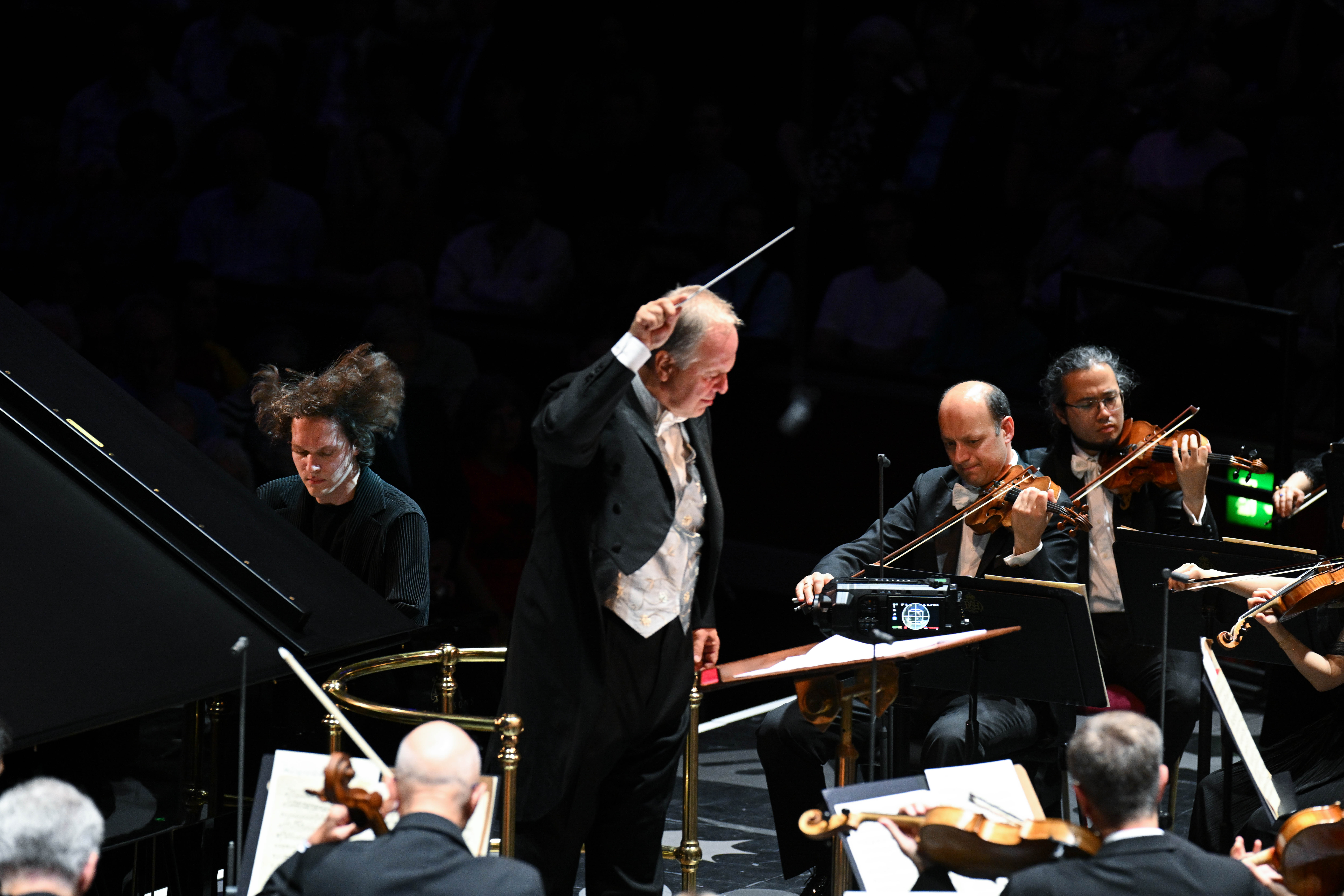
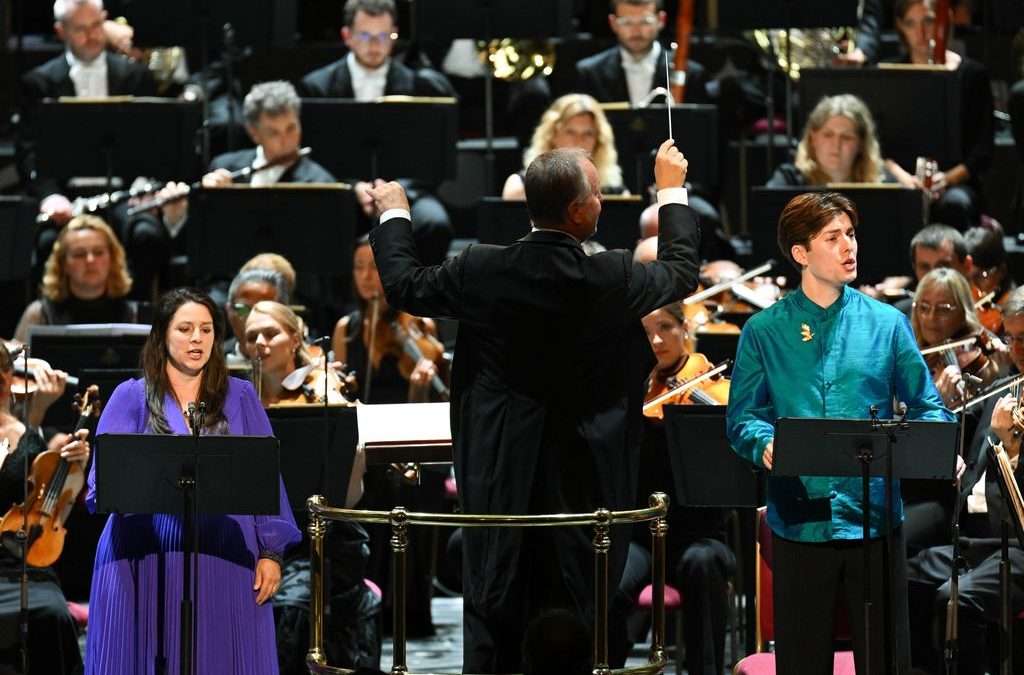
In the event the Grieg received a responsive reading from Lukas Sternath (below, with Oramo), the Viennese pianist who, still in his mid-20s, was most at home in more inward passages. The second theme of the initial Allegro was enticingly taken up after a heartfelt rendering by cellos, as was the Adagio’s eloquent melody and that first emerging in the finale on flute, where it was soulfully rendered by Daniel Pailthorpe. Nor were the more demonstrative aspects underplayed – Sternath having the measure of a cadenza whose mounting rhetoric was pointedly reined-in, while the finale’s outer sections were incisively inflected prior to an apotheosis which felt the more exhilarating through its absence of bathos. A melting take on Richard Strauss’ early song Morgen!, transcribed with enviable poise by Max Reger, served to reinforce Sternath’s formidable pianistic credentials.

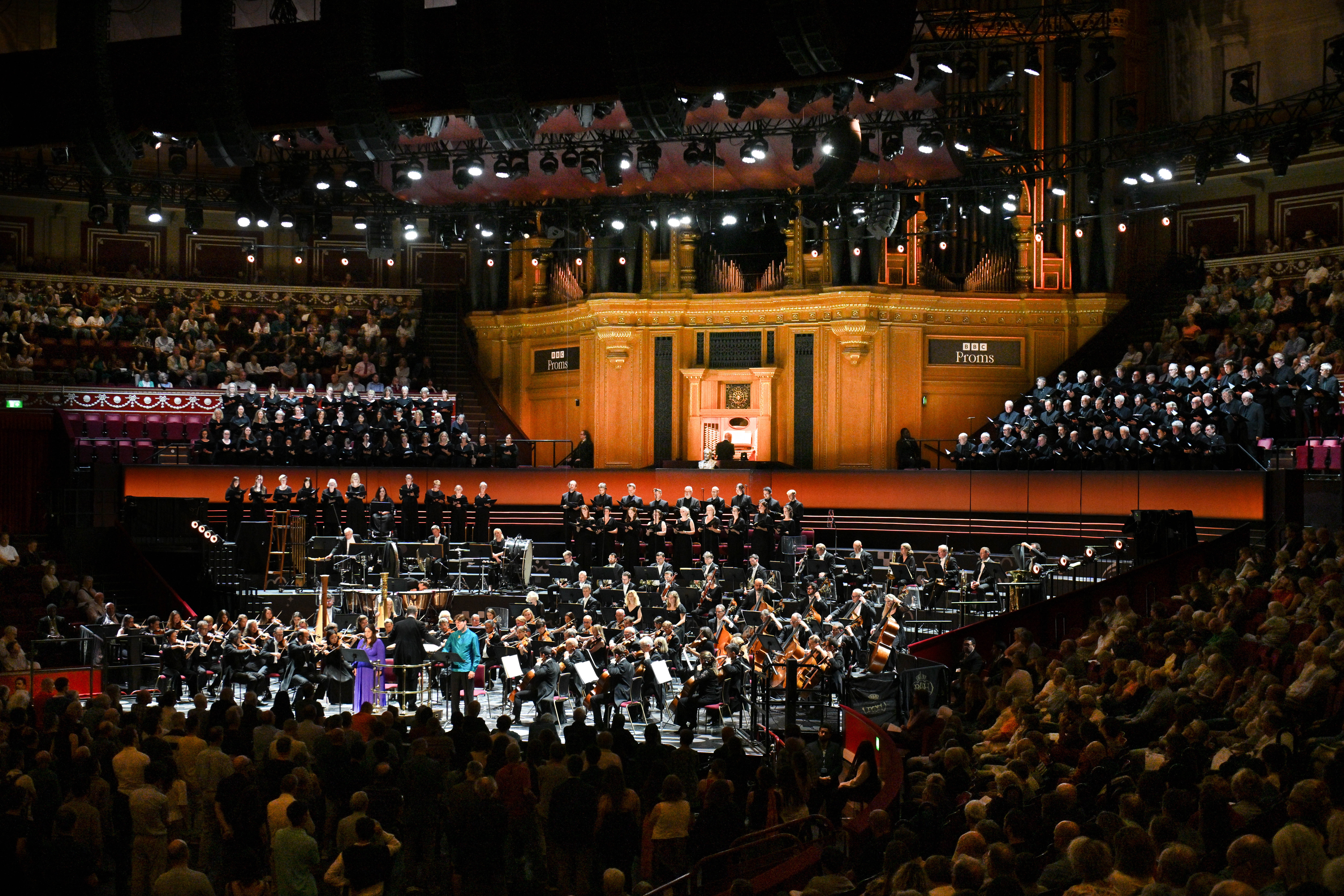
The 50th anniversary year of Sir Arthur Bliss’s death has seen a gratifying number of revivals, few more significant than that of The Beatitudes. The misfortune of its premiere having been moved from Coventry’s new Cathedral to its Belgrade Theatre, thus freeing up rehearsal time for Britten’s War Requiem, rather condemned it as an also-ran from the outset. Yet Bliss had created a piece unerringly suited for the consecration in what, in itself, remains an impressive conception. Unfolding as 14 short sections which can be grouped into six larger movements, this is less a cantata than a choral symphony. Setting all nine Beatitudes, Bliss none the less merged several of these and interspersed them with settings from three 17th-century and one 20th-century ‘metaphysical’ poets to commemorate the past from the vantage of the present.

The texts, drawn from Henry Vaughan, George Herbert and Jeremy Taylor, anticipate a future redemption – as, more ambivalently, does Dylan Thomas in And death shall have dominion which builds implacably to the climactic Ninth Beatitude and Voices of the Mob prior to the hard-won serenity of the Epilogue. That The Beatitudes has enjoyed relatively few revivals is less to do with its intrinsic quality than the demands of its choral writing, to which the BBC Symphony Chorus and BBC Singers did notable justice. Elizabeth Watts responded with real sensitivity and perception to some radiant soprano writing and while Laurence Kilsby was a little effortful in the more demonstrative passages, he brought conviction to a tenor role both fervent and compassionate. Nor did Richard Pearce disappoint with his extensive organ part.

Oramo paced the 50-minute entity superbly as to make one hope he will tackle more works by Bliss – not least the masterly Meditations on a Theme by John Blow, which has inexplicably fallen through the net this year. He had started tonight’s concert with a most welcome revival for Death on the Pale Horse – the succinctly eventful tone poem by Ruth Gipps which, while it might not capture the visceral drama of Blake’s eponymous engraving, distils an evocative atmosphere from pithy initial ideas that audibly reflects the circumstances of its composition.

Click on the artist names to read more about soloists Elizabeth Watts, Laurence Kilsby and Lukas Sternath, the BBC Singers, BBC Symphony Chorus and BBC Symphony Orchestra, and their conductor Sakari Oramo. You can also click to read more about composers Arthur Bliss, Ruth Gipps and the BBC Proms

Published post no.2,652 – Tuesday 9 September 2025

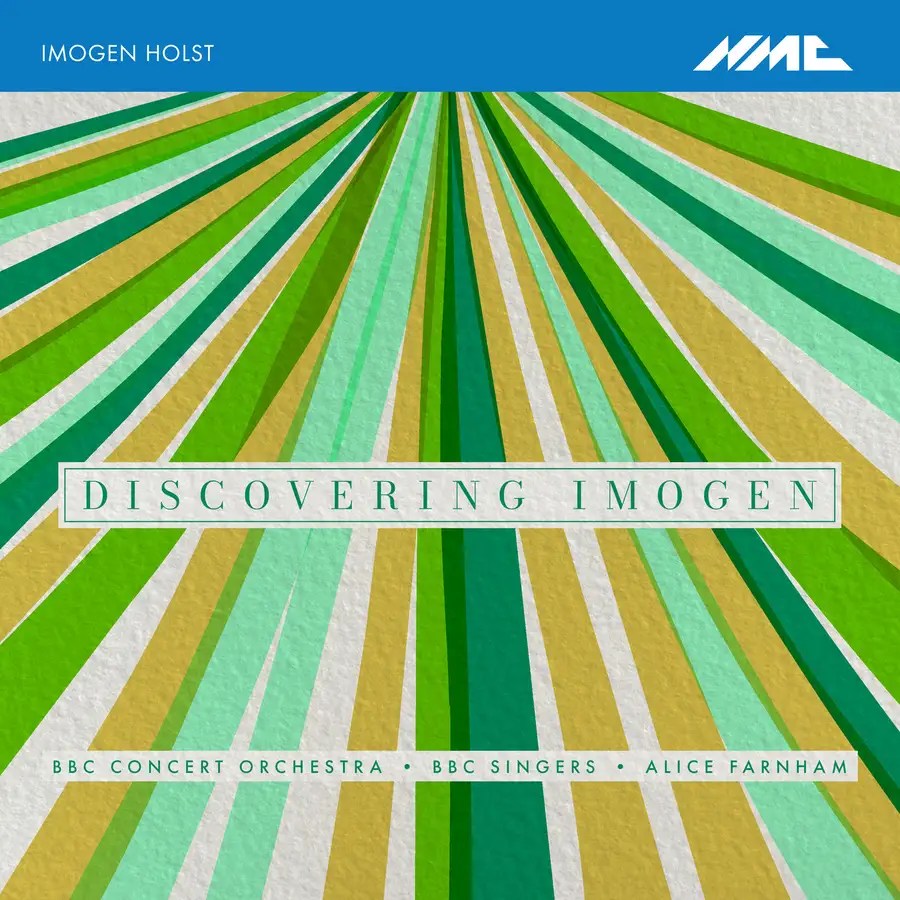
On Record – Imogen Holst: Discovering Imogen (NMC)

BBC Singers (What Man Is He?, Festival Anthem), BBC Concert Orchestra / Alice Farnham

Imogen Holst
Persephone (1929)
Variations on ‘Lorth to Depart’ (1962)
What Man is He? (c1940)
Allegro Assai (1927)
On Westhall Hill (1935)
Suite for String Orchestra (1943)
Festival Anthem (1946)

NMC Recordings NMCD280 [75’01”] English texts included
Producer Colin Matthews Engineers Marvin Ware, Robert Winter, Callum Lawrence
Recorded 27-29 January 2024 at Maida Vale Studio One, London

Reviewed by Richard Whitehouse

What’s the story?

As its executive producer Colin Matthews notes in his introduction, NMC would likely not exist had it not been for Imogen Holst (1907-84) setting up the Holst Foundation prior to her death – so making this release of her larger-scale works the more appropriate, and welcome.

What’s the music like?

The present anthology affords what seems a plausible overview of its composer’s output. The earliest piece here is Allegro Assai, evidently planned as the opening movement of a suite for strings that progressed no further, but which proves characterful and assured on its own terms. Such potential feels well on the way to being realized in Persephone, an overture (albeit more akin to a tone poem) given in rehearsal by Malcolm Sargent, with the influence of Ravel (and indirectly of Vaughan Williams) balanced by the dextrous handling of motifs across a formal evolution such as relates the myth in immediate and individual terms. That this went unheard until the present recording was likely as much a loss to the musical public as to Holst herself.

Underlining its composer’s skill in writing for amateurs, On Westhall Hill is an atmospheric piece the more appealing through its brevity and modesty of scoring. Deriving its text from the Book of Wisdom, What Man Is He? traverses a range of emotions from the sombre, via the introspective, to the affirmative in a setting as searching as it is fervent. Most impressive, however, is the Suite for String Orchestra composed for a ‘portrait’ concert at Wigmore Hall. The four movements unfold from a diaphanous Prelude, via a fluid and astringent Fugue then an Intermezzo whose ruminative warmth hints at qualities rather more fatalistic, to a Jig which convincingly rounds off the whole work with its mounting energy and resolve.

Written in the wake of the Second World War, Festival Anthem went unheard at this time but could be thought a ‘song of thanksgiving’. Adapted from Psalm 104 (‘Praise the Lord, O my soul’), it seamlessly integrates soloistic with choral passages prior to a calmly fulfilled close. The latest work here, Variations on ‘Loth to Depart’ takes a 17th-century tune as harmonized by Giles Farnaby as basis for five variations – the initial four respectively trenchant, eloquent, wistful and incisive; prior to a relatively extended chaconne as distils a pathos the more acute for its understatement. A string quartet is combined resourcefully with double string orchestra in music which can at least hold its own in the context of a distinctive genre in British music.

Does it all work?

It does indeed. It is all too easy to think of Imogen Holst as one who never fully realized her potential in the face of life-long teaching and administrative commitments, but the range of what is heard amply indicates her creative legacy to be one worth exploring in depth. The recordings, moreover, could hardly be bettered in terms of their overall conviction – Alice Farnham securing a laudable response form the BBC Concert Orchestra and, in the choral pieces, BBC Singers. Hopefully other ensembles, professional or amateur, will follow suit.

Is it recommended?

It is indeed. Sound is unexceptionally fine, with informative notes from Christopher Tinker. Alongside the NMC release of her chamber music for strings (D236), and that on Harmonia Mundi of choral music (HMU907576), this is a fine demonstration of Imogen Holst’s legacy.

Listen & Buy

You can listen to samples and explore purchase options on the NMC Recordings website. For more information on the artists, click on the names to visit the websites of the BBC Singers, BBC Concert Orchestra and conductor Alice Farnham, while a dedicated resource can be found for Imogen Holst herself

Published post no.2,374 – Tuesday 26 November 2024

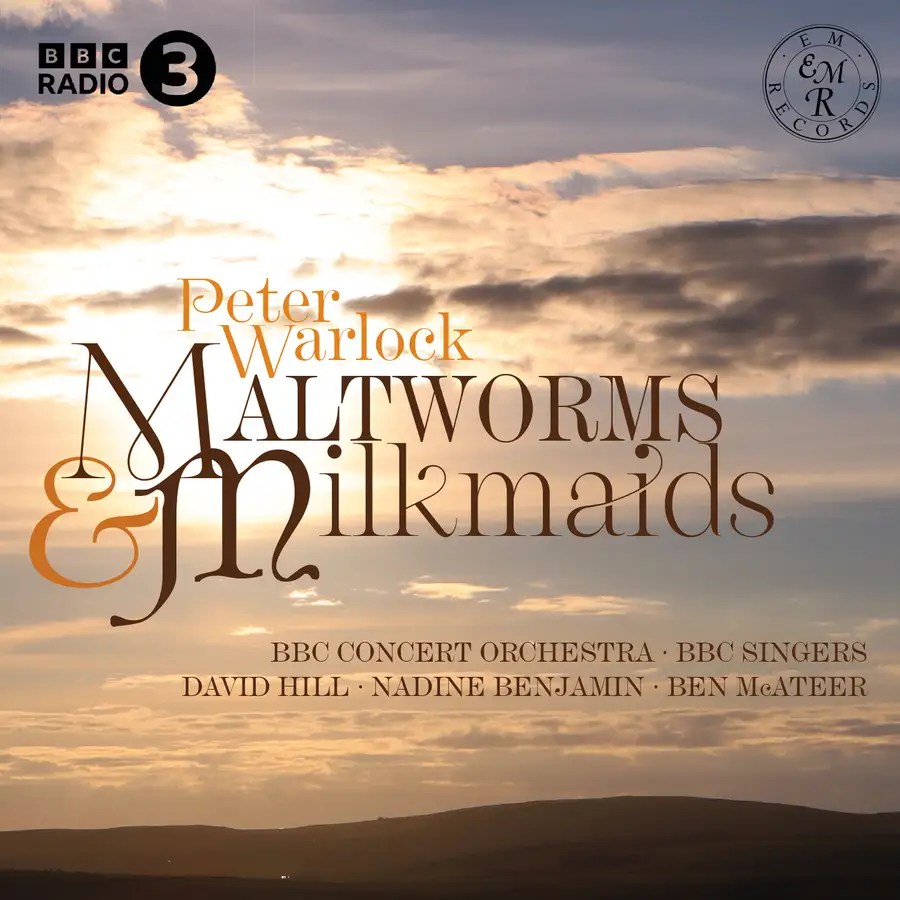
On Record – Maltworms and Milkmaids: Warlock and the Orchestra (EM Records)

Warlock
As Ever I Saw (1918, orch. anon)
An Old Song (1917-23)
Mr Belloc’s Fancy (1921/30, orch. Frederick Bye)
Captain Stratton’s Fancy (1921, orch. Peter Hope)
Serenade (1921-2)
Milkmaids (1923, orch. Henry Geehl)
Adam Lay Ybounden (1922, orch. Reginald Jacques)
Little Trotty Wagtail (1922, orch. David Lane)
The Birds (1926, orch. anon)
The Country-man (1926, orch. Gerrard Williams)
Yarmouth Fair (1924, orch. Kenneth Regan)
Sorrow’s Lullaby (1926-7)
One More River (1925)
Maltworms (1926, with E. J. Moeran)
Capriol (1926-8)
A Sad Song (1926)
Pretty Ring Time (1925)
The First Mercy (1927, orch. Fred Tomlinson/John Mitchell and William Davies)
Three Carols (1923)

Nadine Benjamin (soprano), Ben McAteer (baritone), BBC Singers, BBC Concert Orchestra / David Hill

EM Records EMRCD080 [73’52”] English texts included. Orchestrations by Warlock unless stated
Producer Neil Varley Engineer Robert Winter
Recorded 14-16 January 2022 at the Colosseum, Watford

Reviewed by Richard Whitehouse

What’s the story?

The always enterprising EM Records issues yet another ‘first’ in the guise of this collection featuring the songs with orchestra by Peter Warlock (aka Philip Heseltine), which includes many of those orchestrated by others with two-thirds of them here recorded for the first time.

What’s the music like?

Although his output barely extended beyond a decade and centred largely upon miniatures, Warlock left a substantial legacy of songs whose piano accompaniments mostly respond well when arranged for larger forces. Most of them are divided between soprano and baritone, in which latter Ben McAteer fairly captures their essence – whether the modal poise of the early If Ever I Saw, the heady (slightly forced?) jollity of those ‘fancies’ inspired by Mr Belloc and Captain Stratton, or the deftly barbed humour of Milkmaids. He draws tangible pathos from The Countryman and panache from Yarmouth Fair, with the rumbustious One More River and uproarious The Cricketers of Hambledon duly given their head. A highlight is the first recording of Maltworms, co-written with Ernest Moeran and rendered with suitable levity.

Nor is Nadine Benjamin other than fully attuned to the sentiments of her selection. Hence the soulfulness of A Sad Song or limpidity of Pretty Ring Time, both heard in what are Warlock’s only orchestrations of his solo songs, with The First Mercy an eloquent setting of words by frequent collaborator Bruce Blunt. Most affecting, though, is Sorrow’s Lullaby where soprano and baritone combine for a lengthy and often plangent setting of Thomas Beddoes in which the stark introspection of Warlock’s masterpiece The Curlew is never far beneath the surface.

The BBC Singers make their presence felt in the carol Adam Lay Ybounden and the whimsical Little Trotty Wagtail and winsome The Birds. No compromise is brooked in the rousing Fill the Cup, Philip or wistful choral incarnation of The First Mercy, then a closing trio of carols takes in the capricious Tyrley, Tyrley, the serene Balulalow and the aminated As I Sat Under a Sycamore Tree for a suitably rousing conclusion. Warlock would surely have approved and, had he known of the Singers’ recent travails, doubtless have responded in no uncertain terms.

The BBC Concert Orchestra gives of its best throughout under the astute direction of David Hill, duly coming into its own with the three orchestral pieces that Warlock completed. The evergreen suite Capriol is heard in its seldom heard and appealingly astringent version for full orchestra, the Serenade commemorates Delius’s sixtieth birthday in suitably rapturous terms, and the little-played An Old Song exudes a potent atmosphere as indicates what might have been possible had Warlock felt able to realize his musical ambitions on a larger canvas.

Does it all work?

It does, especially when heard in the continuous sequence as presented here. Warlock might increasingly have fretted about his ability as a composer, but the best of what he did achieve is sure to keep his name alive well beyond the approaching centenary of his untimely demise.

Is it recommended?

It is and not least when the presentation – with full texts, together with detailed notes from David Lane (vice-chairman of the Peter Warlock Society) reflects the always high standards of EM Records. In the words of a latter-day songster, ‘‘a splendid time is guaranteed for all’’.

Listen

Buy

You can explore purchase options for this album at the EM Records website. For more information on the artists click on the names of David Hill, Nadine Benjamin, Ben McAteer, BBC Singers and BBC Concert Orchestra. For more on all things Warlock, click on the name to head to the Peter Warlock Society

Published post no.2,078 – Monday 5 February 2024

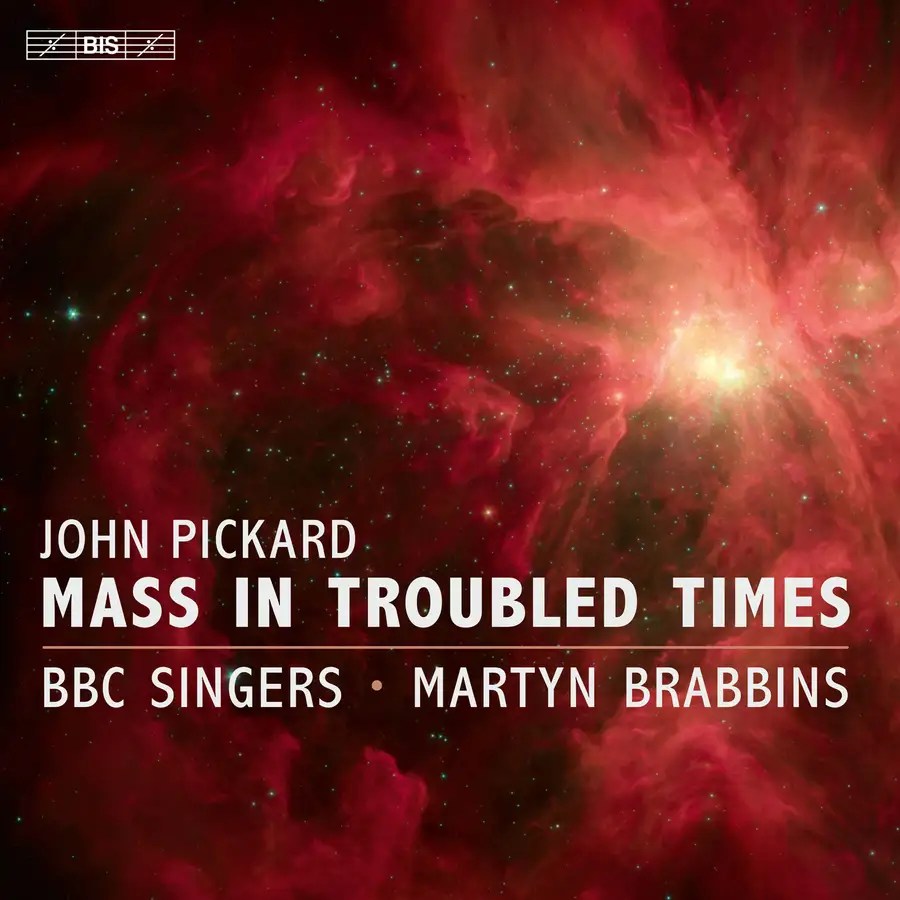
On Record – BBC Singers / Martyn Brabbins – John Pickard: Mass in Troubled Times (BIS)

John Pickard
Three Latin Motets (1983-7)
O magnum mysterium (2015)
Orion (2004)
Ave Maris Stella (1992)
Ozymandias (1983)
Tesserae (2009)
Mass in Troubled Times (2018)

BBC Singers / Martyn Brabbins with Chloë Abbott (trumpet/flugelhorn, Orion); David Goode (organ, Orion and Tesserae)

BIS 2651 [74’30’’] Texts and English translations included

Producer Adrian Peacock Engineer Pete Smith
Recorded 13 & 14 October, St Jude-on-the-Hill, Hampstead, London

Written by Richard Whitehouse

What’s the story?

Although known primarily for his substantial orchestral and chamber output, John Pickard has written several notable choral pieces. This latest release from BIS to be devoted to his music brings most of them together, and in the company of two major instrumental works.

What’s the music like?

Ranging across 35 years of his music, the collection features Pickard’s earliest acknowledged work – a teenage setting of Shelley’s Ozymandias that elicits a response both imaginative and impassioned. Already assured, his choral writing was further honed and refined in Three Latin Motets where limpid renderings of O nata lux and Ubi caritas et amor frame a melting Te lucis ante terminum for female voices. A rapturous Ave Maris stella and touchingly restrained O magnum mysterium duly reinforce Pickard’s confident handling of the a-cappella medium.

The two non-choral items indicate their composer’s abiding fascination with astronomy and antiquity. Scored for trumpet and organ, Orion strikingly evokes said constellation from the vantage of increasing energy in Nebula, an alternating lyricism (courtesy of the flugelhorn) and impetus in Alnitak, then incisive rhythmic interplay of Betelgeuse with its distanced close. Its title indicating those ‘tiles’ used in a mosaic, Tesserae builds cohesion via a steadily accumulating momentum such as tellingly underlies this showpiece with substance for organ.

For 18 unaccompanied voices (in six groups), Mass in Troubled Times is not a setting of the Mass, but a text assembled by the author Gavin D’Costa – lines from T. S. Eliot, Edith Sitwell and Matthew Arnold heard alongside extracts from the Syriac Orthodox Liturgy, the Shahada and the Qur’an. The key is a Turkish Twitter-hashtag from 2015, “Humanity washed ashore”, relating the flight from Aleppo then the drowning of Ayesha – her tragedy an emotional focus over six sections whose expressive intensity seems the greater for their formal concentration.

An Introitus precedes the customary sections of the Mass – reaching a dramatic apex at the climax of the Gloria while carrying the accrued intensity through those that follow; ending with the juxtaposition of lines from William Blake and thrice-repeated Agnus Dei that, next to an evocation of the child’s body off Palermo, has a poignancy shorn of sentiment thanks to Pickard’s acute eloquence. With its wide range of vocal techniques and demanding tessitura, Mass in Troubled Times is a rewarding challenge which all enterprising choirs should tackle.

Does it all work?

It does, not only through the quality of this music but also of these performances – the BBC Singers conveying the immediacy or pathos of Pickard’s response with unstinting clarity and precision. If a demonstration of this choir’s continued existence were needed, this surely is it – Martyn Brabbins (late of English National Opera) directing with his customary conviction. Nor are Chloë Abbott and David Goode to be found wanting in their pieces, rounding out a collection enhanced with vividly analytical recording and the composer’s informative notes.

Is it recommended?

It is, and not merely to those who have been following this invaluable series, which is set to continue with a coupling of Pickard’s Second and Sixth Symphonies. Certainly, the Mass in Troubled Times must feature in any representative selection of works from the 21st century.

For purchase options and more information on this release, visit the BIS website. Click on the names for more on composer John Pickard, the BBC Singers and conductor Martyn Brabbins, trumpeter Chloë Abbott and organist David Goode