In concert – The London Chorus and New London Orchestra / Adrian Brown: VE Day 80th Anniversary Concert @ Holy Trinity Church, Sloane Square

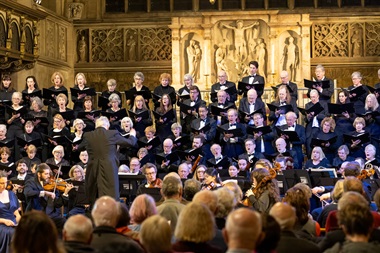
Petroc Trelawny (orator), The London Chorus, New London Orchestra / Adrian Brown

Vaughan Williams Six Choral Songs (1940)
Martinů Memorial to Lidice (1943)
Walton Spitfire Prelude and Fugue (1942)
Bliss Morning Heroes (1929-30)
Holst/Rice I Vow to Thee My Country (1921)

Holy Trinity Church, Sloane Square, London
Thursday 9 May 2025

Reviewed by Richard Whitehouse

The London Chorus and New London Orchestra have put on notable concerts in recent years, few more ambitious than this programme to mark not merely the 80th anniversary of Victory in Europe Day but also the 50th anniversary of Sir Arthur Bliss’s death in appropriate manner.

The first half comprised an unlikely but effective sequence of pieces written at the start of or during the Second World War. Rarely revived as such, Vaughan Williams’s Six Choral Songs to be Sung in Time of War works well as a whole: settings of Shelley that touch on aspects of courage, liberty, healing, victory, then pity, peace and war – before A Song to the New Age characterizes its utopian leanings in subdued and even ambivalent terms which seem typical of its composer. Suffice to add that the London Chorus had the full measure of its aspiration.

Two succinct if otherwise entirely different pieces brought out the best from the New London Orchestra. Rarely so overt in emotion, Martinů was well-nigh explicit when commemorating Nazi atrocities in music of plangent harmonies and chorale-like fervency both evocative and affecting. Derived from his score to the film The First of the Few, Walton had come up with a showpiece whose ceremonial prelude is vividly countered by its incisive fugue – making way for a brief if poignant interlude before matters are brought to a head in the rousing peroration.

Although intimately bound up with the First World War, Morning Heroes is wholly apposite for the present context. Conceived as the exorcism of his wartime experiences, Bliss’s choral symphony elides deftly between a distant past and its present; the first of its five movements featuring an orchestral introduction to set out the underlying mood and salient motifs, before Hector’s Farewell to Adromache had Petroc Trelawny eloquently evoking that scene on the ramparts of Troy without excess rhetoric. Adrian Brown’s understated direction meaningfully pointed up the expressive contrast between this and The City Arming – the setting of Walt Whitman whose interaction of chorus and orchestra was powerfully sustained right through   to the simmering unease at its close, with the onset of hostilities in the American Civil War.

The two parts of the central movement saw each section of the London Chorus come into its own: the women in Vigil, a confiding take on lines by Li-Tai-Po (Li Bai) such as relates the emotions of those left behind; and the men in The Bivouac’s Flame, plangently evoking life at the front with further lines from Whitman’s Drum Taps. Choral forces reunite in Achilles Goes Forth to Battle, a setting from later in The Iliad which brings about the work’s climax via The Heroes – a rollcall commemorating those of Antiquity. After this, the starkness of Wilfred Owen’s Spring Offensive is the greater for its sparse accompaniment – Trelawny’s oration a model of understatement as this segued into the setting of Robert Nichols’s Dawn on the Somme with those ‘morning heroes’ themselves evoked affirmatively if fatalistically.

A concert which ended in fine style with Holst’s stirring anthem had begun in subdued fashion with Dawn on the SommeRonald Corp’s elegy, given hours after his death was announced. Someone who had always given his all to this chorus and orchestra, he will be greatly missed.

Ronald Corp OBE (1951-2025)

Published post no.2,530 – Sunday 11 May 2025

In concert: Pavel Haas Quartet at Wigmore Hall – Suk, Martinů & Korngold

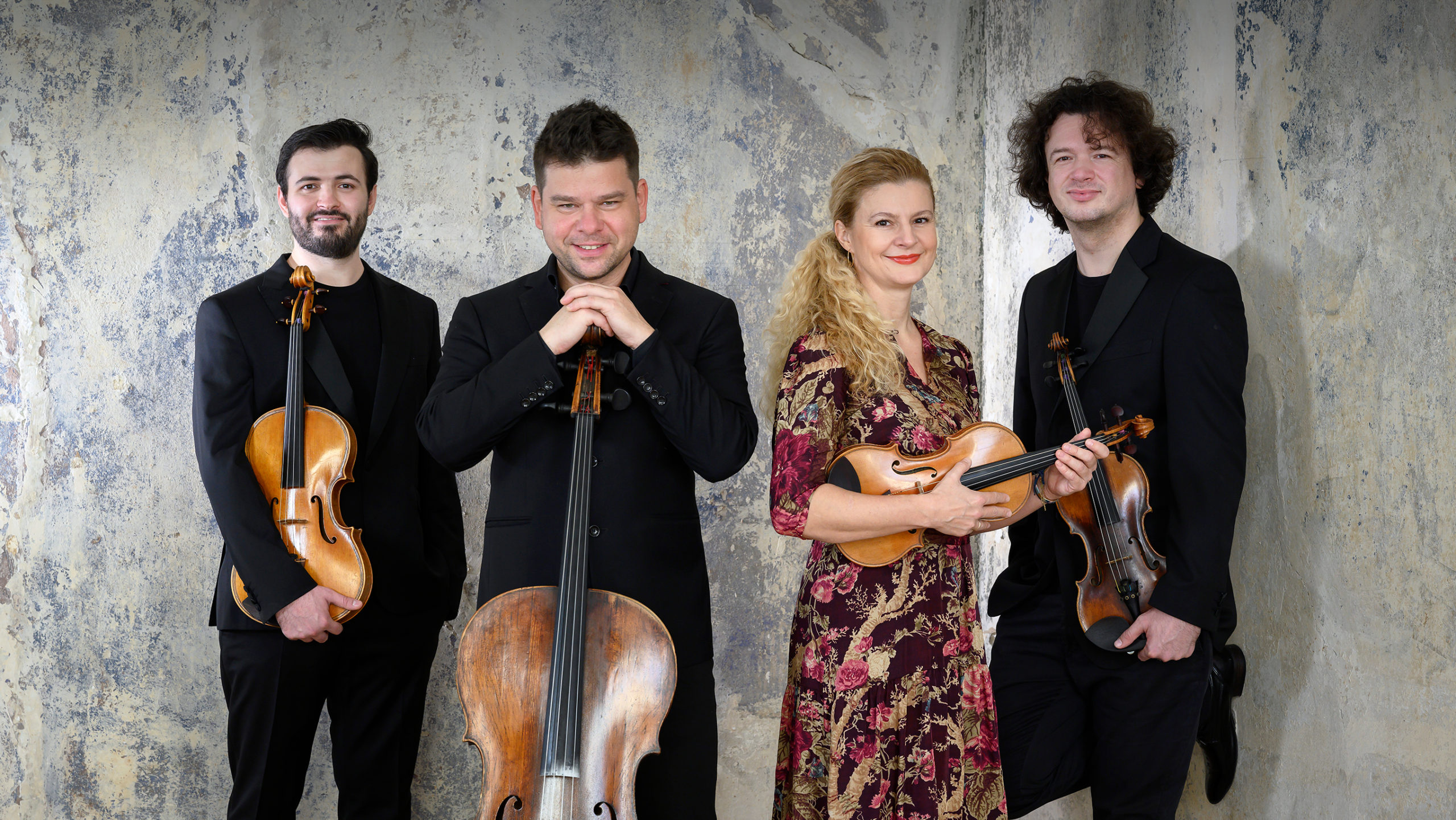
Pavel Haas Quartet [Veronika Jarůšková, Marek Zwiebel (violins), Šimon Truszka (viola), Peter Jarůšek (cello)]

Suk Meditation on an old Bohemian Chorale (St Wenceslas) Op.35a (1914)
Martinů String Quartet no.2 (1925)
Korngold String Quartet no.3 in D major Op.34 (1944-45)

Wigmore Hall
Monday 12 June 2023 1pm

by Ben Hogwood

An unusual and intriguing program from the Pavel Haas Quartet contained music by two fellow Czech composers (Suk and Martinů) and one (Korngold) born in Moravia before moving to America.

The quartet began with a moving piece by Suk, his Meditation on an old Bohemian Chorale (St Wenceslas). This poignant pre-war utterance carried an air of deep profundity right from the first phrase of Simon Truszka’s viola, its elegiac tone enhanced by relative lack of vibrato. The air of solemnity carried throughout, though there was considerable strength in depth as the music grew in stature.

Though a Czech composer, Martinů spent a good deal of time overseas – largely out of necessity. By his early 30s he was in Paris, studying with Roussel, bringing a neoclassical language and tidiness to his music. The String Quartet no.2, though, is a curiously lopsided work, very front heavy with its first movement a combination of substantial slow introduction and quick section. There were close links to the St Wenceslas Chorale here, too, found in the solemn intonations of the Andante. This was the spiritual heart of the piece, dark and uncertain at times and contrasting greatly with the thoughtful but lightly coloured manner in which the quartet began. A resolute first movement found a mood that Martinů reprised in the closing Allegro, a propulsive dance number with a spring in its step. There was an undeniable French flavour to the music here, which the Pavel Haas Quartet brought forward, its elegance at odds on occasion with the rustic dance tunes.

There was tension in the final work, too, though this was undeniably the making of a mature composer. The String Quartet no.3 was Erich Korngold’s last published chamber piece, adjacent in publication to the Violin Concerto, with which it shares the same key of D major. The Pavel Haas Quartet gave a superb account of the piece, exploring its unusual musical language through music that would have presented considerable technical challenges.

The awkward but compelling violin melody in the first movement was brilliantly negotiated by Veronika Jaruskova, who conveyed its uncertainties through sweet tones and phrases. In spite of a convincing and full bodied outburst from all four players, the movement was dominated by this figure, which left a question in the mind. The Scherzo went some way to answering this, a black and white film scene easy to conjure up in the mind as the furtive darting of the main theme ensued. Again this was brilliantly played, as was the heart melting trio, its big tune (from the recently completed score to Between Two Worlds) full of tender longing and given appropriate glissando for expression.

The silvery slow movement flickered in the half light like a candle burning low, but with the flame essentially undimmed. The quartet’s sense of purpose was key here, with burnished lower string tones as viola and cello often combined, a notable cushion on which the searching violin melodies (using material from The Sea Wolf) could rest. Romance was in the air but although some of the music was borne of Hollywood, its intimate confines gave the music a deeply personal air. The atmosphere was heightened as a thundercloud hovered over the Wigmore Hall.

The motorised finale brought conviction and a strong sense of homecoming, not dissimilar to its equivalent movement in the Violin Concerto. Although emphatic in its resolution there were moments where the quartet moved into a different tempo or unexpectedly distant harmonies, Korngold momentarily distracted by edgier thoughts until his focus returned.

The Korngold string quartets have had something of a renaissance of late, with several new recorded versions and a marked increase in performance. On this very cultured evidence it would be no surprise if the Pavel Haas Quartet committed their version to disc soon – but it is to be hoped the other works will join it, for this was a fine concert indeed.

For more livestreamed concerts from the Wigmore Hall, click here

Online Concert: Tine Thing Helseth & Kathryn Stott @ Wigmore Hall

Tine Thing Helseth (trumpet), Kathryn Stott (piano)

Nordheim Den første sommerfugl (1982)
Martinů Sonatina for trumpet and piano (1956)
Shostakovich 4 Romances on Poems by Alexander Pushkin Op. 46 (1936-7)
Piazzolla Café 1930 from Histoire du Tango (1986)
Grieg 6 Songs Op. 48 (1884-8)
Gershwin Prelude No. 2 in C sharp minor (c1923-6); By Strauss (1936)
Weill Youkali (1934)
Kreisler Toy Soldiers March (1917)

Wigmore Hall, Monday 6 March 1pm

by Ben Hogwood

What a joy to see the partnership of trumpeter Tine Thing Helseth and pianist Kathryn Stott renewed at Wigmore Hall, united in an original program of trumpet originals and imaginative arrangements from vocal sources.

Dreamy lines from the piano introduced the concert’s first item, Arne Nordheim’s Den første sommerfugl (The First Butterfly), full of spring promise as the insect’s flight gracefully orbited the hall. Helseth’s trumpet line was a lyrical one, speaking faintly of folk song. From here the pair moved straight into the compact and winsome Sonatina for trumpet and piano, one of the Czech composer Martinů’s miniature gems. Written while experiencing homesickness in New York, the work began with a gruff introduction from the piano, its repeated note figurations taken up by the trumpet in fanfare-like salvos generating a good deal of energy. Gradually this subsided into more poignant thoughts, the composer revealing his softer centre, and by the bittersweet chorale with which the work ends the sense was that of a composer looking for his fortunes to change. Both performers caught that shift of focus.

Next up was an imaginative choice, an arrangement of Shostakovich’s Four Pushkin Songs. The vocal lines transfer to the trumpet with surprising accuracy, both artists playing in such a way that the original spirit of the songs was fully maintained. Regeneration, the first song, was thoughtfully done, held notes on the trumpet carrying above delicate figuration on the piano. Premonition was an easy amble in triple time, but the fourth song, Stanzas, held the cycle’s emotional centre. A substantial song, as long as the other three combined, it began with a stern introduction from Stott before a compelling dialogue unfolded.

Complementing this was a beautifully floated account of Piazzolla’s Café 1930, tastefully augmented by Stott’s rhythmic attention to detail. The melodies really sang from Helseth’s trumpet, any breathing challenges overcome with deceptive ease. As she said at the end, a bit of Piazzolla is never wrong!

Helseth’s announcements between the groups of pieces were nicely done, with an easy charm that also showed how much the two artists were enjoying themselves. This much was clear again in six songs by Grieg, grouped together as Op.48 but once again transcribing with relative ease for the trumpet. Gruss (Greeting) featured a lovely depiction of bells, an outdoor scene, while Lauf der Welt was a rustic march. Helseth’s characterisation of Die verschwiegene Nachtigall (The secretive nightingale) was nicely done. Zur Rosenzeit (Time of roses) presented bright colours, while the final Ein Traum (A dream) was especially full of feeling.

We moved to a stylish Gershwin duo, starting with an account of Prelude no.2 that was especially enjoyable when the main theme returned with the mute in the trumpet. By Strauss was also a highlight, enjoying the Viennese waltz send-up, while Weill’s Youkali was a soave tango. Finally Kreisler’s Toy Soldiers March was a perky account, led off by the piano with crisp fanfares. Topping a highly enjoyable concert was an encore of Piazzolla’s Libertango, led off with a swing by Stott and played with great panache by Helseth, including pitch slides to perfection.

For more livestreamed concerts from the Wigmore Hall, click here

BBC Proms #26 – The Labèques, BBC Symphony Orchestra / Semyon Bychkov: Julian Anderson premiere, Martinů & Rachmaninoff

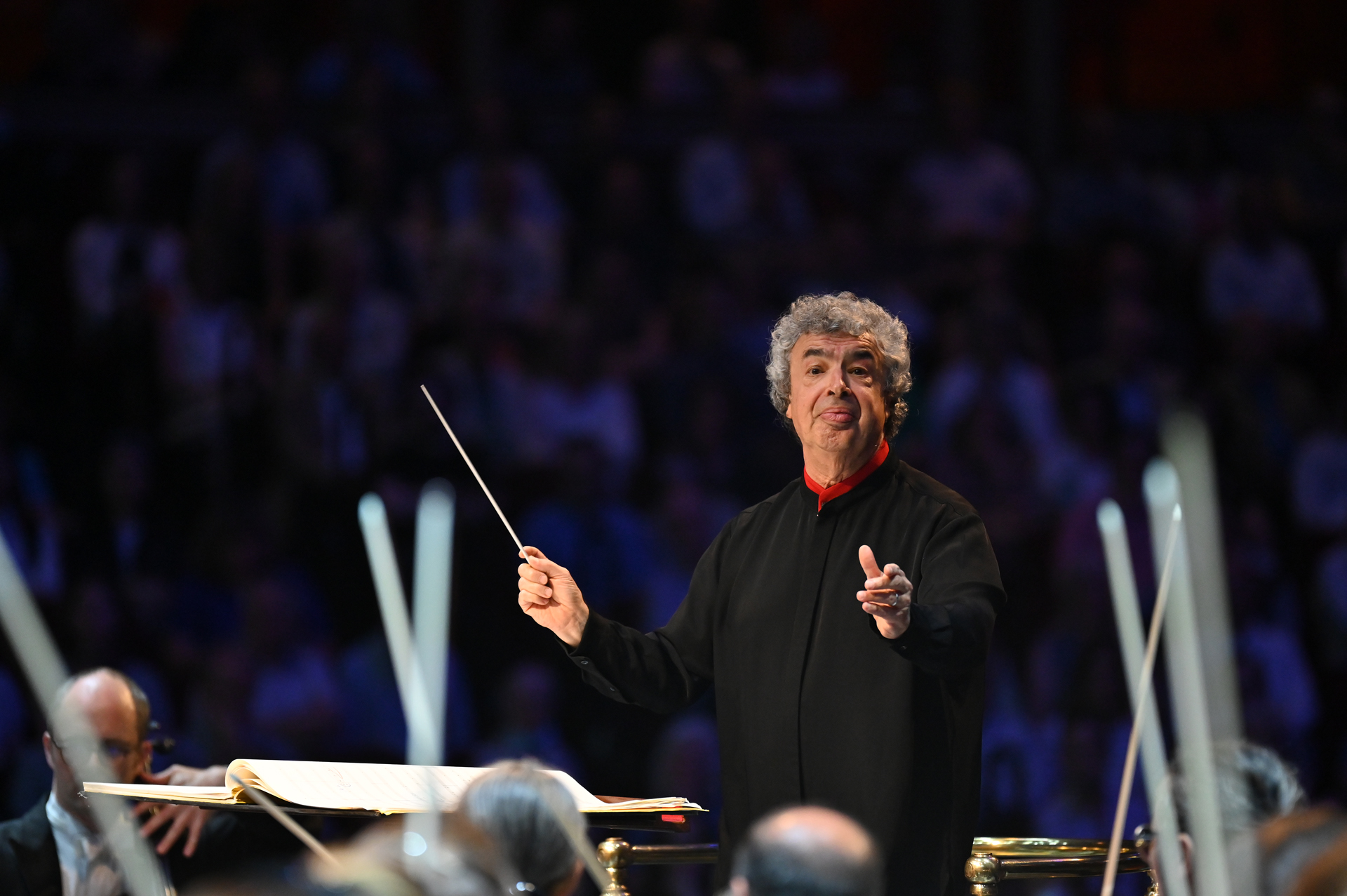
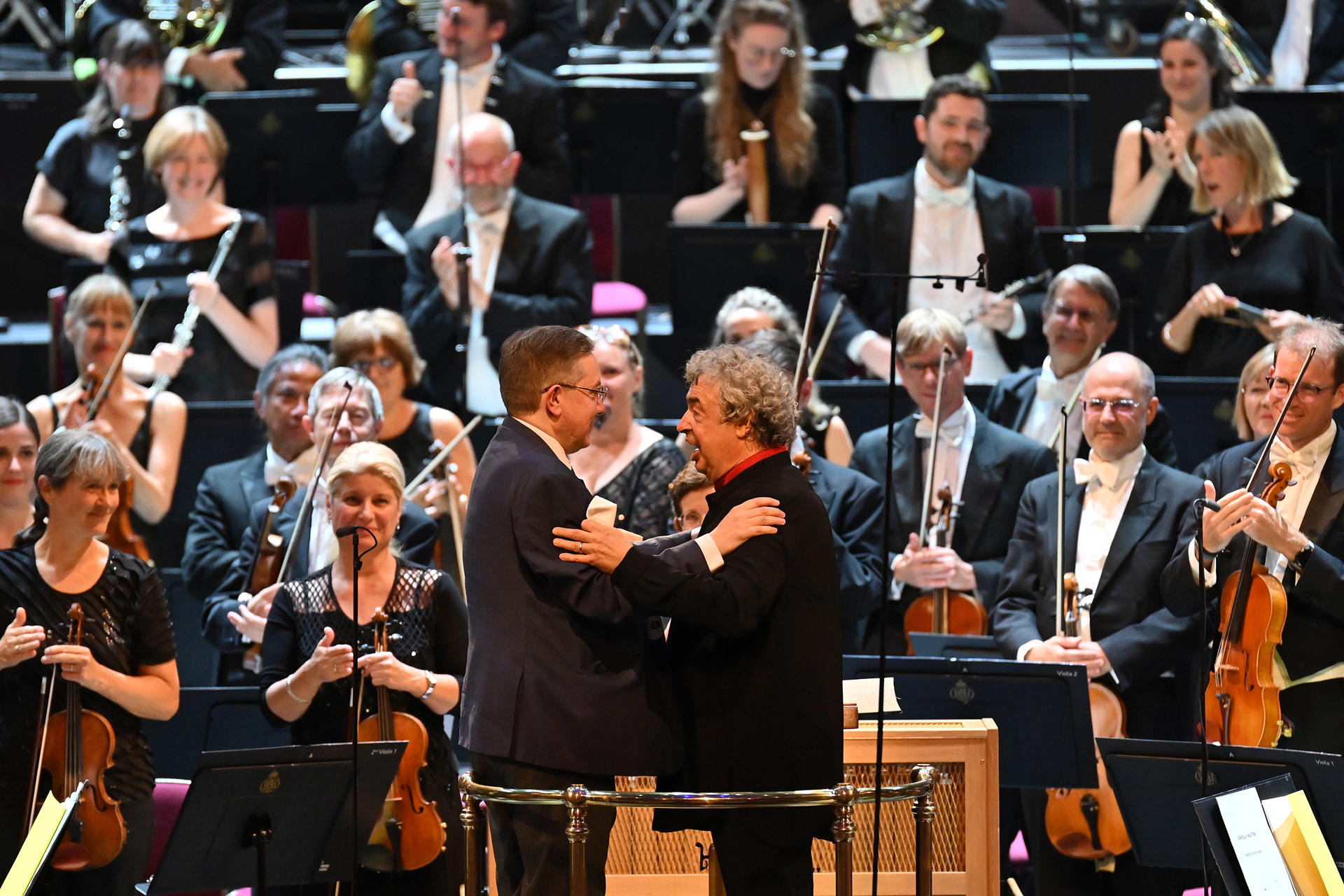
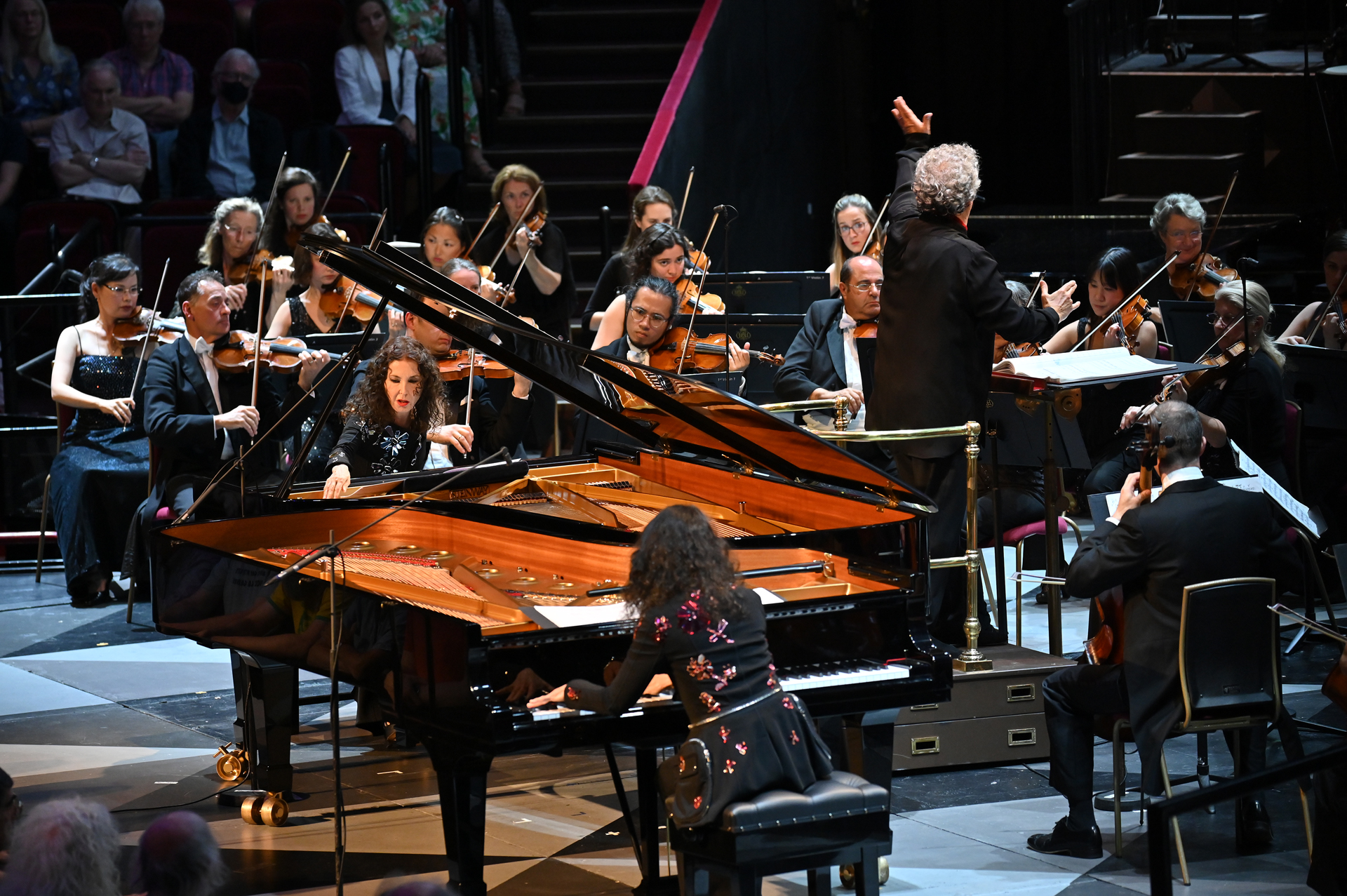
Prom 26 – Katia and Marielle Labèque (pianos), BBC Symphony Orchestra / Semyon Bychkov (above)

Anderson Symphony No. 2 ‘Prague Panoramas’ (2020-22) (BBC co-commission: World premiere of complete work)
Martinů Concerto for Two Pianos and Orchestra H292 (1943)
Rachmaninoff Symphonic Dances Op.45 (1940)

Royal Albert Hall, London
Friday 5 August 2022

Reviewed by Richard Whitehouse Photo (c) Chris Christodoulou

An unusually well-assembled concert this evening with what might be termed a programme of ‘three-by-threes’ – each of these three works having three movements which, in each case, results in a broadly symmetrical design, not least the Second Symphony by Julian Anderson (with the conductor, below).

Inspired by Josef Sudek’s photographs of Prague while utilizing two medieval Czech hymns, Prague Panoramas (might Prague Pictures be even more apposite?) is typical in its fusing evocativeness with precision. Not least the preludial opening movement, its stark alternation of quick-fire chords and silence evolving into aspiring melodic lines as build to a tumultuous if quickly curtailed climax, though this linear aspect comes to dominate the nocturnal central movement with its expressive intensifications then fades against a backdrop of bell resonance and luminously modal polyphony. The finale is a deftly organized rondo – its energetic main material, inspired by Josef Lada’s almost Rabelaisian depictions of pub brawls, interspersed with more lyrical ideas through to the heady peroration later subsiding into a calm postlude.

Although its first two movements had been heard in Munich and Prague, this was the work’s first complete performance and found the BBC Symphony at its collective best – not least the lambently interweaving woodwind and strings, the visceral impact of brass and a substantial array of percussion whose contribution was pervasive. Semyon Bychkov (under-appreciated as an exponent of contemporary music) duly brought out that unity-within-diversity such as gave this work an underlying focus across the 32 minutes of its eventful yet cohesive course.

From Prague-inspired music by a British composer to that by a Czech composer in America – Martinů’s Concerto for Two Pianos may never have gained the plaudits of his earlier Double Concerto but it typifies this composer’s exile in a tried-and-tested interplay of folk-inflected melodicism with a harmonic acerbity recalling Prokofiev and rhythmic dexterity redolent of Stravinsky. Its undoubted highlight is a central Adagio whose almost ‘harmonie’ woodwind writing and circling piano figuration (had the composer come across the gamelan-influenced music of Colin McPhee?) feels mesmeric and affecting. Neither outer movement comes close in their audibly contrived amalgam of the rumbustious and lyrical, but this is music in which Katia and Marielle Labèque excel and tonight’s performance could rarely have been equalled.

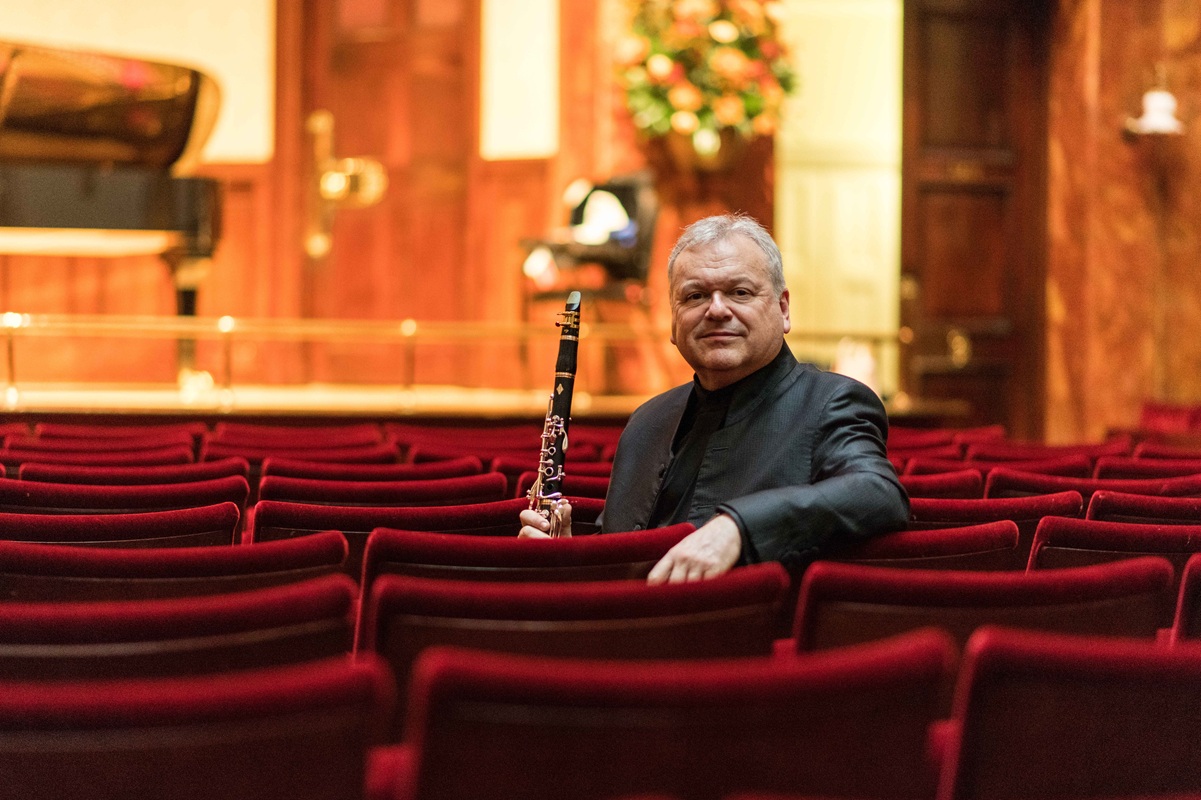
Nor was there any doubting Bychkov’s authority in Rachmaninoff’s Symphonic Dances that followed the interval. Admittedly this now regularly played while technically exacting piece needed more rehearsal than the BBCSO was able to give it on this occasion, though the outer sections of the first dance had just the right ominous incisiveness and its middle part featured winsome alto saxophone from Martin Robertson. The second dance had irony and angularity aplenty, as was slightly offset by the strings’ less than unanimous response towards the close.

Its sombre ambivalence and intricate textures give the central span of the final dance a quality unique in this composer: if Bychkov might have endowed it with even greater intensity, there was no doubting his identity with this music here or on the way to its resplendent apotheosis.

For more information, click on the names of composer Julian Anderson – and for more on the artists, click on the names of Katia and Marielle Labèque, Semyon Bychkov and the BBC Symphony Orchestra. For more on this year’s BBC Proms as it continues, head to the Proms website

For more information, click on the names of composers Kalevi Aho and Kaija Saariaho – and for more on the artists, click on the names of Carolina Eyck, John Storgårds and the BBC Philharmonic Orchestra

Britten Sinfonia at Lunch – Bach, Janáček, Messiaen, Martinů & Edmund Finnis @ Wigmore Hall

Britten Sinfonia soloists [Thomas Gould (violin), Caroline Dearnley (cello), Emer McDonough (flute), Huw Watkins (piano)]

J.S. Bach Violin Sonata no.1 in B minor BWV1014 (1720)
Janáček Pohádka (1910)
Messiaen Le merle noir (1952)
Finnis Five Trios (world premiere tour) (2019)
Martinů Trio for flute, violin and piano (1936)

Wigmore Hall, London
Wednesday 13 February 2019

Photo credit Harry Rankin (Britten Sinfonia)

Review by Ben Hogwood

For years now Britten Sinfonia’s At Lunch series has been a steady delight, a way to discover the new and rediscover the old in chamber music. Using interesting combinations of instruments and building consistently innovative programs around them, the group offer a very accessible way in to discovering classical music’s treasures of the small scale.

This latest series, given in Norwich, Cambridge and London, is no exception, exploring 300 years of chamber music for flute, violin, cello and piano. Pianist Huw Watkins was the one constant for the whole concert, which at London’s Wigmore Hall gave off the unmistakeable aroma of spring.

Watkins and Thomas Gould began proceedings with a very tasteful account of Bach’s Violin Sonata. It is always good to hear Bach with piano accompaniment, for the music is so versatile that it suits the colours available. In a work like this particular sonata, where the piano plays much more than the role of a traditional accompanist, the textures were ideal. The violin, too, had more notes than normal thanks to Bach’s ‘double stopping’ writing, and Gould played these passages beautifully.

Janáček’s Pohádka represented quite a step forward stylistically but the transition was natural, and the fierce lyricism so often associated with the Czech composer was brought to the fore. Caroline Dearnley enjoyed the song-like passages and Watkins gave great clarity to the busy accompaniments, neither musician stinting on the intensity of Janacek’s writing as the plot of the fairy tale took hold.

The same could be said of Le merle noir, Messiaen’s only published work for flute and piano. An important work that signals his intent to accurately reproduce birdsong on traditional instruments, it is a remarkable piece – and Emer McDonough brought to it a wide range of colour. Most importantly she made it sound natural, for while the notes are all written out the intention of the piece is to sound as instinctive as possible. Again Watkins was the catalyst with some carefully voiced and wholly complementary thoughts.

Each ‘At Lunch’ concert features a new work on its world premiere tour, and the springlike atmosphere was ideal for Edmund Finnis and his Five Trios, for the conventional piano trio grouping of violin, cello and piano. Finnis finds an unusual amount of space in his music, and here his blend of quick movement over slow, drone-like figures opened out the textures very attractively.

There was very little bass in the five trios, notable for their translucence and bright textures. The first introduced softly oscillating figures, while the second spread shafts of light from spread piano chords and string harmonics. The dappled sunlight streaming through the Wigmore Hall roof was the ideal companion for the rippling textures of the third piece, but then in the fourth we enjoyed a bolder statement from the cello, its fuller sound ringing through a haze of sustained piano and glassy violin. To finish, the prayerful fifth piece completed a meditative ten minutes from a composer whose rarefied textures are well worth further investigation.

The Britten Sinfonia members closed their generous concert with Martinů’s Trio for flute, violin and piano. So prolific was the Czech composer that it is easy to overlook his achievements, particularly in the chamber music field. While it can on occasion be tricky to recall some of his melodies after the first hearing of a piece, the overall feel of his writing is uniformly positive and, in this case, capable of making the audience smile and clap spontaneously.

The third of four movements was responsible for the clapping outburst, a wonderful piece of effervescent writing betraying his Parisian location when writing it. The outer movements were a little grittier but still charmed with their syncopation, colour combinations and piquant melodies. The tender second movement was heartfelt too.

The standard of musicianship in this concert was extremely high. Particularly memorable moments include Emer McDonough’s final movement cadenza in the Martinů, where Watkins held the performance together admirably despite the tricky rhythms, the graceful playing of Thomas Gould in the Bach and Caroline Dearnley’s rich cello tone in the fourth of Edmund Dinnis’s trios, not to mention the expressive Janáček.

Once more from this source, an enlightening hour of music in an imaginative context. If you live in London or the East of England you really should catch them live soon!

Further listening

You can listen below to an interview with Edmund Finnis, talking with Dr Kate Kennedy about Five Trios ahead of the Wigmore Hall concert://embeds.audioboom.com/posts/7174837-edmund-finnis-talks-about-his-new-work-five-trios/embed/v4?eid=AQAAACp5ZVy1em0A

You can also hear a new release of Finnis’s music for orchestra here:

Meanwhile the remainder of the program is grouped together on this Spotify playlist: