Steve Reich at 80 – Barbican review

reich-80

Steve Reich at 80

Pendulum Music (1968)

Nagoya Guitars (1996)

Electric Counterpoint (1987)

Different Trains (1988)

Pulse (2015) [Barbican co-commission: European premiere]

Three Tales (2002)

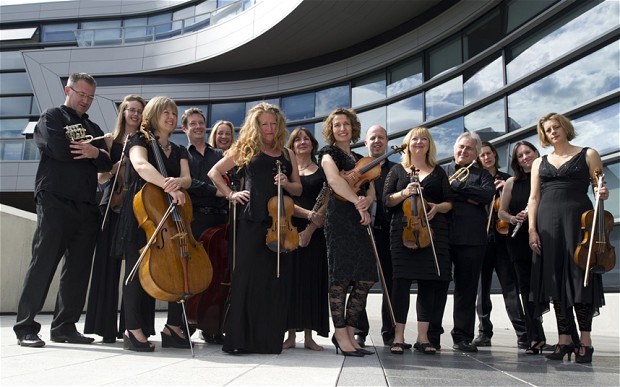
Dither (electric guitars), Thomas Gould and Miranda Dale (violins), Clare Finnimore (viola), Caroline Dearnley (cello), Beryl Korot (video); Electronic Music Studios of the GSMD; Synergy Vocals; Britten Sinfonia / Clark Rundell

Barbican Hall, London

Saturday 5th November [6.30pm]

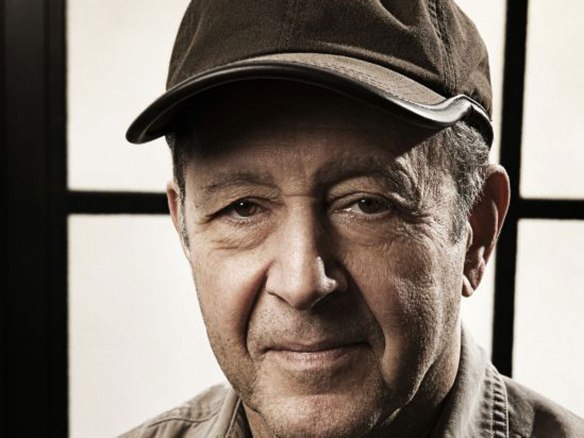
The Barbican venues were dominated this weekend by Steve Reich, whose 80th birthday fell on October 3rd and whose music is the most vital manifestation of the minimalist aesthetic, as well as a pervasive influence on later generations of essentially non-minimalist composers.

The Saturday evening concert itself offered a fair overview of Reich’s evolution across three decades. Pendulum Music may be more an art installation than musical composition, but the presence of 16 people each setting a microphone in motion, such that the resulting feedback is projected by accompanying speakers, makes for a music-theatrical experience of no mean efficacy. A thought persists whether Reich might have been encouraged to do for pendulums what Ligeti had done for metronomes with his Poème symphonique just six years previously?

Utterly consistent in his compositional techniques, Reich has never written intrinsically bad pieces though he has written a few boring ones. There could be no doubting the effectiveness with which David Tanenbaum adapted 1994’s Nagoya Marimbas into Nagoya Guitars, even though the resulting canonic interplay barely sustained interest over its six minutes. Nor did the presence of live guitarists make Electric Counterpoint a riveting experience – not helped by amplification that blurred the interplay of the 11 leads and muddied that of the two basses.

This programme was to have featured Reich’s WTC 9/11 (by some way the most meaningful response to those atrocities in New York), but few would have begrudged revival of Different Trains. Here a live string quartet and three pre-recorded equivalents are overlaid with speech patterns as evoke their literal and metaphorical ‘journeys’ to spellbinding effect, above all in the climactic central Europe – during the war section where observations of three Holocaust survivors become integrated into a soundscape as affecting as any Reich has (and could ever have) achieved. Framed by engaging recollections of the composer’s peripatetic childhood in America – before the war, and a more reflective sequence focussing on observations After the war, it is likely to remain Reich’s masterpiece and Minimalism’s defining raîson d’être.

After which, Pulse was a gentle come-down. This latest Reich work deploys its ensemble of woodwind, strings and pianos via interweaving canons in music that pivots between repose and torpor – with more than a hint of American ‘ruralism’ as regard its harmony and texture.

Back to more immediate concerns with Three Tales – the second of Reich’s collaborations with the video artist Beryl Korot, and his closest engagement (to date) with the premises of contemporary music-theatre. There are three parts, and these are strongly differentiated as to era, concept and underlying form. Thus Hindenburg unfolds as a suite where reportage of the 1937 zeppelin disaster frames imagery of its construction and (over-reaching) ambition, while Bikini is akin to an oblique sonata-design in which footage from the air, on the atoll and on the ships is imbued with expressive intensification and ominous Biblical undertones.

These latter are to the fore in Dolly, where images of the first cloned mammal become the catalyst for six sections akin – in musical terms – to developing variation in the way over a dozen talking heads, with their ‘outlooks’ on the future, are juxtaposed in a sequence whose implosive final dialogue of Kismet (a socially intelligent humanoid robot) with its creator parallels changes from external to internal technological developments over the last century.

Hugely ambitious (despite its barely hour-long duration) and far more compellingly presented than on its previous Barbican outing over a decade ago, Three Tales might still promise more than it delivers, but its attempt to grapple with contemporary issues remains absorbing and it is to be hoped that Reich and Korot will take on one more collaborative challenge. Tonight’s realization overcame technical hitches to convey its emotional charge in full measure, Clark Rundell drawing a precisely coordinated response from Synergy Vocals and Britten Sinfonia.

Reich and Korot were on hand for a post-performance discussion where the former was asked as to future-plans. His immediate task is for a piece on the principals of the ‘concerto grosso’, which will doubtless emerge revivified at the hands of this perennially resourceful composer.

Richard Whitehouse

Britten Sinfonia At Lunch Two: Anna Clyne’s This Lunar Beauty

britten-sinfonia

Julia Doyle (soprano), Marios Argiros (oboe), Maggie Cole (harpsichord), Jacqueline Shave, Miranda Dale (violins), Clare Finnimore (cello), Caroline Dearnley (cello)

Wigmore Hall, 20 January 2016

Written by Ben Hogwood

If you live in London or the South East of England, and fancy a bit of musical exploration, then the Britten Sinfonia’s At Lunch series comes highly recommended.

Celebrating its tenth anniversary, the enterprise promises a brand new work in every concert – and proceeds to build the whole hour of music around it, often with the shared theme of a particular instrumental or vocal combination. With programme notes for adults or schoolchildren, it is one of the most accessible lunchtime concerts you could wish to enjoy – and as well as having the obvious bonus of professional quality performances, it is completely judgement-free!

This particular concert illustrated just why the formula works so well. Taking as its theme the combination of voice, oboe and strings, the Britten Sinfonia built an intricately weaved concert taking in arias from Bach and Scarlatti cantatas as well as two very different approaches to minimalism from Arvo Pärt and Ligeti. It was fitting, then, that the final piece – the new commission from Anna Clyne, This Lunar Beauty, should bring all these strands together.

anna-clyne

Anna Clyne photo by Javier Oddo

Setting the W.H. Auden poem of the same name, Clyne has written a piece of outstanding beauty. Its calling card is a distinctive melody that seems to be sourced from medieval England, but works it in a way of which the late 1960s British folk pioneers such as Fairport Convention, Steeleye Span or Pentangle would be entirely proud.

The repetitions of the tune, given in soprano Julia Doyle’s clear tones, were subtly varied by additions and subtractions to the instrumental texture, filling up with strings or paring back so the glitter of the harpsichord could be sensed on top. This Lunar Beauty left a strong emotional impression, using its forces sensitively in new music of rare quality and depth.

Before this, Doyle leant her clear tones to three varied arias from Bach Cantatas, with oboist Marios Argiros excelling in the obbligato to the aria Tief gebückt und voller Reue. We also heard Salvatore Sciarrino’s arrangement of two arias by Alessandro Scarlatti, the first of which had a striking accompaniment of muted strings without vibrato.

The two very different approaches to minimalism were fascinating. In Arvo Pärt’s Fratres time stood suspended as the string quartet’s theme, first heard in ghostly harmonics, gradually found body and soul before ebbing away into the distance. Ligeti’s Continuum froze time in a wholly different way, the solo harpsichord – brilliantly played by Maggie Cole – seemingly trapped in rapidly flashing strobes. Somehow, despite the hyperactive energy, this too found its own stillness.

A very fine concert, hopefully to be broadcast on the BBC in the future. In the meantime, have a listen to the audio below – and get yourselves over to listen to vocal works on Anna Clyne’s website, because this is a composer we want to hear a lot more of!

You can also hear her new Violin Concerto The Seamstress on the BBC iPlayer, performed by Jennifer Koh and the BBC Symphony Orchestra conducted by Sakari Oramo. The concert is available until 14 February 2016

Vaughan Williams and Sir James MacMillan – Oboe Concertos

macmillan-vw-daniel

Nicholas Daniel teams up with the Britten Sinfonia and Harmonia Mundi to present the recorded premiere of the Oboe Concerto by the recently knighted Sir James MacMillan. He couples this with a much shorter piece by the composer, One, and another British oboe concerto, the well-loved Vaughan Williams. Completing a varied cross-section of styles is Britten’s Suite on English Folk Tunes (A Time There Was), his final completed orchestral work.

What’s the music like?

MacMillan has written a bold Oboe Concerto, a substantial work lasting nearly 25 minutes that makes great technical demands on its soloist. It is a rewrite of an earlier piece for oboe and orchestra, In Angustiis, which responded to the horrors of 9/11. While the piece is essentially optimistic in tone, these thoughts can be felt in the second movement, essentially a lament, where the strings sigh painfully, and in a moment of deep thought that occurs towards the end of the first movement – in complete contrast to the jaunty, angular main material.

Vaughan Williams’ concerto is a lovely piece, its dreamy first theme coloured with strings to evoke a picture of hazy sunshine. Completed in 1944, it is a largely positive work in the face of the Second World War, especially in the third movement, where a dance plays out between oboe and strings.

Britten’s suite, as with so many of his orchestral works, is a model of economy, saying in fifteen minutes what many lesser composers would do in 25. It is extremely resourceful in its use of ten folk tunes, but it is also tinged with pain, the composer aware that he is in his last days – and this is felt in Daniel’s cor anglais solo in the tune Lord Melbourne.

One, the second MacMillan piece here also shows his love for his home country, based on a single, arching tune based on the traditional song of Scotland and Ireland.

Does it all work?

Nicholas Daniel is one of our finest oboists, and although even he admits to difficulties in learning the part for the MacMillan his playing is absolutely superb. The energy of that work contrasts with the soulful Vaughan Williams, an affectionate performance where the slightly reduced forces of the Britten Sinfonia (in comparison to a full scale orchestra) mean more detail can be heard and enjoyed. Turning his hand to a conducting role, Daniel teases out Britten’s subtle affection for folk tunes through the relative darkness of illness.

Is it recommended?

Yes – and how satisfying to listen to such a substantial contemporary piece for oboe, which could hardly have a better advocate than it does here.

With contrasting styles of music this disc is an unrestricted pleasure, and is recommended for all fans of classical music from these shores.

Listen on Spotify

This disc can be heard here:

Britten Sinfonia at Lunch – Reinventing the piano trio

britten-sinfonia

Britten Sinfonia at Lunch – Wigmore Hall, 4 March 2015.

If chamber music is not your forte, then I cannot imagine a better way into it than by the Britten Sinfonia’s ‘At Lunch’ concert series, held in London, Cambridge and Norwich.

Each program explores works written for a particular instrumental combination, but always includes a world premiere from a living composer. The informal atmosphere is both performer and audience friendly, and as a diversion from work or a pause in the middle of the day, the experience is ideal.

This second concert of the 2015 season chose to look at the piano trio, a misleading label since the standard combination of instruments for the trio is piano, violin and cello. Yet, as the program observed, the form is less often used by contemporary composers, and has a heritage of works running from Haydn in the mid-18th century through to 20th century composers such as Shostakovich, who featured here.

What the Britten Sinfonia did really well was to present possible solutions to the form, which here included adding percussion. To begin we heard Lou Harrison’s Varied Trio, for violin, piano and percussion. Harrison, an American composer who lived from 1917-2003, took as his inspiration the music of a number of different countries including China and Indonesia, and his original approach here included a set of rice bowls played with chopsticks. The resultant sounds were often soothing and rather wonderful, drifting as though on the breeze from percussionist Owen Gunnell, but with pianist Huw Watkins also reaching around inside the instrument to produce some unusual sounds. Completing the trio was violinist Thomas Gould, whose sweetly toned Elegy formed the third of the Varied Trio’s five movements and made it the emotional centre.

The new piece was from 22-year old composer Joey Roukens, who described his Lost in a surreal trip as ‘a psychedelic, kaleidoscopic 12-minute piece’. It was vividly coloured and brilliantly realised by the players, adding cellist Caroline Dearnley to their number. Early on the music cast spells of dappled light through harmonics on the strings and intriguing percussion sounds, but then a more mechanical energy took hold as though we were being transported by train to a place without a firm surface. With bags of reverberation and some enchanting sounds from the marimbas, this piece was consistently inventive and will be well worth hearing.

From the conventional piano trio legacy came one of its finest works in the 20th century, the Piano Trio no.2 by Shostakovich. This concentrated wartime work from 1944 is packed full of anguish, marking the death of the composer’s close friend Ivan Sollertinsky but also expressing outright anger at conflict and war. Gould, Dearnley and Watkins had no need for percussion here, not with the rhythmic profile Shostakovich establishes, but theirs was a keenly felt performance that left the listener in no doubt of the composer’s feelings and concerns.

A Spotify playlist containing the Varied trio and the Shostakovich Piano Trio no.2 can be accessed here: