Talking Heads – Alison Balsom

interview by Ben Hogwood

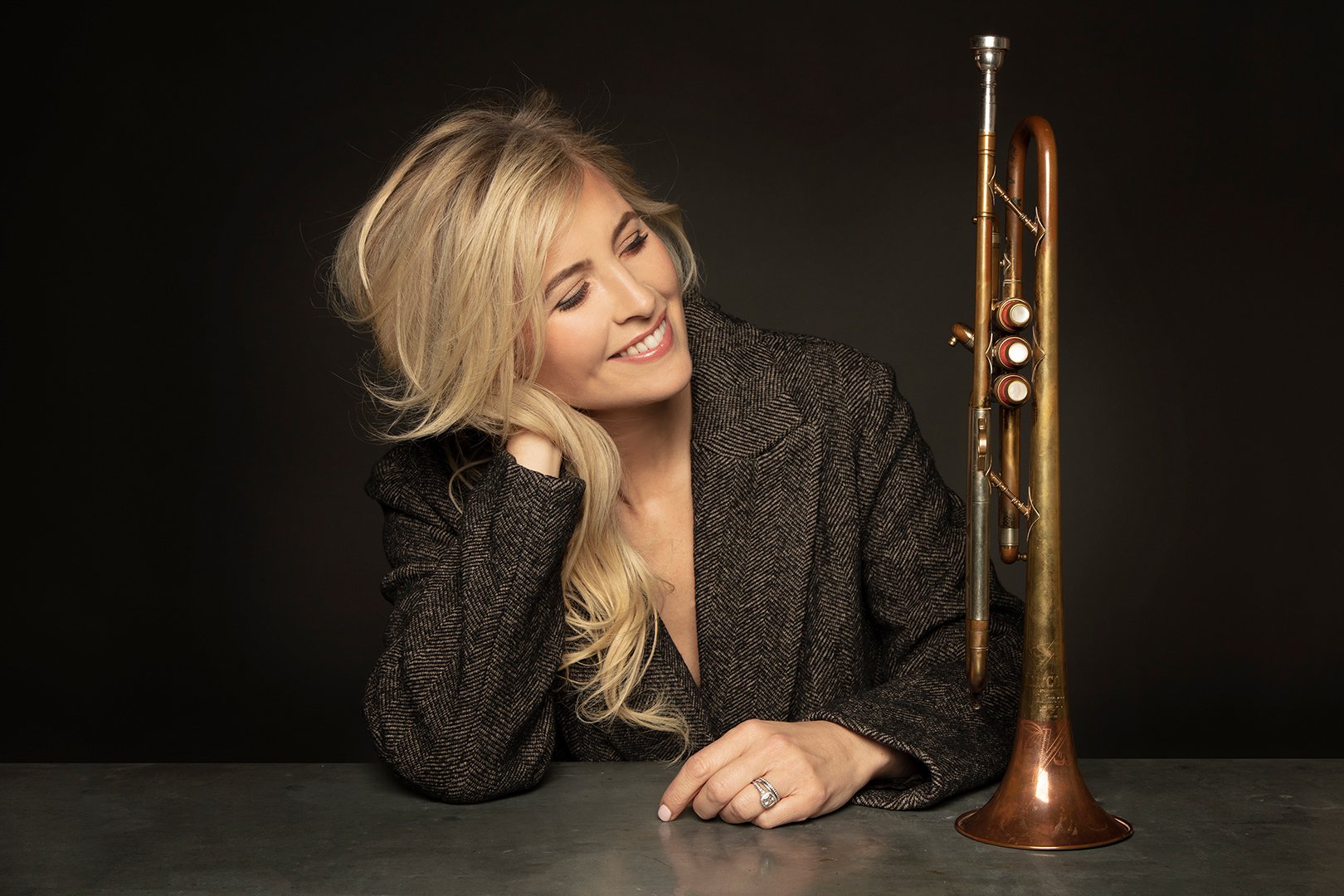
We still think of Alison Balsom as a new artist, a breath of fresh air for the trumpet in and around classical music. Yet all of a sudden it is nearly 25 years since she burst onto the scene, winning the Brass Final of the BBC’s Young Musician competition in 1998. Since then her recording career has yielded no fewer than 15 albums, for EMI Classics and latterly Warner Classics.

Quiet City will be her 16th – and in many ways it is her most personal album yet, as Arcana found when we sat down for a chat with the trumpeter. Balsom has poured herself a cup of tea, and the chat is punctuated with comfortable silences as she sips tea and I write. An extremely affable presence, she clearly has as much enthusiasm for the music now as she did in 1998, if not more.

Quiet City, as you may have guessed, is named after the Copland composition for trumpet, cor anglais and string orchestra of 1939. A forward-looking piece, it became a popular pick for online concerts during lockdown, its scoring favouring smaller orchestras and its mood wholly redolent of the times. It has held a very significant place in Balsom’s life, too. “I didn’t know I was going to make an album like this”, she confesses. “Quiet City is one of the very first pieces that I fell in love with to a deeper level when playing the trumpet. Copland understands the trumpet’s qualities, the melancholy aspects of the instrument and how it could sing. It is a relatively short work, so it was interesting to think about what it should be programmed with. I don’t think of myself as a jazz trumpeter, yet there is a really interesting point where in America composers were writing ‘in the gap’, letting themselves experiment. It didn’t matter that it was classical or jazz, they were taking from both realms. I found that this made a coherent journey, and found the nuggets growing to album ideas.”

She recognises the relevance of Quiet City to the pandemic. “Copland was a visionary with what we needed.  We made this recording in November 2021, when we were just coming out of lockdown. We all had an intense feeling of gratitude to be able to play this music live with a feeling of stillness in the concert hall, a voice that said, “Aren’t we lucky to be here?!” It is such a powerful vision, evoking the atmosphere from the first section, looking between building in New York like an Edward Hopper painting. Even working with a piano reduction I was in a melancholy mood. With this music I think of a film like Lost In Translation, and of two people with a luxury life, going to very different places. There is an isolated melancholy but beauty too, like a friend. As a piece, though, it is technically and physically challenging to play.”

She elaborates further. “Sustaining the notes can be a physical struggle, but you need command of the sound, the articulated notes – and you somehow need to make them tentative and nervous. You want to convey someone practising in an apartment block or something, being wonderfully balanced with the cor anglais and communicating with your audience or listeners.”

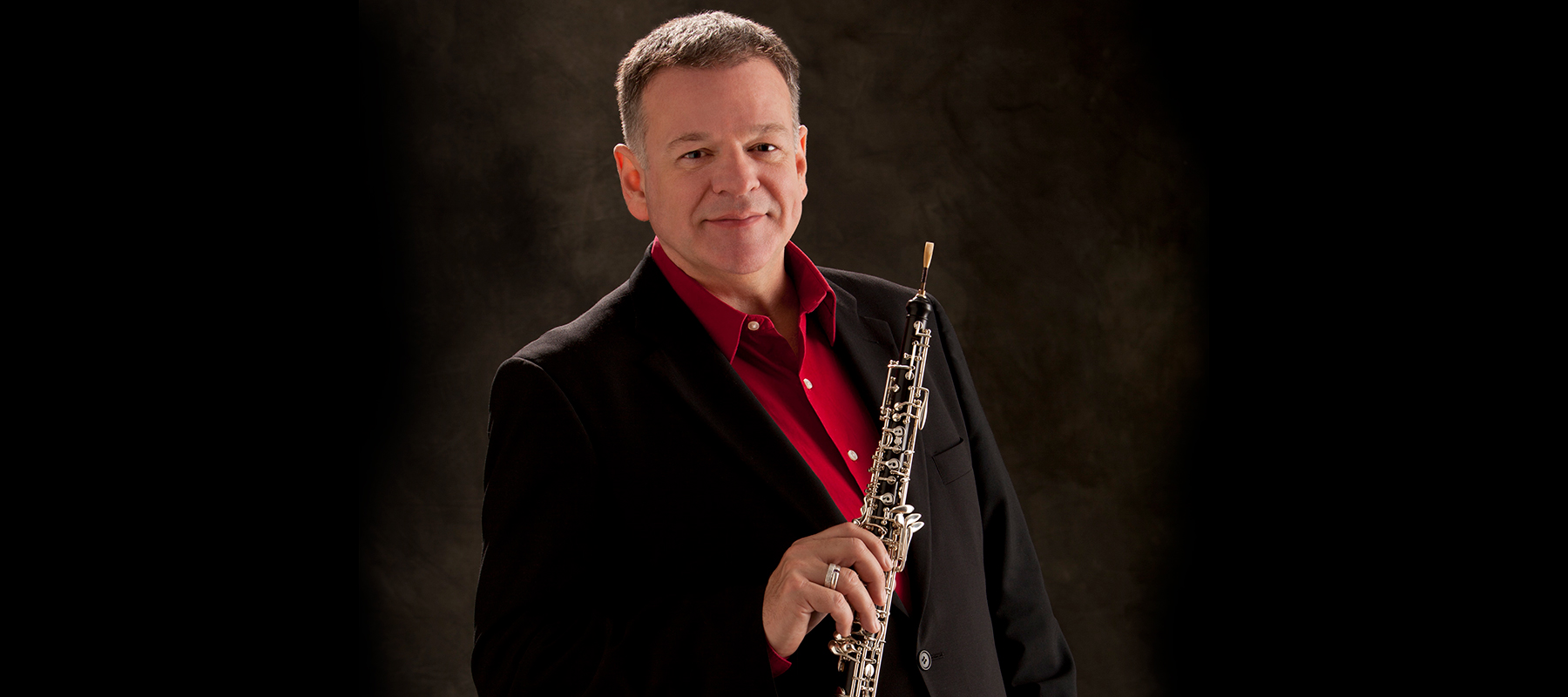
The cor anglais part on this recording is taken by Nicholas Daniel, who Balsom professes undying admiration for. “He is such a great musician, and has such a strong feeling about that piece. It was inspiring working with him and getting his insight and thoughts. It was incredible working with the Britten Sinfonia as well, they have great integrity and are always minded for collaboration. I worked with them in 2017, when we did the Barbican’s Sound Unbound festival. We did Miles Davis and Gil EvansSketches Of Spain, using transcriptions from the original studio recordings. I didn’t realise about the manuscripts, and there was a trumpet part revealed to me. He knew exactly what he wanted! I felt privileged to hear the players as at home playing jazz as they do classical.”

Also featured in the Sound Unbound concert was Gershwin’s Rhapsody In Blue, which appears on Balsom’s album in a very different guise – tastefully rejigged to bring the trumpet forward as a second soloist, alongside childhood friend Tom Poster on the piano. “I had a different hat on for this one!” she confesses. “I respect Tom so much, I think he’s the greatest pianist to play with. We met when I was ten, so we know each other really well. With the arrangement I phoned him up and suggested it, and he thought it was nuts but a good idea. We found that Rhapsody in Blue was out of copyright, but not in the Grofé arrangement. This made the job an enormous one for Simon Wright, who orchestrated it from scratch.  Any coincidences in the new version are Simon coming to the same conclusion as Grofé, and I think it is an amazing achievement. The piano part didn’t have to be set in stone, which gave Tom the opportunity to express himself even more. We did a concert in Norwich, when everything was closed, and we only had to get it right once to get it in the can.”

She may be 15 albums in, but Alison is keenly aware of how much the format has changed in that time, and how consumption habits are so different with streaming. “The greatest challenge has been finding my muse, making something that the world might want to hear”, she says, “and yet there is an amazing opportunity to pioneer. We put Quiet City with some things that we’re OK with, and some things that are more challenging, such as the Charles Ives piece The Unanswered Question, which I love, but Warner let me go for it. It’s a lucky situation to be in.”

Asking Balsom to cast her thoughts back, I ask who has been an influence on her career to date? “In terms of my teachers, I would say John Miller – an amazing teacher and trumpet guru. With him we focussed on sound, as the trumpet is all about the production of technique. I would compare him to Mr. Miyagi from Karate Kid, he wouldn’t let me do the cool stuff but I’m so glad he did that! I then went on to work with Håkan Hardenberger, who taught me how to teach myself. Physically the trumpet is so challenging, but that’s not how you master it. Getting to Grade 8 is just the start! It has this incredible, multifaceted personality, it reflects who you are. We play our personalities through our instruments!”

Balsom’s husband, film director Sam Mendes, had a small hand in the album’s running order. “He suggested the use of Leonard Bernstein‘s Lonely Town”, she says, and was a good soundboard for how the album was fitting together.” Has she returned the compliment on any of his film scoring? “I have made a few suggestions!” – she smiles – “and of course he has got to know a lot of trumpet repertoire through me.”

She recognises a change of focus in the musical landscape since the pandemic, with much more emphasis on recorded music. In spite of that there are a couple of concerts planned for the rest of the year. “There was the launch concert at Snape, with full bells and whistles, which is quite a complicated affair but the only live version of the album we will be doing. After that it gets quite random, but on October I’ll be doing a recital with Anna Lapwood, the organist, and a lighting designer, at a school in Tonbridge. It’s going to be an immersive trumpet and organ recital. We know the music is amazing but how can we present it and immerse people in the music? I’m really looking forward to doing that, she’s a real force for good! I wanted an amazing acoustic and organ, and there will be a few new pieces for that one.”

Plans are afoot for a seventeenth album, too. “I have had a good chat with Trevor Pinnock about my next project. Over the pandemic we had to re-evaluate travelling and what we have a desire to do – and there are some exciting plans on the horizon!”

You can discover more on Alison Balsom by visiting her website – and you can hear more of Quiet City and purchase the album on the Presto website. Meanwhile for more information on her recital with Anna Lapwood, and to buy tickets, go to the Tonbridge Music Club website
Talking Heads: Nicholas Daniel

nicholas-daniel

Interview by Ben Hogwood

As part of the inspiring Summer At Snape season, the counter-tenor Andrew Watts and oboist Nicholas Daniel, are giving world premiere performances of Sir John Tavener’s La Noche Oscura, with the Britten Sinfonia conducted by Sian Edwards. Arcana took the chance to talk with Daniel, who received an OBE for his dedication to music in October 2020, about his lasting friendship with Sir John, as well as his hopes for live music in such a difficult time.

To begin, we look back to Daniel’s first musical meeting with the composer. “I remember hearing The Whale and thinking it was fabulous and risqué,” he says. “It became a piece people talked about more than heard when I was at the Royal Academy. I first met him through Richard Hickox, who I persuaded to ask John to write for me as a thank you for playing at his and Pamela’s wedding.”

While writing La Noche Oscura, Tavener did not consult with his dedicatees. “He never consulted with me about writing”, says Daniel. “I don’t know whether he did with other artists, but for me his pieces seemed to have arrived as a newborn but sitting up and asking for food. Even with Kaleidoscopes we only vaguely discussed the idea of wearing Indian clothes to play it and lighting it really well, months before he wrote it.”

The piece itself is an intriguing balancing act “Noche has inside it a major contradiction in terms. The words are absolutely agonising: “Where have you hidden, beloved, and left me moaning?” “Tell him I suffer, grieve and die” “but thou hast utterly rejected us: thou art very wroth against us,” but the music is not. He says “shining, intense, with majesty and grandeur”, and from my preparation I see the music as flowing through the words to a place where the music is in control. It’s as though the grinding agony of the words are not ignored, but swept away by the beauty of the harmony. It seems a little like Niobe, Britten’s D flat Major tribute to the Queen whose 14 children died (from the 6 Metamorphoses after Ovid for solo oboe), or maybe Gluck’s Che faro senza Euridice, which has nobility in the face of death. Interestingly both those pieces take their lead from Greek Myth.”

Written for oboe and countertenor, La Noche Oscura blends a relatively unusual combination of soloists, though Daniel refutes my initial suggestion the combination would be hard to balance. “In what way would it be difficult? Because Andrew Watts has the biggest counter tenor voice on the planet and therefore the oboe would be drowned? Possibly. Or that the oboe in the high register might drown the counter tenor in the middle? Well, John knew my playing very well and my high register is something I’ve worked very much to develop over years, partly through composers writing death defyingly quiet music for me up there. Listen to the cadenza of John Woolrich’s Oboe Concerto for instance. Noche is a whole major third lower in my part than the highest parts of Kaleidoscopes and I know how to balance to the gentler parts of a counter tenor voice anyway.”

tavener

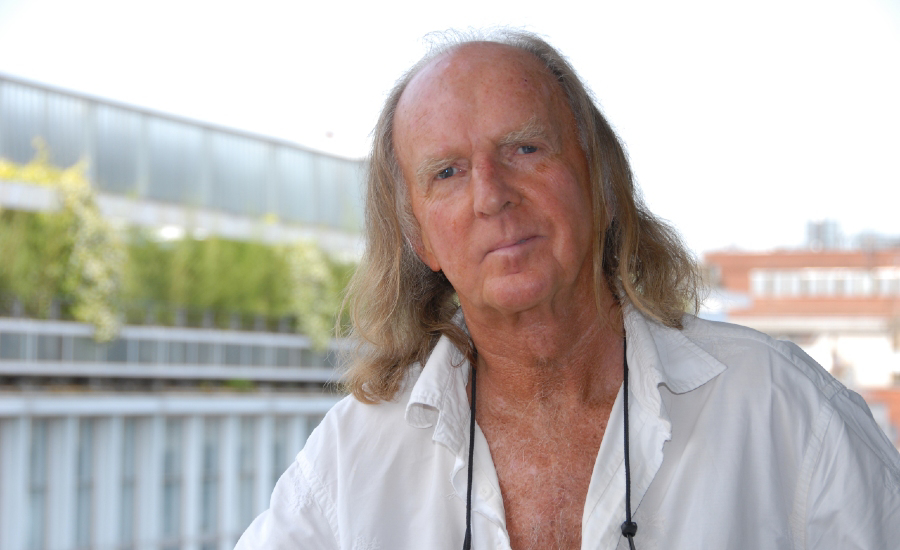
He speaks with great warmth of Tavener (above), both as a friend and as a composer. “I adored him. He was completely unique, and although he maybe lived in other realms as well as ours he was completely able to exist in a very charming and entertaining way in the here and now. I think that he probably felt quite relaxed with me because he was very free in what he said, possibly sensing in me the very non-judgemental and open nature of my soul. His health must have been such a burden to him, and I was always slightly aware of his frailty – the main time I knew him was towards the end of his life. I will never forget the sound he made on the piano and ‘singing’ the music he’d written for me. It was like a seance.”

Is his music particularly appropriate for the times we are living through? “I believe that John’s music is appropriate for any time and any space. He can turn a bike shed into a cathedral with his music. I would love to think that as we have entered the very promising Age of Aquarius we might find it has uses for meditation, for finding stillness, and for connecting ourselves with the planet and with each other.”

daniel-drake

Talk turns to the pandemic, and a particularly special concert Daniel and long-time recital partner Julius Drake gave at the Wigmore Hall in 2020 (above), part of a special season of lunchtime concerts marking the hall’s reopening in June. It was a meaningful concert for those watching online – and for the two performers. “Oh my goodness, thank you. Well, it was a fantastic moment to be able to play to the world, yes. We chose the programme to entertain, and to touch people’s hearts. It was very moving how the artists in that first week all supported each other by text messages!  It was so special to play two new pieces there, by Michael Berkeley and Huw Watkins, and also to play Madaleine Dring’s music, which I adore. As it happened it was two days after the murder of George Floyd, and I decided to dedicate the Bach encore to his memory. It proved harder than I thought to speak about it. The reality is the piece I played (basically in one breath using circular breathing) was shorter than the time he was prevented from breathing. The connection was obvious and absolutely shattering.”

The current situation with Government restrictions from the Coronavirus pandemic means plans for future concerts are sadly up in the air. The reality is stark, and Daniel’s diary has a small number of entries. “A few. Incredibly few. 2023 is looking a little better than the rest of 2021 and 2022 put together. This is all going to take some time. It’s also going to take some fearless programming and risk taking to make concerts irresistibly inviting. New music, new presentation, fresh diverse repertoire; young, diverse artists, a fresh dawn for true diversity and the certain knowledge that we will never take an audience for granted ever again.”

There is a little consolation on the recording front, where Daniel has been busy. “Haha! I’ve been very lucky to have some recordings released over the last while, music by Eleanor Alberga, Roxanna Panufnik and Mark Simpson with Mozart, the latter recorded in lockdown. I had the huge joy of recording a disc for my new label Chandos with the exquisite Doric Quartet of British music which will be out later in the year. On that disc I recorded the Delius Two Interludes on Leon Goossens’ 1911 Lorée Oboe. It was a huge privilege to be allowed to play this massively historic and important instrument.”

Will his approach to making music be any different after the pandemic? “Yes”, he says emphatically. “I’m saying to my students that it has to BURN. No prisoners can be taken, risk taking is everything and make it HIT the audience like your life depends on it. Now is the time to make music COMPLETELY relevant to people’s lives, especially to our children, each one of whom deserves to play an instrument and learn the language of music. Scotland is giving this to their children but England and the rest of the U.K.? Not yet.”

The effects of restrictions imposed in the pandemic are clear to see, and Daniel addresses this head on. “I would love audiences to spare a moment of thought for the artists right now, let alone the effect on our incomes. Not being on stage for more than a year plays havoc with your mind, and just getting to the concert hall seems to involve rules and regulations and risks we have never known before. Personally I’m very grateful that people are taking some of the same risks coming to hear concerts, but it feels weirdly exposing to walk on stage to the smell of hand sanitiser having just ripped off your mask, metres apart from your colleagues. We do it despite these things because we want to and because we have to, and because most of us are addicted to music and concerts.”

Andrew Watts and Nicholas Daniel will give two performances of Sir John Tavener’s La Noche Oscura with the Britten Sinfonia conducted by Sian Edwards at Snape Maltings on Friday 25 June. Their program, part of the ongoing Summer at Snape festival, includes music by Handel, Tansy Davies and two works by Britten, including the Temporal Variations orchestrated by Colin Matthews – who spoke with Arcana earlier in the season here. For details and tickets click here

Summer at Snape runs from Friday 4 June until Saturday 11 July. For full details on all the live events, visit the Snape Maltings website.
.

Britten Sinfonia at Lunch – Katie Bray sings Freya Waley-Cohen’s Spell Book @ Wigmore Hall

Katie Bray (mezzo-soprano), Britten Sinfonia Soloists [Jacqueline Shave, Miranda Dale (violins), Clare Finnimore (viola), Caroline Dearnley (cello), Joy Farrall (clarinet), John Lenehan (piano)]

Leclair Trio Sonata in D major Op.2/8 (1728)
Mahler arr. Waley-Cohen Rückert-Lieder (1901-2, arr. 2019)
Lutosławski Bukoliki (1952 arr. 1962)
Waley-Cohen Spell Book (2019)

Wigmore Hall, London
Wednesday 22 January 2020

Photo credits Patrick Allen (Freya Waley-Cohen); Tim Dunk (Katie Bray)

Review by Ben Hogwood

The previews for this concert were intriguing. As well as a performance of a new arrangement of Mahler’s Ruckert-Lieder, we were to be treated to Spell Book, the world premiere tour of a new dramatic work by Freya Waley-Cohen.

Inspired by the composer’s encounter with Rebecca Tamás’ collection of poems WITCH, the song cycle was written for and performed by mezzo-soprano Katie Bray, singing with an ensemble of string quartet, clarinet and piano. In terms of forces used this gave the work a similar profile to Schoenberg’s famous melodrama Pierrot Lunaire. The music fulfilled Waley-Cohen’s wish that it would place us under a spell, as the book had clearly done for the composer. She brought it to life with music of luminosity and captivating drama.

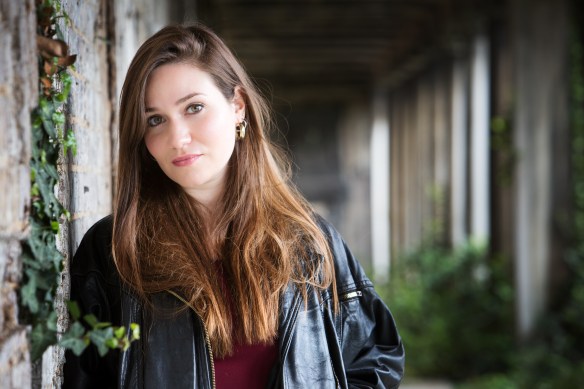
She was helped considerably by Bray (above), who held the attention effortlessly with a commanding performance. The first and most substantial song, spell for Lilith, found her word emphasis in the observation that Lilith is ‘such a bad girl’ setting the expressive tone. The music swept up to impressive heights, Bray’s voice stopping the listener in their tracks while simultaneously nailing the acoustic of the hall.

Waley-Cohen’s response to the text was often vivid, the instruments either offering weighty support to the words or dropping away under their feet. The observation that ‘Lilith, you have a great body’ received appropriately slinky contours, while the contrast of suspension and movement towards the end led to a delirious postlude from John Lenehan’s piano.

The following two songs were more compact but retained Lilith’s intensity. spell for sex had a soft, alluring vocalise that was also remote, while the spell for logic was much more active, pockets of instrumental music bumping into the vocal line but never overwhelming it. The open-ended challenge to the audience was effective, as was the relatively sudden finish, concluding a mysterious and strangely euphoric piece. The spell had indeed been cast.

Spell Book was complemented by Waley-Cohen’s arrangement of Mahler’s Rückert Lieder. In this regard she was bravely nailing her colours to the mast alongside the intimidating figure of Schoenberg, whose arrangement of the composer’s Lieder eines fahrenden gesellen (Songs of a Wayfarer) for chamber ensemble around 100 years ago is still occasionally performed. The ensemble here, replicating that for Spell Book, was cut from similar cloth.

This performance was a qualified success, part of the fault for that lying with the listener and a long-held familiarity with the piano and orchestral versions of Rückert-Lieder. There were however some imaginative qualities here, particularly the technique of doubling instruments at a distance of two octaves. John Lenehan‘s high piano right hand therefore acquired a ghostly shadow in the form of Caroline Dearnley‘s low cello, and this technique was used to create an enchanting, wispy half-light.

It also suited Bray’s range and performance, and while her interpretation felt like it may still be in progress – again the problem of over-familiarity rearing its head – she grew into the songs as they unfolded. The famous Um mitternacht was an inevitable highlight, while the clarinet lines in Blicke mir nicht in die Lieder! (Do not look into my songs!) were beautifully rendered by Joy Farrall. The final song, the rapt Ich bin der Welt abhanden gekommen (I am lost to the world) was beautifully controlled if not quite reaching peak intensity.

Prior to the song cycles we heard the Trio Sonata in D major from Jean-Marie Leclair. It made a nice change to hear this music on modern instruments, the program illustrating how the Trio Sonata was in fact a predecessor of the Piano Trio. Jackie Shave, Caroline Dearnley and John Lenehan clearly enjoyed their time with this piece, and Leclair’s elevation of the cello to much more than mere accompaniment found the two string players engaged in rewarding dialogue.

In between the song collections Dearnley teamed up with viola player Clare Finnimore for Lutoslawski’s six Bukoliki, delectable folk-inspired miniatures originally conceived for piano but subsequently arranged by the composer. Lasting little more than a minute, each one was beautifully formed and strongly expressive, the string players enjoying the melodic ornaments and the rustic sweeps of the bow. The addition of subtle discords created a haunting quality to some of this music, pointing the way to Lutoslawski’s sonic innovations to come.

The Britten Sinfonia’s At Lunch series continues to impress with its imaginative programming and opportunities for contemporary composers. Both aims were realised here in a richly rewarding concert.

Further reading and listening

To discover more about Freya Waley-Cohen, you can visit her website here or listen to her music on Soundcloud here. Meanwhile the Spotify link below offers a chance to hear her Permutations, as played by her sister, violinist Tamsin.


Arcana at the opera: Coraline @ Barbican Theatre

Mark-Anthony Turnage Coraline

Opera in Two Acts – Music by Mark-Anthony Turnage; Libretto by Rory Mullarkey, after the novella by Neil Gaiman; Sung in English (no surtitles)

Barbican Theatre, London

Thursday 29th March, 2018

Review by Richard Whitehouse

Coraline – Mary Bevan (soprano); Mother/Other Mother – Kitty Whatley (mezzo-soprano); Father/Other Father – Alexander Robin Baker (baritone); Miss Spink/First Ghost Child – Gillian Keith (soprano); Miss Forcible – Francis McCafferty (mezzo-soprano); Mr Bobo/Second Ghost Child – Harry Nicoll (tenor); Third Ghost Child – Dominic Sedgewick (baritone)

Aletta Collins, designer; Giles Cadle, set designer; Gabrielle Dalton, costume designer; Matt Haskins, lighting designer

Britten Sinfonia / Sian Edwards

Barbican Theatre, London
Thursday 29th March 2018

From the streetwise allegory of Greek, through the traumas of war in The Silver Tassie and tawdry decadence of Anna Nicole: Mark-Anthony Turnage has always been unequivocal in his choice of topics for dramatic treatment, and Coraline ultimately proves no exception.

Its libretto is expertly derived by Rory Mullarky from a novella by fashionable author Neil Gaiman, but what really makes this opera succeed as a theatrical concept is the equilibrium secured between those real and imaginary worlds being traversed by the eponymous heroine in terms of their narrative symmetry and of musical evolution. In these respects, the piece is something of a breakthrough for Turnage – enhanced with an undemonstrative effectiveness of staging which makes up for in scenic integration what it might lack in visual immediacy.

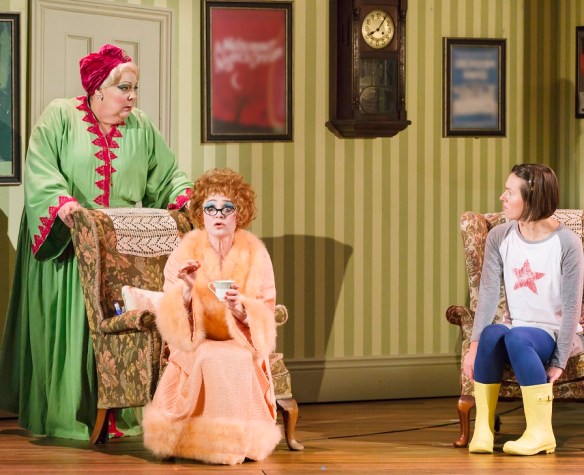
Utilizing the ostensibly inflexible space of Barbican Theatre, Aletta Collins has fashioned a production which underlines the scenario’s uneasy pivoting between fairy-tale and allegory; enabling both characters and settings to appear unexceptionally human while indicative of something ‘beyond’. Her achieving this has been abetted by the engaging and never unduly tricksy designs of Giles Cadle, functional yet never utilitarian costumes by Gabrielle Dalton and effective while unfussy lighting from Matt Haskins. It might be argued the Other House into which Coraline ventures is insufficiently distinct (eye-buttons aside!) from the real one, but such visual consistency serves to unify dramatic action across and between acts; and so ensure an equivocation between environs as points up the underlying moral more explicitly.

These visual qualities are complemented by vocal ones. It might not call for virtuoso singing per se, but Coraline does require tightness of ensemble such as the present cast has in spades. Mary Bevan makes a sympathetic though never cutesy impression in the title-role, gaining in expressive conviction as the drama unfolds, while Kitty Whatley arguably steals the show in her assumption of the mothers. That of the fathers may be more simply drawn, but Alexander Robin Baker is likable and engaging; no less than Harry Nicoll as hapless inventor Mr Bobo. Gillian Keith and Francis McCafferty complement each other ideally as faded thespians Miss Spink and Miss Forcible; the former giving a whimsical cameo as the First Ghost Child, with her companions represented in equally touching fashion by Nicoll and Dominic Sedgewick.

Concerning Turnage’s music, it might easily be dismissed as effective in underpinning stage-action while lacking the memorability and individuality of his best scores. That said, there are numerous stylistic traits consistently in evidence – not least the pungent rhythmic unisons and harmonic astringency such as this composer has made his own. It helps that the score is given with such audible conviction by Britten Sinfonia, increasingly familiar in the opera-pit, and is conducted by Sian Edwards with an appropriate amalgam of incisiveness and dramatic focus.

Whatever else, Coraline secured an evidently appreciative response from adults and children alike, for whom this drama’s more traditional aspects seemed not to inhibit their enjoyment. Not a mesmeric or revelatory night at the opera, perhaps, but an enjoyable and appealing one.

Further performances of Coraline take place at the Barbican Theatre on April 3, 4, 5 & 7 at 7pm and April 7 at 2pm. For more details visit the Barbican and Royal Opera House websites

Ask the Audience at the BBC Proms – Tom Morley on Ravi Shankar & Philip Glass: Passages

For the latest in Arcana’s Ask The Audience series Tom Morley gives his thoughts on the Britten Sinfonia’s rare performance of the Philip Glass / Ravi Shankar collaboration Passages, with the composer’s daughter Anoushka Shankar playing the sitar.

Prom 41: Alexa Mason (soprano), Anoushka Shankar (sitar), Ravichandra Kulur (bansuri), Gaurav Mazumdar (sitar), Britten Sinfonia / Karen Kamensek (above)

Philip Glass & Ravi Shankar Passages (1989-90)

Royal Albert Hall, Tuesday 15 August 2017 (late night)

You can watch this Prom on the BBC iPlayer here

ARCANA: Tom, how would you describe your musical upbringing?

There were two main influences in my musical upbringing. The first came from the local church choir which I sang with three times a week. Most of what we sang was very traditional although there was a piece by Messiaen which got wheeled out every now and then which was pretty out there.

Secondly, my parents were musical so I remember them playing and singing around the house. I’ve also got memories of sitting down with my Dad to listen to a recording, his taste is pretty eclectic so I remember listening to Phantom of the Opera, Donald Where’s Your Troosers, Return to Innocence by Enigma and Night Boat To Cairo by Madness!

What experiences have you had up until now with classical music, and have they been good or bad, or both? (Examples are great if you’re able!)

Aside from the choir, I played trumpet in an orchestra for a short while but decided it wasn’t really my thing. At university I had a few lectures on classical music but once again, struggled to find anything that really spoke to me apart from the odd piece here and there. I wouldn’t say my experiences with classical music have been either good or bad, probably somewhere in the middle.

What if any have been your previous experiences of the Proms?

I’ve never been to a Prom. I sometimes look through the schedule and think about going but have got round to going to see one.

Could you name three musical acts you love, and why you love them?

Radiohead – They always seem to keep their music interesting and challenging and I like the cinematic quality to some of what they write as well as the artwork and concepts that go along with the music.

Snarky Puppy – These guys are brilliant musicians, they’re really supportive of music education and they look like they’re having a great time on stage. Definitely more of a live band than a studio band.

The Beatles – An obvious choice, but they did so much to push the boundaries of popular music and created so many memorable tracks in a such a short while as well as having a massive influence on music and culture.

What did you think of the concert?

I loved it. I can honestly say I’ve never heard anything like that before. I think I was particularly fortunate to be at this one which was a real meeting of styles and ideas and the first live performance of the piece with great musicianship all round.

What did you think of the environment in the Arena?

Not what I was expecting at all. When we walked up the steps the atmosphere changed completely. Some people were standing, some were sitting or lying down and there was a buzz of excitement but when the music started everyone was listening intently. I think this was helped by the fact that this was a late night performance and in some ways, it felt more like a gig than a concert and even though we were close to the back, we still had a good view of the stage.

Is there anything you would change about the Proms?

More of the same please. If they’re all as varied and unique as this one then there’s nothing I’d change, stick to the same formula. If I had to change one thing, it’d be an outsiders perception of the proms. I thought that it was a strictly ‘classical’ music event but there seems to be a real range of different styles and types of music being performed. It’d be great if more people realised how accessible the proms are, even if you don’t typically listen to classical music.

Verdict: SUCCESS