In concert – Alexandre Kantorow (piano), Scottish Chamber Orchestra / Maxim Emelyanychev @ BBC Proms: Rameau, Saint-Saëns, Capperauld & Beethoven

Alexandre Kantorow (piano), Scottish Chamber Orchestra / Maxim Emelyanychev

Rameau Les Indes galantes – suite (1735)
Saint-Saëns Piano Concerto no.5 in F major Op.103 ‘Egyptian’ (1896)
Capperauld Bruckner’s Skull (2024)
Beethoven Symphony no.5 in C minor Op.67 (1807-08)

Royal Albert Hall, London
Friday 25 July 2025

Reviewed by Ben Hogwood Photos (c) BBC / Mark Allan

This colourful program marking the Scottish Chamber Orchestra’s BBC Proms visit began with music written nearly 300 years ago. Rameau’s characterful ballet score Les Indes galantes looks introduce French sophistication to the culture of exotic destinations overseas. After an elegant Entrée there were boisterous dance encounters in the Rigaudons, with the extremities of loud and quiet, and a colourful Chaconne to finish. The SCO were on fine form, their affectionate performance complemented with tasteful harpsichord contributions from Jan Waterfield. Percussionists Louise Lewis Goodwin and Iain Sandilands were joined by conductor Maxim Emelyanychev himself, wielding a side drum in the Danse du grand calumet de paix (below). Unfortunately the Royal Albert Hall acoustics ensured the beat of his instrument was slightly ahead of his colleagues, but it matter little, adding to the outdoor feel of a performance that left the audience wreathed in smiles.

Saint-Saëns wrote his Piano Concerto no.5 in F major in Luxor, Egypt, where temperatures were surely similar to those on a summer night in the Royal Albert Hall! Taking us back to north Africa was pianist Alexandre Kantorow, with a dazzling account showcasing his virtuosity but also his musical acumen. The picture painting in the rhapsodic second movement was vivid, the quiet playing exquisite, while the orchestra provided the heat haze to the decorative homespun themes. Here Kantorow provided the overtones, evoking North African piped instruments. The concerto’s outer movements were a little more strait-laced in their musical language, but soloist and orchestra had fun here too, Saint-Saëns’ push-pull figurations lapped up and delivered with aplomb. For his well-chosen encore, Kantorow held the audience in the palm of his hand for a delicate arrangement of the composer’s most famous aria, Mon coeur s’ouvre à ta voix, by none other than Nina Simone.

After the interval, the SCO first violins began Jay Capperauld’s Bruckner’s Skull with a line akin to that from Bernard Herrmann’s score to Hitchcock’s Psycho. There was something kind of ‘Eeew’ about the newly orchestrated version of this piece, less a homage to Bruckner than an account of his morbid fascination with death. Bruckner is alleged to have held the skulls of both Beethoven and Schubert after their exhumations, and Capperauld reflected these events in a score quoting from both composers, subjecting the music to ghostly twists and turns. This was in effect a musical exhumation, laced with dark humour and a touch of madness. With Bruckner’s own death mask staring out of the Proms programme, the piece wore a haunted expression throughout, a ghoulish but enduring tale.

There were ghostly outlines, too, in Beethoven’s Symphony no.5 in C minor, notably at the memorable transition between scherzo and finale that marked the high point of this performance. This was a fine account indeed, launched before the audience were fully settled back in their seats but on the front foot from then on. The lean interpretation, such as chamber orchestras can bring to this work, was heightened by a relative absence of vibrato in the strings. Some of the heft of Beethoven’s climaxes was missed, particularly in such a large venue, but the four double basses ensured the lower end of the frequency spectrum was amply covered.

With fine woodwind solos, springy timpani and tightly focussed strings, the rhythmic insights were strong. The slow movement did not linger, and was less affectionate as a result, but Kenneth Henderson and Anna Drysdale took an assertive lead on their natural horns in the scherzo. Then the magical moment, Emelyanychev drawing the orchestra back to a barely audible pianissimo, the launch pad from which the finale sprang forward. Now the music wore a resolute smile, its struggle ultimately won.

You can listen back to this Prom concert on BBC Sounds until Sunday 12 October.

Click to read more about the BBC Proms

Published post no.2,608 – Sunday 27 July 2025
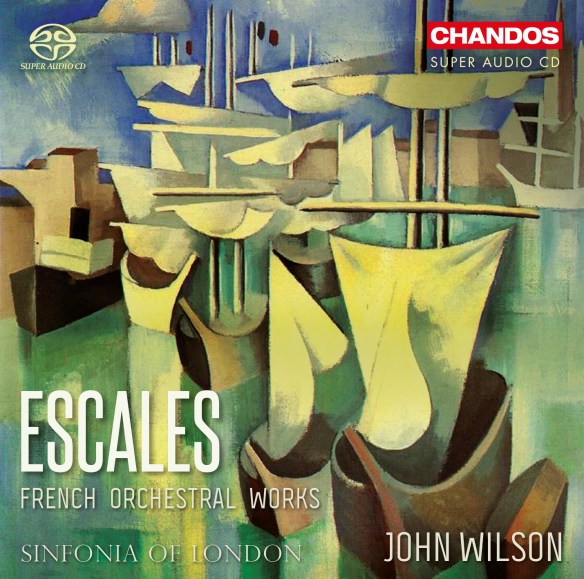
On record – Sinfonia of London / John Wilson – Escales: French Orchestral Works (Chandos)

Escales – French Orchestral Works

Chabrier España (1883)
Duruflé Trois Danses (1932)
Saint-Saëns Le Rouet d’Omphale Op.31 (1871)
Debussy Prélude a l’apres-midi d’un faune (1891-94)
Ibert Escales (1922)
Massenet Meditation from Thaïs (1894)
Ravel Rapsodie espagnole (1907-08)

Adam Walker (Debussy), Andrew Haveron (Massenet), Sinfonia of London / John Wilson

Chandos CHAN 5252 [78’19”]

Producer Brian Pidgeon
Engineer Ralph Couzens

Recorded 6-7 September 2019 (Trois Danses nos.1 & 3), 16-18 January 2019 (other works), Church of St. Augustine, Kilburn, London

Written by Ben Hogwood

What’s the story?

The Sinfonia of London, an orchestra from the 20th century given a new lease of life by conductor John Wilson, makes its second release for Chandos.

In fact we could term it as a series of Sinfonia of London buses, for you wait two decades and then two come along at once! The orchestra’s renaissance began with a stunning account of Korngold’s Symphony in F sharp last year, but now they turn their attention to France, and an imaginatively chosen program celebrating the elusive but immediately recognisable French orchestral sound.

What’s the music like?

A complete pleasure. Although irresistibly French, the music in the collection does remind us of the close bond between France and Spain, thanks to classics of the repertoire from Chabrier and Ravel and a relative rarity from Ibert.

Chabrier‘s España begins the collection and it is an absolute delight, a feel good piece given even more of a lift in this brilliant account. Wilson’s instincts for the stage come to the fore immediately, the bouncy rhythms and cheeky asides proving irresistible when presented with this much colour and warmth.

At the other end Ravel’s Rapsodie Espagnole is no less characterful. The atmospheric Prélude à la nuit ghosts in from silence, Wilson delighting in the orchestral textures and Ravel’s masterly sense of line. The persuasive rhythms of the Feria are expertly judged, the silky strings giving way as the music surges forward with terrific momentum.

Between these two gateposts are works of colour and élan. It is so good to see the inclusion of relative rarities in Duruflé’s Trois Danses, one of only two completed orchestral works in his output, and Ibert’s underrated Escales (Ports of Call) which gives the collection its name. The Duruflé sparkles in Wilson’s hands, violins caressing the longer melodies of the Divertissement, first dance of the three. Much of the composer’s relatively small output is for organ, which he effectively uses as his orchestra, but a persuasive Danse lente and thrilling Tambourin give us further proof of his prowess with large forces, harnessing the influence of Dukas. The latter features a particularly enticing saxophone solo, the recording indulging the colour and scope of Duruflé’s writing.

The Ibert, meanwhile, is a treat. Just over a minute into Escales‘ first movement, Palermo, there is what can only be described as a murmuration of violins, the music fluttering upwards in a bold sweep. Meanwhile Wilson secures a terrific drive to the description of the third ‘port’, Valencia, which ends with a flourish.

Before Escales comes a fresh faced account of Debussy’s Prélude a l’apres-midi d’un faune, the piece that effectively changed the face of music on the eve of the 20th century. Wilson and his charges capture the sense of newness, but also the enchanting and harmonies, with seductive playing from flautist Adam Walker. By contrast the Méditation from Thaïs, Massenet’s most famous orchestral excerpt, is more conventional. It could have felt misplaced here in terms of mood and musical language, but orchestra leader Andrew Haveron invests it with plenty of affection and never overdoes the romantically inclined melodies.

The packed release also finds room for a symphonic poem by Saint-Saëns. Le Rouet d’Omphale (The Spinning Wheel of Omphale) is a relatively early work and a great example of the composer’s melodic flair and ability for musical programming in thrall to Liszt. Wilson has its measure fully, pacing the music’s build ideally in arguably the finest modern recording since Charles Dutoit’s classic account with the Philharmonia in 1980.

Does it all work?

Yes. This is a brilliantly played and really well-chosen program, suiting both the curious listener and the familiar Francophile. What comes through most of all is the sheer enthusiasm and flair of the players, galvanized by Wilson in accounts that are both instinctive and incredibly well prepared.

From the opening notes of España it is immediately clear how this collection is going to go, and with the changes in mood suitably well planned and ordered – save arguably the Massenet – it is a listening experience you will want to return to often.

Is it recommended?

Wholeheartedly. This is music making as it should be, celebrating great orchestral music packed full of good tunes, instrumental colour and the ability to paint vivid pictures of its subjects. Wilson and his charges should be congratulated for an achievement which will surely land them with a glut of awards in the next few months – and only heightens the anticipation for their third release on Chandos, later this month, when they will return to Korngold for the Violin Concerto and String Sextet. In the meantime, make the most of this wonderful set of French fancies!

Listen

Buy

You can listen to clips from this disc and purchase a copy at the Chandos website here

On record – Louis Lortie, BBC Philharmonic Orchestra / Edward Gardner – Saint-Saëns: Piano Concertos 3 & 5 (Chandos)

Saint-Saëns
Rhapsodie d’Auvergne Op.73 (1884)
Piano Concerto no.3 in E flat major Op.29 (1869)
Allegro appassionato in C sharp minor Op.70 (1884)
Piano Concerto no.5 in F major Op.103 ‘Egyptian’ (1896)

Louis Lortie (piano), BBC Philharmonic Orchestra / Edward Gardner

Chandos CHAN 20038 [66’51”]

Producers Mike George and Brian Pidgeon
Engineer Stephen Rinker

Recorded 13 January 2018 (Rhapsodie d’Auvergne), 20 & 25 February 2019 (other works), Media City UK, Salford, Manchester

Written by Ben Hogwood

What’s the story?

This is the second installment of Saint-Saëns piano concertos from Louis Lortie, Edward Gardner and the BBC Philharmonic Orchestra. It completes the cycle of five they have been recording for Chandos.

Saint-Saëns’ Piano Concertos tend to be overlooked in the concert hall, with only occasional performances for no.2 and no.5, which was written in part during a holiday in Egypt. Their neglect is unfortunate, as there is much to enjoy as the pieces unfold. The demands on the solo pianist may be considerable, but the rewards outweigh the effort required for sure.

What’s the music like?

This new release offers the Piano Concerto no.3 in E flat major, still a relatively early work, where Saint-Saëns builds on the influence of Beethoven and Liszt to create a piece with memorable themes and unusual formal devices. We then move to his later period and the Piano Concerto no.5, the ‘Egyptian’. This is a daring piece in the sense that Saint-Saëns was not following the trend of modern music set by the post-Wagner composers, or the new sound worlds offered by Debussy and Ravel. Instead he was writing for the virtuoso pianist in a descriptive and positive sense – conventional but stretching the established ‘rules’ of the concertos. This piece is ultimately fun and packed with tunes, while asking the soloist to achieve some pretty difficult technical feats. There is a faint exoticism capturing the carefree mood of the composer on vacation.

Topping up the positive outlook are the Rapsodie d’Auvergne and the Allegro appassionato, both shorter pieces for piano and orchestra with a similarly sunny outlook. The Allegro appassionato has more drive, while the Rapsodie is a breezy piece for the great outdoors. As the booklet writer Roger Nichols observes, it is based on a tune the composer ‘heard sung by a peasant washing her clothes in a stream in the Auvergne. As such, it is possibly the only folksong from France that Saint-Saëns ever included in his music’.

Does it all work?

Yes. This is extremely positive music, celebrating the combination of piano and orchestra with a good deal of energy.

The concertos are nicely balanced. The better known Fifth, stacked high with good tunes, finds Ed Gardner keen to develop its exotic air with the lush textures of the BBC Philharmonic strings in the first movement. There is a dramatic salvo to begin the second movement, where Lortie gets the melodic inflections just right, then an exotic minimalist passage towards the end, cutting to a real flight of fancy into the finale. Lortie gets a terrific substance to the sound of the lower end of the piano.

The Piano Concerto no.3 if anything fares even better, its status elevated well above the derivative thanks to the stress on its memorable themes. There is a heroic air to the piano part that Louis Lortie develops very nicely, and his commanding performance gives the piece its essential forward drive.

The Rhapsodie d’Auvergne is a bubbly piece, starting softly but gaining ground during the development of its theme. There are brief connections with Brahms before an effervescent and watery sequence, with excellent work in the right hand from Lortie.
Meanwhile the Allegro appassionato is a red-blooded affair very much in the vein of Liszt, asking the soloist for a few feats of athleticism while remaining close to the composer’s melodic heart.

Is it recommended?

Yes. This is an ideal release for banishing any lingering winter blues! There may be some really good recordings around already of the concertos, thanks to Stephen Hough and the City of Birmingham Symphony Orchestra under Sakari Oramo (Hyperion), and looking further back the classic 1980s recordings made by Pascal Rogé and the London Philharmonic Orchestra with Charles Dutoit (Decca).

These sparkling new versions, beautifully recorded, offer a great deal of passion and panache, and at the very least take their place alongside the best..

Listen

Buy

You can listen to clips from this disc and purchase a copy at the Chandos website here

Wigmore Mondays: Tai Murray & Silke Avenhaus play Grieg, Philip Glass & Saint-Saëns

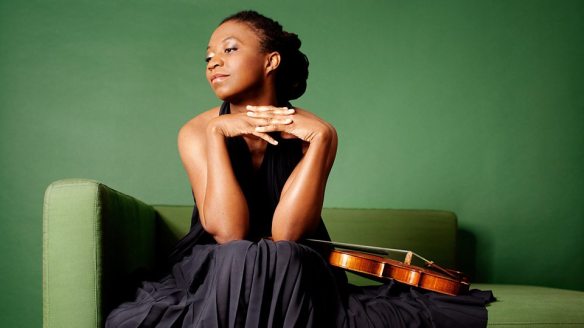
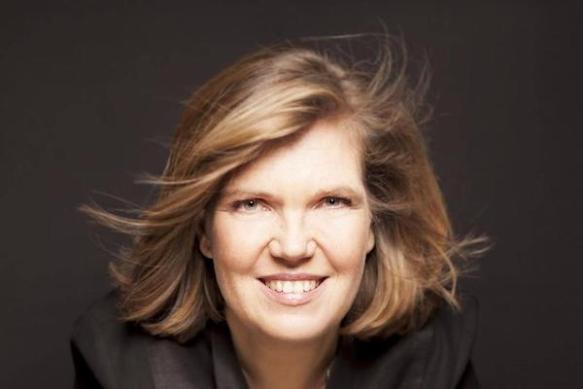
Tai Murray (violin, above); Silke Avenhaus (piano, below)

Grieg Violin Sonata no.2 in G major Op.13 (1867)
Glass Pendulum (2010)
Saint-Saëns Violin Sonata no.1 in D minor Op.75 (1885)

Wigmore Hall, London; Monday 26 November 2018

You can listen to the BBC Radio 3 broadcast by clicking here

Written by Ben Hogwood

This was an imaginative and invigorating recital from two instrumentalists at the very top of their game. It also brought forward two of the lesser lights in the violin and piano repertoire, giving exposure to composers for whom melody came naturally.

Edvard Grieg’s three sonatas for violin and piano are consistently rewarding. Three weeks previously at the Wigmore Hall we heard Aleksey Semenenko and Inna Firsova in the Violin Sonata no.3; now Murray and Avenhaus gave a passionate performance of its predecessor.

Of a largely sunny disposition, the Violin Sonata no.2 in G major is one of the first works to introduce home-grown folksong into the Norwegian composer’s output. Tai Murray seized the opportunity for drama with an assertive introduction, countering Silke Avenhaus’s thoughtful opening in the minor key (1:49). From 3:17 they moved to the first movement proper, enjoying the attractive, dance-like melodies in a bright exchange, though this was countered by a more reflective, minor-key theme (heard again at 8:19).

Grieg used this key for the slow movement, which began in dreamy, reflective mood (11:09). Soon however the violin was soaring higher and faster, before subsiding to a beautiful, airy second theme, back in the major key (12:47). The third movement once again suggested the outdoors with the piano drone (16:55) and another folksy melody, the violin stepping in exuberantly – and another dreamy episode from 19:02. After a recapitulation of the drone material at 20:18 Murray and Avenhaus led us to a grand coda, a passionate finish in a similar vein to the soon to be published Piano Concerto.

Philip Glass’s Pendulum, originally written for piano trio, appeared here in a duo version sanctioned by the composer. Even when Glass is at his most delicate, great demands are placed on the performers, especially when set the kind of athletic arpeggio figures Murray and Avenhaus had here (from 24:30). They responded with an energetic performance but also took great care with the subtleties of Glass’s writing at the start of the piece, with a steady tread on the lower notes of the piano. The nervous energy was never far from the surface, growing as the oscillations became ever wider, leading to a sweeping finish at 31:47.

The mystery that Saint-SaënsViolin Sonata no.1 is not more often performed is solved by its fiendishly difficult but utterly exhilarating finale. Until then, the work – completed in 1885 – had already made a strong impact, thanks to the composer’s clever grouping of the four movements into pairs of two, and the irregular but strangely effective phrasing of the melodies.

From the start of the first movement (34:02) Murray and Avenhaus set a tense, nervy atmosphere, the violin and piano shadowboxing each other. The second theme (35:37) was equally nervy, despite the flowing piano’s suggestions of the Organ symphony. The recapitulation in this dramatic movement reached a climax at 39:55 with some concerto-esque playing from the piano before the flowing theme returned, Saint-Saëns moving us seamlessly into the second movement (from 43:25)

This respite, a rather beautiful reverie, was broken by the third movement Scherzo (from 48:00), a throwback to the composer’s Danse macabre, with irregular phrases and the instruments mirroring each other again. There was a flowing trio section (from 49:58) but before long we were back to the Scherzo (50:58). Another seamless transition set up the finale (from 52:05), scampering out of the blocks with some remarkable playing from both players, responding to the technical demands with apparent ease and bringing back the second theme from the first movement in a beautiful passage of playing from 56:08. Then the music built for the final time, surging into the major key where a cascade of bells rang out from the piano (57:03), before the emphatic finish.

A terrific concert, this, with no need for an encore. At its best Saint-Saëns’ music can be breathtaking, and this was one such wholly enjoyable occasion!

Further listening

Tai Murray has yet to record any of the music played in this concert, but the playlist below contains some of the best available versions:

If you particularly enjoyed the Grieg, I wholeheartedly recommend a disc bringing together all three of the composer’s sonatas for violin and piano, played by Augustin Dumay and Maria-João Pires:

It remains a mystery as to why the Saint-Saëns sonatas are not performed more often. If you listen to the collection below you will find some persuasive accounts of the Second Violin Sonata, the Cello Sonatas and works for clarinet, oboe and bassoon:

Ask the Audience at the BBC Proms – Jamie Sellers on the Royal Philharmonic Orchestra playing Saint-Saëns ‘Organ’ Symphony, Lalo & Falla

For the latest in Arcana’s Ask The Audience series Jamie Sellers gives his verdict on the Royal Philharmonic Orchestra’s Prom of French and Spanish music.

Prom 40: Stéphanie d’Oustrac (mezzo-soprano), Joshua Bell (violin), Cameron Carpenter (organ), Royal Philharmonic Orchestra / Charles Dutoit

Falla El amor brujo (1914-5)

Lalo Symphonie Espagnole (1874)

Saint-Saëns Symphony no.3 in C minor Op.78 (1886)

Royal Albert Hall, Thursday 17 August 2017

You can listen to this Prom on the BBC iPlayer here

ARCANA: Jamie, how would you describe your musical upbringing?

Lots of early exposure to my elder sibling’s 1960s pop records, which they kindly left behind minus covers when they left home. At the age of seven I started to buy vinyl singles, and that was around 1972, the glam rock era. For two or three years I was listening to exclusively white rock and pop records, and it was only sometime later that I started to listen to any other music.

Did you have any exposure to classical music early on?

None whatsoever! I’m not sure what my first exposure to classical music would have been, knowingly – probably the popular classics that I would hear on TV ads, such as Carl Orff selling Brut 33 or cheap wine! For a long time – and I suspect this is true for a lot of people – you would hear only a minute or two of a much longer piece that had become famous, and those pieces would be marketed as such. You would be able to go to a petrol station and buy a ‘best of classical’ or something like that.

With your love of film, did you almost come into a lot of music that could be described as classical through soundtracks?

Yeah, definitely. Before I was even teenager I would be listening to the John Barry James Bond soundtracks, and the Ennio Morricone Spaghetti Western soundtracks. I would think what amazing music it was, but it wasn’t pop music of that era, it was obviously informed by something else. It was only much later when I started to buy soundtracks, and listened to 40 minutes of music that was just a series of cues for a film, some of which were quite ambient and instrumental and others which were hooky, almost pop-classical, that I started to listen to music in that way. I started to listen to Bernard Herrmann and Lalo Schifrin, and similar people. I got the impression that most of them were frustrated classical composers who got sidelined into making film music!

Could you name three musical acts you admire, and say why you admire them?

Off the top of my head, I would say The Beatles, Bobby Bland and Hank Williams, because they all came from different aspects of popular music and were very ground breaking in their own way, whether it be in pop music – The Beatles – or country music – Hank Williams – or blues in Bobby Bland. They all made music that has been hugely influential to subsequent generations.

Turning to the Proms, how would you describe your experience tonight?

It wasn’t totally alien to me, because I have been to a number of orchestral events, usually with the soundtrack composers involved and occasionally pop performers with orchestra. To listen to a piece for half an hour or 45 minutes that is a considerably classical piece is quite different I suppose, and when you don’t know that work as well. It was mixed overall, but I really enjoyed the first piece, with what little I knew about it! I knew Manuel de Falla the name, and knew that he had something to do with flamenco. I love a lot of Spanish music and knew that he was one of the forefathers of Spanish music. Listening to it I couldn’t hear much of that, but if I was looking for references I would …I could hear a few undercurrents of Miles Davis’s Sketches of Spain, which is probably a very broad brush to paint it with (ed – Jamie has identified the use of Will o’ the Wisp, one of the movements in the ballet, on the album).

The second piece with the violin lead I struggled with. Obviously Joshua Bell was brilliant, and everyone was brilliant, but it didn’t do a lot for me. It struck me that at the end of each movement the music petered out in an almost accidental fashion. It wasn’t until the end of the third part that it had a very definite ending, which incidentally was my favourite part of the piece. The first two parts just seemed to end in a very sudden fashion which I found a bit strange. I didn’t get on with that too well.

I wondered what the etiquette was, whether we were supposed to stay quiet for the whole performance or whether we could clap at the end of each movement, because it happened after the third movement of this piece. It’s a bit like going to a play for the first time and clapping at the end of each act, or do you wait until the end of the play?

What did you think of the Saint-Saëns?

It wasn’t quite what I expected! It’s funny, the name and the most famous theme or melody from that piece that appears in the Babe film, sung by some mice, I knew it was a pop record before that as well, a really sentimental song that was a strong ballad (If I Had You). I really enjoyed most of it, it was melodically very accessible I thought, as was the Falla. I think if I was going along to hear some classical music for the first time I might try this because most of it was very accessible, and at one point when the music really picked up it really soared a few minutes in. I was watching two banks of strings either side of the conductor, and they looked like rowers on a slave ship or something. It was visually impressive. I thought the organ would be all-encompassing but it didn’t dominate the piece as much as I expected it to.

Thinking of your experience of the Proms, what appealed to you about the visit?

The fact that we were in the stalls area and people were standing, and it was a very mixed audience, it felt much more accessible than I was expecting – I thought it would be more elitist than that. That was good.

Would you change anything about the experience?

Apart from the bar prices?! I don’t think I would change anything particularly – maybe something in the way of an introduction, but then everything was covered in the brochure we had anyway.

Would you consider going again?

Definitely, yes.

Verdict: SUCCESS