Earlier this week we learned of the sad news of the death of Amelia Freedman. In a post on their website, the Nash Ensemble describe Amelia as their “creator and guiding light”, with “an extraordinary gift for creative programming that was appealing as well as broadening musical horizons”. In their obituary of Amelia, the Daily Telegraph described her as “the most influential British classical music impresario of the late 20th century”.
Her work bore fruit both in the concert hall, through the Nash Ensemble’s long relationship with Wigmore Hall that began in 1967, and a long recording career that is noted for its inventiveness and high performing standards.
The discography below is just a hint of what the Nash Ensemble have achieved on record, including a work by Amelia’s good friend, the late Sir Harrison Birtwistle, as well as the String Trio by David Matthews, which he dedicated to Freedman. Also included are a recent recording of Debussy’s Sonata for Flute, Viola and Harp, a pioneering recording of the attractive Nonet by Sir Arnold Bax, and the vibrant Piano Quartet in B flat major by Saint-Saëns:
Marie-Christine Zupancic (flute), Sebastian Heindl (organ), City of Birmingham Symphony Orchestra / Kazuki Yamada
Berlioz Le Corsaire Op.21 (1844) Takemitsu I Hear the Water Dreaming (1987) Respighi I Fontane di Roma P106 (1916) Saint-Saëns Symphony no.3 in C minor Op.78 ‘Organ’ (1886)
Symphony Hall, Birmingham Wednesday 4 June 2025
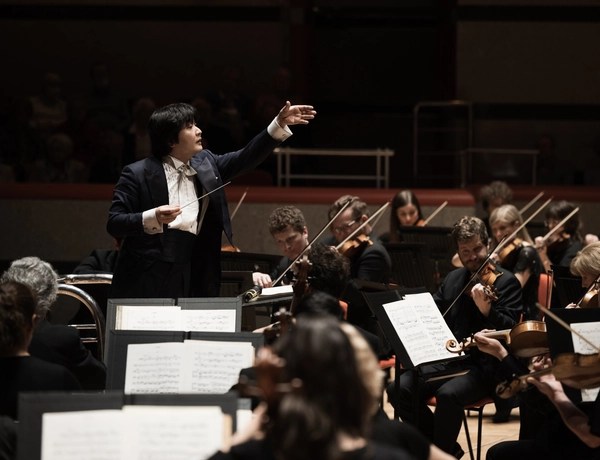
Reviewed by Richard Whitehouse Picture of Kazuki Yamada (c) Benjamin Ealovega
The dashing upsurge at the start of The Corsair launched this evening’s concert by the City of Birmingham Symphony Orchestra under its music director Kazuki Yamada in fine style. Nor was the pathos in this last of Berlioz’s concert overtures downplayed, and if the main portion lacked the pizzazz of illustrious predecessors, Yamada’s handling of the apotheosis proved an object-lesson in controlled spontaneity – setting the seal on a fine account of a piece that long -standing attendees will recall as a favourite of one-time principal conductor Louis Frémaux.
The music of Tōru Takemitsu was often heard in the era of Simon Rattle, but not I Hear the Water Dreaming. Taking its cue (along with other works of this period) from the ‘Dreamtime’ tradition of Aboriginal art, here a painting from the Papunya region of Western Australia, this short though eventful piece typifies its composer’s final creative phase – the formerly radical tendencies from previous years not so much disowned as finding an accommodation with the impressionist leanings of his earliest maturity. A sonic canvas, moreover, against which solo flute pursues its capricious course, with only a hint of something more confrontational either side of the cadenza-like passage towards its close. Certainly, this was music to which Marie-Christine Zupancic (taking time out as the CBSO’s first flute) sounded unerringly attuned.
CBSO regulars will recall Yamada presenting the whole of Respighi’s ‘Roman Triptych’ at a memorable concert four years ago. Tonight, Fountains of Rome rounded off the first half in a performance at its best in the effervescence of Triton at Morning or the dazzling majesty of Trevi at Midday, fading as if suspended in the Symphony Hall ambience. If Valle Giulia at Dawn felt a little passive in its allure, the enfolding serenity of Villa Medici at Sunset was fully sustained – the delicacy and suppleness of its entwining melodic lines accorded full rein.
The CBSO has been identified with Saint-Saëns’s Organ Symphony since Frémaux’s lauded recording of half-a-century ago, and it remains a work in which this orchestra excels. Yamada was (rightly) intent on stressing its symphonic cohesion, drawing ominous expectancy from the first part’s introduction and building no mean momentum in its ensuing Allegro. Sebastian Heindl’s hushed entry duly set the tone for a raptly eloquent slow movement, measured while never sluggish as it headed toward its heartfelt climax then on to a coda of bittersweet repose.
There was no lack of incisiveness or humour in the scherzo which opens the second part – its scintillating passagework for piano duet artfully integrated into the orchestral texture, with an ideally paced link into the finale with its indelible main melody and methodical build-up to a majestic peroration. Those thunderous initial chords aside, Heindl made less of an impact than might have been expected, but his always resourceful choice of registrations underlined the extent to which both he and Yamada continually had the ‘bigger picture’ uppermost in mind.
Overall, then, a concert which manifestly played to this orchestra’s collective strengths. The CBSO is back next week with its former music director Mirga Gražinytė-Tyla for what will be only a second UK performance, 63 years after the first, for Weinberg’s Fifth Symphony.
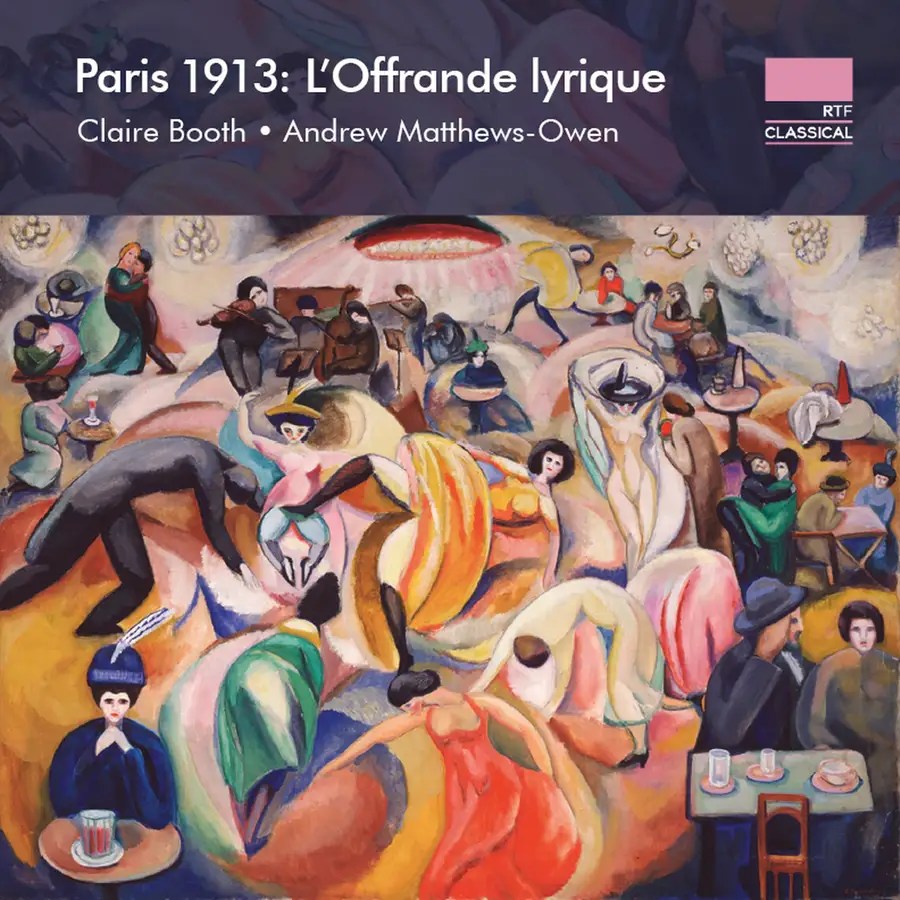
Caplet En regardant ces belles fleurs Milhaud L’innocence Op. 10/3 Hahn À Chloris Ravel arr. Stravinsky Trois poèmes de Stéphane Mallarmé M64 Auric Trois Interludes: Le pouf. Ropartz La Route Durey L’Offrande lyrique Op. 4 Saint-Saëns Petit main Op.146/9 Fauré Il m’est cher, Amour, le bandeau, Op. 106/7 Chaminade Je voudrais être une fleur Debussy Trois poèmes de Stéphane Mallarmé L127 Satie ed. Dearden Trois Poèmes d’Amour Lili Boulanger Clairières dans le Ciel: Vous m’avez regardé avec votre âme Grovlez Guitares et mandolines
Claire Booth (soprano), Andrew Matthews-Owen (piano)
Nimbus RTF Classical NI6455 [66’23”] French texts included Producer & Engineer Raphaël Mouterde
Recorded 11/12 March, 4-6 September 2023 at Wyastone Concert Hall, Monmouth
Reviewed by Richard Whitehouse
What’s the story?
Another enterprising song recital from Claire Booth and Andrew Matthews-Owen, this one focussing on songs that were either conceived, composed or premiered in Paris during 1913 and resulting in an absorbing collection best heard as a diverse while unpredictable totality.
What’s the music like?
Interleaving standalone songs and song-cycles, this recital opens with André Caplet’s take on Charles d’Orléans, its limpid modality highly appealing, then continues with an early song by Darius Milhaud as already demonstrates his distinctive and amusing approach to word-setting, while that by Reynaldo Hahn typifies the teasing charm familiar from his vocal music overall. Maurice Ravel’s triptych to texts by Mallarmé is performed in a version by Stravinsky with its accompanying nonet reduced to piano which, in preserving and maybe even accentuating the music’s questing introspection, represents no mean fete of transcription. Still relatively little known, this certainly deserves to be heard as at least an occasional alternative to the original.
Remembered best as a prolific writer of film scores, Georges Auric had shown a precocious talent for song as is evident in his sensuous setting of René Chalupt. A composer who often wrote on a symphonic scale, Guy Ropartz is heard in a setting of his own verse that amounts to a ‘scena’ in its wide expressive ambit. Interest understandably centres on the eponymous cycle by Louis Durey, a member of Les Six whose increasingly far-left conviction tended to marginalize his creativity yet, as these lucid and empathetic settings of Rabindranath Tagore (as translated by André Gide) confirm, had emerged as a protean talent by his mid-twenties. Hopefully these artists will be encouraged to investigate other of his songs from this period. By contrast, a late song by Camille Saint-Saëns exudes a touching poignancy, while that by Gabriel Fauré typifies the elusiveness of those in his last decade. As is evident here, Cécile Chaminade was a songwriter of style and elegance, then the Mallarmé triptych by Debussy (its first two texts identical to those of Ravel) finds this composer probing the inscrutability of these poems while drawing back from any more explicit intervention. The inscrutability conveyed by Erik Satie’s aphoristic settings (edited by Nathan James Dearden) of his own texts is altogether more playful – after which, the recital continues with a pensive offering by Lili Boulanger, with Gabriel Grovlez’s sultrily evocative setting of Saint-Saëns to finish.
Does it all work?
Yes, given the fascination of this collection taken as a whole and, moreover, the quality of these renditions. Booth is not a singer willing to take the easy option in her interpretations, and so it proves here with singing as fastidious as it is refined, while Matthews-Owen duly instils often deceptively spare accompaniments with understated insight. They contribute a succinctly informative note, but the booklet includes only the French texts with the English translations available at https://rtfn.eu/paris1913/: might it have best the other way round?
Is it recommended?
Very much so. There is much to fascinate even those who consider themselves afficionados of the ‘chanson’, and those who are unfamiliar with much of this repertoire could not have a better means of acquainting themselves with certain of its treasures – hidden or otherwise.
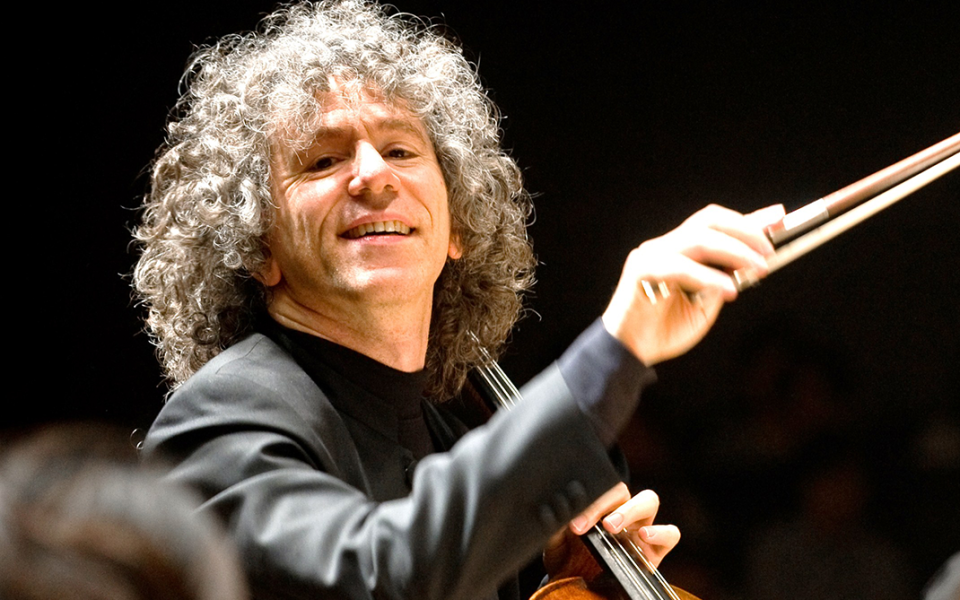
Steven Isserlis (cello) – with Joshua Bell, Irène Duval (violins), Blythe Teh Engstroem (viola), Jeremy Denk, Connie Shih (pianos)
Fauré Violin Sonata no.1 in A major Op.13 (1875-6) Saint-Saëns Piano Trio no.2 in E minor Op.92 (1892) Ysaÿe Solo Violin Sonata in D minor Op.27/3 ‘Ballade’ (1923) Fauré Piano Quintet no.2 in C minor Op.115 (1919-21)
Wigmore Hall, London Sunday 3 November 2024
Reviewed by Richard Whitehouse Picture (c) Joanna Bergin
This third instalment of the Wigmore Hall’s journey through Fauré’s larger chamber works, as overseen in typically understated fashion by Steven Isserlis, took in works from (almost) either end of this composer’s output alongside pieces by two very different contemporaries.
It was Joshua Bell’s recovering illness that brought a switch in programme such that tonight began with the First Violin Sonata which established Fauré’s reputation and remains among his best-known works (also the only one of these pieces in a major key). The melodic verve of its initial Allegro responded well to Bell’s tonal warmth, despite marginal loss of focus as the development ran its cumulative course, then the Andante lacked little in lyrical intimacy nor the scherzo in nimble dexterity. That the final Allegro felt less than animated (not much evidence of ‘quasi presto’) was understandable in context and, even if it meant rounding off this performance with less than ideal decisiveness, there could be no doubting the sense of epiphany as its main theme returns transformed for an apotheosis of heightened eloquence.
At a time when Fauré was grappling with the implications of what became his Second Piano Quintet, Saint-Saëns was writing his no less substantial Second Piano Trio with relative ease. Its stylistic retrenchment is not hard to discern, witness the opening movement’s prolonged and ultimately doomed struggle to break free of a main theme riven with doubt and anxiety. Tensions relax appreciably in the sequence of middle movements – a lithe and ingratiating Allegretto, an Andante of ‘song without words’ lyricism, then a Grazioso with more than its touch of quixotic humour – during which, interplay between Bell, Isserlis and Jeremy Denk was at its most felicitous. Returning to weightier issues, the finale takes in some intensively contrapuntal passages prior to a conclusion whose headlong impetus came to the fore here.
After the interval came the third of Ysaÿe’s solo sonatas – the Ballade dedicated to Enescu but, as Bell pointed out, premiered by his teacher Josef Gingold who had been the last pupil of its composer; its ‘introduction and allegro’ format incisively delineated on this occasion.
Thence to Fauré for his Second Piano Quintet. Although written relatively quickly compared to its predecessor, it is no less fastidious in content or elusive in character – witness the initial movement whose harmonic subtlety is accentuated by the flexibility of its rhythmic contours, which latter aspect comes to the fore in a scherzo whose angularity betrays more than a touch of malevolence. Is there a more consummate instance of this composer’s art than its Andante? Once characterized as a synthesis between Beethoven and Wagner, it exudes a transcendent calm entirely its own in which the eloquence of Irène Duval and Blythe Teh Engstroem added appreciably to the underlying affect. If the finale is less remarkable, it injects an impetus that propelled the work to a headily affirmative close which was conspicuous by its presence here. An impressive performance of a masterpiece that, while it will never achieve in popularity what it has in respect, could never seem other than communicative when realized with this empathy – something that should be no less evident in the remaining concerts of this series.
You can watch the concert below, thanks to the Wigmore Hall YouTube channel:
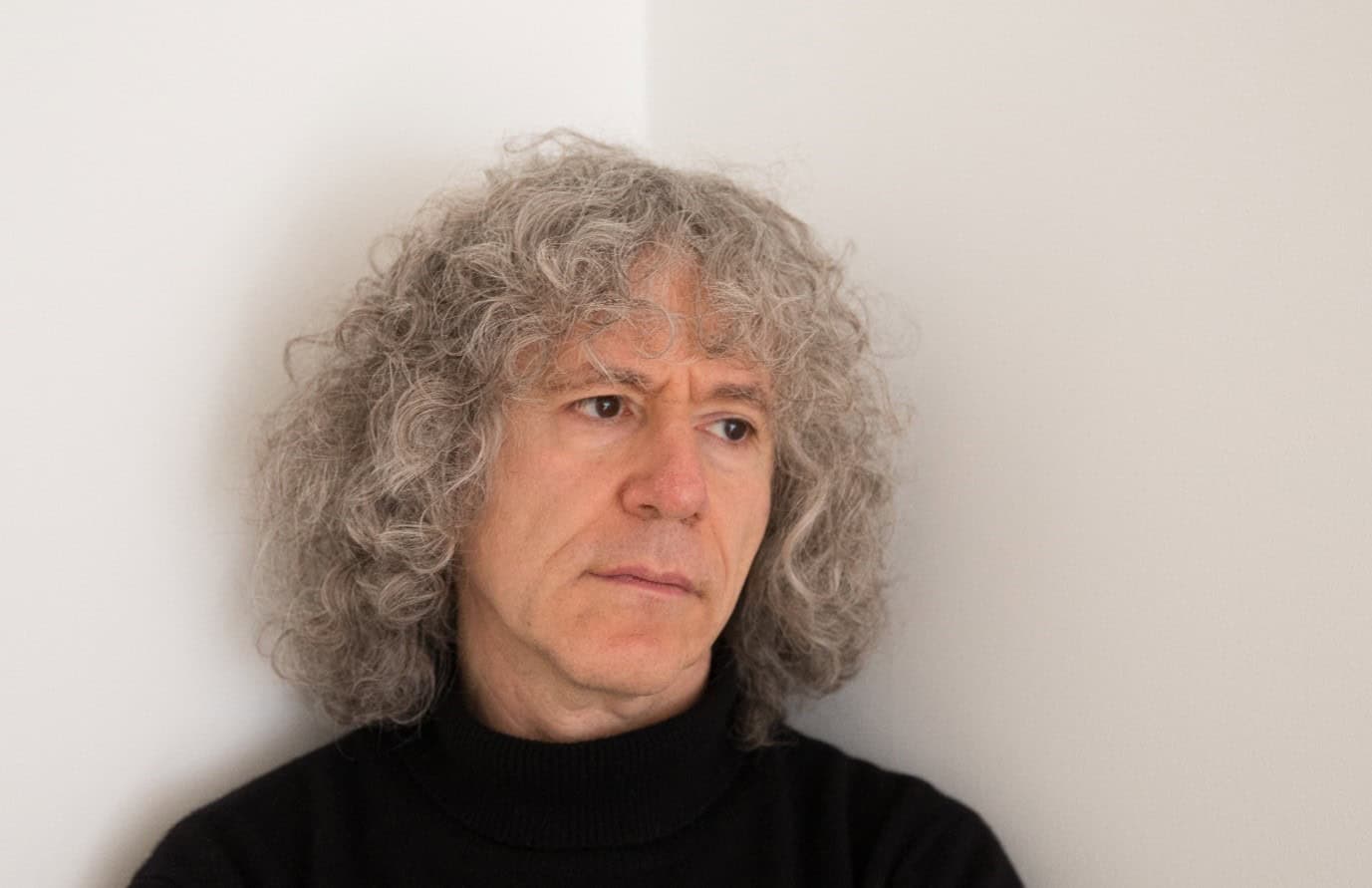
Steven Isserlis (cello), Joshua Bell, Irène Duval (violins), Blythe Teh Engstroem (viola), Jeremy Denk, Connie Shih (pianos)
Fauré Violin Sonata no.2 in E minor Op.108 (1916-7) Saint-Saëns Piano Trio no.1 in F major Op.18 (1863) Nadia Boulanger 3 pièces for cello and piano (1914) Fauré Piano Quartet no.1 in C minor Op.15 (1876-9, rev. 1883)
Wigmore Hall, London Friday 1 November 2024
Reviewed from the online stream by Ben Hogwood Photo (c) Satoshi Aoyagi
As the saying goes, the best laid plans of mice and men often go awry. And so it was that this five-part festival at the Wigmore Hall, two years in the planning to mark 100 years since the death of Gabriel Fauré, was compromised by bad fortune that had violinist Joshua Bell suffering from sickness, unable to perform the first work on the programme.
Yet, as cellist and curator Steven Isserlis announced from the platform, there was a silver lining, thanks to Irène Duval – who stepped in to head the Violin Sonata no.2, programmed instead of its predecessor. Thus we heard the first chamber work of the French composer’s celebrated late period, dating from the middle of the First World War, when Fauré had lost his hearing and his son Philippe had been sent to the frontline. Not surprisingly the sonata is invested with concentrated feeling, brought straight to the surface by Duval’s searching tone and Connie Shih’s assertive piano, both fully inside the music. The first movement found brief consolation in its third principal theme, though this was a brief respite in music of passionate and occasionally fraught discourse. The second movement was initially bittersweet in these hands but more obvious serenity was achieved in the long melody of the second theme, beautifully phrased by Duval. The finale, where Fauré finds positivity in the face of his troubles, was sunlit in these hands, with a thoroughly convincing surge to the finish.
Rewinding just over 50 years, we heard music from Fauré’s teacher and long time friend Saint-Saëns – his first major chamber work. The Piano Trio no.1 is full of charm and good humour, and the trio of Shih, Duval and Isserlis enjoyed the cross rhythms of the first movement. Shih met the demands of the composer’s inevitably tricky piano part head on, with some sparkling passages in the right hand. The captivating second movement took us outside, evoking the French mountain regions with a memorable folk-derived theme, recounted by the strings in a solemn unison. Contrasting with this was the light-footed Scherzo, the players enjoying Saint-Saëns’ playful syncopations, and the confident finale, surging forward with a conviction confirming the composer would have many more such moments in his compositional career. The players’ enjoyment was abundantly clear.
After the interval came music from Fauré’s pupil Nadia Boulanger, usually renowned as a teacher but increasingly recognised as an accomplished composer. The 3 Pièces for cello and piano fully deserve their more frequent airings in concert halls today, for they are brilliantly written and full of originality. Isserlis enjoyed the singing high register of the Modéré, its melody gradually descending to ground like a butterfly. The two players enjoyed the canon of the second piece before the bold outlines of the quickstep third, a little prophetic of Debussy’s Cello Sonata a year later. Isserlis and Shih were brilliant throughout.
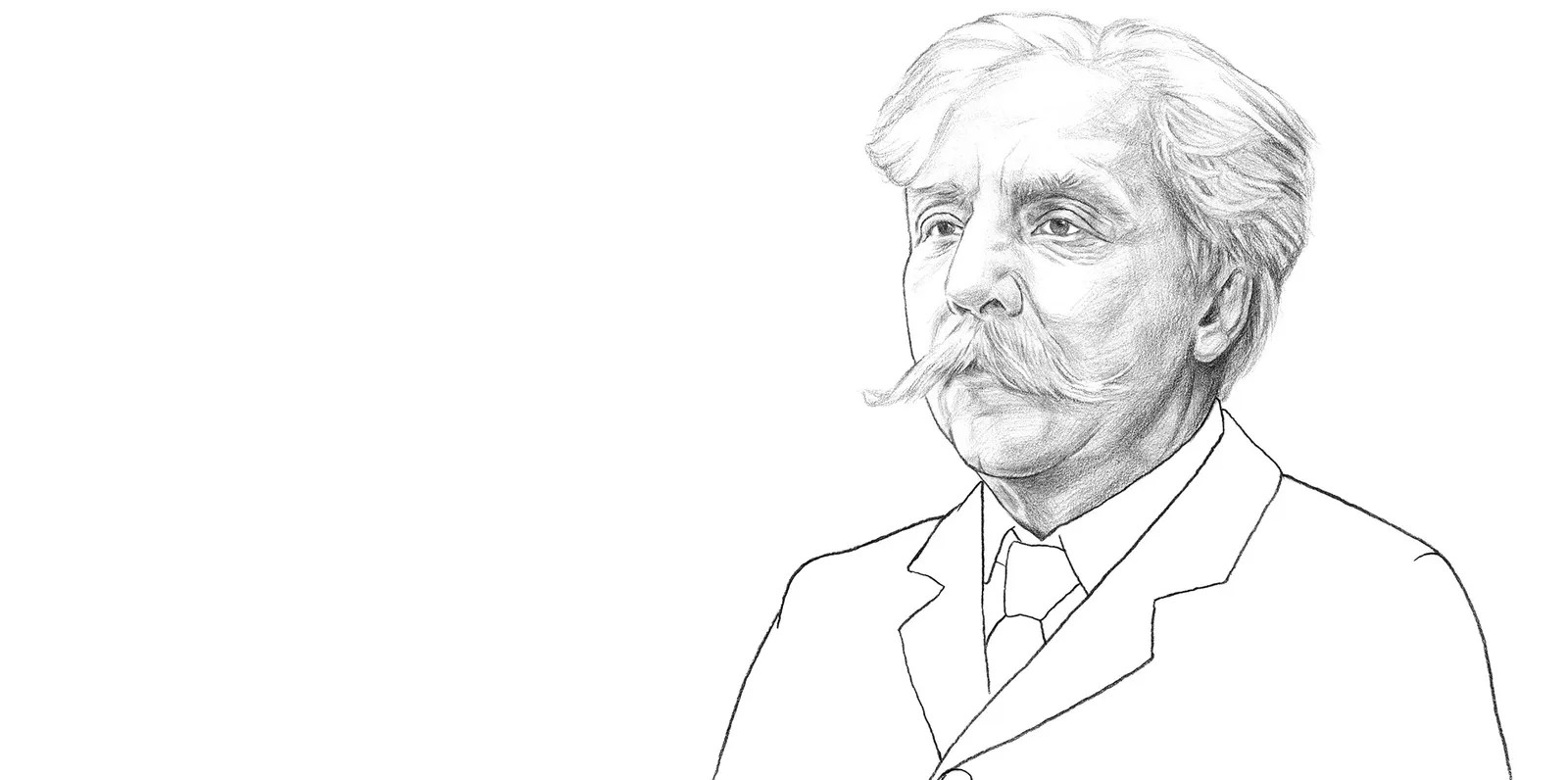
The Piano Quartet no.1 in C minor is one of Fauré’s (above) best-loved works, though it experienced a turbulent composition period in the wake of the dissolution of the composer’s engagement. This is however rarely evident in the music, constructed with elegance and control – though there is plenty of room for expression, as the four players found here.
The first principles of chamber music were on show from the start – for this quartet were playing as one, very much a team rather than a collection of soloists. Such a quality is of great importance in Fauré, his music often containing long and thrilling melodies such as that found at the outset, beautifully played.
Joshua Bell showed commendable energy in spite of his ill health, his sweeter violin tone complemented by Jeremy Denk’s authoritative piano playing, the burnished tone of Blythe Teh Engstroem’s viola and Isserlis’ cello, with lovingly phrased melodies as part of the all-important counterpoint. The syncopations of the second movement, one of Fauré’s calling cards, were deftly handled by the trio and brilliantly led by Denk, the players watching each other closely. Meanwhile the Adagio found time for contemplation, laden with sadness but with an enduring brightness led by Bell’s brighter tone.
The finale found renewed strength in its assertive unison themes, winning through to a thrilling and jubilant finish in spite of the occasional shadow cast in the quieter passages. The closing flourish put the seal on a wonderful first concert which bodes well for the series, providing – as Isserlis said – that the players stay in good health. Should they do so a whole series of treats await.

 Arcana.fm