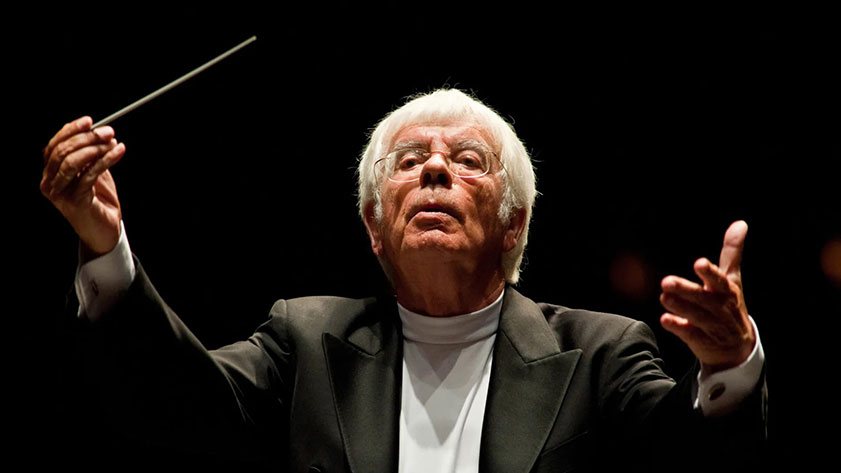
Last week we learned the sad news of the death of conductor Helmuth Rilling, at the age of 92. An obituary can be found at the New York Times website
Rilling will forever be closely associated with the music of Johann Sebastian Bach, becoming the first conductor to record all of his cantatas in a project begun in October 1969 and completed on the occasion of Bach’s 300th anniversary in 1985. The results were released on the German label Hänssler, and immediately won the ‘Grand Prix du Disque’.
In honour of Rilling’s achievements, this Tidal playlist comprises his recordings of three Bach cantatas written for the Sunday before Lent – falling today – and excerpts from works he commissioned for Passion 2000, marking the 250th anniversary of Bach’s death, from the composers Tan Dun, Osvaldo Golijov, Wolfgang Rihm and Sofia Gubaidulina
by Ben Hogwood picture courtesy of United Archives
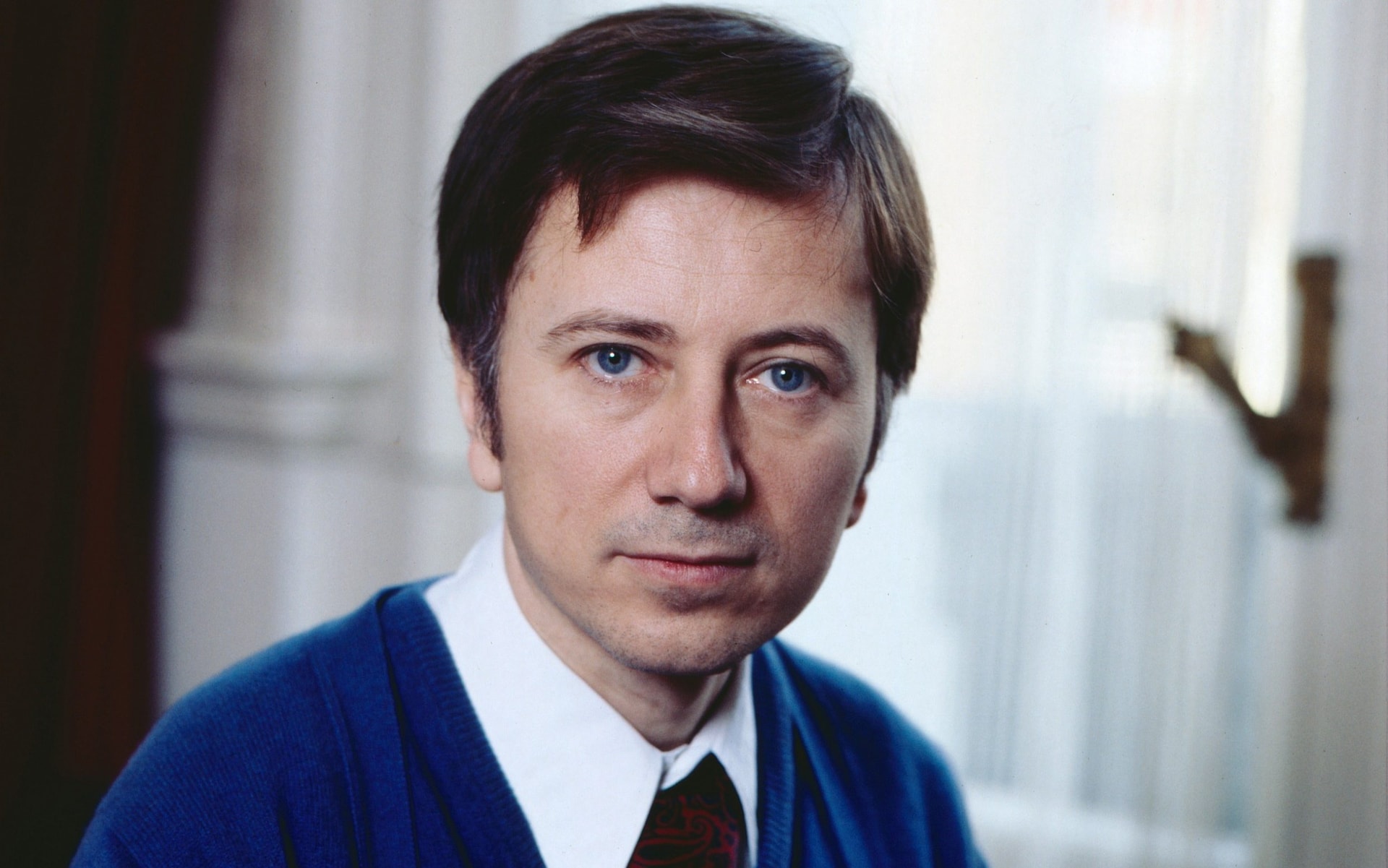
Last week we learned the sad news of the death of Hungarian pianist and conductor Tamás Vásáry, at the age of 92.
More details about Vásáry’s accomplishments can be found in an obituary at Classical Music Daily
Vásáry made many fine recordings as a pianist, with his exploits in Chopin, Liszt and Rachmaninov especially noteworthy, while as a conductor he enjoyed nearly a decade with the Bournemouth Sinfonietta, yielding imaginative albums looking at the music of Respighi, Honegger and Martinu.
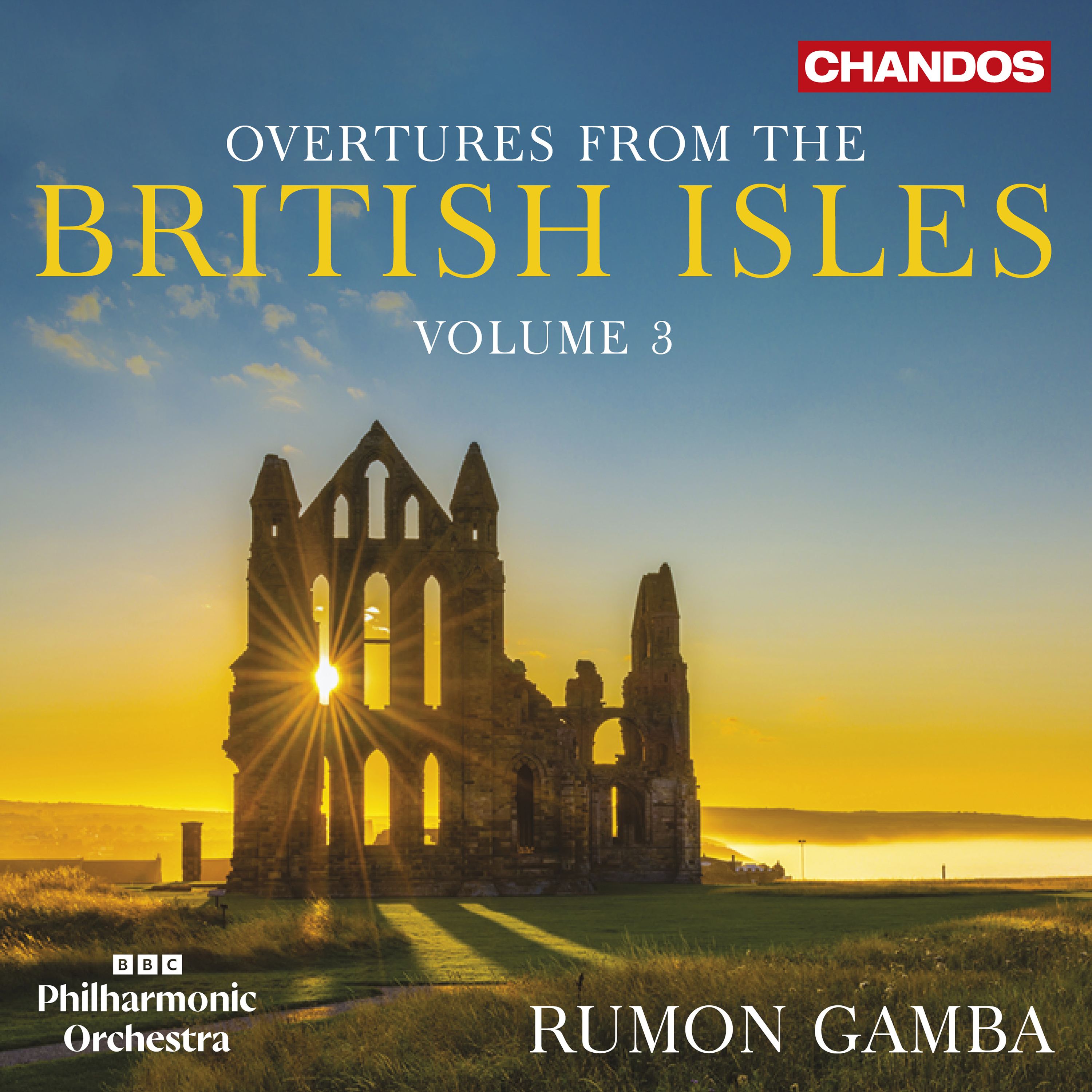
Arnell The New Age, Op. 2 (1939) Brian The Tinker’s Wedding (1948) Bridge Rebus H191 (1940) Britten orch. Colin Matthews Overture to ‘Paul Bunyan’ Op.17 (1941) A. Bush Resolution Op.25 (1944) G. Bush Yoric (1949) Fenby Rossini on Ilkla Moor (1938) Jones Comedy Overture (1942) Orr The Prospect of Whitby (1948) Parker Overture to ‘The Glass Slipper’ (1944) Rawsthorne Street Corner (1944)
Chandos CHAN20351 [77’20’’] Producer Jonathan Cooper Engineer Stephen Rinker, Philip Halliwell
Recorded 23 May (Arnell, Brian, Britten, G. Bush, Rawsthorne), 20 November (Parker), 21 November 2024 (Bridge, A. Bush, Fenby, Jones, Orr) at MediaCityUK, Salford, Manchester
Reviewed by Richard Whitehouse
What’s the story?
Chandos continues its series devoted to British Overtures with the third instalment featuring three first recordings among those eleven works which, between them, demonstrate just how significant to British concertgoing was this now neglected genre throughout the inter-war era.
What’s the music like?
The album gets off to a cracking start with The Tinker’s Wedding – Havergal Brian’s overview of a play by J. M. Synge, by turns uproarious and ruminative, that duly launched his abundant Indian Summer. After this, Geoffrey Bush’s Yorick cannot help sounding well-behaved if with sufficient expressive contrast for an evocative portrayal of Shakespeare’s hapless jester. In his detailed booklet note, Lewis Foreman describes Alan Rawsthorne’s Street Corner as ‘‘largely forgotten’’, which is a pity given its vivid conjuring of time and place has dated as well as the best Ealing Comedy. If Daniel Jones’ take on its subject may be less memorable, his Comedy Overture exudes more than enough humour and intrigue to make its acquaintance worthwhile.
Frank Bridge’s last completed work, Rebus was unheard for decades after its premiere but this third recording confirms it as a minor masterpiece and the finest of all these pieces – not least as an object-lesson in being accessible without diluting individuality. Robin Orr first attracted attention with The Prospect of Whitby, and his bracingly resourceful evocation of the London pub should not have waited so long for its recording. Richard Arnell was clearly out to make a statement of intent with The New Age, which generates real energy between imposing outer sections. Benjamin Britten might not have intended to preface his operetta Paul Bunyan with an overture but, as realized by Colin Matthews, it leaves a pleasing if anonymous impression.
Far more personality is conveyed by Alan Bush in Resolution, derived from an earlier piece for brass band and which continues that dialectical facet evident in much of his earlier music through its contrapuntal dexterity. There could be no greater contrast than The Glass Slipper, Clifton Parker’s overture to Herbert and Eleanor Farjeon’s ‘fairy tale with music’ that found success as a Christmas Matinee in London’s West End. Most appealing for its slightness and knowingly fey charm, it ideally complements Rossini on Ilkla Moor – Eric Fenby’s ingenious homage to the Italian master which came about through (deliberate?) misunderstanding only to enjoyed frequent performance, and which entertainingly rounds off the present collection.
Does it all work?
Yes, whether in terms of the overtures heard individually and a continuous overall sequence. Those who have acquired those previous volumes (or Chandos’s two issues of British Tone Poems) will recall that Rumon Gamba favours predominantly swift tempos and so it proves here, though there is never a sense of this music unnecessarily being rushed, while the BBC Philharmonic is more than equal to the often considerable technical demands of each piece. None of those overtures previously recorded can surely have emerged so effectively as here
Is it recommended?
Indeed it is. The continued absence of overtures from the programmes of most UK orchestras means such pieces have little chance of reaching a new public other than with recordings, and there could be no greater incentive to get to know them than through a collection such as this.
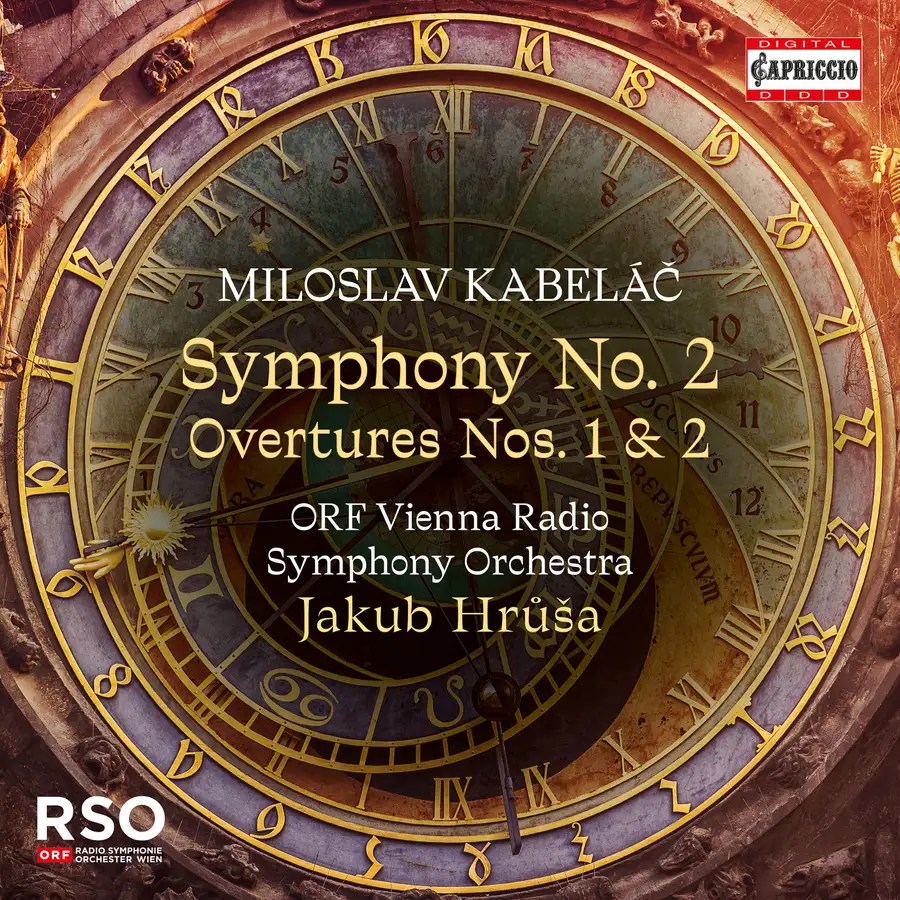
Kabeláč Symphony no.2 in C major Op.15 (1942-6) Overture no.1 Op. 6 (1939) Overture no.2 Op.17 (1947)
Capriccio C5546 [54’51’’] Producer Erich Hofmann Engineer Freidrich Trondl
Recorded 14-16 June 2023 (Symphony), 17 June 2024 (Overtures) at Konzerthus, Radio Kulturhaus, Vienna
Reviewed by Richard Whitehouse
What’s the story?
Capriccio continues its exploration of paths less travelled with a collection of early orchestral works from the Prague-based composer Miloslav Kabeláč (1908-79), all persuasively realized by the ORF Symphony Orchestra of Vienna while authoritatively conducted by Jakub Hrůša.
What’s the music like?
Although his output made little headway outside his native Czechoslovakia over his lifetime, with its dissemination subject to considerable restrictions imposed by those authorities either side of the Dubček era, Kabeláč has belatedly been recognized as a major figure from among the European composers of his generation. The three pieces featured here give only a limited idea of those radical directions that his music subsequently took, though a distinct personality is already evident such that they afford a worthwhile and rewarding listen in their own right.
His first such work for full orchestra, the Second Symphony occupied Kabeláč throughout the latter years of war and into a peace whose promise proved but fleeting. Uncompromising as a statement of intent, the first of its three movements unfolds from an imposing introduction to a sonata design as powerfully sustained as it is intensively argued. Beginning then ending in elegiac inwardness, while characterized by an eloquent theme for alto saxophone, the central Lento builds to a culmination of acute plangency. It remains for the lengthy finale to afford a sense of completion, which it duly does with its methodical yet impulsive course towards an apotheosis whose triumph never feels contrived or overbearing. Successfully heard in Prague then at the ISCM Festival in Palermo, the piece endures as a testament to human aspiration.
This recording is neatly and appositely rounded out with the brace of overtures Kabeláč wrote on either side of the symphony (neither of which appears to have been commercially recorded hitherto). Written in the wake of the Nazi’s invasion of Czechoslovakia, the First Overture is a taut study in martial rhythms whose provocation could hardly have been doubted at its 1940 premiere. Eight years on and the Second Overture is no less concise in its form or economical in its thematic discourse, while exuding an emotional impact which doubtless left its mark on those who attended its 1947 premiere and seems the more poignant in the light of subsequent events. Kabeláč was to write more searching orchestral pieces in those decades that followed, yet the immediacy and appeal of his earlier efforts is still undimmed with the passage of time.
Does it all work?
Yes, owing not least to the excellence of these accounts. While he has not previously recorded the composer, Hrůša directed a memorable performance of Kabeláč’s masterly orchestral work Mystery of Time in London some years ago and he conveys a tangible identity with his music. Those who have the excellent Supraphon set of Kabeláč symphonies (SU42022) need not feel compelled to acquire this release, but those who do will hear readings of this uncompromising music which are likely to remain unsurpassed in their authoritative playing and interpretation.
Is it recommended?
Very much so. Recorded sound could hardly be bettered for elucidating the frequently dense but never opaque orchestral textures, and Miloš Haase pens an insightful booklet note. Those yet to acquire Capriccio’s overview of Kabeláč’s chamber music (C5522) are urged to do so.
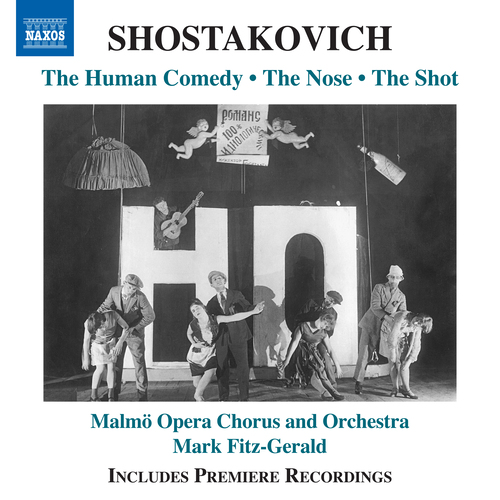
Tor Lind (bass), Kenny Staškus Larsen (flute), Allan Sjølin, Jesper Sivebaek (balalaikas), Edward Stewart (guitar) (all soloists in The Shot); Lars Notto Birkeland (organ, The Nose); Christian Enarsson (piano, The Human Comedy); Malmő Opera Chorus and Orchestra / Mark Fitz-Gerald
Shostakovich The Shot – incidental music, Op.24 (1929) The Human Comedy – incidental music, Op. 37 (1933-4) The Nose, Op. 15 – appendix (1927-8) The Vyborg Side, Op. 50 – March of the Arnachists (1938)
Naxos 8.574590 [56’42’’] Russian text & English translation included Producer Sean Lewis
Recorded 5-7 March at Opera House, Malmő and 4 April 2024 at Fagerborg Church, Oslo (The Nose)
Reviewed by Richard Whitehouse
What’s the story?
Naxos continues its ground-breaking series devoted to Shostakovich’s film and theatre scores, given with conviction by the Malmö Opera Orchestra and authoritatively conducted by Mark Fitz-Gerald, who has edited and often reconstructed these pieces from their surviving sources.
What’s the music like?
It is all too easily overlooked that, prior to being one of the leading composers of symphonies and string quartets from the 20th century, Shostakovich became established primarily through music for the theatre and cinema; in the process, he frequently transferred musical ideas from one medium to the other. The present release features the complete incidental music from two of his most ambitious such undertakings, along with hitherto unknown passages from his first opera and an item from one of his film scores – much of this material recorded for the first time.
Shostakovich’s first assignment for Leningrad-based TRAM (Theatre of Working Youth), his incidental music for Aleksandr Bezymensky’s verse-drama The Shot had a fraught rehearsal process prior to its relatively successful first-run. Few of the mainly brief numbers survived intact but the outcome, as reconstructed from piano sketches, is a lively if not overly anarchic score – highlights being the Mussorgskian pastiche ‘Workers’ Song of Victory’ (track 1) and the poignant ‘Dun’dya’s Lament’ (16) with its guitar part deftly restored by Edward Stewart.
Some five years on and the experimental zeal of Soviet theatre had largely evaporated, hence the music for Moscow-based Vakhtangov Theatre’s production The Human Comedy. Adapted by Pavel Sukhotin from Honoré de Balzac’s epic, its essence seems one of nostalgia for things past – typified by the theme, nominally evoking Paris, which Shostakovich threads across his half-hour score. Complementing this are more animated or even uproarious numbers, several of which found their way into those Ballet Suites latterly assembled in Stalin’s twilight years.
The programme is rounded out, firstly, with three fragments from The Nose – the undoubted masterpiece of Shostakovich’s radical years. Taken from each of its acts, they pursue musical directions likely impractical in a theatrical context; though what was intended as an overture to Act Three (41) could still make its way as a scintillating encore. Finally, the ‘March of the Anarchists’ (43) from the film The Vyborg Side: reconstructed from its original soundtrack, it finds the composer remodelling music from Weill’s The Threepenny Opera in his own image.
Do the performances work?
Pretty much throughout – accepting, of course, the fragmentary nature of the two main works as determined by their function. In particular, the five-movement suite assembled – not by the composer – from The Human Comedy (and recorded by Edward Serov with the St Petersburg Chamber Orchestra for Melodiya) brings together various of those individual pieces to more cohesive overall effect. Not that the present performances are at all wanting in expertise and conviction, making for an album which is a necessary listen for all admirers of this composer.
Is it recommended?
Very much so. The booklet features detailed notes from no less than Gerard McBurney, with a brief contextual note by Fitz-Gerald. Hopefully there will be further such releases from this source, and not forgetting that several of Shostakovich’s film scores have still to be recorded.

 Arcana.fm