On this day – Frank Bridge: 3 Idylls for String Quartet

by Ben Hogwood Photo courtesy of Wikipedia

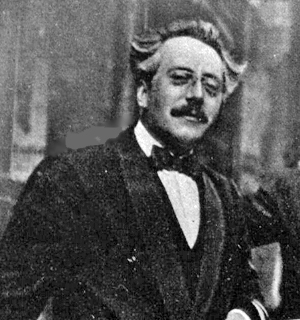
The gentleman in the fuzzy image above, Frank Bridge, died on this day in 1941. The importance of Bridge to English music continues to be underestimated, as indeed does his originality as a composer.

Bridge exerted a keen influence on his pupil, the young Benjamin Britten, but pushed his own music to the edge of tonality without losing its appeal. Compositions that are testament to his ability include Oration, for cello and orchestra, the pictorial orchestral works The Sea, Enter Spring, Summer and There is a willow grows aslant a brook, four string quartets and two piano trios.

Yet the piece I wanted to highlight today comes from earlier in his career, a winsome trio of Idylls for string quartet completed in 1906. The second provided Britten with a theme for his Variations on a theme of Frank Bridge some three decades later. If you listen to all three you get a strong dose of English charm, wit and romantic yearning, along with a little mystery. You can listen to these wonderful pieces below, played by the Maggini Quartet:

Published post no.2,763 – Saturday 10 January 2026

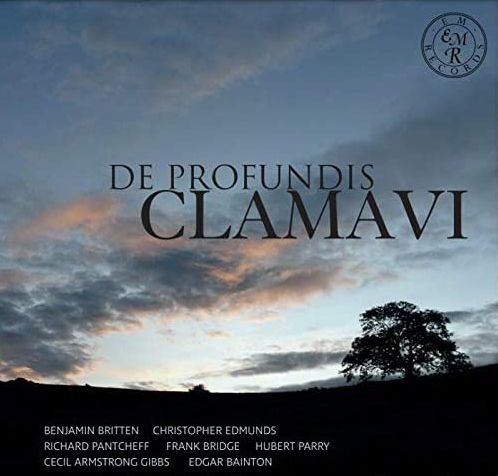
On record – Duncan Honeybourne: De Profundis Clamavi (EM Records)

de-profundis-clamavi

Armstrong Gibbs An Essex Rhapsody Op.36 (1921); Ballade in D flat (1940)
Bainton Variations and Fugue in B minor Op.1 (1898); The Making of the Nightingale (1921); Willows (1927)
Bridge Piano Sonata H160 (1921-4)
Britten Night Piece ‘Notturno’ (1963)
Edmunds Piano Sonata in B minor (1938)
Pantscheff Nocturnus V: Wing oor die Branders (2015); Piano Sonata (2017)
Parry Shulbrede Tunes (1914)

Duncan Honeybourne (piano)

EM Records EMRCD070-71 [two discs, 156’46”]

Producer Oscar Torres & Richard Pantcheff
Engineer Oscar Torres

Recorded 20 & 21 August 2020 at Potton Hall, Westleton, Suffolk

Written by Richard Whitehouse

What’s the story?

Never a pianist to pull his punches, Duncan Honeybourne adds to his expanding discography with this extensive survey of British piano music which, written across almost 120 years and evincing a range of styles, more than reinforces the descriptive heading of the overall project.

What’s the music like?

The first disc begins with the Piano Sonata by Christopher Edmunds. Birmingham-born and long active at the School of Music there, he left a sizable output from which the present work impresses through its wide expressive range within modest formal dimensions. The opening Allegro recalls Medtner in its pivoting between fervency and repose, then the Lento strikes a note of heartfelt emotion underlined by its ‘mesto’ marking. Utilizing aspects of scherzo and finale, the closing Allegro returns to more extrovert concerns as it arrives at a virtuosic close.

Edgar Bainton was still in his teens when composing the Variations and Fugue which became his first acknowledged work. Brahms is a key influence, but the music’s motivic and textural discipline ensures a formal focus throughout the nine deftly contrasted variations then into a tensile and vividly cumulative fugue. Remembered primarily for his songs, Cecil Armstrong Gibbs wrote idiomatically for the piano as is demonstrated by the intricate passagework and often bravura writing of An Essex Rhapsody, while the later Ballade exudes deeper emotion – not least an ominous central section with undeniable overtones of war. Part of a compendious sequence exploring different aspects of night, Richard Pantcheff’s Nocturnus V: Wind on the Waves follows a trajectory of impending marine turbulence that duly regains its earlier calm.

Written at the home of his daughter’s family, Shulbrede Tunes finds Hubert Parry reflecting on domestic environs in a methodically constructed cycle – the 10 pieces taking in evocations of the priory and people within. A lively humour informs Bogies and Sprites that Gambol by Nights, with a ruminative pathos to the fore in Prior’s Chamber by Firelight. Here, as in the exuberant Father Playmate, the aging composer’s devotion to Austro-German romanticism results in music which is as affecting as Parry’s orchestral and choral works from this period.

The second disc opens with two further pieces by Bainton. From among his many miniatures, Willow is a limpidly impressionist album-leaf of no mean poignancy, then The Making of the Nightingale evokes this bird’s creation in imaginative terms that are appealingly realized here. Written for the first Leeds International Piano Competition, Benjamin Britten’s Night Piece is the only acknowledged piano work from his maturity – a study in dynamic and timbral nuance of a finesse as to make one regret his stated antipathy for the modern piano on its own terms.

It is the Piano Sonata by Frank Bridge (placed before the Britten) which inevitably dominates this collection, not least as this recording is among the finest from recent years. Testimony to the composer’s response to the carnage of war as well as its impact on his evolving idiom, the three movements unfold as a single cumulative entity – the sizable opening Allegro preceded by a slow introduction whose main motivic elements are gradually elaborated for the ensuing opposition between anguish and eloquence. The savage rhetoric of its close makes the contrast with the Andante’s consoling rumination more acute, the music as if surveying a landscape of memories which elides straight into the final Allegro with its renewed confrontation of earlier motifs – on the way to a stark denouement then a resigned and almost confessional epilogue.

Pantcheff’s almost contemporary Piano Sonata rounds off this collection. Its three movements each carries an inscription from the epic poem The Axion Esti by Odysseus Elytis that sets the tone for a restive and increasingly tumultuous Inquieto, followed by an Elegia whose sombre imagery might feel almost nihilistic were it not for the plaintive expression that emerges in its latter stages, then a finale whose Alla Vortice marking aptly indicates the gradual intensifying of mood which carries this movement – and the work as a whole – towards its explosive close.

Does it all work?

Undoubtedly, when heard as a collection. Honeybourne has been astute in his planning so that each disc can be appreciated as a stand-alone recital in its own right, or as independent halves of an ‘uber-recital’ which even he would be unlikely to undertake in a live context. All except the Bridge, Britten and Parry are receiving their first recordings, and it would be surprising if some pieces did not enjoy greater exposure in future. For his dedication in championing them, and for putting together such an ambitious anthology, Honeybourne can only be commended.

Is it recommended?

Very much so. The piano sound is a shade hard at climaxes, while spacious and wide-ranging elsewhere, with detailed notes on each work and composer from various sources including the pianist. It adds up to an impressive release and a highlight of the EM Records catalogue so far.

Listen & Buy

You can discover more about this release and listen to clips at the EM Records website, where you can also purchase the recording. For more on Duncan Honeybourne, visit his website – and for more on Richard Pantcheff click here

Playlist – The Rustle of Spring

Welcome to The Rustle of Spring.

This is a playlist designed to look at the positive, to anticipate our emergence from what has been an incredibly difficult winter for many.

Although we are not out of it yet nature is doing its best, with green shoots making themselves known, birds and animals starting to flex their muscles, the nights drawing out a bit and the weather – hopefully – improving.

This selection offers a range of responses to spring from classical composers. We have the outright optimism of Schumann’s Spring Symphony, his first, alongside more mysterious responses to the season from Lili Boulanger and John Foulds. Spring doesn’t have to mean orchestral music, either – there are intimate thoughts from the piano works of Grieg, Sinding and Tchaikovsky, while rarely heard choral pieces from Holst and Moeran lend an exotic air.

We finish with two very different portrayals of spring, in the form of one of Johann Strauss II’s best-known waltzes, Voices of Spring, and an all too rarely heard tone poem by Frank Bridge, Enter Spring. There isn’t even room for Vivaldi’s Four Seasons!

I hope you find something to enjoy.

Ben Hogwood

On record: Sinfonia of London / John Wilson – English Music for Strings (Chandos)

Sinfonia of London / John Wilson

Britten Variations on a Theme of Frank Bridge Op.10 (1937)
Bridge Lament (1915)
Berkeley Serenade for Strings Op.12 (1938-9)
Bliss Music for Strings (1935)

Chandos CHAN 5264 [64’46”]
Producer Brian Pidgeon
Engineers Ralph Couzens, Alex James

Recorded 9-11 January 2020, Church of St. Augustine, Kilburn, London, UK

Reviewed by Ben Hogwood

What’s the story?

After three wonderful albums extolling the virtues of French orchestral music, Korngold and Respighi, John Wilson and his Sinfonia of London charges turn much closer to home with a set of British music for strings drawn from the 1930s. They begin with an established classic, Britten’s Variations on a Theme of Frank Bridge, complemented by two neglected works from Sir Lennox Berkeley (his Serenade for Strings) and Sir Arthur Bliss (the Music for Strings), neither of which appears to have been recorded in the last 20 years. There is also room for the brief Lament from 1915 by Bridge himself.

What’s the music like?

Britten’s Variations on a Theme of Frank Bridge will be familiar to many, but rarely in a performance as good as this. The theme, lovingly drawn from the Second Idyll for string quartet of Britten’s teacher, receives a virtuoso treatment, taken through a number of wildly differing dance forms before a powerful fugue and finale. The variations are sharply contrasted, with a crisp March at odds with the loving Romance that follows; the fulsome Wiener Walzer countered by the rush of a Moto perpetuo.

Berkeley’s Serenade for Strings works really well in this company. It is a work beginning with outward optimism but which ultimately falling under the shadow of the imminent Second World War. A busy first movement, its Baroque influences brought out by Wilson, is complemented by an inward looking but tender Andantino. Berkeley finds renewed energy in a quickfire Scherzo, but that is trumped by the closing Lento, which leaves a lasting impression, reflecting the anxiety felt as the 1930s drew to a close.

There is a good deal of positive energy in Bliss’ Music for Strings. Taking a lead from Elgar’s Introduction and Allegro of 1905, the composer writes for a full string orchestra but often picks out a smaller group of soloists. The substantial three movements show a masterly command of the string orchestra, from the wide span of the vigorous first movement to the meaningful Romance that follows, with lovely rich contributions from violas and cellos. The third movement starts hesitantly, in the depths, but soon the light breaks through to an effervescent finale.

Does it all work?

Everything works here, thanks to the thoroughly assertive performances secured by Wilson. He is quite quick on the draw with the theme for Britten’s variations, maybe quicker than some would like, but the thrills and spills that follow make this one of the finest versions available. The Aria Italiana has all guns blazing in a wonderful display of precision and power, while the Funeral March has a searing and chilling clarity.

Successful though the Britten is, it is the Berkeley and Bliss that ultimately give the disc its importance. The Berkeley is keenly felt, positive in its fast music but anxious in its two slower movements and raising emotional questions in the fourth. Wilson catches its air of uncertainty at the world in which we live, as relevant now as it was then.

The Bliss has terrific drive in its faster music, which builds up a thoroughly convincing momentum while succeeding in bringing forward the writing for the chamber ensemble at the front. The textures are beautifully clear thanks to the Chandos recording, the quicker melodies’ punchy phrasing cutting through easily.

The Bridge Lament, though short, proves a mellow complement to the Britten, a chance for the listener to collect their thoughts while the Sinfonia play with a beautiful, muted sound.

Is it recommended?

In every way. John Wilson and the Sinfonia of London breathe new life into this music, and their programme is superbly judged to bring two neglected and very fine works back into contention. The cover, a painting of Bliss’s Pen Pits house by Edward Wadsworth, is the icing on the cake with its classic 1930s style.

For further information on this release, visit the Chandos website.

In concert – Members of the English Sinfonia @ St John’s Smith Square: English Miniatures

Members of the English Sinfonia: Janice Graham (violin), Nick Bootiman (viola), Julia Graham (cello) Chris Hopkins (piano)

Vaughan Williams The Lark Ascending (1914)
Bridge Miniatures – Book 2, H88 (1910)
Coleridge-Taylor Piano Trio in E minor (1893)
Holst String Trio in G minor (1894)
Bax Piano Quartet in One Movement (1922)

St. John’s, Smith Square, London, 15 December 2020 (lunchtime)

Reviewed by Richard Whitehouse

Celebrating its 60th anniversary next year, the English Sinfonia will be remembered by older listeners for those valuable recordings of British music with Neville Dilkes (not least the first modern account of Moeran’s Symphony). Its current incarnation as ensemble-cum-chamber orchestra enables it to tackle a wide repertoire, and even though only the core personnel was featured in this afternoon’s concert, the works that were chosen offered a more than plausible overview of British chamber music composed across the late 19th and early 20th centuries.

Easy to forget that, long before his music assumed a more radical mindset, Frank Bridge was a composer of lighter fare. Hence those three sets of Miniatures for piano trio – classy salon music of which the second set moves from a soulful while never cloying Romance, via an infectious and decidedly scherzo-like Intermezzo, to a Saltarello with more than a hint of menace in its hectic dash. By comparison, the Piano Trio of Samuel Coleridge-Taylor tries a little too hard to impress. If this early piece is hardly the equal of such as the later Clarinet Quintet, its three compact movements are never less than eventful – whether in the vehement Allegro with its portentous opening, a Scherzo whose unremitting energy brings little respite, or Finale whose distinctive furiant rhythm sees the whole work through to a forthright close.

Unlike the above, Holst composed relatively few chamber pieces in his maturity. While his String Trio evinces little sense of what he went on to achieve, this does not lack for incident. Idiosyncratic, too, in that its compact and forthright opening movement is followed by one which, over twice as long, integrates a slow movement, scherzo and finale that add up to an unlikely if cohesive whole; the fugal intricacies of that final section a stern test of ensemble such as the present players despatched with evident resolve. Appreciably more characteristic is the Piano Quartet by Bax – its tensile single movement packing a wide range of ideas and moods into little more than 10 minutes; and following an essentially conflicted to triumphal trajectory recalling that of the combative First Symphony which immediately preceded it.

Opening this afternoon’s programme, Janice Graham gave an affecting account of The Lark Ascending in the version for violin and piano first heard in public exactly 100 years ago. Now the orchestral version has become ubiquitous, this chamber guise can feel almost a reduction, yet the lucidity of its formal layout becomes even more explicit, and the understated poise of its piano part – as rendered by Chris Hopkins – belies any doubts as to Vaughan Williams’s limitations when writing for the instrument. An eloquent start to an enterprising programme.

Further information at https://www.englishsinfonia.org.uk/