
Talking Heads: Ensemble Resonanz – Justin Caulley

Interviewed by Ben Hogwood

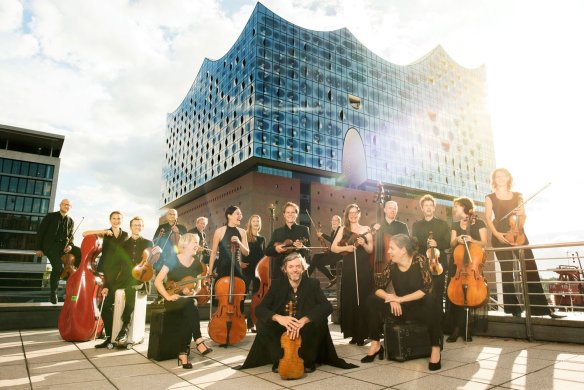
These are exciting times for Ensemble Resonanz. Presenting themselves as an ensemble that functions as a group of soloists as well as a chamber orchestra, the Hamburg-based group are Ensemble in Residence at Germany’s flagship new concert hall, the Elbphilharmonie. From that base they have established themselves as a wide-reaching musical force, capable of interpreting the music of Haydn as naturally as their latest release with Bryce Dessner, composer and guitarist with The National.

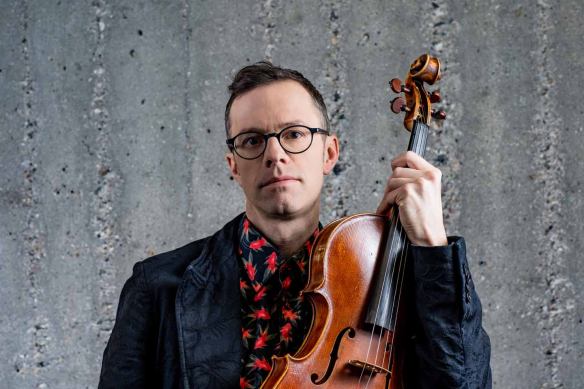
Arcana spoke to one of the ensemble’s lynchpins, viola player Justin Caulley (above), to find out what makes him – and them – tick, and how they achieve their renowned intensity in concert and on record.
As always, we began at the start, and an upbringing that brings both Beethoven and Pearl Jam into the conversation. “I grew up mostly in Kansas”, says Caulley, “and my parents were amateur musicians. My father played piano and a bit of cello, while my mother played the piano. My upbringing was sprinkled with classical CDs that my dad would bring home. I especially remember Richard Strauss’s Also sprach Zarathustra conducted by Herbert von Karajan, and Beethoven’s Symphony no.9 as well. I got started playing the violin in church, then moved to viola. My dad was the preacher there. I played in student concerts in country churches, but like every kid at the time I listened to a lot of rock and grunge music. I was pretty influenced by mixtapes my cousin would make for me, with Pearl Jam, Nirvana and Alice In Chains on them. He was in south Seattle and introduced me to them, as well as bands like Sonic Youth.”

Deciding to pursue music further, Caulley made rapid progress in both his musical attributes and his discoveries. “Having grown up in the United States I was influenced by the idea of crossing genres, or category-less music making. When you grow up in a small town all music is not the same but categories exist as much. Beethoven 9 or Pearl Jam, it’s all there. I was also heavily influenced at the Eastman Rochester School of Music, where I studied. It was there that I first encountered minimal music, and especially quite a few Steve Reich pieces. I was lucky to work with him a couple of times, and with La Monte Young, on the Dream House. We played a version of his String Trio and worked with him on it. This all happened before I came to Europe in 2003, so before Ensemble Resonanz I had a good varied upbringing!”

We move on to discuss the ensemble’s new disc Tenebre, a collection of four pieces by Bryce Dessner. “One of the challenges was to encounter Bryce’s music in the realm outside of categories”, says Caulley, in reference to our earlier points. “He is impossible to put in a box, and the challenge is to approach music with fresh as opposed to tabular thinking. The pieces are great and easy to get to, but each needs its own universe.”

There is a very powerful presence on Aheym, the album’s opening track. Originally written for the Kronos Quartet, it has been expanded by Dessner for the bigger forces of Ensemble Resonanz. “It’s one of those pieces that has such an incredible explosion of ideas and energy”, Justin says enthusiastically. “It’s easy to grab on to. It gets you worked up and very suddenly there is a groove. Some of the changes from section to section in Tenebre itself were astonishing to play, too.”

From previous experience I note Bryce has a really positive presence, softly spoken but fiercely driven. Did that transfer to the recording studio? “I think that’s very well put”, responds Caulley. “Working with him was really nice, and it was interesting to get feedback from him. We were working on this other level outside of the nuts and bolts. What I noticed was this unbelievably broad wisdom outside of the music, in a practiced way but also inside of that practicality there is something bigger going on.”

Dessner was quoted in an interview as being quite taken aback by the intensity of Ensemble Resonanz’s playing, which is surely the ultimate reference for an ensemble. “We were ultimately flattered by that! One of the nice things working with him was us working towards a common goal, our wishes were similar. It was easy to stay intense, with us all in it together.”

Ensemble Resonanz have been recording, too. “I just came from a session of Beethoven’s Piano Concerto no.4 with Gianluca Cascioli, conducted by Riccardo Minasi. We also have a great tour of our version of Bach’s Weihnachts-Oratorium (Christmas Oratorio) coming up, with quite a few concert dates before Christmas. After that we continue with our subscription concerts, with some Shostakovich and Ustvolskaya in January.”

He reflects on the opportunity to play in the Elbphilharmonie. “It’s great, really nice!” he enthuses. “It is totally larger than life, and even though we’ve toured most of our lives it’s not every day such a building opens up.” It must be rewarding moving between music by composers such as Haydn, Schoenberg, Eisler and Dessner, as the ensemble do. “It’s crazy, the breadth of stuff that we do. It’s always a great challenge, and the greatest luxury to have so many opportunities.”

There are moments of creative tension, but Caulley sees these as a sign of healthy artistic dialogue. “As in any group there is a dynamic that can have its moments of tension. One thing I’ve learned of value is the idea that any sort of tension can be resolved, and can also be used towards working for a goal. Where I grew up there was no tension at all, and it could get superficial. Now although sometimes tempers can flare the search for some sort of truth is important to people. They don’t want just to smile and nod and say that’s OK. If that’s tough, just lay it on the table!”

Ensemble Resonanz have a monthly club night, about which Caulley is most enthusiastic. “For me that’s one of the most inspiring things we do, and I’m on the planning committee so am heavily invested. We have our own space, and we do what we want. We don’t necessarily do the most crazy things but we can let our imaginations roll and see what’s possible.”

chamber müzik club night // resonanzraum Festival 2018 from Ensemble Resonanz on Vimeo.

Tenebre, the collaboration between Bryce Dessner and the Ensemble Resonanz, is out now – and can be purchased here

You can listen to Tenebre on Spotify below:

To illustrate the contrast in the repertoire the ensemble records, their previous release was Haydn’s Die sieben letzten Worte unseres Erlösers am Kreuze (The Seven Last Words of our Saviour on the Cross):

Live review – Sara Hershkowitz, BBC Scottish Symphony Orchestra / Antony Hermus – The Ring: An Orchestral Adventure

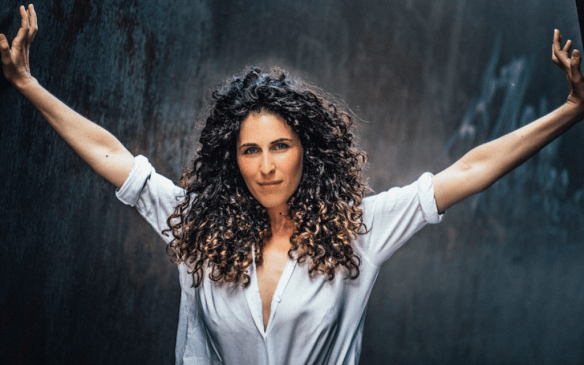
Sara Hershkowitz (coloratura soprano, below), BBC Scottish Symphony Orchestra / Antony Hermus (above)

City Halls, Glasgow
Thursday 28 November 2019

Haydn Symphony no.22 in E flat major ‘Philosopher’ (1764)
Ligeti Mysteries of the Macabre (1974-77; 1992)
Wagner arr. Henk de Vlieger The Ring: An Orchestral Adventure (1991)

Written by Ben Hogwood

An evening of musical philosophy through three very different viewpoints, held together by superb orchestral performances and the artistry and energy of Antony Hermus, making his conducting debut with the BBC Scottish Symphony Orchestra.

On this evidence it has the makings of a fruitful musical relationship. Certainly Haydn‘s Symphony no.22 in E flat major, known as the ‘Philosopher’, was carefully prepared and ideally executed. With just 26 players on the platform, and with most of them strings, the spotlight fell on the pair of horns and cor anglais players. They added unique colours and a doleful atmosphere to the profound opening Adagio, which had a steady accompanying tread. The harpsichord of Andrew Forbes was perfectly judged, complementing Haydn’s harmonic thoughts.

Orchestra leader Laura Samuel helped propel a second movement of earthy substance, which gave way to a charming Menuetto before a lively Presto wrapped things up, Haydn’s wit and inspiration in abundance once again. This was the second Haydn symphony in successive days for Arcana, after the CBSO and Riccardo Minasi’s persuasive reading the previous night. From experience a Haydn symphony a day really can go a long way – and indeed if you did two a week you would have enough for a whole year! Something definitely worth considering.

Back to the concert, and a complete change of tack for Ligeti’s uproarious and outrageous Mysteries of the Macabre, a concert piece lifted from his only opera Le Grand Macabre. And what a show it was from Sara Herskowitz, who has lived with this music some time, even on occasion dressing as Donald Trump to deliver it! Here – no doubt with the presence of BBC recording and streaming in mind – she gave Ligeti’s lines in the most sparkling of silver dresses. To say she owned the platform would be an understatement, for hers was a magnetic presence, often hilarious but frequently dazzling in its utter command of Ligeti’s demands. Using a large bottle of Irn Bru as a prop, she fair brought the house down in a performance that has to be seen to be properly appreciated. The virtuosi of the BBC Scottish Symphony Orchestra were her equal.

Another radical change of subject and perspective saw us experience the whole of Wagner’s Ring Cycle in just over an hour after the interval. The man responsible for this orchestra-only compression is Dutch composer Henk de Vlieger, who has made a remarkable piece of music containing not just the best orchestral excerpts from the four operas but the vocal and thematic music of substance too. With some tasteful composing of his own to complement Wagner’s epic he has created a near-continuous piece of music that, while never expecting to eclipse the impact of the operas, is a wholly effective concert piece.

It helps when given the sort of commanding performance The Ring received here. The brass were simply superb – trumpets, trombones, Wagner tubas, tubas and horns responding to the considerable demands with relish, creating some wonderful sonorities while they did so. The Ride of the Valkyries was an early highlight, the theme given an appropriately majestic profile, while Alberto Menéndez Escibano‘s horn solo for Siegfrieds Heldentat, given from out the back of the hall, was brilliantly done.

The BBC Scottish strings and wind were on the same exalted level, and the Feuerzauber (Magic Fire Music) and Waldweben (Forest Murmurs) were wholly evocative and enchanting. Hermus brought a keen dramatic instinct to his conducting, including rubato where appropriate but also making the silences really tell. Even before the first note sounded he secured complete stillness in the hall, setting the tone for the performance that followed – and when other silences occurred they were impeccably observed by the audience. There was a terrific, ballsy account of Siegfried und Brunnhilde, brass again to the fore, while the violins shone in their unison passages throughout.

Antony Hermus paced the whole ‘adventure’ perfectly, meaning this ‘bite size’ Ring cycle clocked in at around 65 minutes. Do catch this concert online if you can over the next few weeks, for it was a really well constructed programme of very differing but inspiring musical works. From the elegant and sometimes earthy Haydn, through the compressed but outrageous Ligeti to the grand and spectacular Wagner, there was something for everyone.

You can hear this concert on BBC Radio 3 from the evening of Tuesday 3 December by clicking here

Further listening

You can listen to the music from this concert on the Spotify playlist below, made up of some leading recordings of the works played.

Live review – CBSO / Riccardo Minasi: Haydn & Mozart

Oliver Janes (clarinet), Nikolaj Henriques (bassoon), City of Birmingham Symphony Orchestra / Riccardo Minasi (above)

Symphony Hall, Birmingham
Wednesday 27 November 2019

Haydn Symphony no.88 in G major (1787)
Richard Strauss Duet-Concertino (1946)
Beethoven Coriolan Overture (1806)
Mozart Symphony no.39 in E flat major K543 (1788)

Written by Ben Hogwood

What a refreshing concert for a dank November evening. This was a slightly stripped back version of the City of Birmingham Symphony Orchestra, with their guest conductor Riccardo Minasi overseeing energetic accounts of Haydn and Mozart, a high octane Beethoven overture and a youthful take on the music of an elderly Richard Strauss.

The Haydn first, in the form of a strongly characterised account of his Symphony no.88, premiered in Paris in 1787. We still take Haydn’s astonishing output of 104 published symphonies for granted, for while they make effective concert openers they are full of invention, wit, and – especially in this case – drama.

After a poised first movement, Minasi lovingly shaping the phrases with tasteful rubato, the second movement Largo was laid bare as a strongly emotive utterance with dark twists and turns, interventions from brass and timpani sounding powerful warning notes. By contrast the Minuet was a light hearted dance, its trio section employing bagpipe-like drone effects that anticipate the Brahms Serenades. Minasi and the players clearly love this music, and their effervescence carried over into the finale, the conductor dancing on the podium as upper and lower strings egged each other on.

Richard Strauss was looking intently at the Classical period when he wrote his penultimate orchestral work at the age of 83. The Duett-Concertino is an unusual piece, bringing forward clarinet and bassoon soloists to shine in front of a decorative chamber orchestra. This is recognisably late music in its assured and economical treatment of form, and in some unexpectedly spicy harmonic twists, but the soloists captured its ‘Indian summer’ profile.

Oliver Janes and Nikolaj Henriques were superb, plucked from the orchestra and fully enjoying their moment in the spotlight in front of their colleagues, who responded with rustic string accompaniment and beautifully rendered harp (Katherine Thomas). Janes’ clarinet tone was delightful, with Henriques’ bassoon cajoling and prompting in response. Both came into their own with some dazzling acrobatics in the finale. The light hearted approach spilled over into a brilliantly designed encore, a selection of Mozart themes arranged for the two solo instruments to often comic effect.

The second half began with high theatre, an account of Beethoven‘s Coriolan overture that crackled with atmosphere and descriptive content. The opening chords bore the effect of powerful slamming doors, such was the crisp ensemble, and as the overture gradually opened up so did a vivid response to Heinrich von Collin’s tale. As the story unfolded there was no doubt on its tragic ending, and here Minasi’s management of the quiet string dynamics looked forward to equivalent drama in the first movement of Mahler’s Resurrection symphony.

Even in the context of this concert the best was saved for last in an account of Mozart‘s Symphony no.39 that positively fizzed with good spirits. When he composed the piece in 1788 Mozart was writing without commission, a relative rarity for him, and this was the first of three symphonic works that were to redefine the form, effectively preparing the way for Beethoven and Schubert.

The atmosphere crackled in a fulsome introduction to the first movement, which took on a waltz-like form, Minasi’s prowess as an opera conductor clear for all to see through his dramatic instincts and more tasteful rubato. The slow movement was perfectly judged, initially and deceptively straightforward but with stern interventions from the woodwind. These highlighted the lyricism of the main subject, once again beautifully phrased. A warmly coloured Minuet followed before the finale sprang out of the traps, violins easily handling the considerable demands placed on them in rushing scales and rapid string crossing. Minasi was if anything even more energetic than he had been at the start of the concert, prompting the wonderful syncopations and interplay of Mozart’s inspiration which were brought right to the front.

So good was this concert it was a shame when we entered the closing bars of the symphony, but we did so with great positivity, Mozart – and Minasi – inspiring us through their wonderful craft.

Further listening

You can listen to the music from this concert on the Spotify playlist below, made up of some leading recordings of the works played.

Proms at … Cadogan Hall 4: Aris Quartet play Schubert, Sirmen & Haydn

Aris Quartet [Anna Katharina Wildermuth, Noémi Zipperling (violins), Caspar Vinzens (viola), Lukas Sieber (cello)]

Schubert String Quartet no.1 in G minor / B flat major D18 (1810/11) (2:03 – 18:14 on the broadcast link below)
Maddalena Laura Sirmen String Quartet No. 5 in F minor (publ. 1769) (20:20 – 31:43)
Haydn String Quartet in B flat major Op.76/4 ‘Sunrise’ (1796-7) (33:04 – 54:33)

Cadogan Hall, Monday 12 August 2019

Reviewed by Ben Hogwood

You can listen to this Prom on BBC Sounds here

The BBC Proms are charting 800 years of history in their Proms At…Cadogan Hall concerts this season, and the fourth instalment brought an examination of the string quartet towards the start of its existence. It was great to see Haydn – the acknowledged father of the form – given top billing for once, with one of the six masterpieces published as his Op.76, the mature peak of his chamber music output.

Before that, the youthful Aris Quartet brought us music by an even younger composer. Schubert was only just into his teens when he delivered the first of fifteen published string quartets, and even at this point – with a work given its first performance by the family quartet in their home – he was finding a distinctive and adventurous voice. Schubert played viola in his own piece – and it was published when he turned 15.

The String Quartet no.1 inhabits two keys, G minor and its major key ‘relative’, B flat. The first movement (from 2:03 on the broadcast link above) has a tender slow introduction but becomes surprisingly stern as its main theme kicks in (3:47), with brisk tremolo figurations. This is complemented by a less stern, major key theme later on (5:24). The Aris Quartet gave it the appropriate depth, before moving on to the silvery elegance of the Menuetto (7:56), where the quartet are instructed to use mutes. This had a nice rise and fall to its dance steps in the Aris performance. A warm Andante followed (11:30), now in the sunnier climbs of B flat major, before a bright and breezy finale (14:31) in the same key confirmed the young composer’s progress not just with writing for strings, but in his already enviable grasp of form.

Very little has been heard to date of Maddalena Laura Sirmen, but thanks to the BBC Proms we had confirmation that women composers were indeed alive and well in the 18th century. Thankfully performances of their work are starting to break through, and to hear Sirmen’s String Quartet no.5, published alongside Mozart’s early works, was to hear a voice rooted in Venetian Baroque traditions but very much looking forward.
Sirmen’s work opens with a short but quite austere Largo (20:20), which the quartet played with a bit less vibrato, gradually using more as the music became warmer. Then at 21:30 they gave a nice, full sound to the first Allegro, an attractive movement and a busy affair where the parts are closely intertwined. Sirmen’s style is free of padding and the players enjoyed its conversational style. The Largo returned at 26:26, casting a shadow before the Minuetto (27:40) drew us back to music of optimism and charm.

Haydn wrote a great many string quartets – thought to be 68 in all – but the six published as Op.76 are among his finest achievements in the field. He somehow manages to find a fresh approach with each of his works, and in the case of the ‘Sunrise’ it is through a musical portrayal of the very beginning of the day (from 33:04). He had already successfully tried this approach in a symphony (the introduction of Symphony no.6 (Le Matin) the best example) but this is a more intimate affair.
The performance here was beautifully shaded to catch the first light, with a sensitive and beautiful solo from Anna Katharina Wildermuth, but the ensuing busy passages – the players following the composer’s directions – were much more forceful, as though the sun had woken a gale force wind too.

This was a very fine performance, enjoying Haydn’s invention and wit, but giving each return to the ‘Sunrise’ material the magic of the first hearing. The second movement, marked Adagio, was expansive but also softly voiced (41:18), an example of one of the composer’s later, radiant slow movements. There was still plenty of room given to the first violin part, and Wildermuth took full advantage with excellent intonation.

A typically lively Minuet followed, with a smile and the odd knowing glance through its chromatic melodies (45:59). With it came a contrasting Trio section which had something of the march about it (57:35), over a steady drone from cellist Lukas Sieber, with the Minuet repeated at 49:01. The fourth movement (50:02) was elegant, light on its feet and with fine ensemble playing, the quartet enjoying Haydn’s presentation of the theme and its variations right up to the brisk finish.

Once off air the quartet gave an encore of the last movement of Dvořák’s American string quartet, disrupting the progression through 800 years for the live audience rather, but again playing with plenty of energy and virtuosity.

Listen

The music in this concert can be heard on Spotify below:

The six Surmen quartets can be heard on Spotify in this collection from the Allegri Quartet:

Meanwhile Haydn’s collection of Op.76 quartets can be heard here in a fine set of recordings from the Takacs Quartet:

Wigmore Mondays – Belcea Quartet: Recollections of Hans Keller


Belcea Quartet [Corina Belcea, Axel Schacher (violins), Krzysztof Chorzelski (viola), Antoine Lederlin (cello)] Photo (c) Marco Borggreve

Haydn String Quartet in D minor Op.76/2 ‘Fifths’ (1797) (4:27 – 25:22 on the broadcast link)
Britten String Quartet no.3 Op.94 (1975) (28:18 – 56:35)

Wigmore Hall, London
Monday 11 March 2019

To hear the BBC broadcast through BBC Sounds, please follow this link

Commentary and Review by Ben Hogwood

Hans Keller was one of the great musicologists and musical writers of the 20th century, and this BBC Radio 3 Lunchtime Concert at the Wigmore Hall marked the occasion of what would have been his 100th birthday.

Despite his obvious talents as a writer and analyst Keller was a divisive figure, his forthright views often creating controversy, but the notes for the program accompanying this concert reflected a deeply passionate listener who simply loved the music of Haydn and Britten.

For Keller, Haydn was ‘musical history’s greatest thematic economist’ – a point borne out by the String Quartet in D minor Op.76/2. The nicknames applied to some of Haydn’s best-loved works are evocative, even if they do relegate some more deserving works to the sidelines. The ‘Fifths’ for this quartet refer not just to the melodic intervals in the first theme of the first movement (from 4:27 on the broadcast), where Corina Belcea’s first violin took an authoritative lead in this performance, but to the second theme too.

The discourse of the first movement was extremely satisfying in this performance, the Belcea Quartet lingering on one particularly spicy chord () while providing energy and passion. The second movement Andante (11:45), more a graceful minuet than a slow movement, had some lovely moments of radiance from all four players, with a lightness of touch carrying the whole way through.

In complete contrast the Menuetto itself (17:42) wore a stern expression, dramatically poised as its canon played out between upper and lower parts. It did relent a little however for its trio section (18:58), Haydn slipping into the major key for a rustic dance. Here the Belcea Quartet judged the speeds just right, leaning on the down beat perfectly, before the gruff Minuetto theme returned (20:16).

The finale, marked Vivace assai (21:11), began with a hushed urgency, the main theme a little flighty in Corina Belcea’s hands, but by the time Haydn transported the music into the major key the quartet had an assertive grip on the performance.

Hans Keller, as captured by his wife, the artist Milein Cosman

Benjamin Britten loved the music of Haydn, declaring ‘If I feel down when I go to bed, I take a Haydn quartet with me. It’s all in there.’ His own contributions to the string quartet have proved to be long lasting, but the third – dedicated to Hans Keller who had been persisting that Britten write it – is an extraordinary piece.

Britten conceived it in five movements which might look unconventional on paper, but which translate to an extremely clever interpretation of the traditional sonata form, impressing his friend Keller greatly. However the technical achievements are not at the expense of emotion, as the Belcea Quartet showed here. The first movement, Duets (28:18) pairs second violin with viola – Axel Schacher and Krzysztof Chorzelski beginning authoritatively – before first violin and cello add their thoughts (Belcea and Antoine Lederlin in similar unity of voice).

A scabrous Ostinato movement follows (34:24), the quartet stretched to their limits by Britten’s ‘multiple stopping’ (several notes played at once on each instrument) and on the edge emotionally, but brilliantly played here.

It felt like time ceased to exist for the Solo movement (38:04), Belcea finding a radiant calm in a hall so silent that even a passing tube train could be heard underneath. This was a deeply felt but incredibly free account from the violinist, its central section like a swift on the wing with no restrictions of movement or direction until pure stillness from 42:31.

Following this the forthright Burlesque (43:38), with its elements of Shostakovich, came as something of a shock – but led inevitably into the final Recitative and Passacaglia, subtitled La Serenissima (46:23). The shafts of bright light at the opening are unmistakeably linked to Aldeburgh, and here the quartet found yet another higher plain, Britten’s last substantial work playing out his last days but taking his leave in music of great restraint and beauty.

The reassuring rising motif of the Passacaglia (from 49:22) sets a firm base, from which Britten spins a number of variations. It ends openly (56:08), on a remarkable chord – as Keller says ‘a non-end’, Britten effectively declaring ‘I’m not dead yet’. It is a calling card for his music, restraint packed with hidden emotion – and the Belcea Quartet found its heart unerringly.

Further reading and listening

For more on Britten’s String Quartet no.3, you can visit this entry on the Good Morning Britten blog – an anniversary tribute to the composer from 2013 from yours truly.

Meanwhile the music played in this concert can be heard on the Spotify playlist below, including the Belcea Quartet’s own recording of the Britten:

The six works making up Haydn’s Op.76 represent the pinnacle of his writing for string quartet, and can be heard below in one of several fine available versions, this one from the Hungarian Takács String Quartet:

Britten’s contribution to the string quartet repertoire is hardly negligible itself, mind, and Keller was in great awe of the String Quartet no.2 in particular. Here is a link to the Belcea Quartet’s recordings of that, the extrovert D major String Quartet no.1 and the youthful but assured 3 Divertimenti: