On this day, 174 years ago, the premiere of Schubert’s String Quintet in C major took place in Vienna, Austria.
The string quintet was brought to prominence by Mozart’s masterpieces in the form, using the standard string quartet line-up of two violins, viola and cello with the addition of a second viola. Beethoven wrote an underrated quintet for the same instrumental combination, but Schubert chose to use a second cello. His much-loved quintet, completed three weeks before his death, is a desert island choice for many people on account of its heavenly Adagio. Here it is, played by the Borodin String Quartet and cellist Alexander Buzlov:
Mary Bevan (soprano), City of Birmingham Symphony Orchestra / Edward Gardner
Schubert Rosamunde D797 – No. 3b, Romanze (1823) Der Erlkönig D328 (1815, orch. Berlioz 1860) Die Forelle D550 (1816, orch. Britten 1942) Im Abendrot D799 (1825, orch. Reger 1914) Geheimes D719 (1821, orch. Brahms, 1862) Symphony no.9 in C major D944 ‘Great’ (1825-6, rev. 1828)
Symphony Hall, Birmingham Wednesday 17 May 2024
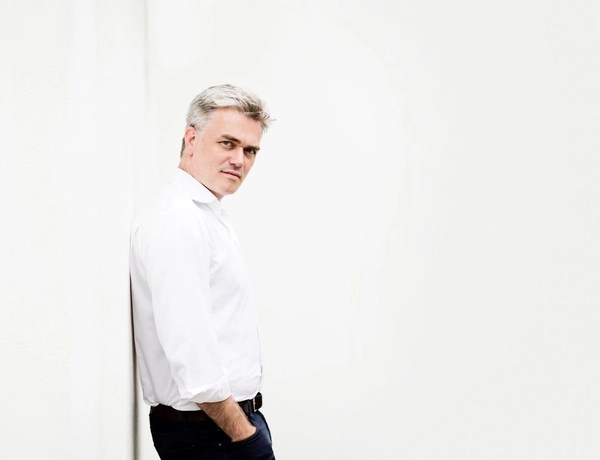
Reviewed by Richard Whitehouse Pictures by Benjamin Ealovega (Ed Gardner), Victoria Cadisch (Mary Bevan)
July concerts no longer a consistent fixture in the City of Birmingham Symphony Orchestra’s schedule, it made sense to end the current season with the intended programme for the fourth and final volume of this orchestra’s Schubert cycle with former chief guest conductor Edward Gardner.
If not his final such project, the ‘Great’ was the final symphony that Schubert finished and the culminating orchestral work of his last decade. Now, as almost two centuries ago, it is not an easy work to being off – but this account hit the ground running with a flowing yet purposeful introduction that elided seamlessly with the initial Allegro. Gardner kept momentum on a sure yet flexible rein over those impetuous and capricious themes of its exposition; underlining the subtly eddying tension of its development and a propulsive coda whose link-up with the tempo of that introduction was marred only by the too emphatic final gesture. Respectively plaintive or consoling, the Andante’s alternate episodes were brought into eloquent accord – the fanfare -riven anguish at its climax then the stark fatalism towards its close being especial highlights.
The essential link between the scherzos of Beethoven and Bruckner, the third movement had the right buoyancy but also a suavity in keeping with the Viennese character of its dance-like themes, and complemented by those of its trio whose lilting elegance were tinged by wistful regret. Launched with a commanding call-to-attention, the Finale did not lack for vigour but, unlike so many performances, Gardner was mindful not to rush either here or in the capering second theme whose relentless string accompaniment was vividly rendered. The development more than fulfilled its purpose as an extended transition into the reprise, then the coda opened with a frisson of anticipation such as underpinned the closing pages as they powered towards the decisive but never headlong close to what was a convincing and engrossing performance.
Regarding repeats, Gardner observed that of the first movement’s exposition but not those in the second half during either scherzo or trio, and that of the finale’s exposition. This at least made matters easier for the players, and left options open for their inclusion in the recording.
That forthcoming release on Chandos will hopefully find room for the five songs that formed the first half of this concert, with each of them arranged by a different composer. The pensive Romanze from Schubert’s incidental music to Rosamunde was heard in the composer’s own orchestration, with the compact psychodrama of Der Erlkōnig in a resourceful and nowadays overlooked orchestration by Berlioz. The looping but not always ingratiating playfulness of Die Forelle was expertly attended to by Britten, while the pensive soulfulness of Im Abendrot summoned an appropriate response from Reger; the sombre resignation of Geheimnis making for a welcome encore in its orchestration by Brahms. Throughout the selection, Mary Bevan’s veracity of emotional response and her clarity of enunciation were qualities worth savouring.
This programme may have concluded the Schubert cycle by Gardner and the CBSO, though hopefully it will not see of this partnership in recorded terms – the symphonies of Schumann, and maybe Brahms, being well worth considering as additions to the orchestra’s discography.
Charlotte Saluste-Bridoux (violin, above) and Joseph Havlat (piano, below)
Szymanowski 3 Myths Op.30 (1915) Poulenc Violin Sonata (1943) Szymanowski arr. Havlat 3 Kurpian Songs (from Op.58) (1930-32) Schubert Rondo Brillant in B minor D895 (1826)
Wigmore Hall, London Tuesday 10 April 2024 (1pm)
by Ben Hogwood
This recital was given under the umbrella of YCAT (Young Classical Artists Trust), the organisation supporting promising classical talent celebrating their 40th anniversary this year. Violinist Charlotte Saluste-Bridoux is one of the current roster, and with pianist Joseph Havlat she gave a captivating recital.
The two began with the highly perfumed 3 Myths of Karol Szymanowski, ideal concert material that can show off a performer’s virtuosity but also their descriptive potential and range of tonal colour. These pieces, written as part of a highly productive partnership Szymanowski enjoyed with violinist Pawel Kochanski, were declared by the composer to have created ‘a new…mode of expression for the violin’.
There was a sense of the new in this performance, notable for its wide range of instrumental colour. The first ‘myth’, La fontaine d’Aréthuse, was strongly characterised, the fountain vividly evoked by Havlat’s opening phrases before Saluste-Bridoux took control with fearless virtuosity. Both musicians were notable for their convincing melodic phrasing, the violin sound strikingly beautiful both with and without the mute. The musical links back to Wagner and Franck were clear, most notably in Narcisse, where the performers brought clarity to the dense counterpoint. This was descriptive music indeed, and Szymanowski’s sound world – unusually advanced for 1915 – took the audience far from the hall. The hollow piano towards the end of Dryades et Pan was notable, Havlat responding to the ghostly harmonics from the violin.
The excesses of Szymanowski were countered by one of Poulenc’s most substantial chamber works. The Violin Sonata has a very different profile to its more famous counterparts for wind instruments, being a troubled work bearing the imprint of the Second World War and personal bereavement. Completed in 1943, it is a work riddled with dark anxiety, though this performance brought out the bittersweet lyricism of the first movement. The nocturnal Intermezzo evoked the guitar, suggesting the influence of Debussy but soon holding the audience in suspense before the finale took off at quite a pace, as though looking to evade capture. Once again this was a performance of high technical standard, one that got beneath the surface to reveal the loss at the heart of Poulenc’s writing – the composer lamenting the Spanish poet Federico Garcia Lorca, who died in the Spanish Civil War.
We then heard three highly effective arrangements from Joseph Havlat of Szymanowski’s Kurpian Songs, selected from the twelve Polish folk texts set by the composer for singer and piano in 1932. As Prokofiev showed with his arrangements of 5 Poems of Anna Akhmatova for violin and piano, such a transcription can be extremely effective – and Havlat’s arrangements were just that, ideally balanced and equally spread between violin and piano. Saluste-Bridoux played with notable dexterity, the two performers enjoying the rustic Bzicem kunia and the sharp outbursts, tinged with regret, of A pod borem siwe kunie.
The musical outlook changed notably for Schubert’s Rondo brilliant, which was effectively an extended encore. The violin was arguably too full bodied to start with, the piano back in the mix, but as the Rondo progressed the balance was restored and we were able to enjoy Schubert’s humour, expressed through an oft-repeating, stop-start theme. This was successfully lodged in our heads by the end, capping an extremely fine recital. These are two artists to watch out for – especially with the Schubert recorded for Delphian Records.
The term ‘moment musical’ has been seldom used in classical music, with only two significant sets of these ambiguously named piano pieces coming to mind. Yet as Canadian pianist Louis Lortie showed us, in this stimulating BBC Radio 3 Lunchtime Concert at the Wigmore Hall, they are far from insignificant works.
Schubert’s publisher was the first to coin the term, describing his set of six ‘easier’ pieces thus when they were published in 1828. In spite of their sporadic composition period – no.3 was the first written five years earlier – they make a satisfying collection when performed in order. As a common factor they find Schubert alternating between major and minor keys, a tension Lortie was keen to bring forward.
He began with a quizzical account of the first piece in C major, played with more pedal than might normally be the case but with persuasive phrasing. The second piece in A flat major was notable for its touching intimacy, in spite of a troubled middle section where a shadow fell over the music. Schubert’s third piece, a Danse Russe, anticipates Tchaikovsky’s Danse des Cygnes from Swan Lake. Lortie played it beautifully, with a touch of humour, before the Chopin-esque fourth piece contrasted the darker hues of C# minor with an elegant section in the major key. The fifth piece strode forward with a determined gait, ending in a major key but not shaking off its feeling of inner strife, before a lovingly delivered sixth piece (subtitled A troubadou’s lament) returned to A flat major seemingly lost in thought.
Rachmaninoff’s cycle of six Moments Musicaux, published in 1896, prove rather more challenging for the performer, his aim for professional pianists with a similarly wide span across the hands. He would appear to have known about the Schubert set – that much is implied by the title – but the volume is noticeably louder for these passionate pieces. The opening nocturne in B flat minor started simply enough but soon a cold wind swirled about, Lortie mastering the technical demands with impressive control. This was a feature of his Rachmaninov playing, especially in the third piece, the emotional centrepiece of the cycle with strong, yearning characteristics. Around this we rocked to the turbulence of the second piece in E flat minor and the fourth in E minor, both with a steely glint at the edges and the latter with more bluster. Lortie drew back for a soulful fifth piece, saving the most impressive pianism for the final flourish, a brilliantly played peal of bells bringing us full circle to C major.
This was a fascinating and superbly played programme, the inner thoughts of Schubert complemented by Rachmaninoff’s overt passion, both brought into the open by Louis Lortie for us to fully appreciate. As a parting gesture he acknowledged the piano itself, a Bösendorfer instrument whose tone was ideal for this music.
For livestreamed concerts from the Wigmore Hall, click here
Benjamin Grosvenor (piano), City of Birmingham Symphony Orchestra / Riccardo Minasi
Schubert Overture in C major ‘In the Italian style’ D591 (1817) Chopin Piano Concerto no.2 in F minor Op.21 (1830) Mozart Symphony no.41 in C major K551 ‘Jupiter’ (1788)
Symphony Hall, Birmingham Thursday 1 June 2023 (2.15pm)
Reviewed by Richard Whitehouse
It is not often these days to have a whole concert of music from the late Classical and early Romantic eras, but that was just what the City of Birmingham Symphony Orchestra provided this afternoon under the disciplined as well as immensely assured direction of Riccardo Minasi.
There was no mistaking the inherent classicism of Chopin’s Second (sic) Piano Concerto – not least the simmering impetus in its opening Maestoso where, after a forthright tutti, Benjamin Grosvenor rendered those main melodies with requisite poise, and the emotional eddying of its development in direct contrast to the terseness of its coda. Most memorable was a Larghetto of melting eloquence but also, in its central episode, a volatility only gradually dispelled. Here, and in the final Allegro, the almost concertante role allotted to bassoon was characterfully taken by Nikolaj Henriques – as were those brass fanfares and col legno writing for strings (was this really Chopin’s idea?) which see the latter movement on its way to a spirited close. A limpid take on Chopin’s Nocturne in C sharp minor from the same year made for an appropriate encore.
Mozart symphonies rarely conclude a programme nowadays, yet the last four are ideal for this purpose and none more than the Forty-First – by some distance the weightiest and the most physical such work prior to Beethoven’s Eroica. This was the highlight of Minasi’s recording of the final triptych (Harmonia Mundi), with the opening Allegro likewise a statement of intent in its rhythmic tensility and general bravura, though its more ambivalent asides were never downplayed. Less distinctive melodically than its two predecessors, the Andante is memorable for its expressive understatement and a subtlety – with wind and strings enfolded into a textural continuity – that accentuates its pathos. Nor was there any lack of suavity in the Menuetto, its outer sections finding ideal contrast with a trio whose pert expectancy was delectably pointed.
The final Allegro crowns this work in every respect and, here again, Minasi did not disappoint. Not that there any sense of merely ‘going through the motions’ with his inclusion of first- and second-half repeats, each of which brought added intensity to what had gone before as well as enabling the wealth of contrapuntal detail to come through as it too rarely does. For its part the CBSO more than rose to the challenge, not least in a coda whose methodical combining of this movement’s themes makes possible an apotheosis such as felt truly visceral in its affirmation.
Schubert evidently had other preoccupations when essaying his two overtures ‘in the Italian style’, both of which have fallen out of the repertoire this past half-century but which make for attractive and appealing curtain-raisers. Especially that in C major with its teasingly portentous introduction, jocular and lilting main themes, then coda which sees it through to an effervescent close. The CBSO players (woodwind in particular) audibly enjoyed making its acquaintance, and it would be a real pity were such pieces relegated to the lower reaches of today’s playlists.
Hopefully a performance such as that by Minasi will make this just a little less likely. One looks forward to his future collaboration with this orchestra, which returns next Wednesday with its chief conductor Kazuki Yamada in a programme featuring Holst, Beethoven and Rachmaninoff.



 Arcana.fm