In concert – Mark Bebbington, Czech National Symphony Orchestra / Steven Mercurio: Delius, Beethoven, Smetana & Dvořák @ Symphony Hall, Birmingham

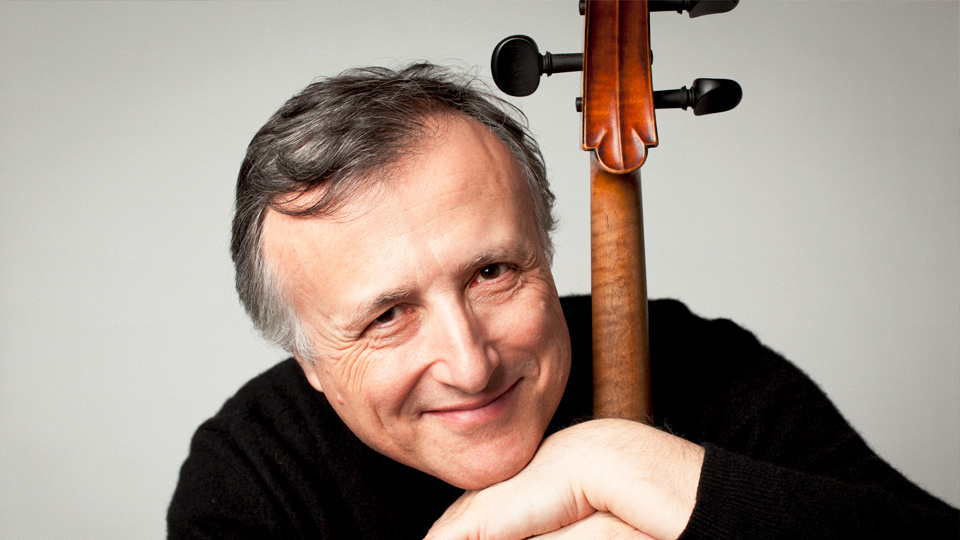
Mark Bebbington (piano, below), Czech National Symphony Orchestra / Steven Mercurio

Delius The Walk to the Paradise Garden (1906)
Beethoven Piano Concerto no.5 in E flat Op.73 ‘Emperor’ (1809)
Smetana Má vlast – Vltava (1874)
Dvořák Symphony no.8 in G major Op.88 (1889)

Symphony Hall, Birmingham
Tuesday 21 May 2024

Reviewed by Richard Whitehouse

Although it might not see the number of visiting orchestras that it once did, Symphony Hall still hosts a number of such concerts and the season’s representation ended tonight with this welcome appearance by the Czech National Symphony Orchestra and music director Steven Mercurio.

Opening with DeliusThe Walk to the Paradise Garden (from his opera A Village Romeo and Juliet) found these players evincing real affinity with its powerful if elusive idiom, Mercurio securing a poetic response from the woodwind and no mean ardour during its climactic stages.

Despite coming from and being based in or around Birmingham for most of his career, Mark Bebbington (above) is less known locally than he might be and his account of Beethoven’s Emperor Concerto confirmed a sure grasp of its expansive formal structure, with his secure and never inflexible technique more than equal to its pianistic demands. After those commanding initial exchanges, the initial Allegro felt just a little under-characterized until hitting its stride in the development; from where this reading proceeded with tangible conviction through to an agile ‘anti-cadenza’ then combative coda. The Adagio’s winsome variations could have had greater inner rapture, yet the eloquence of Bebbington’s response was not in doubt while the hushed transition into the Rondo produced an emotional frisson as carried through this finale overall.

Throughout the movement, Bebbington’s scintillating pianism duly galvanized the CNSO into a forthright response right up to the life-affirming close – after which, he acknowledged the enthusiastic applause with his limpid take on Chopin’s Nocturne (no.20) in C sharp minor.

Following the interval, Czech music not unreasonably took centre-stage. The players might have been surprised by reference to the ‘Moldau’, but Mercurio directed a fluent Vltava with such passages as its wedding dance or traversal of St John’s Rapids nothing if not evocative.

Having been at the helm of the CNSO since March 2019 (in succession to the much-missed Libor Pešek), Mercurio has certainly put his own stamp on its repertoire and presentation. He gave an account of Dvořák’s Eighth Symphony (sometimes referred to as the ‘English’ due to being published by Novello, but actually the most Czech-sounding of his mature symphonies) that, if affording few revelations, underlined its structural innovations as surely as its melodic immediacy. The opening Allegro made a virtue out of eliding the customary formal divisions on route to a resounding peroration, then the Adagio was even finer for the way that its pathos and grandeur were melded into a seamless and methodical yet cumulative design; one where the composer’s Romantic instincts and his Classical inclinations find especially potent accord.

The lilting Allegretto sees Dvořák at its most felicitous – Mercurio aptly taking its boisterous pay-off as a lead-in to the final Allegro, with its variations on an easeful theme for the strings that ingeniously shadow the outline of a sonata design prior to a coda of headlong brilliance.

Conductor and orchestra duly responded with two encores – a rhythmically incisive piece by Iranian-Canadian composer Iman Habibi, then a bossa nova as gave first trumpet and CSNO co-founder Jan Hasenöhrl the spotlight and brought the whole evening gently down to earth.

Click on the names to read more about the Czech National Symphony Orchestra, conductor Steven Mercurio, pianist Mark Bebbington and composer / pianist Iman Habibi

Published post no.2,186 – Wednesday 22 May 2024

On Record – Roderick Williams, Rupert Marshall-Luck, BBC Concert Orchestra / John Andrews – La Belle Dame (EM Records)

Roderick Williams (baritone) (Holst, O’Neil, Quilter & Scott), Rupert Marshall-Luck (violin, Brian), BBC Concert Orchestra / John Andrews

Brian orch. Marshall-Luck Legend B144 (c1919)
Delius Petite Suite d’Orchestre no.1 RTVI/6 (1889-90)
Holst Ornulf’s Drapa H34 (1898, rev. 1900)
Mackenzie Colomba Op.28 – Prelude (1883)
O’Neill La Belle Dame sans Merci Op.31 (1908)
Quilter orch. anonymous The Faithless Shepherdess Op.12/4 (1908)
Scott The Ballad of Fair Helen of Kirkconnel Op.8 (1900)

EM Records EMRCD085 [61’21’’] English texts included
Producer Neil Varley Engineers Andrew Rushton, Robbie Hayward
Recorded 5-7 January 2023 at Battersea Arts Centre, London

Reviewed by Richard Whitehouse

What’s the story?

EM Records continues its enterprising schedule with this collection of mainly vocal settings from the early twentieth century – heard alongside early orchestral pieces by Mackenzie and Delius, plus a recent orchestration of what is Havergal Brian’s only surviving chamber work.

What’s the music like?

This album’s title is also that of the 1819 poem by John Keats, its tale of ecstasy recollected in despair tangibly conveyed by Norman O’Neill in a setting which surely ranks among his finest concert works before music for theatre productions became his focus. Only marginally less compelling, Cyril Scott’s take on a typically over-elaborate ballad by Walter Scott has a keen sense of atmosphere – not least as rendered by Roderick Williams with an appropriate Lowland burr. Less involving emotionally, Holst’s setting of verse from an early Ibsen play is rather forced in its rhetoric – though the passages of emotional impulsiveness, allied to an acute feeling for orchestral textures, does presage those masterpieces of his maturity. Roger Quilter’s setting of a favourite Elizabethan lyric launches the collection with brusque charm.

Of the orchestral pieces, Delius’s early Première Petite Suite is here heard in full for the first time. Influences are easy to discern – Bizet in its whimsical Marche, Grieg in its winsome Berceuse, Massenet in its vivacious Scherzo then Fauré in its plaintive Duo – but never to the detriment of this music’s appeal, while the final variations on a sternly unison theme with ecclesiastical overtones will keep even seasoned Delians guessing as to its provenance. The likelihood of Alexander Mackenzie’s lyrical drama Colomba being revived is slim, but the Prelude to its first act has an evocative ardency which concludes this album in fine style.

John Andrews has the measure of these contrasting idioms and gets committed playing from the BBC Concert Orchestra. Roderick Williams is on fine form, as is Rupert Marshall-Luck in the Legend by Havergal Brian he himself has orchestrated. Ranging widely in expressive profile, while building considerable fervour during its relatively brief span prior to a calmly eloquent close, it is a stylish adaptation of the violin-and-piano original which has enjoyed increasing exposure this past decade. Marshall-Luck speculates whether Brian intended his own orchestral realization yet, given the composer had evidently written an orchestral piece with this title around 1915, it seems not impossible that the duo version is itself a reduction.

Does it all work?

Yes, in that the whole proves greater than the sum of its parts. Certainly, the works by Scott and O’Neill find these contemporaneous while otherwise very different figures at something near their best, while the Delius makes for an attractive sequence which deserves more than occasional revival. As, too, does the Brian given that comparable shorter concertante pieces by figures such as Saint-Saëns are being taken up by a younger generation of violinists. The spacious sound and extensive annotations are both up to EMR’s customary high standards.

Is it recommended?

Indeed. Hearing the Holst prompts the thought that, with the 150th and 90th anniversaries of his respective birth and death falling this year, now would be the ideal time for revival of his orchestral suite Phantastes – which has seemingly remained unheard since its 1912 premiere.

Listen & Buy

La Belle Dame is due for release on 19 April, but you can hear excerpts and look at purchase options on the EM Records website. For more information on the artists click on the names of conductor John Andrews, baritone Roderick Williams, violinist Rupert Marshall-Luck and the BBC Concert Orchestra

Published post no.2,126 – Saturday 23 March 2024

Music for a hot evening – Delius: In A Summer Garden

Delius’ garden in Grez-sur-Loing, France

by Ben Hogwood

Back in July 2015, Arcana posed the question ‘Is there a less fashionable British composer than Delius?

The thought was a response to the lack of Proms performances for his music over the years, a trend that continues to this day.

The piece played on that balmy July evening, however, made a winsome impression on this particular author, even though it is not one of his best known works. To quote from the review, “Delius’ mastery lies in his orchestration and harmony, with sultry added notes and hazy, impressionistic textures that evoke the laziness of a summer day.”

Since a good deal of Europe has been basking in hot weather this weekend, it is the ideal time to revisit this dreamy piece. Listen (and hopefully enjoy!) below:

In concert – Raphael Wallfisch, BBC Concert Orchestra / Martin Yates: English Music Festival opening concert

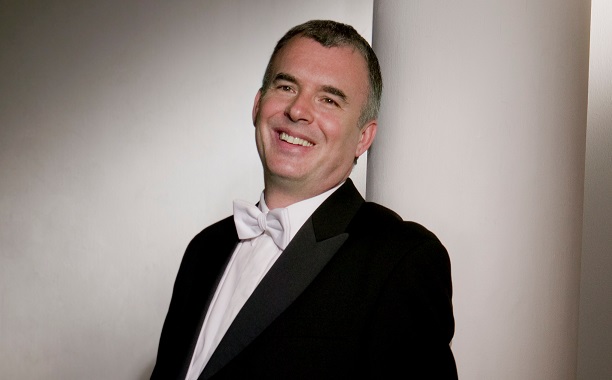
Raphael Wallfisch (cello, below), BBC Concert Orchestra / Martin Yates

Lewis A Celebratory Overture (2023) [EMF commission: World premiere]
Lloyd Webber (orch. Yates) Scenes from Childhood (c1950) [World premiere]
Moeran Cello Concerto in B minor (1945)
Alwyn Serenade for Orchestra (1932) [World premiere]
Delius Two Pieces for Small Orchestra (1911-12)
Vaughan Williams (arr. Adrian Williams) A Road All Paved with Stars (1929/2016) [Public premiere]

Dorchester Abbey, Dorchester-on-Thames
Friday 26 May 2023

Reviewed by Richard Whitehouse

The breezy ebullience of Paul Lewis’s A Celebratory Overture (redolent of Malcolm Arnold without any risk of expressive ambiguity) launched this latest English Music Festival in fine style, with its crisp and precise playing from the BBC Concert Orchestra under Martin Yates.

As so often in these concerts, world premieres were not lacking and the first brought hitherto unknown partsongs by William Lloyd Webber arranged into suite-form then orchestrated by the conductor. If the resultant Scenes from Childhood adds but little to the reputation of this not inconsiderable figure, the Prelude yields appealing poise while Serenade is a waltz of no mean suavity, then the Finale nimbly combines elements of fugue and waltz on its way to a rousing close. Worth hearing, and not least when rendered with such obvious enjoyment.

The emotional weight of this first half inevitably fell upon the Cello Concerto by E.J. Moeran. Completed in the aftermath of the Second World War, it was the composer’s first large-scale piece for his wife Peers Coetmore; her belated and often approximate recording likely having deterred others from taking it up. Not so Raphael Wallfisch (above), his belief evident from the outset of a Moderato whose confiding eloquence is not without undercurrents of unease. These latter are made explicit at the start of the Adagio, otherwise centred on one of the composer’s most affecting melodies and building with due inevitability to a cadenza whose growing animation carries over to the final Allegretto. Here a jig-like main theme denotes an Irish influence that offsets any tendency to introspection as it guides this engaging movement to a decisive close.

Quite a performance, then, which was complemented after the interval by a first hearing for the early(ish) Serenade by William Alwyn. Written while on examination duties in Australia, this undemanding piece moves from a (mostly!) tranquil Prelude, through a stealthy and by no means uninhibited Bacchanale then a serene Air which could yet find favour as a radio staple, to a Finale that, as Andrew Knowles rightly indicated in his programme note, betrays more than a hint of Czech folk-music across its insouciant and ultimately boisterous course.

Hardly an interlude, the brace of pieces by Delius fairly encapsulate the inward rapture of his maturity. Yates (above) brought just the right lilt to the dancing gait of On Hearing the First Cuckoo in Spring, while the subtle eddying of Summer Night on the River was effortlessly conveyed.

The final premiere tonight came in the guise of A Road All Paved with Stars – the ‘symphonic fantasy’ as arranged by Adrian Williams (a notable composer in his own right) from Vaughan Williams’ comic opera The Poisoned Kiss. Occasionally revived, its dramatic prolixity rather obscures its musical highpoints – emphasized here in what is both a chronological overview and cumulative paraphrase that also adds a non-symphonic orchestral work to its composer’s output. The surging emotion of those final stages could hardly leave an audience unmoved. This vivid reading concluded a memorable concert in which the Moeran was dedicated to the memory of Michal Kaznowski – who, as cellist of the Maggini Quartet and formerly section-leader at the City of Birmingham Symphony Orchestra, has left a legacy worth remembering.

To read more about the festival, visit the English Music Festival website. For information on the performers, click on the links to read more about cellist Raphael Wallfisch, conductor Martin Yates and the BBC Concert Orchestra, and for more information on composer and arranger Adrian Williams and composer Paul Lewis

Arcana at the opera: Margot la Rouge & Le Villi @ Opera Holland Park

Margot la Rouge (1902)
Lyric Drama in One Act – music by Frederick Delius; Libretto by Rosenval
Sung in French with English surtitles

Margot – Anne Sophie Duprels (soprano), Sergeant Thibaud – Samuel Sakker (tenor), L’Artiste – Paul Carey Jones (bass-baritone), Lili Béguin – Sarah Minns (soprano), Nini – Laura Lolita Perešivana (soprano), La Patronne – Laura Woods (mezzo-soprano), Totor – David Woloszko (bass)

Le Villi (1883)
Opera-Ballet in Two Acts – music by Giacomo Puccini, Libretto by Ferdinando Fontana
Sung in Italian with English surtitles

Anna – Anne Sophie Duprels (soprano), Roberto – Peter Auty (tenor), Guglielmo – Stephen Gadd (baritone)

Martin Lloyd-Evans (director), takis (designer), Jake Wiltshire (lighting), Jami Read-Quarrel (movement)
Opera Holland Park Chorus, City of London Sinfonia / Francesco Cilluffo

Opera Holland Park, London
Thursday 21st July 2022 [7.30pm]

review by Richard Whitehouse Photos (c) Ali Wright

Delius and Puccini are unlikely operatic bedfellows (as anyone who recalls a near-disastrous ENO staging of Fennimore and Gerda with Gianni Schicchi three decades back will surely concur), but this double-bill by Opera Holland Park has an undeniable logic given both works started out as entries in the competition for one-act operas held on four occasions by Edoardo Sonzogno to encourage young talent (so gaining the upper hand against his established rival Ricordi). That neither proved successful at the time need not detract from the merits of either and if the concept of the one is, with hindsight, as uncharacteristic as that of the other appears immature, both contain more than enough worthwhile music along with arresting stagecraft to vindicate their revival in an imaginative production such as they receive on this occasion.

At the time he finished Margot la Rouge, Delius already had four operas behind him so was hardly unequipped for the task at hand. The challenge lay rather in adapting his increasingly personal, even metaphysical approach to the hard-hitting realism – not abetted by a libretto (written pseudonymously by Berthe Gaston-Danville) which reduces its characterization to stereotypes throughout. Yet the best of Delius’s music rises well above any one-dimensional sordidness – the plaintiveness of its prelude and mounting eloquence of its love scene (both refashioned as the Prelude and Idyll which was the composer’s final collaboration with Eric Fenby) equal to anything from his maturity. Had one or another of those earlier operas been acclaimed, the chances for Margot to reach the stage would have been appreciably greater.

The simple but effective revolving set favoured by Martin Lloyd-Evans presents this drama the more effectively for its unfussiness, enhanced by takis’s set designs and Jake Wiltshire’s resourceful lighting. Casting-wise the stage is dominated, as it needs to be, by Anne Sophie Duprels’s assumption of the title-role – emotionally guarded in its earlier sullenness, before ascending to heights of rapture once her identity becomes known. Samuel Sakker evinces the necessary ardency as Thibault and though Paul Carey Jones is a little too suave to convey the viciousness of The Artist, his commanding presence is never in doubt. Sarah Minns has just the right coquettishness as Lili, while there are telling cameos from Laura Lolita Perešvana, Laura Woods and, especially, David Woloszko among those (too?) numerous smaller roles.

Whereas Delius’s opera had to wait 82 years for its premiere, Puccini’s Le Villi hit the stage within a year of completion then was revived twice before the end of the decade – by which time, this ‘opera-ballet’ had expanded to two acts. Therein lies the problem, as Ferdinando Fontana’s modish libretto seems stretched beyond its effectiveness as drama, the threadbare nature in much of the latter scenario requiring a narrative element merely to hold it together. That said, there are various opportunities for characterizing the three protagonists of which Puccini made the most, with the central symphonic intermezzo L’abbandono e La tregenda (the latter still heard as an encore) confirming a new orchestral sophistication in Italian opera. Theatrically flawed as it may be, Le Villi is an auspicious and undeniable statement of intent.

Here, too, the Lloyd-Evans-takis-Wiltshire staging works to the advantage of this drama, yet without over-egging the supernatural shenanigans; credit, also, to Jami Reid-Quarrell for his utilizing the relatively restricted stage-space such that the dance element seems both alluring and more than compensates for the flailing narrative. Vocally, Anne Sophie Duprels has the measure of Anna as she traverses the gamut of emotions from diffidence, through heartbreak to revenge, with a continuity of expression not to be taken for granted. Peter Auty has made a speciality of high tenor roles, but his Roberto needs greater fervency and warmth to offset its shrillness. Not so Stephen Gadd, whose Guglielmo has a burnished humanity that commands attention on his (too few?) appearances and a clarity ideally suited to delivering the narrative.

The latter opera also gains from a typically lusty contribution by Opera Holland Park Chorus – and, in both works, the City of London Sinfonia responds with commitment to the dynamic direction of Francesco Cilluffo, who teases out the many dramatic nuances with alacrity. The orchestral reductions by Andreas Luca Beraldo have been judiciously gauged in both cases -that for Margot ironically closer to the orchestration undertaken by Eric Fenby in the absence of Delius’s score and which was soon mothballed once the original had been relocated. The relative unfamiliarity of these operas is a coup such as OHP has regularly delivered over the years, and one which is well worth the attention of more than just those drawn to rare opera.

Further performances take place on 29 July, 31 July [2pm], 2, 4 and 6 August. For more information visit the Opera Holland Park website