Marianna Crebassa (mezzo-soprano), The Mozartists / Ian Page
Mozart Lucio Silla K135 (1772): Dunque sperar poss’io…Il tenero momento Haydn Symphony no.34 in D minor Hob.I:34 (1765) Mozart Idomeneo K366 (1781): Ah! qual gelido orror; La clemenza di Tito K621 (1791): Parto, parto; Lucio Silla K135: Ah! se morir mi chiama; Le nozze di Figaro K492 (1786): Voi che sapete che cosa e amor Haydn Symphony no.26 in D minor ‘Lamentatione’ (1768) Mozart La clemenza di Tito K621: Deh, per questo istante solo
Wigmore Hall, London Thursday 26 February
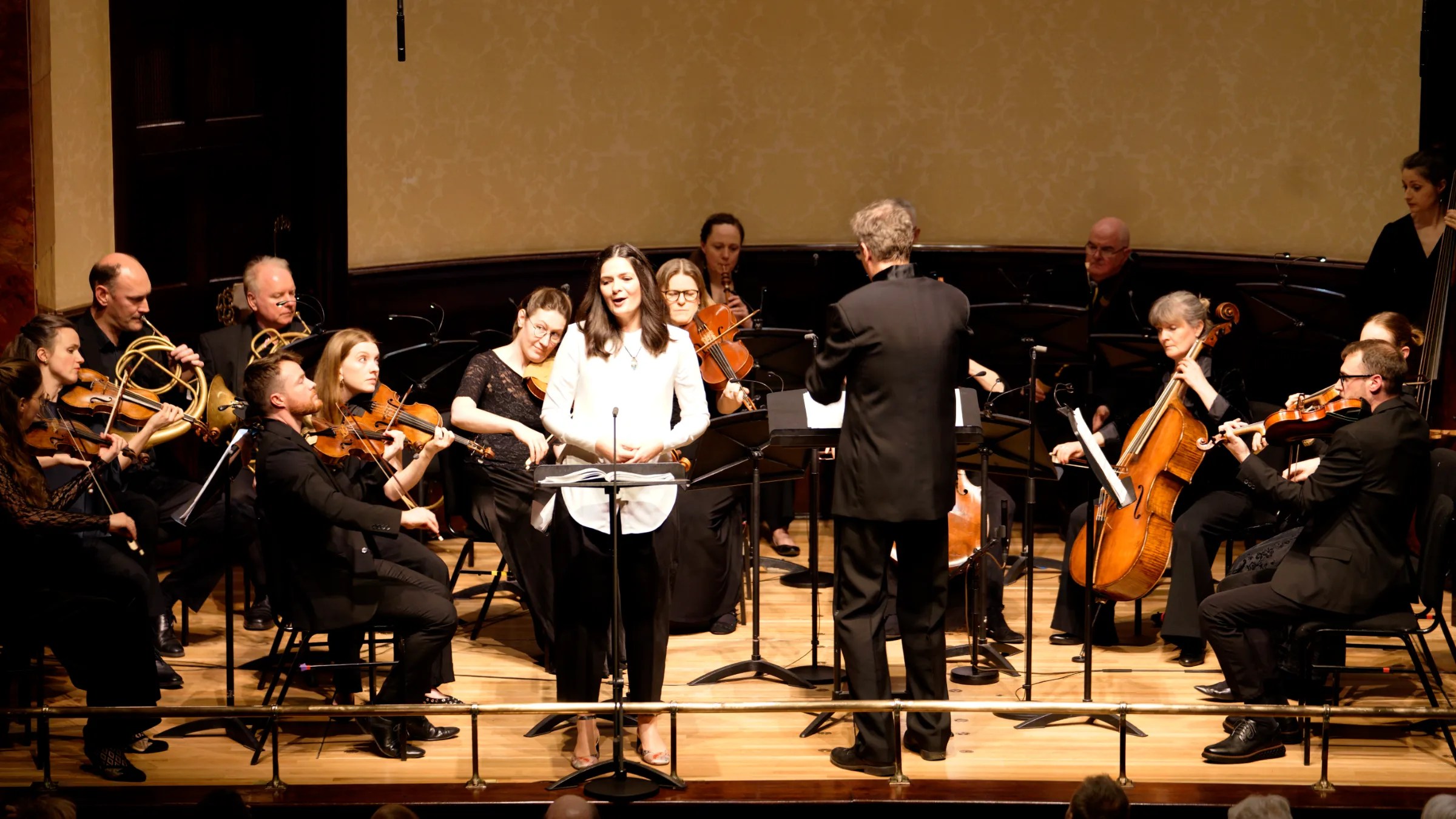
Reviewed by Ben Hogwood Photo (c) The Mozartists
It was a matter of time before Marianne Crebassa and Ian Page appeared together on the same stage. Indeed, as Page confided in the pre-concert talk, the French mezzo-soprano was top of his ‘wanted’ list for performing with his band, The Mozartists. With dates aligned, the pair constructed a typically stimulating programme.
Page’s eye for historical and orchestral detail proved the ideal foil for Crebassa’s characterisation of four operatic characters from early, middle and late in Mozart’s career, with each role written for castrato singers. Supporting these operatic excerpts were two symphonic examples from Haydn’s ‘Sturm und Drang’ period.
Diving straight in at the deep end, Crebassa embraced the many twists and turns of the 10-minute epic Dunque sperar poss’io…Il tenero momento, from Mozart’s teenage opera Lucio Silla. Her lower range notes were sumptuously delivered with impeccable poise, while Crebassa’s upper range was thrilling in the exposed virtuoso passages, delivered with a flash of the eye and a smile.
‘Enjoyment’ was a key word for this concert, as players, conductor and singer alike shared musical asides with obvious pleasure – not always the case in the concert hall! Some of the biggest smiles were reserved for Crebassa’s coy account of Voi che sapete, from Le Nozze di Figaro, subtle but winsome. Meanwhile the tragic Ah! qual gelido orror, from Idomeneo, had the appropriate gravitas and a weighty orchestral tone to match. A second aria from Lucio Silla, Ah! se morir mi chiama, was given with exceptional voice control and attention to detail from Page, including tasteful harpsichord continuo from Steven Devine.
Crebassa also triumphed in two arias from Mozart’s final opera La clemenza di Tito, hailed by Page as a long-underrated masterpiece. In Parto, parto her accomplice was basset clarinettist Emily Worthington, taking the part of Mozart’s friend (and Clarinet Quintet dedicatee) Anton Stadler. Player and singer engaged in a compelling sequence of musical cat and mouse, Worthington projecting well from the back of the stage. Meanwhile Deh, per questo istante solo found Crebassa drawing the audience in with its dynamic contrasts, high on drama. As a considerable bonus she gave a serene account of Qui d’amor from Handel’s Ariodante as an encore.
Complementing the Mozart selection were two examples of Haydn’s invention from early on in his tenure as Director of Music at Esterházy. Both D minor works share a weighty tone, and the earlier work, Symphony no.34, began with a heavy heart. The sparse tone of the orchestra was a stark contrast to the Mozart, only briefly relenting as the first movement developed its ideas. Even when D major appeared as the key of the resulting Allegro the music still bristled with anxiety, expressed through the violin tremolos. The Minuet and Trio – with lovely tone from oboists James Eastaway and Rachel Chaplin – eased the strain with brighter tones, as did the finale, in spite of its brief minor key recollections.
One of few Haydn symphonies to receive a nickname from the composer himself, Symphony no.26, the ‘Lamentatione’, took us to church in an interpretation reaching profound emotional depths. Page and the Mozartists moved from the brio of the lean first movement to rapt concentration in the second, where the music has a similar gait to the chorale of J.S. Bach’s famous cantata Wachet auf, ruft uns die Stimme. Page gave the phrasing appropriate room for contemplation. Haydn’s wit and invention made a welcome reappearance beneath the surface tension of the Minuet and was expressly felt in the syncopated trio, where oboes and horns excelled.
This was a memorable evening of music making, captured by microphones – presumably for broadcast on BBC Radio 3 or recording. Either way, a memento is well worth seeking out!
You can listen to the music from this concert in a Tidal playlist, including some of Marianne Crebassa’s own Mozart recordings made for the Erato label.
Mozart Piano Sonata no.13 in B flat major K333 (1783-4) Debussy Images Set 1: Reflets dans l’eau (1901-5); Suite Bergamasque: Clair de lune (c1890, rev. 1905) Dupont Les heures dolentes: Après-midi de Dimanche (1905) Hahn Le Rossignol éperdu: Hivernale; Le banc songeur (1902-10) Koechlin Paysages et marines Op.63: Chant de pêcheurs (1915-6) Schmitt Musiques intimes Book 2 Op.29: Glas (1889-1904)
Wigmore Hall, London Monday 28 April 2025 (1pm)
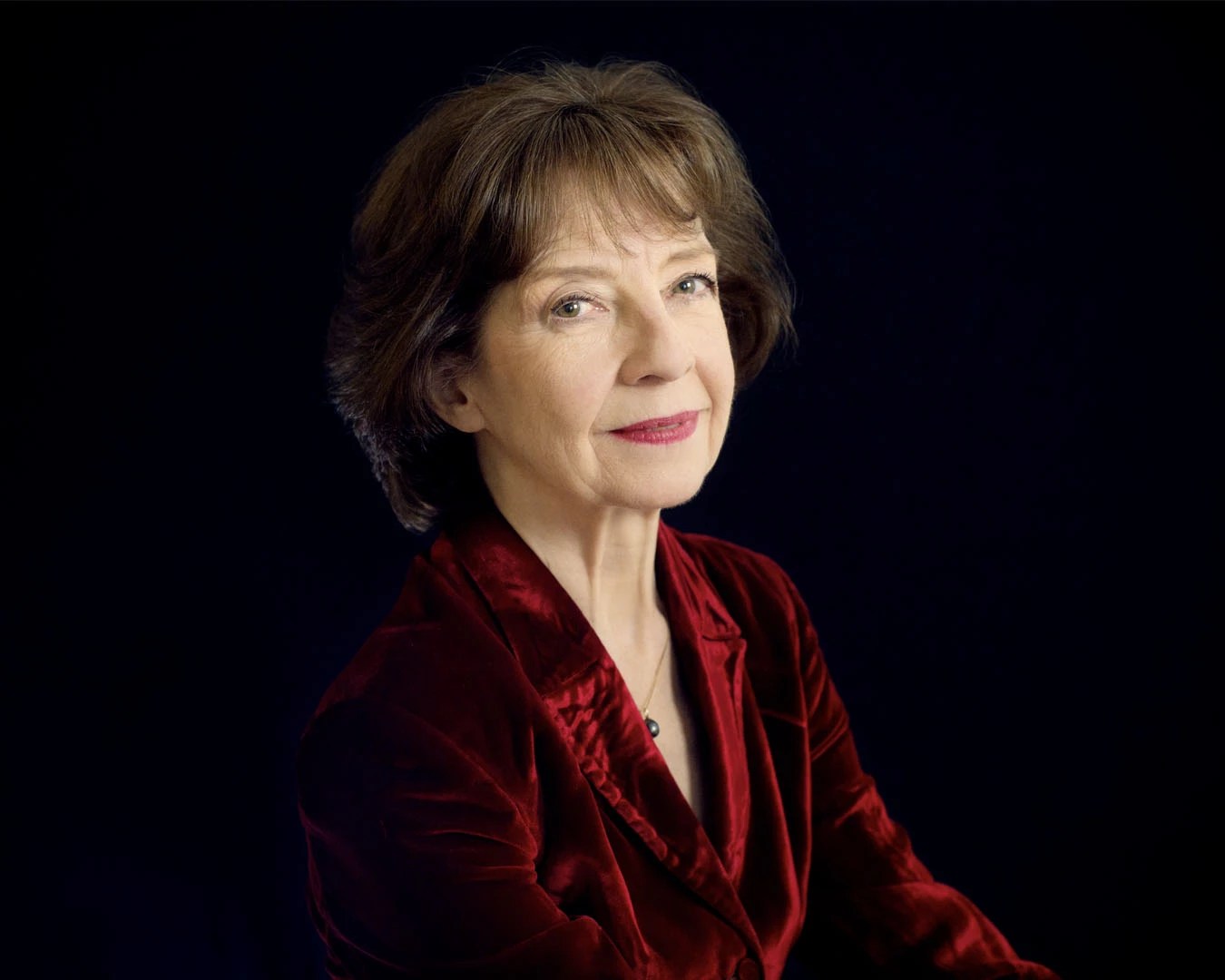
by Ben Hogwood picture of Anne Queffélec (c) Jean-Baptiste Millot
The celebrated French pianist Anne Queffélec is elegantly moving through her eighth decade, and her musical inspiration is as fresh as ever. The temptation for this recital may have been to play anniversary composer Ravel, but instead she chose to look beneath the surface, emerging with a captivating sequence of lesser-known French piano gems from the Belle Époque, successfully debuted on CD in 2013 and described by the pianist herself as “a walk in the musical garden à la Française.”
Before the guided tour, we had Mozart at this most inquisitive and chromatic. The Piano Sonata no.13 in B flat major, K.333, was written in transit between Salzburg and Vienna, and the restlessness of travel runs through its syncopation and wandering melodic lines. Queffélec phrased these stylishly, giving a little more emphasis to the left hand in order to bring out Mozart’s imaginative counterpoint. She enjoyed the ornamental flourishes of the first movement, the singing right hand following Mozart’s Andante cantabile marking for the second movement, and the attractive earworm theme of the finale, developed in virtuosic keystrokes while making perfect sense formally.
The sequence of French piano music began with two of Debussy’s best known evocations. An expansive take on the first of Debussy’s Images Book 1, Reflets dans l’eau led directly into an enchanting account Clair de Lune, magically held in suspense and not played too loud at its climactic point, heightening the emotional impact.
The move to the music of the seldom heard and short lived Gabriel Dupont was surprisingly smooth, his evocative Après-midi de Dimanche given as a reverie punctuated by more urgent bells. Hahn’s Hivernale was a mysterious counterpart, its modal tune evoking memories long past that looked far beyond the hall. Le banc songeur floated softly, its watery profile evident in the outwardly rippling piano lines. The music of Charles Koechlin is all too rarely heard these days, yet the brief Le Chant des Pêcheur left a mark, its folksy melody remarkably similar to that heard in the second (Fêtes) of Debussy’s orchestral Nocturnes.
Yet the most striking of these piano pieces was left until last, Florent Schmitt’s Glas including unusual and rather haunting overtones to the ringing of the bells in the right hand. Queffélec’s playing was descriptive and exquisitely balanced in the quieter passages, so much so that the largely restless Wigmore Hall audience was rapt, fully in the moment. Even the persistent hammering of the neighbouring builders, a threat to concert halls London-wide, at last fell silent.
Queffélec had an encore to add to her expertly curated playlist, a French dance by way of Germany and England. Handel’s Minuet in G minor, arranged by Wilhelm Kempff, was appropriately bittersweet and played with rare beauty, completing a memorable hour of music from one of the finest pianists alive today.
Listen
You can listen to this concert as the first hour of BBC Radio 3’s Classical Live, which can be found on BBC Sounds. The Spotify playlist below has collected Anne Queffélec’s available recordings of the repertoire played:
The conductor talks to Ben Hogwood about his forthcoming debut at Garsington Opera, where he will conduct Rameau‘s Platée – a work in which he has also sung the title role. Agnew talks about Rameau but also Handel, considering why now is a good time for British audiences to embrace the music of the French Baroque.
On a dark, dank winter’s day there is something incredibly heartening in having a discussion about the prospect of a summer opera season. Arcana has teamed up with conductor (and former tenor) Paul Agnew to do exactly that, and he is in optimistic mood. “It will arrive quickly, with the spring and the daffodils, and then we’ll find ourselves in Garsington!” he says. It will be his first visit to Wormsley Park, and to the festival. “I’m really looking forward to it. It’s one of those very original places, and it isn’t a dark theatre. It has windows, and so each production has to take into account that you’re going to have a part of that show in the light. I’ve never done that sort of thing, and the team is very nice. We had the model showing so we’ve seen the set, and the concepts, and it looks great. It will be a lot of fun, which it should be – but with that hint of tragedy, which is always lurking in Platée.”
He is talking about Rameau’s comic-tragic opera, which he will lead with a new team of soloists and The English Concert. It is the first excursion for Garsington into the world of French Baroque opera, but Agnew is returning to a piece he knows well. Indeed, he first encountered Platée as a singer. “I didn’t sing Platée – I sang Thespis in the Prologue. I was quite a young thing, and it was a production with the Opera de Paris. It’s a really hard role, extremely high – and obviously you go on at the top of the show. It’s a bit nervy. Then almost immediately I took on the role of Platée in that same production in Japan. That was released on DVD, which had a lot of success.”
He explains why. “Laurent Pelly did a genius job – and they found just the right balance in order that when we get to the end, where the audience have been cheerleading with the rest of the chorus and these horrible characters, and they find themselves in fact implicated in this terrible humiliation. I think he just found the right click. There was a gasp from the audience when they understood quite what a terrible thing this is. I wouldn’t want to exaggerate, but there is something political about it, and within the operas of Rameau – Les Indes galantes and certainly Les Boréades. They tend to have slightly monarchical reflections, and there’s a sense – if you know the film Ridicule – about how close you can get to the king but then you know you made a mistake, you didn’t use the right wig and so on, and you get sent straight back to the back of the queue. There’s a sense of that in Platée and the ridicule, as you would expect Jupiter – who essentially is Louis XIV – to be the hero. In fact, he’s the villain! It’s not exactly dangerous, but not politic either – Louis XV by then.”
Agnew has enjoyed a close affinity with Rameau throughout his career. “The very first thing I did in France, with William Christie and Les Arts Florissants, was record the Rameau Grands Motets. They’re relatively youthful pieces compared with the operas, which he didn’t start until he was about 50 years old. I love Les Grands Motets, partly because it’s surprising to find such incredibly sensual music for the church. They just seemed to suit my voice, and in fact it was one of the very first French Baroque things I did at all. You know you have those lucky things in in a long career where you ‘meet’ a music and you think, “Oh, my goodness, I’m really made for this!” I love the sentimentality of it, in the best sense of the term, I love the melody and I love the sensuality of the harmonies. That leads you through the line and tells you where you’re going constantly, so you can make the music into such a strong experience.”
Things moved quickly. “Almost immediately we started on the operas in the Opera de Paris, so we did Hippolyte et Aricie, then various roles in Les Indes galantes, and then we did Platée, which was with Marc Minkowski and Les Musiciens du Louvre. Then we did Les Boréades, the last opera, which was never staged in his lifetime – he was 80 when he wrote it. It’s amazing to think he lived to 80, but happily he did! It’s an astonishing journey, very much like Platée but in a much more heroic way – he’s a real prince. So I did all those operas, and I’ve sung others – Castor et Pollux for instance – in concert. I’ve done a lot of the ballets, too. I’m a big fan, as you would expect! It’s the most extreme the Baroque gets, even more complicated in some ways than Bach. He was an amazing technician, and he’s stating things relatively clearly, whereas there’s a complexity of emotions in Rameau which really predate going into Gluck and then early Mozart. He didn’t die until 1764, so Mozart has already composed his first piece before Rameau dies. There is a big influence on Gluck, and everything that he says about the reform operas is what Rameau has been trying to do for years.”
Performing the operas as both a singer and a conductor has given Agnew a unique perspective. “It’s very helpful”, he agrees, “for the singers too. I’m naturally a singer’s conductor, as I want them to be able to breathe and recover and so on, because that’s the best for us. I’m not going to push them into a tempo which they can’t do, so we want to find the right tempo for the singer. If you’re a singer you understand that more clearly. It’s a good place to have been, whatever the music – I’ve sung a lot of Handel and Purcell, and now I conduct a lot of Handel and Purcell too. Having sung Platée itself, it makes me smile and I’m not in the least bit jealous about being on stage. I wouldn’t want to sing it again or go through that experience. It’s a long evening, and you’re on stage a lot. There’s a lot to sing, it’s quite hard, and it’s quite physical because it’s a comedy. There’s a lot of running around, and jumping – if you’re a frog! – and I’m happy to leave that to other people. I still absolutely love the piece, and to have that long association is very useful.”
Visitors to Platée’s page on the Garsington Opera website are presented with the image of a flamingo and a beachball (above), an immediately appealing prospect in the depths of winter. “I think it’s going to be a lot of fun. I really like the way it’s being approached. We’re quite used to women playing men – that’s been around in Handel‘s Rinaldo, for instance, but the other way round is very much rarer. The only way in which the piece works is if she’s just a woman, you just get over it. I think Rameau’s idea was to define the strangeness to that person. It’s not about sexual politics, but not a woman as the gods would know – maybe asexual thing rather than being particularly transvestite or drag. I think we’re in the right direction in this production, where we just need to forget that the singer is a man, and just accept that this is a strange woman. She’s a nymph from the marshlands – we don’t know really what she is, a creature from the blue lagoon.”
It is the first time Agnew has encountered the work of director Louisa Miller and designer Christopher Oram. “I’m not sure they’ve done much Baroque before, so I wouldn’t have encountered them as that’s more or less my world. I like them very much. It’s not a very easy piece to approach dry – just to get your head around what Rameau could possibly be thinking about is quite hard. Right from the very first meetings we were clearly on the same page, and Louisa clearly knows the piece, which is very reassuring. As a singer you often get to the first rehearsal and find out the director doesn’t really know the piece very well, and you find yourself having to subtly guide the director through towards a good solution. That’s definitely not the case here! Chris’s designs are very good, it’s funny and relevant and they work throughout the piece. Sometimes at a first rehearsal you think, “This will work great in Act One, and Act Three, but Acts Two and Four will be a disaster because it just simply won’t work in this concept. This concept will work the whole way through, so I’m really encouraged. We’ve got a lovely cast, and also decided at the beginning we would take a cast where nobody had sung it before. Nobody arrives with preconceptions about how their role is, or how they would like to play it.”
There is a sense of great excitement that this is Garsington’s first foray into Rameau’s output. “Yes, and they’ve chosen well!” he says enthusiastically. “We’ve got a great band in the English Concert. I sang with them in my 20s, with Trevor Pinnock, and what an honour it is to direct them.” He expands on the repertoire at hand. “I’ve done French Baroque music with English bands before, and it is quite tricky. They’re technically such fantastic players, but it has a tricky accent, and you can’t get it just by reading the books. Again, it’s useful to be a singer in those situations because you can sing the sensuality of the line much more easily than you can describe it. I always end up singing quite a lot of rehearsals because it’s a visceral, physical reaction to what you hear, which makes it much easier. It will be a challenge for the band to get that accent right, but they’re eminently capable, and I’m massively looking forward to working with them.”
They are complemented by a strong team of soloists, who have equivalent challenges. “Equally, the singers are all English, so we need to get that right – and that’s not just question of pronunciation. There are all sorts of things about how the phrases are constructed, and how the ornamentation helps the grammar of the music. We will have time and we have a good cast, so that doesn’t worry me. You have to go quite deep into these pieces, especially doing this repertoire for the very first time in an opera house. It’s very rare to hear Rameau at all in the UK. I think Platée is the only piece that has been properly staged in the past, and that was a long time ago with the Royal Opera House. It’s very exciting, and there is a lot of interest from the public in French baroque music, so I look forward to that encounter! It is very complicated to put on, you need a ballet, an orchestra that knows their beans, and a cast willing to take risks with the ornamentation. It’s a courageous choice, but not an impossible one.”
Is the boundless supply of great music by Handel (below) in some ways to blame for the relative lack of French baroque music in the UK? Agnew smiles. “Handel’s an interesting one, because he would say, “You do get French Baroque – because if you look at the dances in Alcina, the overtures – you’re not missing out, I’ve written it myself!” In some ways, yes – but you could never say Handel’s at fault, because a house without Handel would be a disaster. You have to think as well that if Purcell had lived longer than the whole history of English music would have been very different. He died in 1695, and then they had a few abortive attempts to create English opera. Then there was an extraordinary moment where Handel arrives, and he creates this strange bastard form of Italian opera for English people, written by a German! You think it’s never going to work but he has this immense success, at least until the early 1740s.”
He goes into more detail behind Handel’s successful formula. “He is much more straightforward, he has the advantage – and I don’t mean to be disrespectful – that what you see on the page is what you get. Twenty to thirty years earlier, the ‘affect’ is everything. Once you start an aria you stay in that in that emotion until the end of the aria, and then a recitative will tell you what kind of emotion you’re going to go to in the next one. With Rameau it’s much, much more fluid than that, because things are changing very fast, and he goes towards complications where the likes of Pergolesi go towards simplicity. You get that break that comes around the time of French Revolution, a time of an immense social and cultural change. Handel is a chancer, isn’t he?! He’s in Italy, and then he knows that George of Hanover is going to be the next king of England, so he immediately goes up and gets a job in Hanover. The first thing the Hanoverians say is go to England, as a sort of spy-come-diplomat or equerry.”
The rest – as they say – is history, and Agnew relishes recounting the events. “And then, of course, George I turns up and it’s all set up for him to have this contact with the nobility, and the prestigious arrival of the king at his operas and so on. He’s bright, and gets it sorted right at the start! The other thing is he turns up in Italy, and produces these works that are effectively for the Catholic nobility and cardinals, and he is a straight, up and up Protestant Lutheran. And yet – business is business, you do what you want! He produces something for a public that don’t know anything about anything. Rameau can produce something much more technically difficult and also psychologically complex, because he’s simply joining the train. We’ve had Lully, Charpentier, Campra, and all the rest – and Handel arrives and takes all that on board, that melange between the original French style – which wasn’t French anyway, because Lully wasn’t French – and then he puts this new Italian virtuosity in. He’s joining this great movement, and dominates England completely!”
We move on from Agnew’s fascinating dissection of Handel and Rameau to talk about one of his mentors and accomplices, conductor William Christie (above). “He’s a theatre man, he wants to pick up the music and shake it and I love that. When you’re a singer, you absolutely want that because you don’t want someone saying, “Careful with the D sharp”, you want someone saying, “Come on, tell me the story!” I always much prefer those people – and John Eliot Gardiner as well – who pick up the music and shake it, and have enough courage to say this music needs interpreters. The composer wants you to take it and make a show of it. That’s what Bill does, and absolutely what I try to do now as a conductor. You should take risks with it! These people were pragmatists, so if you’ve got someone who can sing this note but not that one, go with it. If you look at the history of Handel’s operas, or Messiah – there’s no definitive Messiah. He changed all the time, because he wanted to get the best out of who he had. It wasn’t saying, “This is my definitive work of art, have some respect and do it correctly”, it was, “Today it’s going to be like this, tomorrow it’s going to be different again, because I need to get the best that you have! I need to get great performance out of you. And that’s why it changes constantly. We don’t quite have that variance, but nonetheless you still have to have that attitude that you have to make a show. That goes straight through to Mozart – he is a show man. You want to start Cosi fan tutte with the overture thinking that you are making a show, not a homage. It’s an entertainment. You should laugh and cry and be frightened and happy, and all those things!”
Turning to Rameau again, he considers the composer’s standing. “He can be very funny, in the likes of Les indes galantes – and Platée is genuinely funny too. Rameau is always known as a surly bugger, when you read about him he is not at all a nice person – but he is really genuinely funny. To do comedy, as everyone knows, it’s much harder than just telling a joke – you have to have that special talent. He has that. It doesn’t mean that Boreades or Hippolyte aren’t amazing pieces, but when he wants to be funny he can be very funny.”
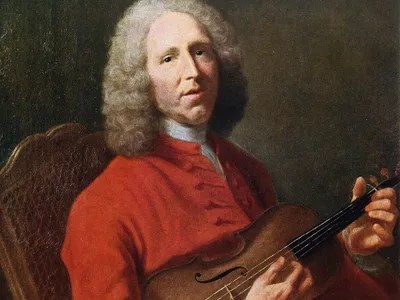
Rameau (above) is a colourful composer, too. “Everything is about colour”, agrees Agnew, “and he’s the first to really properly orchestrate, not just saying to the flutes to play the same as the violins. This is music just for flutes, just for the oboe, and then we’re just going to hear the strings coming in when when we need harmony. And then of course we’ll have a big string moment. It’s the beginning of colour in its best sense, not only harmonic colour but audible colour. The players suddenly find themselves pretty exposed in Rameau, particularly the bassoon parts. He’s a genius of the bassoon writing, and you get these incredible melodies, in Dardanus for example, with these sombre, reedy, mournful qualities. Some amazing colours.”
There is more, too. “And then he’s a great dancer! I think he has to be the best dance composer before Stravinsky. He has this incredible variety, within the ‘stock’ dances. Everyone knows straight away if it’s a Galliard or a Bourree, but they are so incredibly different. It’s a joy when the band understand it, too. I did Platée with the Dresden Staatskapelle, and a more serious orchestra you could not find – but once they got the idea that you could have fun and you could play out and take risks, they really went for it and it ended up great fun. There was a sort of trigger moment where we were doing a dance, and I kept on trying to get them to bow shorter, because they do hugely long bows, with fabulous, resonant instruments – nothing like the English Concert will play in Platée. I was trying to get them to play shorter and closer to the bridge, get a slightly sharper sound out of it. The shorter they got with the bow, the more they understood it and wanted to play out. It took off! Legato is a kind of aberration in this opera, everything else is short – so we charmed them out of certain – very good – habits.”
We bid farewell with one thing clear – Platée is in very good hands and a highly entertaining night is in prospect. “The main thing to say is that it’s a fun evening. You don’t need to worry if you don’t know much about French, or Baroque, or history. Just come and have a ball, it’s a fun evening, a fun piece with some very sharp twists!”
You can read more about the forthcoming production, and book tickets, at the Garsington Opera website
Martin Fröst (clarinet), Roland Pöntinen (piano), Sébastien Dubé (double bass)
Debussy Première rhapsodie (1909-10) Chausson Andante and Allegro (1881) Poulenc Sonata for clarinet and piano (1962) Night Passages – A musical mosaic (with arrangements by the performers) Domenico Scarlatti Sonata in D minor Kk32 Chick Corea Children’s Song no.15 (1978) Rameau Les Indes galantes: Air pour les Sauvages (1735-6) Purcell Incidental music for Oedipus, King of Thebes Z583: Music for a while (1692) J.S. Bach Sinfonia no15 in B minor BWV801 (c1720) Chick Corea Armando’s Rumba (1976) Purcell Hornpipe in E minor Z685 Handel Menuet in G minor (1733) Traditional Polska från Dorotea Göran Fröst Klezmer Dance no.2 (2011)
Wigmore Hall, London Wednesday 21 December 2022
Reviewed by Ben Hogwood
In 2019, Arcana was at the Wigmore Hall to see Martin Fröst and Roland Pöntinen give a concert of largely French music for clarinet and piano. Their encore hinted at an intriguing sequence of arrangements exploring connections between classical music and jazz. Three years on, that sequence has grown in stature, realised in recorded form as the Sony Classical album Night Passages, and given meaningful content by personal and world events.
Through lockdown, Fröst experienced intense bouts of Ménière’s disease, whose symptoms include unexpectedly severe bouts of vertigo and tinnitus. The clarinettist experienced one such bout while driving his car, which he thankfully negotiated without injury, but which bred a number of accompanying fever dreams. Expressed in the program notes, they lent a vivid written complement to the music.
Since 2019 the double bass of Sébastien Dubé has been added to the instrumental thinking, an essential musical component taking the arrangement style towards Jacques Loussier without ever resorting to parody. Unexpectedly, the group’s colourful arrangements did not always include the piano, allowing Fröst and Dubé the chance to explore the rewarding combination of clarinet and double bass through imaginative techniques and compelling improvisation.
The course of Night Passages led from a solemn sonata by Domenico Scarlatti to a Klezmer dance from Fröst’s brother Göran, by way of arrangements exploring the versatility of Baroque music. These were matched by jazz-inflected work from Chick Corea, with Armando’s Rumba presenting some vibrant syncopations, along with a celebration of the Swedish polska.
Frost’s artistry was almost beyond criticism, the clarinettist able to make even the most demanding technical passages appear nothing more than a walk in the park, airily improvising or running through sharply edged cadenzas. Dubé was no less impressive, and a remarkably wide range of colours issued from the double bass, whether bowed or plucked. His chemistry with Fröst was compelling, and the occasional use of vocals added to the mix. Roland Pöntinen also made the most of his chances to shine, providing the rhythmic verve to the dances but also a welcome, cleansing clarity which ran through the Baroque arrangements, tastefully and affectionately realised.
Prior to the interval we heard three short pieces by French composers for clarinet and piano. Debussy’s Première rhapsodie tells its story through a set of contrasting thoughts, initially set out in a humid atmosphere but becoming more outward facing as it gains in confidence. Fröst and Pöntinen had its many twists and turns instinctively under their fingers, finishing each other’s sentences as they did in the romantic, lyrical writing of Chausson’s Andante and Allegro, played with evident affection.
Yet it was Poulenc’s Sonata for clarinet and piano, completed in the year before his death, that made the most lasting impression. What a profound work this is, paying tribute to his friend and fellow composer Arthur Honegger. The slow movement holds the emotional centre of the work, with melancholy on occasion spilling over into outright sadness. Fröst’s quieter asides encouraged the audience to lean closer to the music, but these intimate thoughts were swept away by the exuberant finale, throwing caution to the winds. Fröst and Pöntinen played with great feeling throughout, typifying the approach of a concert that may not have been generous in length but which amply compensated through musical quality.
As we move on from the two Bachs, Johann Sebastian and Carl Philipp Emmanuel, towards Beethoven, we arrived at the person he described as ‘the greatest, most ablest composer’ – George Frideric Handel.
In his superbly written Beethoven biography, Jan Swafford makes the point of how “Handel, who died in 1759…gave the first inkling that there could be such a thing as a permanent repertoire. One of the things that made Beethoven what he became was the understanding, still relatively novel at the time, that one’s music could not only bring fame in life but also write one’s name on the wall of history.”
Swafford goes on to tell of how, when Beethoven was seeking outside ‘influences’ from the work of other composers, he repeatedly asked his publishers Breitkopf & Hartel for scores and literary works. These were by the two Bachs already mentioned, but extended specifically on the musical side to Handel’s Messiah, Mozart’s Requiem and Haydn’s Masses.
The effect of Handel on Beethoven’s late works – in particular the Missa Solemnis and Choral Symphony – is also considered. He goes as far as to suggest that “The whole of the Missa Solemnis is informed by Handel…” while noting that “Beethoven jotted down the dead march from Saul as he worked on the Ninth.”
We also learn of how, “out of the blue, in the middle of December arrived the forty-volume set of Handel’s works sent by his British admirer Johann Stumpff. Beethoven was overjoyed. ‘I received these as a gift today; they have given me great joy with this…for Handel is the greatest, the ablest composer. I can still learn from him.'”
Listening to Handel over the last few days has been a thoroughly uplifting experience. His instrumental music in this encounter has been full of positive intent, while one listen to the Messiah confirms it to be the work of a composer working in the white heat of inspiration. Some of Handel’s word painting here is exquisite, such as the excitement of the violins when they portray the arrival of the angels to the shepherds.
Beethoven clearly had some familiarity with Handel’s sacred works, for in 1796 he used an excerpt from the oratorio Judas Maccabaeus, ‘See, the conqu’ring hero comes’, as the basis for a brilliant set of variations for keyboard and cello.
Handel’s Concerti Grossi and Organ Concertos are revealed to be a strong blend of invention and convention – that is, following some of the models already established but with a composer putting his own stamp on proceedings. The Op.6 concertos have such a good nature to them, but also a few more spicy dissonances in the slower music especially.
The Keyboard Suites – which Beethoven may well have played – also have craft and harmonic originality in good measure:
It appears that the true influence of Handel on Beethoven’s music may not become clear until we reach the late works – but that throughout he was held in an incredibly high regard, an inspiration to Beethoven as he sought to become a lasting household name.
Listen
This Spotify playlist presents some of the works discussed, including two of the Keyboard Suites, the first of the Op.6 Concerti Grossi and Part 1 of Messiah. It begins with the second of the Water Music suites, illustrating how Handel could work to commission but find plenty of inspiration in doing so:
Next up
Routes to Beethoven moves on to a quick look at the music of one of his teachers, Anton Albrechtsberger.





 Arcana.fm