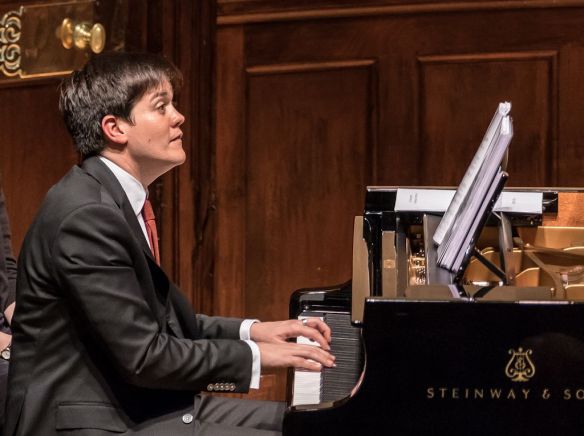
On Record – Chu-Yu Yang & Eric McElroy – An English Pastoral (Somm Recordings)

Venables (arr. composer) Violin Sonata Op.23a (1989 arr. 2018)
Finzi Elegy Op.22 (1940)
Gurney ed. Venables Eight Pieces (1908-09)
Bliss Violin Sonata B12 (c1914)
Venables Three Pieces Op.11 (1986)

Chu-Yu Yang (violin), Eric McElroy (piano)

Somm Recordings SOMMCD0700 [75’45”]
Producer Siva Oke Engineer Adaq Khan

Recorded 13-14 April 2024 at St Mary’s Church, St Marylebone, London

Reviewed by Richard Whitehouse

What’s the story?

Although the Taiwanese violinist Chu-Yu Yang and the American pianist Eric McElroy have found success independently, their appearances as a duo have firmly established them before the public across a wide repertoire, not least the music which is featured on this new release.

What’s the music like?

The title of this album might be thought to speak for itself, yet An English Pastoral amounts to more than an exercise in wanton nostalgia. Alongside early if not wholly uncharacteristic music by Ivor Gurney and Arthur Bliss – contemporaries whose outlooks were transformed through war service – it takes in one of Gerald Finzi’s most affectingly realized instrumental pieces and works by Ian Venables whose 70th birthday is just weeks away at time of writing. A programme, moreover, as cohesive in recorded terms as it would be heard as a live recital.

The centrepiece here is a sequence of pieces by the teenage Gurney such as demonstrates no mean assurance in this testing medium. Hence the Elgarian wistfulness of Chanson Triste or respectively poetic and bittersweet evocations as are In September and In August. A winsome Romance is the most elegantly proportioned of these eight pieces, with the elaborate Legende more discursive in its (over-) ambition. The poignant A Folk Tale and an engaging Humoreske have a succinctness to confirm that, with Gurney as with most composers, less is often more.

The players seem as emotionally attuned to this music as they are when mining the expressive subtleties of Finzi’s Elegy which, composed barely a year into the Second World War, offsets its yielding nostalgia with passages of simmering anxiety. Nor do they disappoint in the single movement that was all Bliss completed – if, indeed, he ever envisaged any successors – of his wartime Violin Sonata; its cautious if never inhibited handling of ‘phantasy’ form implying a transition from his earlier Pastoralism to the innovation of those pieces which came afterward.

Venables proves no less adept combining violin and piano, not least when adapting what was previously his Flute Sonata as to emphasize the pensive raptness of the first movement or its alternately playful and plaintive successor. Witness, moreover, the astutely judged trajectory of his Three Pieces as it moves from the blithe lyricism of its initial Pastorale, through the unforced eloquence of its central Romance, to the incisive energy of its final Dance – thus making for a sequence that could have been a ‘sonatina’ had the composer designated it thus.

Does it all work?

Pretty much always. Nothing here sounds less than idiomatic in terms of being conceived for this medium, a tribute to the skill of these players in realizing the intentions of the composers in question. For those listeners who still (rightly) attach importance to such things, the layout is viable but it might have been improved by interpolating the Gurney pieces – most of which are what might be termed ‘medium slow’ – across the release as a whole rather than grouping them all together at its centre, but this is relatively less of a consideration in streaming terms.

Is it recommended?

Indeed it is. The recorded ambience could hardly be bettered in terms of this medium, while Yang contributes detailed and informative annotations. Hopefully he and McElroy will have a chance to record further such collections, whether or not in the ‘English Pastoral’ tradition.

Listen / Buy

You can read more about this release and explore purchase options at the Somm Recordings website

Published post no.2,578 – Saturday 28 June 2025
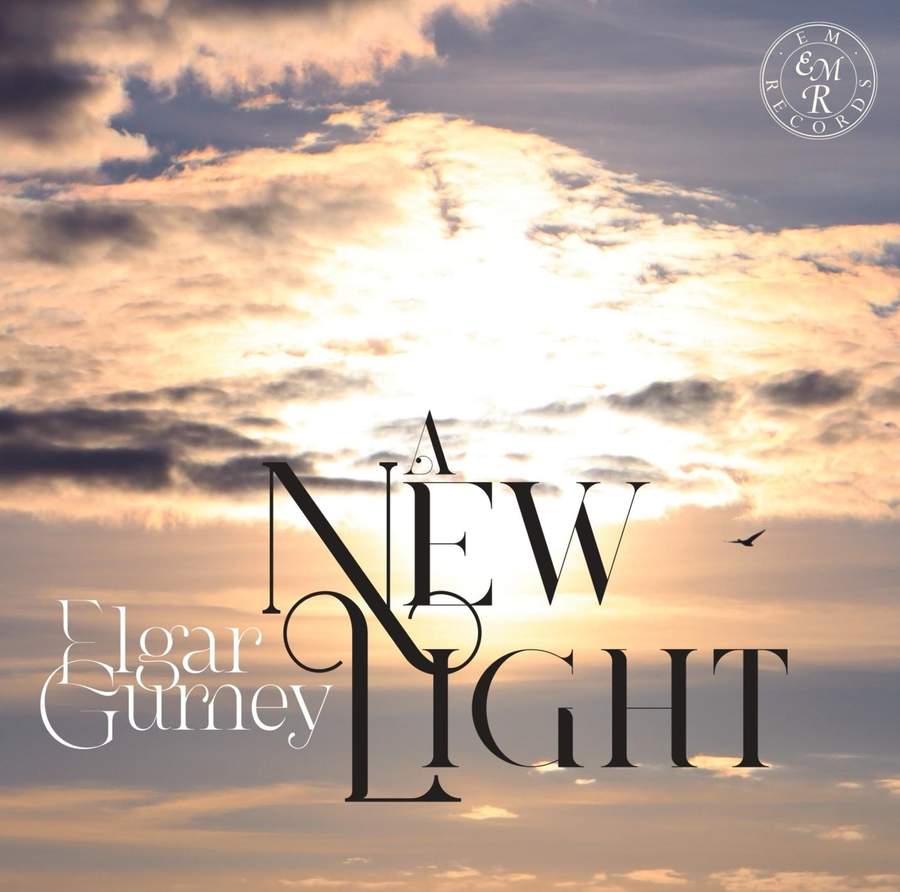
On Record: Rupert Marshall-Luck & Duncan Honeybourne – Elgar & Gurney: A New Light (EM Records)

Elgar
Violin Sonata in E minor Op.82 (1918)
Salut d’Amour Op.12 (1888)
Chanson de Nuit Op.15/1 (c1889)
Chanson de Matin Op.15/2 (c1890)
Gurney ed. Marshall Luck
Violin Sonata in D major (c1918-19)

Rupert Marshall-Luck (violin), Duncan Honeybourne (piano)

EM Records EMRCD075 [73’39″]

Producer Rupert Marshall-Luck Engineer Oscar Torres

Recorded 29-30 March 2021, Wyastone Concert Hall, Wyastone Leys, Monmouth

Reviewed by Richard Whitehouse

What’s the story?

Rupert Marshall-Luck here continues his exploration of British music for violin and piano with this coupling of sonatas by Elgar and Gurney, the former performed in a new critical edition as prepared by the violinist and the latter receiving its first commercial recording.

What’s the music like?

The Violin Sonata was the first of a series of ‘chamber’ pieces Elgar wrote near the close and in the aftermath of the First World War, distilling his musical language while accentuating a pathos seldom far beneath the surface during his maturity. Outwardly traditional in overall design, none of its three movements is yet beholden to formal precedent. Thus, the opening Allegro alternates its subtly differentiated themes to halting and even uncertain effect; the Romance contrasts the flowing eloquence of its middle section with the restrained poignancy of those either side, while the final Allegro centres on an ardently expressive melody as this unfolds with increasing purposefulness toward a tersely decisive close. Marshall-Luck’s edition was published by the Munich firm of Henle in 1919, a century after the work’s first performance.

His Violin Sonata in D marks another stage in the reclamation of Ivor Gurney’s voluminous output. Composed near the start of that period between his discharge from the army and his admittance to a psychiatric hospital, it is less overt in its emotional intensity than the later E flat Sonata but more cohesive formally – due, in part, to Gurney’s advocate Marion Scott in having preserved a near-complete score as has subsequently been realized by Ian Venables. Despite its Allegro marking, the first movement is often understated in its expressive range and motivated more by tonal fluidity than by its rhythmic animation. The Scherzo exudes a capering humour complemented by the winsome poise of its trio, then the largely literal ‘da capo’ ends in teasing ambivalence. The Lento builds from its initial reticence to a climax of acute plangency before subsiding into regretful calm; after which, the Finale sets out with a renewed determination, offset by its elegant second theme and energized by its development, on the way to a coda whose resolution is the greater for its almost offhand sense of closure.

Placed between these sonatas are several of Elgar’s duo miniatures – Salut d’Amour with its effortlessly ingratiating charm, then the Chansons which make for an ideal diptych in terms of their respective pathos and ardency. Marshall-Luck plays all three with unfailing artistry.

Does it all work?

Pretty much. Comparison with his earlier recording of the Elgar (EM Records EMRCD011) finds Marshall-Luck more expansive in each movement, notably a finale that now has greater depth and insight. Here and in the Gurney, Duncan Honeybourne (most recently heard in a deeply impressive account of Frank Bridge’s Sonata on EMRCD070-71) contributes pianism as sensitive yet impulsive as this music requires and which adds much to the persuasiveness of these accounts. Hopefully the Gurney will go on to receive the public hearings it deserves.

Is it recommended?

Yes. The sound has the focus and clarity needed for this difficult medium, while Marshall-Luck contributes detailed overviews on each piece within the extensive booklet notes. As a programme it adds considerably to one’s appreciation of the music – ‘A New Light’ indeed.

Listen & Buy

For buying options, and to listen to clips from the album, visit the EM Records website. For more information on the composers, click on the names Sir Edward Elgar and Ivor Gurney – and on the performers, Rupert Marshall-Luck and Duncan Honeybourne

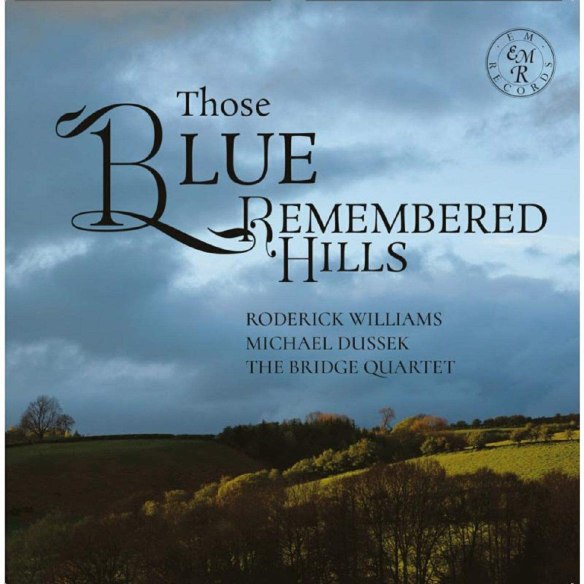
On record – Roderick Williams, Michael Dussek & Bridge Quartet: Those Blue Remembered Hills (EM Records)

Gurney
The Western Playland (and of Sorrow) (1920)
Edward, Edward (1914)
By A Bierside (1916)
String Quartet in D minor (1924-5)
Howells
There was a Maiden (1915)
Girl’s Song (1916)
King David (1919)
The Mugger’s Song (1919)

Roderick Williams (baritone), Michael Dussek (piano), Bridge Quartet [Colin Twigg, Catherine Schofield (violins), Michael Schofield (viola), Lucy Wilding (cello)]

EM Records EMR CD065 [80’52”]

Producer Rupert Marshall-Luck
Engineer Patrick Allen

Recorded 4 & 5 June 2018 at Potton Hall, Suffolk

Written by Richard Whitehouse

What’s the story?

The latest release from EM Records is largely devoted to music by Ivor Gurney (1890-1937), including the second of his song-cycles with ensemble and the first recording of a large-scale string quartet composed before encroaching mental illness led to a cessation of his creativity.

What’s the music like?

Time was when Gurney was viewed as a poet who also wrote songs, but recent research has unearthed piano music, two orchestral pieces and numerous chamber works. Just how much he wrote and destroyed in a period of activity through to 1927 will probably never be known.

It was the success of Ludlow and Teme (recorded on EMRCD036) which led Gurney to essay a second song-cycle after A. E. Housman. Equally well received, The Western Playland was revised in 1925, when (and of Sorrow) was added to the title as if to point up that emotional dislocation the composer felt when incarcerated at City of London Mental Hospital – far from his beloved Gloucestershire. The eight songs traverse a wide expressive range, with such as a limpid setting of Loveliest of Trees and a purposeful take on Is my Team Ploughing very different in manner yet comparable in quality to those by Butterworth or Vaughan Williams. The forced jollity of the initial Reveille strikes a slightly jarring note, but the final March conjures a luminous poise which is further enhances by its extended instrumental postlude.

Also featured are two of Gurney’s songs with piano – that of the anonymous ballad Edward, Edward summons a malevolence that finds natural contrast with the sombre wartime (indeed, trench-bound) setting of John Masefield’s By a Bierside. Four songs by Herbert Howells are a reminder of the close personal and regional ties between these composers – three of which are appealing in their craftsmanship, with the setting of Walter de la Mare’s King David as affecting as any song from this period and justifiably receiving of the poet’s endorsement.

The centrepiece here is a String Quartet in D minor – one of several written during Gurney’s incarceration and which, fortunately for posterity, he was able to hear performed thanks to the redoubtable musicologist Marion M. Scott. Extensive revisions made deciphering his ultimate intentions more difficult, but the time and effort has been well worthwhile. The EMR release referred to above contains the original version of the work’s Adagio, and the revision as heard here only intensifies its anguished pathos. This, along with the ruminative ensuing intermezzo, are the highlights of an ambitious entity – the motivic ingenuity of whose opening movement feels undermined by lack of textural or rhythmic clarity; this latter failing arguably inhibiting the vehemence and drama which otherwise inform the finale as it surges to its fatalistic close.

Does it all work?

Almost. Roderick Williams is at his perceptive best in the songs, sensitively accompanied by Michael Dussek. The Bridge Quartet is superb in the song-cycle and makes a fine effort in the quartet, of which further performances are needed to assess the full extent of its achievement.

Is it recommended?

Indeed. Gurney is a composer whose stature has only latterly become apparent, and to which this disc is a signal contribution. Spacious and natural sound balance, together with detailed and often insightful annotations, further enhance what is another indispensable EMR release.

Listen and Buy

You can discover more about this release at the EM Records website, where you can hear clips from the recording and also purchase.

BBC Proms: Dame Sarah Connolly & Joseph Middleton – English Songs

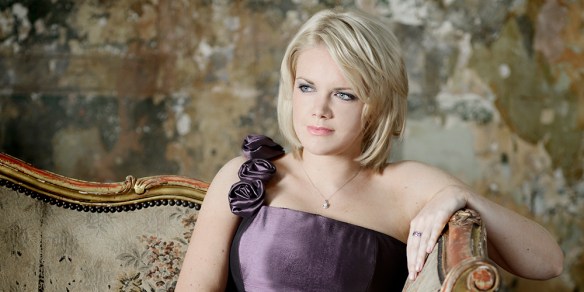
Proms at the Cadogan Hall: Dame Sarah Connolly (mezzo-soprano, above), Joseph Middleton (piano, below)
Stanford A Soft Day Op.140/3 (from A Sheaf of Songs from Leinster) (1913) (from 7:15 on the broadcast)
Parry Weep you no more, sad fountains (from English Lyrics Set 4) (1896) (9:58)
Vaughan Williams Love-Sight (from The House of Life) (1903) (12:18)
Gurney Thou didst delight my eyes (1921) (16:53)
Somervell A Shropshire Lad – ‘Into my heart an air that kills’ (1904) (20:19)
Bridge Come to me in my dreams (1906) (22:45)
Howells Goddess of Night (1920)
Bridge Journey’s End (1925) (28:19)
Britten A Sweet Lullaby (36:34); Somnus (40:31) (both 1947, world premieres)
Holst Journey’s End (1929) (42:50)
Britten A Charm of Lullabies Op.41 (1947) (45:09, 47:22, 49:08, 51:06, 52:48)
Lisa Illean Sleeplessness … Sails (2018, world premiere) (57:31)
Mark-Anthony Turnage Farewell (2016, world premiere)

Cadogan Hall, Monday 6 August 2018

You can listen this Prom by clicking here The times given on this page refer to the starting times on the broadcast itself

Reviewed by Ben Hogwood. Photo of Sarah Connolly (c) Jan Capinski

11 composers and four world premieres in an hour. Not a recipe for sleep and respite, you might think, but Dame Sarah Connolly and Joseph Middleton constructed between them an enchanting tour of English song, ending up at some far-flung outposts.

For anyone new to the form this would have been the ideal introduction, especially as Dame Sarah was singing with wonderful clarity and diction. I hardly needed to glance at the texts, for her words and expressions, added to those of Middleton’s carefully and beautifully crafted piano parts, did the job perfectly. The structure of the recital was very satisfying too, with natural pauses at the end of a short group of songs for applause and the intake of breath – and, as the subject matter was sleep and dreams, it ensured nobody had fallen foul of the listening criteria in the hot conditions!

The two began in Ireland, presenting the beatific calm of Winifred LettsA Soft Day, as set by Stanford, with the ‘wind from the south’ that some of us in the hot Cadogan Hall would have been longing for! So too for the subject of Parry’s Weep you no more, sad fountains, with its flowing piano lines. This pair from the fathers of English song led to one of the ‘sons’ – Vaughan Williams, and a deeply felt Love-Sight from his song-cycle The House of Life – and Ivor Gurney, his moving Thou didst delight my eyes.

We moved on to Arthur Somervell, the brief but tenderly devastating Into my heart an air that kills (from A Shropshire Lad) and then Come to me in my dreams, an expressive, earlier example of Frank Bridge’s chromatic credentials. Bridge appeared later with the lovelorn Journey’s End, following Herbert Howells’ magical Goddess Of Night – where Connolly allowed the text plenty of room.

Britten’s interpretations of sleep and dreams range from the calm to the nightmarish, aspects that surfaced throughout his song-cycle A Charm of Lullabies, which was given with two extra songs intended for the cycle but left unused. Recently ‘repaired’ by Colin Matthews, A Sweet Lullaby and Somnus were receiving their world premieres and were interesting finds if not quite reaching the level of intensity in the cycle itself.

Britten starts his night with A Cradle Song, before Connolly’s Scots accent (she was born relatively close by in County Durham!) brought an extremely authentic voice to The Highland Balou. The fifth number, The Nurse’s Song, is structured like the Dirge from Britten’s earlier Serenade for tenor, horn and strings. It focused everyone in the hall on the vivid storytelling of Connolly’s voice, from which she moved through humour, intense scolding (scary, too!) and soft slumber. The music ranged wildly, Britten’s wandering piano writing recalling Shostakovich in A Cradle Song, while the clustered chords of the refrain in Sephestia’s Lullaby spoke vividly in a language Janáček would understand. Connolly’s characterisations were brilliant, the audience impatient to clap between numbers initially but held in rapt concentration at the end.

In between the Britten discoveries, Gustav Holst contributed a sparse but telling interpretation of Journey’s End, which Connolly again sang with deep expression, while Australian composer Lisa Illean gave us another world premiere, a farewell of her own in Sleeplessness … Sails. This was a very slow-moving piece where Connolly held admirable control, despite the music’s seeming reluctance to move on. Arguably more effective was Turnage’s Farewell, a profound statement which ended with the composer bounding on the platform, delighted at the interpretation. It would be lovely to hear more from him in song – and from this pair, too, who delivered a wonderful hour’s escapism to the land of nod!

You can hear Dame Sarah Connolly and Joseph Middleton’s new recital disc Come To Me In My Dreams, which features much of the music heard in this concert, on the Spotify link below:

Wigmore Mondays – Kathryn Rudge & James Baillieu: English song

kathryn-rudge

Kathryn Rudge (mezzo-soprano), Gary Pomeroy (viola) & James Baillieu (piano, below)

Howells Come sing and dance (1927)

Quilter Go, lovely rose (1922), Now sleeps the crimson petal (1897), Music, when soft voices die (1926)

William Charles Denis Browne To Gratiana, dancing and singing (1913)

Howells Peacock Pie Op.33 (1919)

Ivor Gurney Sleep (1914); Most holy night (1920); The Fields are full (pub. 1928); By a bierside (1916)

Bridge Three songs with viola [Far, far from each other; Where is it that our soul doth go?; Music when soft voices die] (1903-06)

Listen to the BBC broadcast here

Written by Ben Hogwood

Kathryn Rudge has a special affinity with English song, and in particular the music of Herbert Howells. I remember an especially moving account of his most famous song King David at the Wigmore Hall a few years back, and here she and pianist James Baillieu enjoyed the open-air sonorities of his song Come sing and dance (from 1:26 on the broadcast).

Howells is one of several English composers who excelled in the form of song, but who are not heard often in concert programs, so it was gratifying to see these two BBC Radio 3 New Generation Artists trying something different.

Roger Quilter was the most celebrated song composer of the five here, and the selection of three of his most famous songs was lovingly performed. Go, lovely rose (from 6:02), Now sleeps the crimson petal (9:08) an Music, when soft voices die (11:38) all showed off his melodic craft and subtly rapturous word settings, not to mention flowing piano accompaniment that was superbly played by Baillieu.

Most striking of all those here was the biggest rarity, a song by William Denis Browne, who was killed in the First World War. He left a tiny output of music, dying at the age of 27, and this song – To Gratiana dancing and singing (from 13:47) – left a lasting impression with its strong melody and bold, grand piano part.

james-baillieu-clive-bardaAfter the war English composers were attracted to the simple poetry of Walter de la Mare, and Howells delivered a short, six-part song cycle Peacock Pie, setting verses for children. Here it was oddly enchanting, especially the story of Tired Tim (19:37), who took an age to get up the stairs, the strangely charming figure of Mrs MacQueen or the lumbering profile of The dunce (25:35), a kind of march gone wrong. Rudge could perhaps have used more variety in her portrayal of the characters here, but Howells’ invention and distinctive harmonies shone through, especially in the magical Full Moon (26:45).

On to the tragic figure of Ivor Gurney, much of whose output remains unpublished after his tragically early move to the asylum. The quartet of songs here were dramatic in the extreme though – a resigned Sleep (30:51), a protective Most Holy Night (33:50) the heady, summer stillness of The fields are full (39:49) – vividly caught by both performers – and finally the terrible truth of By a bierside. Written in the trenches in France, its coda (43:20) sings of how ‘it is most grand to die’. This was the loudest and most painful music of the concert, but Baillieu’s response was magical, subtly moving the music through the keys to reach a less painful finish.

Finally we heard songs by Britten’s teacher and friend Frank Bridge, a masterful viola player who wrote his own instrument into these three songs, written between 1903 and 1906. In this performance they were highly charged, and could perhaps have done with more light and shade from singer and viola, but these minor gripes were outdone by the enjoyment of Bridge’s turbulent writing in Far, far from each other (47:10), the resignation of Where is it that our soul doth go? (from 51:00) and finally the warmer heart of Music, when soft voices die (54:45).

As an encore Rudge and Baillieu chose perfectly, opting for Alan Robert Murray’s song I’ll walk beside you (58:33), uncannily sharing a wish for a better, more inclusive world.

Further listening

Kathryn Rudge and James Baillieu made their debut album as a partnership for Champs Hill Records in 2014 – and it complements the songs in this concert perfectly.