In concert – Helena Juntunen, CBSO / Osmo Vänskä: Sibelius & Shostakovich

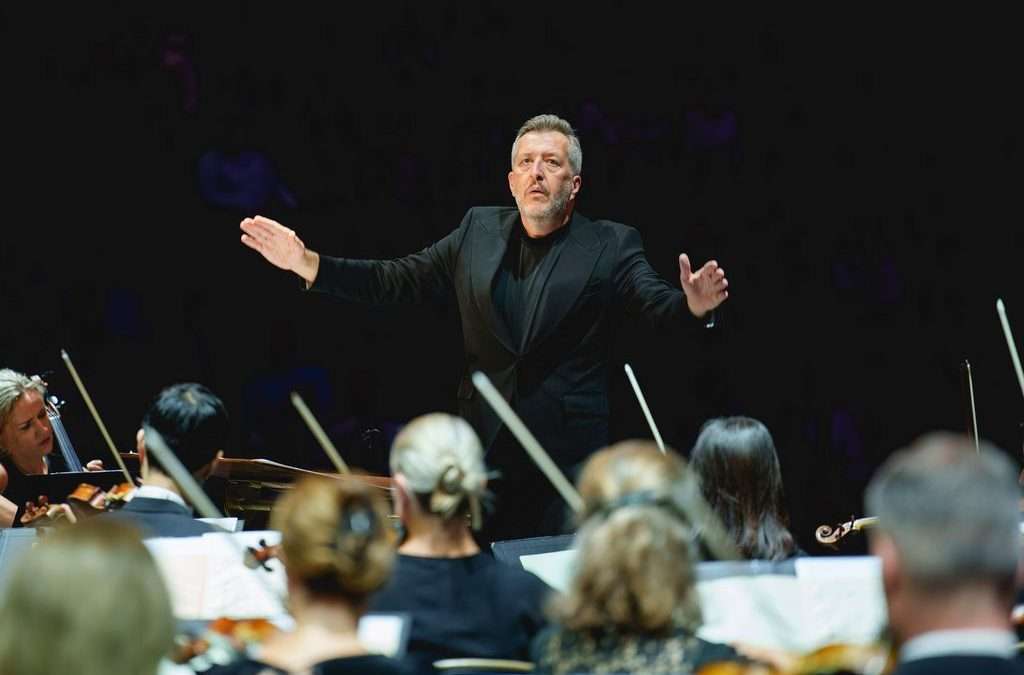
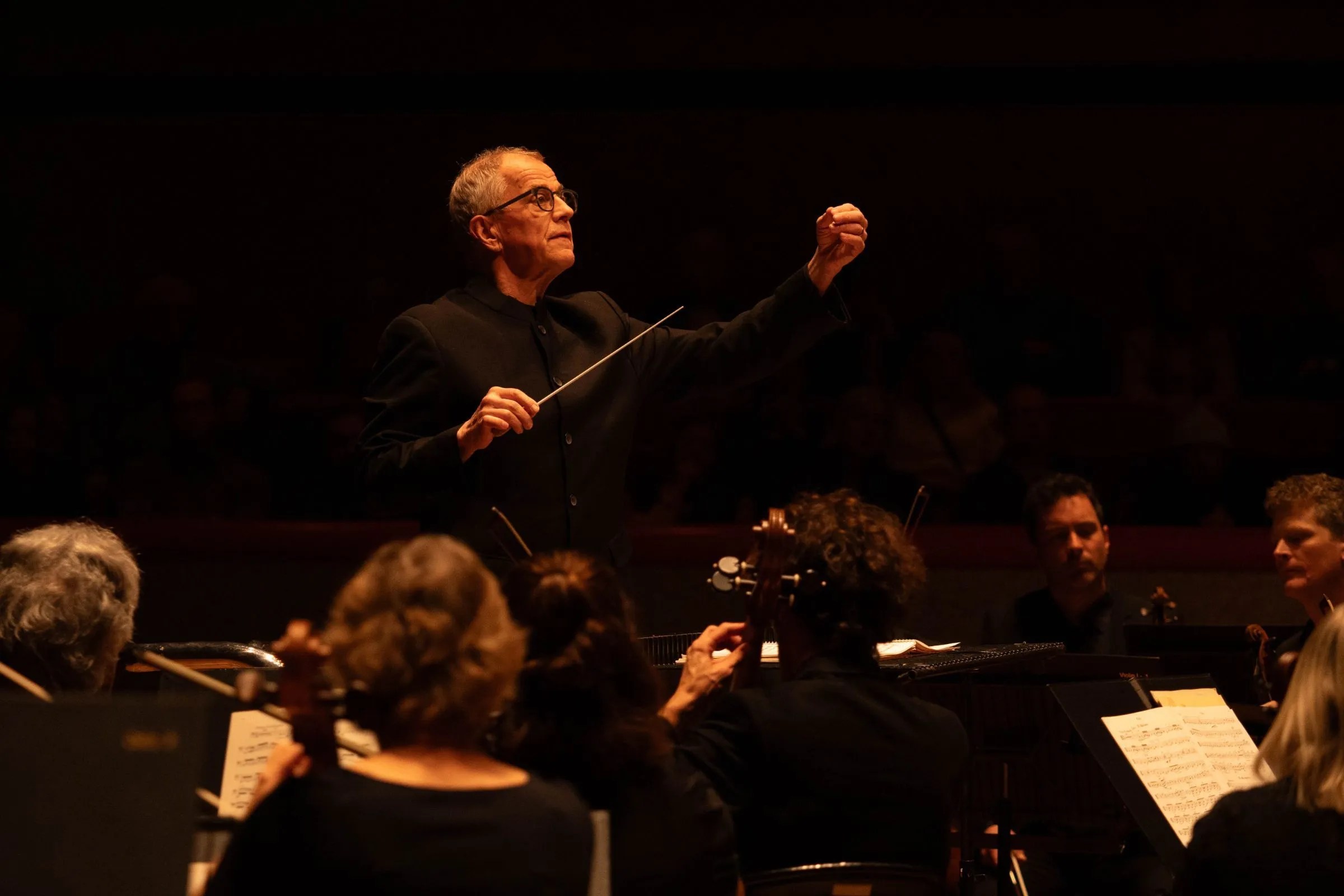
Helena Juntunen (soprano), City of Birmingham Symphony Orchestra / Osmo Vänskä (above)

Sibelius
Karelia Suite Op.11 (1893)
Songs – Höstkväll Op.38/1 (1903, orch. 1904); Hertig Magnus Op.57/6 (1909, orch. 1912); Våren flyktar hastigt Op.13/4 (1891, orch. 1913)
The Bard Op.64 (1913)
Luonnotar Op.70 (1913)
Shostakovich
Symphony no.15 in A major Op.141 (1970-71)

Symphony Hall, Birmingham
Wednesday 19 November 2025

Reviewed by Richard Whitehouse Pictures (c) Jonathan Ferro

Finnish conductor Osmo Vänskä makes relatively UK appearances these days such that this evening’s concert with the City of Birmingham Symphony Orchestra was to be anticipated, given the never less than intriguing juxtaposition of works from Sibelius and Shostakovich.

It now appears less frequently on programmes than half a century ago, but Karelia Suite finds Sibelius at his most uninhibited and Vänskä responded accordingly – whether the simmering motion of its Intermezzo or the pulsating activity of its Alla Marcia; its Ballade distilling the keenest atmosphere with Rachel Pankhurst making the most of her plaintive solo. Harpist Karherine Thomas was similarly attuned to her almost obligato role in The Bard, a tone poem whose sombre understatement hardly prepares one for the surging emotion towards its climax.
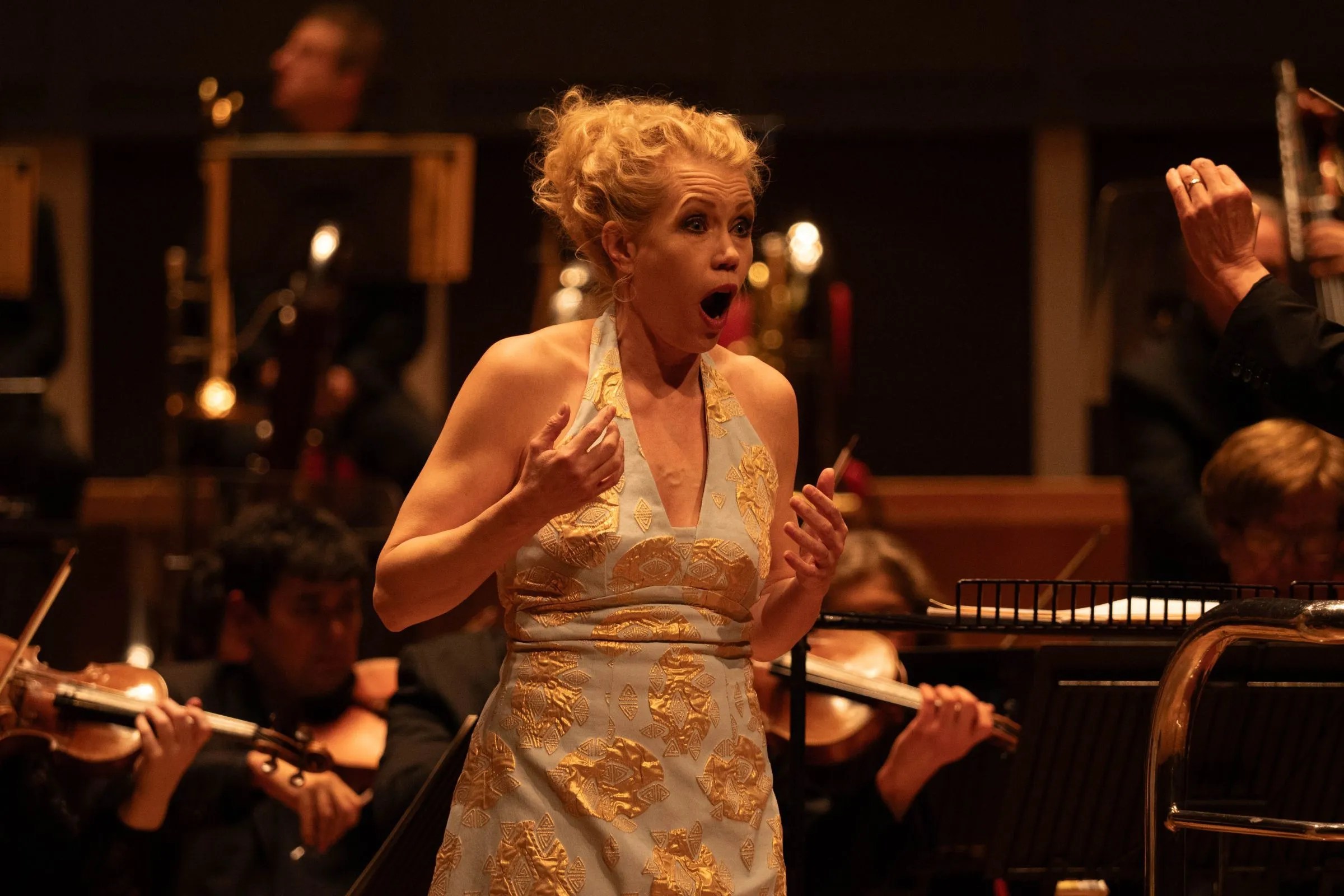
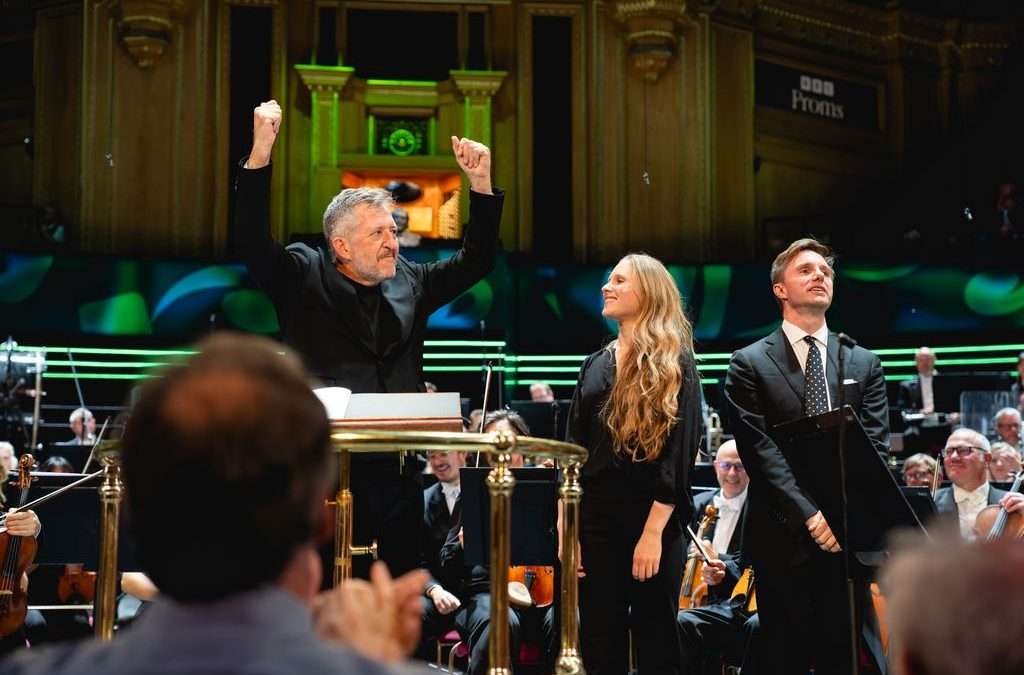
Elsewhere in this half it was Helena Juntunen (above) who stole the show with her judicious selection of Sibelius songs. That almost all these are settings of Swedish texts reflects an introspective Romanticism often overlooked in his output and Juntunen brought out the stark imagining of Autumn Evening then restless aspiration of Baron Magnus as potently as the ecstatic yearning of Spring is Flying. Her swapping sophisticated gown for traditional dress may have pointed up stylistic differences with Luonnotar, but it also underlined the inimitability of this setting from Finnish national epic the Kalevala. Birmingham audiences had been spoiled by hearing Anu Komsi in the piece, but Juntunen was no less inside music whose extremes of timbre or texture result in as heady a culmination then as spellbinding a conclusion as any in Sibelius.

Hard now to recall a time when Shostakovich’s 15th Symphony was believed too inscrutable for wider appreciation, rather than that masterly reassessment of Classical symphonism it is. Vänskä brooked no compromise in an initial Allegretto not without its technical mishaps, for all its sardonic and even scabrous humour came over unimpeded, but it was with the Adagio this performance wholly found its stride. As enhanced by eloquent contributions from cellist Eduardo Vassallo then trombonist Richard Watkin, this was palpably well sustained through to a climax shot through with a defiance borne of desperation, before retreating back into its initial numbness. Continuing directly, the ensuing Allegretto was an intermezzo no less acute in its expression and not least for the way solo instruments melded so deftly with percussion.

Vänskä did not make the mistake of rendering the finale an Adagio, such as holds good only with its portentous introduction. The main Allegretto was persuasively handled – broadening marginally for a central passacaglia builds stealthily if inevitably to a climax corrosive in its dissonance, before retracing its thematic steps towards a coda which evokes the notion of the ‘unbearable lightness of being’ more completely than any other music. Here, also, there was no mistaking the CBSO’s collective focus in bringing this totemic work to its deathless close.

Shostakovich 15 does not lack for probing or memorable readings these days and, if tonight’s did not answer all its questions, Vänskä nevertheless ensured this piece left its mark on what was a commendably full house, and which set the seal on a flawed while memorable concert.

For more information on the 2025-26 season head to the City of Birmingham Symphony Orchestra website. Click on the names to read more about soloist Helena Juntunen and conductor Osmo Vänskä

Published post no.2,727 – Sunday 23 November 2025

In appreciation – Jean Sibelius

by Ben Hogwood. Picture by Henry B. Goodwin – The last masterpieces 1920–1927 (Public Domain, used from Wikipedia)

On this day in 1957, Finnish composer Jean Sibelius died at the age of 91.

Even now the extent of Sibelius’s genius and influence has not fully been established, for his is a unique and powerful voice, particularly in the field of orchestral music. Here is his relatively unsung Symphony no.3, a propulsive work that is a remarkable combination of economy and expression:

Published post no.2,663 – Saturday 20 September 2025

In concert – James McVinnie, BBC Symphony Orchestra / Thomas Adès @ BBC Proms: Sibelius, Gabriella Smith & Adès

James McVinnie (organ), BBC Symphony Orchestra / Thomas Adès

Sibelius The Swan of Tuonela Op.22/2 (1893, rev. 1897 & 1900)
Gabriella Smith Breathing Forests (2021) [UK Premiere]
Adès Five Spells from The Tempest (2022) [Proms premiere]
Sibelius The Tempest – Suite No. 1, Op. 109 No. 2 (1925-6, arr. 1929)

Royal Albert Hall, London
Tuesday 2 September 2025

Reviewed by Richard Whitehouse Photos (c) BBC / Andy Paradise

Having worked across the board with orchestras in London (and elsewhere), Thomas Adès tonight conducted the BBC Symphony Orchestra in what, for his ninth Prom as a conductor, was a typically imaginative programme that centred on concepts of nature and the elements.

A concept, moreover, whose primary focus was Breathing Forests – an organ concerto by the American composer Gabriella Smith (below). She herself has described this work as ‘‘a reflection on the complex relationship between humans, forests, climate change and fire’’; one that unfolds across three interconnected movements and whose evoking the fast-slow-fast archetype belies its overall ingenuity. The opening Grow picks up on Ligeti’s ‘op-art’ pieces of the late 1960s as it pulsates gently if insistently into life, then the central Breathe draws from the interplay of soloist and orchestra a variety of methodically evolving textures; given emotional impetus in the final Burn as it builds to a climax which spatially engulfs the whole ambience, though its continuation towards a clinching apotheosis sounded just a little gratuitous in this context.

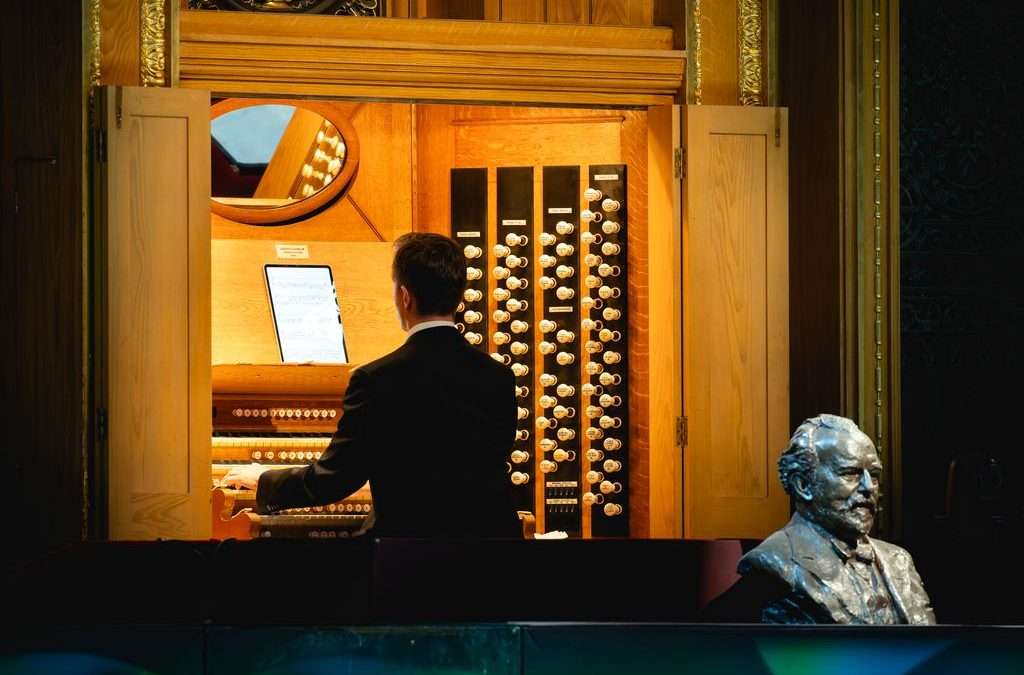
What was never in doubt was the sheer dexterity of James McVinnie (below) in conveying the power and poetry of the solo part, to which the BBCSO’s contribution was scarcely less visceral. As musical representation of the natural world in time of crisis, this piece more than left its mark.

Adès as composer was featured after the interval with Five Spells from ‘The Tempest’, a suite drawn retrospectively from his eponymous opera. This ranges widely over the parent work – beginning, not unreasonably, with its Overture such as depicts the play’s opening storm in guardedly elemental terms. From there it heads into Ariel and Prospero, akin to a scherzo where the contrasting characters of the two protagonists are vividly played off against each other. A more nuanced juxtaposition is evident from Ferdinand and Miranda, its inherently amorous nature conveyed with due reticence, then The Feast affords a culmination of sorts with its stealthy interplay of character-imbued motifs. The end comes, naturally enough, in Prospero’s Farewell – Caliban with the music evanescing in the most equivocal of terms.

The programme was framed with music by Sibelius – opening with The Sawn of Tuonela as emphasized the music’s hieratic poise and fatalistic aura, as did those eloquent contributions from cor anglais and cello. Maybe Adès will one day tackle the whole Lemminkäinen Suite?

The First Suite from Sibelius’s compendious score for The Tempest opens with the searing evocation The Oak Tree which was a little underwhelming here, though there was nothing amiss in the characterful Humoreske or in Caliban’s Song with its telling bizarrerie. The Harvesters is a reminder of Sibelius’s innate gift for light music at all stages in his career, as also the animated Canon and insinuating Scene; to which the plangent Intrada/Berceuse then the ominous Interlude/Ariel’s Song provide startling contrasts. The truncated Prelude follows on seamlessly through to its decidedly abrupt end. Right through this sequence, the BBCSO was always attuned expressively and, while a sense of the music as teetering on the edge of some greater catastrophe was minimal, there was no denying Adès’s insight overall.

Click on the artist names to read more about organist James McVinnie, the BBC Symphony Orchestra and conductor Thomas Adès. Click also for more on Thomas Adès as a composer and Gabriella Smith, and the BBC Proms

Published post no.2,648 – Friday 5 September 2025

Talking Heads: Doing It Their Way – Kenneth Woods, ESO Records and the Future

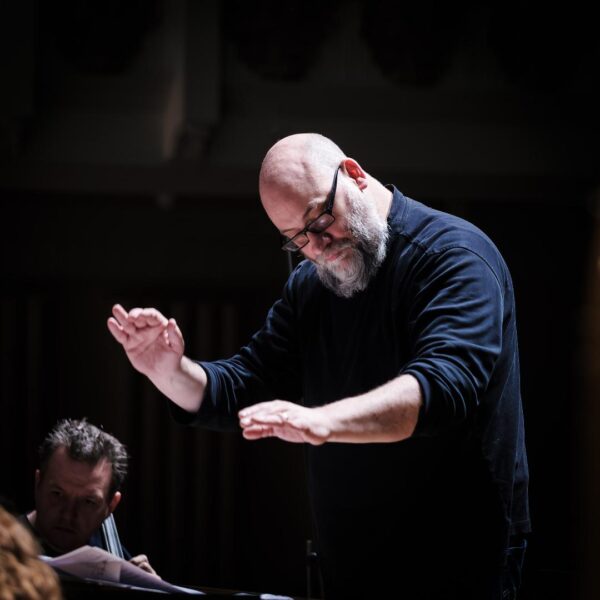
interview by Richard Whitehouse Picture (c) Julie Andrews

You do not move forward by standing still. That is evidently the maxim of the English Symphony Orchestra, whose first release on its new in-house label has just been issued. Apropos of this and other matters, Arcana spoke recently to Kenneth Woods, the principal conductor and artistic director of the ESO, about his plans for this audacious undertaking.

It made sense to begin with the motivation behind the establishing of ESO Records. ‘‘It’s something I’ve wanted to do for a long time. Being able to release whatever we want, and whenever we want, to is hugely empowering for us as an orchestra. It gives us a chance to align our concert work with our online presence and recording programme more strategically’’.

As to whether these releases will be mainly studio or live recordings, ‘‘It’ll be a combination of both. I think that over the course of the next couple of years, listeners will start to discern a number of threads within the ESO Records portfolio. Our first release is an Elgar Festival disc with Elgar’s First Symphony and his concert overture In the South. This is a great way for us to spread the word about the festival internationally and also to share the exceptional quality of Elgar Festival events. And, with the festival doing so many new or lesser-known works, we can share that music with a world-wide audience.

‘‘As a result of the COVID pandemic, we’ve an enormous amount of material ‘in the can’ that we recorded for ESO Digital (our online video portal). ESO Records gives us a chance to share that body of work, also to highlight and complement our future concerts. For instance, we’ll be releasing our one-per-part version of Mahler’s Ninth Symphony to coincide with a run of performances in December. And there are studio projects such as the Sibelius cycle which have continued as we tie-in the recording of its future instalments to public concerts’’.

Woods is keen to point out that ESO Digital release will complement the orchestra’s ongoing schedule of releases for other labels. ‘‘Since we released the first disc of my tenure in 2015, we’ve worked with Nimbus, Lyrita, Signum, Avie, Toccata and Somm among others. While I hope that many of those partnerships will continue, the economic climate for labels is very difficult. They’ve a lot of fixed costs and declining revenue streams which means that, for a group like us, finding release slots and agreeing repertoire or projects has become more complicated. Something like the Sibelius cycle which, while it is very important to us as an orchestra, is not the kind of repertoire many labels do anymore.

‘‘One can also be hampered through labels having other versions of the same repertoire in the pipeline or in their back catalogue. That said, I’d contend the world does need recordings of pieces which emerge out of shared sympathy and enthusiasm for the music among players, conductor and production team. There’s always more to be said about the greatest music, and if we feel we’ve something meaningful to contribute, then we’re going to say it’’.

Given the varying economic and logistical factors, ESO Records might not always be issued both as CDs and Downloads. ‘‘This will vary according to the release. It makes to put the Elgar Festival Live stuff makes out on CD because they make a great souvenir for attendees. But with most projects today, physical sales are so small it isn’t worth the cost or complexity of maintaining an inventory and shipping it all over the world. Moreover, the argument used to be that CDs sounded better, but the quality now at 24-bit and 96-kHz sampling contains between three and ten times as much detail and information. We want our listeners to hear our work in the best possible quality, and these days that means streaming or hi-res downloads’’.

With this in mind, listeners can look forward to no mean diversity in terms of future issues. ‘‘I mentioned we were looking to create coherent and ongoing threads among our releases. Elgar Festival Live has several more releases ready and we’ll be recording our performances at this year’s and all future festivals. The orchestra’s long-term commitment to contemporary music will be a big part of our future work, and I expect this to feature many of the amazing composers that listeners have come to associate with ESO such as Philip Sawyers, Adrian Williams, Emily Doolittle, David Matthews and Steve Elcock. We’re also keen to draw on the ESO’s extensive archive of performances by composers such as Ireland, McCabe, Maw, Simpson and Arnold, along with performances conducted by the likes of Michael Tippett and Yehudi Menuhin, with a wider public.”

‘‘The Sibelius and Mahler projects are indicative of our desire to put our stamp on so-called standard repertoire or, as I prefer to call it, the greatest music ever written. One of the best things about streaming is that not every release needs to be a 70-minute album. Archival recordings might well come out as singles or EPs to align with composer anniversaries or birthdays, historic occasions and upcoming concerts – so there’ll be releases of Beethoven, Mozart, Brahms, Strauss, Bartók and Shostakovich. I’m also very proud of our track record of championing historically suppressed music, so listeners can expect further issues of Gál, Schulhoff, Kapralova, Krenek and Weinberg.”

‘‘Finally, ESO Records will give us greater freedom to develop collaborative projects with artistic partners including composers, soloists and directors. We’ve just recorded a fantastic disc of organ concertos by Poulenc, Hindemith and Daniel Pinkham with organist Iain Quinn for release next year, and I’m hopeful there’ll be many opportunities in the future to work collaboratively so as to bring worthwhile music to the public’s attention’’.

Much to look forward to, then, from a label whose artists have never shied away in pushing the envelope when it comes to imaginative programming and innovative presentation. Qualities, indeed, that will no doubt prove synonymous with whatever releases emerge from the ever-enterprising English Symphony Orchestra.

You can read Richard’s review of the first instalment in the English Symphony Orchestra’s Sibelius cycle on Arcana, with the Sixth and Seventh Symphonies and Tapiola

Published post no.2,623 – Monday 10 August 2025

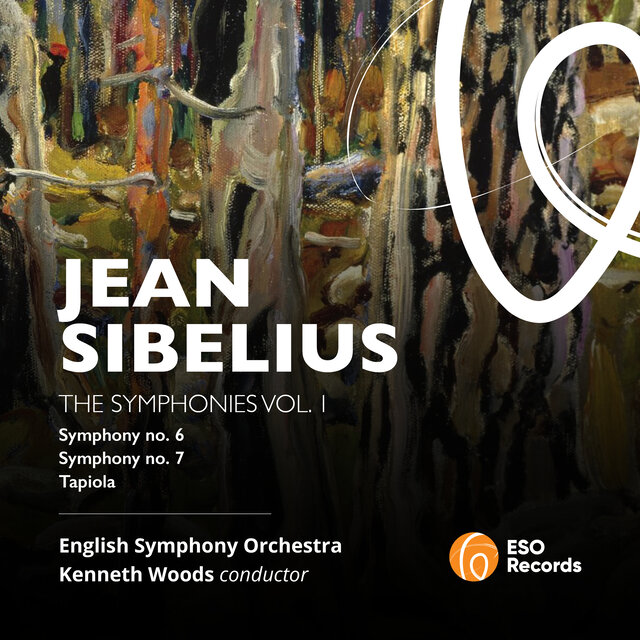
On Record – English Symphony Orchestra / Kenneth Woods – Sibelius: Symphonies 6 & 7, Tapiola (ESO Records)

Jean Sibelius
Symphony no.6 in D minor Op. 104 (1918-23)
Symphony no.7 in C major Op. 105 (1923-4)
Tapiola, Op, 112 (1926)

English Symphony Orchestra / Kenneth Woods

ESO Records ESO2502 [67’16”]
Producers Phil Rowlands, Michael Young Engineer Tim Burton

Recorded 1-2 March 2022 (Symphony no.6 & Tapiola); 2 May 2023 (Symphony no.7) at Wyastone Concert Hall, Monmouth

Reviewed by Richard Whitehouse

What’s the story?

Good to find the English Symphony Orchestra issuing the follow-up release on its own label (after Elgar’s First Symphony and In the South), launching an ambitious project to record all seven symphonies and Tapiola by Sibelius prior to the 70th anniversary of his death in 2027.

What are the performances like?

Only if the Sixth Symphony is considered neo-classical does it feel elusive, rather than a deft reformulation of Classical precepts as here. Hence the first movement unfolds as a seamless evolution whose emotional contrasts are incidental – Kenneth Woods ensuring its purposeful course complements the circling repetitions of the following intermezzo, with its speculative variations on those almost casual opening gestures. Ideally paced, the scherzo projects a more incisive tone which the finale then pursues in a refracted sonata design that gains intensity up to its climactic mid-point. Tension drops momentarily here, quickly restored for a disarming reprise of its opening and coda whose evanescence is well conveyed; a reminder that Sibelius Six is as much about the eschewal of beginnings and endings in its seeking a new coherence.

A decisive factor in the Seventh Symphony is how its overall trajectory is sensed – the ending implicit within the beginning, as Sibelius fuses form and content with an inevitability always evident here. After an expectant if not unduly tense introduction, Woods builds the first main section with unforced eloquence to a first statement of the trombone chorale that provides the formal backbone. His transition into the ‘scherzo’ is less abrupt than many, picking up energy as the chorale’s re-emergence generates requisite momentum to sustain a relatively extended ‘intermezzo’. If his approach to the chorale’s last appearance is a little restrained, the latter’s intensity carries over into a searing string threnody that subsides into pensive uncertainty; the music gathering itself for a magisterial crescendo which does not so much end as cease to be.

Tapiola was Sibelius’s last completed major work, and one whose prefatory quatrain implies an elemental aspect rendered here through the almost total absence of transition in this music of incessant evolution. A quality to the fore in a perceptive reading where Woods secures just the right balance between formal unity and expressive diversity across its underlying course. Occasionally there seems a marginal lack of that ‘otherness’ such as endows this music with its uniquely disquieting aura, but steadily accumulating momentum is rarely in doubt on the approach to the seething climax, or a string threnody whose anguish bestows only the most tenuous of benedictions. A reminder, also, that not the least reason Sibelius may have failed to realize an ‘Eighth Symphony’ was because he had already done so with the present work.

Does it all work?

Pretty much throughout. Whether or not the cycle unfolds consistently in reverse order (with a coupling of the Fourth and Fifth Symphonies having already been announced), this opening instalment is the more pertinent for focussing on Sibelius’s last years of sustained creativity.

Is it recommended?

Indeed. The ESO is heard to advantage in the spacious ambience of Wyastone Hall, and there are detailed booklet notes by Guy Rickards. Make no mistake, these are deeply thoughtful and superbly realized performances which launch the ESO’s Sibelius cycle in impressive fashion.

Listen / Buy

You can read more about this release and explore purchase options at the Ulysees Arts website. Click on the names to read more about the English Symphony Orchestra and conductor Kenneth Woods, and for the Ernest Bloch Society

Published post no.2,622 – Sunday 10 August 2025