New music – Jeremy Denk – Ives / Denk (Nonesuch)

published by Ben Hogwood, with text appropriated from the press release

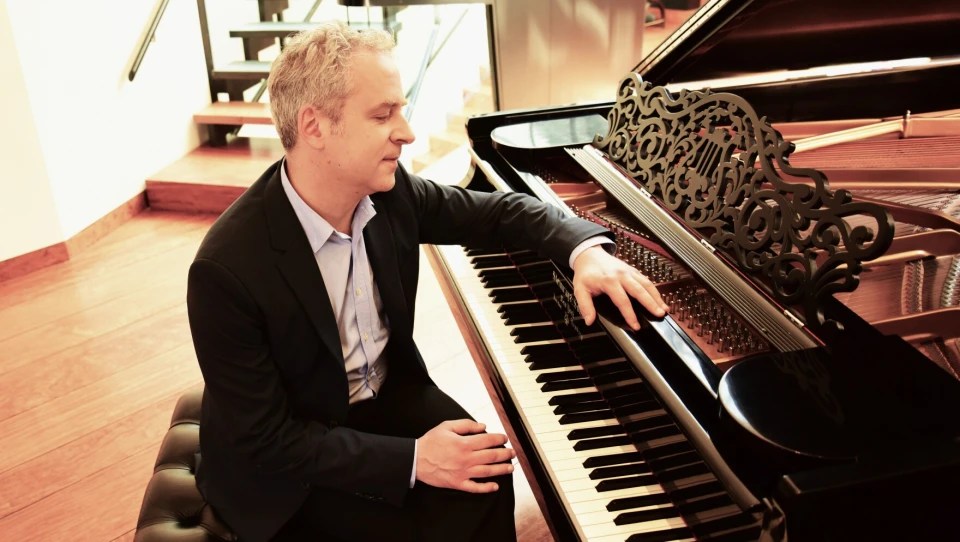
Nonesuch Records releases Jeremy Denk’s Ives Denk on October 18. The pianist, known as a champion of Charles Ives, is acclaimed for his performances of the great American composer’s works. Ives Denk, released in celebration of the 150th anniversary of Ives’ birth, features the composer’s four violin sonatas, performed with violinist Stefan Jackiw, as well as remastered versions of his Sonatas No. 1 and 2 for piano, from Denk’s 2010 debut recording, Jeremy Denk Plays Ives. ‘In the Barn’, the second movement of Sonata No. 2 for violin and piano, is available to download and can be listened to here:

In his liner note, Denk says that Ives’ “deepest dream was to create an original musical style, a fresh and uniquely American voice. He achieved this. But it was a voice most didn’t want to hear, and still don’t. He is one of history’s least popular populists … Ives’ writing – especially the later ones, when he was in terrible physical decline – are… often unhinged with anger, full of mean-spirited nicknames and simplistic binaries, they reflect some of the worst angles of America. One thing that saves Ives’ music from these dangers is his sense of humour, and his willingness to embrace failure.”

“If there is one piece that sums up for me Ives’ difficult virtues, it is the slow movement of the first violin sonata, a jagged musical reflection on the Civil War, so eerily relevant now, with America split into red-blue madness. It is interesting to compare this kind of piece, profound yet unloved, with the far more identifiably American voice of Aaron Copland … Ives is optimistic but always messy, always falling apart at the seams. His music suggests America will just have to muddle through, and wrestle with its own failure. At this particular historical moment, Ives seems to be more right than ever.”

“‘In the Barn’ is a joyful disaster,” Denk says of the second sonata movement, above. “It starts with country fiddling, slips slyly into urban ragtime, and as time passes, every imaginable genre makes a cameo – overheated Wagnerian Romanticism, fashionable exoticism, a dizzying tour of the early twentieth century musical world.”

Ives / Denk will contain the following repertoire:

Violin Sonata no.4 ‘Children’s Day at the Camp Meeting’
Violin Sonata no.3
Violin Sonata no.2
Violin Sonata no.1
Piano Sonata no.1
Piano Sonata no.2 ‘Concord, Mass., 1840-1860’

Published post no.2,277 – Wednesday 21 August 2024

In concert – Jeremy Denk, CBSO / Kazuki Yamada: Gershwin, Clyne, Ravel & Mussorgsky / Wood

Jeremy Denk (piano, above), City of Birmingham Symphony Orchestra / Kazuki Yamada

Gershwin An American in Paris (1928)
Clyne ATLAS (2023) [CBSO Co-Commission: UK Premiere]
Ravel Pavane pour une infante défunte (1899, orch. 1910)
Mussorgsky orch. Wood Pictures at an Exhibition (1874, orch. 1915)

Symphony Hall, Birmingham
Wednesday 1 May 2024

Reviewed by Richard Whitehouse

This evening’s concert by the City of Birmingham Symphony Orchestra may have taken its overall title from the final work, but ‘pictures’ were everywhere in evidence and not merely those ‘at an exhibition’ – not least with Kazuki Yamada as enthusiastic as ever at the helm.

While it loses out to his Rhapsody in Blue in the popularity stakes, Gershwin’s An American in Paris is surely the most successful of his orchestral pieces for matching its immediacy of imagery to a resourceful structure. Encouraging the CBSO to a bracing response in the outer sections, and with Jason Lewis’s nostalgic trumpet initiating that pathos-laden central phase, Yamada secured a response whose full-on expression was offset by too sectional an approach – the music proceeding in a stop-start fashion rather than unfolding organically as it should.

Over recent years, the New York-based Anna Clyne has emerged among the leading British composers of her generation, with this first UK hearing for her piano concerto ATLAS keenly anticipated. Inspired by the eponymous and epic collection of the artist Gerhard Richter, this likewise falls into four ‘volumes’ rather than movements, which also underlines their relative formal freedom. Certainly, the ingenious interplay between soloist and orchestra is a tough challenge which Jeremy Denk met head-on – whether in the coursing energy then yielding eloquence of the opening Fierce, alluring textural overlaps of Freely, intimate, the lilting nonchalance of Driving or cumulative activity of the final Transparent with its surge to an emphatic close that (as with this work overall) was capricious and allusive in equal measure.

Doubtless motivated by Denk’s coruscating virtuosity, the CBSO gave its collective all in a work which (rightly) appealed to those present – the pianist responding with his deft take on the Heliotrope Rag co-written by Scott Joplin and the tragically short-lived Louis Chauvin.

After the interval, a rare moment of calm – Ravel’s Pavane for a Dead Princess given with a studied if never stolid grace, Elspeth Dutch’s horn and Katherine Thomas’ harp enhancing its appeal. As with Fauré’s Pavane, this is ideal music for opening the second half of a concert.

And so, to Mussorgsky’s Pictures at an Exhibition – heard here in the orchestration by Henry Wood which preceded and was duly superseded by Ravel’s. Wood is more interventionist, not least by reducing the recurrent ‘Promenade’ to a stealthy introduction, but not necessarily less faithful to the piano work’s spirit – hence the scabrous immediacy of Gnomus, sombre aura of The Old Castle (Andrew McDade’s tuba balefully intoning on high above stage-right), or fatalistic tread of Bydlo with its evocative percussion. Respighi was probably taken by this glowering depiction of Catacombs with a ghostly recollection of the promenade hardly less effective, and if Baba Yaga gets summarily curtailed here, the crescendo of bells launching The Great Gate[s] of Kiev set the tone for a treatment whose opulence borders on overkill.

Not that this inhibited the CBSO from projecting Wood’s organ-clad texture to the maximum, to the enthusiasm of an audience that erupted in the lingering resonances at its close. Quite a way to end an impressive performance, and a memorable concert, on a day that saw Yamada become this orchestra’s Music Director and the CBSO launch ‘A Season of Joy’ for 2024/25.

Click on the link to read more on the current CBSO concert season, and also to read about the recently announced 2024/25 programme. Click on the names for more on pianist Jeremy Denk, conductor Kazuki Yamada, and composer Anna Clyne

Published post no.2,168 – Saturday 4 May 2024

Live review – Jeremy Denk, CBSO / Gustavo Gimeno: Beethoven & Stravinsky

Jeremy Denk (piano, below), City of Birmingham Symphony Orchestra / Gustavo Gimeno (above)

Symphony Hall, Birmingham
Wednesday 20 November 2019 (2.15pm)

Beethoven
Egmont Op.84 – Overture (1810)
Piano Concerto no.3 in C minor Op.37 (1800, rev. 1803)
Stravinsky
Petrushka (1911, rev. 1947)

Written by Richard Whitehouse

Beethoven and Stravinsky might not be felt natural bedfellows (whatever the latter claimed in later life), but this afternoon’s concert with the City of Birmingham Symphony Orchestra and fast-rising conductor Gustavo Gimeno was evidently intent on demonstrating otherwise. The overture from Beethoven‘s music for Goethe’s play Egmont duly launched the programme in imposing fashion, Gimeno securing a trenchant while slightly inflexible response across the main Allegro, with no lack of rhythmic definition as held good during an incisive peroration.

If his Third Piano Concerto finds Beethoven more overtly indebted to Classical precedent, its palpable emotional breadth is a clear pointer to what lay ahead. As soloist, Jeremy Denk had the measure of the opening movement’s often abrupt alternation between imperiousness and intimacy – not least a probing take on the development with those eloquent woodwind contributions. If the cadenza was a shade too volatile in its later stages, the fateful emergence of the coda (timpani and strings) was suitably rapt in its intensity. Raptness was equally the watchword of the central Largo, Denk pointing up the stark contrast of his E flat entry then duetting blissfully with bassoon and flute in its transition to the main theme, but as the coda (seemingly) evanesces into silence a greater dynamic subtlety would have been welcome.

Interestingly, Denk supplied this in abundance at that mesmeric point in the finale when the rondo theme ventures into the major as if to goad the music back to the prevailing C minor. Elsewhere, this was an impetuous and assured account which reached its culmination with a heady solo transition into a coda that dispersed preceding tensions through its unchecked ebullience. Denk returned for an unlikely yet appealing encore – a paraphrase (his own?) on the Pilgrims’ Chorus from Wagner‘s Tannhauser as rapidly evolved into a full-blown rag.

Few British orchestras can have performed Stravinsky‘s early ballets with the frequency and consistency of the CBSO, which is not to suggest Gimeno was other than his own man in this reading of Petrushka – heard in its streamlined 1947 revision rather than the texturally more imaginative 1911 original (which this past nine decades the orchestra has only played under Pierre Boulez). Certainly the revision’s tendency to encourage a headlong and even ruthless approach was evident in an overly regimented take on the Russian Dance, the scene-setting that precedes it audibly lacking atmosphere, but thankfully not the central tableaux depicting Petrushka and the Blackamoor – the former as nervous and agitated as the latter was moody and, not least following the arrival of the Ballerina, ominous in its smouldering sexuality.

No less impressive were the surrounding evocations of the Shrovetide Fair – the latter with its various set-pieces vividly and tellingly characterized, on route to the sudden reappearance of the main protagonists then Petrushka’s death and ghostly apparition for what remain some of the composer’s most affecting pages. The stentorian trumpet writing was fearlessly delivered, and if those concluding pizzicato chords might have been more unanimous, it only marginally detracted from the conviction of what was a well conceived and finely executed performance.

This performance will be repeated at Symphony Hall, Birmingham, on Saturday 23 November at 7pm. For more details head to the CBSO website

Wigmore Mondays – Jeremy Denk plays Bach & Schubert

Jeremy Denk (piano)

J.S. Bach Partita no.5 in G major BWV829 (1726-1730) (1:35 – 16:37)
Schubert 4 Impromptus D935 (1827) (19:16 – 54:07)

Wigmore Hall, London
Monday 18 March 2019

To hear the BBC broadcast through BBC Sounds, please follow this link

Commentary and Review by Ben Hogwood

If you know anybody who is sceptical of the music of J.S. Bach, point them in the direction of the link above, and Jeremy Denk’s account of his Partita no.5. This sparkling display of virtuosity showed beyond doubt the composer’s ability to write instinctively with humour, a playful Partita where the only regret was the pianist’s decision not to use all the written repeats applied to the dance-based movements.

The reason for this would almost certainly have been time constraints, with Denk’s wish to combine the Bach with the Four Impromptus Schubert completed in 1827, his last full year. The two made a very satisfying coupling, giving listeners in the Wigmore Hall and to BBC Radio 3’s Lunchtime Concert an hour of fluidly written and brilliantly played pieces.

The Bach first, beginning at 1:35 on the broadcast link with a lively Praeambulum, then moving almost without a break into the traditional sequence of dance movements the composer reserved for pieces such as this. With the mood defined Bach presents an elegant Allemande (3:54), a light footed Corrente (7:35) and then a slower Sarabande (8:52), which features attractive doubling of the melody.

These slower dances always present a pause for thought within Bach, an intake of breath before more dancing – which here includes a Minuetta (11:34) where Bach puts a delightful ‘two against three’ set of rhythms together, the dance stumbling attractively. It’s over all too soon unfortunately, but the straight faced Passepied (12:38) has a stately feel, before the triple-time Gigue (13:48), with its centrepiece, a fugue that Denk masters most impressively, building the momentum to a thrilling conclusion.

Angela Hewitt has spoken of how the key of G major ‘always seems to inspire Bach to write music of great radiance, joy, gentleness and technical display’ – and that is on view throughout Denk’s spring-like account. He delighted in asides to the audience throughout, letting them in on his enjoyment of the music.

The Schubert presented a very different range of emotions. Published as a set of four pieces in 1839, twelve years after composition, the Impromptus work in isolation and also as a quartet, their themes crossing over but not as rigidly as a sonata might demand. This spirit of relative freedom runs through the four pieces.

The first Impromptu, in F minor (19:16 on the link) is a substantial piece that immediately brings Beethoven to mind with its call to arms – Schubert’s contemporary having not long died. The second theme of this impromptu (20:51) is soft and hymn-like, reflective yet with strength in depth when repeated and magnified, in development. This intense passage is cleverly worked, coming back around to the relatively stern main theme at 24:25, though Denk enjoys the more optimistic strains of the major key as it soon takes over. The ‘hymn’ recurs in this key at 26:08 – but as befits the uncertainty of this music, Schubert can’t resist more harmonic movement right through to the turbulent end.

The second Impromptu (29:43) is in F minor’s ‘relative’ key, A flat major, and starts in wonderful stillness. This main theme is restated on a number of occasions, resisting any of the louder interventions trying to derail it. A central section (from 33:05) is faster and flowing, but once again takes a turn for darker waters as Schubert alternates between major and minor key. This only heightens the soft contentment of the main music when it returns at 35:17, wonderfully handled by Denk.

The third Impromptu is similarly light and shade, but this time much more in favour of brighter thoughts. From its opening (37:27) it sets out a theme very similar to a famous melody from Schubert’s Rosamunde stage music, which the composer proceeds to take as a base for several variations – just as he did in an earlier String Quartet in A minor. This unfolds beautifully – with impeccable technique from Denk, and impressive depth in the minor key fourth variation (41:44). The twinkling figure of the final variation (45:30) looks to finish the piece in high spirits, but a final statement returns us to quiet thought.

Finally the fourth Impromptu (47:49) returns us to the F minor world of the first, though here Schubert is in the mood for a dance, evoking the Hungarian cimbalom with spicy harmonies and some daring passagework for the right hand. This finishes the piece acrobatically in the run up to 54:07, a feat superbly realised by Denk here.

As a completely irreverent encore, breaking Schubert’s spell but proving a superbly entertaining sign-off, we had the Pilgrims’ Chorus from Wagner’s Tannhäuser well and truly sent through the boogie-woogie and blues wringer by Donald Lambert (from 55:55 – 58:21)

Further reading and listening

If you enjoyed Jeremy Denk’s Bach playing, there is a disc of Partitas he released back in 2011 for Azica Records. You can hear it on Spotify here:

Denk’s latest release is an intriguing exploration of music from 1300 to the present day. You can hear it here:

Meanwhile to explore more Schubert Impromptus and pieces, the peerless Alfred Brendel is strongly recommended. This album includes all the Impromptus for solo piano as well as some attractive German Dances, the elusive but compelling 6 Moments Musicaux and the darkly tinged 3 Klavierstücke:

Steven Isserlis and friends – Czech chamber music

czech-chamber-music
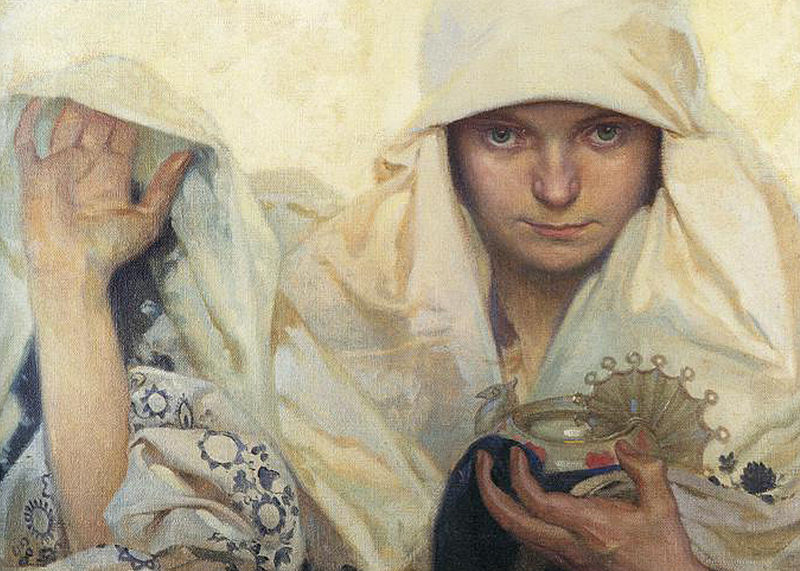
Fate by the Czech artist Alphonse Mucha, 1920

Jeremy Denk (piano), Joshua Bell (violin), Lawrence Power (viola) and Steven Isserlis (cello), Wigmore Hall, 20 May 2015.

As Steven Isserlis wrote so eloquently in the program notes for this concert, ‘Why is it that so much Czech music is loveable in such a unique way?’

This, the first of two parts, revealed a quartet of composers intent on spoiling the listener with a mass of tunes (teacher Dvořák and pupil Suk) or using their music to express the highly charged climate in Europe in the 1920s and 1930s (Janáček and, from a distance, Martinů)

Jeremy Denk, Joshua Bell, Steven Isserlis and Lawrence Power planned this concert to perfection, the abundance of tunes placed first and last, with the deeper moments in between.

It is doubtful Suk’s Piano Quartet, the first published piece of a precocious seventeen year old, has ever had a performance like this, bursting with pride and enthusiasm. After a forthright statement of the first tune from the ensemble, a beautiful solo from Isserlis revealed the work’s softer underbelly, which came to the fore in a similarly affecting tune in the slow movement, the cello releasing a beautiful mellow sound.

Janáček’s Violin Sonata wore a permanently furrowed brow. The icy reach of the muted violin in the last of the four brief movements was key to summing up a work that bristles with anger, though redemption was briefly found in the second movement Balada, with a theme of silvery consolation.

The second of three cello sonatas by Bohuslav Martinů was next. Isserlis has championed these works for more than 25 years, and gave a commanding performance of a moving work. Written in America in 1938, the composer having successfully fled Paris and the Nazis, it is a deeply felt and resilient utterance, especially in the second movement where time stood still.

As far as the tunes were concerned, the best was saved until last. Dvořák’s Piano Quartet no.2 positively bursts with Czech melodies – which are revealed to be surprisingly close in mood and contour to the American tunes he was to use towards the end of his career. Here they were swept along in a wonderful performance of good feeling, played with great sensitivity by Jeremy Denk, whose phrasing was key to the utmost charm of the Scherzo, the tender Adagio and the rustic finale.

Yet this was music for a team of friends to enjoy, the music surging forwards with a positivity rarely experienced to this extent in the concert hall – and happily caught by microphones, hopefully for a future release on Wigmore Hall Live. Those Czechs, they knew a good tune – and these four were the best possible Bohemian Rhapsodists in waiting!

The music from this concert can be heard here on Spotify. Part two of this series is at the Wigmore Hall on Saturday 23 May, and will include the Dvořák Piano Quintet and the Piano Trio by Smetana.