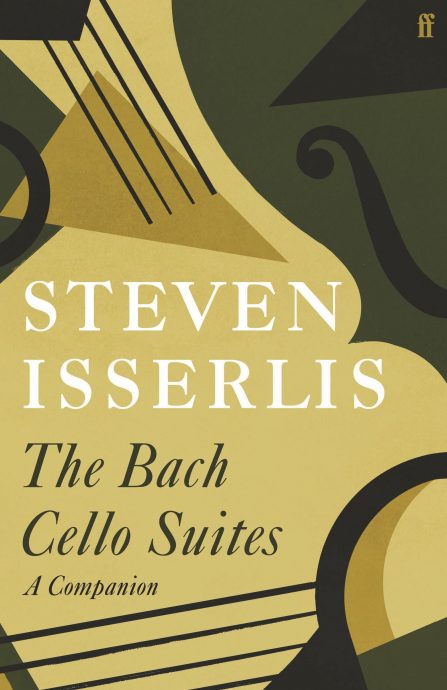
Ask Steven Isserlis the music he would take to a desert island, and his answer would surely be the six Bach Cello Suites. The cellist has lived with their music all his adult life, and having released his award-winning recording of them for Hyperion in 2007, he now expresses his deep love and admiration for them in written form.
What’s the book like?
In a word, invigorating. Having lived with the suites myself for 35+ years as an amateur cellist, your reviewer is very much a convert – but reading this gave me enthusiasm anew, for Isserlis reveals new treasures about this wonderful music at every turn.
Crucially he does this in a way that will appeal to cellists and non-cellists alike, and even those who struggle with musical terms. A helpful glossary is on hand to help here, but so is an introduction that sets out this celebration of six works where mystery, expression and originality walk hand-in-hand.
The origins of the suites are shrouded in mystery, right down to their authorship. Isserlis tackles these questions head-on, in a wholly compelling way. He confronts the doubts, examines the existing performing editions, and looks at the role of Bach’s second wife Anna Magdalena in their publication, all without getting too bogged down in musicology. There is healthy but qualified assumption and speculation, made as a music lover but backed up with firm arguments from Bach scholars past and present.
Isserlis looks at the construction of each suite in great detail, marvelling at Bach’s consistent marriage of mathematical precision and emotional outpouring. He uses the scholarly texts but also leans heavily and most enjoyably on his perspective from the pure, musical instinct of a performer. This approach lifts the music from the page, frequently inspiring the reader to listen along.
This instinct leads to a central, compelling case for a subtext for the suites, describing the life of Christ in a way that can be keenly experienced by the listener but which also makes a great deal of musical sense, with the caveat that the cellist’s conclusions are largely speculative.
What is beyond doubt is the technical mastery shown by Bach in writing for the cello, and the inspiration that flowed so readily and so inevitably in writing the suites, lifting the instrument and its potential to a higher plain. The six suites are remarkable pieces both individually and collectively, as are the six movements of each – and Isserlis brings them to life as he writes. He celebrates their role in the life of any cellist while also, under his breath, lightly cursing some of the technical difficulties as the cycle progresses.
Readers can opt to take the book from start to finish, taking in each of the 36 movements, but the layout rewards repeat visits to dip in to individual parts and elements of their composition. This is ideal not just for serious, practicing cellists but also for individual listener preferences.
Does it all work?
Yes, in several ways. Isserlis is a fluent and passionate writer, putting the music first at all times, so that reading the book will almost always lead to a first hand encounter with the music. That is the surest guide to success for any book on music, surely!
Is it recommended?
Yes, on pretty much every level. For cellists – either full or part-time, like your reviewer – this book is essential and thought-provoking reading. It reveals afresh the many delights to be found in experiencing this wonderful music, and will also make you want to listen to more Bach, the choral works especially, to explore the fascinating parallels drawn between these and the suites.
Non-cellists should not hesitate to approach the book either, for there are many entertaining and thoughtful stories in the book that prove richly rewarding.
This is a fine achievement, celebrating a body of work that all cellists hold dear. The music lifts from the page and into our homes with an easy candour and compelling storytelling. It is a wonderful achievement.
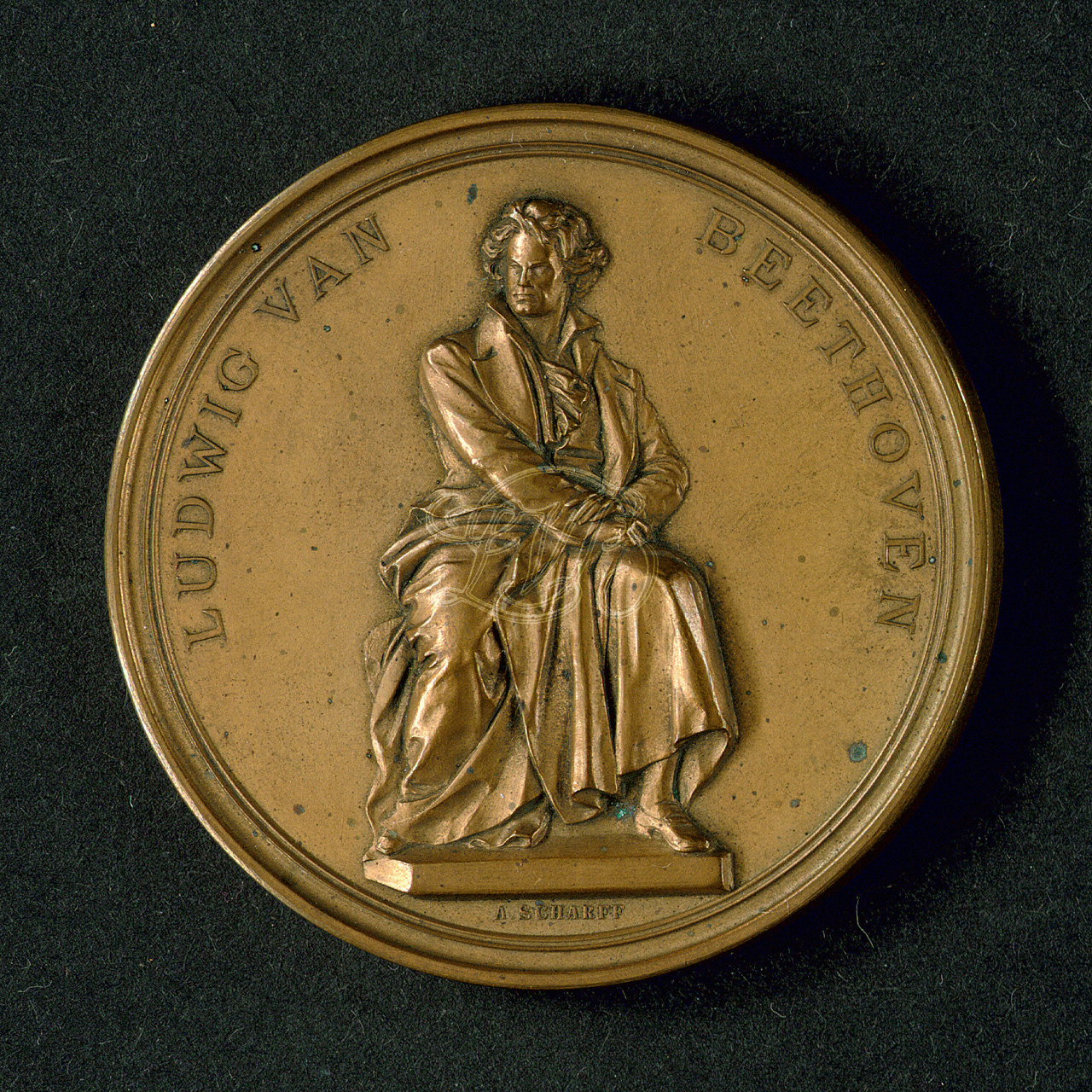
Commemorative medal for the unveiling of the Beethoven monument in Vienna – bronze medal based on a design by Anton Scharff depicting the Beethoven sculpture by Caspar von Zumbusch
Prelude in F minor WoO 55 for piano (1803, Beethoven aged 32)
Dedication not known Duration 3′
Listen
written by Ben Hogwood
Background and Critical Reception
Roeland Hazendonk, writing booklet notes for the recording made by Ronald Brautigam for BIS, describes this piece as ‘an almost perfect pastiche of a prelude by Bach’, drawing attention to its similarity with the Prelude in the same key from the first book of Bach’s Well-Tempered Clavier.
Thoughts
If you heard this piece without knowing, your first guess at a composer would surely not be Beethoven, for this is a piece of incredibly accurate pastiche. It is remarkably similar in both mood and profile to the F minor prelude of Bach referred to above, yet it is clearly not a copy as you will hear by comparing the two:
Beethoven starts the Prelude confidently, and it evolves naturally in a series of arpeggios that pass instinctively between the hands. For much of the piece he keeps the tonality close to F minor, though the central section starts wandering towards further flung keys. It all comes back together for a poised conclusion.
Perhaps this was a study for one of Beethoven’s teachers at the time, but it expresses his knowledge and love of Bach better than words could possibly manage!
Recordings used and Spotify playlist
Jenő Jandó (Naxos) Olli Mustonen (Sony BMG) Ronald Brautigam (BIS)
Gianluca Cascioli adopts a slow and steady tempo, but gives great feeling to his performance. Ronald Brautigam is much quicker but still allows the notes to breathe, pausing at strategic points in the music to give the phrasing a natural structure.
You can chart the Arcana Beethoven playlist as it grows, with one recommended version of each piece we listen to. Catch up here!
It is deepest summer, and Arcana is on an online call with Arandel, live from Burgundy. Taking the music of Johann Sebastian Bach as his inspiration, the anonymous French composer and producer has been discovering a wide range of material that has so far yielded two InBach albums. The second enjoys new perspectives offered in live performance of the first, and it presented the perfect opportunity for Arcana to step in and discuss.
We begin with introductions – especially the one Arandel had with the music of Bach. “I’m not sure, but it was some of the music my father used to play on this turntable when I was a kid. I remember being very impressed by the Toccata and Fugue in D minor, it used to be the soundtrack of the opening credits for a children’s cartoon called Il était une fois… l’homme (Once upon a time…man) My father used to play all kinds of music and Bach was one of those.”
His curiosity grew. “One of the things that attracted me to the music was that I was trying to figure out why it was so present in everyone’s mind. In today’s modern music there are glimpses and traces of Bach, more than any other classical or Baroque composers.” Inspiration took hold, but what was it about Bach that made Arandel realise he could use it for his own music? “It all started with a preposition from someone I worked with at the Paris Philharmonie. He asked me to think about something for a weekend dedicated to Bach, a Bach marathon. I had carte blanche for the end of the evening, and I had 45 minutes to do whatever I wanted on Bach. I had remixed Mozart once, but while I am very impressed with and have a lot of respect for classical music, I’m not a classically trained musician at all. I can’t read or write the music, so I look at classical music with very much respect but also a bit of distance.”
In spite of the lack of experience, Bach’s music took hold. “It was never a career plan of mine to venture into electronic classical music, but I thought it was a great opportunity to work on something different. I felt like there was enough material, diversity in Bach’s music for me to find something I could work on. I think it would have been very different with Mozart or Beethoven, but with Bach there is something that makes it possible to make it your own. From this position, I dived into Bach’s music, and I asked friends and colleagues to give me recommendations on Bach. That’s how I found a lot of material for the first InBach. Every scene has its own little story – I couldn’t answer how I made those tracks in general. One is with a particular instrument, another because of cooperation with another musician. It reflects the different tones of the album.”
One of the musicians collaborating with Arandel is cellist Gaspar Claus, who appears on three tracks on InBach Vol.2, including Fabula (above). “That was a long time ago,” he recalls, “Three years, I guess. It was great. We have known each other for over 10 years now but hadn’t really worked together other than a small jam one night in a small French town. I don’t normally do this kind of improvisation because I don’t feel comfortable, but with Gaspar it was easy to think about something, because he brings so much and frees you to bring something different. I remembered this night when I asked him to if he wanted to join the InBach project. At first it was with his trio, but they were not all available, so it became just Gaspar. At first, I wanted him to play the viola da gamba, and I asked him if he was up for playing an instrument he hadn’t played before. Of course he was, but we had little difficulties with the museum we approached, because of very strict rules about the consideration of the instruments. The rule was that you couldn’t have someone playing the viola da gamba if they were not a professional. In the end he played a historical cello, and they agreed to let us use a facsimile of an old viola da gamba. It was great, very natural.”
Arandel also worked with Myra Davies, who provides vocals on Doxa Notes, the first track on the album. “I was impressed by her in a way that I was almost scared, as I have a lot of admiration for her work. Talking to her was almost challenging, in some ways, because she’s so brilliant and clever! I wasn’t sure I could keep up with her but the level of conversations we had was really interesting, about metaphysics and the meaning of live.”
Are these the sort of discussions Bach’s music could fuel? “Maybe it’s because we had the same feeling about Bach’s music being timeless. The magic of his music could be inherited, and from century to century it will survive us all. That’s probably where the metaphysics came from. When we are not here anymore, where will Bach’s music be?”
Both InBach albums are likely to surprise with the scope of their approach and invention. Was it Bach himself who brought out this creativity? “Yes, of course! To me, it’s not really my music. It’s my take on Bach’s music, and I think it’s because of the way I approached it, which was like what I would do for a remix. It is about finding the find bits of the original piece and maintain something of the original, it has to float somewhere. You have to bring your own creativity or touch. It was a bit challenging at first, because Bach’s music is regarded by some as perfect and sacred. Some of the musicians I approached for the collaborations turned it down because they said, “No, Bach’s music is perfect.” They told me it would be very cocky of me to bring something to Bach’s music. I can understand their point, but I don’t agree! I can try to bring my light touch to it and still think that Bach’s music is great on its own. I’m not trying to make it better! I always say it was like being iconoclastic, and I wanted to do it with respect to what I hear in Bach’s music.”
With such a wide and varied range of responses to Bach in pop music, is it fair to say the best ones are those treating him with great respect, such as Wendy Carlos in Switched On Bach? “Yeah. It’s not easy music to listen to, with all the bleeps – I think it’s very inspiring, but for my own taste it is a little too close to the original, and at the same time a little too ‘bleepy’. After two or three tracks, it gets hard to listen to the whole album.”
Was it an emotional experience writing the two Bach albums? “For the second one, of course – there was the whole thing about the lockdowns, and my brother passed away while I was working on it. I’m not sure how it affects the way I produce though.” I asked as one of the most telling tracks is in fact the Capriccio, subtitled by Bach as ‘on the departure of a beloved brother’, “Agnès Gayraud, a French writer and philosopher, wrote a great book called Dialectic of Pop. She wrote the press release for the album, and we had a long talk about how she felt about the album. It was really the first time I could talk to someone about this subject because I was still very immersed in it. We talked a lot about God, and dramatic apparitions. The music of Bach to her was starting to get more haunting. She really had a point, and it resonated with me very deeply. I don’t know if it’s because I’m getting older – aren’t we all?! – but I feel like I’m becoming more haunted. People who are not here any more are at a place where you can go and look for them, you know where they are.” Is it true that Bach’s music can act as a link between the two worlds? “Yes, because it says something about eternity, and how things keep on enlightening us. Death is not an end in itself.”
Bach’s music continues to inspire, whether in reinterpretations like Arandel’s but also in new recordings from classical musicians. “There is something about the composer that still resonates, but I like that after two volumes I still don’t know why! I’ll probably never know, and that’s fine. I will keep on looking, but I don’t think I will make a third album. I will keep looking at Bach’s music though.”
In spite of the lack of classical training, Arandel agrees this can be a help rather than hindrance when talking of an original approach. “I don’t see things from this perspective, but how can it have any influence on the classical world?” I suggest that it can inspire different approaches to concerts and flexible audiences, who could be pleasantly surprised by electronic musicians and their approach to Bach. “I wouldn’t really know because I don’t have much feedback from the classical world. It was actually those reviews that were interesting. I like to read reviews, and when I read them, I learn about what I did. That’s why I liked your critique, I remember reading it and thinking it was very interesting.”
With no more Bach planned for now, is there other new music on the go? “At the moment I should be working on remixes, but it’s the middle of the holidays and my mind’s not exactly in music right now. I’m in the garden, working with tomatoes and potatoes. It’s different but it’s what I need! The next album is almost ready. It was actually ready before InBach, but this project happened in a very short period of time and the label decided that instead of moving on with my next album I should put it to one side and focus on InBach. I have made some tweaks and adjustments now I have worked on InBach. I feel it might change a few things about how I listen to my own music!”
For now, the man behind Arandel will remain anonymous. “When working on the promotion of InBach we discussed a lot with the label as to how I would have to adjust my communication because it was a different project, but I felt I said everything I could say while still being anonymous and not showing my face and not doing video interviews. For a while I felt that everything that could be said had been said, and I had to do something differently. I was reluctant and still am, to use my real name!”
Interview by Ben Hogwood
Both InBach and InBach Vol.2 are out now on InFiné, with a link to the Bandcamp site for the current album below:
Music has had an important role to play in the celebration of Christmas for as long as we can remember. In spite of the enormous choice of repertoire available, however, new works continue to be created, the inspiration never waning – and the next premiere is less than a week away as we write.
It is a major work, too – Sir James MacMillan filling a whole concert with his Christmas Oratorio. Written in 2019, it had a European premiere in Amsterdam in January 2020, and was due for performance by the London Philharmonic Choir and Orchestra later the same year. For sadly predictable reasons that did not happen, but happily MacMillan is now ready for the UK premiere at the Royal Festival Hall.
Arcana hooked up with the composer via Zoom at his North Ayrshire home, to find out more – and began by asking him for the first experiences of Christmas music he could recall. “The magic of Christmas was the music for me I suppose, going back even to the days before I was involved in music. Hearing the carols at school, and the church, and the home, amongst families, with the piano being played, are all very early memories. I loved it at school especially, and then gradually we were ushered into actually singing and performing the music. I would be pressed into service eventually to accompany some of the carols in the class, and that sort of thing.”
Were there any particular pieces that made a strong impression? “The usual ones or the popular ones, but I always remember it was the Advent carols that got me really excited, as that was the indication that Christmas was coming. It was things like O Come, O Come Emmanuel, and a few other children’s carols. I was at a children’s Catholic school, and there was a lot of that kind of thing covered in the way that the school ran.”
Recalling the first piece of Christmas music he composed proves a little trickier. “I do remember as a teenager being asked to write a setting of one of the Isaiah texts for a singer. It was one of the teachers at the school, who sang it at a local Christmas concert. I would have been around 16 or 17, and I’ve lost the music for that. There isn’t a lot of Christmas music in the catalogue, as most composers get asked to write more music associated with Passiontide If anything. There is an issue perhaps that there isn’t enough Christmas music, as it’s not necessarily the kind of liturgical area that composers get drawn to, which is a pity because there’s a lot to be done! There’s a couple of little things in my catalogue written as a student, and Ex Cathedra asked me to write something a couple of years together which got me going.”
The Christmas Oratorio is a much larger piece – billed, like Bach, as a celebration of Christmas? “I think so. On the basis of what I’ve just said about the lack of Christmas music, my mind turned towards trying to fill the gap in a substantial way. In my discussions with the LPO in the early days, I had flagged up the idea that at some stage I would like to write a big Christmas piece. It had been in my mind for some time. I’ve written two passion settings already, and quite a lot of my music already relates to that point in the liturgical calendar, and it just seemed to be a big, empty space that needed to be filled. The LPO picked up on it and liked the idea, and they gave me carte blanche to produce a very substantial piece. It’s a full evening’s programme, in fact.”
The compositional process, as he recounts it, seems remarkably straightforward. “The next stage was what text do I set, what forces do I use, and it became clear that the chorus should be used quite substantially as well as the orchestra. Then I thought about soloists. Once those practical considerations were made and in place, the next question was what do I give to the different choral groups? The way it worked out was that I decided on a mixture of early English poetry, mostly given to the two soloists, liturgical texts in Latin associated with liturgy and scripture given to the chorus, largely, and then these orchestral interludes. All are inspired by the memories of Bach cantatas, and the sinfonias. A pattern emerged by starting and ending each half with a sinfonia, and using a palindromic structure, with arias for the soprano and baritone, choral items and a central tableau in each part to bring everybody together on a big gospel narrative, a New Testament text.”
At every point the composer had his eye on the bigger structure. “When I began to break it down and look at all the constituent parts, the question was how to build it up into a coherent structure, one that was replicated from part one to part two.” This multi-layered approach would seem to suit audience involvement. “When I did the performance in January, we went over to Amsterdam and did it live on Dutch radio. There was no audience, but I was able to prepare the piece and perform it knowing that there were people listening. I got a sense of how it was stitching together and how the different sections related to each other. I’m pleased with how the different movements complement each other, and how they go from Latin to English, from one aspect of the story to another, in very different ways. The instrumental commentaries stand back from the drama of the storytelling and allow a reflection of either serenity, joy or exultation.”
It might seem odd performing a Christmas work in January, but this proved surprisingly natural for MacMillan. “In essence it’s still part of the season”, he explains. “In Holland and Germany especially, they keep their Christmas trees up until early February. The key thing is to keep the decorations up to the Feast of the Presentation. In European terms there is still something of the Christmas character alive at that time, although we Brits have flat packed our decorations away! It was odd stepping back, but any excuse for live music making was happily received.”
MacMillan took an approach that was aware of what other composers have written for Christmastime, but one presence especially loomed large. “When I’m writing these big pieces, I’m certainly aware of antecedents and models established by great employers in the past. As far as the Passions were concerned when I was writing them it was very much the Bach passions that stuck in my mind, but sometimes it’s more of a hindrance than a help, and it’s trying to put all of that out of one’s mind. Nevertheless, the pattern was there, and the model was set in the Bach Christmas Oratorio, which was very much in my mind. Bach is an inescapable ghost, he hovers over all our shoulders. It certainly has been the case with me as I’ve written these big liturgical pieces.”
The composer has been writing more for choir of late, part of a general resurgence for choral music in the last few years. “That’s true. My background as a young musician was in instrumental music. I was a brass player, I played in brass bands as well as school and university orchestras. I did have some choral involvement as a teenager at high school, and that was that was a very important experience for me. I sang and conducted a lot of choral music as an undergraduate. There was something about a general thrust in modernism especially at that time – the 1970s and 1980s – which emphasised instrumental music over choral music, and certainly over vocal music. It’s probably because modernism valued that kind of extreme virtuosity that instrumentalists were able to achieve. When you look at the great modernists, composers of that time, even their vocal music looks and sounds instrumental, for instance the Berio Sequenza for voice.”
He continues. “Even the choral music of Webern and Schoenberg, going back into the early part of the 20th century, it’s very instrumentally crafted. I was exposed to early polyphony, and the Bach cantatas, and then more modern music that I regard as really important by British composers like Benjamin Britten. You see that there is a different way of imagining the choir and the kind of muscle memory of choral singing that has been kept alive in the British tradition. I grafted myself on to that. Britten was a great composer and there are these other great British composers that keep the choral tradition alive. It’s partly through the church experience and experience of the great English cathedrals in particular, but it’s also the local choral unions and choral societies.”
The tradition reaches well beyond professional singers. “The whole amateur way of working has kept the choral flame alive, and it is a very important part of the musical ecology of these islands. There is that love of choral music which is very deeply embedded into the amateur experience as. As that grew in me, I decided to start writing more and more choral music. And the other thing that has to be said, is that as a young composer in the 1970s in particular, I and many others didn’t see the rise of those fabulous English choral ensembles that have become much more prominent in recent years.”
He name-checks a few examples. “Those are The Sixteen, Tenebrae and Polyphony, TheMarian Ensemble and other new groups that are making music of a very, very high standard, and increasingly, incrementally higher standards. This is a very exciting time, not just for British choral singing, but for those of us who value choral music. You’re beginning to see that these groups are commissioning and getting living composers to write for them, and they’re being programmed alongside early music, which makes sense. A brand new piece of 21st century music sits alongside music from the past, and all audiences seem to be at ease with that and seem to see it as a natural complement.”
It is an approach which, to your interviewer at least, makes the early music feel current while the new music gains a historical perspective, the two meeting in the middle. Talking of new music, and MacMillan’s work nurturing new composers, does he have any pointers for the next generation? “Yes. Very recently I’ve been involved in a mentoring process along with The Sixteen and Genesis Sixteen, set up by the Genesis Foundation and directed by Harry Christophers. I’ve worked with them the last seven or eight years now. The last tranche of three composers I met and worked with just a few weeks ago, and Genesis Sixteen brought the course up to Scotland for the first time. There was a Scottish composer, Lisa Robertson, who I have mentored before in choral music at the University of St. Andrews, and also in orchestral music. She’s an all-rounder in that sense, a very gifted young composer. There was an Irish composer, Eoghan Desmond, a very gifted composer, and Anna Semple was the third, a very fine composer too. We workshopped their music – three works in progress, but close to completion. Eventually The Sixteen will take on board the completed works, perform and record them.”
In the wake of the pandemic – be it ending or ongoing – has MacMillan’s approach to composition altered at all? “The only difference I’ve noticed is that I’ve got on with more music writing. Some of our projects were brought forward, because a lot of the other things I do were just obliterated, and I had no contact with universities or students. In a sense I was able to get back to the day job. I wouldn’t say I was more focused on inspired than usual, but I suppose I was given more space to think about the music in more detail. I have written a lot – some choral, some orchestral, some chamber music, which I’m writing just now.”
He continued working with ensembles to. “I did a couple of things with orchestras, because as you know, choirs were shut down. I got to work with the LPO on a mentoring course, but not to a live audience. We recorded the process of rehearsal and performance with several young composers, and I did a Radio 3 recording with the BBC Concert Orchestra. I did filmed concerts with the Scottish Chamber Orchestra, too, and I eventually got to conduct them with a live audience, which was wonderful. It’s just a great thrill to get back to the live concert.”
Does he get nervous before a premiere such as the Christmas Oratorio? “I can never tell before just how nervous I’ll be. Sometimes I’m placidly calm, other times, I’m really on edge, and there’s no single factor determining how I’m going to be.”
Turning back to the music, I ask if it is important with composition to express the importance of being Scottish, and MacMillan’s Catholic faith? “It’s part of my DNA in different ways, part of the given circumstances of who I am. When I was younger, I got involved with Scottish traditional music. I played and sung with folk bands, and I did feel at the time as if it was a kind of absorption process, deliberately trying to absorb the experience of what it was to perform Scottish traditional music with an eye on how it might transform itself into the music I was writing. I was aware that that was an ongoing process, but performing Scottish folk music was a very important experience that had a knock-on effect on some of the music that I made. I don’t do that anymore. Perhaps the experience of Scottish traditional music is much more kind of underground, subconscious rather than conscious.”
He takes more time to consider. “There is perhaps an analogy there with the religious thing. There were times in the past where I thought more consciously and more anxiously about what it meant to engage with religion in modern music, and now I don’t think about it as it’s become much more part of the natural pattern. It’s what I do, it’s who I am. I will write lots of pieces with settings of sacred text, but then I will turn my hand to something else that has nothing to do with text or directly theological considerations.”
Does that make for a stronger connection with the audience, music that is part of MacMillan himself rather than consciously signposted? “That would be good if it was the case! I feel I have a lot in common with my audiences regardless of whether they are Scottish or English, Brazilian or Russian!” You do tend to meet people who love music as much as I do, who will use almost quasi spiritual language to account for the impact of music on their lives. Those are sometimes deeply sceptical people when it comes to religious matters, but it’s an acknowledgement that there’s something about music which is bigger than who we are, and perhaps it does point to a spiritual dimension in the art form.”
Finally, a completely different subject – craft beer! James has been sampling some during lockdown, so does he have any tips to pass on to a likeminded enthusiast? “I wouldn’t say I’m an expert, I’m very much a dilettante, finding things as I go. I keep meeting people who know much more about it than I do. I did manage to get to the States during the summer and ended up in Vermont, where the local craft beers are just wonderful, if a whole lot stronger! After a few of them you’ve had an experience, put it that way!”
James MacMillan’s Christmas Oratorio will be performed at the Royal Festival Hall on Saturday 4 December at the Royal Festival Hall, and then again on Sunday 5 December at Saffron Hall. Sir Mark Elder will conduct the London Philharmonic Choir and Orchestra, with soloists Lucy Crowe (soprano) and Roderick Williams (baritone)
Bartók Sonata, BB124 (1944) Schneeberger Sonata (1942) First Hand Records FHR117 [61’45”]
Producer / Engineer Jean-Daniel Noir
Recorded 8-10 February 2021 at ‘Il Poggio’, Montecastelli Pisano, Italy
Written by Richard Whitehouse
What’s the story?
The violinist Dmitri Smirnov makes his debut for First Hand Records with this release of unaccompanied works from Bach and Bartók, together with a first commercial recording for the wartime sonata by Schneeberger in what proves an astute and instructive coupling.
What’s the music like?
The Solo Violin Sonata by Bartók is the pre-eminent work of its kind in the twentieth century – Smirnov setting out his credentials in a forthright though never over-wrought account of its initial Tempo di ciaccona, followed by a tensile reading of the Fuga which still admits a bracing humour into its methodical construction. The Melodia is the emotional core of this work, and here Smirnov avails himself of a wide variety of timbre in its heartfelt unfolding, then the Presto makes for a coruscating finale that ultimately heads to its decisive ending.
Its famous finale can easily dwarf the initial four movements of Bach’s Second Solo Partita, but Smirnov is mindful to accord due emphasis to this succession of capricious Allemande, trenchant Courante, eloquent Sarabande then cavorting Gigue, whose jazzy syncopation provides a telling foil for what follows. Attacca in this instance – Smirnov heading directly into the Chaconne which here eschews rhetorical grandeur for an impulsive traversal of its motivically close-knit variations, sustained through to an unexpectedly taciturn conclusion.
Interest understandably focusses on a Solo Sonata by Swiss violinist Hansheinz Schneeberger (1926-2019), with whom Smirnov was personally acquainted. The present work is structured in three compact movements: a powerfully sustained Adagio – entitled Introduzione (quasi cadenza) – followed by an alternately humorous and suave Allegro, then a closing Allegro which is barely half the length of its predecessors, while compensating for any formal short-windedness with an unflagging energy which is maintained right through to its final cadence.
Does it all work?
Yes, whether in terms of a collection whose constituents can be enjoyed separately or as a straight-through recital. There are many other recordings of both the Bach and Bartók, but Smirnov brings his own interpretative approach to bear on each work while, at least for the present, has the field to himself in the Schneeberger. The repertoire for solo violin is wider than supposed, and Smirnov will hopefully continue with its exploration – maybe tackling one of those sonatas by Mieczysław Weinberg, Benjamin Frankel, or Bernard van Dieren.
Is it recommended?
Indeed. The focussed while never constricted sound provides an ideal ambience for Smirnov, whose playing is complemented by his informative annotations. Both CD and booklet cover feature one of Scheeberger’s paintings, The Forest, dating from two years before his Sonata.