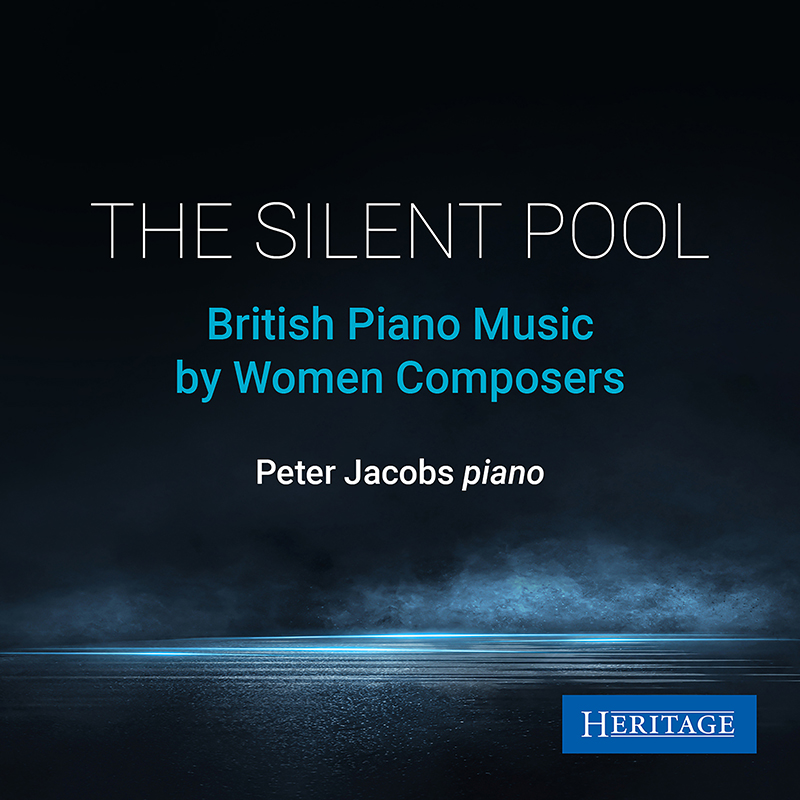
On Record – Peter Jacobs: The Silent Pool: British Piano Music by Women Composers (Heritage Records)

Peter Jacobs (piano)

Smyth Piano Sonata no.3 (1877); Piano Sonata no.2 (Andante) (1877)
Maconchy A Country Town (nos. 1, 3, 4, 5 & 7) (1945)
Williams The Silent Pool (1932)
Grime The Silver Moon (2025)
Dring Colour Suite (1963)
Bingham The Moon Over Westminster Cathedral (2003)
Woodforde-Finden Indian Love Lyrics (nos.2 & 1) (1903)
McDowall Vespers in Venice (2002)
Bingham Christmas Past, Christmas Present (1991)
Roe A Mystery of Cats (nos. 1, 4 & 5) (1994)
Beamish Lullaby for Owain (2016)
Da Costa Gigue; Moods (both 1930)
Lehmann Cobweb Castle (nos. 2 & 5) (1908)

Heritage Records HTGCD126 [75’40”]
Producer / Engineer Paul Arden-Taylor

Recorded 16 September 2024 & 26 January 2025 at Wyastone Concert Hall, Wyastone Leys, Monmouth

Reviewed by Richard Whitehouse

What’s the story?

Peter Jacobs continues his productive association with the Heritage label with this anthology that takes in a well-planned overview of piano music by female British composers, ranging across over more than 130 years of creativity in an impressive variety of idioms and genres.

What’s the music like?

Although female composers had been active in the UK from the outset of the English Musical Renaissance and before, relatively few came to prominence during their lifetime, with many others destined to be rediscovered only years and sometimes decades after their death. While hardly the first of its kind, the present collection is among the most representative in terms of its stylistic coverage which, in turn, underlines they should not be pigeon-holed any more than their male counterparts. Moreover, what was the loss to earlier generations is our gain today.

This recital opens with the redoubtable Ethel Smyth – her Third Piano Sonata contrasting the equable motion of its initial Allegro with the impetuous manner of its closing Allegro vivace. From its larger scale predecessor, the central Song Without Words affords ruminative space between the dynamism and tensions of those movements either side. Of the five (out of nine) pieces in Elizabeth Maconchy’s suite, the eloquent Lament and limpid Bells are especially appealing. Grace Williams is at her most haunting in the piece as gives this collection its title, and Helen Grime pens a miniature stark yet pellucid. Among the most versatile composers of her generation, Madeleine Dring is represented here by a five-movement themed suite which includes such delights as the quizzical Pink Mirror or the appropriately sensuous Blue Air. Judith Bingham may be best known for her choral and brass band music, but there is nothing unpianistic about so translucently textured a nocturne.

Two of Amy Woodforde-Finden’s four-piece suite include the elegant poise of Less than the Dust, while Cecilia McDowall sounds a note of spatial immensity in her Venetian evocation. The four pieces of her Christmas suite find Bingham pursuing an altogether more winsome vein of expression – duly complemented by three out of five whimsical feline homages by Betty Roe, happily still going strong in her 96th year. Sally Beamish contributes a (surprisingly?) capricious lullaby, with two pieces by the short-lived Raie da Costa typifying her witty and sassy manner. The wistful charm of Liza Lehmann, two of six pieces from her only piano suite, affords an elegant then touching envoi.

Does it all work?

As an overall sequence, absolutely. At around 75 minutes, this concert-length recital can be enjoyed as a continuous sequence or in any number of selections. It helps when Jacobs is so persuasive an exponent of this music, much of it remaining little known other than to pianists with his breadth of sympathies but which ought to find an audience given exposure in a live context. As he himself notes, this “random selection [is] united by being rewarding to play, beautifully written for the instrument, varied in style and intellectual depth”. Enough said.

Is it recommended?

It is. Piano sound is as full and spacious as expected given its Wyastone source, while Jacobs contributes laconically insightful notes on the recital overall. Most enjoyable, with hopefully enough material in this pianist’s “library of over 60 years collecting” to warrant a follow-up.

Listen / Buy

You can read more about this release and explore purchase options at the Heritage Records website

Published post no.2,682 – Thursday 9 October 2025
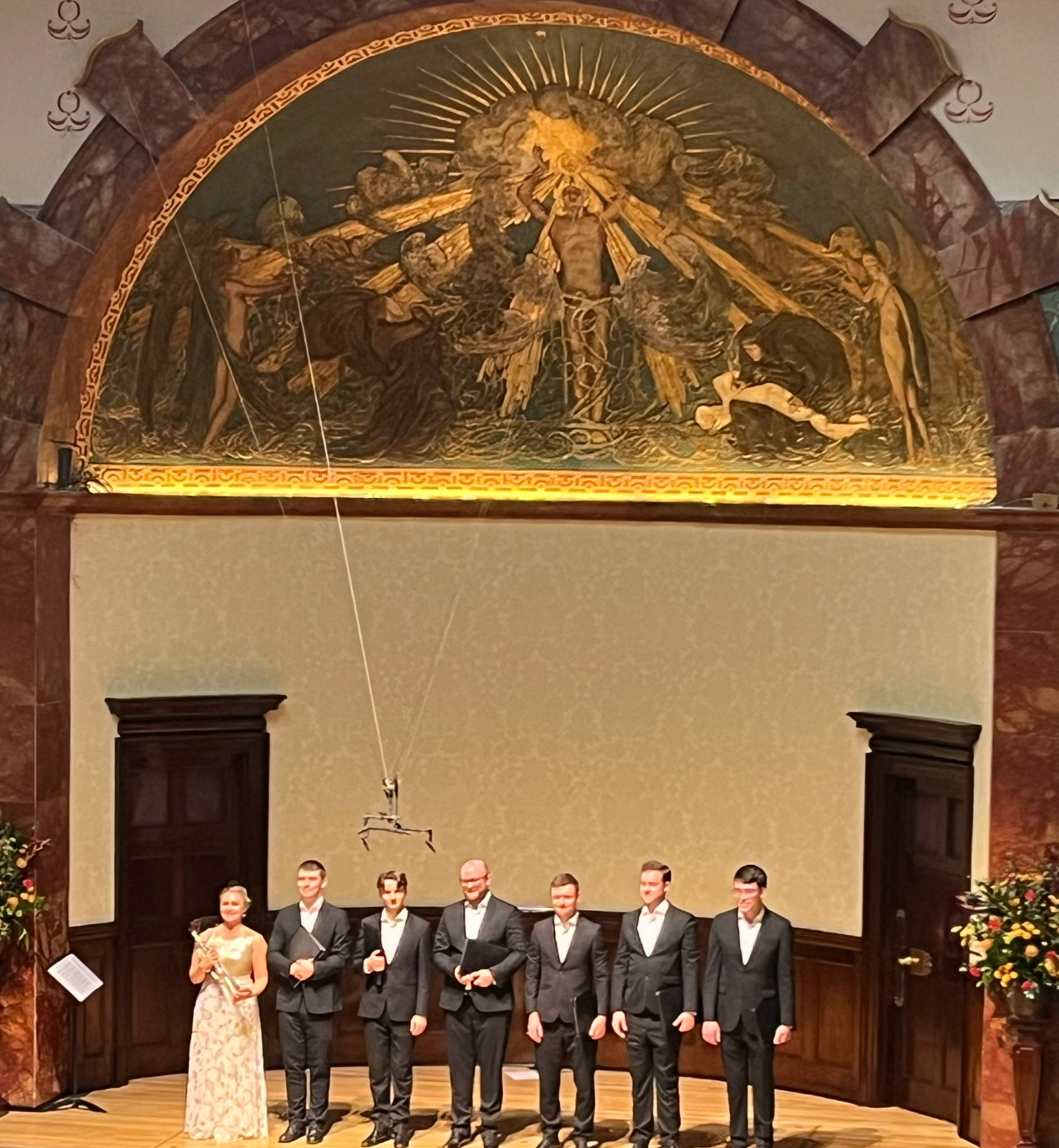
In concert – The Gesualdo Six & Matilda Lloyd @ Wigmore Hall

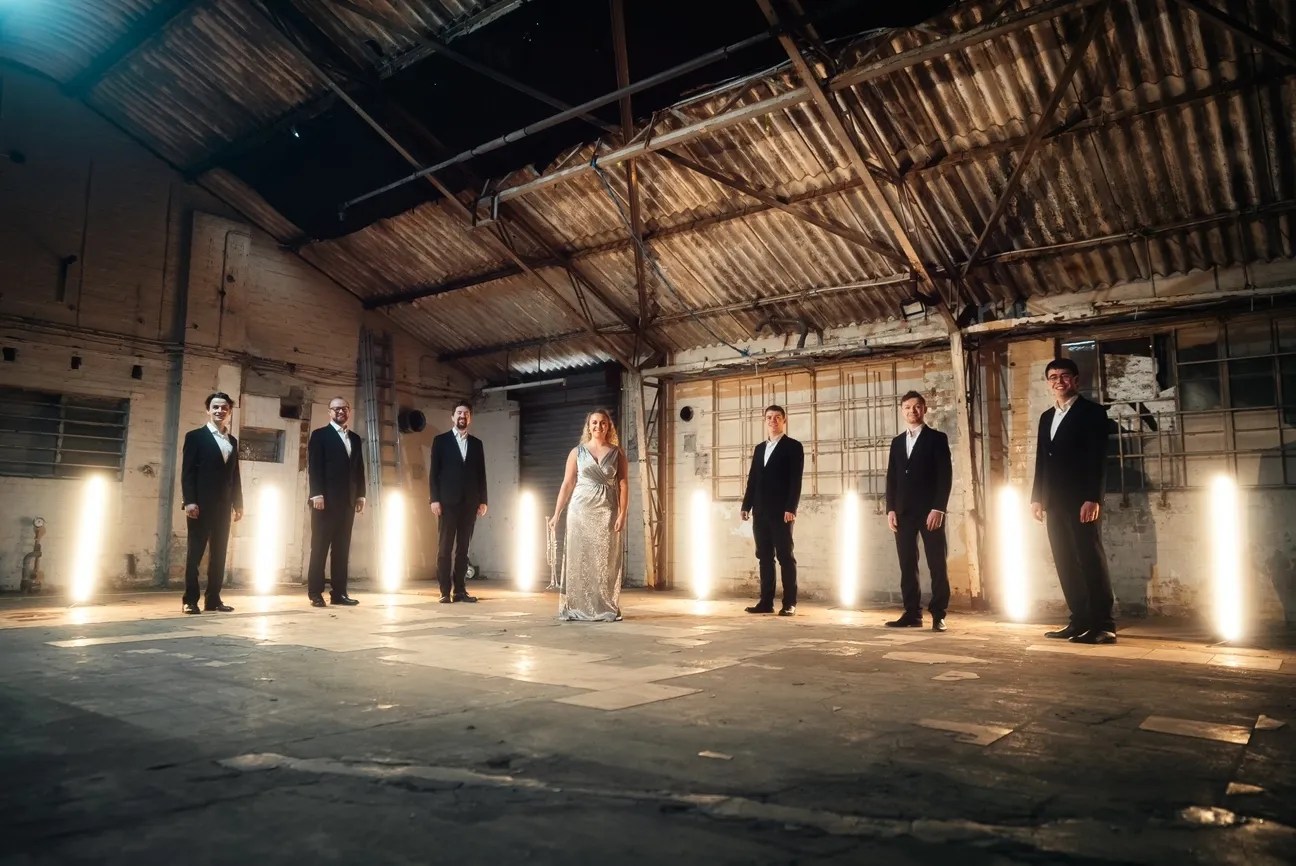
The Gesualdo Six [Guy James (countertenor), Alasdair Austin (countertenor), Joseph Wicks (tenor), Josh Cooter (tenor), Simon Grant (baritone) and director Owain Park (bass)]

Roth Night Prayer (2017)
Tallis O nata lux de lumine (pub. 1575)
Pritchard The Light Thereof (2020)
MacMillan O Radiant Dawn from The Strathclyde Motets (2005)
Tallis Dum transisset Sabbatum (1575)
Hildegard of Bingen O gloriosissimi (с.1163-1175)
Bingham Enter Ghost (2002)
Owain Park Sommernacht (2022)
Rheinberger Abendlied from 3 Geistliche Gesänge Op. 69 (pub.1873)
Barnard Aura (2020)
Roxanna Panufnik O Hearken (2015)
Burgon Nunc dimittis (1979)

Wigmore Hall, London, 2 October 2025

by John Earls. Photo credits unknown (above), John Earls (below)

The Gesualdo Six have recently released their tenth album (for Hyperion) Radiant Dawn. It finds them combining consistently high standards of choral music with imaginative programming featuring classic and contemporary compositions spanning over 800 years of music. It also sees them introducing a new element to the mix, namely the inclusion of the trumpet for a number of pieces superbly played by Matilda Lloyd.

The new album was the focus for this hour-long lunchtime concert at a packed Wigmore Hall with all pieces performed coming from it (and a few omitted). The theme of the album, as explained by The Gesualdo Six’s director and bass (and recently named new chief conductor of the BBC Singers) Owain Park, is “musical responses to light” in a whole variety of contexts.

First up in the set (and on the album) was Alec Roth’s Night Prayer, an almost dreamy reflection of the Compline hymn Te lucis ante terminum that introduces Lloyd’s trumpet and the remarkable effect it has when married with these magnificent voices.

Next was Thomas Tallis’s O nata lux de lumine, one of two shorter pieces (both just over 2 minutes) along with Roxanna Panufnik’s O Hearken, but their duration made them no less impactful. Both featured just voices, and I loved finding out from the programme that O Hearken started life as a raffle ticket prize. Another Tallis piece Dum transisset Sabbatum saw Matilda Lloyd’s trumpet taking the soprano voice to powerful effect.

There are two of James MacMillan’s Strathclyde Motets on the album. Only one of them, O Radiant Dawn, from which the album gets its title, gets performed here. It’s harmonically inspired by Tallis’s O nata lux de lumine and has a yearning to it befitting of the Advent season it relates to.

Richard Barnard’s Aura (commissioned for the album) sets music to the text of Emily Barry’s poem about the loss of her mother. Credit to the programme editors for faithfully reproducing the poem’s arresting layout – two parallel columns reflecting the emotional fracture involved (Owain Park’s programme notes were also excellent). This fracturing dissipates musically as the piece progresses with the trumpet acting as a bridge between two groups of singers. It was one of the most affecting pieces of the concert with the composer in the audience to hear it.

Another composer in the audience was Deborah Pritchard whose The Light Thereof (also commissioned for the album) sets words from the Book of Revelation and demonstrated deftly the ability of the trumpet (muted at times) to evoke different shades of light.

Matilda Lloyd’s virtuosity on the trumpet was to the fore in Judith Bingham’s Enter Ghost, an interpretation of a passage from Shakespeare’s Hamlet mixing music with spoken word, the drama enhanced by her walking off stage (and returning) whilst playing.

Other pieces sung a cappella included Hildegard of Bingen’s O gloriosissimi (from the back of the hall) and beautiful performances of Owain Park’s own Sommernacht and Joseph Rheinberger’s Abendlied.

The programme ended (as does the album) with Geoffrey Burgon’s Nunc dimittis which some may remember as the closing music from the BBC’s television adaptation of John le Carré’s Tinker Tailor Soldier Spy. It was yet another example of how effective this glorious combination of voices and trumpet is and proved a fitting conclusion to a most illuminating concert.  

John Earls is Director of Research at Unite the Union and posts at @johnearls.bsky.social on Bluesky and @john_earls on X. You can subscribe (free) to his Hanging Out a Window Substack column here: https://johnearls.substack.com/

Published post no.2,677 – Saturday 4 October 2025

An Epiphany…Happy New Year!

The Adoration of the Magi, by Edward Burne-Jones

‘A moment of sudden and great revelation or realization’.

This is the second Oxford definition for the word ‘epiphany’…which is also a Christian feast day, ‘the manifestation of Christ to the Gentiles as represented by the Magi’.

It’s the ‘sudden realization’ that has descended on Arcana towers, however, as many of us go back to work today. Christmas is done, two weeks that have flown by – and just a heartbeat later we’re thrust wide-eyed into the New Year, back into the strong current of the river that is modern life.

Help is at hand, however. Music is such a reliable ally in times like this, whether it’s the music we know and love or the music we haven’t discovered yet. Both are reasons to look forward to 2025 with anticipation! Arcana will be hoping for several ‘epiphanies’, as we split our loyalties between the old and the new, covering music from the last 500 years or more as we go.

2025 will see the tenth birthday of this resource, believe it or not – on Saturday 1st February. By then we hope to be well in the groove of providing a daily digest of shared musical loves, interviews and concerts. Along the way there will be special focus on Shostakovich, who died 50 years ago this year, and is a favourite composer in these parts. We will also look to enjoy classical music from London, Birmingham and online, electronic music from all corners of the world, and plenty in between.

If you’d like to get in touch with us about any of it, suggest some things for us to listen to, or even write for us, get in touch! You can get me, Ben Hogwood, via e-mail (editor@arcana.fm), over BlueSky (Ben Hogwood or Arcana) or – if you must – on Twitter / X for a little while longer.

Before you go, do listen to this remarkable carol marking Epiphany from British composer Judith Bingham – both haunting and tremendously powerful. Happy New Year!

Published post no.2,403 – Monday 6 January 2025

In Concert – BBC Singers @ St Giles’ Cripplegate & St Paul’s Knightsbridge

by John Earls

It has been quite a time for the BBC Singers recently. As this world-renowned choir approaches its 100th anniversary, the past few weeks have seen the BBC announce their closure, and magnificent campaign against it in response (including more than 700 composers writing to the BBC director general in condemnation) Here on Arcana you can get a glimpse of their recorded worth, with an appreciation and a BBC Singers playlist.

Thankfully a temporary reprieve has since been issued, with the BBC issuing a statement on an “alternative funding solution”.

All of this was book-ended by two concerts of sacred music broadcast on BBC Radio 3 for Holy Week, both demonstrating what a unique and valuable choir they are.

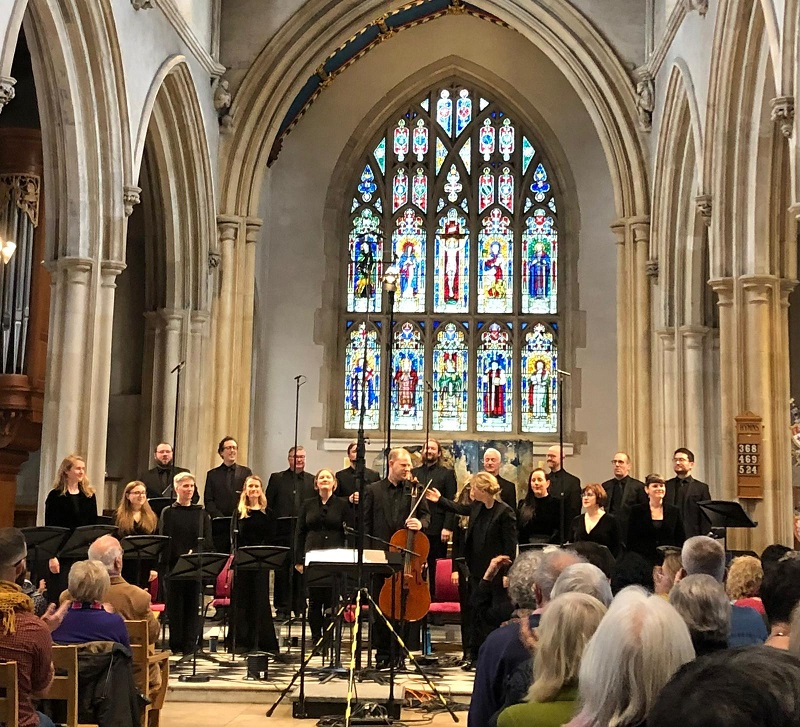
On 17th March they gave their first concert following the BBC’s shameful axing announcement at St Giles’ Cripplegate in London. It was inevitably a special and emotional occasion. The programme of choral and cello music went under the bitterly ironic title of All Will Be Well (after Roxanna Panufnik’s piece of the same name which concluded the programme). “I’m still the producer of the BBC Singers” said Jonathan Manners in his introduction to much applause.

The concert was a fitting example of the range and depth of the choir’s repertoire in terms of time (it opened with Hildegard von Bingen’s O cruor sanguinis from the 12th Century) and style. It displayed impressively their ability to convey a sense of comfort and balm such as in Lesia Dychko’s short piece Blessed be the name (Emma Tring a beautiful solo soprano) as well something more unsettling like Fac me tecum pie flere by Sven-David Sandström.

But this was a programme of choral and cello music and cellist Benjamin Hughes was individually expressive as well as combining powerfully with the choir, both in evidence in Knut Nystedt’s Stabat Mater.

A magnificent encore of Maurice Duruflé’s motet Ubi Caritas was followed by a rapturous and moving ovation (below)

The concert was broadcast on BBC Radio 3 on Palm Sunday and is available online for a limited period.

Less than three weeks later, and following the BBC statement announcing a suspension of the closure, the group performed a Music for Maundy Thursday concert of sacred pieces on the theme of ‘contemplation, sorrow and reflection’ for live broadcast on BBC Radio 3 at St Paul’s Church, Knightsbridge, London (above).

Yet again the programme highlighted the sweep of their repertoire opening with a meditative motet from the 1590s, Vittoria Aleotti’s Miserere mei, Deus (from the first published book of sacred music by a woman) and also featuring sacred pieces from the 21st Century (Karin Rehnqvist’s I raise my hands and Judith Bingham’s Watch with Me), as well as William Byrd’s 14th Century The Lamentations of Jeremiah.

But there were two pieces where the group really shone to spectacular effect. Domenico Scarlatti’s Stabat Mater à 10, with Richard Pearce on chamber organ, was stunning and utterly compelling in its detailed delivery. Francis Poulenc’s Quatre motets pour un temps de penitence made a glorious finale.

One must also acknowledge the key role of Chief Conductor, Sofi Jeannin, always assured yet empathetic. To watch her conduct is a mesmerising experience in itself.

The extent to which the BBC Singers and Jeannin develop and promote a diverse repertoire (they have a 50:50 gender policy for composers whose music they perform), engage in learning and community work, regularly perform commissions and broadcast on Radio 3 (making their phenomenal output available to such a wide audience) is all part of what makes them so unique.

I have seen them many times over many years and they never fail to move me. These two concerts only served to prove just why they are irreplaceable.

John Earls is Director of Research at Unite the Union and tweets at @john_earls

Click on this text to find out more about the Musicians’ Union campaign to protect the BBC Singers after September and action to stop job cuts at BBC Orchestras