On Record – English Symphony Orchestra / Kenneth Woods – Sibelius: Symphonies 6 & 7, Tapiola (ESO Records)

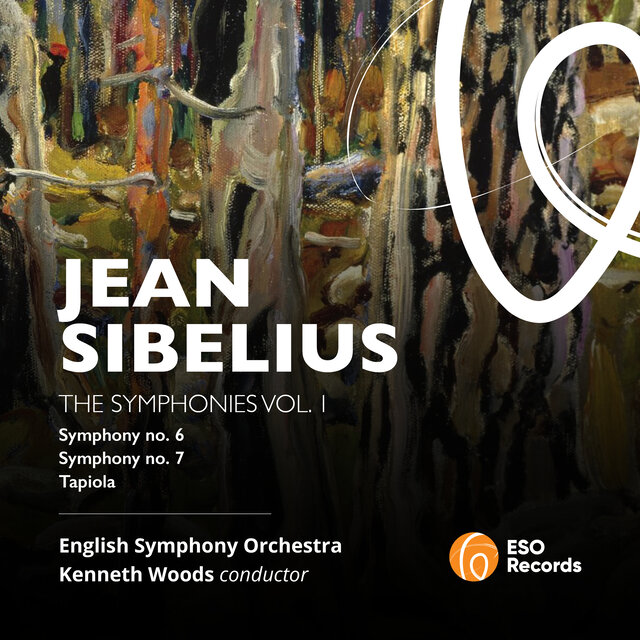
Jean Sibelius
Symphony no.6 in D minor Op. 104 (1918-23)
Symphony no.7 in C major Op. 105 (1923-4)
Tapiola, Op, 112 (1926)

English Symphony Orchestra / Kenneth Woods

ESO Records ESO2502 [67’16”]
Producers Phil Rowlands, Michael Young Engineer Tim Burton

Recorded 1-2 March 2022 (Symphony no.6 & Tapiola); 2 May 2023 (Symphony no.7) at Wyastone Concert Hall, Monmouth

Reviewed by Richard Whitehouse

What’s the story?

Good to find the English Symphony Orchestra issuing the follow-up release on its own label (after Elgar’s First Symphony and In the South), launching an ambitious project to record all seven symphonies and Tapiola by Sibelius prior to the 70th anniversary of his death in 2027.

What are the performances like?

Only if the Sixth Symphony is considered neo-classical does it feel elusive, rather than a deft reformulation of Classical precepts as here. Hence the first movement unfolds as a seamless evolution whose emotional contrasts are incidental – Kenneth Woods ensuring its purposeful course complements the circling repetitions of the following intermezzo, with its speculative variations on those almost casual opening gestures. Ideally paced, the scherzo projects a more incisive tone which the finale then pursues in a refracted sonata design that gains intensity up to its climactic mid-point. Tension drops momentarily here, quickly restored for a disarming reprise of its opening and coda whose evanescence is well conveyed; a reminder that Sibelius Six is as much about the eschewal of beginnings and endings in its seeking a new coherence.

A decisive factor in the Seventh Symphony is how its overall trajectory is sensed – the ending implicit within the beginning, as Sibelius fuses form and content with an inevitability always evident here. After an expectant if not unduly tense introduction, Woods builds the first main section with unforced eloquence to a first statement of the trombone chorale that provides the formal backbone. His transition into the ‘scherzo’ is less abrupt than many, picking up energy as the chorale’s re-emergence generates requisite momentum to sustain a relatively extended ‘intermezzo’. If his approach to the chorale’s last appearance is a little restrained, the latter’s intensity carries over into a searing string threnody that subsides into pensive uncertainty; the music gathering itself for a magisterial crescendo which does not so much end as cease to be.

Tapiola was Sibelius’s last completed major work, and one whose prefatory quatrain implies an elemental aspect rendered here through the almost total absence of transition in this music of incessant evolution. A quality to the fore in a perceptive reading where Woods secures just the right balance between formal unity and expressive diversity across its underlying course. Occasionally there seems a marginal lack of that ‘otherness’ such as endows this music with its uniquely disquieting aura, but steadily accumulating momentum is rarely in doubt on the approach to the seething climax, or a string threnody whose anguish bestows only the most tenuous of benedictions. A reminder, also, that not the least reason Sibelius may have failed to realize an ‘Eighth Symphony’ was because he had already done so with the present work.

Does it all work?

Pretty much throughout. Whether or not the cycle unfolds consistently in reverse order (with a coupling of the Fourth and Fifth Symphonies having already been announced), this opening instalment is the more pertinent for focussing on Sibelius’s last years of sustained creativity.

Is it recommended?

Indeed. The ESO is heard to advantage in the spacious ambience of Wyastone Hall, and there are detailed booklet notes by Guy Rickards. Make no mistake, these are deeply thoughtful and superbly realized performances which launch the ESO’s Sibelius cycle in impressive fashion.

Listen / Buy

You can read more about this release and explore purchase options at the Ulysees Arts website. Click on the names to read more about the English Symphony Orchestra and conductor Kenneth Woods, and for the Ernest Bloch Society

Published post no.2,622 – Sunday 10 August 2025

On Record – Parry Karp, BBC National Orchestra of Wales – Bloch: Schelomo & Suite (Signum Classics)

Ernest Bloch
Schelomo (1918)
Suite for Viola and Orchestra (1919; arr. Rejtő/Baller, 1969)

Parry Karp (cello), BBC National Orchestra of Wales / Kenneth Woods

Signum Classics SIGCD932 [60’58”]
Producer Phil Rowlands Engineer Andrew Smilie

Recorded 29-30 July 2024 at BBC Hoddinott Hall, Wales Millennium Centre, Cardiff

Reviewed by Richard Whitehouse

What’s the story?

Signum Classics issues its first release devoted to Ernest Bloch (1880-1959), comprising what is his best-known work alongside a piece that receives its first recording in a version for cello and orchestra – making for a representative introduction to this now under-appreciated figure.

What’s the music like?

Considered in his lifetime to be on a par with such contemporaries as Bartók and Stravinsky, Bloch duly suffered that almost inevitable falling off of reputation from which his music has never quite recovered, but almost all his major works have now been recorded and often on several occasions. Among his sizable output, those with a concertante element are especially notable for their redefining the relationship between soloist and orchestra as holds good for the present works, written as they were either side of the composer’s emigration to the USA.

Its title might translate as Solomon, but Schelomo is by no means a portrait of the Biblical monarch nor is the solo part merely a ‘translation’ of lines from Ecclesiastes such as Bloch had initially intended to set. This ‘Hebraic Rhapsody’ is the last and most representative, if not necessarily the finest, of his Jewish Cycle, its three contrasting sections amounting to a concerto (or maybe a Konzertstück) in terms of their encompassing a gradually cumulative ‘exposition’, then an impulsively tense ‘development’ whose impassioned climax subsides into a ‘reprise’ which takes in a musing accompanied cadenza prior to the starkly fatalistic close. Parry Karp is a perceptive interpreter – one who never over-emphasizes its eloquence or rhetorical overkill, while rendering the piece as a cohesive and an audibly unified whole.

Conceived for viola and piano, the Suite was orchestrated soon afterward then arranged for cello a half-century on by cellist Gábor Rejtő and pianist Adolph Baller. The layout, though not so integrated as to make it a concerto, is none the less striking. Its lengthy initial Lento (originally entitled ‘In the Jungle’) pits soloist against orchestra in a fantasia-like evolution that finds effective contrast in an alternately capricious and ruminative Allegro ironico, then the songfulness of an equally compact Lento; its searching inwardness pointedly dispelled by the lively and playful Molto vivo which brings about an affirmative conclusion. Karp is fully attuned to its understated charm and Kenneth Woods, who directed the likely premiere of this version in 2008, secures playing of sensitivity and imagination from the BBC NOW.

Does it all work?

Almost always. As his introductory note makes plain, Karp has been an enthusiastic advocate for this music throughout his career and there is no doubting the extent of his commitment in either piece. Schelomo remains Bloch’s most recorded work such that those who have any one of Gregor Piatigorsky (Testament), Pierre Fournier (DG), Mstislav Rostropovich (Warner) or, more recently, Sol Gabetta (Sony) can rest content; yet this newcomer is worth a place on any shortlist and a first recording of the Suite in this guise makes the release self-recommending.

Is it recommended?

It is. Balance between cello and orchestra could not be bettered in the spacious yet analytical ambience of Hoddinott Hall, while Woods contributes his customary insightful observations. Aficionados and newcomers alike will find much to delight and absorb them on this release.

Listen / Buy

You can read more about this release and explore purchase options at the Signum Records website. Click on the names to read more about cellist Perry Karp, the BBC National Orchestra of Wales and conductor Kenneth Woods, and for the Ernest Bloch Society

Published post no.2,585 – Friday 4 July 2025

On Record – English Symphony Orchestra / Kenneth Woods: Elgar Festival Live – Symphony no.1 & In The South (ESO Records)

Elgar
Symphony no.1 in A flat major Op.55 (1907-08)
In the South (Alassio) Op.50 (1903-04)

English Symphony Orchestra / Kenneth Woods

ESO Records ESO2501 (80’10″]
Producer and Engineer Tim Burton

Live performances at Worcester Cathedral on 4 June 2022 (In The South) and 3 June 2023 (Symphony)

Reviewed by Richard Whitehouse

What’s the story?

There could hardly been a more fitting release to launch the English Symphony Orchestra’s own label than these performances drawn from past editions of the Elgar Festival, with both of them a reminder of the ESO’s formidable prowess over the range of symphonic writing.

What are the performances like?

The First Symphony may not have the usual number of strings to complement its triple wind, but due to the resonance of Worcester Cathedral this is not evident as regards internal balance. Not least in an opening movement whose motto-theme is never indulgent, setting the tone for an Allegro where expressive variety goes hand in hand with formal focus. Especially fine is a hushed transition into the reprise, then a coda that distils the equivocal mood as this subsides into ruminative calm. Woods is mindful to invest scherzo and trio with consistency of pulse, so if the former feels reined in on return, the latter has an ideal poise and wistfulness. Nor is the transition other than indicative of the Adagio’s profundity, Woods negotiating its soulful main theme and wistful episodes with unerring rightness through to the ineffable closing bars.

If the finale has any marginal falling-off of inspiration, it is not apparent here. Sombre if shot through with expectancy, its introduction launches an Allegro whose alternating incisiveness and suavity holds good over an impulsive development, then a transformation of the codetta whose pathos intensifies for an apotheosis where the motto-theme carries all before it. Not that the closing pages are bombastic or grandiloquent in import – rather, they set the seal on a work whose affirmation is made the greater for its having been so purposefully attained.

As for In the South, the main issue is in setting a tempo flexible enough to accommodate this concert overture’s extended sonata design without it becoming episodic. Here a surging main theme, its speculative transition and suave second theme emerge seamlessly – the underlying tension carried into a development whose impulsiveness is maintained across the intervening first episode. Amply evoking the grandeur of ‘empires past’, this is astutely handled such that its implacability eschews bathos. If the second ‘canto populare’ episode is just a little reticent, its expressive raptness – and Carl Hill’s eloquent playing of its indelible viola melody – more than compensates. Nor is there any loss of continuity during the reprise, Woods’s building of momentum near the start of the coda ensuring an irresistible yet never overbearing peroration.

Does it all work?

Almost always. ESO concerts at the Elgar Festival have yielded numerous performances of note, with In the South among the finest yet in vindicating a work that can all too easily fall victim to its seeming indulgencies. Nor is that of the First Symphony far behind in revealing the formal intricacy and expressive variety of music as personal as is any of this composer’s major works. Anyone who may have harboured doubts about either piece is likely to be won over, confirming an empathy as augers well for the Second Symphony at this year’s festival.

Is it recommended?

Absolutely. These readings are far more than mementos of their concerts, this being ‘Volume 1’ suggests that further performances from the Elgar Festival will be made available. Note too the first instalment of a Sibelius cycle is downloadable as the second release on ESO Records.

Listen / Buy

You can read more about this release and explore purchase options at the ESO website Click to read more about the English Symphony Orchestra, conductor Kenneth Woods and the Elgar Festival 2025

Published post no.2,536 – Sunday 18 May 2025

On Record – Anna Huntley, Gwilym Bowen, Thomas Mole, BBC Women’s Chorus of Wales, ESO / Kenneth Woods – Walter Arlen: The Song of Songs, The Poet In Exile (Signum Classics)

Arlen arr. Bekmambetov / ed. Woods The Song of Songs (1953)
Arlen ed. Woods The Poet in Exile (1988, rev. 1994)

Anna Huntley (mezzo-soprano), Gwilym Bowen (tenor), Thomas Mole (baritone), BBC Women’s Chorus of Wales, English Symphony Orchestra / Kenneth Woods

Signum Classics SIGCD879 [52’21’’]
Producer / Engineer Phil Rowlands, Engineer Andrew Smilie

Recorded 17-20 February 2022 at BBC Hoddinott Hall, Cardiff

Reviewed by Richard Whitehouse

What’s the story?

Kenneth Woods and the English Symphony Orchestra continue their exploration of music by composers murdered or forced into exile during the Third Reich with this release of Walter Arlen, whose recent death at 103 enabled him to experience a renewed interest in his music.

What’s the music like?

Although he remains best known through his trenchant music criticism for the Los Angeles Times, the Vienna-born Walter Arlen (Aptowitzer) also made a distinguished contribution to music administration and left a not inconsiderable output. Several albums featuring his songs and piano music can be heard on the Gramola label, while this latest ESO release provides a welcome introduction to two of his works that involve larger forces – the one drawing on an ancient Jewish source and the other upon poems by a seminal author from the post-war era.

Whether or not The Song of Songs is the harbinger of monogamy in the Judeo-Christian moral code, it contains some of the eloquent expression found in either Biblical testament. In just 30 minutes, Arlen’s ‘dramatic poem’ takes in the main narrative, its lively initial chorus featuring intricate polyphony for female voices and incisive orchestral textures. As the piece unfolds, its emotional emphasis is placed on the solo contributions – whether those of Solomon sung with burnished warmth by Thomas Mole, those of the Shepherdess with poise and insouciance by Anna Huntley, or those of the Shepherd given with virility and tenderness by Gwilym Bowen. Nor is the BBC Women’s Chorus of Wales wanting in intonational accuracy. If the resolution does not bring expected closure, this direct and unaffected setting certainly warrants revival.

The real discovery is The Poet in Exile, a song-cycle to texts by Polish-born American author Czesław Miłosz. These profound poems are not easily rendered in musical terms, and it is to Arlen’s credit that he goes a considerable way to achieving this. As the composer states, they ‘‘dealt with situations echoing my own remembrance of things past’’ – as holds good from the trenchant rhetoric of ‘Incantation’, via the sombre rumination of ‘Island’ then wistful elegance of ‘In Music’ or controlled fervour of ‘For J.L.’ (with its striking harpsichord obligato), to the confiding intimacy of ‘Recovery’. Some may have heard these songs with Christian Immler and Danny Driver (GRAM98946) but this orchestration by Woods, after the arrangement by Eskender Bekmambatov, offers a wider-ranging context for assured singing by Thomas Mole.

Does it all work?

Pretty much, and not least because the ESO is heard to advantage in the spacious acoustic of Hoddinott Hall while directed by Woods with unerring sense of where to place the emotional emphasis – especially important in conveying the meaning of the songs. A pity, however, that neither texts nor translations could be included here – not least as that by Leroy Waterman of The Song of Songs is appreciably different from those which have been previously set, while the Miłoz poems are worth savouring on their own terms and need to be approached as such.

Is it recommended?

It is. If not a major voice, Arlen’s music is always approachable and often thought-provoking. Initiates and newcomers alike will enjoy getting to know these works and hearing them given so persuasively – a worthy present, indeed, for this composer as he neared his 102nd birthday.

Listen & Buy

Click on the names to read more about performers Anna Huntley, Gwilym Bowen, Thomas Mole, the English Symphony Orchestra and conductor Kenneth Woods. Click on the name for more on Walter Arlen

Published post no.2,515 – Saturday 26 April 2025

In concert – English Symphony Orchestra / Kenneth Woods @ Kings Place: Elgar, Truscott, Fribbins, Weinberg & Shostakovich

Laura Jellicoe (flute), Rosemary Cow (bassoon), Rosalind Ventris (viola), English Symphony Orchestra / Kenneth Woods

Elgar Romance in D minor Op.62 (1910)
Truscott Elegy in E flat major (1944) [London premiere]
Fribbins Folk Songs (2022) [London premiere]
Weinberg Flute Concerto no.1 in D minor Op.75 (1961)
Shostakovich arr. Barshai Chamber Symphony in A flat major Op.118a (1964, arr. 1971)

Kings Place, London
Sunday 23 March 2025

Reviewed by Richard Whitehouse

What has become the English Symphony Orchestra’s annual appearance in London Chamber Music Society’s season saw an appealing programme of (relatively) familiar and (relatively) unfamiliar British and Soviet-era music as wide ranging as it had been carefully assembled.

It cannot often have begun a concert, but the Romance that Elgar wrote for bassoonist Edwin James made an attractive entrée – its pathos and eloquence fully conveyed by ESO principal Rosamary Cow, always heard to advantage against the strings’ warmly ruminative backdrop.

Harold Truscott finished only three works for orchestra, his Elegy for strings the undoubted masterpiece – eliding intuitively between the already burgeoning British lineage with that of Central Europe (Dvořák’s crepuscular Nocturne, heard at last year’s ESO concert, affords an interesting precedent). Despite its major-key grounding, this is music of intense while often anguished emotion – Truscott bearing his soul to a degree he was rarely, if ever, to do again. As in Worcester four seasons ago, Kenneth Woods searched out its every expressive nuance.

Concertante pieces have featured prominently in Peter Fribbins’s output, with Folk Songs the most recent example. Those traditional tunes range widely geographically and expressively – the Prelude drawing on Welsh melody Bugail Yr Hafod (When I was a Shepherd) in soulful restraint, the Fugue on Serbian tune Ajde Jano (C’mon Jana) in animated dexterity, then the Fantasia on Hungarian song Azt gondoltam eső esik (I thought it rains) in elegant profundity. Superbly played by Rosalind Ventris, it makes a welcome addition to a still-limited repertoire.

Hardly less valuable in its own context is the First Flute Concerto by Mieczysław Weinberg. Written for Alexander Korneyev, its modest proportions fairly belie its substance – whether the energetic interplay of its opening Allegro, the deftly understated threnody of its Adagio, or the whimsical humour of an Allegro anticipating numerous Weinberg finales. It was also the ideal showcase for ESO principal Laura Jellicoe to demonstrate her solo prowess, with ESO strings responding ably to what must be among its composer’s most performed pieces.

Dedicated to Weinberg and written over just 11 days, Shostakovich’s Tenth String Quartet is something of a standalone in the composer’s cycle – coming between four innately personal quartets and four dedicated to each member of the Beethoven Quartet. Yet it is music no less focussed in intent and Rudolf Barshai’s arrangement for string orchestra defines its character more markedly – not least the winsome ambivalence of its initial Andante or visceral force of its ‘furioso’ scherzo, the ESO players tackling those fearsome rhythmic unisons head on. The cellos came into their own with the emotionally restrained variations of the Adagio before, its link seamlessly effected, the final Allegretto built methodically if inexorably to a heightened restatement of the passacaglia’s theme before tentatively retracing its steps to a wistful close.

An impressive demonstration overall of the ESO’s prowess and, moreover, the ideal way to close 17 seasons of LCMS recitals at Kings Place. September finds this series relocating to the newly refurbished St John’s Church at Waterloo, ready for a new chapter in its existence.

Visit the English Symphony Orchestra website to read more about the orchestra, and click on the artist names to read more about flautist Laura Jellicoe, bassoonist Rosemary Cow, viola player Rosalind Ventris and conductor Kenneth Woods. Click also to read more on composers Peter Fribbins and Harold Truscott

Published post no.2,483 – Monday 24 March 2025