In concert – Dame Sarah Connolly, CBSO Choruses, CBSO / Sofi Jeannin: The Music Makers

Dame Sarah Connolly (mezzo-soprano), CBSO Children’s Chorus, CBSO Youth Chorus, CBSO Chorus, City of Birmingham Symphony Orchestra / Sofi Jeannin

Weir Music, Untangled (1992)
Muhly Friday Afternoons (2015, orch. 2019) [UK Premiere]
Britten The Young Person’s Guide to the Orchestra Op.34 (1945)
Elgar The Music Makers Op.69 (1912)

Symphony Hall, Birmingham
Wednesday 20 November 2024

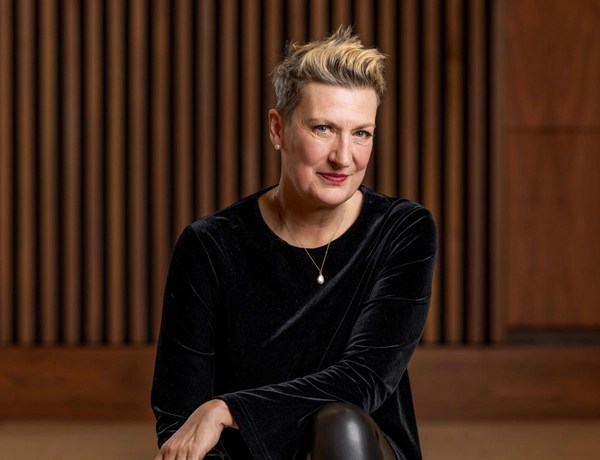
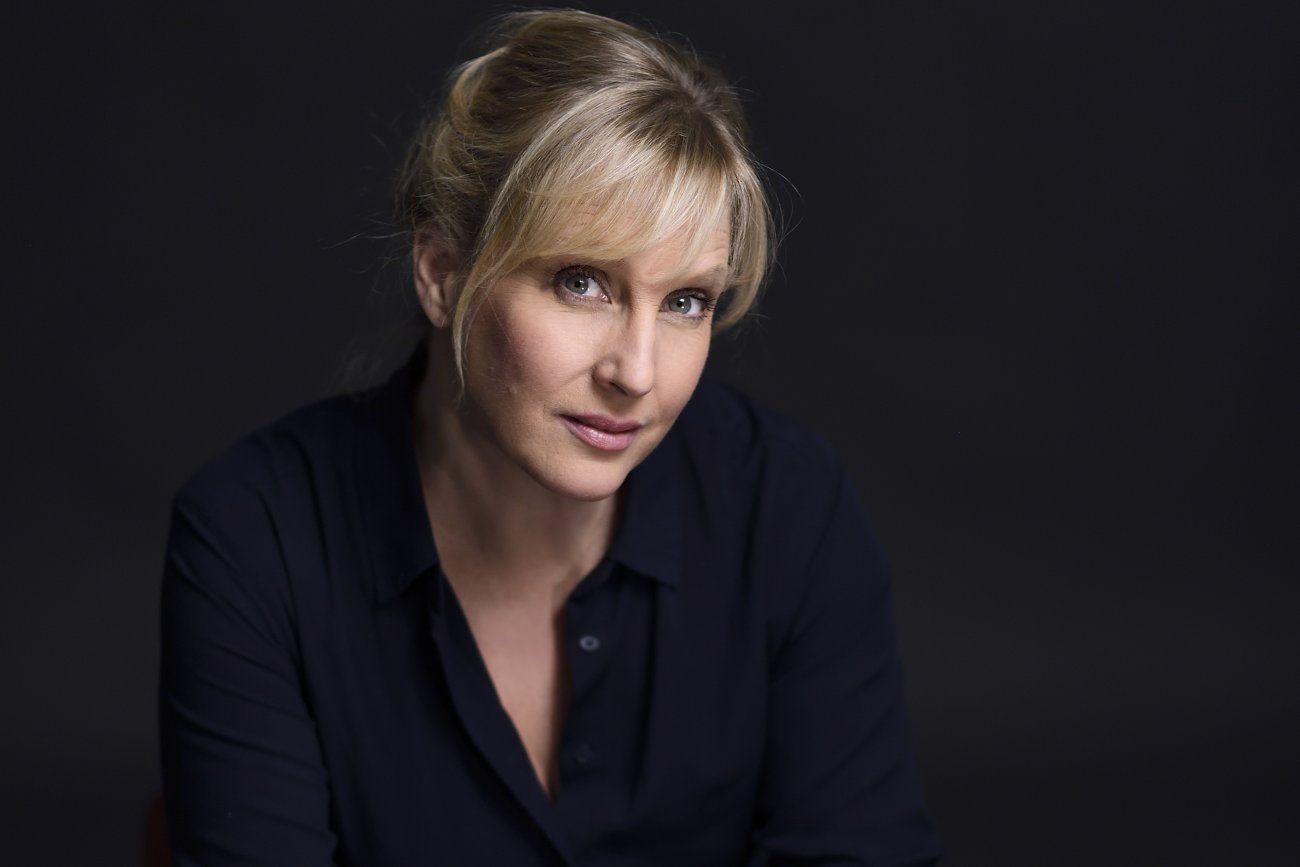
Reviewed by Richard Whitehouse Pictures (c) Andrew Crowley (Dame Sarah Connolly), (c) Radio France / Christophe Abramowitz (Sofi Jeannin)

Under the capable direction of Swedish-born Sofi Jeannin (below), the City of Birmingham Symphony Orchestra tonight took on a varied if cohesive programme featuring two composers with direct links to the city, one of whose works had been performed for the first time here 112 years ago.

Although he might not be so associated with Birmingham, Nico Muhly is hardly an unknown quantity. Friday Afternoons proved a diverting and enjoyable traversal across eight traditional poems – directly yet unaffectedly recalling Britten in their simplicity of choral writing with, in this instance, a resourceful and often evocative orchestration that brought out subtle and quite unexpected nuances from these texts. Qualities that the combined CBSO Youth and Children’s Choruses responded to with alacrity, doubtless owing to the astute guidance of Julian Wilkins.

Beforehand, the orchestra made no less favourable a response in Music, Untangled by Judith Weir, former Master of the Queen’s Music and composer-in-association to the CBSO during 1995-98. Written for the Boston Symphony, this not unreasonably American-sounding piece takes extracts from melodies emanating from the Western isles of Weir’s native Scotland as the basis for a compact if eventful piece where said melodies are gradually fined down from sonic diversity to a single strand through a process of ‘less is more’ typical of this composer.
Closing the first half, what had started out as Britten’s ‘Variations and Fugue on a Theme of Purcell’ received an engaging performance at its best in those variations highlighting specific instruments – in the course of which the excellence of the individual CBSO sections came to the fore. Presentation of the theme itself was a little on the portentous side, a quality which re -surfaced in a fugue whose clarity of texture seemed at the expense of that exuberance when Britten puts his orchestra back-together. An enjoyable take on a timeless masterpiece even so.

Despite its high-profile launch at the 1912 Triennial Festival, Elgar’s The Music Makers has struggled to find general favour – his setting of Arthur O’Shaughnessy’s Ode intensifying the text’s ambivalence and introspection via a wealth of self-quotation such as renders several of his most acclaimed pieces from an unlikely or even disturbing perspective. Together with its near-contemporary work, the symphonic study Falstaff, this is Elgar at his most searching as well as confessional – qualities such as the encroaching ‘Great War’ would duly exacerbate.

Despite its modest (35-minute) duration, The Music Makers is a difficult work to pace and to make cohere and, while Jeannin (an experienced choral conductor) did not wholly succeed in these respects, there was no doubt as to her insight into its content or defining of its emotions. Prepared by Simon Halsey (who first ‘gave’ this work with Simon Rattle some 40 years ago), the CBSO Chorus lacked little in conviction or finesse – and, if Dame Sarah Connolly was not quite at her most assured, the sheer eloquence and conviction of her singing could never be denied.

A fine account, then, of a work still in need of such advocacy for its inherent greatness to be acknowledged. Interesting also that audience response was warm if undeniably muted – as if to confirm, on this occasion at least, the music’s ‘message’ had got through to those listening.

For details on the 2024-25 season A Season of Joy, head to the City of Birmingham Symphony Orchestra website. Click on the names to read more about soloist Dame Sarah Connolly, conductor Sofi Jeannin and composers Nico Muhly and Dame Judith Weir

Published post no.2,372 – Sunday 24 November 2024

On Record – Vanessa Wagner: Mirrored (InFiné)

by Ben Hogwood

What’s the story?

Vanessa Wagner has been quick to follow up her March release, Study Of The Invisible, where she thoughtfully compiled an album of modern piano music that might be described as ‘minimal’ but which led to a series of inventive and rewarding compositions, imaginatively sequenced.

Mirrored is a collection of studies for solo piano, largely contemplative spaces that leave plenty of room for meditation and a get-out clause from today’s fast-moving world. Normally a listener might associate piano studies with application of technique; functional pieces rather than emotive; but this collection is very much studies in the form of moods and mental images.

What’s the music like?

Introspective, yet wholly rewarding. Particularly engaging is Wagner’s selection of music by Philip Glass, well-chosen and beautifully played. The Poet Acts is a sombre, thoughtful piece, opening out like an uneasy berceuse. Etude 4 is very different, a turbulent and agitated piece generating a large amount of nervous energy. By contrast Etude 2 is a thoughtful contemplation with a hint of darkness, led as it is by the low left hand, before building to a forceful conclusion.

Ryuichi Sakamoto’s Solitude has a similar profile, though its plaintive right hand melody leads the way. Plaintive is also the word that could be used for Nico Muhly’s Quiet Music, though this has an inner power generated through a soft but meaningful chorale, which makes it sound like a deeply spiritual statement. Melaine Dalibert’s Six + Six has gentle undulations that go on their way in watery figurations, while Sylvain Chauveau adopts a still profile for the simple and meaningful Mineral.

Moondog’s Sea Horses is short but descriptive, an active piece flitting this way and that. A similar freedom is afforded to the right hand in Léo Ferré’s Opus X, where the melody is free to travel up and down in the treble as it wishes.

Does it all work?

It does. Once again Vanessa Wagner has chosen a logical and rewarding sequence of pieces, and her affinity with the music of Philip Glass in particular makes these compelling recordings. She has an unusual and vivid sensitivity for this music, creating many different keyboard colours in the course of the collection.

Is it recommended?

Yes – provided you also have Study Of The Invisible, which is the ideal complement to these pieces.

Listen

Buy

On Record: Toumani Diabaté & London Symphony Orchestra: Kôrôlén (World Circuit)

diabate-lso

reviewed by Ben Hogwood

What’s the story?

This is the second cross-genre collaboration for the London Symphony Orchestra to be released in as many months, following on from their successful work with Floating Points and Pharoah Sanders, already getting plaudits as an album of the year contender. However this issue of a concert with Malian Toumani Diabaté and his ensemble dates from 2008, another of the kora player’s efforts to bring African music to new audiences.

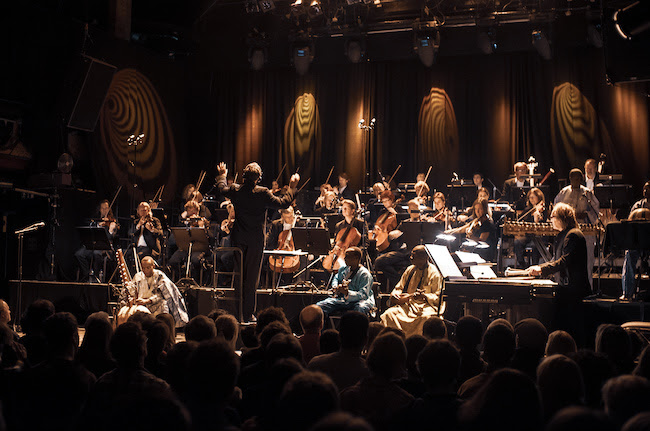
With arrangements from Nico Muhly and Ian Gardiner, the 21-string kora is set alongside contributions from other Malian musicians and the fulsome presence of the London Symphony Orchestra, bringing forward music that, as Diabaté says, has a tradition stretching back beyond the music of Bach. Ultimately his vision is that we ‘look at African music in a new way’.

What’s the music like?

Rather wonderful. The early exchanges of Haïnamady Town establish the sound world of the kora and orchestra, with an opening solo from Diabaté showing off his fluid and sensitive playing. The serene strings provide colour around the edges, dressing the material rather than dominating it, but as the suite progresses the orchestra takes a more prominent role.

diabate-lso-2

Balafonist Lassana Diabaté comes to the fore for Mama Souraka, a response to the kora that brings fresh, outdoor energy to the music. Attractive woodwind colours are the feature of Elyne Road, which segue to an attractive round that develops. Cantelowes Dream is a longer sequence, where Diabaté takes longer phrases, spinning them above held strings and gently undulating balafon. The music pauses in the middle, giving room for dialogue with the flute.

Moon Kaira has extra propulsion with a recurring bass motif and solos from kora and marimba, and is ultimately taken over by joyful string motifs. Mamadou Kanda Keita provides a fitting climax, beautifully sung by Kasse Mady Diabaté in the first vocal of the album, rapturously received by the Barbican audience.

Does it all work?

In every way. Many collaborations between electronics, jazz and / or symphony orchestra miss the mark because of balance issues, with everything turned up too loud or with too many notes given to too many instruments, or because one or more of the musical parties are not on the same wavelength. This makes Promises all the more remarkable, for even the LSO strings, adding their contribution a year hence, are fully in the moment.

The ‘less is more’ approach of this collaboration pays off in every way. Sure, the music is slow moving, but that is an essential part of its appeal, a meditation for large forces securing the most intimate of responses.

Is it recommended?

Yes, provided the piece is experienced as one. Gardiner and Muhly’s arrangements are nicely weighted, giving the right amount of balance with the African instruments and only occasionally threatening their clarity. The brightness of the wind instruments and softness of the strings complements the studied, picked timbres of the kora. Conductor Clark Rundell gives the music all the room it needs, lending the exchanges an instinctive, almost improvised quality.

Stream

Buy

You can find out more about the release and purchase from the World Circuit website


On record – Aurora Orchestra / Nicholas Collon: Music of the Spheres (DG)

Pekka Kuusisto (violin), Iestyn Davies (countertenor), Sam Swallow (vocalist), Aurora Orchestra / Nicholas Collon

Mozart Symphony no.41 in C major K551 ‘Jupiter’ (1788)
Richter Journey (CP1919) (2019)
Dowland arr. Muhly Time Stands Still (1603)
Adès Violin Concerto ‘Concentric Paths’ (2005)
Bowie arr. John Barber Life on Mars? (1971)

Deutsche Grammophon 4838228 [69′]

Recorded 9 June 2019, Maida Vale Studio 1, London

Written by Ben Hogwood

What’s the story?

Only the Aurora Orchestra could put together an album running from Mozart to David Bowie. Yet as we have seen from their previous themed releases such as Insomnia and Road Trip, there are no gimmicks involved in their musical choices and a clear theme runs through the programming.

Music of the Spheres is no exception, beginning with Mozart’s Jupiter symphony before music from Max Richter (Journey), Dowland via Muhly (Time Stands Still) and the Violin Concerto of Thomas Adès, subtitled Concentric Paths. The soloist here is Pekka Kuusisto, while the Aurora play the Jupiter symphony entirely from memory, as they did in the BBC Proms in 2016.

What’s the music like?

There is something for everyone here. Mozart’s Jupiter symphony is his 41st and final essay in the genre, setting a new bar for the form when it was completed. While the first three movements are particularly fine it is the finale that comes in for the greatest acclamation, for its well-nigh perfect fusion of melody and counterpoint.

Richter’s Journey CP1919, is inspired by and named after the discovery of the first Pulsar star. It fits perfectly onto the tail of the Mozart, running at a slow speed and operating in C minor rather than the earlier piece’s key of C major.

By contrast Adès’ Concentric Paths operates in a wider orbit, the violin soaring at great heights over the compelling orchestral writing, which has in its spiralling strong echoes of the music of Benjamin Britten. As soloist Pekka Kuusisto has described, ‘it’s hyper-emotional music for people in an accelerating world’.

Complementing these instrumental pieces are two songs of identical length but very different form – a serene early 17th century song from Dowland and one of the best-known pop songs of the 20th century. Having heard from Jupiter and CP1919, Sam Swallow asks, to effective arranged accompaniment, is there Life On Mars?

Does it all work?

Pretty much! The Jupiter gets an athletic performance from the Aurora Orchestra – no dallying here, or lingering on expressive notes. That does mean a darkening of the slow movement, and maybe some constricted phrases, but by contrast it means an exciting first movement, a mysterious Menuetto and a lithe finale, busy and brilliantly played.

The Richter is haunting and really effective, its simplicity leaving the orchestra plenty of room to create a remote atmosphere. The songs are great too – Iestyn Davies is the perfect choice for the Dowland, with Nico Muhly’s sensitive orchestration, while Sam Swallow puts his own stamp on Life on Mars? without losing the essence of the original, which is an impressive achievement.

Yet the performance I kept coming back to was Pekka Kuusisto’s white-hot rendering of the Adès. This is terrifically difficult music to play, but he makes it sound easy even at the highest points of the violin range, and the moods range from serenity to power and even anger as the music moves relentlessly forwards. On occasion I have to admit I find Thomas Adès music hard to relate to emotionally, but this is a clear exception and the music digs deep.

Is it recommended?

Yes. The Aurora’s albums are great at bringing music of very different origins together, exposing new elements and old qualities, and it does so again here. Freshly minted Mozart and brilliantly played contemporary works, plus a good deal of imagination. What’s not to love?

Listen

Buy

You can purchase this recording from various digital outlets via the Presto website

Arcana at the Proms – Prom 71: Bach Night – Dunedin Consort & John Butt perform the four Orchestral Suites and commissioned ‘responses’

Prom 71: Dunedin Consort / John Butt (harpsichord)

J.S. Bach Orchestral Suite no.4 in D major BWV1069 (c1730) (from dfgd on the broadcast)
Nico Muhly Tambourin (2019) (22:14 – 25:28)
J.S. Bach Orchestral Suite no.1 in C major BWV1066 (c1725) (28:12)
Stevie Wishart The Last Dance? A Baroque Tango (2019) (49:28 – 52:37)
Ailie Robertson Chaconne (2019) (1:19:50)
J.S. Bach Orchestral Suite no.2 in B minor BWV1067 (c 1738-9) (1:23:38
Stuart MacRae Courante (2019)
J.S. Bach Orchestral Suite no.3 in D major BWV1068 (c1730)

Royal Albert Hall, Wednesday 11 September 2019

Reviewed by Ben Hogwood

You can listen to this Prom on BBC Sounds here

A joyous Prom.

One of Sir Henry Wood’s many inventions at the Proms was to instigate ‘composer nights’, where the programme revolved around the output of a composer such as Wagner, Beethoven, the Strauss family, or Johann Sebastian Bach.

This particular Bach night came with a neat twist – the four orchestral suites, grouped together, but each complemented with a new commission receiving its world premiere. The idea of composers writing new music for a group that plays on the instruments of Bach’s time is not necessarily new but it is an intriguing one, and led to four very varied responses. What these short asides ultimately did, however, was make the audience even more in thrall to the music of Johann Sebastian.

The four Orchestral Suites do not get as much air or auditorium time as the six Brandenburg Concertos, but there is nothing to mark them out as inferior works. They make a very satisfying whole, especially when programmed as here by John Butt and the Dunedin Consort – the fourth suite placed first, so that we went through a satisfying key cycle and heard the most affirmative music at the end.

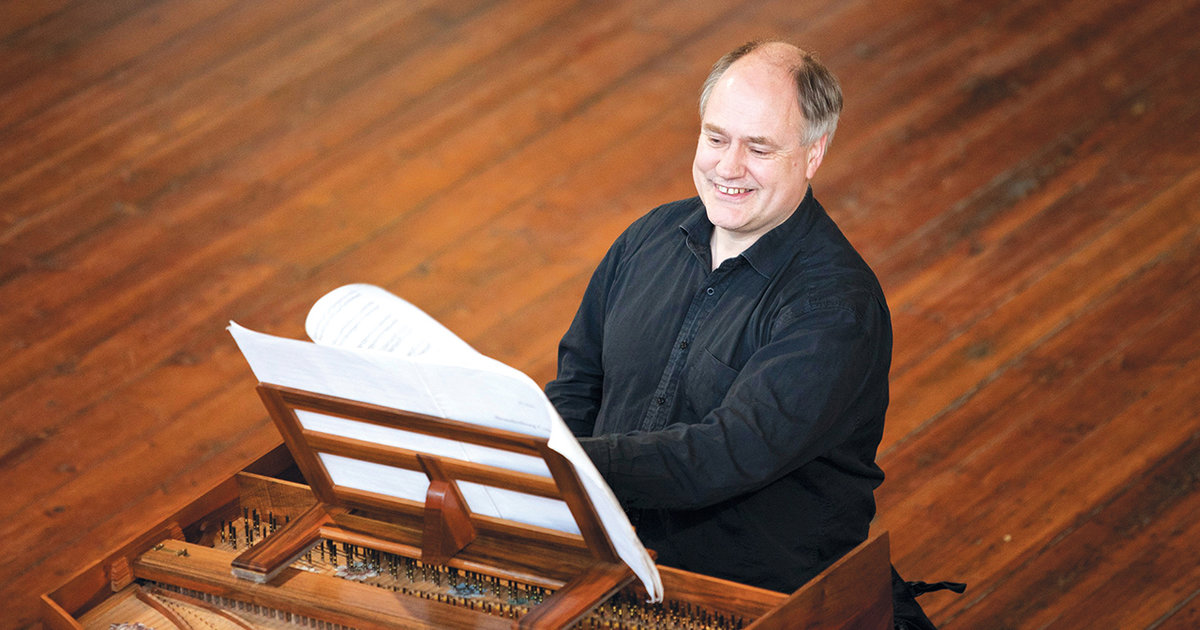
Butt (above) is a Bach specialist, living and breathing the composer’s music. He has scholarly intellect on his side but balances that with enthusiasm in spades. For this concert his energy rubbed off on the audience, and in several faster numbers he literally could not wait to get his hands busy on the harpsichord. Like all bar the cellists and basses he stood to perform, the Dunedin Consort’s freedom of movement translating nicely into their interpretations of Bach’s dance movements, which had a spring in their step.

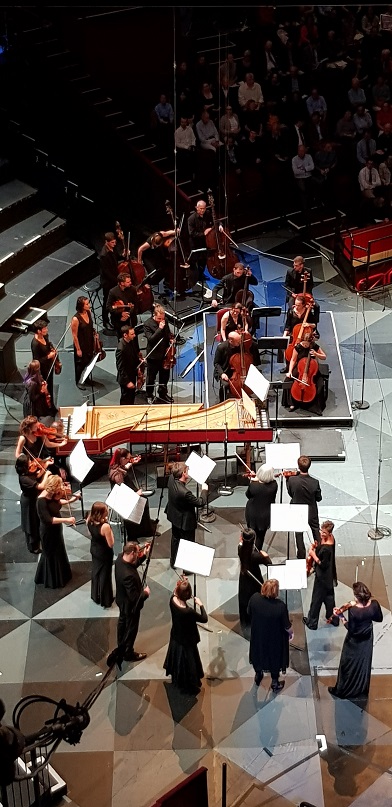
The last two numbered suites use brass and timpani, so we began with something approaching a fanfare. It took a couple of bars for the Dunedin Consort, numbering nearly 40, to hit their stride, but from then on their playing filled the Royal Albert Hall with the expanse of the fourth suite’s Ouverture, which had a ceremonial air before breaking into a bustling faster tempo. The four dances that followed were fleet of foot, Butt enjoying the humour of the perky Bourrée (10:40), then a stately Gavotte (13:25), Menuet (15:23) and Réjouissance (19:33), at which point brass and drums returned with a flourish.

Nico Muhly’s Tambourin followed without a break, utilising the same grand forces but expanding the harmonic world considerably. As a dance it was syncopated beyond danceable rhythms, starting powerfully but dissolving into D major at the end, dressed by flecks of Stephen Farr’s harpsichord.

The Orchestral Suite no.1 is a rich tapestry of dance movements prefaced by an expansive overture. The most expansive work of the four, its French ‘ouverture’ was elegantly played and dressed with expansive bass notes before moving to a lively fugue, oboes really coming into their own. The dances, again all of French derivation, were light on their feet, propelled by nifty harpsichord accompaniment from Farr and Butt centre stage. They were topped by a bustling Bourrée, its figures flying around the violin section before the complement, a darker, minor key central section for woodwind. With harpsichords silent, this was poignant and beautifully played.

Stevie Wishart complemented the first suite with a striking tribute to the endangered Argentine Hooded Grebe, whose call matched her music and could be heard over the Royal Albert Hall speakers during a witty and rather macabre tango. Once heard the call became ever more poignant, the instruments thrown off course and off pitch. It was effective, haunting and thought provoking.

Ailie Robertson’s Chaconne opened the second half, a reflection on Scottish dance music. A slow and atmospheric piece, it began with eerie held notes in the upper violins which really came into its own when the flutes joined, like Wishart evoking a bird in imagery, though this time a slower, bigger one like an albatross.

For the Orchestral Suite no.2 Butt used reduced string forces and three flutes, headed by the excellent Katy Bircher. The colours of this work are appreciably darker, and the leaner string sound complemented the consoling flutes. After a solemn start to the Ouverture came a lively fast section, then the flutes led us in a sprightly Rondeau, with a quicksilver account of the famous Badinerie to finish. In between there were solemn, more processional numbers – a mournful Sarabande picked up by a quick Bourrée, resolute Polonaise and gallant Menuet.

Stuart MacRae’s Courante was the final commission, an upbeat to the final suite that went off at quite a pace, Stephen Farr’s rattling harpsichord pursued by the orchestra and ultimately caught, before the violins became ‘it’ and took off again, the piece diminishing to a whisper at the end.

The Courante was a cheeky upbeat to a truly joyous performance of Bach’s Orchestral Suite no.3. Trumpets were bright and timpani on point, Stephen Burke tapering his strokes to use angle rather than force to create the sound. The celebrated Air ‘on the G String’ was light on its feet and affectionate without overindulging, while the Gavotte, Bourrée and Gigue had the biggest smile on their faces, Bach’s counterpoint as inevitable and toe tapping as ever. The Gigue was especially upbeat, with rolling timpani and celebratory trumpets.

It is incredible to think that only last year Creative Scotland were proposing to cease funding the Dunedin Consort, a decision that was thankfully overturned. This night at the Royal Albert Hall illustrated beyond doubt the collective, creative bloom the group are experiencing, and it was a privilege to be a part of their Bach night.

Further Listening

John Butt and the Dunedin Consort have not yet recorded the Bach suites, but they did recently release an account of the wonderful violin concertos which you can sample below:

Bach Violin concertos with Cecilia Bernardini from Dunedin Consort on Vimeo.

For a choice recording of the suites, a new disc from the Freiburger Barockorchester is recommended here: