Today marks the anniversary of the birth of composer Ottorino Respighi in 1879.
Respighi’s most famous works are the orchestral pieces making up the ‘Roman trilogy’ – in order of composition the Fountains of Rome, Pines of Rome and Roman Festivals. Here they are in landmark performances from the Chicago Symphony Orchestra conducted by Fritz Reiner:
Marie-Christine Zupancic (flute), Sebastian Heindl (organ), City of Birmingham Symphony Orchestra / Kazuki Yamada
Berlioz Le Corsaire Op.21 (1844) Takemitsu I Hear the Water Dreaming (1987) Respighi I Fontane di Roma P106 (1916) Saint-Saëns Symphony no.3 in C minor Op.78 ‘Organ’ (1886)
Symphony Hall, Birmingham Wednesday 4 June 2025
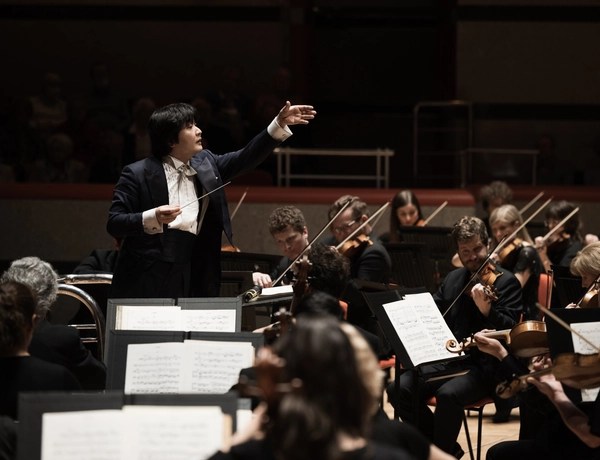
Reviewed by Richard Whitehouse Picture of Kazuki Yamada (c) Benjamin Ealovega
The dashing upsurge at the start of The Corsair launched this evening’s concert by the City of Birmingham Symphony Orchestra under its music director Kazuki Yamada in fine style. Nor was the pathos in this last of Berlioz’s concert overtures downplayed, and if the main portion lacked the pizzazz of illustrious predecessors, Yamada’s handling of the apotheosis proved an object-lesson in controlled spontaneity – setting the seal on a fine account of a piece that long -standing attendees will recall as a favourite of one-time principal conductor Louis Frémaux.
The music of Tōru Takemitsu was often heard in the era of Simon Rattle, but not I Hear the Water Dreaming. Taking its cue (along with other works of this period) from the ‘Dreamtime’ tradition of Aboriginal art, here a painting from the Papunya region of Western Australia, this short though eventful piece typifies its composer’s final creative phase – the formerly radical tendencies from previous years not so much disowned as finding an accommodation with the impressionist leanings of his earliest maturity. A sonic canvas, moreover, against which solo flute pursues its capricious course, with only a hint of something more confrontational either side of the cadenza-like passage towards its close. Certainly, this was music to which Marie-Christine Zupancic (taking time out as the CBSO’s first flute) sounded unerringly attuned.
CBSO regulars will recall Yamada presenting the whole of Respighi’s ‘Roman Triptych’ at a memorable concert four years ago. Tonight, Fountains of Rome rounded off the first half in a performance at its best in the effervescence of Triton at Morning or the dazzling majesty of Trevi at Midday, fading as if suspended in the Symphony Hall ambience. If Valle Giulia at Dawn felt a little passive in its allure, the enfolding serenity of Villa Medici at Sunset was fully sustained – the delicacy and suppleness of its entwining melodic lines accorded full rein.
The CBSO has been identified with Saint-Saëns’s Organ Symphony since Frémaux’s lauded recording of half-a-century ago, and it remains a work in which this orchestra excels. Yamada was (rightly) intent on stressing its symphonic cohesion, drawing ominous expectancy from the first part’s introduction and building no mean momentum in its ensuing Allegro. Sebastian Heindl’s hushed entry duly set the tone for a raptly eloquent slow movement, measured while never sluggish as it headed toward its heartfelt climax then on to a coda of bittersweet repose.
There was no lack of incisiveness or humour in the scherzo which opens the second part – its scintillating passagework for piano duet artfully integrated into the orchestral texture, with an ideally paced link into the finale with its indelible main melody and methodical build-up to a majestic peroration. Those thunderous initial chords aside, Heindl made less of an impact than might have been expected, but his always resourceful choice of registrations underlined the extent to which both he and Yamada continually had the ‘bigger picture’ uppermost in mind.
Overall, then, a concert which manifestly played to this orchestra’s collective strengths. The CBSO is back next week with its former music director Mirga Gražinytė-Tyla for what will be only a second UK performance, 63 years after the first, for Weinberg’s Fifth Symphony.
On this day, 100 years ago, the first performance of Respighi‘s mighty descriptive suite Pines of Rome took place, with Bernardino Molinari conducting The Augusteo Orchestra of Rome.
Here is a legendary account from the Chicago Symphony Orchestra, conducted by Fritz Reiner:
Published post no.2,393 – Saturday 14 December 2024
Prom 7 – Elena Urioste (violin), BBC National Orchestra of Wales / Tadaaki Otaka
Rachmaninoff (orch. Respighi) Five Études-tableaux (1911-17, orch 1930) [Proms premiere] Coleridge-Taylor Violin Concerto in G minor Op.80 (1911-12) Beethoven Symphony no.5 in C minor Op.67 (1807-08)
Royal Albert Hall, London Wednesday 19th July 2023 [7pm]
by Richard Whitehouse photos by Andy Paradise / BBC
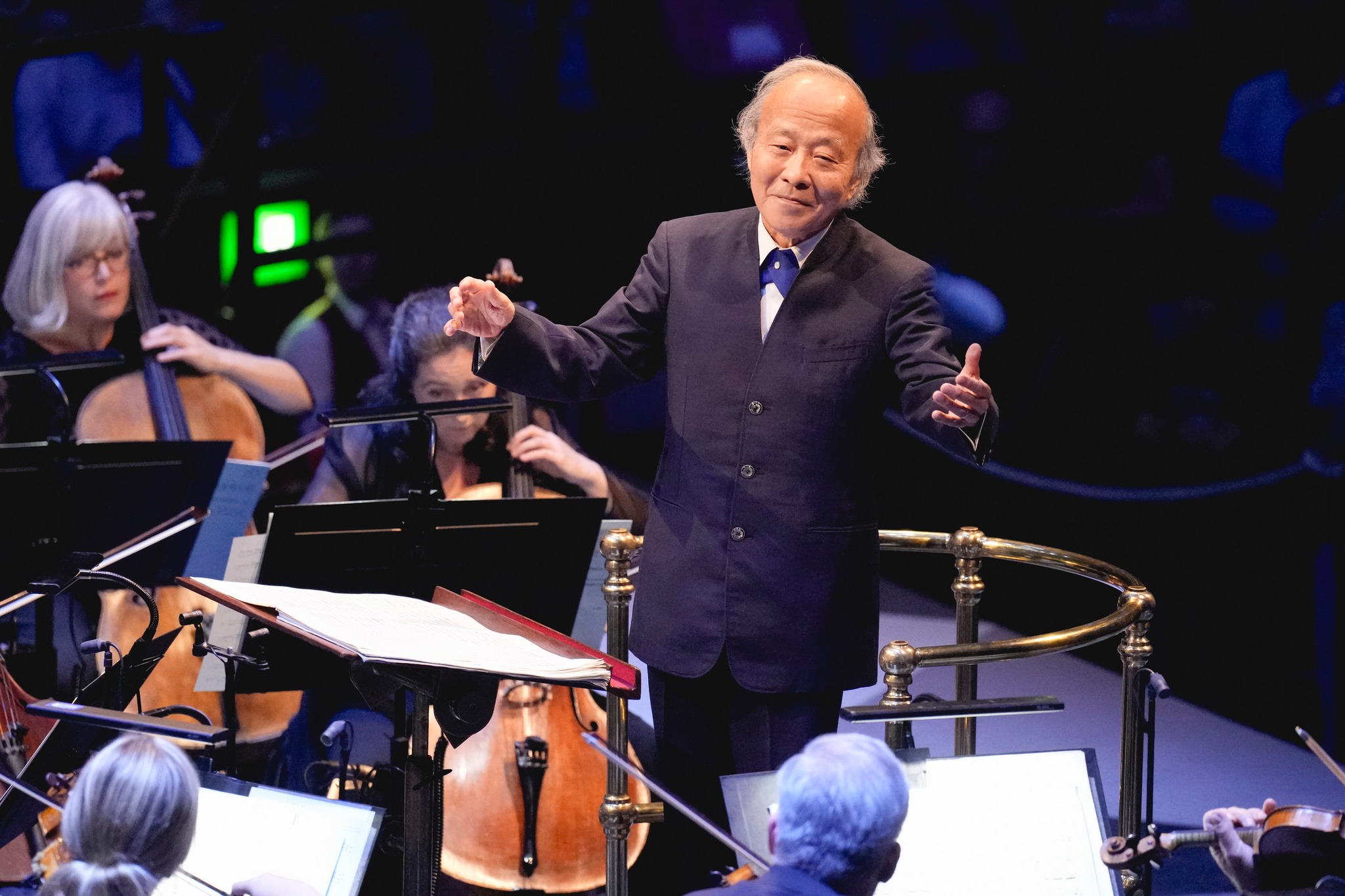
Tadaaki Otaka’s years at the helm of the BBC National Orchestra of Wales (1987-95) were a highpoint of the latter’s history, and it was good to see and hear the rapport between them now that he is Conductor Laureate being maintained throughout this evening’s programme.
Surprising that Respighi’s orchestration of five from Rachmaninoff’s sets of Études-tableaux had not been given at the Proms, but the respective 150th and 80th anniversaries of his birth and death provided an ideal opportunity. Otaka brought out the listless calm of The Sea and the Seagulls with its death-haunted aura, then conveyed the scintillating energy of The Fair. With its evocations of Orthodox chant and heady pealing of bells towards the close, Funeral March is the most imposing and Otaka gave it its due – not least by pointing up the deadpan humour of Little Red Riding Hood and the Wolf which provides greatest possible contrast. The sheer effervescence of March made a fitting conclusion to a sequence that, while other orderings are possible (not least 2-1-4-3-5), is a viable and a cohesive entity in its own right.
The resurgence of interest in Samuel Coleridge-Taylor continued apace with a revival of his Violin Concerto, 111 years after its UK public premiere at these concerts. Its composer’s last major work, this is a work audibly in the Romantic tradition and while the initial Allegro gets off to a less than promising start with its blousy and over-emphatic first theme, the resource with which the soloist elaborates both this and the insouciant idea that follows is as engaging as the cadenza underpinned by drum-roll is arresting. The central Andante is the undoubted highlight, its warmly confiding main melody capable of unexpected plangency as it unfolds, then the final Allegro draws on the Afro-American inflections of Coleridge-Taylor’s heritage in a spirited discourse whose climax sees an opulent restatement of the work’s opening theme.
A testing assignment such as Elena Urioste (after last year’s Proms debut with Ethel Smyth’s Double Concerto) gave with no little panache, her vivid while modest tone heard to advantage in Tom Poster’s eloquent take on Harold Arlen’s Over the Rainbow that was given as encore.
A staple of the Proms since its very first season 128 years ago, Beethoven’s Fifth Symphony comes so weighted with expectation as to make any performance in itself a provocative act. Eschewing astringency and portentousness, Otaka (rightly) rendered the initial movement as an elemental though unpredictable play on its indelible opening motif; the ensuing Andante pursuing an equally eventful course as its main theme evolves via a process of developing variation, the heroic and inquisitive held in unforced accord through to the decisive ending.
A pity that Otaka opted not to take the repeat in the Scherzo (rather than that of the finale) – its interplay between the ominous and the impetuous abetted by a transition of speculative intent. Here too there was never any risk of pomposity or overkill, Otaka steering this most visceral of symphonic finales through a development of bracing immediacy then on to a coda whose insistent C major reiterations were the outcome – no more and no less – of this movement’s innate potential. The undiminished relevance of this music was never for a moment in doubt.
Respighi Vetrate di Chiesa (1925-6) Dallapiccola Il prigioniero (1944-8) {Sung in Italian with English surtitles]
Ángeles Blancas Gulín (soprano – Mother), Eric Greene (baritone – Prisoner), Stefano Secco (tenor – Gaoler / Grand Inquisitor), Egor Zhuravskii (tenor – First Priest), Chuma Sijeqa (bass-baritone – Second Priest), London Symphony Chorus, Guildhall School Singers, London Symphony Orchestra / Sir Antonio Pappano
Barbican Hall, London
Sunday 5 June 2022
Written by Richard Whitehouse Pictures (c) Mark Allan Photography
This second of the London Symphony Orchestra’s two concerts of Italian music with chief conductor designate Sir Antonio Pappano consisted of two pieces that brought the aesthetic and political divisions of Italy between the world wars into acute while always productive focus.
It might have originated in piano pieces written for his wife, but Respighi’s Church Windows duly emerged among the most opulent and evocative of his orchestral works. That both title and subtitles were postpriori additions does not lessen their relevance – not least as concerns The Flight into Egypt, its tense understatement a telling foil to the ensuing Saint Michael the Archangel with its warlike images rendered graphically by brass and percussion, before climaxing in one of the most theatrical of tam-tam crashes as Satan is banished from Heaven.
Not that Respighi was averse to gentler expression as appropriate, The Matins of Saint Clare featuring orchestration of unfailing finesse on its raptly expressive course. Inevitably, it is the magisterial finale of Saint Gregory the Great when this composer comes most fully into his own – its cumulative fervour drawing on all aspects of the sizable forces for what becomes a heady apotheosis. Music, indeed, that needs to be realized with discipline and focus to avoid overkill, which was certainly the case in a performance where the LSO left nothing to chance.
The London Symphony Orchestra and London Symphony Chorus conducted by Sir Antonio Pappano perform Ottorino Respighi Church Windows
Luigi Dallapiccola Il prigioniero
In the Barbican Hall (Ángeles Blancas Gulin Mother,
Eric Greene Prisoner, Stefano Secco Gaoler / Grand Inquisitor, Egor Zhuravskii First priest, Chuma Sijeqa Second priest ) on Friday, 3 June 2022.
Photo by Mark Allan
Whereas Respighi pays (indirect) tribute to Italy’s cultural greatness, Dallapiccola exposes its darker recesses in his one-act opera The Prisoner. Composed over several years that span the decline and fall of Mussolini’s Italian empire, its libretto is drawn from the novel by the late 19th century author Villiers de l’Isle-Adam whose title Torture by Hope became subtitle for this opera by intimating the culmination of a scenario set during one of the grimmest periods in the Spanish Inquisition. By this time, Dallapiccola had evolved that distinctively personal brand of serialism which served him thereafter, but his knowledge of and devotion to Italian opera meant that those more methodical or systematic aspects are harnessed to an emotional fervour as makes for a consistently powerful and often moving while harrowing experience.
The performance was a compulsive one – centred upon Eric Greene’s assumption of the title-role that built gradually to an apex of elation suddenly and cruelly denied. The opening stage is dominated by the Mother – rendered with unfailing charisma yet never wanton melodrama by Ángeles Blancas Gulín, and Stefano Secco brought hardly less conviction to the twin-role of the Gaoler whose urgings to remain steadfast assume a chilling tone when he is revealed as the Grand Inquisitor. There were telling cameos from Egor Zhuruvskii and Chuma Sijeqa as the Priests, with the London Symphony Chorus and Guildhall School Singers combining to potent effect in offstage Psalm settings – the final one a climax of sombre grandeur. Pappano directed with absolute assurance an opera he doubtless, and rightly so, ranks with the finest.
It brought this enterprising and superbly executed concert to an impressive close. One only hopes Pappano will have the opportunity to programme further such music over the coming seasons: the enthusiastic response suggested an almost full house would be there it hear it.





 Arcana.fm