BBC Proms 2017 – John Adams: Naive and Sentimental Music – Philharmonia / Esa-Pekka Salonen

Marianne Crebassa (mezzo-soprano), Philharmonia Voices and Orchestra / Esa-Pekka Salonen

J.S. Bach arr. Stravinsky Canonic Variations on Vom Himmel hoch, da komm, ich her (1956)

Ravel Shéhérazade (1904)

Adams Naive and Sentimental Music (1999)

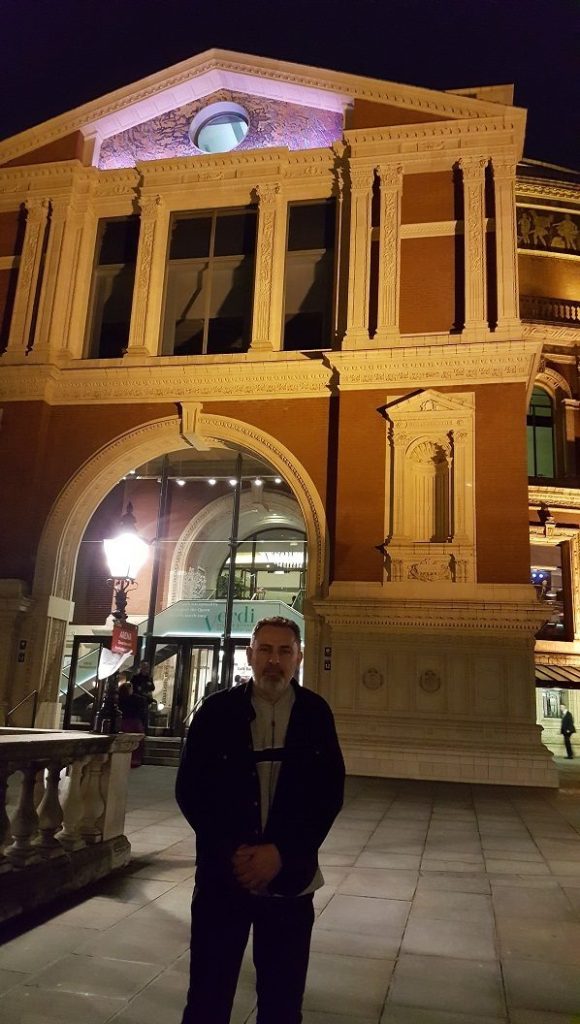
Royal Albert Hall, Wednesday 2 August 2017

You can listen to this Prom here for 28 days from the date of the performance

This year’s Proms celebration of John Adams‘ 70th birthday moved on to some Naïve and Sentimental Music. Not my label, but the composer’s own – and a misleading one at that. The title implies a sketchily composed, throwaway fragment, but what we actually get is something very substantial, longer than many symphonies. The construction of the three sections making up the piece illustrate the ease with which the music of Adams expands to fill such dimensions, not something you could always say about the music of like-minded ‘minimalists’, Philip Glass and Steve Reich.

Where others of his ilk tend to work in smaller melodic units, Adams thinks nothing of spinning out a long, intense melody over several minutes, hanging like a long telegraph wire above the sun-drenched plains. Such an image came to my head as we listened to the second movement of three, Mother of the Man, where the guitar of Huw Davies sounded rather like the early music of Pat Metheny in its deceptively lazy traversal. The strings held fast, creating the wide expanses of which Copland would surely have been proud. The treble textures were especially rich, but when the dynamic dropped to a barely audible whisper on the violins, members of the audience were subconsciously leaning forward to follow developments in the music.

It helped that the conductor was also the dedicatee of Adams’ sizeable score, Esa-Pekka Salonen taking delivery on behalf of the Los Angeles Philharmonic in 1999. Here he secured some outstanding playing from the Philharmonia Orchestra, who responded to the virtuoso demands of the music with impressive rhythmic impetus, intense focus and characterful phrasing. When the music gathered itself several times in the first movement, Naïve and Sentimental Music, the pacing and rhythms felt just right, with especially good work from harpists Heidi Krutzen and Stephanie Beck, not to mention percussionists Antoine Siguré, Scott Lumsdaine, Peter Fry, Stephen Burke, Tim Gunnell and Karen Hutt.

Towards the solemn close of Mother of the Man it was the brass bringing deeper shades to the forefront of the picture with exquisitely held chords. As Chain to the Rhythm hurried along the intensity built steadily and inexorably until it became nerve-shredding, the piece thundering along with gongs, bass drum, cymbals and massive timpani strokes giving it a mountainous perspective. We ended through the altitude of the violins, these massive orchestral sounds now a huge echo. It was a moving finish to a piece that is clearly underrated in Adams’ canon. Salonen clearly believes in it, and this audience did too.

A curious (but very interesting) first half began with Stravinsky’s arrangement of J.S. Bach’s Canonic Variations on Vom Himmel hoch, da komm, ich her, a recomposition made to accompany the world premiere of the latter composer’s Canticum Sacrum in St Marks, Venice in 1956. This was an oddity of economical orchestration and sung text from a reduced choir. There was some quite tart colouring in the manner of Stravinsky’s later style, and his additions to the music of Bach added extra spice to the harmonies at unexpected points. An intriguing but puzzling arrangement, and one that threw the softer textures of Ravel’s Shéhérazade into relief.

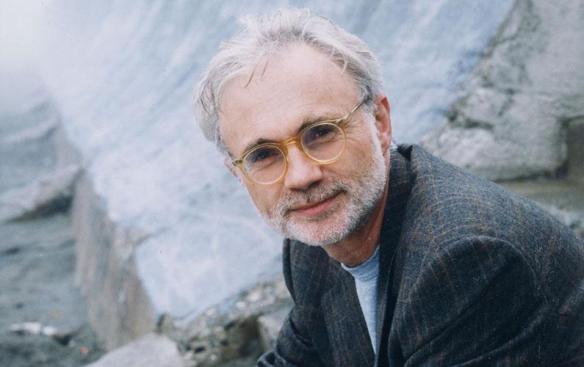
This was no doubt intentional, for we were privy to a wonderful performance from French mezzo-soprano Marianne Crebassa (above). Shéhérazade is a magical song cycle when performed well, but here it transcended all expectations – in fact I don’t recall ever seeing a singer who gauged the acoustic of the Royal Albert Hall with quite the accuracy of Crebassa. Her direct communication with the audience was reinforced by the elegance and understated strength of her vocal delivery, a truly beautiful tone that caressed Ravel’s lines with clear love and affection.

The first song, Asie, held an exquisite tension as the travelling scene unfolded, while La flûte enchantée, the instrument itself beautifully played by Samuel Coles, thrilled with its orchestral colours and heady textures. L’indifférent was a little more mischievous, and again the exquisite tones and textures were in full accord with the very best Ravel performances.

Crebassa is most definitely an artist for the future, and her blend and rapport with the Philharmonia was something to behold. The reverent string textures and typically pinpoint orchestration were viewed through Salonen’s technicolour lens, but the team brought something very special to Klingor’s text. If you get the chance to hear the broadcast, do so as soon as you can. You will hear one of the best young singers in classical music right now!

Ben Hogwood

Stay tuned for the next in Arcana’s Ask The Audience series, where Steve Hodges will give his verdict on the John Adams Prom. Coming shortly!

Ask the Audience at the BBC Proms – Dean Francis on Bartok and Dvořák

Ask The Audience Arcana at the Proms
dean-francisThis is the first in a new series where Arcana invites a friend to a Prom who does not normally listen to classical music. In an interview after the concert each will share their musical upbringing and their thoughts on the concert – whether good or bad! Here, Dean Francis (above) gives his thoughts on Prom 25.
Alban Gerhardt (cello); Ildikó Komlósi (mezzo-soprano), John Relyea (bass), Royal Philharmonic Orchestra / Charles Dutoit

Dvořák Cello Concerto in B minor (1895)
Bartók Duke Bluebeard’s Castle (1911)

You can listen on the BBC iPlayer here

Arcana: Dean, what was your musical upbringing?

It was really wide and varied. I grew up with my great grandparents, and they came over from Jamaica in the 1960s. I was heavily influenced by that, and was listening to blue beat and ska. In Jamaica the musical influences are really wide, so they’ll listen to a lot of country like Kenny Rogers or church-influenced stuff, Jamaican gospel and American gospel. I used to hear tapes with church services and things.

My grandparents listened to more reggae – Bob Marley, John Holt, Gregory Isaacs – but my mum was born here and went to school in West London, and she listened to stuff like Boy George and punk, Prince, The Cure, literally everything! My auntie was only a couple of years older than me and she would be listening to Bros and Mariah Carey!

My own personal influences were hip hop early on. I think my first concert was either Cypress Hill or The Beastie Boys, and the first record I bought was a Barrington Levy record, so I was all over the place really! Nowadays I think kids have a watered down view of music, it’s made specially for them. We used to listen to what our parents listened to, in my house at least – not the latest kiddie sound. There was no jumping about to stuff like Miley Cyrus, the stuff I’d listen to would be at family parties, dancing with adults.

Could you name three musical acts you love, and why you love them?

Ice Cube. His music was descriptive of what was going on at the time in America, and it’s almost the polar opposite of the lyrical content of mainstream hip hop now. I guess his life is quite inspiring, starting in NWA and going on film. I grew up with the Predator and Lethal Injection albums at the time.

Going back to reggae I would say someone like Buju Banton, I listened to him a lot, and met him, before he went to prison. Another reason for liking him is his music is good, but if you listen to him talk about what was going on in the world, the politics of the time – living in the West you get a very different view of the politics because of the media.

Even in Jamaica, although it’s The West, you realise that people have got a lot more common sense than you might expect in relation to places perceived as ‘more learned’. They are closer to nature, doing more practical jobs and living off the land, so they have a different view of the world. You don’t get people getting bullshitted, people are smart and on the ball – and so he was telling me stuff about life and wisdom, and he was inspiring in his mindset and how driven and aware he was of whats going on politically.

More recently I would say Loco Dice, because I’ve had some good moments out with him DJing with good friends. His music has energy that brings people together, and that transmits itself in the music he plays. So that’s my three – but you could ask another time and I’d give you a different answer!

I think I tend to like music that has an energy and makes a connection with people. I get bogged down by dirge! I would always listen to something like the Arctic Monkeys over Katie Melua, say!

What has been your experience of classical music so far?

The school I went to had a lot of classical music. It was quite funny and we had a teacher who drank whisky at the primary school I went to! He would play the piano, and I think he used to like Holst. It was quite good, even though we didn’t appreciate it at the time. I think everybody at some point should be exposed to the music of the world, it helps, you know?

With real electronic music and some of the music they play now, it can dumb you down because you’re not exposed to real instruments.

Really I’ve taken it upon myself to go to things, I’m not really averse to any kind of music. If people have invested their time and craft, it will be worth seeing. It’s like sport, you know, you watch it at the Olympics because you know it’s the best of its kind. There is so much classical music in films you don’t realise it’s happening as well!

How did you rate your first Proms experience?

I thought it would be more stuffy, but because it’s classical I would say you get an older demographic. That’s good in one way but it would be good for younger people to think it’s accessible. I think it’s a perception thing, and a shame really – it’s just music at the end of the day! There shouldn’t be that perceived snootiness. It was a really good experience though.

What did you like about it?

I like the emotion of the music. Some of the descriptive parts of moods and nature, like water and fire in the Bartók, that’s really good if a good composer can capture those moments.

What might you improve about the experience?

Not much really, but more how they can engage younger people so that it doesn’t become too stuffy.

What did you think of the Dvořák?

I liked that, especially the first movement. The second movement, it felt less interesting to my ear, but it was all really good. It reminded me a bit of a 1930s or 1940s Western, I can’t remember what. It wasn’t quite as good as the second piece!

What did you think of that, the Bartók?

I really liked the bits of impending doom, but it was also contrasted with light moments. When you’ve got a night where you’re reading the words it makes it very obvious what the composer is trying to do. It’s a like a piece of art with the audio describing the tour.

Would you go again?

Yeah, definitely. It would be a great place to take a date!

Verdict: SUCCESS

You can read Arcana’s review of the whole Prom here – and you can listen to it on the BBC iPlayer

Steven Isserlis – revisiting Elgar and discovering Walton

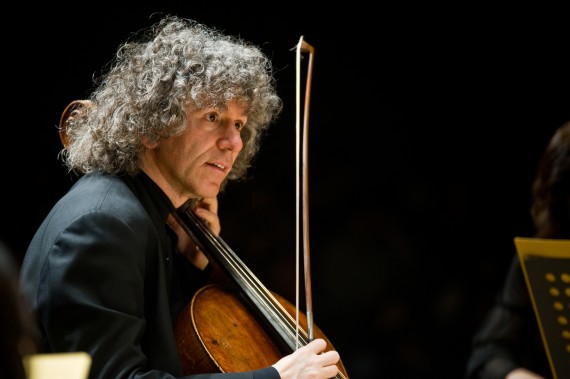
steven-isserlisCellist Steven Isserlis is one of Britain’s best-loved classical artists – loved for his highly respected interpretations of the cello repertoire, but also for his open, honest and enthusiastic approach to classical music.

Isserlis, an author of books introducing children to the likes of Beethoven, Handel and Schumann, generously donated time to talk to Arcana about the roots of his love of the cello, his new disc of Cello Concertos by Elgar and Walton and his new work as an author.

Can you remember your first encounters with classical music?

I can’t remember a time without music! From the time I remember anything, my sisters were already learning instruments, and I used to go to sleep at night to the sound of my father practising the violin and my mother the piano.

How did you develop a love of the cello?

My sister Rachel played the violin, and my elder sister Annette was always going to play the viola. So a cellist was needed – that would be me. So my parents took me to a local teacher, and – after a false start at the age of four or five – I began lessons from the age of six. I think my love for the cello developed as I came to realise that if I played OK I could be the centre of attention!

What was it like returning to record Elgar’s Cello Concerto? Was it invigorating in the company of someone (the conductor Paavo Järvi) who may not have encountered the composer’s music so much?

Well, I’ve played the Elgar so many times over the 25+ years since I first recorded it that it seemed a good idea to record it again. It’s true that Paavo needed a bit more persuading than he did for our Prokofiev / Shostakovich disc, but not much more; he’s always up for a challenge.

Was it your aim to bring out a little more of the humour in the last movement of the Elgar, given the relative darkness around it? It also feels a little quicker than your first recording of the concerto.

It was not a conscious aim – I really didn’t think about (or listen to) the earlier recording. But yes, there is humour in parts of the last movement – which for me throw the tragedy into even sharper relief.

This is the first time you have recorded the Walton (I think!) I’m assuming you knew it very well before, but what effect did it have on you in the recording process?

I’m not sure it had any particular effect on me ‘in the recording process’, but I’d been wanting to record it for some years, since I feel passionately about it. I always name the Schumann, Dvorak, Elgar and Walton concertos as the four very greatest cello concertos (though I’d be bereft without those of Haydn, C.P.E. Bach, Boccherini, Saint-Saëns, Prokofiev, Shostakovich, Dutilleux etc).

It feels like a very romantic piece, with sighing melodies and deeply felt thoughts. Given your booklet note for the release, is that how you would view it?

Definitely – romantic, poetic, impassioned, magical.

The Gustav and Imogen Holst pieces make fascinating complements. Do you think people are in neglect of just how adventurous Gustav’s music could be?

Perhaps. To my shame, I know very little of it. But I love Invocation, maybe especially so since I had something of a part in its rediscovery.

What do you remember of Imogen Holst as a person, and of the piece here? Her ‘Presto’ seems to me (a bit of wishful thinking I’m sure!) to depict birds chasing each other in the reeds at Aldeburgh.

I remember Imogen as a wonderfully quaint personality who was also sharp as a stainless steel razor! Wonderful. I’ve always thought of the Presto as depicting leaves flying around in a storm. Recently I was sent a note by the work’s dedicatee, Pamela Hind O’Malley, apparently written with Imogen’s approval, which describes it as ‘the scuttering of leaves in a high wind’. I like that word ‘scuttering’!

I understand you have just completed a book – are you able to tell us more about it at this stage?

It’s advice for young musicians – incorporating and updating Schumann’s book of the same name. I suppose that means that I’m now an old musician – groan…

Is it important for you to communicate to people, young and old, in a language that brings classical music to everybody?

Absolutely! And I enjoy playing for children, as well as writing for them – it can be tremendous fun.

Do you think classical music should do more to get the music beyond its ‘inner circle’, so to speak?

Well, yes – but not if that means distorting it, or promoting sugary crossover stuff. Classical music doesn’t need that!

You can hear extracts from the new Steven Isserlis disc of cello concertos by Elgar and Walton, released by Hyperion Records, here – including shorter pieces by Gustav Holst – his Invocation – and his daughter Imogen, a short suite for solo cello The Fall of the Leaf.

Meanwhile forthcoming concerts from the cellist are listed on his website