In concert – Soloists, BBC Symphony Chorus & Orchestra / Hannu Lintu @ BBC Proms: Mahler Das klagende Lied & Boulez Rituel in memoriam Bruno Maderna

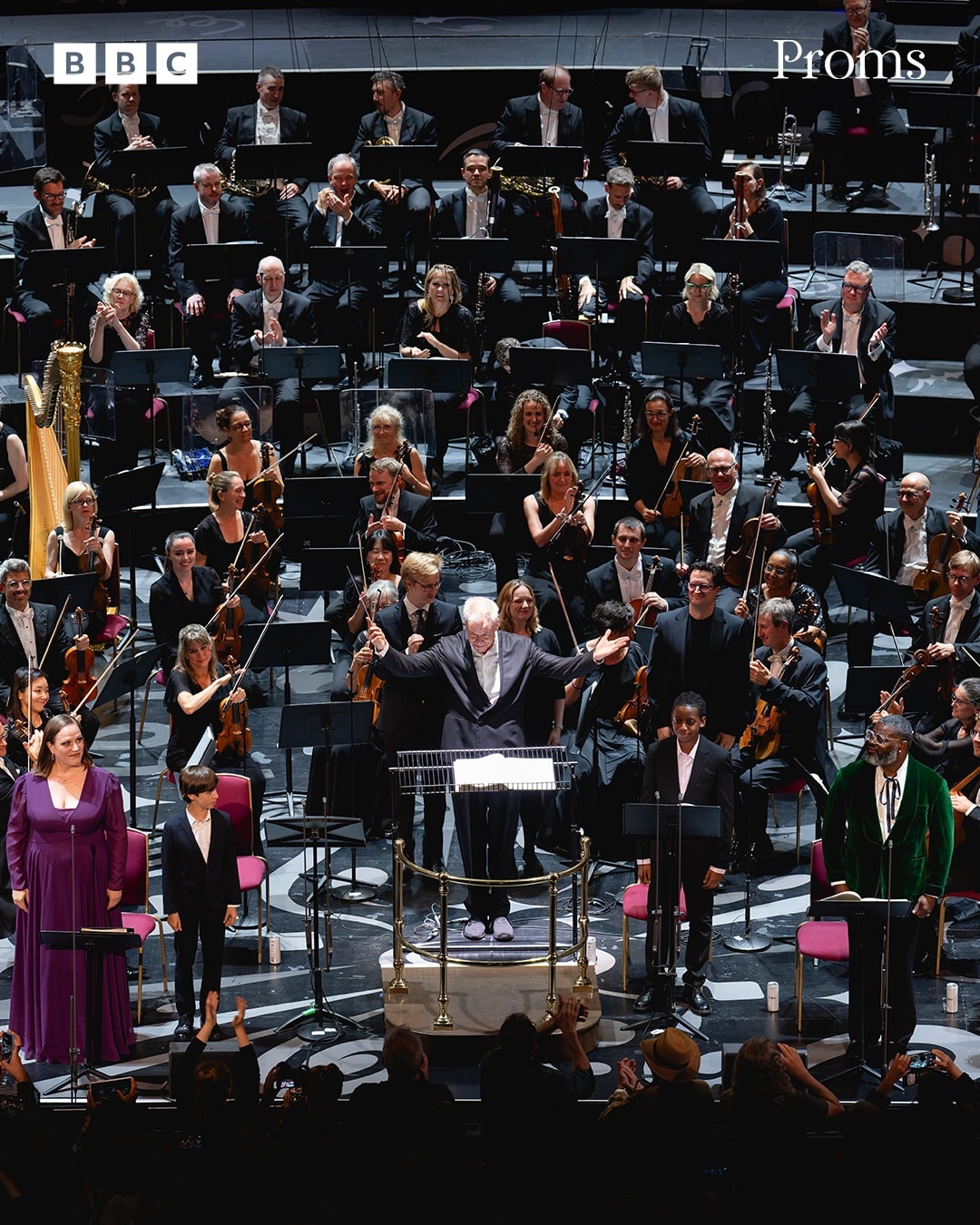
Natalya Romaniw (soprano), Jennifer Johnston (mezzo-soprano), Russell Thomas (tenor), James Newby (baritone) Carlos González Nápoles (treble), Malakai Bayoh (alto), Constanza Chorus, BBC Symphony Chorus, BBC Symphony Orchestra / Hannu Lintu

Boulez Rituel in memoriam Bruno Maderna (1974-75)
Mahler Das klagende Lied (1878-80)

Royal Albert Hall, London
Tuesday 4 August 2025

Reviewed by Richard Whitehouse Photos (c) BBC Proms (from the festival’s uncredited Facebook upload)

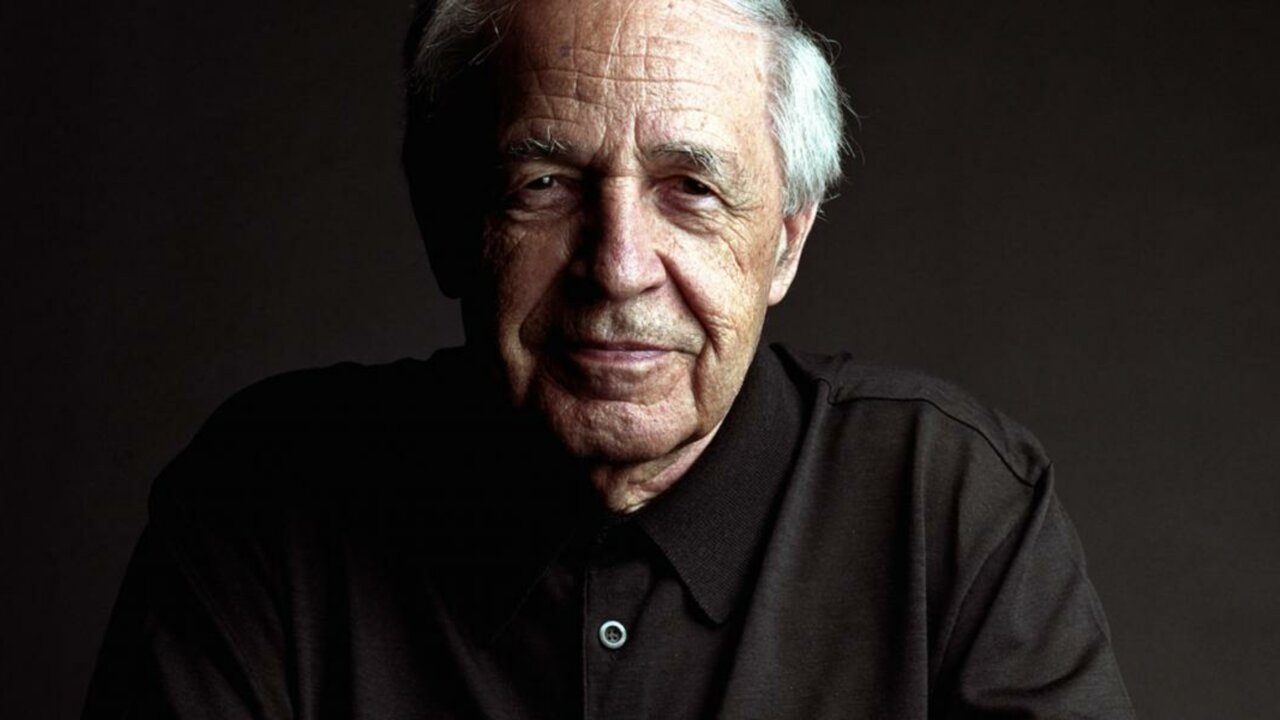
Boulez and Mahler may not seem an obvious coupling, until one recalls the would have-been centenarian regularly conducted all the latter’s major works including that heard tonight – as well having made the first recording of its original three-part version more than 55 years ago.

When it appeared in 1975, Rituel in memoriam Bruno Maderna was thought something of an anomaly in Boulez’s output – its hieratic aura and structural (if never literal) use of repetition a homage more to his teacher Messiaen than his late colleague who, revealingly perhaps, had grown disenchanted in the avant-garde project of the post-war era. To which this work might seem an envoi – one eschewing any trace of nostalgia as it pursues its inevitable course from the response of the individual to that of the collective then (almost) returning to the singular.

Outwardly Rituel unfolds a series of litanies from one to seven players and refrains for a 14-piece brass ensemble, but such distinctions increasingly merge towards its mid-point so that its latter half is an intricate mesh of overlaid textures, moving around those groups arrayed on stage. Maintaining audible balance is crucial – in which respect, Hannu Lintu succeeded admirably, as in pacing the overall sequence (memory recalls Boulez as opting for a discreet acceleration across the later stages) so its ending conveyed arrival though hardly fulfilment.

What marked a crucial juncture for Boulez was no less evident, almost a century before, for Mahler. The virtual absence of any previous music only makes Das klagende Lied the more remarkable for conveying the essence of what its composer, barely out of his teens, went on to achieve. At this time, he aspired to opera and though this cantata was never envisaged for staging, its scenic evocation and its dramatic immediacy suggest that, had he been awarded the 1881 Beethoven Prize for his entry, his creative priorities could have been very different.

The work has fared well at the Proms, this being its seventh hearing and the third to use the edition of the original version that restores the first of its three parts and enables the latter to be heard as conceived, thereby making musical as well as dramatic sense. A leisurely course through Waldmärchen enabled Lintu to highlight the motivic richness of its prelude, and if the alternation of solo verses with choral refrains felt a little stolid, the latter stages with the discovery of the flower, the fratricide and a desolate postlude were consummately rendered.
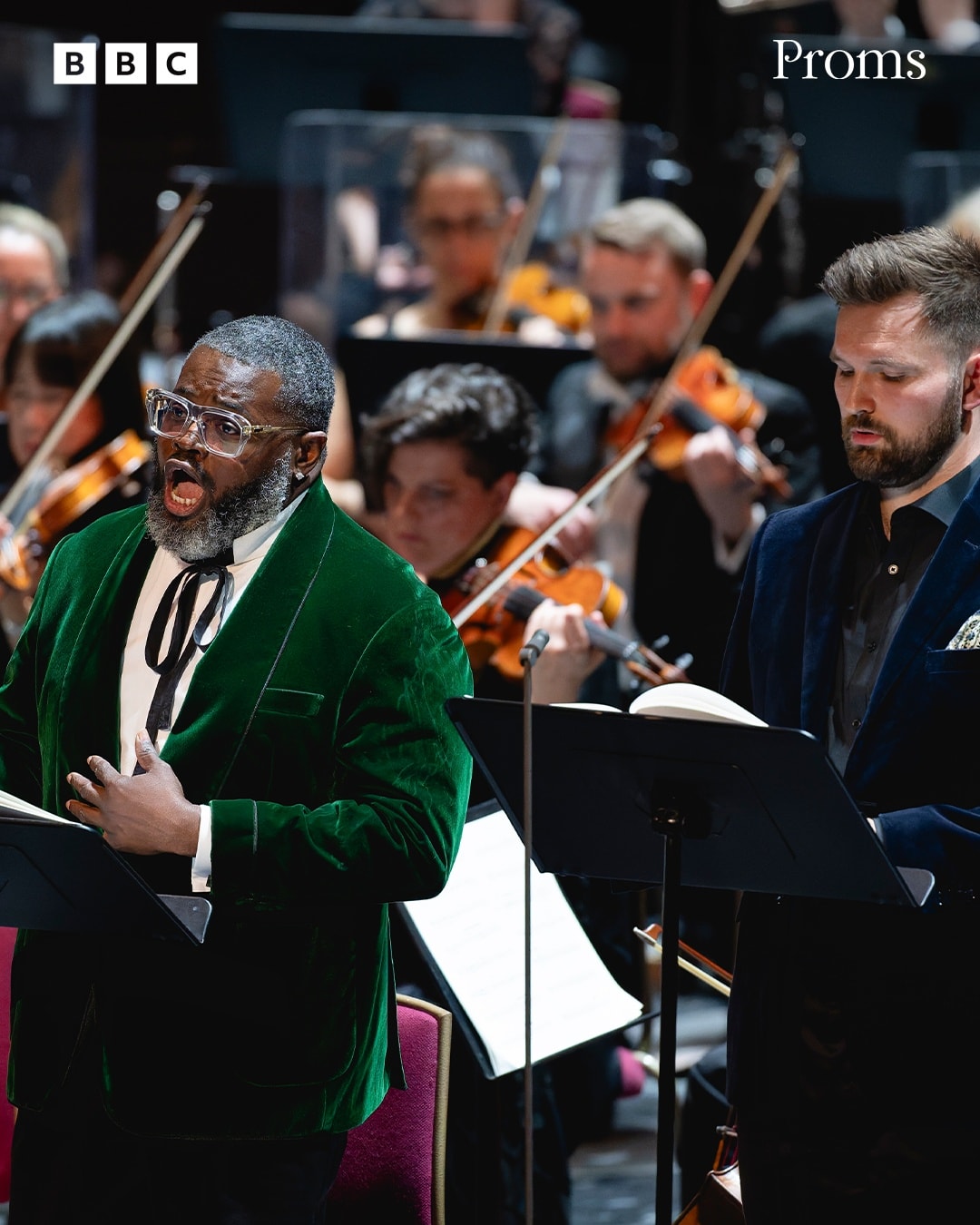
With its anticipations of later Mahler (via Wagner and Bruckner), Der Spielmann is the most characteristic part as it pivots deftly yet pointedly between genial whimsy and ominous dread. That this latter gains the upper hand with discovery of the ‘singing bone’ is offset by the blaze of glory with which Hochzeitstück begins; the offstage orchestra – head to advantage in the gallery – underpinning an increasingly desperate course of events as the fratricide is revealed and the wedding descends into mayhem, with deathly stillness pervading those final minutes.

There was some persuasive solo singing, notably Jennifer Johnston who carries the primary narrative thread; Russell Thomas was fervent if slightly strained and James Newby warmly eloquent, with Natalya Romaniw conveying real dramatic acuity. Treble and alto roles were poignantly taken, while Lintu drew an assured response from sizable choral and orchestral forces – the latter’s quartet of harps assuming a concertante role in an orchestration whose encompassing of dramatic impetus and intimate reflection is already that of Mahler alone.

Playing for around 70 minutes, Das klagende Lied seems as rich in incident as any Mahler symphony; not all of which, whatever their greater stylistic assurance or maturity, feature a conclusion as spine-tingling as this – and one which certainly drove its point across tonight.

You can listen back to this Prom concert on BBC Sounds until Sunday 12 October – or listen to recordings of the two works conducted by Pierre Boulez on Tidal here

Click on the artist names to read more about the Constanza Chorus, BBC Symphony Chorus and BBC Symphony Orchestra, conductor Hannu Lintu and soloists Natalya Romaniw, Jennifer Johnston, Russell Thomas and James Newby. Click also for more on the BBC Proms

Published post no.2,617 – Tuesday 5 August 2025

In concert – Sarah Aristidou, Ensemble Intercontemporain / Pierre Bleuse @ BBC Proms: Boulez & Berio: 20th-Century Giants

Sarah Aristidou (soprano), Jérôme Comte (clarinet), Lucas Ounissi (trombone), Yann Brécy (IRCAM electronics), Sylvain Cadars (IRCAM sound diffusion), Ensemble Intercontemporain / Pierre Bleuse

Berio Sequenza V (1966)
Boulez Dialogue de l’ombre double (1982-5)
Berio Recital I (for Cathy) (1972)

Royal Albert Hall, London
Wednesday 23 July 2025 (10.15pm)

Reviewed by Richard Whitehouse Photos (c) BBC / Chris Christodoulou

It is a salutary thought that events such as this evening’s later concert were once a ubiquitous feature at the Proms, and it required an anniversary such as the centenaries of both composers heard here to make it possible once again. Not that any of those present would have objected.

The jury might still be out on the precise nature of Luciano Berio’s achievement, but not on the intrinsic value of those works as Sequenza V. One of 14 such pieces that emerged across 44 years, it is arguably the most compact and communicative – not least for its pronounced degree of theatricality. His attire more readily evoked Harpo Marx than Grock the clown, but Lucas Ounissi (above) was fully alive to this music’s extended trombone technique serving a routine humorous though pathos-laden – his exclaimed ‘Why?’ defining the performance as a whole.

Although he eschewed such theatrics, Pierre Boulez was rarely averse to the extra-musical. Inspired by a scene in Paul Claudel’s play Le soulier de satin and the offshoot of work on his major 1980s project Répons, Dialogue de l’ombre double is typical of Boulez’s later thinking with its interplay of live and pre-recorded elements so that the musicians become engaged in a performance with themselves. Here the music proceeds as a continuum between Strophes and Transitions – clarinettist Jérôme Comte as tangible by his presence during the former as he was intangible by his absence during the latter, with all the contrast in perception that this implies. The presence of lighting proved as effective as it was immediate – not least in those framing sections of Sigle initial and Sigle final which act as processional then recessional.

Next to such expressive concreteness, Berio’s Recital I (for Cathy) could feel beholden to its era, but this music-theatre for the composer’s former wife and ongoing collaborator touches on salient aspects of existence as surely as those of performance. As with the more familiar Sinfonia (also revived this season), the plethora of quotations of and allusions to other music – ranging over three centuries from Monteverdi to Berio himself – is absorbed (if not always integrated) into an extended monologue during which the singer evolves from touchy prima-donna to solitary protagonist whose search for meaning in her artistic endeavour has become (and maybe always had been?) elusive. It has to be said that previous Proms hearings, at the Roundhouse then Kensington Town Hall, were better suited to this piece’s relative intimacy than the expanse of the Royal Albert Hall; moreover, for all the eloquence of her assumption, Sarah Aristidou (above) was not wholly suited to a role which requires a singer-actor in the lineage of Cathy Berberian to convey the intensifying emotional meltdown played out during its course.

What could hardly be denied was the alacrity of the instrumental response; the musicians of Ensemble Intercontemporain never less than committed under assured guidance from Pierre Bleuse, who has clearly galvanized this organization in the two seasons since he became its artistic director. Hopefully they will be invited back to the Proms at the earliest opportunity, and not just on the basis of commemorating those composers whose centenaries underscore their significance to a post-war musical culture whose passing has not made less relevant.

You can listen back to this Prom concert on BBC Sounds until Sunday 12 October.

Click on the artist names to read more about Sarah Aristidou, Jérôme Comte, Lucas Ounissi, the Ensemble Intercontemporain, their conductor Pierre Bleuse – and for more on the BBC Proms

Published post no.2,607 – Saturday 26 July 2025

In concert – Ensemble intercontemporain – Boulez 100 @ The Barbican

Ensemble intercontemporain / Nicolò Umberto Foron, NikNak (turntables), tyroneisaacstuart (choreographer & dancer), Julien Creuzet (visuals), Nathan England-Jones (electronics technical support)

Hannah Kendall shouting forever into the receiver
Cassie Kinoshi [untitled]
Pierre Boulez Sur Incises

Barbican Hall, London, 27 May 2025

by John Earls. Photo credits (c) John Earls

Billed as part of the Boulez 100 series* to celebrate what would have been Pierre Boulez’s 100th birthday year, it was exciting to see a concert by Ensemble intercontemporain, the group the great iconoclast founded in France in 1976 (I can’t help but also tell you that this was with the support of the then French Secretary of State for Culture).

Recognising Boulez’s championing of new voices, the programme combined a classic Boulez piece with new works by two younger generation British composers. First up was Hannah Kendall’s shouting forever into the receiver. The title comes from Ocean Vuong’s novel On Earth We’re Briefly Gorgeous and refers to the description of a tiny plastic toy soldier yelling into its handheld radio transceiver. In this piece, spoken extracts, initially from the Book of Revelation and then verses from Ezekiel, are passed back and forth between two performers using walkie-talkie radios and sat on opposite sides of the stage. This is combined with arresting musical accompaniment including pre-programmed music boxes playing familiar works such as Beethoven’s Ode to Joy, dampened piano and a contemplative harmonica chorale. It was a fascinating opening 15 minutes.

Second on the programme was the world premiere of composer, arranger and saxophonist Cassie Kinoshi’s [UNTITLED]. Inspired by Boscoe Holder, the Trinidadian artist, dancer, choreographer and musician it “pays tribute not only to historic Caribbean artforms…but also to the continued evolution of these forms in modern diasporic contexts”. This is reflected in this multi-disciplinary piece combining music, choreography, improvisation, technology and visual art “embracing the kind of fluid creativity that Boscoe Holder explored throughout his lifetime”.

At the very start choreographer and dancer tyroneisaacstuart circles the stage before literally passing on the baton to conductor Nicolò Umberto Foron (currently Assistant Conductor of the London Symphony Orchestra). Throughout the evening Foron’s angular gestures complemented the music perfectly. Something of a dance in itself.

tyroneisaacstuart’s own dancing involved spins, weaving through sections of the orchestra, running on the spot and at one point appearing to hit a forcefield during a dramatic build-up of repetitive beats. Rhythm featured strongly throughout the piece including beats from NikNak on turntables (Nathan England-Jones provided electronics technical support) and we were frequently never far from an albeit eclectic dancefloor.

The dancer was all dressed in white contrasting with the fiery red visuals (by Julien Creuzet) on a large screen featuring the slower movements of blurred figures. Kinoshi’s intention is that the “on-stage presence invites the audience to not only hear but to see rhythm”. I don’t know whether when the orchestra, dancer and visuals are on stage together it makes it difficult to focus properly, but at times it felt a bit too busy. That said it is a stimulating and brave piece.

[left to right: Cassie Kinoshi, Nathan England-Jones, NikNak, Nicolò Umberto Foron, tyroneisaacstuart]

After the interval, nine members of the Ensemble performed Pierre Boulez’s Sur Incises (1996-1998) for three pianos, three harps and three percussion parts (including vibraphone, marimba, glockenspiel, steel drums, and tubular bells).

The stage setting alone with the instrumentalists set some distance apart (a bit like Covid times) with the harps centre stage was striking. It’s quite a sonic experience too. Heavy percussion and lustrous harmonies combine in an ebb and flow of crashes and trills that both comfort and have a sense of foreboding. Boulez’s music has a reputation for being difficult, but when played like this it is utterly captivating.

John Earls is Director of Research at Unite the Union. He posts on Bluesky and tweets / updates his ‘X’ content at @john_earls

*It was a bit strange, not to say disappointing, that the concert programme labelled this as part of the Boulez 100 series but contained nothing on Boulez himself or the piece of his being performed. The notes on the other two pieces, written by the composers themselves, were, not least for this reviewer, very useful.

For more on the ensemble, visit the Ensemble Intercontemporain website

Published post no.2,547 – Wednesday 28 May 2025

In appreciation – Pierre Boulez

by Ben Hogwood

Today marks the centenary of the birth of composer and conductor Pierre Boulez, a towering figure in 20th century classical music.

There are so many recordings conducted by Boulez that I thought it best to share a playlist centred on memories of concerts I saw him conduct, largely from the 1990s and 2000s.

My first encounter with him was a rare appearance with the City of Birmingham Symphony Orchestra at the Royal Festival Hall. There he conducted Bartók’s Piano Concerto no.1 with customary clarity, soloist Krystian Zimerman delivering a memorable performance of percussive drive as he does here. On the second half of the concert was Stravinsky’s Petrushka, well-represented here by Boulez’s recording for DG in Cleveland.

Another South Bank visit in the 1990s brought an unusual appearance for Schoenberg’s monodrama Erwartung, sung memorably by soprano Jessye Norman. I remember vividly several visits to the Barbican to see Boulez conduct the London Symphony Orchestra in the 1990s, and one performance that particularly stands in the memory was that of Ravel’s Valses nobles et sentimentales, a colourful yet brisk performance that danced with a glint in its eye.

One other eyeopener, which I will never forget, was Boulez conducting Prokofiev’s Scythian Suite at the Barbican – a work he never recorded. Simultaneously on the bill was Szymanowski’s Violin Concerto no.1. Here was a composer Boulez seemingly re-evaluated later in his life, recording the concerto with violinist Christian Tetzlaff for DG.

From the recorded side I have included Maurizio Pollini’s pioneering account of Boulez’s own Piano Sonata no.2, a challenging piece that I must admit I have not yet conquered – but whose importance is clear.

To finish, my favourite Boulez recording, which finds him back in Cleveland conducting Debussy’s Nocturnes, a recording notable for its ideal pacing, beautiful colouring and immaculate rhythmic direction.

You can listen to this selection on Tidal by clicking on the playlist link below:

https://tidal.com/browse/playlist/3632d2ec-3ba7-4c0f-9654-569aff5dfb1d

Published post no.2,485 – Wednesday 25 March 2025

Igor Stravinsky – three personal favourites on the 50th anniversary of his death

by Ben Hogwood

Today marks the 50th anniversary of the death of Russian composer Igor Stravinsky.

Stravinsky was a true revolutionary, and at Arcana we are looking forward to exploring the music behind that revolutionary voice later on in his anniversary year.

For now, here are three personal favourites of mine. The first is the ballet Petrushka, written in 1911 when Stravinsky was emerging from the influence of his teacher, Rimsky-Korsakov. This was the piece that switched me on to the composer’s colourful and descriptive sound world, highlighting his thoroughly original harmonic thinking:

The second is a much later ballet, Agon, written in America in 1957. By this time Stravinsky had explored a number of different styles, and was beginning to push the boundaries of tonality along with a new, more austere form of orchestration. In spite of that, there is an appealing warmth to the sparse textures of this, his final ballet:

Finally, a true favourite – the Symphony of Psalms. I was fortunate enough to play the cello in a performance of this and I can honestly say it was one of the most enjoyable 25 minutes of my musical life. The first chord is quite unlike anything I had heard before, but as the piece progresses Stravinsky’s use of the choir and orchestra is highly unusual for anything written in 1930, culminating in a wonderful, meditative Laudate Dominum that could easily go on for eternity. This performance conducted by Pierre Boulez is one of the best:

Stay with Arcana for some exciting explorations of Stravinsky later in 2021, but for now raise a toast to a wholly original voice.