In concert – St. John’s College Choir Cambridge / Christopher Gray – Christmas Carols @ Wigmore Hall

Choir of St. John’s College Cambridge / Christopher Gray

Beamish In the stillness (2007)
Rutter There is a flower (1986)
Parsons Ave Maria (c1560)
Hassler Verbum caro factum est (1591)
Britten A Hymn to the Virgin (1930, rev. 1934)
Walton All this time (1970)
Trad/German arr. Pearsall In dulci jubilo
Hieronymus Praetorius Magnificat quinti toni (pub. 1622)
Daley Love came down at Christmas (2004)
Poston Jesus Christ the Apple Tree (1967)
Kirbye Vox in Rama (c.1620)
Anon Coventry Carol
Dove The Three Kings (2000)

Wigmore Hall, London
Monday 15 December 2025

Reviewed by Ben Hogwood

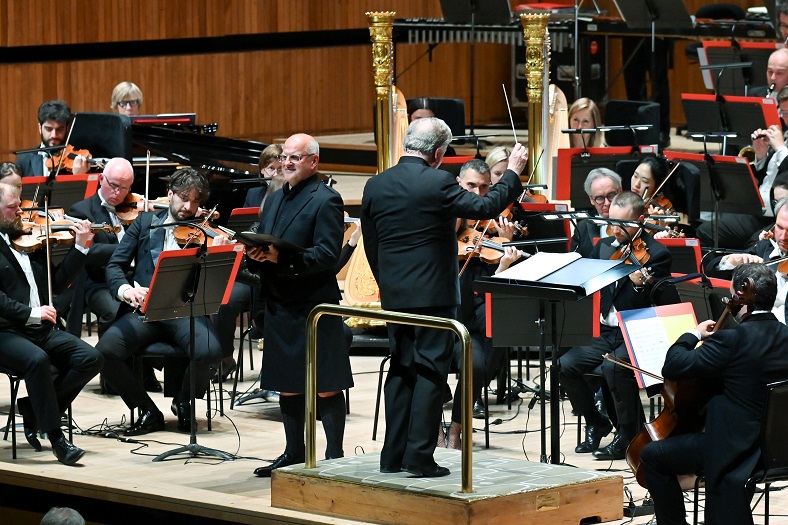
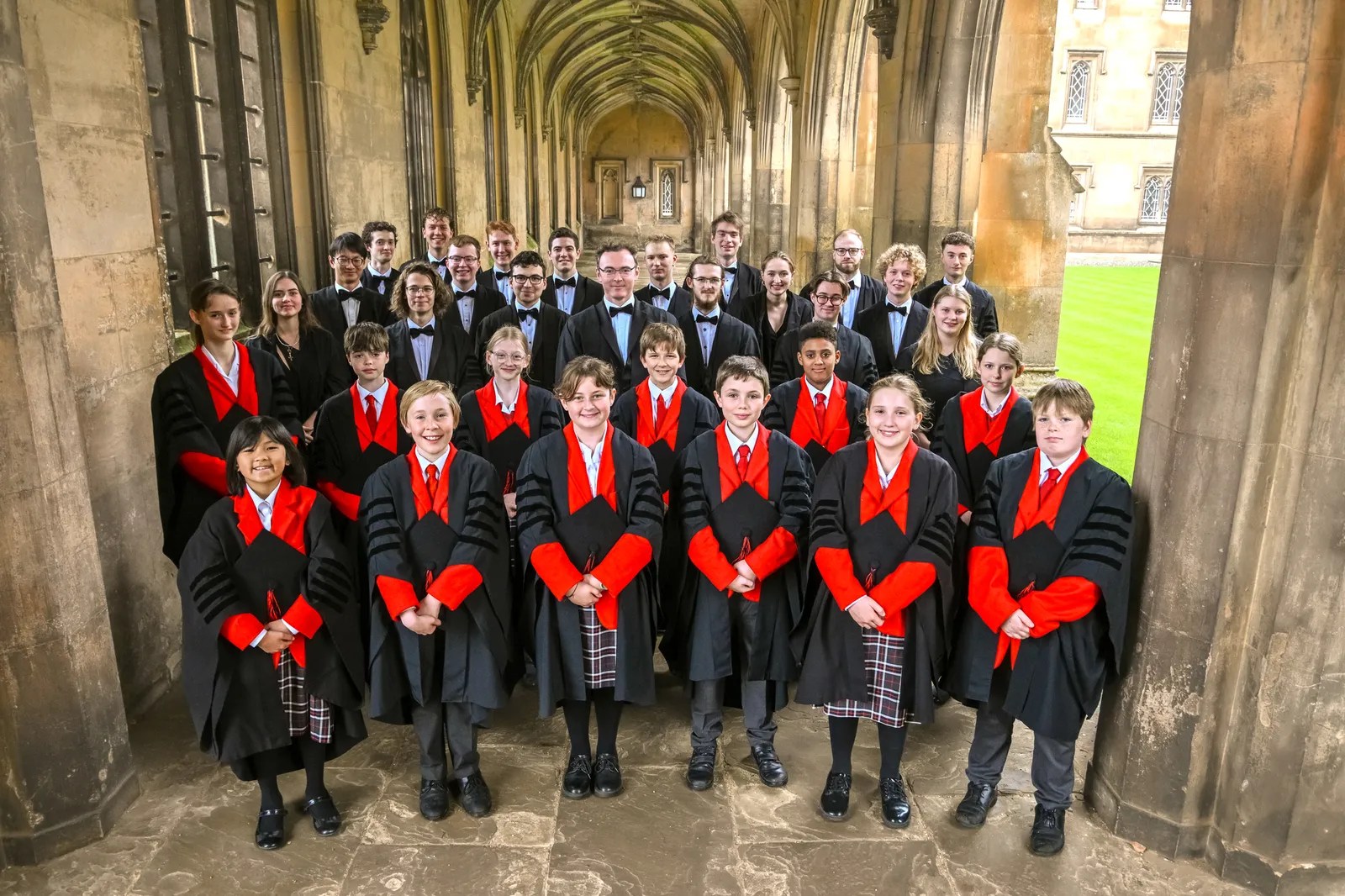
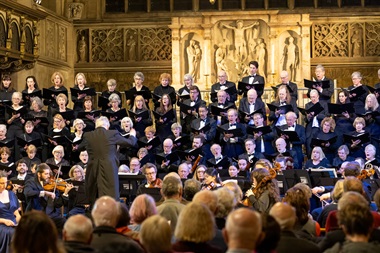
What a lovely idea to bring a concert of Christmas Carols to the last of the BBC Radio 3 Lunchtime Concerts held in the Wigmore Hall in 2025. The Choir of St. John’s College Cambridge, suitably attired, were led in a stirring yet thought-provoking programme by their conductor Christopher Gray, who have just released O Holy Night, an album of Christmas carols, on Signum Classics.

Yet much of the selection here went beyond the album’s component parts, exploring responses old and new to specific parts of the Christmas story. In a curious twist, the oldest music heard proved to be the most adventurous and emotive.

The concert began with an account of Sally Beamish’s In the stillness which was notable for its crystal clear intonation and enunciation, features the choir would display throughout the concert. John Rutter’s There is a flower fared equally well, the anthem he wrote for the choir leading with a touching treble solo, before the complexities of Robert Parsons’ masterful Ave maria were aligned in commendable phrasing. Similar qualities befell the lively exchanges of counterpoint in Hans Leo Hassler’s Verbum caro factum est, before the remarkable invention of the teenage Britten was found in A Hymn to the Virgin, music that looks simultaneously forward and backward.

The choir performed these carols in carefully arranged sequences, ideally programmed for tonality and emotive impact. Walton’s exuberant All this time began the second sequence, the choir enjoying the push-pull rhythms, after which In dulci jubilo switched on its ever-beautiful light in the darkness, casting a spell in spite of a slightly ragged second verse. The clever text setting of Hieronymus Praetorius – not the normally performed Michael! – was especially enjoyable in his Magnificat setting, before the clarity of carols from Canadian composer Eleanor Daley and Brit Elizabeth Poston was beautifully achieved. The latter’s Jesus Christ The Apple Tree was particularly moving in the simplicity with which its paragraphs end.

The mood darkened appreciably for George Kirbye’s lament Vox in Rama, the inconsolable Rachel weeping for the loss of her children in the massacre ordered by King Herod, while the Coventry Carol too sounded sombre in this company. All the more reason to end with a characterful account of Jonathan Dove’s The Three Kings, brilliantly characterised by the trebles especially.

Two encores followed – a breathless and exciting arrangement of Adam lay ybounden by Laura Sheils, then a close-harmony version of We Wish You A Merry Christmas, channelling Cole Porter to show-stopping effect. It was the musical equivalent of a mince pie with extra brandy, the ideal way to send the Wigmore Hall audience humming into the afternoon!

You can listen to the concert on BBC Sounds here, and explore the choir’s recent discography at the Signum Classics website.

Published post no.2,750 – Tuesday 16 December 2025
In concert – The London Chorus and New London Orchestra / Adrian Brown: VE Day 80th Anniversary Concert @ Holy Trinity Church, Sloane Square

Petroc Trelawny (orator), The London Chorus, New London Orchestra / Adrian Brown

Vaughan Williams Six Choral Songs (1940)
Martinů Memorial to Lidice (1943)
Walton Spitfire Prelude and Fugue (1942)
Bliss Morning Heroes (1929-30)
Holst/Rice I Vow to Thee My Country (1921)

Holy Trinity Church, Sloane Square, London
Thursday 9 May 2025

Reviewed by Richard Whitehouse

The London Chorus and New London Orchestra have put on notable concerts in recent years, few more ambitious than this programme to mark not merely the 80th anniversary of Victory in Europe Day but also the 50th anniversary of Sir Arthur Bliss’s death in appropriate manner.

The first half comprised an unlikely but effective sequence of pieces written at the start of or during the Second World War. Rarely revived as such, Vaughan Williams’s Six Choral Songs to be Sung in Time of War works well as a whole: settings of Shelley that touch on aspects of courage, liberty, healing, victory, then pity, peace and war – before A Song to the New Age characterizes its utopian leanings in subdued and even ambivalent terms which seem typical of its composer. Suffice to add that the London Chorus had the full measure of its aspiration.

Two succinct if otherwise entirely different pieces brought out the best from the New London Orchestra. Rarely so overt in emotion, Martinů was well-nigh explicit when commemorating Nazi atrocities in music of plangent harmonies and chorale-like fervency both evocative and affecting. Derived from his score to the film The First of the Few, Walton had come up with a showpiece whose ceremonial prelude is vividly countered by its incisive fugue – making way for a brief if poignant interlude before matters are brought to a head in the rousing peroration.

Although intimately bound up with the First World War, Morning Heroes is wholly apposite for the present context. Conceived as the exorcism of his wartime experiences, Bliss’s choral symphony elides deftly between a distant past and its present; the first of its five movements featuring an orchestral introduction to set out the underlying mood and salient motifs, before Hector’s Farewell to Adromache had Petroc Trelawny eloquently evoking that scene on the ramparts of Troy without excess rhetoric. Adrian Brown’s understated direction meaningfully pointed up the expressive contrast between this and The City Arming – the setting of Walt Whitman whose interaction of chorus and orchestra was powerfully sustained right through   to the simmering unease at its close, with the onset of hostilities in the American Civil War.

The two parts of the central movement saw each section of the London Chorus come into its own: the women in Vigil, a confiding take on lines by Li-Tai-Po (Li Bai) such as relates the emotions of those left behind; and the men in The Bivouac’s Flame, plangently evoking life at the front with further lines from Whitman’s Drum Taps. Choral forces reunite in Achilles Goes Forth to Battle, a setting from later in The Iliad which brings about the work’s climax via The Heroes – a rollcall commemorating those of Antiquity. After this, the starkness of Wilfred Owen’s Spring Offensive is the greater for its sparse accompaniment – Trelawny’s oration a model of understatement as this segued into the setting of Robert Nichols’s Dawn on the Somme with those ‘morning heroes’ themselves evoked affirmatively if fatalistically.

A concert which ended in fine style with Holst’s stirring anthem had begun in subdued fashion with Dawn on the SommeRonald Corp’s elegy, given hours after his death was announced. Someone who had always given his all to this chorus and orchestra, he will be greatly missed.

Ronald Corp OBE (1951-2025)

Published post no.2,530 – Sunday 11 May 2025

In concert – The Bach Choir, Philharmonia Orchestra / David Hill: Delius, Blackford & Walton

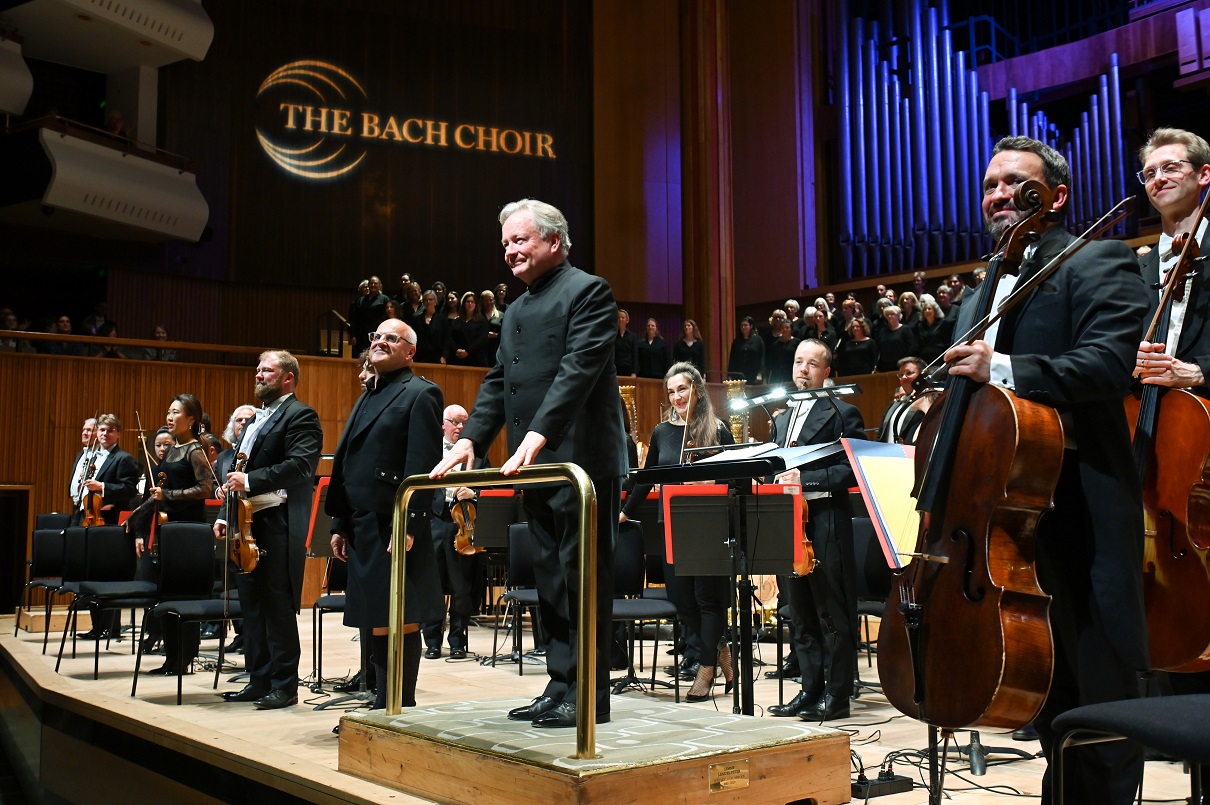
Amy Carson (soprano), Harry Jacques (tenor), Christopher Purves (baritone), The Bach Choir, Philharmonia Orchestra / David Hill

Delius The Song Of The High Hills (1911)
Blackford La Sagrada Familia Symphony (2022, world premiere)
Walton Belshazzar’s Feast (1931)

Royal Festival Hall, London
Thursday 8 May 2025

Reviewed by Ben Hogwood Pictures (c) Chris Christodoulou

This imaginative concert presented three British works telling stories from overseas, their reach extending to Norway, Spain and Babylon respectively.

Although born in Bradford, Frederick Delius spent much of his life abroad, living in America and then France – from where he would visit Norway for many a summer holiday with his wife. One such vacation in 1911 inspired him to write The Song Of The High Hills, a continuous sequence in three sections for wordless choir and orchestra capturing the mountain plateau, or ‘vidda’, that they found on their walks. Images from the plateau were shown on a screen behind the chorus as they performed.

Musically the work draws from Grieg and Debussy (his Nocturnes in especially) but inhabits a world all of its own, Delius achieving an unusual, rapt stillness when describing the high plains. David Hill, a long time exponent of his music, marshalled a strong performance, albeit one that didn’t quite sustain the rarefied atmosphere of the central section. It did cast quite a spell, mind, thanks to a beautiful oboe solo from Timothy Rundle on the approach, and some superbly controlled singing from The Bach Choir, headed by soloists Amy Carson (soprano) and Harry Jacques (tenor). The climax of the middle section was bolstered by three timpani, before the orchestra returned us to base camp. Speeds were on the fast side, but the Philharmonia Orchestra gave consistently luminous textures.

London-born composer Richard Blackford has shown considerable flair when writing for orchestra, and this was immediately evident in the world premiere of his La Sagrada Famila Symphony. Completed in 2022 and already recorded on the Lyrita label, it is a musical response to a 2019 encounter with Gaudí’s vision, concentrating on three great facades of the building – Nativity, Passion and Glory.

Blackford’s symphony was rich in colour but also vividly descriptive, his responses matched by an accompanying film, directed by the composer. Nativity began with awe-inspiring salvos from the brass but grew into a more intimate study, with elements of Hindemith and Berg in the orchestral writing, before a propulsive passage threw off the shackles. Passion was the emotional centrepiece, a vivid study in the brutality of the Good Friday story. Grotesque elements were emphasised by sudden closeups of Josep Maria Subirachs’s sculptures, their drawn expressions reflected in the music. The death of Christ was especially notable, marked by a solo of moving eloquence from cellist Martin Smith, then a sharp cry of dismay from Mark van de Wiel’s clarinet.

Glory was less obviously jubilant than might have been expected, mystical and reverent, but again it was an accurate response to the imagery as the film briefly went inside the massive structure. Blackford’s imagery danced in the listener’s mind on its own merits, with the thrilling surge at the end, bolstered by the organ, reminiscent of Messiaen or Scriabin. David Hill secured a fine performance from the Philharmonia, bringing the splendour of Gaudí’s cathedral to the concert hall. The emphatic finish brought with it a reminder of the building’s likely completion in 2026, a mere 144 years after construction began!

A British choral classic followed in the second half. Belshazzar’s Feast was initially denounced by Sir Thomas Beecham (a Delius fan, coincidentally) but Walton’s cantata has become a popular occasion piece. It is a vivid account of Babylonian decadence, before a human hand appears, writing on the wall of the banqueting hall to prophesy Belshazzar’s downfall. David Hill applied expert pacing to the storytelling, the Bach Choir on top form as the tension grew, spilling over into the exultant Praise Ye section. The paeans to the Babylonian Gods were starkly thrilling, contrasted by the terrifying unison shout of “Slain!” at Belshazzar’s death. The Philharmonia were superb, too, offstage brass bringing widescreen sound from either side of the stage and the percussion giving brilliant descriptions of the elements – iron and wood especially.

When the writing on the wall began, an ominous hush descended on the choir, the orchestra spreading a macabre chill through the hall – before the triumph of the closing pages, the Israelites free at last. Baritone Christopher Purves was a fine soloist, narrating the events and capturing the mood throughout. With 220+ in the choir, our ears were ringing long after the concert had finished, a timely reminder of a ruler whose inflated ego had brought about his downfall. Could there be any parallels in today’s world, I wonder?

For details on the their 2024-25 season, head to the Philharmonia Orchestra website

Published post no.2,529 – Saturday 10 May 2025

In concert – Eugene Tzikindelean, CBSO / Kazuki Yamada: Elgar Violin Concerto & Walton Symphony no.2

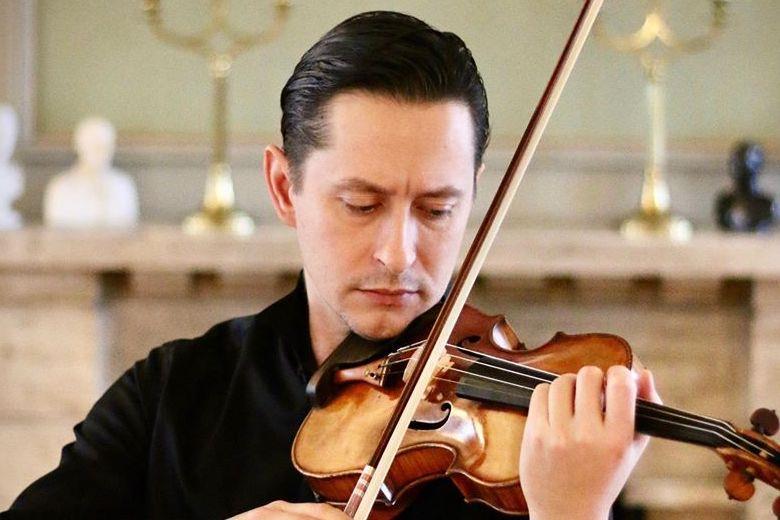
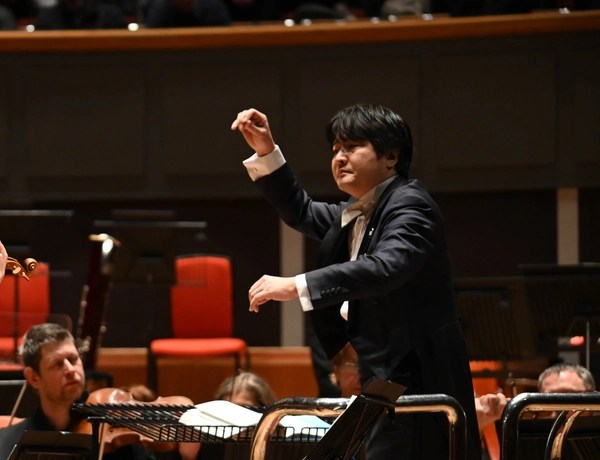
Eugene Tzikindelean (violin, above), City of Birmingham Symphony Orchestra / Kazuki Yamada (below)

Elgar Violin Concerto in B minor Op.61 (1909-10)
Walton Orb and Sceptre (1952-3)
Walton Symphony no.2 (1957-60)

Symphony Hall, Birmingham
Wednesday 4 December 2024

Reviewed by Richard Whitehouse

His tenure so far as music director of the City of Birmingham Symphony Orchestra has shown Kazuki Yamada to have real sympathy for British music, hence it was no surprise to encounter this programme of works by Elgar and Walton, which itself proved (unexpectedly?) satisfying.

Following on his highly regarded performances of Nielsen and Walton over previous seasons, CBSO leader Eugene Tzikindelean took on Elgar’s Violin Concerto for a reading which was fine if not consistently so. The opening movement, in particular, lacked forward momentum in its restless first theme so that not enough contrast was established with its rapt successor – the highlights being Yamada’s vigorous handling of its orchestral introduction and a development as powerfully sustained as it was combatively rendered. Tzikindelean was more fully at home with the central Andante, its variously reflective and heartfelt melodies drawn into a seamless continuity enhanced by a notably beguiling response from the CBSO woodwind. Whether or not the most profound of Elgar’s slow movement, this is arguably his most perfectly achieved.

The finale was, for the most part, equally successful – this being hardly the first performance setting off at a suitably incisive tempo, only to lose impetus once the poised second theme has entered the frame. Not that there was insufficient energy to make the emergence of its lengthy accompanied cadenza other than startling – this latter proceeding with a suffused mystery and poignancy, not least in recalling previous themes, as finds Elgar as his most confessional; the movement then resuming its earlier course as it surged on to a decisive and affirmative close.

Although his later orchestral works have never quite fallen into obscurity, Walton’s tended to fare better in the US than in the UK. Not least the coronation march Orb and Sceptre – all too easily denigrated next to the opulent grandeur of predecessor Crown Imperial, but evincing a jazzy lack of uninhibition and, in its trio, a suavity Yamada clearly relished in the company of an orchestra that made benchmark recordings with Louis Frémaux almost half a century ago. Even the latter could not summon the pizzaz conveyed here with that trio’s infectious return.

Walton’s Second Symphony has been equivocally regarded ever since its Liverpool premiere, but Yamada clearly harboured few doubts as to its conviction. The opening Allegro unfolded methodically if remorselessly, its main themes subtly yet meaningfully differentiated not least in bringing out the compositional mastery of sizable orchestral forces. Nor was there any lack of pathos in the ensuing Lento, its ominous tones denoting music shot through with intensely ambivalent emotion. Much the most difficult movement to sustain, the final Passacaglia was no less successful – Yamada binding its successive variations into a tensile if never inflexible whole, while making a virtue of Walton’s premise that a 12-note theme can resolve effortlessly in tonal terms at the peroration: a journey as fascinating as its destination proved exhilarating.

Interesting to note this concert was ‘being recorded for future release;, given the Walton was undoubtedly an account to savour. Yamada is back with the CBSO next week in a programme which pairs Mozart’s penultimate piano concerto and Bruckner’s (unfinished) final symphony.

For details on the 2024-25 season A Season of Joy, head to the City of Birmingham Symphony Orchestra website. Click on the names to read more about CBSO leader, violinist Eugene Tzikindelean – and the orchestra’s principal conductor Kazuki Yamada

Published post no.2,386 – Saturday 7 December 2024

In concert – Fenella Humphreys, ESO Youth Symphony Orchestra / James Topp: Walton, Heathfield & Korngold

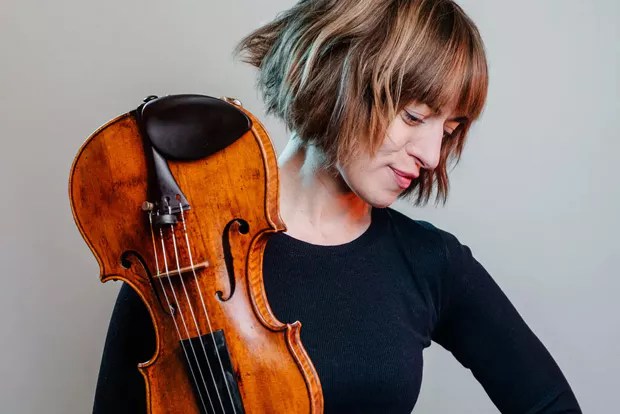
Fenella Humphreys (violin, below), ESO Youth Symphony Orchestra / James Topp

Walton Prelude and Fugue ‘The Spitfire’ (1942)
Korngold Violin Concerto in D, Op. 35 (1945)
Heathfield JAZZ HORSE (2024) [World Premiere]
Korngold arr. Russ The Sea Hawk – Suite (1940)
Walton arr. Matheson/ed. Lloyd-Jones Henry V – Suite (1944, arr. 1963)

The Bradshaw Hall, Royal Birmingham Conservatoire, Birmingham
Friday 23 August 2024

Reviewed by Richard Whitehouse

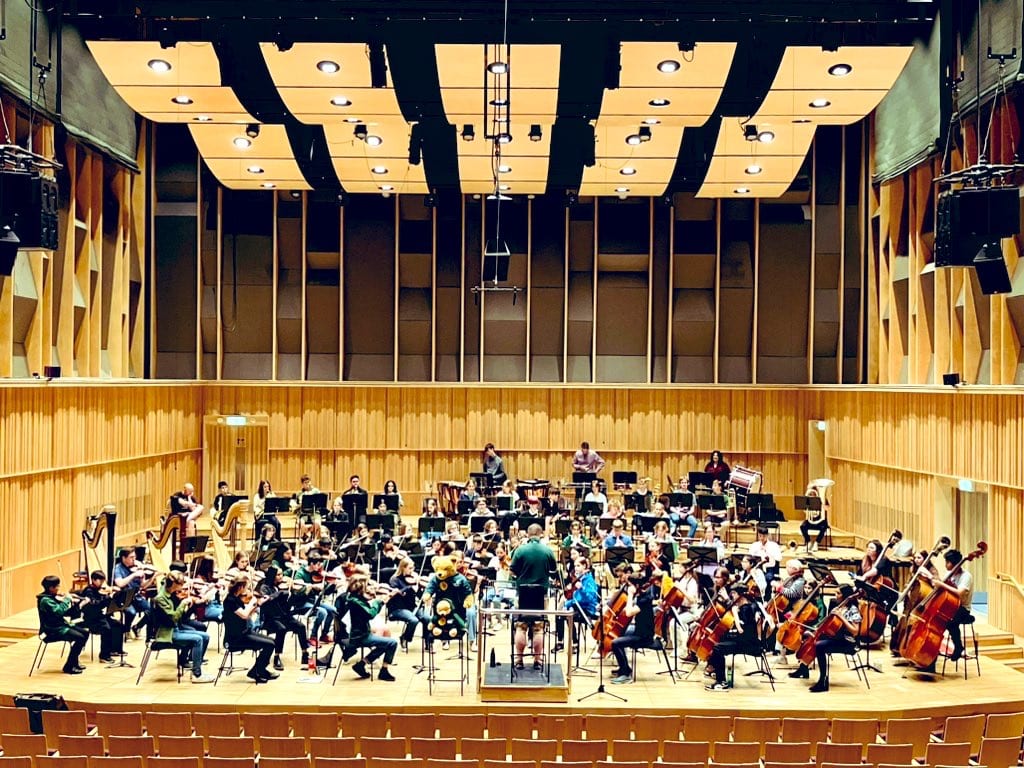
The English Symphony Orchestra’s annual Summer Course reached its climax this evening with a concert by its Youth Symphony Orchestra as ranged across film music from the mid-20th century, and in various guises from straightforward adaptation to wholesale reworking.

Whether or not those films for which he provided music have stood the test of time, Walton’s is a significant contribution to the cinema. As adapted from The First of the Few, his ‘Spitfire’ Prelude and Fugue remains one of his most characteristic such pieces and this performance did full justice to the prelude’s martial tread as to the fugue’s driving impetus, though James Topp was mindful to ensure the pastoral interlude (just before the return of the main theme) yielded an intimacy as underlined the essentially personal nature of this now underrated film.

Whereas Walton’s metier was in wartime or theatrical subjects, that of Korngold centred on Hollywood ‘blockbusters’ which required scores of suitably emotional opulence. Several of these found an equally appropriate home in the Violin Concerto completed at the end of the Second World War, whose formal cohesion prevents any risk of its expressive power losing focus. This was certainly the impression as conveyed by Fenella Humphreys – notably the ardency of her take on the opening Moderato, with a central Romance as ingenious in its trajectory as it was eloquent in content. Nor was there any lack of energy in a final Allegro with repartee between soloist and orchestra at its most engaging and not least in its closing stages, when a resplendent version of the main theme is outflanked by the uproarious coda.

After the interval, a sinisterly attired Finn Heathfield put members of the orchestra through their collective paces with JAZZ HORSE, described as ‘‘a collection of improvisations and performance exercise rooted by the rhythm section’s bass motif (thus F-Ab-Bb-Eb). It duly provided a telling foil to the suite (here arranged by Patrick Russ) from Korngold’s score to The Sea Hawk; a sequence capturing this film’s overall panache as surely as its resourceful writing for percussion and a reminder of a composer who should never be underestimated.

The programme concluded with more Walton and the suite from his score to Henry V – now remembered as a star-vehicle for Laurence Olivier, but which at the time played a necessary role in the British war-effort. Muir Matheson’s adaptation features most of the highlights and, as edited by the late David Lloyd-Jones, takes in more from the Overture in its evoking The Globe Playhouse via Elizabethan stylizations these players audibly relished. The sombreness of The Death of Falstaff and calm ecstasy of Touch Her Soft Lips and Part were rendered with no less insight, while the Charge and Battle placed between them brought a frisson of excitement set in relief by a poetic evocation of the Baïlerò at the close. Building intently to its joyous close, the Agincourt Song provided a rousing end to the suite and to this concert.

Another Summer Course Concert completed – its success not, as Topp indicated, to be taken for granted given the logistical and financial obstacles in bringing 91 musicians to this level of attainment. Hopefully such considerations will not become insurmountable in the future.

For details on the artists, click on the names to read more about Fenella Humphreys, James Topp, the ESO Youth Orchestra and the English Symphony Orchestra – and for more on composer Finn Heathfield

Published post no.2,282 – Monday 26 August 2024