In concert – Hyeyoon Park, CBSO / Alexander Shelley: Gershwin, Florence Price, Ravel & Stravinsky

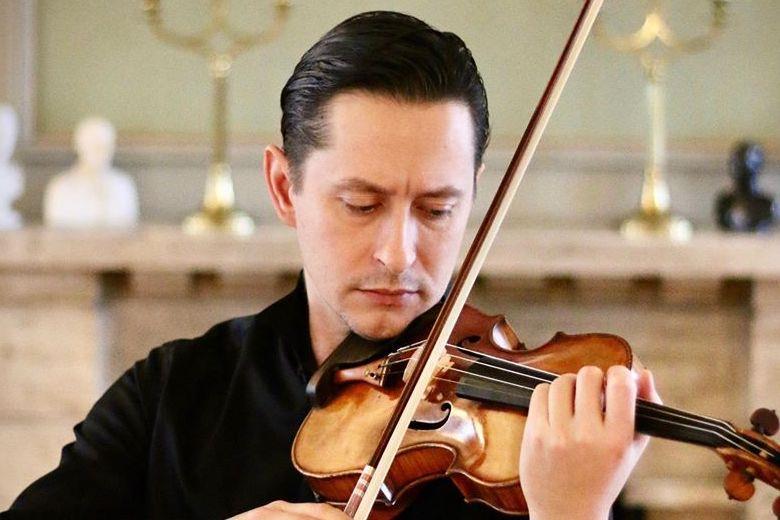
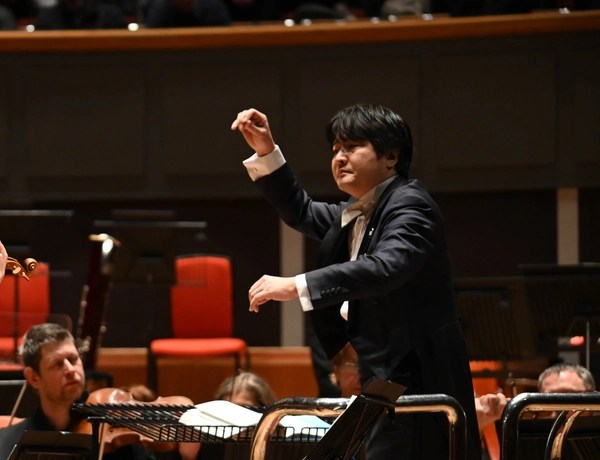
Hyeyoon Park (violin, above), City of Birmingham Symphony Orchestra / Alexander Shelley (below)

Gershwin An American in Paris (1928)
Price Violin Concerto no.2 in D minor (1952)
Price arr. Farrington Adoration (1951)
Ravel Le Tombeau de Couperin (1914-17, orch. 1919)
Stravinsky The Firebird – suite (1910, arr. 1919)

Symphony Hall, Birmingham
Thursday 20 February 2025 (2:15pm)

Reviewed by Richard Whitehouse

Although he holds major posts in Canada and Naples and has a longstanding association with the Royal Philharmonic, Alexander Shelley seems not previously to have conducted the City of Birmingham Symphony Orchestra, and this afternoon’s concert made one hope he will return soon.

An American in Paris was a tricky piece with which to open proceedings, but here succeeded well on its own terms. Somewhere between tone poem and symphonic rhapsody, Gershwin’s evocation of a compatriot (maybe himself?) not a little lost in the French capital was treated to a bracingly impulsive and most often perceptive reading. A slightly start-stop feel in those earlier stages ceased well before Jason Lewis’s eloquent though not unduly inflected take on its indelible trumpet melody, with the closing stages afforded a tangible sense of resolution.

Much interest has centred over this past decade on the music of Florence Price – the Chicago-based composer and pianist, much of whose output was thought lost prior to the rediscovery of a substantial cache of manuscripts in 2009. One of which was her Second Violin Concerto, among her last works and whose 15-minute single movement evinces a focus and continuity often lacking in her earlier symphonic pieces (not least a Piano Concerto which Birmingham heard a couple of seasons ago). Its rich-textured orchestration (but why four percussionists?) is an ideal backdrop for the soloist to elaborate its series of episodes commanding, ruminative then impetuous, and Hyeyoon Park made the most of her time in the spotlight for an account that presented this always enjoyable while ultimately unmemorable work to best advantage.

The concerto being short measure, Park continued with an ideal encore. Written for solo organ, Price’s Adoration was given in Iain Farrington’s arrangement that brought out its elegance and warmth, if also an unlikely resemblance to Albert Fitz’s ballad The Honeysuckle and the Bee.

After the interval, music by composers from whom Gershwin had sought composition lessons when in Paris. Orchestral forces duly scaled down, Ravel’s Le Tombeau de Couperin was at its best in a deftly propelled Forlane, the alternation of verses with refrains never outstaying its welcome, then a Menuet whose winsome poise – and delectable oboe playing from Hyun Jung Song – emphasized the ominous tone of its central section. The Prélude was a little too skittish, while a capering Rigaudon was spoiled by an excessive ritenuto on its final phrase.

Interesting how the 1919 suite from Stravinsky’s The Firebird has regained a popularity it long enjoyed before renditions of the complete ballet became the norm. Drawing palpable mystery from its ‘Introduction’, Shelley (above) secured a dextrous response in Dance of the Firebird then an alluring response from the woodwind in Khovorod of the Princesses. Contrast again with the Infernal Dance of King Kashchei, even if its later stages lacked a measure of adrenalin, then the Berceuse had a soulful contribution by Nikolaj Henriques and fastidiously shaded strings. Hardly less involving was the crescendo into the Finale, started by Zoe Tweed’s poetic horn solo and culminating in a peroration with no lack of spectacle. It made an imposing end to this varied and cohesive concert, one that confirmed Shelley as a conductor with whom to reckon.

For details on the 2024-25 season A Season of Joy, head to the City of Birmingham Symphony Orchestra website. Click on the names to read more about violinist Hyeyoon Park, and conductor Alexander Shelley, or for more on composer Florence Price

Published post no.2,453 – Saturday 22 February 2025

In concert – Isabelle Faust, CBSO / Kazuki Yamada: Akio Yashiro: Symphony, Shostakovich: Violin Concerto no.2 & Bartók Dance Suite

Isabelle Faust (violin, above), City of Birmingham Symphony Orchestra / Kazuki Yamada (below)

Bartók Dance Suite BB86a (1923)
Shostakovich Violin Concerto no.2 in C sharp minor Op.129 (1967)
Yashiro Symphony for Large Orchestra (1958) [UK Premiere]

Symphony Hall, Birmingham
Wednesday 5 February 2025

Reviewed by Richard Whitehouse Picture of Isabelle Faust (c) Felix Broede

It may not have been a popular programme, but tonight’s concert by the City of Birmingham Symphony Orchestra drew a pretty decent attendance in music clearly to the liking of music director Kazuki Yamada, who duly gave of his best for what proved a memorable evening.

Often seen as a breakthrough work in terms of its fusing indigenous musical expression with Western formal conceits, Bartók’s Dance Suite makes an ideal concert-opener. At its best in the rhythmic propulsion or harmonic astringency of the second and third dances, the present account felt a touch inhibited elsewhere; Yamada making overmuch of rhetorical pauses that should motivate rather than impede ongoing momentum. Not that this precluded a forthright response from the CBSO, pianist James Keefe making the most of his time in the spotlight.

Although not now the rarity it once was, Shostakovich’s Second Violin Concerto will always lag behind its predecessor as to performance. Coming near the outset of its composer’s final decade, its inwardness and austerity belie its technical difficulties – though these latter were rarely an issue for Isabelle Faust, who kept the initial Moderato on a tight if never inflexible rein so its demonstrative outbursts and speculative asides were more than usually integrated. Even finer was the central Lento, muted anguish finding potent contrast with plangent solo passages, and a closing contribution from horn player Elspeth Dutch of subdued pathos. Nor was the final Allegro an anti-climax, Faust drawn into engaging confrontation with timpani and tom-tom then heading to a denouement with more than a touch of desperation in its hilarity.

Inquiring listeners may have encountered a recording in Naxos’s Japanese Classics series of a Symphony by Akio Yashiro (1929-76). One of the first group of Japanese composers to study in Europe after the Second World War, his limited yet vital output witnesses a determined and distinctive attempt to fuse certain native elements with the more radical aspects of timbre and texture stemming from the West. Messiaen (with whom he studied) is audible in the fastidious harmonies of this work’s Lento that, building from pensive melodies on flute and cor anglais into a threnody of real emotional power, is its undoubted highlight. Otherwise, the music feels more akin to that of André Jolivet (whose three symphonies deserve revival) in its abundant orchestral colour and predilection for rhythmic ostinatos that galvanize the musical argument.

Such is evident in the implacable unfolding of a Prelude whose motivic ideas secure a more purposeful accord in the ensuing Scherzo, while the finale draws upon the slow movement’s intensity as it expands over successive waves of activity to an impetuous Allegro of no mean velocity prior to a seismic, even brutal peroration. Whatever its intermittent lack of subtlety and cohesion, Yashiro’s Symphony remains an imposing musical edifice such as makes one regret that the composer never managed to pen its successor during his subsequent 18 years.

It certainly found the CBSO at its collective best, so making one hope that Yamada (above) might yet schedule pieces by such as Toshiro Mayuzumi or Sadao Bekku. His next concert has a rather more familiar symphony by Tchaikovsky in the orchestra’s annual Benevolent Fund Concert.

For details on the 2024-25 season A Season of Joy, head to the City of Birmingham Symphony Orchestra website. Click on the names to read more about violinist Isabelle Faust and the CBSO chief conductor Kazuki Yamada, and also the composer Akio Yashiro’s symphony

Published post no.2,438 – Friday 7 February 2025

In concert – Eugene Tzikindelean, CBSO / Kazuki Yamada: Elgar Violin Concerto & Walton Symphony no.2

Eugene Tzikindelean (violin, above), City of Birmingham Symphony Orchestra / Kazuki Yamada (below)

Elgar Violin Concerto in B minor Op.61 (1909-10)
Walton Orb and Sceptre (1952-3)
Walton Symphony no.2 (1957-60)

Symphony Hall, Birmingham
Wednesday 4 December 2024

Reviewed by Richard Whitehouse

His tenure so far as music director of the City of Birmingham Symphony Orchestra has shown Kazuki Yamada to have real sympathy for British music, hence it was no surprise to encounter this programme of works by Elgar and Walton, which itself proved (unexpectedly?) satisfying.

Following on his highly regarded performances of Nielsen and Walton over previous seasons, CBSO leader Eugene Tzikindelean took on Elgar’s Violin Concerto for a reading which was fine if not consistently so. The opening movement, in particular, lacked forward momentum in its restless first theme so that not enough contrast was established with its rapt successor – the highlights being Yamada’s vigorous handling of its orchestral introduction and a development as powerfully sustained as it was combatively rendered. Tzikindelean was more fully at home with the central Andante, its variously reflective and heartfelt melodies drawn into a seamless continuity enhanced by a notably beguiling response from the CBSO woodwind. Whether or not the most profound of Elgar’s slow movement, this is arguably his most perfectly achieved.

The finale was, for the most part, equally successful – this being hardly the first performance setting off at a suitably incisive tempo, only to lose impetus once the poised second theme has entered the frame. Not that there was insufficient energy to make the emergence of its lengthy accompanied cadenza other than startling – this latter proceeding with a suffused mystery and poignancy, not least in recalling previous themes, as finds Elgar as his most confessional; the movement then resuming its earlier course as it surged on to a decisive and affirmative close.

Although his later orchestral works have never quite fallen into obscurity, Walton’s tended to fare better in the US than in the UK. Not least the coronation march Orb and Sceptre – all too easily denigrated next to the opulent grandeur of predecessor Crown Imperial, but evincing a jazzy lack of uninhibition and, in its trio, a suavity Yamada clearly relished in the company of an orchestra that made benchmark recordings with Louis Frémaux almost half a century ago. Even the latter could not summon the pizzaz conveyed here with that trio’s infectious return.

Walton’s Second Symphony has been equivocally regarded ever since its Liverpool premiere, but Yamada clearly harboured few doubts as to its conviction. The opening Allegro unfolded methodically if remorselessly, its main themes subtly yet meaningfully differentiated not least in bringing out the compositional mastery of sizable orchestral forces. Nor was there any lack of pathos in the ensuing Lento, its ominous tones denoting music shot through with intensely ambivalent emotion. Much the most difficult movement to sustain, the final Passacaglia was no less successful – Yamada binding its successive variations into a tensile if never inflexible whole, while making a virtue of Walton’s premise that a 12-note theme can resolve effortlessly in tonal terms at the peroration: a journey as fascinating as its destination proved exhilarating.

Interesting to note this concert was ‘being recorded for future release;, given the Walton was undoubtedly an account to savour. Yamada is back with the CBSO next week in a programme which pairs Mozart’s penultimate piano concerto and Bruckner’s (unfinished) final symphony.

For details on the 2024-25 season A Season of Joy, head to the City of Birmingham Symphony Orchestra website. Click on the names to read more about CBSO leader, violinist Eugene Tzikindelean – and the orchestra’s principal conductor Kazuki Yamada

Published post no.2,386 – Saturday 7 December 2024

In concert – Dame Sarah Connolly, CBSO Choruses, CBSO / Sofi Jeannin: The Music Makers

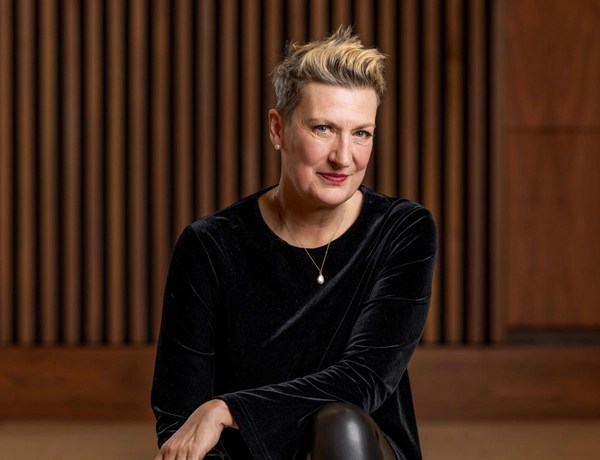
Dame Sarah Connolly (mezzo-soprano), CBSO Children’s Chorus, CBSO Youth Chorus, CBSO Chorus, City of Birmingham Symphony Orchestra / Sofi Jeannin

Weir Music, Untangled (1992)
Muhly Friday Afternoons (2015, orch. 2019) [UK Premiere]
Britten The Young Person’s Guide to the Orchestra Op.34 (1945)
Elgar The Music Makers Op.69 (1912)

Symphony Hall, Birmingham
Wednesday 20 November 2024

Reviewed by Richard Whitehouse Pictures (c) Andrew Crowley (Dame Sarah Connolly), (c) Radio France / Christophe Abramowitz (Sofi Jeannin)

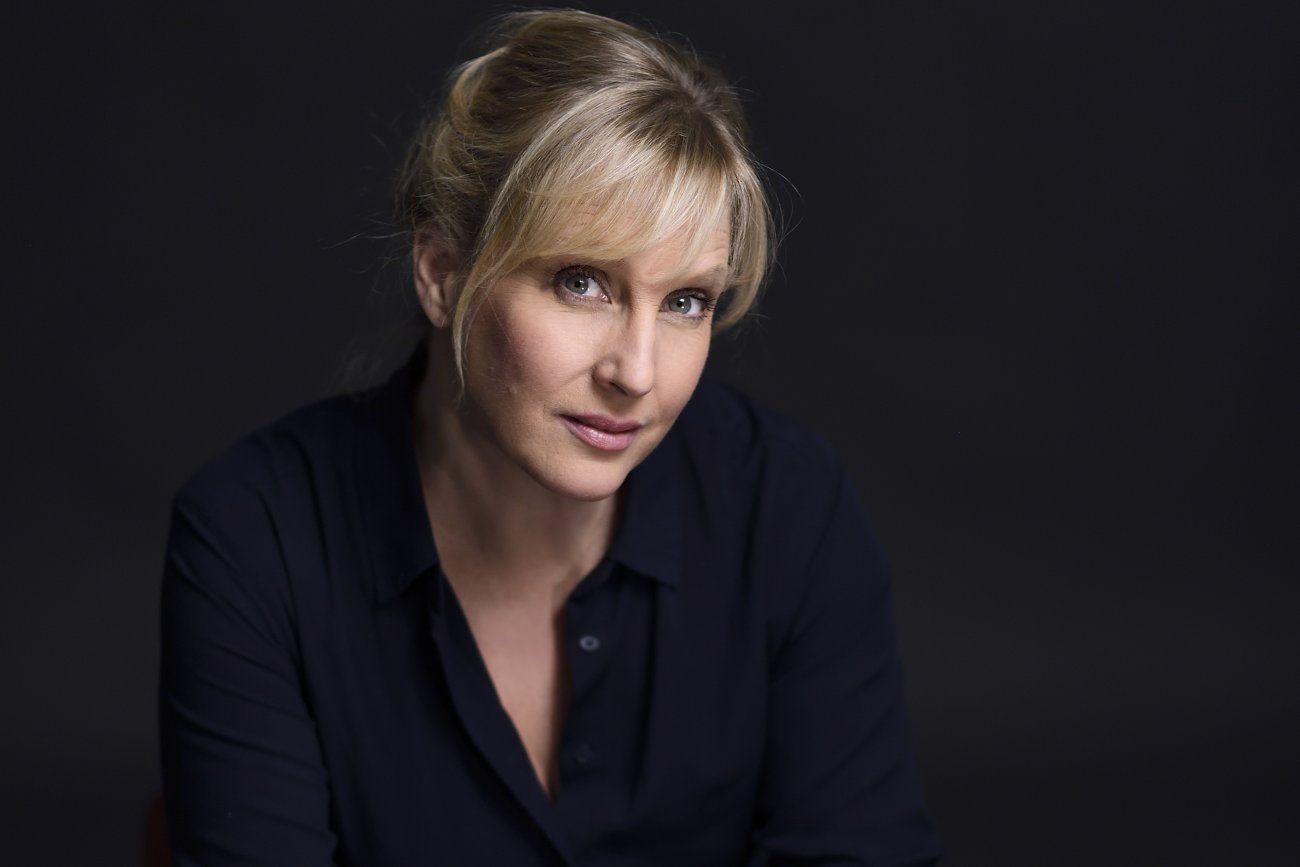
Under the capable direction of Swedish-born Sofi Jeannin (below), the City of Birmingham Symphony Orchestra tonight took on a varied if cohesive programme featuring two composers with direct links to the city, one of whose works had been performed for the first time here 112 years ago.

Although he might not be so associated with Birmingham, Nico Muhly is hardly an unknown quantity. Friday Afternoons proved a diverting and enjoyable traversal across eight traditional poems – directly yet unaffectedly recalling Britten in their simplicity of choral writing with, in this instance, a resourceful and often evocative orchestration that brought out subtle and quite unexpected nuances from these texts. Qualities that the combined CBSO Youth and Children’s Choruses responded to with alacrity, doubtless owing to the astute guidance of Julian Wilkins.

Beforehand, the orchestra made no less favourable a response in Music, Untangled by Judith Weir, former Master of the Queen’s Music and composer-in-association to the CBSO during 1995-98. Written for the Boston Symphony, this not unreasonably American-sounding piece takes extracts from melodies emanating from the Western isles of Weir’s native Scotland as the basis for a compact if eventful piece where said melodies are gradually fined down from sonic diversity to a single strand through a process of ‘less is more’ typical of this composer.

Closing the first half, what had started out as Britten’s ‘Variations and Fugue on a Theme of Purcell’ received an engaging performance at its best in those variations highlighting specific instruments – in the course of which the excellence of the individual CBSO sections came to the fore. Presentation of the theme itself was a little on the portentous side, a quality which re -surfaced in a fugue whose clarity of texture seemed at the expense of that exuberance when Britten puts his orchestra back-together. An enjoyable take on a timeless masterpiece even so.

Despite its high-profile launch at the 1912 Triennial Festival, Elgar’s The Music Makers has struggled to find general favour – his setting of Arthur O’Shaughnessy’s Ode intensifying the text’s ambivalence and introspection via a wealth of self-quotation such as renders several of his most acclaimed pieces from an unlikely or even disturbing perspective. Together with its near-contemporary work, the symphonic study Falstaff, this is Elgar at his most searching as well as confessional – qualities such as the encroaching ‘Great War’ would duly exacerbate.

Despite its modest (35-minute) duration, The Music Makers is a difficult work to pace and to make cohere and, while Jeannin (an experienced choral conductor) did not wholly succeed in these respects, there was no doubt as to her insight into its content or defining of its emotions. Prepared by Simon Halsey (who first ‘gave’ this work with Simon Rattle some 40 years ago), the CBSO Chorus lacked little in conviction or finesse – and, if Dame Sarah Connolly was not quite at her most assured, the sheer eloquence and conviction of her singing could never be denied.

A fine account, then, of a work still in need of such advocacy for its inherent greatness to be acknowledged. Interesting also that audience response was warm if undeniably muted – as if to confirm, on this occasion at least, the music’s ‘message’ had got through to those listening.

For details on the 2024-25 season A Season of Joy, head to the City of Birmingham Symphony Orchestra website. Click on the names to read more about soloist Dame Sarah Connolly, conductor Sofi Jeannin and composers Nico Muhly and Dame Judith Weir

Published post no.2,372 – Sunday 24 November 2024

In concert – Steven Osborne, CBSO / Kerem Hasan: Coleman, Grieg & Beethoven

Steven Osborne (piano), City of Birmingham Symphony Orchestra / Kerem Hasan (above)

Coleman Umoja: Anthem for Unity (2001, orch. 2019)
Grieg Piano Concerto in A minor Op.16 (1868)
Beethoven Symphony no.4 in B flat major Op.60 (1806)

Symphony Hall, Birmingham
Thursday 7 November 2024, 2.15pm

Reviewed by Richard Whitehouse Picture (c) Tristan Fewings

Highly regarded for his work with Welsh National Opera and his five years at the helm of the Tyrolean Symphony, British-Cypriot conductor Kerem Hasan’s is a relaxed though attentive presence that resulted in no mean rapport with the City of Birmingham Symphony Orchestra.

Such was evident from the outset of Valerie Coleman’s Umoja. Written for wind quintet, this ‘Anthem for Unity’ (the latter word in Swahili being the title) went through incarnations for wind sextet and concert band before being expanded to a commission from the Philadelphia Orchestra. Essentially a sequence of free-flowing variations on a theme stated by solo violin after an atmospheric introduction, it emerges in sharply contrasted guises before arriving at   a culminative statement – its evocation of ‘unity’ the more powerful for such overt restraint.

If the remainder of this programme consisted of repertoire staples, there was nothing routine or predictable about the performances. Steven Osborne has doubtless given more consistently accurate accounts of Grieg’s Piano Concerto, but his determination here to throw caution to the wind almost always paid off. Not least in an opening movement at its most perceptive in an unusually cohesive development, then a cadenza which ably sustained emotional tension through to a thunderous close. Building to a fervent rendering of its main theme, the Adagio evinced no lack of pathos, and Hasan secured a seamless transition into the finale – its virile main theme tellingly contrasted with that rapturous flute melody (Marie-Christine Zupancic on fine form), which emerged duly transformed as a majestic apotheosis towards the close.

That Hasan was out to make the case for Beethoven’s Fourth Symphony was evident from an introduction whose speculative mystery was tangibly conveyed, thus making contrast with the first movement’s main Allegro the more potent. Nor was the repeat of the exposition a carbon copy of what preceded it, Hasan channelling its impetus into an eventful development whose hushed transition into the reprise brought a surge of adrenalin no less palpable than that of the brief if thrilling coda. The ensuing Adagio might be felt to lack the drama or heroism of those in the symphonies either side, though its wistful main theme accrued considerable profundity on its successive and varied reappearances – not least through the unforced eloquence of the CBSO woodwind in what becomes something of an all-round showcase for that department.

Hasan drove the scherzo sections of the third movement hard, yet there was never any lack of articulation, while the trio sections had all the ingratiating charm needed. Taking the finale at anything that approaches the composer’s metronome marking can easily become a hostage to fortune, but the CBSO held its collective nerve throughout what was an eventful as well as an exhilarating ride – one fully underpinned by Beethoven’s irreverent humour such as comes to the fore in the tonal and emotional punning of those captivating bars that round off this work.

A persuasive case, then, for Beethoven Four as for Hasan’s conducting. Meanwhile, Sunday afternoon brings an intriguing event in the guise of Bach’s Goldberg Variations arranged by Dmitry Sitkovetsky for string ensemble and directed by CBSO leader Eugene Tzikindelean.

For details on the 2024-25 season A Season of Joy, head to the City of Birmingham Symphony Orchestra website. Click on the names to read more about pianist Steven Osborne, conductor Kerem Hasan, and composer Valerie Coleman

Published post no.2,357 – Saturday 9 November 2024