Today, Canadian musician Michael Brook, Grammy-nominated film composer (Heat, The Perks of Being a Wallflower, Into the Wild) and inventor of the ‘infinite guitar’, releases the first vinyl reissue of his 1992 4AD record Cobalt Blue and the vinyl debut of Live at the Aquarium.
These underrated gems from the 4AD catalogue have been newly remastered by Rashad Becker and are presented on Crystal Clear 2×LP and 2CD with artwork by Alison Fielding based on the original v23 designs.
Cobalt Blue is a timeless and quietly stunning collection of instrumental pieces and shimmering dreamscapes, featuring contributions from ambient music pioneer Brian Eno, composer & multi-instrumentalist Roger Eno, and Grammy-winning producer Daniel Lanois. Recorded later that year, Live at the Aquarium captures Brook’s rare solo performance in London, highlighting the hypnotic sustain and atmosphere that define his work.
Michael Brook’s Cobalt Blue & Live at the Aquarium is available from today, 10 July, digitally, on Crystal Clear 2xLP and 2xCD. To order, and for more information, head HERE.
The second Pye Corner Audio studio album for the excellent Sonic Cathedral label is a sequel to Let’s Emerge!, the long player with which he took his bow in 2022. Martin Jenkins, the prolific writer behind the pseudonym, moves further into Balearic warmth with the addition of guitars by Andy Bell, whose work has been enjoyed in this parish for a number of years.
Talking about the album, Jenkins says, “I wanted the whole record to be awash with distortion and saturation, but not in a blown-out guitar amp kind of way. Almost every element has been subject to some form of saturation.”
What’s the music like?
As you might expect, heat-soaked! The album is an ideal blend of electronica and shoegaze, topped off with some restrained euphoria in the form of vocals from Andy Bell and Ian Rankin. Bell proves an ideal match for the dreamy textures of Analogue Dreams, while Cycle goes through the gears with a strong electro bassline. Bell knows when to add propulsion in just the right measure, with a touch of Krautrock here and dubby house there.
Rankin’s involvement is a joy, his spoken word bringing a real frisson to The Breath Of Now, with its low-slung groove right out of the early 1990s. Towards the end of the album the temperature dips, the music cooler to the touch and exploring more shoegaze territory, but the move complements the first half nicely.
Does it all work?
It does – with More Songs About The Sun proving the ideal counterpart to its predecessor.
In this second interview centred around this year’s Aldeburgh Festival, James Baillieu talks to Ben Hogwood about the art of picture painting on the piano in music by Schubert and Britten. Though the festival has since passed, Arcana publishes this interview that also focuses on his Live At The Met album with soprano Lise Davidsen, as well as his work with baritone Benjamin Appl.
Picture credit: David Ruano
My first question to pianist James Baillieu is to ask him to recall his first connection with the Aldeburgh Festival. “The first time I went to the festival was when I was a kid. I have a connection through the Young Artist Programme, but my dad’s mother lived there. A couple of times, as kids from South Africa, we spent summers in Aldeburgh. As a grown-up it would have been the second year of my postgrad studies, where I did one of the masterclasses, and I was chosen to do one of the concerts in the Jubilee Hall the following year. The concert was with the soprano Katherine Broderick, and we did some Clara Schumann, Mendelssohn songs and Robert Schumann.”
Has James always gravitated towards playing piano with singers? “I would say the balance is probably 60/40, between vocal and instrumental repertoire. When I trained in South Africa I was doing a lot of solo repertoire, but in Cape Town there is a huge opera school, so I ended up doing a lot of vocal repertoire just for fun. Coming to London was really a focus of training, and I found I loved the fusion of text and music, and had a very instinctive understanding of voices. I found I could play in a way that could highlight that. It was a lucky thing that I ended up specialising in this field, because it suits the way I play and my instincts.”
The spirit of collaboration also appeals. “What I really love about working with people is that that I’m lucky to have a handful of long-term partnerships. We do a lot together, and there is real trust in the relationship. That’s when it can be really exciting because our job is to empower our partners and make them sound the best version of themselves. That often by being very supportive, but also by being difficult, pushing in a different way to create something. When you have these strong partnerships, you can do that and things can be musically alive and interesting. It’s having the trust to change something, but also knowing if it’s a bad day, and people aren’t feeling well, then helping navigate through difficult areas. It’s having the in-depth knowledge of someone’s instrument.”
With Aldeburgh as our subject matter, talk inevitably turns to the music of Benjamin Britten. Baillieu’s first encounter was the folk song arrangements, which left a lasting impact. “I found that very interesting. I think Britten is one of the most musical people. I love the recordings of his song accompaniments. I found the folk song arrangements really fascinating in a clever way, because simple shifts of tonalities and use of gesture highlights the text in a very natural way. That was a window into his music, and then early in my postgraduate studies I worked with Allan Clayton on Canticle I: My beloved is mine and I am his. At first I didn’t quite get it, but then it suddenly clicked. The notes aren’t always the most obvious, but it’s gesture, colour and musicality that comes across. The notes are sometimes quite random!”
Britten’s music, we agree, has a habit of drawing people back. “Canticle I is such a personal tribute to Peter Pears, and you feel such genuine respect in the writing, respect for music and gesture.” James is fully aware of the importance of the piano in Britten’s songwriting. “Allan and I did this at the beginning of our studies, but then a couple of years ago we completed all the Britten cycles at the Wigmore Hall, and it was amazing to see the variety of everything. Just last week I worked with another tenor, David Butt Philip, and we did The Holy Sonnets of John Donne in Tokyo. The Japanese people loved it! They love serious things and those are very serious. It’s a wonderful cycle, really satisfying to play.”
Britten’s music does indeed travel well. “I think also he had a good sense of entrepreneurship, and he knew how to make a show.” The John Donne sonnets were written in response to a visit to the Belsen concentration camp in 1945, where Britten gave a concert with violinist Yehudi Menuhin. Baillieu recreated this concert at Aldeburgh with Maria Wloszczowska. “She’s a wonderful player, and being from Poland brings something very meaningful. Britten’s beliefs are about peace, and with the state of the world right now it felt right to bring something meaningful, to focus on that.”
At the heart of Aldeburgh is the new Festival Academy, of which Baillieu is a director with one of his regular partners, soprano Lise Davidsen, Nicky Spence, Caroline Dowdle and Julia Faulkner. He reflects on the festival’s attendance. “For me the unique thing is that the audience has been very well trained. They trust the festival and challenge themselves. They’re not scared of anything, which is very different to a lot of festivals right now where it’s all about getting the biggest stars to sell the most number of tickets. That doesn’t have a real curiosity. My role is fabulous because the artists really invest in everything the young artists do.”
Baillieu himself is a graduate of the YCAT scheme, one of the most successful and supportive enterprises for young artists. “I feel enormously lucky and grateful that I had all these wonderful opportunities”, he says warmly. “YCAT was pivotal in helping me become the artist that I needed to become. I feel very honoured that the custodianship of this young artist programme that was very pivotal in in in my development has been granted to me. The climate for young artists right now is pretty brutal. Loads of schemes have been shut down and competitions reduced or cut. I wanted to bring the ethos and legacy that Britain and Pears created with this young artist programme, to keep all the cultural enrichment and deep musical training, but to make sure we respond to the musical world as it looks today. If I was graduating tomorrow, things would look very different now, and it’s making sure that as an organisation we’re responding to that.”
James clearly relishes the thought of giving a lot back through teaching and support. “I was so well supported that I really want to do what I can to help, because there’s so much fabulous talent around. The Britten Pears programme works with other organisations to amplify opportunities as much as possible. I keep saying ‘young people’, I still feel like a young artist! Career-wise I couldn’t be happier, but it’s still very fresh in my mind, so I think it’s useful that I know what it feels like to build this pathway.”
With soprano Lise Davidsen, Baillieu gave a full concert of Schubert lieder – a marked contrast to the big stage roles she has also inhabited. “Lisa is one of my close musical partners and also a very close friend. It has been super exciting to be part of her journey, and for the last decade or so we have done various mixed programmes. For the last one we put in a set of Schubert, and it was amazing just how well it fitted. It wasn’t always the most obvious fit to me, but somehow the magnitude of her voice, with something like Strauss songs, you do feel a little bit shortchanged with just a piano version rather than a huge orchestra. But with the simplicity of Schubert, it somehow works better.”
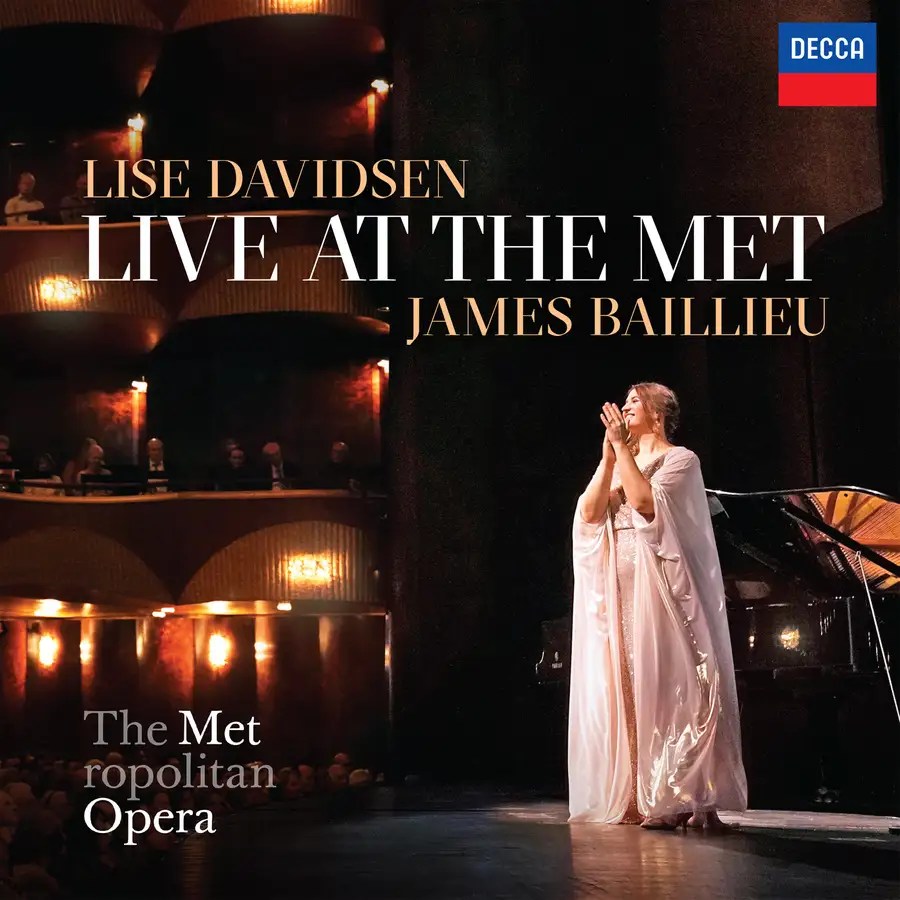
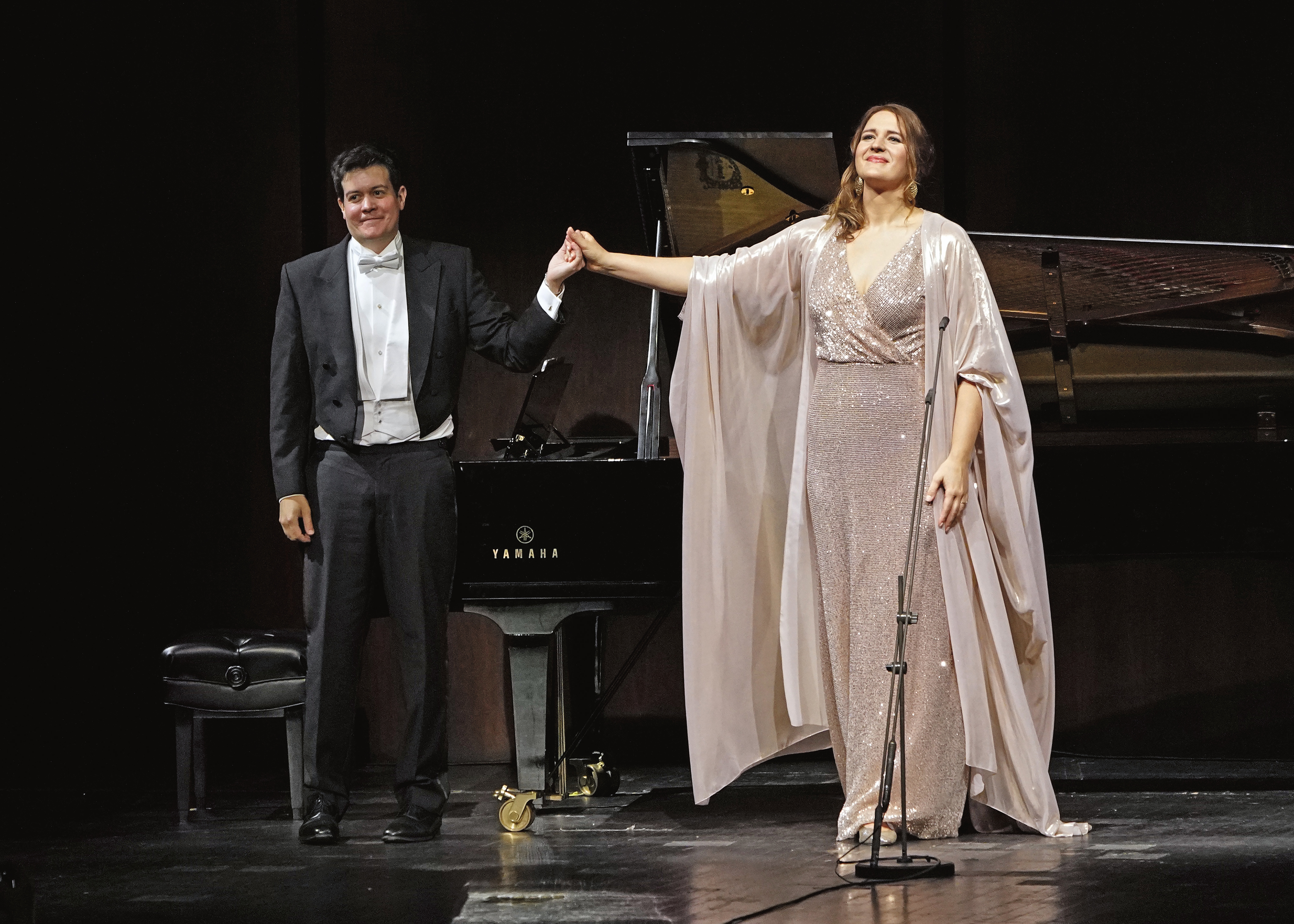
The listeners agreed. “Because the response to that small shipper group was so overwhelmingly and kind of universally positive, we decided to be brave and put together a whole evening of Schubert.” Schubert features as part of the recently released Decca album Live at the Met, where Davidsen and Baillieu added music by Puccini, Richard Strauss, Sibelius and Grieg. The concert took place in September 2023, and the pianist remembers it vividly. “It was an extraordinary experience, and was equally terrifying! The day before I’ll never forget, because in America they have all these unions, and all the stagehands were there even when I needed the piano to be moved 10 centimetres to the right – just two of us in a venue for orchestra, chorus and principles. The music staff were amazingly supportive, and they put an acoustic shell around the piano, which really helped. When we rehearsed the day before I felt immediately calm, because the acoustic is actually fabulous. On the day itself I felt like a rock start. The audience was just so joyous, and there was such a good energy from the hall, that I just loved it.”
The concert (above) included music by Richard Strauss, whose music presents all sorts of challenges for the pianist. “They are very virtuosic and dense”, he agrees. “Most of my training I thought about the famous book by Gerald Moore, Am I Too Loud, but with Lise it’s “Am I too soft?!” If I know that I’m going to do a patch with her I started beefing up myself, whereas with other things it’s about finesse and scaling down. It’s a different challenge.”
Baillieu works with a wide variety of artists, including baritone Benjamin Appl and flautist Adam Walker. Does one complement the other? “I’ve been very lucky that my partnerships have generally been long term and very close, and I have worked with a lot of vocal partners and niche instruments – flute, clarinet, and trombone, working with Peter Moore recently. I actually haven’t done all that much kind of traditional Beethoven sonatas, but I don’t mind. Now I have quite a close partnership with viola player Timothy Ridout and have learned a lot of interesting repertoire.”
Both are YCAT alumni. “Someone like Yuja Wang would not need that, because she had a very clear trajectory and was a big star and won everything. YCAT helped people like me who were perhaps musically interesting but without a completely clear pathway. I guess those like-minded souls stick together, and so a lot of my partners have been from YCAT days. They’re very brave, taking the ‘interesting misfits’ and putting them into the mainstream!”
Returning to Schubert, Baillieu filmed Schubert’s Winterreise with Appl under the direction of John Bridcut. With Appl he also worked on the music of György Kurtág – subject of a previous Arcana interview. “It was an unforgettable, intense and unrelenting few days!” he says with a glint in the eye, “but I was very grateful to have had that experience.” And what was it like filming Winterreise with Appl in the Alps? “It was also challenging. In our partnership, Ben and I have done some very strange things in our lives together! What we hadn’t quite taken on board is how different filming is to recording, and that the focus is completely visual. We had to fight a lot for giving the sound equal importance, but if you had the heating on in the tower it made a noise! We managed to find a happy medium, but the visuals are very striking. Ben then had to go and sing outside with just an earpiece, so I prerecorded some of the songs and he went and did that outside.” The weather also proved unpredictable. “When we arrived, there was absolutely no snow, so we thought the whole project was going to be cancelled, but thankfully the snow came in the evening and there was something to film!”
What would James say are the principal qualities of a good Schubert pianist, when it comes to the songs? “I always feel that what we get from Schubert is someone that understands humanity in sound. I always said I think he would have been a genius psychotherapist, because he manages to get the human condition into sound. In terms of music there are a lot of Classical influences, the elegance and structure of phrases, but I think it’s empathy. If you are empathetic, that’s when Schubert is most successful, because he was obviously very empathetic. He is also unique with the incredible friendships with various poets with whom he had intense connections. He was clearly something of a “connector” – but empathy is the main one I would say.”
His music has proved far reaching. “With Ben we have taken Schubert to Hong Kong, and he’s done projects in India and Australia. It speaks to people, there is a universality about it, and I think it’s because he understands the human spirit. There is also the simplicity. That’s what makes Schubert so hard, because there is a timeless elegance, and a perfect quality that makes it a little bit scary. But there is nothing better than some of those songs!”
You can read more about this year’s Aldeburgh Festival at the Britten Pears Arts website, with full concert information and details. For biographical information on James Baillieu himself, you can visit his artist page
Janai Brugger (narrator/soprano), CBSO Chorus (Julian Wilkins, chorus-master), City of Birmingham Symphony Orchestra / Kazuki Yamada
Copland Fanfare for the Common Man (1942); Lincoln Portrait (1942) Tower Fanfare for the Uncommon Woman (1989) Price orch. Rosner The Heart of a Woman (c1930-50) Adams Harmonium (1980-81)
Symphony Hall, Birmingham Saturday 4 July 2026
Reviewed by Richard Whitehouse
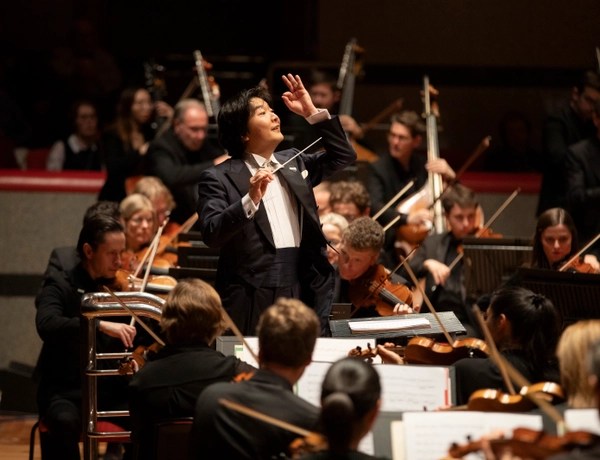
Marking the 250th anniversary of American independence, the City of Birmingham Symphony Orchestra and music director Kazuki Yamada duly pulled out the stops with a programme that placed musical achievements from the past century within an unlikely yet stimulating context.
The first half unfolded as two diptychs focussing, respectively, on male and female concerns. Thus a brazen but never brash take on Copland’s Fanfare for the Common Man preceded his Lincoln Portrait – its sentiments as apposite to World War Two as to the American Civil War, after whose Battle of Gettysburg Lincoln made his famous ‘Address’. Yamada drew nobility and fervour from its lengthy preamble, then Janai Brugger delivered its subsequent narration with enough poise and understatement to offset any risk of hubris during the climactic stages.
Initiated by a visceral reading of Joan Tower’s Fanfare for the Uncommon Woman, its brass and percussion deployed in notably combative manner, the female response continued with Florence Price’s The Heart of a Woman. Not so much a song-cycle as a ‘themed’ collection which has only recently been assembled from its composer’s extensive contribution to this genre, its 10 settings of black American authors have been orchestrated by Israeli-American composer Lior Rosner with no mean subtlety and eloquence, though on occasion softening the harmonic piquancy with which Price seeks to highlights aspects of her own experience.
Wistful and rapturous by turns, these merge into a rather generalized sequence lacking any more cumulative intensity to justify it as a whole; the exception being Don’t you say no to me which, with its vivid (if slightly self-conscious) elements of blues and ragtime, sounds like a number such as Ella Fitzgerald might have recorded in her youth. Brugger (with kit-percussionist Alex Henshaw-Van den Bos) made the most of its insouciance, with Yamada encouraging the orchestra to a warmly empathetic response elsewhere. Hardly a revelatory discovery, but attractive and affecting music such as reinforced the impression that Price is at her best freed from those formal constraints encountered in her symphonies or concertos.
After the interval came Harmonium, by which John Adams established his wider reputation almost 45 years ago. Now as then, its overall impact belies its relative concision and, while its streamlined ebb and flow arguably overrides the manifest ambivalence in John Donne’s Negative Love then emphasizes predictability over pathos in Emily Dickinson’s Because I could not stop for Death, the integration of chorus and orchestra is unfailing. To this end, coordination was not all that it might have been though the seminal passages were tellingly realized – not least that seismic build-up into a setting of Dickinson’s Wild Nights whose heady crescendos then raptly inward ending, both among its composer’s finest inspirations, were conveyed with conviction boding well for the CBSO performance at this year’s Proms.