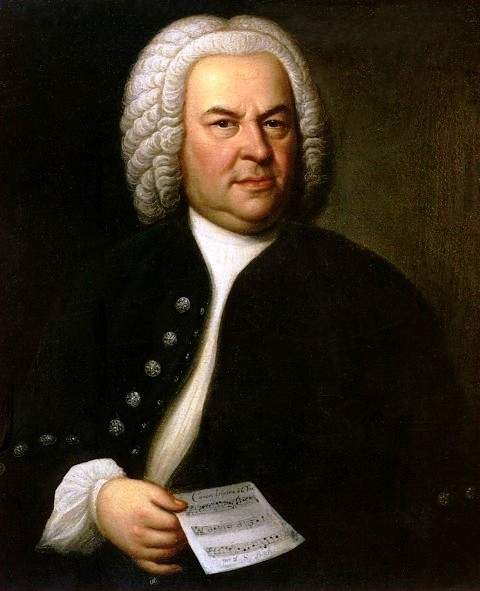
Over this long Easter weekend, and with it recently being the anniversary of Johann Sebastian Bach‘s birthday, it feels appropriate to share four favourite pieces with you.
The first is the Cello Suite no.2 in D minor, BWV1008. The deeply profound Prelude to this suite is often associated with Good Friday and the Crucifixion, and is followed by the traditional sequence of dances where Bach’s masterful writing can be fully appreciated. Having been fortunate to play this piece, I can confirm the music gives as much satisfaction to the performer as it does to the listener!
You can enjoy a performance from Yo-Yo Ma, live at the BBC Proms in 2015, below:
by Ben Hogwood Image of Ludwig van Beethoven in 1801, courtesy of Wikipedia
On this day in 1800 the premiere of Beethoven‘s game-changing Symphony no.1 took place, in Vienna’s Burgtheater.
You can read all about the work as part of Arcana’s ongoing Beethoven odyssey, and listen to a performance of the symphony given by the London Symphony Orchestra and Bernard Haitink here:
by Ben Hogwood, with text lifted from the press release
Contemplating the role of the album format in an attention-deficient society, Speedy J presents Walkman — a constantly shifting, 90-minute soundtrack to a journey of your choice. Jochem Paap‘s first solo album in over 20 years is a freewheeling, 20-track testament to his decades-deep studio skill and sonic versatility, running from skewed rhythmic rabbit holes to exploratory tonal abandon. You can listen to the first single, Arp Δmp Chasm, below:
For Paap, the traditional idea of the album had become obscured by listening habits and the non-stop information barrage of our digital lives. Having moved on from his breakthrough years releasing LPs and touring off the back of them, he was more inspired to develop his many-sided STOOR project and feed into a bigger artistic body of work than the temporary shelf-life of a single release. As is natural for any artist, his perspective shifted over time and he found himself drawn back to the idea of an album, realising he connected best with longer releases while he was on a walk, out for a run or generally in transit one way or another.
With an endearing call back to the humble Walkman, Paap (above) selected an hour and a half of material created during studio sessions at the beginning of 2025, perfectly sized to fit on two 45-minute sides of a cassette tape. As has long been the case for his studio practice, there were no fixed intentions when sitting down in the STOOR lab to start making noise — just a wealth of experience and an expansive set of tools to start exploring with. From hours of jams Paap pulled together standout moments and moulded them into a mixtape-like narrative ranging from two-minute beat nuggets to full-tilt techno workouts and immersive ambient drops. Every sound is intentional, but the overall delivery is instinctive and curious, showing multiple new dimensions to Paap’s sound and offering unpredictability at every turn.
‘Arp Δmp Chasm’ opens the album up in a thick blanket of humming, harmonic waves with an electric emotional charge, while ‘Ctrssalms17 (Cold Render)’ journeys through evocative blooms of melancholic, gritty pads and rugged, half-submerged tech funk. ‘Modern Birds (Origin Edit)’ reaches skywards with grand sweeps of dynamic, brilliantly rendered synthesis. From the dexterous drum science of ‘Drift Vector’ to ‘Osc Hop (Slow Collapse)’s lurching, beatless swamp of synths, on Walkman even the briefest snapshots leave an impression that lasts beyond the quick-scan cycle of the modern music experience.
With his return to the album format, Paap’s message is clear – put your headphones on, get outside and lose yourself in the sound of an artist constantly committed to moving forwards.
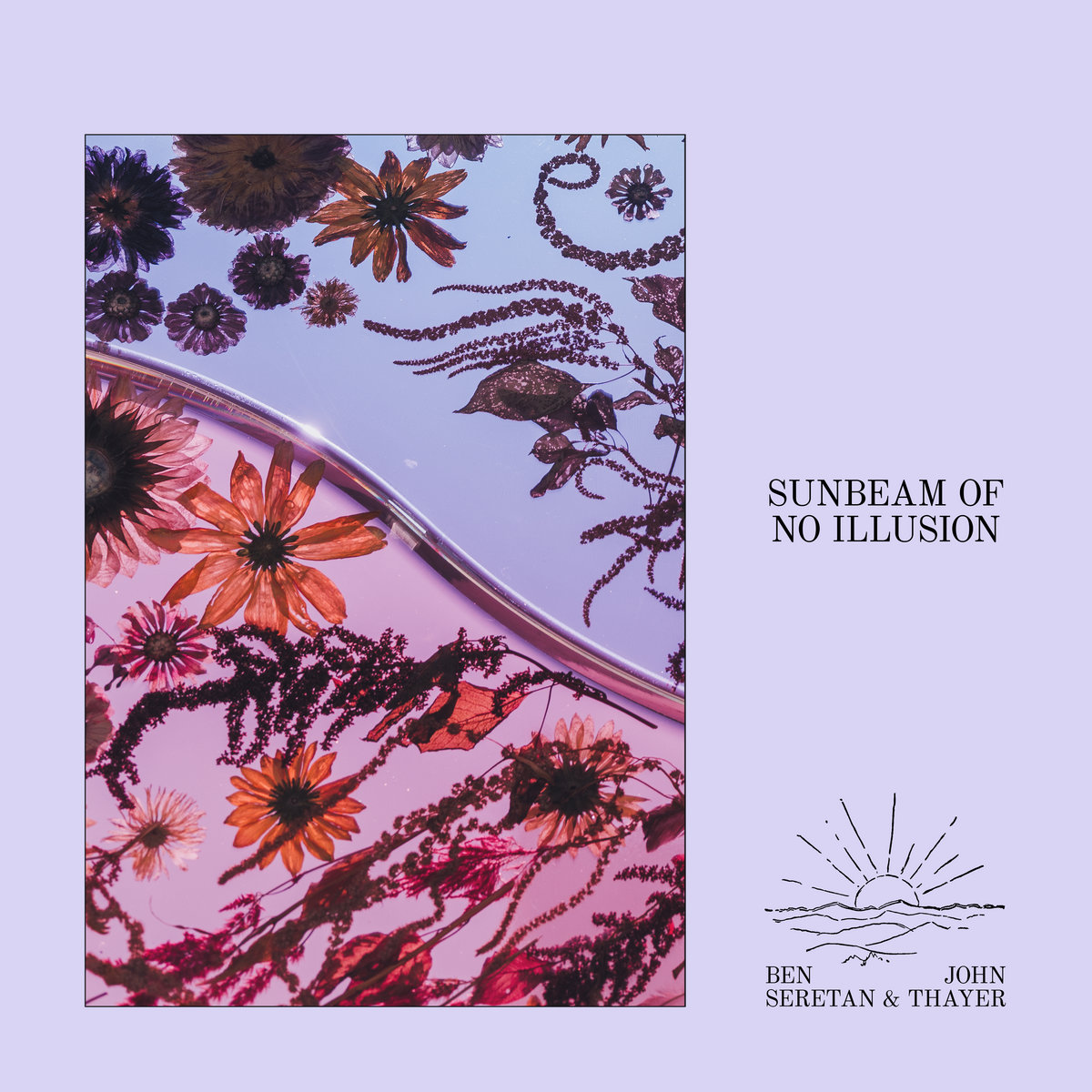
Sunbeam Of No Illusion takes its title from correspondence between Ralph Emerson and Walt Whitman, which is described as “cheeky acknowledgement of the mutual admiration of this project’s partnership”.
For this is the first time Ben Seretan and John Thayer have worked together directly on a project, though their musical paths have crossed on occasion before. Here, they blend largely spontaneous instrumental thoughts with field recordings, literally throwing open the studio door to let the light in – the sunbeam of the title, perhaps. The list of instruments used gives an idea of the density of the project, and the variety of sounds open for use:
Ben Seretan is credited with Fender Rhodes Piano, Moog Matriarch, Juno 106, Supro Lap Steel, Lowrey Organ, Teenage Engineering KOII, Electric Guitar and Assorted Guitar Pedals, while Thayer is listed on Lexicon Prime Time, Delta Labs Effectron II, Crystal Rattles, Temple Block, Brushes, Grass Shakers, Field Recordings, Digitakt, Modular Synthesizer, Tape Echo and Tascam Porta Studio.
What’s the music like?
Extremely restful. This is the musical equivalent of sitting under a big tree in warm weather. There is a breath of breeze here and there, and occasionally the leaves part to reveal a warm burst of sunshine – or they might close in with an unexpected chill.
Whatever happens, the music is drenched in appealing, consonant harmonies and warm textures, beckoning the listener out into the open. Some of these figures are elusive, such as on Memory Garden or Little Winds, where the music floats delicately and wisps of melody make themselves known. The electronic breeze on Valley Spirit is immediately appealing, while the closing Peat Fire, an evocative number with cymbals imitating kindling, is a beauty.
Does it all work?
The unhurried nature of this music is an antidote to fast-paced living, with Seretan and Thayer’s instinctive improvisations unfolding in their own sweet time.
Is it recommended?
It is. An album where the listener can get close to the wind and the trees without having to leave the room they are in, basking in the delights of what Ben Seretan and John Thayer have created. Their descriptive musical pictures are an ambient delight.
Taking time to pay tribute to an old, sadly departed friend. Martyn Granville would have been 62 today, and I realised I had not yet dedicated music to him on these pages, for Martyn sadly left us in May 2014. Here is his favourite classical piece, the wonderful Fantasia on a theme by Thomas Tallis by Vaughan Williams, from a lockdown session revealing its emotive core: