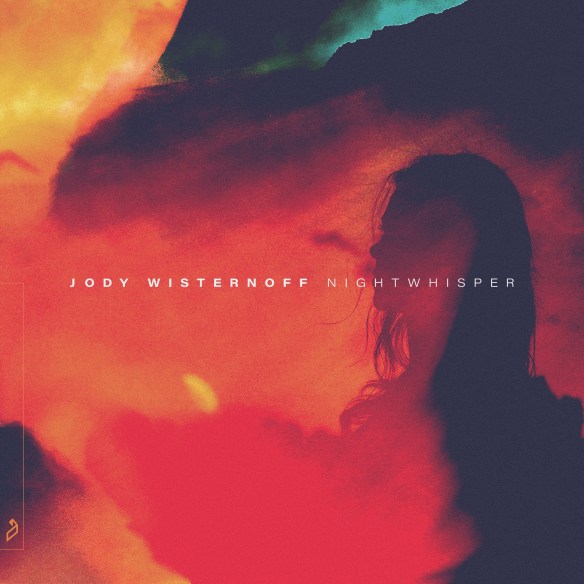
Jody Wisternoff is dance music royalty, being one half of Way Out West where he is joined by Nick Warren. The two have made powerful and progressive albums since the mid-1990s, sitting squarely between house and trance music, but are free to run their own solo projects alongside the duo. Nightwhisper is Jody’s second solo album, his first since 2012, and it has served as an outlet to express conflicting emotions felt through the death of his father, with a sustained period of caring for him beforehand.
Written in 2019, it faces those sorrowful events in the context of weekends where Wisternoff was involved in the ‘day job’, as it were, DJing at exotic party locations.
What’s the music like?
The conflict between the different areas of Wisternoff’s life is certainly felt here, but the overall impression is firmly positive. The songwriting here is direct and so it is easy to relate to. For example when the loop ‘don’t go away, don’t leave me now’ starts up on Here To Stay, the combination is just right – some introspective thoughts but presented through a really good vocal hook.
Wisternoff chooses his vocalists well, with the husky tones of Rondo Mo working well on Lately, or James Grant and Jinadu on the ultra cool Blue Space, singing how ‘I’ve been looking everywhere for a sign’. Grant also appears on the title track, a blissful number tapping into the spirit of The Beloved. The varied rhythms that Way Out West have always used are in evidence, too – Andromeda marshals its breakbeats well, Story Of Light works a sharper bassline, and the lovely soft timbres on For Those We Knew are really nicely done. Mimi Page’s vocal adds a beautifully weighted tribute here, an apt memorial piece.
Does it all work?
Yes – Wisternoff uses his experience to provide exactly what is needed for a pool soundtrack or for the dancefloor. To be honest each of these twelve tracks can move effortlessly between the two, and since the vocals are good they stand up well to repeat plays.
Is it recommended?
Yes. This is classy, hot weather music which works really well on the beats front, but has music of substance to go with it. Because of that, Nightwhisper works equally well as foreground and background listening – and it stays with you emotionally too.
Aārp is an intriguing figure. Having started out as a viola player in an orchestra, the producer – whose real name is elusive – found his head turned by electronic music, specifically the likes of Squarepusher, Amon Tobin and Oneohtrix Point Never. His love of classical and exploratory electronic music spills over into a full length record for InFiné, his first album Propaganda.
With a title like that it is no surprise to report a political slant to Aārp’s thinking. It is a response to the tragedy of a young festival-goer in Nantes who drowned following a police altercation – and specifically a response to how that tragedy was reported and spun by the press. Aārp was inspired to create a series of tracks, each given the title of an important quote from world news that was treated in a similar way.
What’s the music like?
While it sounds like he is working with a heavy subtext, it is great to report that Aārp does not get too weighed down by his subject matter. In fact the opposite is true, as Propaganda has moments of light and shade, seriousness and humour. It is a restless piece of work, full of riffs that never quite stay still but go really well with his beat making. Nothing is off the table here and there is a lot of excellent work by instinct.
Ca fuit de partout sets the tone with a descending motif that has a quirky edge, which Condamnez-vous les violences? runs with, the riffs becoming more oblique. The Axis of Evil is a thrilling ride, glitchy beats preceded by a blast of rich organ chords. Meanwhile on The Herbicide That Gets To The Root Of The Problem, riffs flit across the stereo picture like birds not quite settling, the music hyperactive and uneasy.
Not all Aārp’s writing is as packed with events as the opening trio. His descending motif gets a different perspective in the more introspective Less than 1% of Patients Become Addicted, while darkness descends with the low threat of Nada es gratis en esta vida, a short but heavily loaded track.
Some of his soundscapes are really impressive – try the breadth of vision from I Prefer a Liberal Dictator to Democratic Government Lacking Liberalism, or Les malheureux sont les puissances de la Terre, which moves from what sounds like electronic steelpans to pinball-style beats and shimmering chords.
Does it all work?
As an album, yes – because Aārp has a distinctive style that constantly asks questions of its surroundings. The duration might be relatively short but a lot happens in 35 minutes! The bursts of hyperactivity might also be a bit too much for some, with a short attention span meaning some of the ideas don’t get developed as fully as they might, but the album follows a compelling path which rewards repeated listening.
Is it recommended?
Yes. Aarp has a fresh approach to electronic music that works rather well, and although the topics covered by Propaganda are pretty weighty, the responses to them offer blasts of fresh air.
Schroder and his toy piano, drawn by Charles M. Schulz (c)PNTS
Klage WoO 113 (Lament) for voice and piano (1790, Beethoven aged 19)
Dedication not known
Text Ludwig Hölty
Duration 2’40”
Listen
Background and Critical Reception
This setting of poetry by Ludwig Hölty continues Beethoven’s current preoccupation with downcast songs, having recently set the Elegy for a dead poodle. Klage (translated as Lament) starts in a more positive light, describing the silver light of the moon, but soon talks of how ‘no peace smiles on me’, and ‘soon your silver light will shine on the tombstone that hides my ashes’.
Writing his programme notes for a collection of Beethoven songs on the Hyperion label, Julian Haylock describes this song as ‘an early setting that, despite its deceptively simple outlines and such delightfully naive effects as the doubling of right hand and voice in the first verse, touches an emotional nerve in the young composer’s psyche that was to be amongst his most enduring expressive traits – an exemplary handling of the minor mode.’
He also notes the stark closing postlude for piano, and its anticipation of similar instances in songs by Schumann.
Thoughts
If you listened to this song without a clue who the composer was, it would be hard to place. Although Beethoven does indeed use some of the ‘naive’ tactics described by Julian Haylock, his musical language is definitely looking forward to the likes of Mendelssohn and Schumann rather than backwards.
Again the topic is a relatively sorrowful one, suggesting that Beethoven’s downcast mood has lingered for a while since the death of his mother. The telling moment comes at the end of the first verse, when the silver light of the moon fades and the song turns to the minor key. Darkness falls, and tragedy with it, with little hope at the end. The bare chords from the piano offer little consolation as a closing statement.
Recordings used
Stephan Genz (baritone) & Roger Vignoles (piano) (Hyperion)
Hermann Prey (baritone), Leonard Hokanson (piano) (Capriccio)
Matthias Goerne (baritone), Jan Lisiecki (piano) (DG)
Peter Schreier (tenor) & Walter Obertz (piano) (Brilliant Classics)
The version for tenor and piano, beautifully sung by Peter Schreier with Walter Obertz, is set in E major / minor, while the version with baritone and piano is a third lower, beginning in C. For his version with Jan Lisiecki, Matthias Goerne has an ideally measured tone, with Lisiecki’s final chords completely bare. Stephan Genz and Roger Vignoles are the ideal match, while Hermann Prey operates at a much slower tempo with Leonard Hokanson, giving an even darker impression.
Spotify links
Hermann Prey (baritone) & Leonard Hokanson (piano)
Matthias Goerne (baritone), Jan Lisiecki (piano) (DG)
Peter Schreier (tenor) & Walter Obertz (piano)
Also written in 1790 Hummel Piano Quartet in D major
The Coronation of Leopold II at Bratislava (1790) Austrian School, 18th century, Mestske Galerie, Bratislava
Cantata on the Accession of Emperor Leopold II WoO88 for soloists, choir and orchestra (1790, Beethoven aged 19)
Dedication Emperor Leopold II
Text Severin Anton Averdonk
Duration 23’30”
Watch
Chen Reiss sings the flagship aria Fliese, Wonnezahren, fliese (Flow, tears of joy, flow), the second number in the score:
Background and Critical Reception
When Beethoven received his commission for the Cantata on the Death of Emperor Joseph II, he was also enlisted to help celebrate the accession of his successor, Leopold II, again with text from Severin Anton Averdonk.. In the event neither piece fulfilled their function, due mainly to time constraints but also – possibly – due to the difficulty of learning and rehearsing new and challenging music for the time.
Thus the cantata was not heard in Beethoven’s lifetime, not emerging until the 1880s. Lewis Lockwood argues for its acceptance as a positive, optimistic counterpart to the tragedy of the Joseph cantata, anticipating in this early period Beethoven’s later way of contrasting two opposed expressive domains in consecutive works in the same genre.
He also notes that ‘though less majestic, it possesses the expressive chorus Stürzet nieder, Millionen (Prostrate yourselves, O millions) which textually associates with Schiller’s Ode to Joy and the Ninth Symphony by means of its passage asking the question ‘Stürzet nieder, Millionen?’ (‘O ye millions, do you fall prostrate?’)
One aria in particular stands out – the substantial Fliese, Wonnezahren, fliese (Flow, tears of joy, flow), written for soprano soloist with key parts for flute and cello, drawn from the orchestra. In his notes for the Hyperion recording of the piece, Nicholas Marston suggests Beethoven’s operatic experience led him to include this ensemble number.
Thoughts
The Cantata on the Accession of Emperor II is a much slighter work than its predecessor mourning the death of Emperor Joseph II, being half the length of that piece. Nor does it quite sustain the high level of feeling Beethoven poured into that work. Having said that it comfortably fulfils its function as a celebratory piece, and demonstrates once again how the composer is fully at home working with larger forces.
There is a strong sense of occasion from the start, through the hushed delivery from both soprano and chorus. The music then swells into more obvious pomp and celebration, now in a ‘pure’ C major as opposed to the fraught C minor of the Joseph cantata. This is surely not a coincidence, and as Marston also notes, it anticipates a similar tactic used in the movement from darkness to light in the Fifth Symphony. Fliese, Wonnezahren, fliese, the big aria, pushes forward with an optimistic look to the future rather than the caught under the heavy tread of the past. It includes some sparkling writing for the soprano soloist that culminates with a high E flat towards the end.
Later the choral writing is more red-blooded, setting the translated text ‘Look up to the lord of thrones who brought you this salvation’. All soloists and high choir are united in their praise of the new leader.
It is a shame for Beethoven that this music was not heard at the time of Leopold’s accession, for while this work does not quite reach the levels of the Joseph cantata it is still a fine and perfectly functioning celebration for the new emperor.
Performances
Charlotte Margiono (soprano), Veronica Verebely (soprano), William Shimell (bass), Ulrike Helzel (contralto), Clemens Bieber (tenor), Chorus and Orchester der Deutschen Oper Berlin / Christian Thielemann (DG)
Janice Watson (soprano), Jean Rigby (contralto), John Mark Ainsley (tenor), José Van Dam (bass), Corydon Singers and Orchestra / Matthew Best (Hyperion)
Juha Kotilainen (bass), Reetta Haavisto (soprano), Chorus Cathedralis Aboensis, Turku Philharmonic Orchestra / Leif Segerstam (Naxos)
As with the Joseph Cantata, recordings of Beethoven’s ceremonial music for Leopold II were thin on the ground until the release of Matthew Best‘s account with the Corydon Singers and Orchestra by Hyperion in 1996. It is an excellent performance, capped by exceptional female soloists in Janice Watson and Jean Rigby.
Again the performance from Christian Thielemann for DG is a glossier affair, but it is very fine indeed, and Charlotte Margiono is a very fine soprano soloist.
The recent version from Leif Segerstram for Naxos delivers a strong impact too, with full bodied choral singing.
Spotify links
The Hyperion version conducted by Matthew Best is not available on Spotify but clips can be heard on the Hyperion website here
Christian Thielemann (tracks 8-13)
Leif Segerstam (tracks 8-13)
You can chart the Arcana Beethoven playlist as it grows, with one recommended version of each piece we listen to. Catch up here!
Schroder and Snoopy, drawn by Charles M. Schulz (c)PNTS
Elegie auf den Tod eines Pudels WoO 110 (Elegy on the death of a poodle) for voice and piano (1790, Beethoven aged 19)
Dedication not known
Text unknown author
Duration 3’20”
Listen
Background and Critical Reception
While flexing his compositional muscles with ever more ambitious pieces such as the Cantatas for Emperor Joseph II and Leopold II, Beethoven was continuing to get to grips with the German Lied. This latest example was certainly his darkest effort to date, described by Lewis Lockwood as ‘marginally more ambitious’ than his first attempts at writing Lied.
The dead poodle in question is not known – and nor is the author of the text – but in the little that is written about this song there is general agreement that it is one of Beethoven’s most original early works. By coincidence it appears around the same time that Mozart wrote a lament for his dead starling.
Thoughts
It is not thought Beethoven ever owned a dog…but this tribute to the passing of a poodle suggests he would know of the sadness the death of a pet can bring! It is set in F minor, which was to become a significant key for the composer later in life.
There are clouds for the first few verses but then the mood picks up unexpectedly and a ray of light shifts the music into F major.
Recordings used
Hermann Prey & Leonard Hokanson (Capriccio)
Peter Schreier & Walter Obertz (Brilliant Classics)
Schreier’s account does not use any repeats so is half the length of the version from Hermann Prey and Leonard Hokanson. Prey’s bass, an octave lower than Schreier’s tenor, gives the song a more sorrowful air, as does his use of a slower tempo. Schreier and Obertz speed up considerably for the final stanza.
Spotify links
Hermann Prey & Leonard Hokanson:
Vincent Lièvre-Picard and Jean-Pierre Armengaud:
Peter Schreier & Walter Obertz
Also written in 1790 Kozeluch Clarinet Concerto no.1 in E flat major
Next upCantata on the Accession of Emperor Leopold II