Wigmore Mondays – Peter Moore & James Baillieu: Trombone showpieces

peter-moore

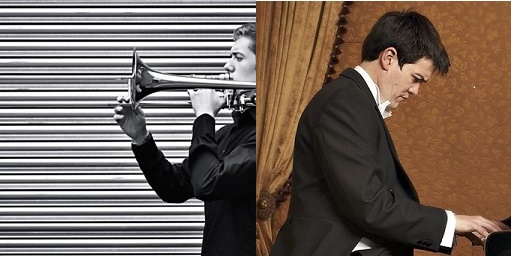
Peter Moore & James Baillieu: Trombone showpieces

James Maynard Urban Variations (2016, world première)

Schumann Fantasiestücke Op. 73 (1849)

Axel Jørgensen Romance Op. 21 (publ.1921)

Duparc La vie antérieure (1884)

Rachmaninov Cello Sonata in G minor Op. 19 (3rd movt, Andante) (1901)

Hindemith Trombone Sonata (1941)

Arthur Pryor Annie Laurie (early 1900s)

Listen to the BBC broadcast here

Written by Ben Hogwood

Peter Moore is a remarkable talent.

Winner of the BBC Young Musician of the Year crown at the age of 12, co-principal trombone of the London Symphony Orchestra at 18 and now one of the BBC Radio 3 New Generation Artists, he looks set for a long and lasting career at the top, if this superb recital is anything to go by.

The same can be said for partner in crime James Baillieu, a pianist of great sensitivity and style, whose musicality and technique mark him out as a very fine accompanist – using that term with the knowledge that it is not a secondary role!

The recital, a rare chance to experience the trombone in a solo capacity, was full of thrills and spills. Moore began with a flourish, the enjoyable Urban Variations of fellow trombonist James Maynard an evocation of three different cities – Berlin (from 1:42 on the broadcast), London (a calm St John’s Wood park at 3:10) and the bustle of New York (8:13)

Then Moore explored more romantic repertoire in straight transcriptions of three Fantasy Pieces by Schumann (10:59), a song by Duparc (26:13) and the slow movement of Rachmaninov’s Cello Sonata (30:55), with an original piece from the Danish composer Axel Jørgensen added for good measure.

The Schumann was a tricky one for both performers to balance. It was superbly played but at the back of the hall the piano was a way back in the balance at times. The Duparc and Rachmaninov fared very well, an inspired pairing that proved a great showcase for Moore’s breadth of tone, while the Jorgensen (from 21:00) was a bright piece, dappled with sunshine.

The coup de grace, though, was a brilliant performance of Hindemith’s Trombone Sonata (from 38:25). Rarely heard in the concert hall these days, the composer’s music gets an unfair deal. Moore and Baillieu showed us why this is wrong, with plenty of humour, grace and a gritty resilience, the latter quality due in part to the work’s composition in 1941, around the Second World War. Both players performed heroically, whether it was Baillieu catching the rhythmic drive of the music, or Moore moving between technical trickery and sudden if brief lyrical asides. The third movement, wonderfully described as a Swashbuckler’s Song, found Moore at his outspoken best.

The two followed with a work by Sousa’s go-to trombone man, Arthur Pryor (from 48:50). Annie Laurie, an air and variations on the traditional Scottish tune, was a winning performance, the audience alternately gasping at Moore’s technique or laughing at some of the outrageous and funny musical statements. The encore, which was inevitable after a concert of such good quality, was an arrangement of Charlie Chaplin’s Smile (54:38)

If brass playing is your thing, I would urge you to catch Peter Moore live – and soon!

Further listening

The music played by Peter Moore and James Baillieu is included in the Spotify playlist below.
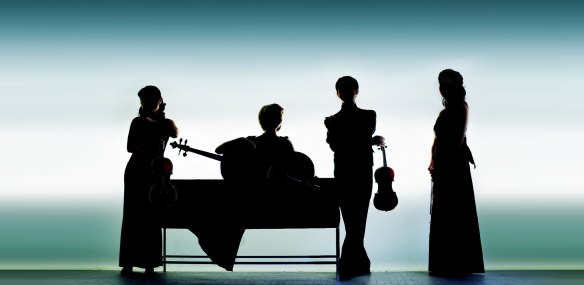
ECMA showcase – Pacific Quartet Vienna at the Wigmore Hall

pacific-quartet

Pacific Quartet Vienna (Yuta Takase, Eszter Major (violins), Chin-Ting Huang (viola), Sarah Weilenmann (cello))

Mozart String Quartet in D minor, K421 (1783)

Schumann String Quartet in A major Op.41/3 (1842)

Wigmore Hall; Saturday January 28, 2017

Flying in the face of Brexit, the European Chamber Music Academy is a body established in 2004 by the Alban Berg Quartet founder Hatto Beyerle.

It provides training for flourishing chamber ensembles, and here gave a showcase for the Pacific Quartet of Vienna, a chance for them to play at the hallowed Wigmore Hall for the first time.

There was much to admire. A nicely balanced program of Mozart and Schumann began with one of the six quartets the former composer wrote and dedicated to Haydn. The D minor is the darkest quartet of the six, exploring more oblique harmonies and melodies than the composer normally would. The quartet gave a nicely poised performance, the obdurate and slightly gruff outer movements punctuated by flashes of light. The slow movement was light and beautifully floated, as though they were performing an aria, while the trio section of the stern minuet took the weight away completely, a note of mischief added to the duets between leader Yuta Takase and violist Chin-Ting Huang.

For the Schumann the quartet had a noticeably warmer sound, and they bought joy to one of the composer’s happiest utterances, written in the wake of his marriage to Clara. The lyrical first movement and romantic third were affectionately played, Huang giving maximum expression to the melodies. The scherzo was fun but eventually paled in the shadow of the finale, which gets obsessed with a ten note motif to the point of distraction. Here it cropped up with amusing regularity, the intervening sections deliberately contrasted with it so that it felt like home.

This was an impressive first Wigmore outing for the quartet, who clearly enjoyed the experience and the music they brought with them. I would wager it won’t be the last!

You can read more about forthcoming ECMA events at their website, while further information about the Pacific Quartet Vienna can be found by clicking here

Wigmore Mondays – Roderick Williams & Roger Vignoles in French art-song

Roderick Williams & Roger Vignoles – French Art Song

Fauré Mirages, Op 113 (1919)

Caplet Cinq ballades françaises de Paul Fort (1919-20)

Honegger Petits cours de morale (1941)

Poulenc Deux poèmes de Guillaume Apollinaire (1938); Parisiana (1954)

Listen to the BBC broadcast here

Written by Ben Hogwood

How heartening to have such an inventive hour-long recital of French art-song for a Monday lunchtime. In choosing a programme mostly comprising rarely performed works Roderick Williams and Roger Vignoles demonstrated both the depth of the genre and the rich variety of source texts on which the composers drew.

For this concert we had the intriguing combination of late Fauré, bright Caplet, silly Honegger and typically heart-on-sleeve Poulenc, and both baritone and pianist applied themselves to each with great enthusiasm and character. No stone was left unturned as they strove to bring the texts to life, helped as they were by some wildly differing moods of interpretation.

Late Fauré has a uniquely timeless approach, and the essentially slow Mirages are no exception. The composer’s last song cycle, it is a quartet of settings from the collection of the same name by Renée de Brimont. Williams and Vignoles inhabited a still world, especially in the remarkable passage in Reflets dans l’eau (Reflections in the water) (beginning 4:44 on the radio broadcast), the song almost stopping completely, seemingly in the middle of the lake, for sustained contemplation (from 8:08)

Still more affecting was Danseuse (Dancer), a haunting closing song that vividly portrays the languid movements of the dancer. With his single melodic line in the right hand Vignoles had the lilt just right, as did Williams in his controlled singing.

The Caplet cycle of Paul Fort setting was an altogether different story. André Caplet was a close friend of Debussy, and did a lot of work for him on editions and such. Debussy comes through to some of the harmonies and sleights of hand, but Caplet’s own style makes itself known and is fascinating. Here Vignoles was exceptional in his setting of the five scenes, with some incredibly tricky piano parts made to sound comparatively easy. The start of Cloche d’aube (Tolling dawn) (from 18:09) was a sparkling, brightly lit piano part, complemented by Williams’ sonorous tones.

Notre chaumière en Yveline (Our cottage in Yveline), the third song (from 23:38), was even more striking, falling over itself in rapture, while the glissando of the piano and soaring vocal of Songe d’une nuit d’été (A Midsummer Night’s Dream) (from 26:07) continued the rapt mood of the recently married composer and his domestic bliss. Only the final song, L’adieu en barque (Farewell from a boat) struck a note of caution with the refracted bell ringing conveyed so vividly by Vignoles.

The Honegger songs (from 34:46) were little picture postcards, lasting just over four minutes in total. Described as ‘a short course in morality’, they were written with some striking if rather odd observations by Jean Giraudoux, four of which centred on locations in the UK. Each one, given a woman’s name, had a certain charm – the wandering Jeanne, a rather brusque Adèle (35:25), the heady scents of Cècile (36:11), a strident Irène (37:03) and finally Rosemonde (37:48). Williams and Vignoles clearly enjoyed them, and were on sparkling form throughout.

Finally music by Poulenc, one of the great French songwriters, was given exemplary performances. We heard 2 poems by Guillaume Apollinaire, the colourful Dans le jardin d’Anna (In Anna’s Garden) (40:16), the increasingly bothered Allons plus vite (Move Along) (43:35) and the two Max Jacob poems making up Parisiana (Jouer du bugle (Playing the cornet)) from 46:44 and the short but riotous Vous n’écrivez plus? (You do not write any longer?) (48:15). Both performers were again wreathed in smiles as they enjoyed Poulenc’s direct emotional approach, and then, as a bonus, we had a reflective encore in the form of La Grenouillère (The Froggery).

Even Vignoles was silently singing along at this point, the two finding a strong bond in this little known but richly rewarding box of treats.

Further listening

One of my favourite discs of French song is from the baritone François le Roux, joined by a crack team of French soloists under Charles Dutoit. It includes Poulenc’s Le bal masqué and Le Bestiare cycles, along with the Rapsodie nègre:

Wigmore Mondays – Beatrice Rana: Bach Goldberg Variations

beatrice-rana

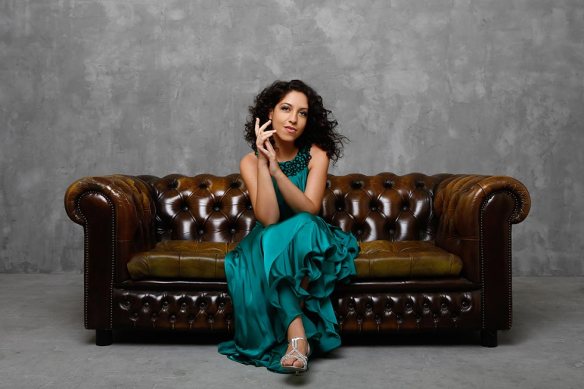
Beatrice Rana (photo Marie Staggat)

J.S. Bach Goldberg Variations, BWV988

johann_sebastian_bach
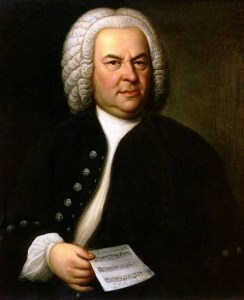
J.S. Bach (1658-1750)

Listen to the BBC broadcast here

Written by Ben Hogwood

The famous Canadian pianist Glenn Gould made his first, famed recording of J.S. Bach’s Goldberg Variations at the age of 23. Beatrice Rana has just completed hers at the very same age, as BBC Radio 3 presenter Sara Mohr-Pietsch informed us just before this Wigmore Hall lunchtime concert began. Of course the interpretations would be wildly different, but there was plenty here to suggest Rana is going to be a wonderful pianist for many years to come.

She decided to use Bach’s marked repeats, a move that stretched the piece to 75 minutes and caused the BBC to extend their traditional hour – a move in favour of their Radio 3 New Generation Artists that suggests they too know exactly what she’s about.

Rana took her time with the opening Aria, setting the scene perfectly (from 1:49 on the broadcast link above). Bach’s timeless writing made the greatest possible impact because of this, in music of great, profound meaning, and whenever textures filled up later on there was always the knowledge this sublime music would return to wrap things up at the end.

Not that Rana gave us anything other than clarity, definition and musicality. Only once was her rhythmic profile noticeably challenged, as she took a while to get a definitive pulse for the seventh variation, a gigue, but elsewhere she was white hot, fingers skating over the keyboard in the toccata variations. In the slow variations she gave the music plenty of time to breathe, investing deep emotion into the minor-key sarabande (from 32:57) and similarly pained variation 25 (from 55:07) She also used helpful silences to signpost the music and give both her and the audience chance to take a breath and digest the music a bit, wondering at this great music.

On this evidence, her forthcoming disc of the Goldberg Variations for Warner Classics should be snapped up, and future concerts followed closely. She certainly did Bach full justice here.

Further listening

You can watch Beatrice in the opening bars of the Goldberg Variations, recorded last year:

…or you can take in Gould’s 1955 recording of the Goldbergs below:

Meanwhile if it’s more Bach that you fancy, this Glenn Gould album gives you access to the amazing world of the Italian Concerto, the Chromatic Fantasy and Fugue in D minor and the Partitas for keyboard:

Wigmore Mondays – Richard Egarr: Keyboard music of the Tudors and Stuarts

Richard Egarr

Richard Egarr (photo Marco Borggreve)

Byrd Fantasia in A minor; Pavan and Galliard; The Bells

Purcell Suite in G major; Ground in C minor

Blow Chaconne in FaUt

Purcell Suite in G minor; Suite in D major; Ground in D minor

L-R William Byrd (c.1540-1623);   Henry Purcell (c.1659-1695); John Blow (1648-1708)

Listen to the BBC broadcast here

Written by Ben Hogwood

The harpsichord enjoys a rather chequered reputation in concert, and from personal experience at least among friends I can say it is one of those ‘marmite’ instruments.

Certainly it is unusual for it to have a place alone in a BBC Radio 3 Lunchtime Concert, yet here it was, with Richard Egarr beginning the 2017 part of the Wigmore Hall Monday lunchtime concert season.

In the event the BBC had chosen well, Egarr compiling a fascinating program of keyboard music from the Tudors (Byrd) and Stuarts (Purcell and Blow).

The music of Byrd, a composer for Queen Elizabeth, flows with obvious inspiration. Egarr’s selection here began with the free and at times elaborate Prelude and Fantasia (from 1:43 in the broadcast), moved on to a more stately Pavan and Galliard (from 10:54 and 14:39) from the impressive collection My Lady Neville’s Book and concluded with the descriptive The Bells (16:19), a remarkable piece of writing beginning with a single toll and working its way intricately through thrilling peals of bells.

Purcell, even now one of the greatest composers England has ever produced, appears to have written his harpsichord suites as a tuition aid, yet they are all characterised with dances fast and slow. Egarr played three suites here, the G major work (from 23:55 on the broadcast) the simplest and the G minor (from 37:07), with its brisk Corant dance, seemingly the most challenging. Most engaging, however, was the three-part D major suite (from 45:45), with its thoughtful Prelude and brief but vigorous Hornpipe.

Egarr also included two brief Grounds (pieces with a short, recurring bass line) by Purcell (27:24 and 49:31), with a third, A New Ground, as an encore (52:50). We also heard a Chaconne by Purcell’s teacher John Blow (30:18), a chirpy piece that became increasingly busy and eventful, leading to a series of grand, block chords near the end.

Egarr’s performance manner was conversational. He turned his own pages, and even gave the harpsichord itself a clap at the end, as though thanking it for staying well-tuned! His demeanour encouraged the audience to feel part of an intimate concert, and lightened some of the heavy cloud around London for the first Monday proper of 2017.

Further listening

You can listen to the music in this concert on Spotify below, with recordings from Egarr himself: