On Record – Gavin Higgins: The Fairie Bride, Horn Concerto (Lyrita)

Gavin Higgins
Horn Concerto (2023)
Fanfare, Air and Flourishes (2021)
The Fairie Bride (2021)

Marta Fontanals-Simmons (mezzo-soprano), Roderick Williams (baritone), Ben Goldscheider (horn), Three Choirs Festival Chorus; BBC National Orchestra of Wales / Jaime Martin (Horn Concerto), Martyn Brabbins (The Fairie Bride)

Lyrita SRCD440 [84’14”] English/Welsh libretto included
Producer Adrian Farmer Engineer Andrew Smilie

Recorded in Hoddinott Hall, 11 January 2024 (Horn Concerto), Concert Hall, Wyastone Leys, Monmouth, 4 April 2024 (Fanfare, Air and Flourishes), live performance from Gloucester Cathedral on 23 July 2023 (The Fairie Bride)

Reviewed by Richard Whitehouse

What’s the story?

Lyrita adds to the already growing discography of Gavin Higgins (b.1983) with this release featuring two recent major works, both of which are heard in their first performances and thereby confirm this composer’s place among the leading British voices of his generation.

What’s the music like?

Listeners may have come across Higgins’s music via the release Ekstasis (see the link below), a collection of chamber pieces which attests to a distinctive and searching personality. Such is equally true of those here, not least the Horn Concerto that takes its place in a notable lineage of such works ‘in E flat’, while taking in Schumann and Ligeti as part of its range of stylistic or conceptual allusions. Its three movements have as their inspiration the Waldhorn – the first, Understorey, duly outlining an emergence from the (Wagnerian) depths to the forest floor in mounting waves of activity. There follow Overstorey with its airily expressive evocation of the forest canopy as builds considerable fervency over its course, then Myelium Rondo with its overtones of the hunt and energetic fanfares which propel this work to an affirmative close.

No stranger to the horn (being his own instrument), Higgins had indirectly prepared for this concerto with Fanfare, Air and Flourishes, a brief but eventful solo triptych which tries out several gestures or motifs to be developed in the larger work as well as in his second opera.

Commissioned by the Three Choirs Festival, The Faerie Bride takes a legend from the Book of Hergest for its synopsis of the coming together but eventual (its being inevitable) disunion between water spirit and earthly man. This is played out over seven scenes divided into two parts – Francesca Simon’s succinct yet artfully constructed libretto moving from their initial encounters at the lake, via the gradual dissolution of their relationship through events during each of the four seasons, to a climactic juncture when the woman returns with her extended family into the depths. Musically the work encompasses the range of Higgins’s idiom up to this point, its richness and variety of texture complemented by an instrumental clarity which ensures vocal audibility throughout – certain discrepancies between the libretto as published and as sung being immediately evident. That this opera keeps its emotions close to its chest much of the time only makes the closing stages the more powerful, not least in the way the ending reaches back to the beginning for a tangible sense of resolution borne of experience.

Does it all work?

Yes, in that Higgins is able to integrate his influences into a coherent and personal language. It helps that these performers are audibly attuned to this music – not least Marta Fontanels-Simmons as an otherworldly Woman and Roderick Williams as the uncomprehending Man – with Ben Goldscheider a consummate exponent of works for horn. The Three Choirs Festival Chorus characterizes the Villagers with suitable aggression, while Jaime Martin and Martyn Brabbins secure idiomatic playing of real finesse from the BBC National Orchestra of Wales.

Is it recommended?

Very much so. Those yet to do so should certainly acquire the earlier release on Nimbus, but the works featured here round out the potency of Higgins’s music accordingly. Detailed and informative notes by Gillian Moore, though watch out for those discrepancies in the libretto.

Listen & Buy

For purchase options, you can visit the Ulysees Arts website. For information on the performers, click on the names to read more about Ben Goldscheider, Marta Fontanals-Simmons, Roderick Williams, Jaime Martin, Martyn Brabbins and the BBC National Orchestra of Wales. Click to read more about composer Gavin Higgins and about Ekstasis

Published post no.2,465 – Thursday 6 March 2025

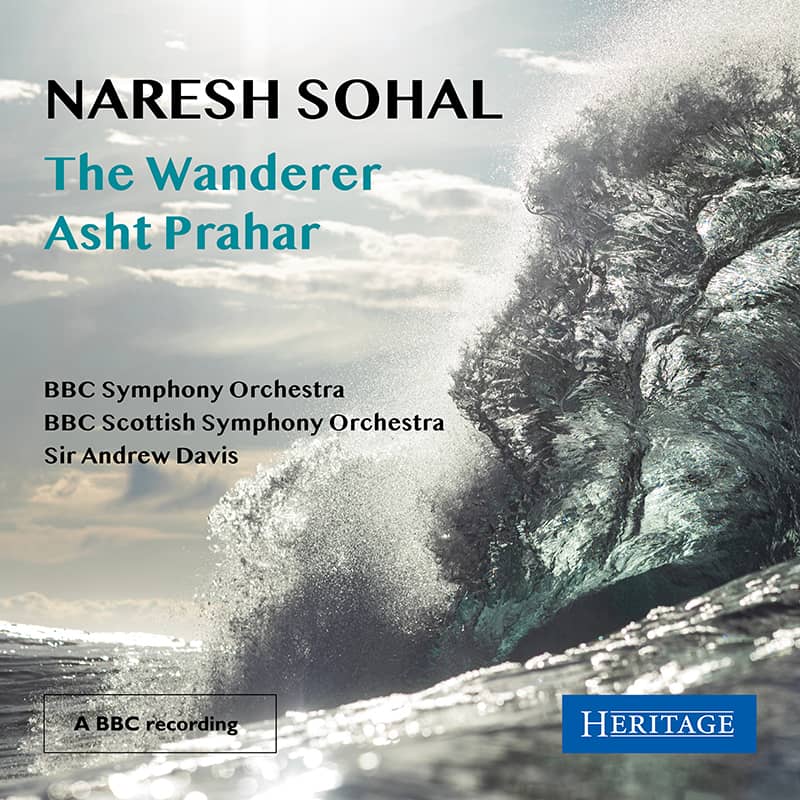
On Record – BBC SSO & BBC SO / Sir Andrew Davis – Naresh Sohal: The Wanderer & Asht Prahar (Heritage)

Naresh Sohal
Asht Pradar (1965)
The Wanderer (1982)

Jane Manning (soprano), BBC Scottish Symphony Orchestra (Asht Pradar), David Wilson-Johnson (baritone), BBC Symphony Chorus and Orchestra (The Wanderer) / Sir Andrew Davis

Heritage HTGCD135 [77’36”] English text included
Remastering Engineer Paul Arden-Taylor

Broadcast performance from BBC Studios, Glasgow on 6 January 1973 (Asht Pradar); live performance from Royal Albert Hall, London on 23 August 1982 (The Wanderer)

Reviewed by Richard Whitehouse

What’s the story?

Heritage issues what will evidently be an ongoing series of archival releases devoted to the music of Naresh Sohal, taken from BBC sources and featuring performers who championed his work over a career whose achievement is not reflected in the availability of recordings.

What’s the music like?

Although he came belatedly to the UK, Sohal (1939-2018) rapidly made up for any lost time when arriving in London in 1962 (further biographical detail can be found in the booklet note for this release and on the composer’s website). Within three years, he had produced his first major (and latterly his first acknowledged) work. Asht Prahar then had to wait until 1970 for its premiere (at the Royal Festival Hall conducted by Norman Del Mar), but it attracted much favourable attention and led to another hearing three years on – the performance featured here.

Taking its cue from the Indian sub-division of the day into eight temporal units (four each for day and night), Asht Prahar unfolds its eight sections as an unbroken continuity. The sizable forces are, for the most part, used sparingly yet resourcefully; as too the deployment of such devices as quarter-tones, along with influences of Ravel and Stravinsky, in music that makes a virtue of its pivoting between East and West. Cyclical if not necessarily cumulative, its final and longest ‘prahar’ brings wordless soprano and orchestra into tangible and haunting accord.

By the time that The Wanderer received its premiere, Sohal had a number of major works to his credit and rationalized his musical idiom accordingly. Setting an anonymous Anglo-Saxon poem in which the male protagonist speaks movingly and often despairingly of his isolation – both physical and spiritual – after the death of his lord, the work divides into two large parts that expand on the narrative’s emotional import. Such ‘‘existential bleakness’’ is intensified by omission of the poem’s last lines with their invoking a specifically Christian consolation. Despite its more than 50-minute duration, there is nothing discursive or unfocussed about The Wanderer’s content. Much of its text is understandably allotted to the baritone, whose austere character is complemented by darkly rhetorical choral passages while offset by an orchestral component with much soloistic writing (notably for flute) in a texture the more involving for its restraint and its strategic use of colour to define specific incidents or emotional responses. Nor is this an opera-manqué, the work succeeding admirably on its inherently abstract terms.

Does it all work?

It does, allowing for the fact that Sohal is not seeking any overt fusion between Occident and Orient, but rather attempting to forge a personal idiom influenced by both while beholden to neither. Both these performances bear out his convictions, Jane Manning adding her ethereal presence to Asht Prahar and David Wilson-Johnson bringing evident compassion to his more substantial role in The Wanderer. Both works benefit from the insightful presence of the late Sir Andrew Davis, whom one regrets never had an opportunity to record them commercially.

Is it recommended?

It is. The sound of these broadcasts has come up decently in remastering, lacking only the last degree of clarity or definition, and Suddhaseel Sen contributes informative annotations. Those looking for a way into Sohal’s distinctive and alluring sound-world need no further incentive.

Listen & Buy

For purchase options, you can visit the Heritage Records website

Published post no.2,451 – Thursday 20 February 2025

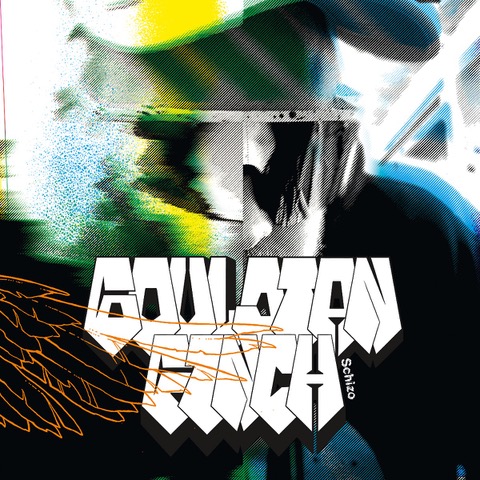
On Record – Gouldian Finch: Schizo (All Ape)

by Ben Hogwood

What’s the story?

Gouldian Finch is the pseudonym under which we find Martin Horntveth, the drummer for Jaga Jazzist – where he is one of the principal members along with brother Lars. For this work, based on a commission entitled Polaroid from the Kongsberg Jazz festival in 2021, he assembles a band of similar dimensions to carry out his musical wishes- nine musicians to supervise as band leader.

This album reflects the breadth of Horntveth’s musical outlook, but hones in more on his love of jazz and jazz rock, and what he describes as “a love / hate relationship with fusion and funk.” Typically he comes out from behind the drums to play keyboards and other percussion instruments on the album, as well as producing and arranging.

What’s the music like?

If you like Jaga Jazzist, then this will be right up your street – assuming your street is home to all sorts of colourful musical twists and turns.

The overriding observation is that Horntveth loves to celebrate music itself, because Schizo bubbles over with positive energy, its riffs delivered with flair and excitement, dressed in multicoloured clothing.

The best examples of this are CAPS LOCK, a riot of colour that originally scuttles along a little furtively before blossoming into a flurry of activity, and Guilty Pleasure, which is an enormous amount of fun. The title track is made of similar stuff, a rush of musical endorphins that bottles up all the fizz Horntveth projected through his band.

There is an appealing playfulness running through the likes of Guilty Pleasure but there are slower moments too, such as the start of Spinning Pinwheel, a plaintive saxophone choir that proves to be a mask for the exuberant funk that follows. No Filter is closer to ballad territory, a nice freewheeling bit of music with the sun at its back.

Does it all work?

It does – with the caveat that you won’t always be in the right mood for music that does sometimes spill over into hyperactivity, the sonic equivalent of having too much caffeine!

Is it recommended?

It is. Schizo does indeed flit between musical moods, but it is a lot of fun.

For fans of… Jaga Jazzist, The Comet Is Coming, Moses Boyd, Ezra Collective

Listen / Buy

Published post no.2,449 – Tuesday 18 February 2025

On Record – The Peter Jacobs Anthology Vol. 2 – Twentieth Century British Piano Music (Heritage)

Coleridge-Taylor Petite Suite de Concert Op.77 (1911)
Cooke High Marley Rest (1933)
Delius Mazurka and Waltz for a Little Girl RTIX/7, 1 & 2 (1922-3)
Headington Toccata (1963)
Rubbra Eight Preludes Op.131 (1967)
Scott Lotus Land Op.47/1 (1905)
Armstrong Gibbs Lakeland Pictures Op.98 (1940) – no.2, After Rain (Rydal Beck); no.8, Quiet Water (Tarn Howe)
Baumer Idyll (1935)
Mayer Calcutta-Nagar (1993)

Peter Jacobs (piano)

Heritage HTGCD131 [73’30″]
Producer & Engineer Paul Arden-Taylor

Recorded 14 & 16 September 2014 at Wyastone Concert Hall, Wyastone Leys, Monmouth

Reviewed by Richard Whitehouse

What’s the story?

Heritage extends an already extensive discography of British music with its follow-up to the Peter Jacobs Anthology, a further volume featuring collections of or standalone miniatures with a wide range of musical idioms given focus through the persuasiveness of the pianism.

What’s the music like?

Among the miscellaneous pieces included here are Greville Cooke’s ruminative ‘portrait’ of the home of pianist (and his former teacher) Tobias Matthay, Delius’s respectively pert and fey offerings, or Christopher Headington’s scintillating study for John Ogdon. Cyril Scott’s evergreen is treated to a subtly understated reading, while two out of a set of eight by Cecil Armstrong Gibbs provide enticing evocations of Rydal Beck then Tarn Howe – their innate Englishness sounding removed from the overtly Russian manner of that from Cecil Baumer.

Forming the backbone of this collection are three sets that in themselves attest to the variety of the music featured. Best known in its orchestral guise (a recording of which can be found on Heritage HTGCD249), Samuel Coleridge-Taylor’s Petite Suite de Concert is light music of a superior kind – witness its flighty initial Caprice, its ingratiating Sonnet or its lively closing Tarantelle, though its ostensible highlight is Demande et Réponse whose alluring sentiment helped with keeping the composer’s memory alive prior to his belated rediscovery.

Other than figuring among its composer’s later works, the Eight Preludes by Edmund Rubbra could hardly have been more different. As with his Eighth Symphony written soon afterward, these short while arresting pieces likewise focus on specific musical intervals rather than any overall key scheme, though their cohesiveness heard as an integral sequence could never be in doubt. Introspective without being inscrutable, this is wholly absorbing music and Jacobs accords ample justice to what is only the second complete recording this set has yet received.

As the most unlikely inclusion, John Mayer’s Calcutta-Nagar proves nothing less than a total delight. Known primarily for his syntheses of Indian and European elements, notably through the group Indo-Jazz Fusions, Mayer wrote extensively for Western media with this collection a notable instance. Only two of its 18 pieces last over a minute, yet their capturing of places recalled from the Calcutta of the composer’s youth is absolute. Jacobs notes his favourite as being the 13th (Kali Temple), but listeners will doubtless come up with their own favourites.

Does it all work?

Yes, whether as a judiciously planned collection or an anthology from which one can select individual items as preferred. The three collections are each among the most distinctive of its kind, while they and the various individual pieces provide ready-made encores in recital. Evidently this is music which Jacobs has long included in his repertoire, the performances exuding that combination of technical finesse allied to a probing insight as have long been hallmarks of his interpretations. Those who are unfamiliar with this music are in for a treat.

Is it recommended?

Indeed, not least as the sound has a combination of clarity and warmth ideal for piano music. The pianist pens informative notes, and one hopes that there will be further such anthologies. Meanwhile, Jacobs approaches his 80th birthday (this August) with his pianism undimmed.

Listen & Buy

For purchase options, you can visit the Heritage Records website

Published post no.2,448 – Monday 17 February 2025

On Record – Corelli Orchestra / Warwick Cole – William Hayes: Instrumental Music (Heritage Records)

William Hayes
Harpsichord Concerto in G major (c1740)
Harpsichord Concerto in D major (1755)
Concerto Grosso in D major (1758)
Concerto Grosso in G minor (1758)
Trio Sonata in E minor (1775)
The Fall of Jericho – Sinfonia (c1750)

Corelli Orchestra / Warwick Cole (harpsichord)

Heritage HTGCD134 [74’]
Producer Simon Heighes Engineer Paul Arden-Taylor

Recorded February 2010 at Prince Michael Hall, Dean Close School, Cheltenham; July 2018 at Church of St Philip and St James, Cheltenham

Reviewed by Richard Whitehouse

What’s the story?

The Heritage label adds yet another enterprising release to its expanding catalogue with this representative selection of instrumental music by William Hayes (1708-1777), idiomatically rendered by the Corelli Orchestra and its founder director, the harpsichordist Warwick Cole.

What’s the music like?

The most substantial works are two harpsichord concertos. That in G major is notable for the close-knit interplay between soloist and strings of its lively initial Allegro or the deft humour of its closing Minuetto, but it is the central Andante which leaves the strongest resonance – its intricate solo part (with two elaborate cadenzas) and its plangent expression both anticipating the ‘Sturm und Drang’ inclinations of a subsequent generation. That in D major (derived from an organ concerto) follows a not dissimilar trajectory, its buoyant and harmonically questing Allegro followed by a brief yet affecting Adagio for the soloist unaccompanied then a finale that takes in a wider expression than its Tempo di Menuetto marking might indicate. Equally effective are those transitions for soloist then strings as afford this work its overall continuity.

Taken overall, the six concerti grossi are Hayes’s most substantial legacy to the instrumental domain. That in D major duly alternates Andante movements of subdued pathos with Allegro movements in which this composer’s much-heralded contrapuntal facility is to the fore, while that in G minor owes its larger scale to the ruminative Larghetto which, preceded by a wistful Affetuoso and coursing Allegro then rounded off by a lilting Pastorale, is a sure pointer to the Classicism that lay ahead. It may be the shortest piece featured here, but the Trio Sonata in E minor (itself the final contribution to a set of six) is overall even more most forward-looking as it unfolds from a pathos-laden Adagio, via an incisive Allegro (which is pointedly marked ‘staccato’) followed by a gravely eloquent Largo, to the gracefully elegant closing Grattioso.

That just leaves the Sinfonia to the oratorio The Fall of Jericho which was likely the largest work Hayes completed. More than a mere curtain-raiser, this substantial piece begins with a purposeful Andante notable for trenchant oboe writing – as also the Largo into which it leads and whose plaintive melodic line makes it an aria in its own right. There follows an Allegro of deftly propelled impetus, then an Andante such as provides overall balance in terms of its undulating gait. A performance of the complete work can also be obtained at Fall of Jericho

Does it all work?

Yes, and not only viewed within its aesthetic remit. Acknowledged during his lifetime as one of the few English composers able to hold his own against Handel, Haynes (who dominated academic life at Oxford for three decades) left an output whose scope is evidently in advance of its size. Historically significant for being on the cusp between Baroque and Classical eras, his work is always appealing – not least given the poise and finesse of the Corelli Orchestra, an ensemble whose ‘authentic’ credentials never draw attention away from its music-making.

Is it recommended?

Indeed, and not least with annotations by Simon Heighes (no doubt recalled by some readers for his insightful reviews in International Record Review), whose book The Lives and Works of William and Philip Hayes (Garland Press: 1995) is the standard study about this composer.

Listen & Buy

For buying options, you can visit the Heritage Records website

Published post no.2,444 – Thursday 13 February 2025