Live review – English Symphony Orchestra / Kenneth Woods: Mahler Symphony no.9

mahler-9-woods

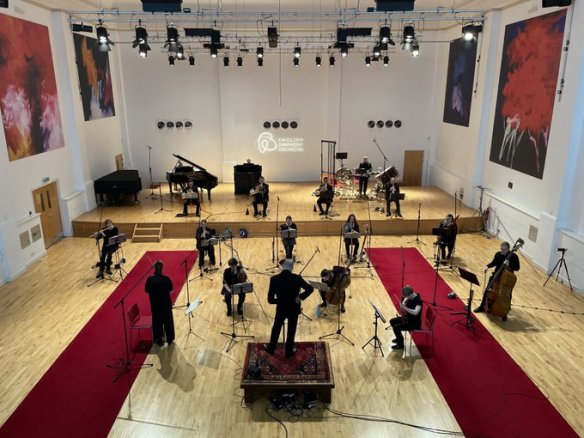
Members of the English Symphony Orchestra / Kenneth Woods

Mahler arr. Simon Symphony no.9 in D major (1908-10, arr. 2011)

Wyastone Concert Hall, Monmouth
Recorded March 23-25 2021 for online broadcast, premieres 7 July 2021

Written by Richard Whitehouse

The chamber reductions of orchestral works, as pioneered by the Society for Private Musical Performances founded by Schoenberg after the First World War, has gained renewed impetus these past 15 months given the unfeasibility of full-scale performances. Few can have been as ambitious as Mahler’s Ninth Symphony – arranged by pianist and conductor Klaus Simon for an ensemble of single strings and woodwind (with doublings), two horns, trumpet, percussion (one player), piano and harmonium; its textural and motivic content thereby remaining intact.

This is evident in the opening Andante, arguably Mahler’s most perfectly realized symphonic movement, whose formal trajectory of interlocking arcs is made explicit so that its long-term expressive intensification and release become no less tangible. To this end, the roles of piano and harmonium are much more than the mere filling-out of texture – respectively articulating and reinforcing the harmonic profile through to a coda which more than usually clinches the overall tonal journey with a serenity the more poignant for its remaining, as yet, unfulfilled.

The ensuing Ländler was no less lucid in terms of its unfolding, Kenneth Woods resisting any temptation to play up the emotional contrasts across a movement whose deceptive blitheness of spirit is only gradually undermined (and a quality this music shares, doubtless unbeknown to the younger composer, with Ravel’s La valse). Equally significant is the way that Simon’s arrangement discreetly emphasizes disparities of timbre and texture, on the way to a closing section where the music only too audibly fragments into a bemused parody of how it began.

More questionable is the Rondo-Burleske – Woods’s underlying tempo for the outer sections, while enabling the music’s contrapuntal intricacy to emerge unimpeded, feeling too dogged to convey its frequently assaultive manner to the degree that the composer surely intended. This is less of an issue in a trio section whose aching regret was potently conveyed, with the stealthy regaining of tension no less in evidence. Animated and accurate, this final section again lacked that seething energy which propels the movement towards its anguished close.

No such questions affect the final Adagio – only equivocally conclusive now that the Tenth Symphony has all but been accepted into the Mahler canon, yet remaining a test of all-round cohesion such as this account rendered with unwavering conviction. Having thus gauged the balance between its alternate paragraphs, Woods assuredly controlled the winding down of tension towards a coda of inward rapture despite its sparseness of gesture – while affording the speculative dialogue between solo strings the necessary temporal and emotional space.

It hardly needs to be said that the playing of this 15-strong ensemble drawn from the English Symphony Orchestra was consistently attuned to the spirit of this music – as, too, is Simon’s methodical and apposite arrangement. Whether such reductions can continue to be relevant in the (presumed) aftermath of the pandemic, it would be a pity were these not to enjoy revival in their own right: revival, moreover, out of aesthetic rather than just didactic considerations, as this impressively conceived and executed rendition demonstrated to often moving effect.

You can watch the concert on the English Symphony Orchestra website here

Further information on Klaus Simon is here, while for further information on the Music from Wyastone series, you can click here. ‘Fiddles, Forests and Fowl Fables’ is now available from the English Symphony Orchestra Website.
Live review – Ealing Symphony Orchestra / John Gibbons: Stanford: Symphony no.6

ealing-symphony-orchestra

Ealing Symphony Orchestra / John Gibbons

St Barnabas Church, Pitshanger Lane, London

Broadcast Thursday 10 June 2021, available online

Stanford Symphony no.6 in E flat major Op.94 ‘In honour of the life-work of a great artist: George Frederick Watts (1905)

Written by Ben Hogwood

Next year will be the centenary of the independent Ealing Symphony Orchestra, one of the leading voluntary ensembles in London. In more recent years the group have built a reputation for deviating from ‘normal’ repertoire, and their return from a tortuous year-and-a-half of lockdown saw an immediate return to that approach.

It came in the form of a welcome reappraisal of the Sixth symphony of Charles Villiers Stanford. Stanford occupies a godfather-like position in British music, credited with the instruction of many leading composers (Vaughan Williams, Holst, Coleridge Taylor and Ireland to name but a few), but his music tends to be admired rather than deeply loved. Stanford acknowledges the influence of continental Romantic composers in his music, with hints of Mendelssohn, Brahms and Wagner to be found, but in the course of this symphony closer parallels emerge to the music of Elgar, whose own first symphony was still three years away.

Conductor John Gibbons gave a heartfelt introduction from the podium at St Barnabas Church, where the orchestra are based, and the online pictures illustrated a wide spacing between the instruments, with many players wearing masks. Through necessity the strings were further apart, the cellos particularly far back, with the brass on the conductor’s far left. None of these unconventional placings harmed the performance, however, and there was a very strong sense of joyful homecoming, the opening of a new chapter.

physical energy

A good deal of this was due to Stanford’s music. The sixth symphony celebrates sculptor and artist George Frederic Watts, and in the first movement takes inspiration by Watts’ Physical Energy sculpture, now in Hyde Park (above, picture by David Hawgood). Stanford begins with the most positive and exultant music, played with appropriate gusto here. There were occasional lapses in the strings’ turning early on, but it bears remembering that amateur players in particular have been devoid of ensemble practice for so long, and such moments are inevitable as part of the ‘reawakening’ process. In any case the music powered forward with increasing conviction, its prevailing mood of strength and resolve in keeping with the players’ emergence from lockdown. A particularly fulsome solo from the orchestra’s leader (uncredited) was in keeping with the sunny disposition all around.

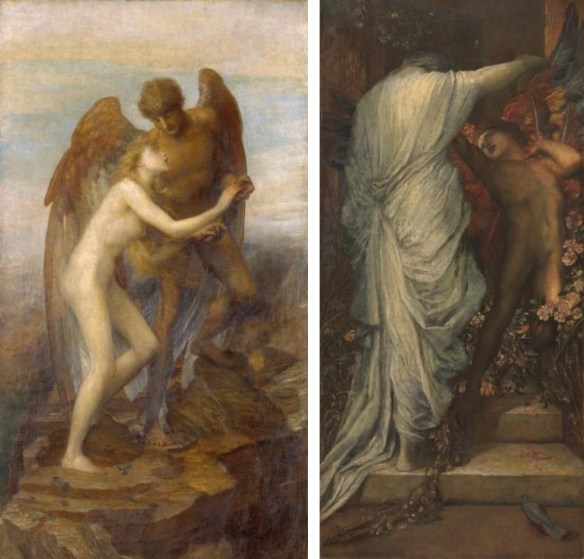
Love and Life c.1884-5 by George Frederic Watts 1817-1904

The heart of Stanford’s Sixth lies in the slow movement, where a soulful cor anglais solo sets the tone but long phrases were expertly paced towards the big climax. Based on Watts’ paintings Love and Life and Love and Death (both above), there was an appropriate romanticism near the surface throughout. The scherzo of light and shade was elusive, portraying the movement of water as depicted by Watts in Good Luck to your Fishing (below).

Good_Luck_to_your_Fishing_by_George_Frederick_Watts
This third movement would have benefited from a bit more rhythmic definition, but was still a n engaging account, especially as Gibbons plotted a smooth transition to the finale, where the drama heightened further. The venue proved its worth here, with just the right amount of reverb – and as all passion was spent towards the end the music slowed slightly, giving plenty of room for some excellent woodwind playing.

This was a fine and extremely enjoyable performance, passionate and concentrated – a persuasive advocate for Stanford’s music. His voice is all too seldom heard in this country, but performances like this ought to ensure greater coverage. It was the ideal choice for the Ealing Symphony Orchestra to reassert their identity after lockdown, and the enthusiasm and optimism throughout were uplifting. Watch it if you can.

For more information on the Ealing Symphony Orchestra’s return from lockdown on Saturday 10 July, and further events, visit the orchestra website

In concert – Michael Collins & Michael McHale: Widor, Bax, Muczynski & Horovitz @ Wigmore Hall

collins-mchale

Michael Collins (clarinet), Michael McHale (piano)

Widor Introduction et Rondo Op.72 (1898)
Bax Clarinet Sonata in D major (1934)
Muczynski Time Pieces Op.43 (1984)
Horovitz Sonatina (1981)

Wigmore Hall, London
Monday 17 May (review of the online broadcast)

Written by Ben Hogwood

What a joy to see audiences back in Wigmore Hall on a Monday lunchtime, as the venue took its first available opportunity of 2021. The gathering was for an enterprising program of 20th century works for clarinet and piano from Michael Collins and Michael McHale, pleasingly off the beaten track in its selection and proving highly accessible.

Viewed online in this case, the excitement was palpable – from Andrew McGregor’s introduction for the live broadcast on BBC Radio 3 to the performers’ demeanour as they began. The clarinetist successfully overcame an instrument malfunction, too, which caused him to repeat the first few minutes of the Bax sonata.

Collins and McHale began with Widor, however, a competition piece written for students of the Paris Conservatoire in 1898. Both performers settled immediately, Collins with a beautifully floated introduction and McHale with sensitive pedaling, the pianist then echoing the excitable flourishes from of clarinet when the Rondo itself arrived. This work occupies a happy place in Widor’s output, and was a joyful overture here.

The mood deepened for the Clarinet Sonata in D major of Sir Arnold Bax from 1934. First performed by Frederick Thurston, it is an unusually structured work, but the two movements sit together nicely. It was during the beautifully floated opening that Collins had to change his clarinet, but the advantage of this was that we were able to marvel at his control for a second time, supported by rippling figures from McHale. The first movement unfolded as though in one long phrase, revealing the influence of Wagner but establishing Bax’s own melodic grace too. The second movement had impressive urgency, with chromatic surges from the piano and impressive breath control from Collins. A typically deep second theme was matched by a lovely, poised closing section.

The Polish-American composer Robert Muczynski has an intriguing works list including many pieces for woodwind, and the Time Pieces of 1984 are among his most-performed. Each of the four movements looks to bring out different qualities of the clarinet and Collins was fully alive to their possibilities. The busy first piece was enjoyable, clarinet and piano ducking and diving in their interplay, while time became suspended in the outer sections of the second piece, lost in thought. The third explored the timbres of the solo clarinet, wonderfully nuanced by Collins, while the spicy dialogue of the fourth was laden with syncopation and brilliantly played.

The Sonatina for clarinet and piano from Joseph Horovitz dates from 1981, when it was first performed by Gervase de Peyer and Gwenneth Pryor in the Wigmore Hall itself. Like Muczynski, Horovitz is at home writing for wind and brass. Working within a compressed structure, the Sonatina was packed with incident and melody. A perky first movement unfolded with easy, winsome phrases, while the second was more introspective and took time for soul searching. Not so the finale, whose offbeat japes were carefree and witty in this performance, instinctively played.

It was over all too soon – but we were treated to an encore, Collins every bit as enthused as the audience. The warm-hearted Summer, from Paul Reade’s suite Victorian Kitchen Garden, was the ideal choice.

This concert is available to play for 30 days using the YouTube embedded link above.

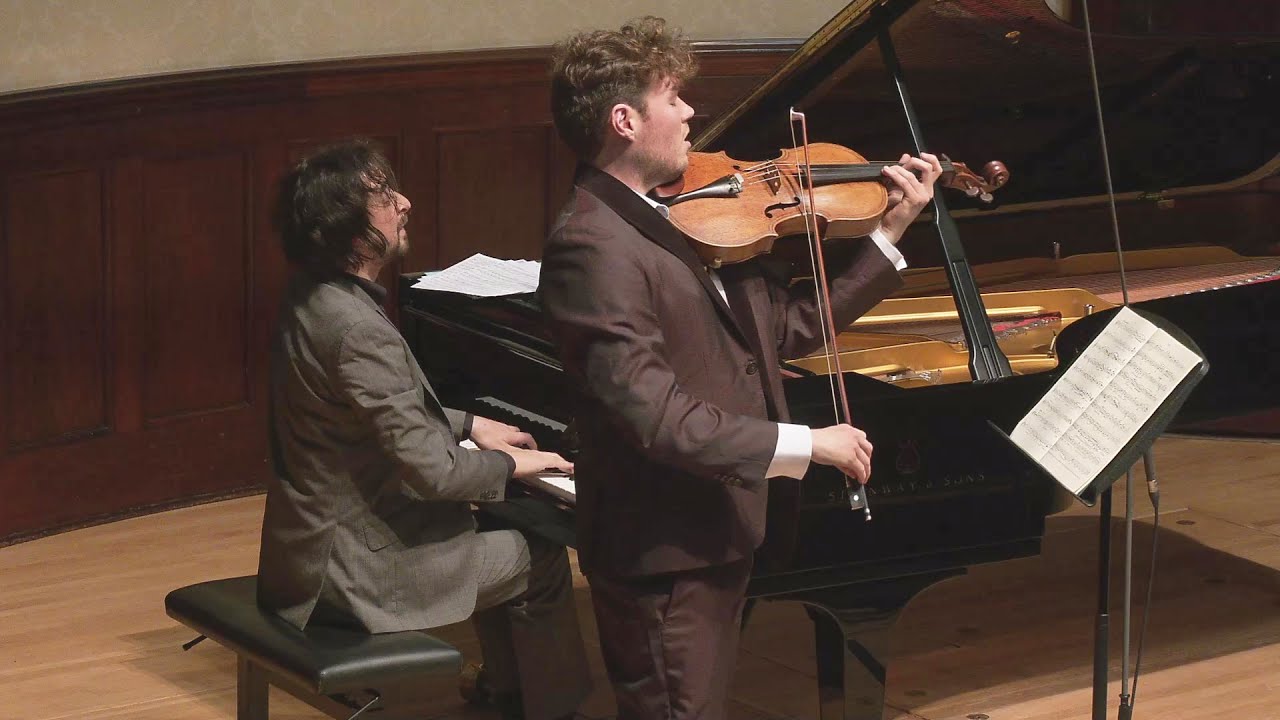
In concert – Timothy Ridout & Tom Poster: Brahms Sonatas & Schwertsik world premiere @ Wigmore Hall

ridout-poster

Timothy Ridout (viola), Tom Poster (piano)

Brahms Sonata for viola and piano in F minor Op.120/1 (1894)
Schwertsik Haydn lived in Eisenstadt (2021, world premiere)
Brahms Sonata for viola and piano no.2 in E flat major Op.120/2 (1894)

Wigmore Hall, London
Monday 10 May (review of the online broadcast)

Written by Ben Hogwood

This was, on paper, an ideal match of repertoire and performers – and it proved that way on screen too, as the Wigmore Hall served us the latest offering in its lunchtime concert program.

Timothy Ridout and Tom Poster are both beneficiaries of the invaluable Young Concert Artists Trust (YCAT) scheme and the BBC’s New Generation Artists program, of which Ridout is still a member. They are both plotting exciting paths as distinctive artists, and as a duo they enjoy an easy rapport, clearly relishing the music they play – an observation which can never be taken for granted!

The two sonatas published as Op.120 are Brahms’ final notes in chamber music, and indeed among his last works altogether. To have younger artists playing them is to reveal the youthful heart amid their autumnal colours, showing off their elusive qualities and winsome melodies.

Both works may have originated for clarinet and piano but work equally well through the burnished tones of the viola. Indeed Ridout proved with the first notes of the Sonata in F minor Op.120/1 that the range is ideal for his instrument, and the tone – not to mention Poster’s complementary piano line – was ideally weighted once he had fully secured the intonation.

The second movement had a cold shiver, thanks to the use of less vibrato, but grew warmer as it progressed. The genial Allegro grazioso was a treat, the finale more celebratory but enjoying its flowing second themes too.

The E flat sonata was if anything even more successful, lighter on its feet and with airy phrases and interplay. The first movement bobbed and weaved beautifully, especially when Ridout was playing in the higher register, which Poster clearly relished. The second movement literally rolled up its sleeves for a powerful outpouring, Ridout’s tone beautifully supple. By contrast the central section benefited from the burnished tones of the double-stopped viola. The finale’s theme and variations were well judged, thoughtful and mellow to begin with but then more capricious as they progressed, finishing with a thoroughly convincing flourish.

Between the two Brahms works was an interesting new piece by Kurt Schwertsik, commissioned by Ridout himself. Schwertsik is a Viennese composer now in his 70s, aware of his place in musical history but making original and intriguing music. This piece was characteristically elusive, under the intriguing title Haydn lived in Eisenstadt. Set in several movements, it posed questions and answers, but remained curiously unsettled. BBC Radio 3 presenter Andrew McGregor thought the piece had ended at one point, only for another two movements to follow – a situation we have all surely experienced as audience members! Ridout swept through the longer phrases of the penultimate movement against softly tolling chords from the piano, before the last movement threw furtive glances into the shadows amid bursts of activity, ending in a similar vein to early Schoenberg.

Poster ensured the harmonies were a point of focus throughout, hinting at exotic late Romanticism but never quite settling in that mood. This was a piece of intriguing thoughts and colours, a substantial utterance well worth hearing again. It proved the ideal complement to the poised Brahms sonatas around it – and the encore of the older composer’s Wie melodien, with which the concert softly concluded.

This concert is available to play for 30 days using the YouTube embedded link above.

In concert – London Chamber Ensemble & Madeleine Mitchell: A Century of Music by British Women (1921-2021)

London Chamber Ensemble [Madeleine Mitchell (violin, director), Joseph Spooner (cello), Sophia Rahman (piano), David Aspin (viola), Gordon Mackay (violin), Lynda Houghton (double bass), Peter Cigleris (clarinet, bass clarinet), Nancy Ruffer (flute), Alec Harmon (oboe), Bruce Nockles (trumpet), Ian Pace (piano)

Rebecca Clarke Piano Trio (1921)
Judith Weir Atlantic Drift: Sleep Sound ida Mornin’ (1995), Atlantic Drift (2006), Rain and Mist are on the Mountain, I’d Better Buy Some Shoes (Movements I-IV, 2005)
Helen Grime Miniatures (2005)
Judith Weir The Bagpiper’s String Trio (1985)
Cheryl Frances-Hoad Invocation for cello & piano (1999)
Thea Musgrave Colloquy (1960)
Ruth Gipps Prelude for bass clarinet (1958)
Errollyn Wallen Sojourner Truth (2021, world premiere)
Grace Williams Suite for Nine Instruments (1934)

St John’s Smith Square, London
Monday 9 March (review of the online broadcast)

Written by Ben Hogwood

Classical music still has an awfully long way to go before female composers are an integral part of its make-up, but the celebration of International Women’s Day is helping the cause considerably, gaining more traction with each passing year.

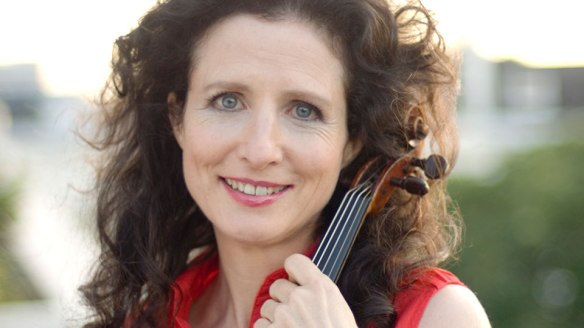
One of the highlights of the 2021 celebrations was this concert from St John’s Smith Square, masterminded by Madeleine Mitchell, who led the London Chamber Ensemble in a very satisfying hour-and-a-half of music.

In a concert celebrating eight women composers, the common threads of America and the Royal College of Music were also explored. The latter organisation is where Rebecca Clarke, Grace Williams and Helen Grime all studied, and where Errollyn Wallen and Mitchell herself are now professors. Wallen wrote a new piece, Sojourner Truth, for the occasion.

The concert began however with a terrific performance of Rebecca Clarke’s Piano Trio. Completed in 1921, this substantial piece begins with a passionate outpouring, but it also has its elusive, mysterious moments. The trio of Mitchell, cellist Joseph Spooner and pianist Sophia Rahman caught these elements, getting off to a terrific start but pulling back to allow the enchanting slow movement room to breathe. At times Clarke’s music hints at influences from France – particularly Ravel but also Franck – which Spooner caught in his high intonation in the second movement. The spirit of the dance inhabited the finale, a more obviously English statement, but there was still room for more fervent thoughts when the trio united.

There was a sudden transition on the broadcast to the refreshing open air of Judith Weir’s Atlantic Drift, a compilation of three pieces for two violins proving an invigorating contrast to the denser textures of the Clarke. Weir’s incorporation of folk material into her music is enchanting, especially in the four-part last piece, Rain and mist are on the Moutain, I’d Better Buy Some Shoes. Using a Gaelic song as its inspiration, Weir’s adaptation worked really well in these open air accounts from Mitchell and Gordon Mackay, the empty St John’s providing the ideal acoustic. Weir appeared later with The Bagpiper’s String Trio, a similarly folk-powered work from 1985. Based on a Scottish pipe tune this too lifted the listener away to the great outdoors, with excellent teamwork from Mitchell, Spooner and viola player David Aspin.

Helen Grime’s trio of Miniatures for oboe and piano were next, studies in compressed expression from the pale harmonics of the first to the jagged edges of the second. The third was an effective summation of Grime’s thoughts, panning out for a wider perspective from the piano. Alec Harmon and Sophia Rahman were fully responsive to the virtuoso demands.

Cheryl Frances-Hoad’s Invocation for cello and piano followed, a late teenage piece offering an immediate chance to appreciate the probing line given to Joseph Spooner’s fulsome cello. As the composer’s response to Edvard Munch’s painting Melanchola reached its apex there were clangorous chords from Rahman, capping a compact but powerful utterance.

Thea Musgrave’s Colloquy was next, another model of economy – four short pieces for violin and piano packed with sharp, expressive statements. There were some challenges to performance here – such as the quick interchange between pizzicato and bowing in the second movement – which Mitchell took in her stride. The third piece was a touch more playful but still assertive, but the fourth was the most effective, a private train of thought gracefully prompted by Ian Pace’s piano.

The most striking piece of the evening – for its sound, its soul and its warmth – was Ruth GippsPrelude for bass clarinet. Gipps’ centenary falls this year, and her slightly baleful writing for the instrument was beautifully captured by Peter Cigleris, a model of control. After watching this I was struck by two questions – why do we not hear the music of Gipps more, and why are there not more pieces for solo bass clarinet?

Errollyn Wallen’s Sojourner Truth followed, written not just for Madeline Mitchell but for International Women’s Day – and taking us back to violin and piano. Based on a spiritual, O’er the crossing, it features intense dialogue between the two instruments, but when the melody is heard unaccompanied on the violin the ear is pulled firmly towards the centre of the music, a striking feature of another piece with more traditional inspirations.

To finish, we heard the 75-year-old Suite for Nine Instruments by Grace Williams. Scored for piano quintet, double bass, flute, clarinet and trumpet, it is a vivacious piece, quite modal and with hints of Stravinsky’s Septet for a similar instrumental combination – and equally driven in the outer movements, bringing the interval of a tritone right to the front. The London Chamber Ensemble played with flair, commitment and virtuosity, bringing a very impressive program to a close.

The concert is available to watch until 8 April on the link below – with some spoken introductions by Mitchell herself. On occasion the gaps between pieces are very short, but there are helpful markers to make viewing easier. Do make sure you watch, as some of the best chamber music from British women composers in the last 100 years is right here.

A Century of Music by British Women (1921-2021) on International Women’s Day, directed by Madeleine Mitchell from St John’s Smith Square on Vimeo.

Meanwhile, Madeleine and the London Chamber Ensemble’s album of works by Grace Williams can be heard here: