Published post no.2,509 – Sunday 20 April 2025
Music for Easter Sunday – Rimsky-Korsakov: Russian Easter Festival Overture
Reply

Published post no.2,509 – Sunday 20 April 2025
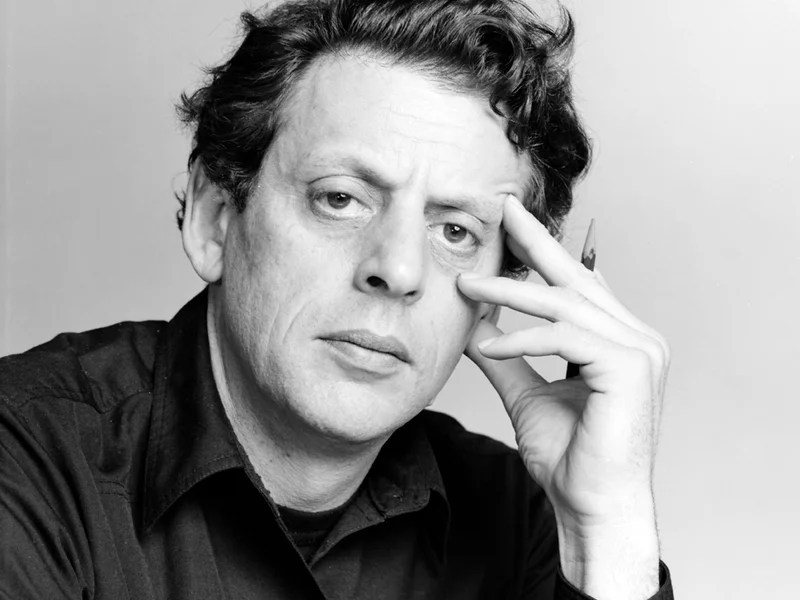
by Ben Hogwood picture (c) Jack Mitchell/Getty Images
On this day in 1987 the premiere of Philip Glass‘ Violin Concerto no.1 took place, played by Paul Zukofsky and with the American Composers Orchestra under Dennis Russell Davies.
The piece has established itself as one of Glass’s most popular works in concert, and can be heard below in its first recording, made by Gidon Kremer for Deutsche Grammophon:
Published post no.2,495 – Saturday 5 April 2025

Gavin Higgins
Horn Concerto (2023)
Fanfare, Air and Flourishes (2021)
The Fairie Bride (2021)
Marta Fontanals-Simmons (mezzo-soprano), Roderick Williams (baritone), Ben Goldscheider (horn), Three Choirs Festival Chorus; BBC National Orchestra of Wales / Jaime Martin (Horn Concerto), Martyn Brabbins (The Fairie Bride)
Lyrita SRCD440 [84’14”] English/Welsh libretto included
Producer Adrian Farmer Engineer Andrew Smilie
Recorded in Hoddinott Hall, 11 January 2024 (Horn Concerto), Concert Hall, Wyastone Leys, Monmouth, 4 April 2024 (Fanfare, Air and Flourishes), live performance from Gloucester Cathedral on 23 July 2023 (The Fairie Bride)
Reviewed by Richard Whitehouse
What’s the story?
Lyrita adds to the already growing discography of Gavin Higgins (b.1983) with this release featuring two recent major works, both of which are heard in their first performances and thereby confirm this composer’s place among the leading British voices of his generation.
What’s the music like?
Listeners may have come across Higgins’s music via the release Ekstasis (see the link below), a collection of chamber pieces which attests to a distinctive and searching personality. Such is equally true of those here, not least the Horn Concerto that takes its place in a notable lineage of such works ‘in E flat’, while taking in Schumann and Ligeti as part of its range of stylistic or conceptual allusions. Its three movements have as their inspiration the Waldhorn – the first, Understorey, duly outlining an emergence from the (Wagnerian) depths to the forest floor in mounting waves of activity. There follow Overstorey with its airily expressive evocation of the forest canopy as builds considerable fervency over its course, then Myelium Rondo with its overtones of the hunt and energetic fanfares which propel this work to an affirmative close.
No stranger to the horn (being his own instrument), Higgins had indirectly prepared for this concerto with Fanfare, Air and Flourishes, a brief but eventful solo triptych which tries out several gestures or motifs to be developed in the larger work as well as in his second opera.
Commissioned by the Three Choirs Festival, The Faerie Bride takes a legend from the Book of Hergest for its synopsis of the coming together but eventual (its being inevitable) disunion between water spirit and earthly man. This is played out over seven scenes divided into two parts – Francesca Simon’s succinct yet artfully constructed libretto moving from their initial encounters at the lake, via the gradual dissolution of their relationship through events during each of the four seasons, to a climactic juncture when the woman returns with her extended family into the depths. Musically the work encompasses the range of Higgins’s idiom up to this point, its richness and variety of texture complemented by an instrumental clarity which ensures vocal audibility throughout – certain discrepancies between the libretto as published and as sung being immediately evident. That this opera keeps its emotions close to its chest much of the time only makes the closing stages the more powerful, not least in the way the ending reaches back to the beginning for a tangible sense of resolution borne of experience.
Does it all work?
Yes, in that Higgins is able to integrate his influences into a coherent and personal language. It helps that these performers are audibly attuned to this music – not least Marta Fontanels-Simmons as an otherworldly Woman and Roderick Williams as the uncomprehending Man – with Ben Goldscheider a consummate exponent of works for horn. The Three Choirs Festival Chorus characterizes the Villagers with suitable aggression, while Jaime Martin and Martyn Brabbins secure idiomatic playing of real finesse from the BBC National Orchestra of Wales.
Is it recommended?
Very much so. Those yet to do so should certainly acquire the earlier release on Nimbus, but the works featured here round out the potency of Higgins’s music accordingly. Detailed and informative notes by Gillian Moore, though watch out for those discrepancies in the libretto.
Listen & Buy
For purchase options, you can visit the Ulysees Arts website. For information on the performers, click on the names to read more about Ben Goldscheider, Marta Fontanals-Simmons, Roderick Williams, Jaime Martin, Martyn Brabbins and the BBC National Orchestra of Wales. Click to read more about composer Gavin Higgins and about Ekstasis
Published post no.2,465 – Thursday 6 March 2025
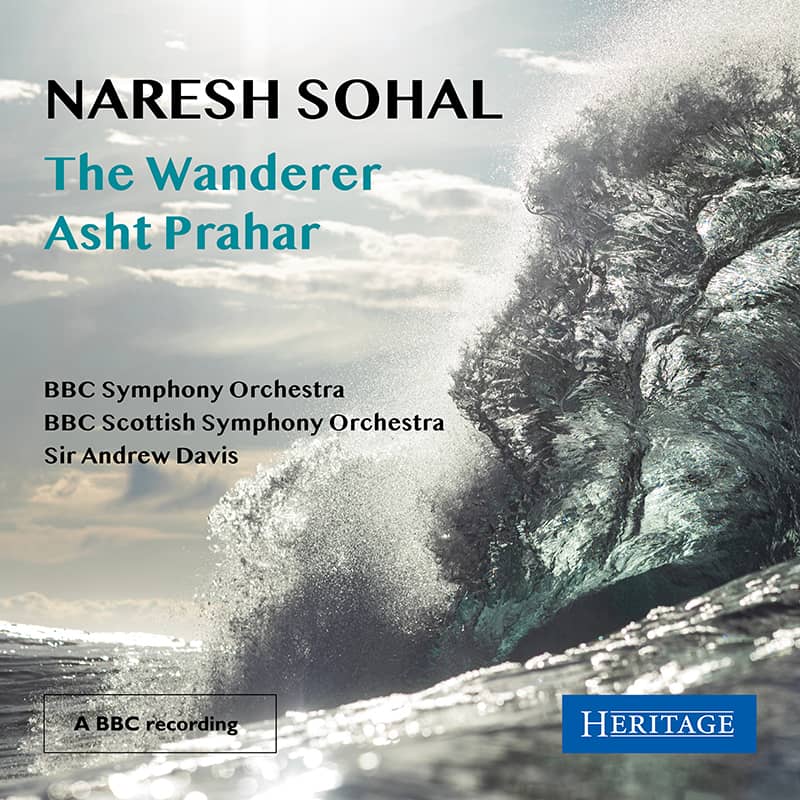
Naresh Sohal
Asht Pradar (1965)
The Wanderer (1982)
Jane Manning (soprano), BBC Scottish Symphony Orchestra (Asht Pradar), David Wilson-Johnson (baritone), BBC Symphony Chorus and Orchestra (The Wanderer) / Sir Andrew Davis
Heritage HTGCD135 [77’36”] English text included
Remastering Engineer Paul Arden-Taylor
Broadcast performance from BBC Studios, Glasgow on 6 January 1973 (Asht Pradar); live performance from Royal Albert Hall, London on 23 August 1982 (The Wanderer)
Reviewed by Richard Whitehouse
What’s the story?
Heritage issues what will evidently be an ongoing series of archival releases devoted to the music of Naresh Sohal, taken from BBC sources and featuring performers who championed his work over a career whose achievement is not reflected in the availability of recordings.
What’s the music like?
Although he came belatedly to the UK, Sohal (1939-2018) rapidly made up for any lost time when arriving in London in 1962 (further biographical detail can be found in the booklet note for this release and on the composer’s website). Within three years, he had produced his first major (and latterly his first acknowledged) work. Asht Prahar then had to wait until 1970 for its premiere (at the Royal Festival Hall conducted by Norman Del Mar), but it attracted much favourable attention and led to another hearing three years on – the performance featured here.
Taking its cue from the Indian sub-division of the day into eight temporal units (four each for day and night), Asht Prahar unfolds its eight sections as an unbroken continuity. The sizable forces are, for the most part, used sparingly yet resourcefully; as too the deployment of such devices as quarter-tones, along with influences of Ravel and Stravinsky, in music that makes a virtue of its pivoting between East and West. Cyclical if not necessarily cumulative, its final and longest ‘prahar’ brings wordless soprano and orchestra into tangible and haunting accord.
By the time that The Wanderer received its premiere, Sohal had a number of major works to his credit and rationalized his musical idiom accordingly. Setting an anonymous Anglo-Saxon poem in which the male protagonist speaks movingly and often despairingly of his isolation – both physical and spiritual – after the death of his lord, the work divides into two large parts that expand on the narrative’s emotional import. Such ‘‘existential bleakness’’ is intensified by omission of the poem’s last lines with their invoking a specifically Christian consolation. Despite its more than 50-minute duration, there is nothing discursive or unfocussed about The Wanderer’s content. Much of its text is understandably allotted to the baritone, whose austere character is complemented by darkly rhetorical choral passages while offset by an orchestral component with much soloistic writing (notably for flute) in a texture the more involving for its restraint and its strategic use of colour to define specific incidents or emotional responses. Nor is this an opera-manqué, the work succeeding admirably on its inherently abstract terms.
Does it all work?
It does, allowing for the fact that Sohal is not seeking any overt fusion between Occident and Orient, but rather attempting to forge a personal idiom influenced by both while beholden to neither. Both these performances bear out his convictions, Jane Manning adding her ethereal presence to Asht Prahar and David Wilson-Johnson bringing evident compassion to his more substantial role in The Wanderer. Both works benefit from the insightful presence of the late Sir Andrew Davis, whom one regrets never had an opportunity to record them commercially.
Is it recommended?
It is. The sound of these broadcasts has come up decently in remastering, lacking only the last degree of clarity or definition, and Suddhaseel Sen contributes informative annotations. Those looking for a way into Sohal’s distinctive and alluring sound-world need no further incentive.
Listen & Buy
For purchase options, you can visit the Heritage Records website
Published post no.2,451 – Thursday 20 February 2025

by Ben Hogwood Picture of György Kurtág (c) Filarmonia Hungaria
This is a post in honour of the remarkable composer György Kurtág, celebrating his 99th birthday today.
You can read about his work with baritone Benjamin Appl in an interview published on Arcana last week, but to get some appreciation of Kurtág’s remarkable music, here are a few pointers:
It is perhaps a bit restrictive trying to listen to Kurtág’s music via a YouTube link, so if you can find a widescreen system to play Grabstein für Stephan on then I fully recommend it. Following the score will show just how imaginative his orchestration is, and how compressed and concentrated the music becomes.
Meanwhile the Microludes, for string quartet, encapsulate Kurtág’s economical and pinpoint style, pieces whose every move and aside is critical to the whole.
One of my favourite live experiences was watching Kurtág and his now late wife Márta play exquisite duets at the Wigmore Hall for the composer’s 80th birthday. It was like eavesdropping on a private conversation between two intimately connected souls, no more so than when they were playing Kurtág’s own arrangements of J.S. Bach:
Published post no.2,450 – Wednesday 19 February 2025
 Arcana.fm