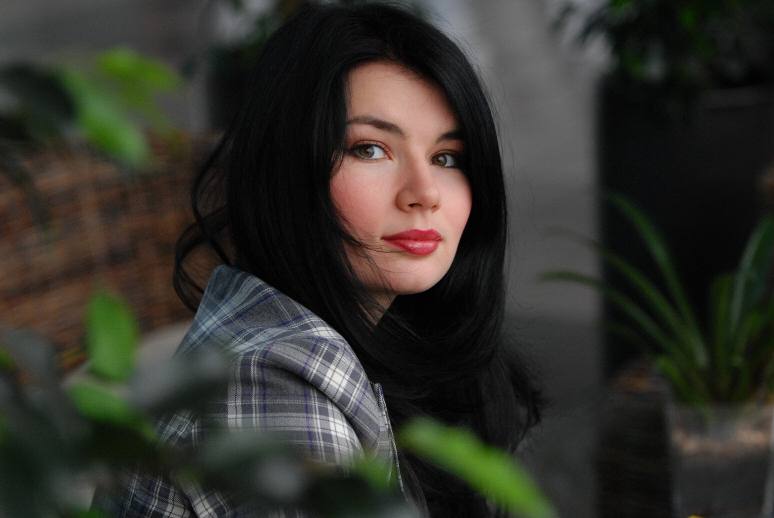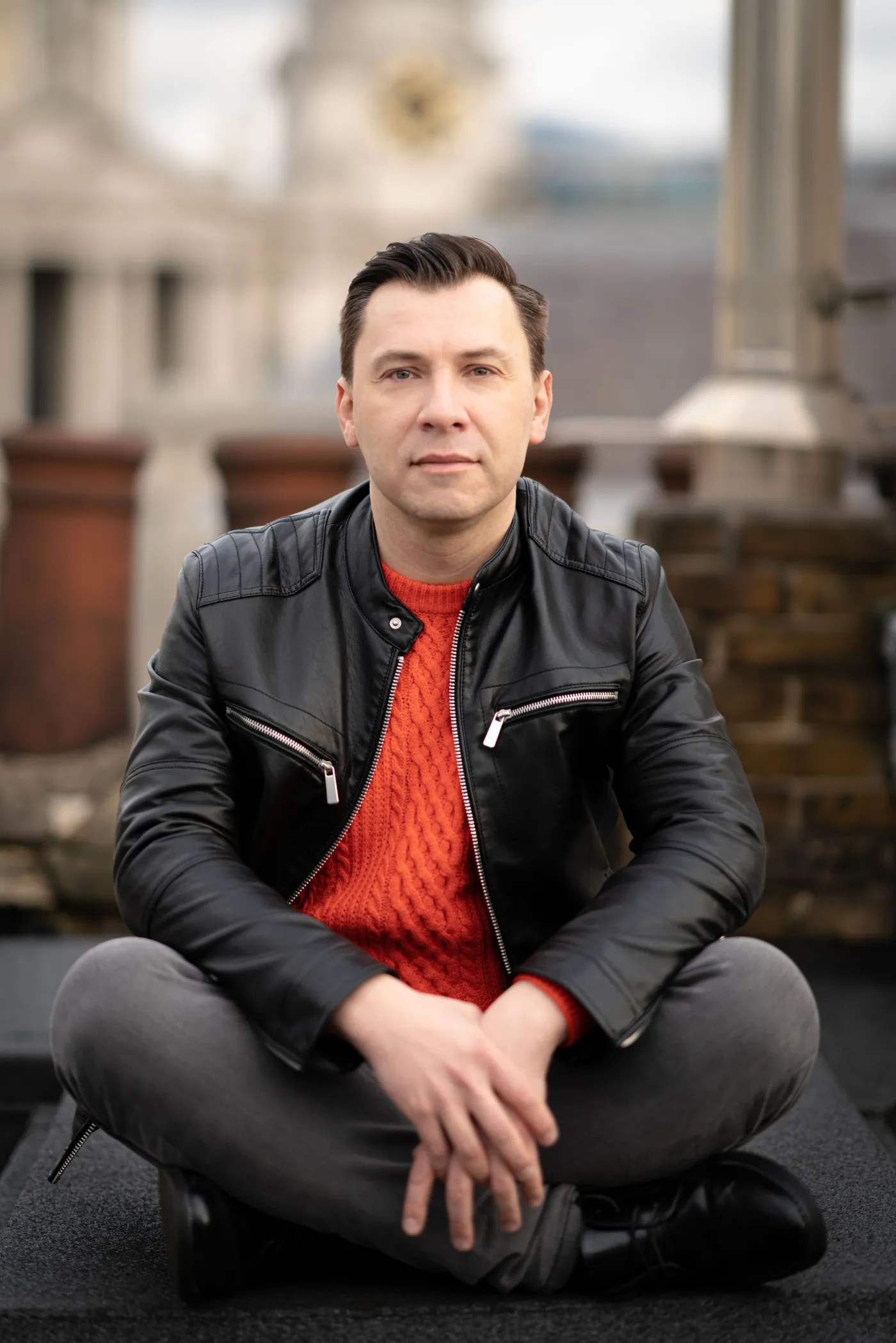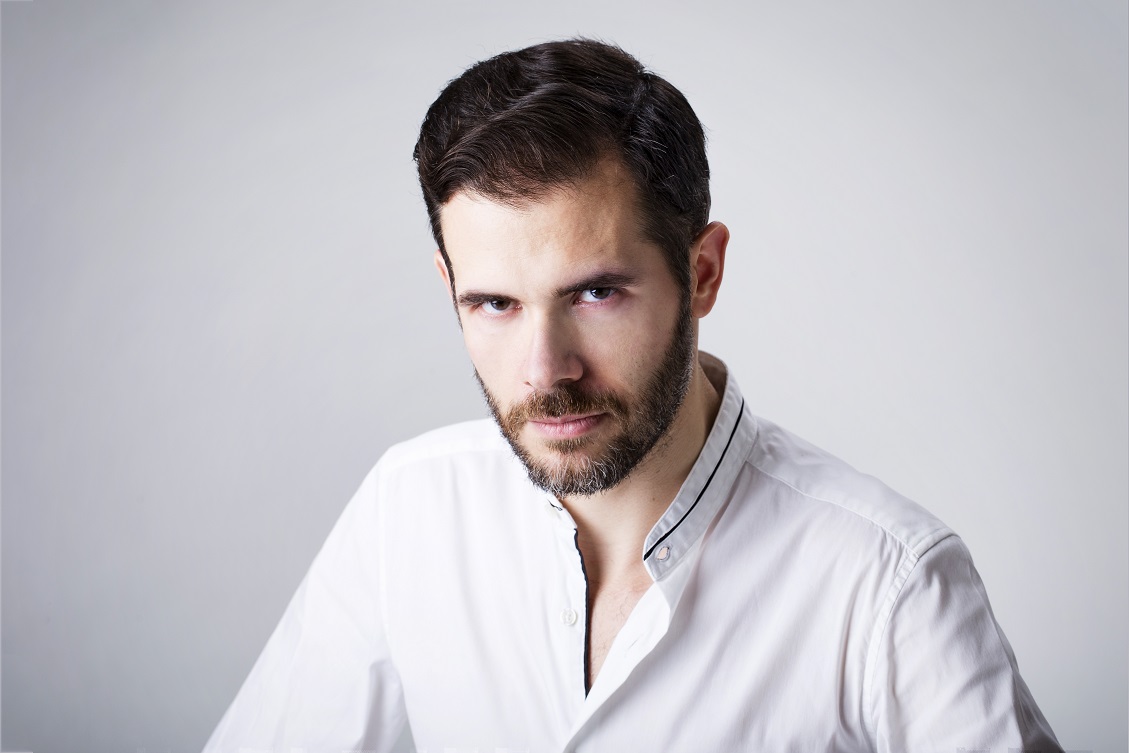
Talking Heads: Francesco Cilluffo

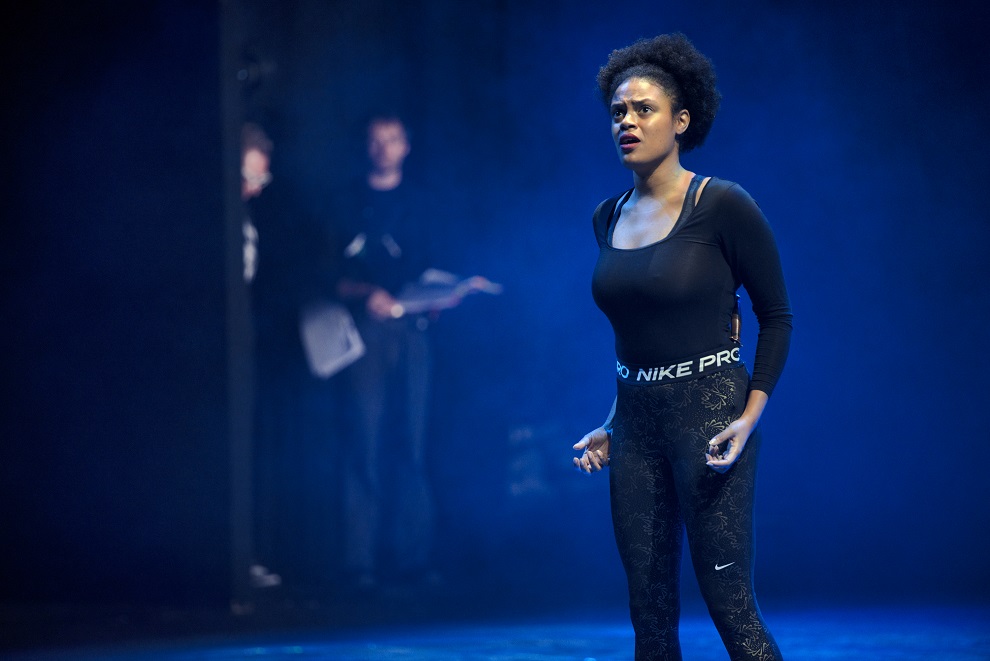
by Ben Hogwood pictures (c) Ribaltaluce Studio (Francesco Cilluffo); Pádraig Grant (rehearsals)

Arcana has the pleasure of an audience with conductor Francesco Cilluffo, in his third year as Principal Guest Conductor at Wexford Festival Opera. Previous outings have led to encounters with Alfredo Catalani’s Edmea (2021) and Fromental Halévy’s La tempesta (2022), both Italian operas with Shakespearean connections. This year, however, the action shifts to the coast of Florida, for a production of Frederick Delius‘s rarely heard opera The Magic Fountain.

As we talk, it is clear Cilluffo is excited and deeply passionate about communicating this little-known work to a wider audience, from his own unique position. “I’m a very unusual Italian conductor!” he says. “Alongside the staple repertoire one expects from an Italian conductor, I’ve always had a great curiosity about less performed repertoire. My musical upbringing was a mixture, because I grew up in Italy, but lived and studied in London for many years, and worked a fair amount of time in English speaking countries. I remember the first time I was exposed to Delius was when I heard The Walk to the Paradise Garden, in a Barbirolli recording. I thought there something very soothing about the music, but at the same time I could feel there were more layers. It made me very interested to know more and I learned it was from his opera A Village Romeo & Juliet, and gradually about Delius.

As I said I have an unusual profile, and to prove that I can say that The Magic Fountain is already better known than the only Delius opera I have already performed, which is Margot la Rouge, which I did in Opera Holland Park as part of a double bill (with Puccini’s Le Villi) two years ago. That is completely unknown but is his fourth opera, so not an early attempt. It’s a weird piece, because it is in French, and there are no other versions in any other language because it was written for a competition, for the famous Verismo opera competition that was in Italy, and was won by Leoncavallo’s Cavalleria Rusticana. Delius forced himself to enter it, because if you think of Delius, you don’t necessarily think about life and blood, or drama. Because I’ve conducted it now I can say it is probably the least interesting of his operas, because apart from his craft in writing for the orchestra, it sounds like something he felt he had to do, and it was not successful. So I arrived at The Magic Fountain knowing a lot about Delius. In the years coming up to this performance, I have always felt a particular connection with the music. It is gorgeous music, very personal, and clearly the music of someone with a very interesting and difficult life. All of that gets into the notes!”

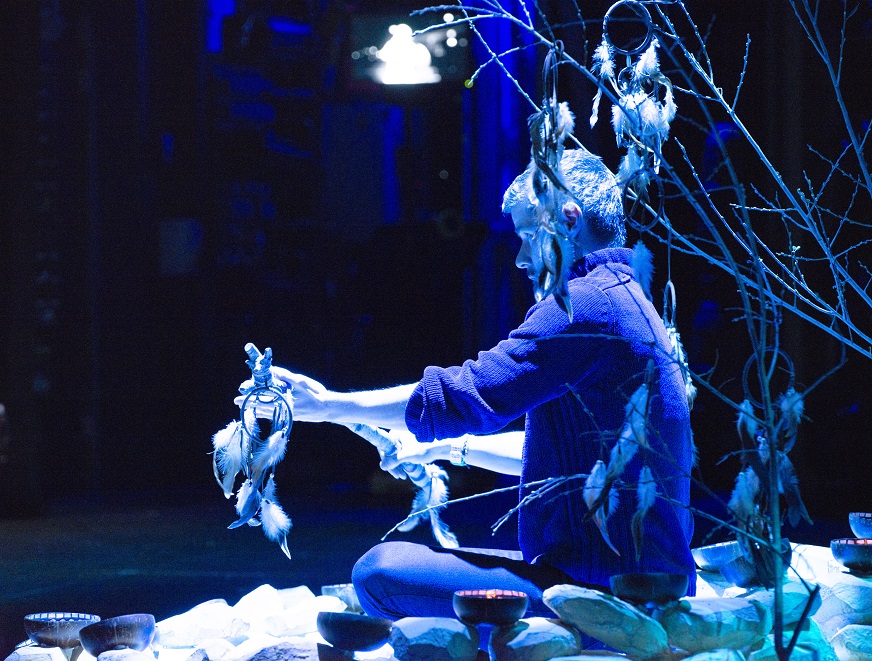
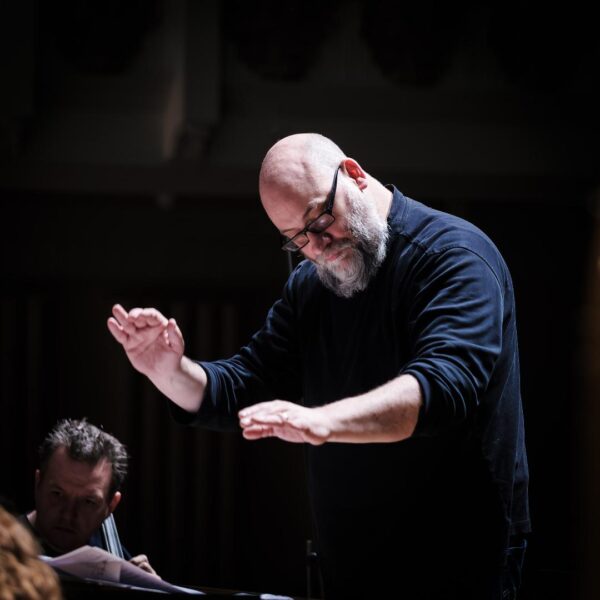
During a rehearsal for the Magic Fountain, Axelle Saint-Cirel sings the role of Watawa

The plot has strong autobiographical elements that Cilluffo recognises. “It’s not just an isolated case, because all the Delius operas deal with a similar situation”, he says. “You could say the same thing about Benjamin Britten’s operas. Delius has different worlds, backgrounds, countries and social backgrounds, different worlds that collide through love. We can read a lot of autobiographical meaning here, starting with the name of the main lead, Solano. We know that one of the many crazy things that Delius did was manage the orange plantation in Florida, called Solana Grove, and while there is no proof, we know when he was there he probably had a love child with one of the locals. There is also a letter from Delius planning an operatic trilogy about outcasts. In a way he did, because if you think of his three main operas, The Magic Fountain has the native Americans and the clashes between their culture and the conquistadors. Then his opera Koanga is a clash between slaves and the owner of a plantation, and in a way A Village Romeo & Juliet is about, again, innocence versus society, but again there is the strong character of the Traveller, who is central to the plot.”

Like Britten, the connection runs deep. “Delius probably felt some connection with the outcast, for the main reason that he was a man without a motherland. In my experience a lot of British people don’t really see Delius as a British composer. His DNA starts in North Europe, then most of his early life was in Bradford, but then he moved everywhere! Apparently he didn’t master British language as flawlessly as one would expect, because he was writing this weird German with a hint of Norwegian, because of his relationship with Grieg. I am aware of a bit of a Delius renaissance, because I’ve seen a lot of programming of his stuff. I’m very glad, because I think he stands in a category of his own.”

Meilir Jones

Cilluffo remembers fellow countryman, the critic Paolo Isotta, sharing this view. “He was a very old school music critic, who was very controversial in his taste, but I remember he kept saying he thought Delius was one of the most interesting orchestral composers of the 20th century. That’s quite a statement, and it clicked in my thinking – I thought there must be a grain of truth there. So I was very glad to spend a lot of time learning and studying his music.”

One of Delius’ strongest characteristics is an ability to create vivid pictures in the mind of his listener, which carries through to The Magic Fountain. Yet Cilluffo goes further. “I think so, but descriptive music is just the surface. There’s a veneer of that, but what really stands out is an incredibly physical and sexual drive in the music, a sensuality needs to be embraced in a very unapologetic way.”

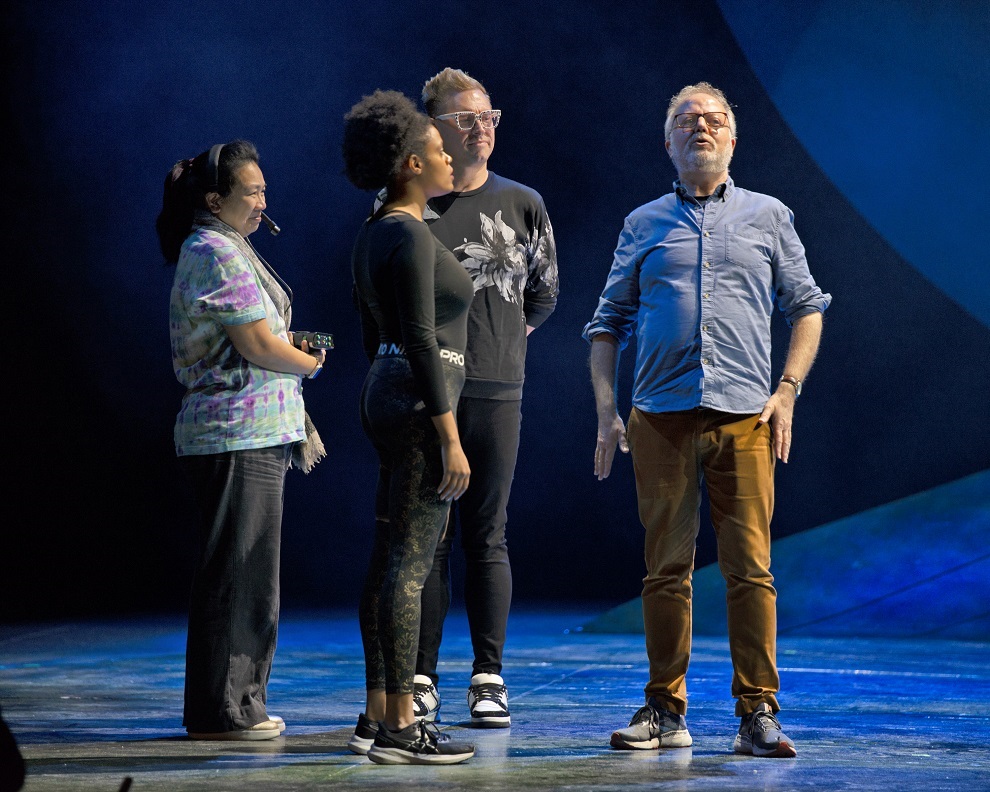
L-R Theresa Tsang, stage manager with Dominick Chenes, Axelle Saint-Cirel and director Christopher Luscombe

He also considers how the quality of the performance is particularly important in Delius’s music. “I think Beethoven and Puccini can survive, but for some composers a bad performance can harm them. I don’t mean technical, of course, but I mean when the music is not done in a way that does it justice or bring through the many layers of the music. Some composers can be doomed by that, and I think that’s the case with Delius. As much as Sir Thomas Beecham was an incredible champion of his music, and was an amazing conductor, I still feel to this day he gave the idea that this is lovely countryside, beautiful English music. As gorgeous as that can be, people can say after five minutes, “I’m done with your beautiful English idyll, there’s nothing else. Only by starting with the Delius biography, and reading his letters, which I’ve done, and knowing about the culture of Paris and Northern Europe at the start of the 20th century, then you start to see more. You see that why this person connected much more with expressionist painters and writers than any other – because there’s an incredibly violent and sensual layer in the music there. You just need to bring it up!”

There are interpretative dangers for conductors taking on Delius’s music. “The way it’s written – and we know that Delius was a self-taught musician – can lend itself to misinterpretation. If we talk about historical performers, I think Sir John Barbirolli understood him better, despite the fact that Beecham was the great champion of his music. We also have to remember that Delius never heard most of his music in his lifetime. He never sat through a performance or even the read through of The Magic Fountain. I don’t say to suggest that he would have changed anything, but I think there is an element of frustration and anger inside, of knowing he was writing this amazing music, but nobody wanted to put it on. That somehow creeps into the writing, especially towards the end.”

His health – and sexual health – also played a part. “We know that his syphilis was such a constant in his life. His relationship with an illness that was inevitably linked with sexual freedom was against his very strict upbringing, with a Protestant father. If we put on one side his friendships with Munch and Gauguin, and writers like Strindberg, there is very little room left for beautiful, idyllic, ‘make you feel good’ music.”

For this production of The Magic Fountain, Cilluffo is drawing on previous creative relationships. “We are very much on the same level with the director, Christopher Luscombe, as we already worked together at Grange Opera on Tosca together. We have one recording of The Magic Fountain to refer to, which is already one more than we would normally have for Wexford style operas. As good a reference as that recording is, we feel we are going in completely the opposite direction. The recording sounds too beautiful, too even, and this is an opera with bursts of passion and conflict. There is also something very courageous about this opera, where someone who is so clearly middle class wanted to put on stage people who are victims of the very same system of which Delius is part. Maybe that’s also one of the reasons why people didn’t go out of their way to put on operas like Koanga or The Magic Fountain, because it was uncomfortable. With Koanga, we are talking about decades before Porgy and Bess could be considered as an opera to put on the stage. All this is part of what we have in mind in bringing this work back to life.”

When conducting Delius, what does Cilluffo consider to be the principal challenges? “There are two sides to this answer”, he says. “One is that as an opera composer, Delius always thought of the orchestra first. The orchestra is the colour that brings out the drama, contrary to a lot of opera where the drama is always from the voice, and enhanced by the orchestral palette. You also have to keep in mind that he never heard it, and – I’m going to use a very bad word here – he never ‘workshopped’ it. Nobody told him that if you want to have three horns blasting out when a soprano is singing in the middle register, you might want to consider lowering the dynamics here and there. But that’s the work we do, and where my background as a composer comes in very useful. The technical challenge is to adjust the work so that the orchestra doesn’t become the only character.”

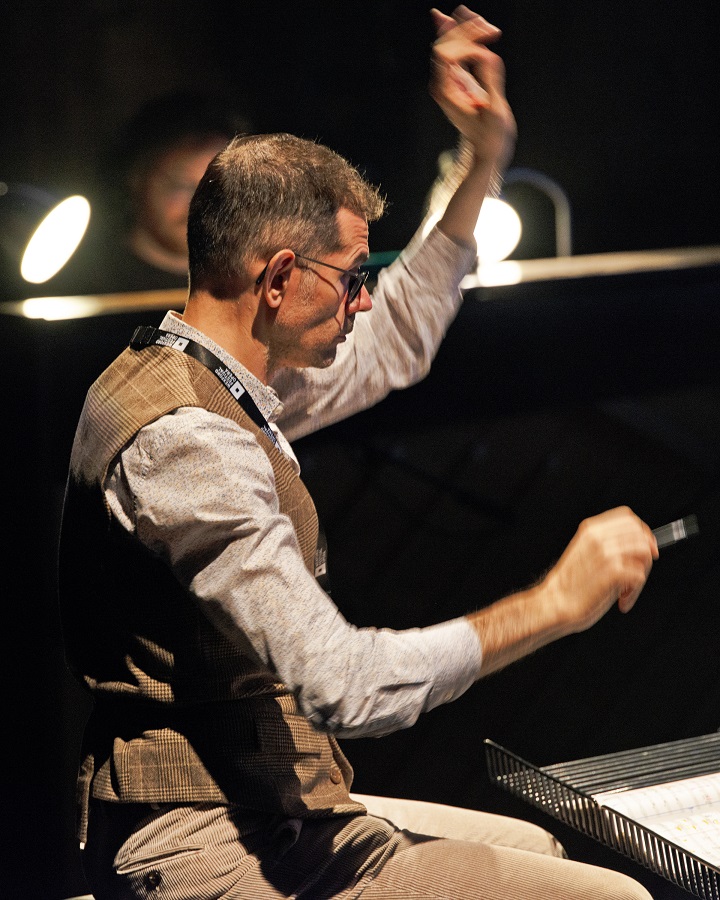
Francesco Cilluffo, conductor

As to the other side, Cilluffo says, “The one composer that keeps coming up as a reference when we speak with Chris about the opera is Puccini, which you would imagine is as far as possible from this world. However he isn’t far, because Puccini is another one who suffered, especially in the past decades, as being labelled as just one thing, an Italian composer of desperate love. Puccini was a very troubled and dark soul and was in contact with the same world at the same time – Paris and Northern Europe, of the beginning of 20th century. You know, Delius used to go and attend autopsies in the morgue in Paris. Part of that goes into Margot La Rouge, which is set on the outskirts of Paris and is a fight between prostitutes and dealers. I’m bringing this up because that’s something we read about in the novels of Émile Zola, like Thérèse Raquin, and that’s the same world Puccini was fascinated by, as in one of the operas of Il Trittico Il Tabarro. I think both composers, as different as they were, were triggered by the incredible war in Paris for artists at the beginning of 20th century.”

Coincidentally, Francesco’s diary for 2025 has been dominated by two composers – Puccini and Delius, heightening the levels of interest in linking them. “What really stood out – and finally made Puccini be considered a proper great composer – was the orchestra, and how the orchestra conveys, in a post-Wagnerian but personal way, what’s going on, the psychology, or what we’re really talking about. It’s always with the lesser known operas where it is easier to see, and I think a great underrated opera of Puccini in La Rondine. You could say it is a lighter version of La Traviata, but if you listen to the music, and the duet at the end of the opera, it’s about the end of a world of certainties, of the Austo-Hungarian Empire. It’s interesting because you read his letters, and Puccini writes, “I want La Rondine to be my Der Rosenkavalier”. That’s why I always insist with younger colleagues that you have to study what’s in between the notes as well studying the notes, because by reading these things, words open up to you about how to actually make it work apart from the technical side. Of course Delius was a very different experience, because Puccini was one of the most famous and richest composers of his time, while Delius had to sell his Gauguin painting towards the end of his life because he just couldn’t make money – and of course he was becoming blind as well.”

Axelle Saint-Cirel

Yet the similarity of what they experienced persists. “I feel they were both in touch with this incredible age, where we cannot even start to feel what it was like to be in the Paris at the beginning of 20 century, with all the contradictions, the violence, and their approach towards love, sexuality and wars – and, up to a certain point, the approach to different and far away cultures. Puccini treated it in a very normal way of his time, with Madama Butterfly and Turandot using different cultures as a background for a story that was totally Western European. In the case of Delius, he actually went to the places, and dealt with rather less comfortable situations. As part of my background research I have been reading a book by Claude Levi Strauss, the French anthropologist. One of his books, Tristes Tropiques, talks about his work in South America, and how that changed the perception of different culture and how we actually go from an anthropological point of view, at that time, to interpret things according to our own system of beliefs. He talks of how not to do that.”

Turning to Wexford, the 2025 incarnation of the festival looks set to be a colourful one. “I started going to Wexford in 2015”, recalls Cilluffo, “and my first experience was a Mascagni opera, Guglielmo Ratcliff. Funnily enough, one of the three operas that year was Koanga by Delius! It’s funny after ten years I’m now the one conducting the Delius, but that is one of many reasons why I keep coming back and I was very happy to be nominated principal conductor in 2022. It’s the one moment of the year where I know I’m going back to a place where music and studying matter. As a guest conductor I travel all over the world, and most of the time it is with operas that are well known. It is very much a traveller’s life, but sometimes you do feel you are just one wheel of a big machine. I always think that in Wexford, the real core of Wexford is an act of love, because you take some less fortunate operas, that for some reason have been forgotten. Some of them, when they were premiered, were huge success and were for a long time but then suddenly disappeared. I think Wexford reconnects you with the very reason you want to do this, which is to make a difference, to really live a month in a work of art that has been rarely heard, and to make a case for it. I cannot lie – not all the operas are going to be blockbusters – but I’m not sure that’s the point. It’s a great moment to reflect and to connect with this repertoire. I always look forward to this every year, it is a privilege to think I am going to spend a month with Delius, and with this work. I’m already fascinated, and I haven’t done the first rehearsal yet!”

The location is also a draw. “Wexford is a very Delius-like festival, the coming together of different countries and cultures in one space, and the nature there is so outstanding. Most of us go from one city to another, but suddenly here you are, with the Irish Sea in front of you, and you are far away from the closest big city, Dublin, which is two hours north. It is a very Delius-esque festival, and in fact this is the third Delius opera they have done in under 20 years – with A Village Romeo & Juliet, Koanga and now this. I do have to say personally, however, that I think Delius’ operatic masterpiece is Fennimore and Gerda. I hope one day to that, it’s a one-act opera so has to be part of a double. It deals with so much material of his life, art and life in Northern Europe, Scandinavia. It’s the closest he got, I think, to writing Pelléas et Mélisande.”

We may hear more of that in time, of course – but for now it is clear anyone attending The Magic Fountain will be treated to a fascinating work by a composer whose creative wealth and originality is finally being transmitted to the stage.

The Magic Fountain runs at the O’Reilly Theatre, National Opera House, Wexford, on 19, 23, 25 and 31 October. For more information and tickets, visit the Wexford Festival Opera website

Published post no.2,684 – Saturday 11 October 2025

Talking Heads: Doing It Their Way – Kenneth Woods, ESO Records and the Future

interview by Richard Whitehouse Picture (c) Julie Andrews

You do not move forward by standing still. That is evidently the maxim of the English Symphony Orchestra, whose first release on its new in-house label has just been issued. Apropos of this and other matters, Arcana spoke recently to Kenneth Woods, the principal conductor and artistic director of the ESO, about his plans for this audacious undertaking.

It made sense to begin with the motivation behind the establishing of ESO Records. ‘‘It’s something I’ve wanted to do for a long time. Being able to release whatever we want, and whenever we want, to is hugely empowering for us as an orchestra. It gives us a chance to align our concert work with our online presence and recording programme more strategically’’.

As to whether these releases will be mainly studio or live recordings, ‘‘It’ll be a combination of both. I think that over the course of the next couple of years, listeners will start to discern a number of threads within the ESO Records portfolio. Our first release is an Elgar Festival disc with Elgar’s First Symphony and his concert overture In the South. This is a great way for us to spread the word about the festival internationally and also to share the exceptional quality of Elgar Festival events. And, with the festival doing so many new or lesser-known works, we can share that music with a world-wide audience.

‘‘As a result of the COVID pandemic, we’ve an enormous amount of material ‘in the can’ that we recorded for ESO Digital (our online video portal). ESO Records gives us a chance to share that body of work, also to highlight and complement our future concerts. For instance, we’ll be releasing our one-per-part version of Mahler’s Ninth Symphony to coincide with a run of performances in December. And there are studio projects such as the Sibelius cycle which have continued as we tie-in the recording of its future instalments to public concerts’’.

Woods is keen to point out that ESO Digital release will complement the orchestra’s ongoing schedule of releases for other labels. ‘‘Since we released the first disc of my tenure in 2015, we’ve worked with Nimbus, Lyrita, Signum, Avie, Toccata and Somm among others. While I hope that many of those partnerships will continue, the economic climate for labels is very difficult. They’ve a lot of fixed costs and declining revenue streams which means that, for a group like us, finding release slots and agreeing repertoire or projects has become more complicated. Something like the Sibelius cycle which, while it is very important to us as an orchestra, is not the kind of repertoire many labels do anymore.

‘‘One can also be hampered through labels having other versions of the same repertoire in the pipeline or in their back catalogue. That said, I’d contend the world does need recordings of pieces which emerge out of shared sympathy and enthusiasm for the music among players, conductor and production team. There’s always more to be said about the greatest music, and if we feel we’ve something meaningful to contribute, then we’re going to say it’’.

Given the varying economic and logistical factors, ESO Records might not always be issued both as CDs and Downloads. ‘‘This will vary according to the release. It makes to put the Elgar Festival Live stuff makes out on CD because they make a great souvenir for attendees. But with most projects today, physical sales are so small it isn’t worth the cost or complexity of maintaining an inventory and shipping it all over the world. Moreover, the argument used to be that CDs sounded better, but the quality now at 24-bit and 96-kHz sampling contains between three and ten times as much detail and information. We want our listeners to hear our work in the best possible quality, and these days that means streaming or hi-res downloads’’.

With this in mind, listeners can look forward to no mean diversity in terms of future issues. ‘‘I mentioned we were looking to create coherent and ongoing threads among our releases. Elgar Festival Live has several more releases ready and we’ll be recording our performances at this year’s and all future festivals. The orchestra’s long-term commitment to contemporary music will be a big part of our future work, and I expect this to feature many of the amazing composers that listeners have come to associate with ESO such as Philip Sawyers, Adrian Williams, Emily Doolittle, David Matthews and Steve Elcock. We’re also keen to draw on the ESO’s extensive archive of performances by composers such as Ireland, McCabe, Maw, Simpson and Arnold, along with performances conducted by the likes of Michael Tippett and Yehudi Menuhin, with a wider public.”

‘‘The Sibelius and Mahler projects are indicative of our desire to put our stamp on so-called standard repertoire or, as I prefer to call it, the greatest music ever written. One of the best things about streaming is that not every release needs to be a 70-minute album. Archival recordings might well come out as singles or EPs to align with composer anniversaries or birthdays, historic occasions and upcoming concerts – so there’ll be releases of Beethoven, Mozart, Brahms, Strauss, Bartók and Shostakovich. I’m also very proud of our track record of championing historically suppressed music, so listeners can expect further issues of Gál, Schulhoff, Kapralova, Krenek and Weinberg.”

‘‘Finally, ESO Records will give us greater freedom to develop collaborative projects with artistic partners including composers, soloists and directors. We’ve just recorded a fantastic disc of organ concertos by Poulenc, Hindemith and Daniel Pinkham with organist Iain Quinn for release next year, and I’m hopeful there’ll be many opportunities in the future to work collaboratively so as to bring worthwhile music to the public’s attention’’.

Much to look forward to, then, from a label whose artists have never shied away in pushing the envelope when it comes to imaginative programming and innovative presentation. Qualities, indeed, that will no doubt prove synonymous with whatever releases emerge from the ever-enterprising English Symphony Orchestra.

You can read Richard’s review of the first instalment in the English Symphony Orchestra’s Sibelius cycle on Arcana, with the Sixth and Seventh Symphonies and Tapiola

Published post no.2,623 – Monday 10 August 2025

Talking Heads – Helen Grime

by Ben Hogwood

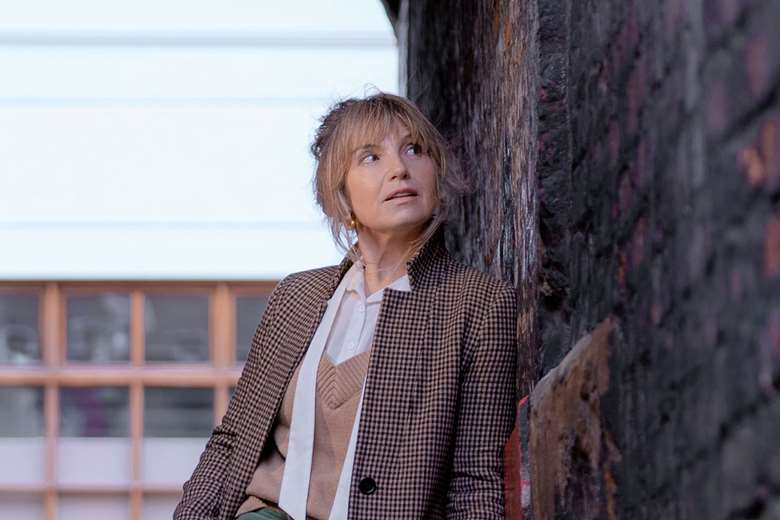
Helen Grime

In the classical music calendar, summer effectively begins with the start of the Aldeburgh Festival. This year’s model – the 76th running of the Suffolk festival – comes prefaced by a line from Shelley:

And, hark! Their sweet sad voices! ‘t is despair
Mingled with love and then dissolved in sound.

At the heart of this year’s festival are four featured artists – tenor Allan Clayton, violinist Leila Josefowicz and composers Daniel Kidane and Helen Grime. Scottish composer Grime, currently living in London, joined Arcana for a chat to talk about the range of her compositions in the festival this year, and the close link she enjoys with its audience and organisers.

Her first experiences of the festival date back to 2005, when she was on the Britten Pears Advanced Composition course. “I was studying on that and Colin Matthews was there, and I went back in 2006 to hear the performance of the piece I wrote while I was there. I also played in the chamber orchestra for the War Requiem on a course, and I played in Britten’s Nocturne as well, which was amazing. Those were the first experiences, and I also went to an opera writing course as a composer, which would probably have been 2006. Then in 2009 I wrote a piece called A Cold Spring, for chamber ensemble. It was a joint commission with Aldeburgh Music, the Birmingham Contemporary Music Group and the Sue Knussen Trust. The piece was in the same program as an Elliott Carter premiere (On Conversing With Paradise). He was there, and it was an amazing time.”

Carter is a composer Grime has always admired, and she had met him the previous year. “I was a fellow in the Tanglewood Music Center, and it was his 100th birthday year. They have a festival of contemporary music every year, and that year it was completely devoted to Elliot Carter’s music. As composers we had the opportunity to go to all the rehearsals and concerts, and it was a chance to immerse yourself in a composer’s work – lots of his chamber music but also the orchestral works. This was the time that I really dived into his music and were able to meet him and ask him questions. It was an incredible point in history to think back to really, and he had so many amazing things to say. He was able to go back in time and talk about his time studying in Paris with Nadia Boulanger, and moments in jazz bars, little things that maybe you haven’t read in a book. Hearing that directly from the composer is a fantastic experience!”

Helen lived in Edinburgh initially but moved to London for studying, and has stayed. Her music still carries parallels to her Scottish roots – and these are evident in Folk, premiered by soprano Claire Booth with the BBC Scottish Symphony Orchestra under Ryan Wigglesworth in Glasgow. “Scotland still feels like home”, she says, “and I’m so fond of that orchestra. I’ve worked with them a fair bit over the years, and it was wonderful to be able to work with them on the premier of Folk, with Ryan Wigglesworth, and of course, Claire.”

The piece will receive a second performance at the Aldeburgh Festival, with the Knussen Chamber Orchestra conducted by Wigglesworth. “I’m excited now for Ryan to do it again with a different with a different group. The piece is rooted in lots of folklore traditions. Zoe Gilbert, who wrote the libretto, is particularly influenced by Manx folklore, but the stories are rooted in different storytelling traditions from different places. She based the libretto on the stories in her book, Folk, so when you read them, you feel the resonance with stories we already know and have known since childhood. She’s subverted lots of roles, but there’s definitely that kind of connection with Scotland and folklore, so I wanted to have that connection in the music as well.”

Arcana was fortunate to interview Claire Booth (above) just before the premiere of Folk, and Grime speaks warmly of her dedicatee. “She is a ball of energy! We’re very different in that way, but we get on very well. She is incredibly talented but also interested in many things. She found the book, and we both loved it, and so she approached Zoe. Obviously, I’ve known her work and singing for years. but we haven’t been working together until last year – although this project was brewing before Covid and then took a while to get it together. I don’t think it’s going to be the last time we work together, so I’m really excited about that. She’s an incredible talent but she brings such a personality to the piece, and she can just do anything. It’s very virtuosic, vocally. In Aldeburgh it will be with a small orchestra, so it will be interesting to hear that, in the Snape hall – but also with the surroundings, it’s made for that. When you’re there, and you’re amongst the reeds, it’s a magical place. You can see so far there, and whenever I’m there it always seems to be really clear skies. That time of dusk is particularly amazing.”

As a featured composer, Grime is presenting a varied body of work for the festival. “It is very satisfying. I’ve written a fair bit of music now, and I’m really happy with, for example, my Missa Brevis happening on the first Sunday. I’m really excited to hear that, as couldn’t go to the premiere in Edinburgh. To have these pieces happening in different locations around Aldeburgh is really special, with chamber music as well as bigger pieces. There is also another premiere, a piece I wrote during lockdown called Prayer which I wrote a while ago, which, again, I haven’t seen in a live performance. The Britten Pears Contemporary Ensemble are going to do that, a piece that I wrote during lockdown. It was recorded but not performed live, with the performers doing their bits separately, and Dame Sarah Connolly singing her bit. It’ll be great to be at an actual performance of that as well.”

Both of Grime’s string quartets will be performed in one recital, from the Heath and Fibonacci Quartets. They hold great personal significance for her. “It’s actually quite strange with the string quartets, because I wrote both of them partly while being pregnant. The first one was written in 2013, which was when I had my first son, so it’s weird that I then was writing another string quartet when I was pregnant with my second son! I was writing it at the beginning of lockdown, when we didn’t really know if things were going to be cancelled that summer. I was stressed out because I still had to meet the deadline, which was probably never going to actually happen – and it didn’t in the end, but I still needed to write the piece. For a lot of people that time they had lots of time to compose, but because everything was cancelled and you had a child who was then not at school, you suddenly didn’t have any time to work either, and there was no childcare of course. It was very intense, and I think the music is very intense, apart from the last movement, which is not intense in the same way and is much more of a release.”

Does it bring back vivid memories when she hears it? “Yeah, I can sort of remember how I felt, but it’s really difficult be in that moment. The Heath Quartet, who premiered and recorded that piece, I just love to hear them play, they made a brilliant recording of it and gave the most amazing premiere. So I can’t wait to hear them play it again, and to hear the other quartet with the Fibonacci Quartet, who I haven’t heard play before. It will be really exciting to hear the two pieces together and on the same program. They are sat between Beethoven and Britten, which I’m so happy about – hopefully they’ll somehow hold their own in amongst all of that! That concert is in Orford Church, so again a different venue which is so nice.”

It may seem an obvious question, but does Britten continue to be a constant presence at the festival? “Yes, and I think that’s the way it should be. I was in Aldeburgh last year, and Claire was there too, because she was coaching the young artists course. I paid my respects to Britten and Pears, at their graves. That line of history is so moving for me, and it’s something I hold close. I love Britten’s music, and it’s always going to be important to me, and that kind of continuation and line of British music is a beautiful thing. Having the opportunity to be a featured composer and to be surrounded by that is it’s a huge privilege.”

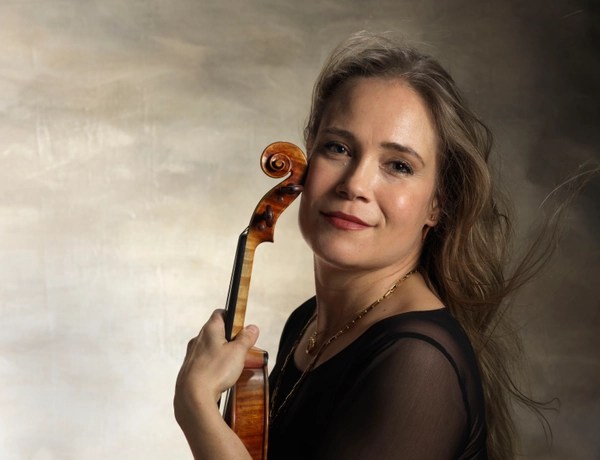
The featured artists and composers are chosen with typical care, placing Grime alongside violinist Leila Josefowicz (above), soloist in the composer’s Violin Concerto with the BBC Symphony Orchestra. “I’ve waited a long, long time for the UK premiere of concerto”, she says. “I wrote it for Malin Broman, an amazing Swedish violinist who used to be based in London and who premiered it in 2016, and then Leila took the piece on. She was supposed to be doing the UK premiere in 2020, but she’s played it a lot – in Amsterdam and in Finland. This does feel like the perfect moment, though, because Leila has that real connection with with Oliver Knussen. It’s kind of perfect that the premiere is happening in Aldeburgh. She’s an incredible artist, so the fact that we’re both featured artists is brilliant. I’m really, really excited about hearing Allan Clayton singing, and also Daniel Kidane’s pieces. We have quite a few shared concerts.”

Mention of Knussen leads us to talk about another highly influential composer, a clear influence on Grime both personally and professionally. “I have loved his music since the first time I heard it”, she says. “The first piece I heard was Ophelia Dances. My teacher at the time was Julian Anderson, and he introduced me to his music at the Royal College of Music. Every note is the right note, it’s just so beautifully crafted and exciting and powerful and enchanted.”

I was meant to meet him at the Britten Pears composer’s course, but when I was a fellow in Tanglewood he was out conducting, and he gave some masterclasses. He heard my music, and we got on well. Shortly after that, he conducted a short orchestral peace of mine called Virga, which I wrote as part of the London Symphony Orchestra scheme Sound Adventures, which is now known as the Panufnik Legacies. He was a real supporter of my music. I wrote Night Songs, which is also being done at Aldeburgh, for his 60th birthday celebrations in 2012. I really hold that dear, and I still listen to his music most weeks and days. A brilliant musician, composer, and supporter – and I think many musicians and composers feel the same way. My path would not have been the same at all without meeting Ollie.”

Looking ahead a little, Grime has an album of chamber works due for release on the Delphian label in August, a fascinating collection of works performed by The Hebrides Ensemble. “It’s coincidental to Aldeburgh, but great. The Hebrides Ensemble are one of those amazing groups who’ve been so supportive of me over the years, and they’ve given different performances. To have this portrait CD is fantastic, with a string sextet Into the Faded Air from 2007 right through to Braid Hills, a horn duo I wrote for St Mary’s Music School to celebrate their anniversary in 2022. I can’t wait for it to come out.”

Grime also acknowledges the passion and commitment of Delphian to composer albums such as this. “It’s really difficult to get these projects off the ground today, and very expensive, obviously. The commitment to new music in Delphian is absolutely brilliant, there was a wonderful CD the Hebrides Ensemble did a few years ago on Stuart MacRae, and there was a great collection of Judith Weir.”

With these projects coming to fruition, it is great to report Grime’s composition continues apace. “I’m coming to the end of my teaching turn at the moment, which means we get a bit of time for some holidays to compose. I’m writing a horn concerto at the moment, for Alec Frank-Gemmill and the Gothenburg Symphony Orchestra, so I’m completely immersed in all things horn at the moment! It’s a big piece, a big project, but I like that. I like to get my teeth into something. There are lots of various things on the horizon, too, but that’s the main thing. I’m more of a one piece at a time kind of person. Directly before this, I wrote a song cycle, Bright Travellers, which was premiered at the Leeds Lieder Festival earlier this year by Louise Alder and Joseph Middleton. I’ve been working with a lot of texts, and it’s been great in the last couple of years to work with living writers, that’s quite a new direction for me which is exciting!”

For more information on Helen Grime’s music at the Aldeburgh Festival, head to the Britten Pears Arts website

Talking Heads: Steven Isserlis

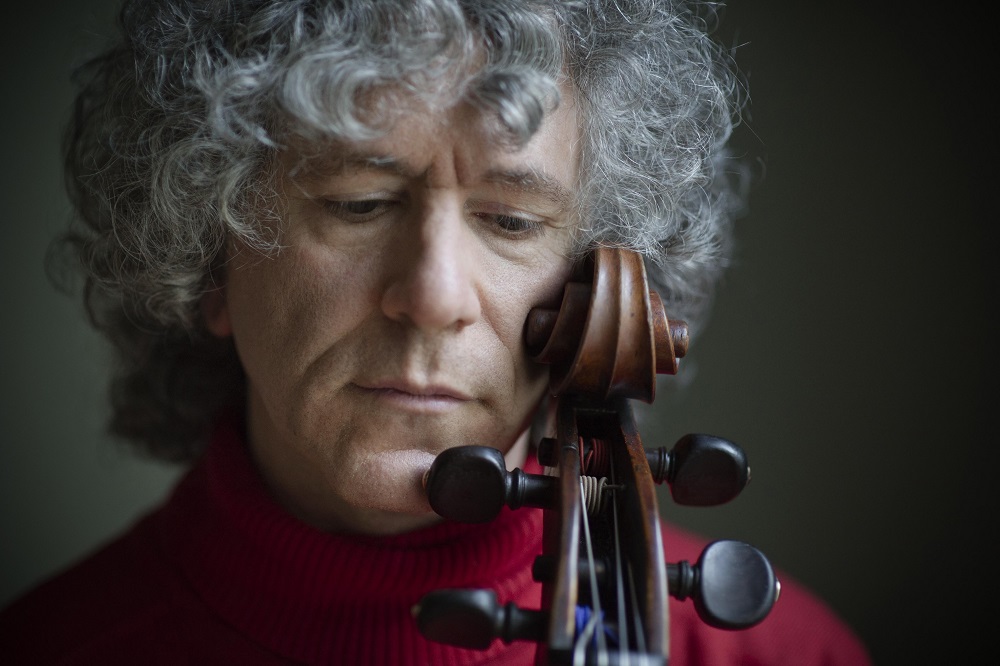
The cellist talks to The cellist talks to Ben Hogwood about his Wigmore Hall residency, celebrating the music of Fauré, and his new Boccherini album Music of the Angels.

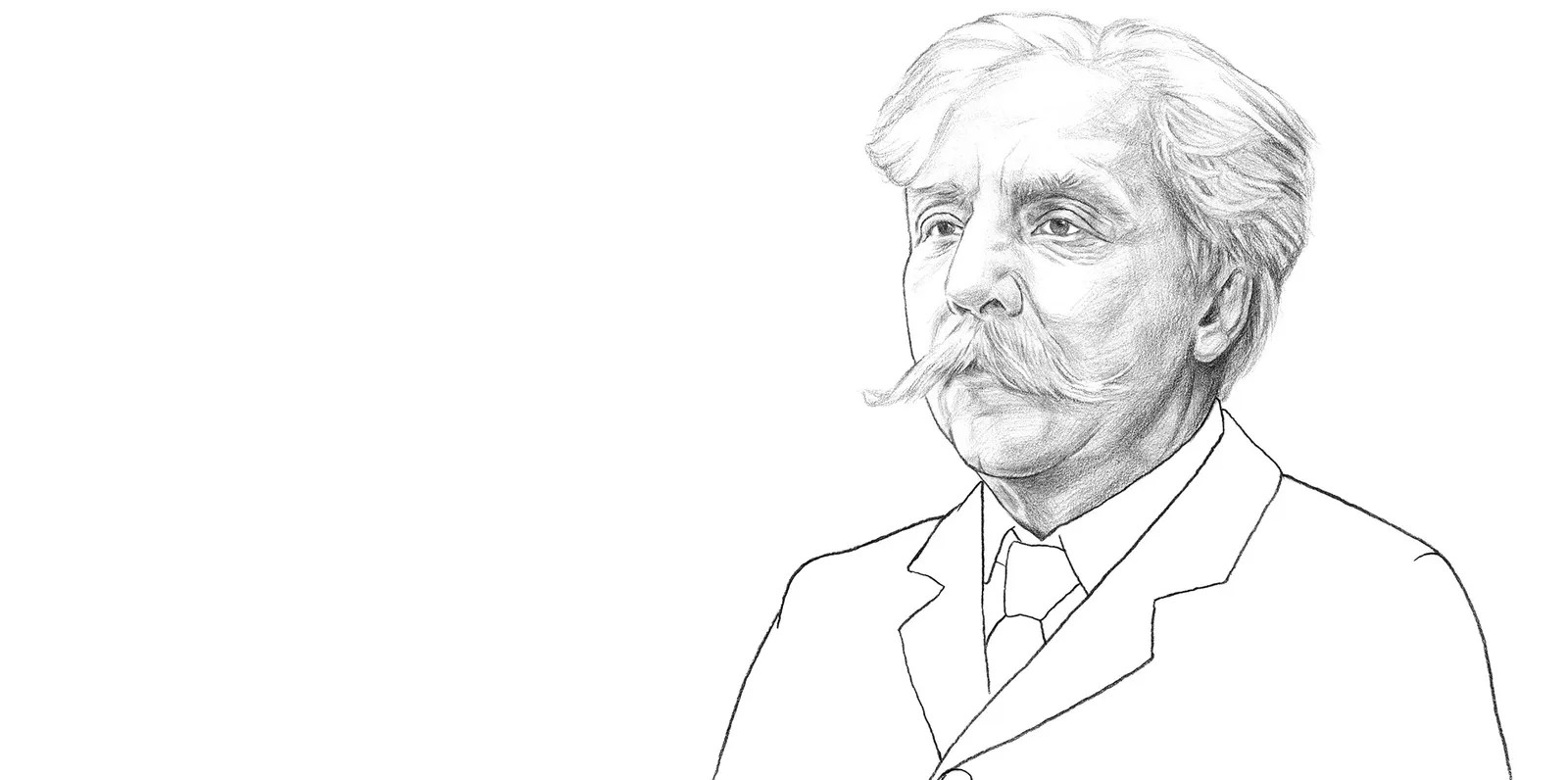
For cellist Steven Isserlis, November 2024 is all about two composers. From the first day of the month he is taking up residence at London’s Wigmore Hall for a five-day exploration of the late chamber music of Gabriel Fauré, who died on 4 November 1924. He has given a valuable insight into his thoughts on the composer in an article just published for the Guardian newspaper, but was generous to spend some time answering specific questions about Fauré’s late music for Arcana.


Arcana: The Wigmore Hall concerts put Fauré (above) in context with his contemporaries
– how did you plan them? It’s especially good to see the music of Nadia
Boulanger, Saint-Saëns and Koechlin included.

Steven: Well, first came the idea of doing the complete (major) chamber music of Fauré for the centenary; then everything else had to be worked out around that. It took some time for the programmes to fall into place – and then I was amazed that the Wigmore said yes to all five of them!

How does Fauré’s writing for the cello develop through his works?

I don’t think of his cello writing as such developing – it’s more the musical content. His first work for cello was the Élégie, which is of course wonderful; but if you compare it to the most similar subsequent piece of his, the slow movement of the second sonata, you see how much more profound his music has become. Which is not to put down the Élégie – any more than saying that Beethoven’s last piano sonata in C minor, op 111, is on a higher level than the Pathétique sonata op 13, also in C minor, is a criticism of the Pathétique.

What are the challenges and ‘do nots’ of performing his music in an ensemble such as a piano quartet or quintet?

We just have to agree on our approach – but we do! I call our team – Joshua Bell, Irène Duval, Blythe Teh Engstroem, myself, Jeremy Denk, Connie Shih – Team Fauré. We’re all in love with his music!

Fauré’s late period has some similarities with that of Brahms. Would you say there is anything in common between their approach, late in life?

I suppose, in that there is a ‘new simplicity’; but I think there’s much more in common between late Fauré and late Beethoven. And not just because both men were profoundly deaf!

There is something very special about Fauré’s melodic writing, and the chromatic harmonies he uses. It must be a joy to play!

It is! So long as one understands the chromatic harmonies – one has to be absolutely sensitive to each change of tonal colour.

Would you say Fauré is a composer where repeated listening brings ever
greater rewards?

Well – yes, of course; but I’d say that of any great composer! But perhaps with Fauré’s late works in particular, familiarity with the style is especially helpful.


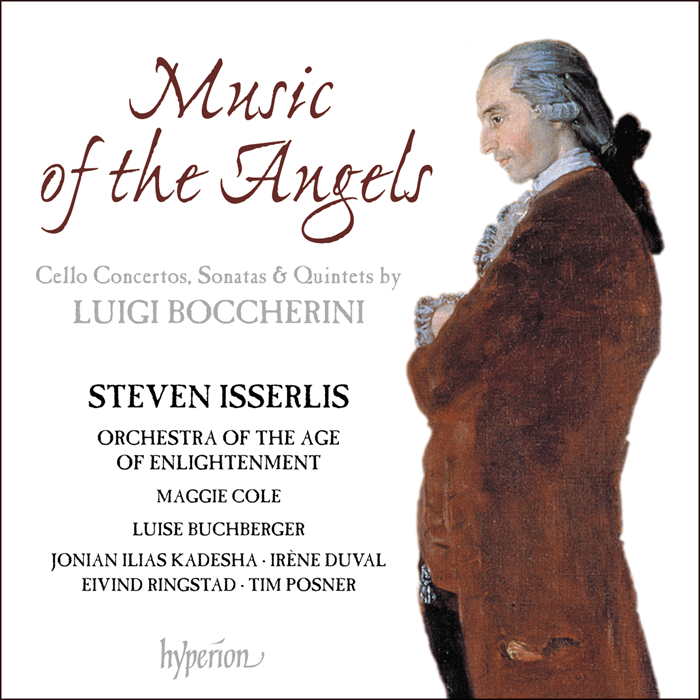
The other composer occupying Steven’s uppermost thoughts in the next month is Luigi Boccherini, with Hyperion releasing Music of the Angels, a generous anthology of the composer’s works for cello with members of the Orchestra of the Age of Enlightenment and harpsichordist Maggie Cole. The album explores the very different forms of Cello Concerto, Cello Sonata and String Quintet – where the composer adds an extra cello to the traditional string quartet line-up. Boccherini is a lesser-known light from the 18th century, and his cause has been close to Steven’s heart right through his recording career.

It’s great to see your Boccherini album. Was it most important for you to present the different types of work – concerto, quintet, sonata – in context?

Thank you! Again, the programme just worked out that way; but yes, I was happy to show different facets of Boccherini’s unique world.

You’ve been playing and recording the music of Boccherini for a good while – what was it that first attracted you to his music?

Well, my teacher Jane Cowan was a great Boccherini fan, which I’m sure influenced me. (She was also a great Fauré fan!) But I’ve always loved his elegance, the otherworldly beauty of his music, his gentle, kind musical soul.

At a guess, I think it might have been the Orchestra of the Age of Enlightenment’s first exposure to Boccherini. Did they enjoy it as much as you?

I think they MIGHT have done some of the symphonies; but I’m not sure. They were certainly lovely to work with – committed, enthusiastic and supportive.

You talk in your notes about the virtuosity Boccherini requires from his soloist – he must have been quite a player. Is it quite intimidating using such a high register of the cello to start with?

Yes! He’s among the most demanding composers for cello, because there’s nowhere one can hide. One can’t just add mounds of vibrato to mask the intonation, for instance. And one has to be able to shape the delicate curves of the music in a way that is naturally graceful; a challenge indeed.

Would you say his music is an ideal ‘next step’ for lovers of Haydn and Mozart?

I think that he’s very different from either Mozart or Haydn – roughly contemporaneous, yes, but another personality entirely. In a way, I think he’s more analogous to Domenico Scarlatti – not because they’re that similar, but because they were both Italians who spent much of their lives in Spain where, relatively cut off from the centre of European musical life, they created their entirely individual compositional worlds.

How does Boccherini’s cello writing contrast with that of Haydn?

Very different! Both can make the cello sing, true; but Haydn uses virtuosity for purposes of excitement, whereas Boccherini uses it much more subtly – usually for lightness and delicacy, frequently evoking birdsong.

With your Boccherini album set for release, are you inclined to record the Fauré trio, quartets and quintets?

Actually, yes; we were originally set to record straight after the festival; but we decided that that would be just too much. So nowthe plan is to record at least the late chamber works (which is the Fauré most in need of advocacy, I feel) next summer in the US. We hope…”

You can book the last remaining tickets for Steven Isserlis and friends’ Fauré residency at the Wigmore Hall website, and explore purchase options for the new Boccherini album Music of the Angels at the Hyperion website. The Wigmore Hall are streaming the Fauré concerts live from their YouTube site

Published post no.2,344 – Sunday 27 October 2024

Talking Heads: Claire Booth

The leading British soprano talks to Ben Hogwood about her duo of new albums celebrating the music of Schoenberg, as well as a fascinating career that touches on Mussorgsky and her meaningful friendship with Oliver Knussen. Photos (c) Sven Arnstein (above), Mark Allan (Oliver Knussen)

It is no understatement to state that Claire Booth is a national singing treasure. She would be too gracious to admit this, but the British soprano has played a leading role in classical music on these shores, particularly in league with composer and conductor Oliver Knussen as a leading exponent of new compositions.

Yet Booth’s pioneering spirit extends to music of the classical canon, and after Knussen’s sad death in 2018 her work has continued apace. In 2024 she has included a special emphasis on the music of Arnold Schoenberg, 150 years on from the composer’s birth. His music remains a challenge today – but as Booth revealed in an enjoyably candid chat, it is a challenge well worth accepting for the performer and ultimately the listener.

Before we discuss Booth’s new Pierrot Portraits album on Onyx Classics, where she is joined by Ensemble 360 to put Schoenberg’s melodrama Pierrot Lunaire in the context of composers inspired by the Pierrot, I ask her if she can remember her first encounter with Schoenberg’s music. It turns out to be a milestone she will never forget. “The first time I did Pierrot Lunaire, which was the first piece of Schoenberg that I did, was with Pierre Boulez at the Lucerne Festival. I was a young artist on the inaugural Festival Academy. The first year that they did that was just the Ensemble Intercontemporain and Pierre Boulez. Every instrumentalist had one student, so there was basically a student ensemble, the Ensemble Intercontemporain, Pierre Boulez and Hilary Summers, who was effectively the singing consultant. I was the student singer, so Pierre Boulez basically taught me Pierrot Lunaire! I sort of went, bowed at his feet and said, “Sprechtgesang – how do you do it?”, thinking this is the master of 20th century composition, I’ll get this incredible insight – and he must have been about 70, I suppose, and he just looked at me and said, “You sing a bit, you speak a bit. That’s it.” And actually, he’s so right – because you just learn it like any other piece of music, and you do sing a bit and speak a bit! How you do that is up to you. Like a lot of very, very good musicians, they’re very keen to leave it up to the performer. He wasn’t a micromanager,  and when you’re working with really good people they assume you’re as good as them – I mean, the nice ones do. So he just let me get on with it, and those were the parameters.”

Does the straightforward approach remove a temptation to micromanage Pierrot Lunaire itself? “That’s interesting, because you definitely need to put a lot of time in, and by that, you might think, “Gosh, I’m micromanaging this”. But I can think of any Mozart aria that actually, if you pull it apart, you are micromanaging how you are working. There is a certain sense of micromanagement, but there’s quite a negative connotation with that phrase. With Schoenberg’s music people often get stuck in the realm of thinking very carefully and complexly, but ultimately we do that with all repertoire. After that, we free ourselves up and employ our musicality and our professionalism. Once you get to that stage with Pierrot, then it does feel very innate and characterful, you just have to have done the groundwork.”

Booth has worked with one of Pierrot’s legendary interpreters. “I remember Jane Manning told me, in the way that only Jane could, that she had given the most accurate rendition of the piece ever. She’s absolutely right that there is no excuse not to be accurate pitch-wise, but if you listen to someone like Erwin Schrott do Don Giovanni, when he’s singing the recitatives, he’s not caring about the individual notes – but there’s no way he doesn’t know the notes. He’s inhabiting it completely, and it’s such a wonderful way of listening to the freedom of it. You don’t want to get bogged down in the micromanagement of accuracy. You have to be accurate, but then you get to the next level.”

Schoenberg’s detail of colour in the score reaches descriptive heights with the voice and ensemble, colours that present themselves afresh with each listen. “Absolutely. Obviously there were other vocal pieces before Pierrot Lunaire that employed instruments, but I think Schoenberg really did break up the rule book in how he uses the instrumentalists and voice as one. You’ve got five instrumentalists playing eight instruments, and the singer playing three characters and the narrator in a myriad of different emotional states. The palette is so deft that if the performer understands the text in us, it’s a complete gift. The orchestration is so brilliantly witty, clever, charming and poignant – you know, there are echoes of Bach, Mozart, and elegiac and even aggressive qualities to it. Like all the best music there are no extraneous notes, and his decision to play the note in a certain way is just consummate to me. When people come to this new as an audience member, you might be thinking, “What have I let myself in for?” Within five minutes, though, you are in this sound world, and audiences delight in the sheer virtuosity of the world. As a performer you just have to dive right in, and if you really believe in what is written, it’s just mind blowing!”

Booth has also been recording Schoenberg’s early songs with pianist Christopher Glynn, in a compelling Expressionist Music album released earlier this year on Orchid Classics. It reveals the remarkable breadth to their compositional style. “When you listen to pop music you have the Coldplay sound, the U2 sound, and it’s their thing. But one of the reviews of the Expressionist Music disc said it sounds a bit like Mahler or Brahms. Well, what’s wrong with that? These were people in the musical, historical pedigree that he loved and revered. Why wouldn’t his sound world sound like that? I think one reviewer was almost disappointed that it didn’t all sound like Schoenberg. And you’re like, “What is Schoenberg? Is it a kind of construct that we’ve decided is difficult, atonal?” I think an audience’s appreciation of tonality and atonality now is different than it would have been 40 years ago. We’ve all listened to a lot more music, we don’t hear the jarring qualities that atonality maybe heralded within us. My granny might still think it sounds a little bit risque, but, I think we’re much more open to his world anyway.”

She adds some context. “It’s so important, I think, for everyone to recognize that Schoenberg was a product of his time. He didn’t just parachute in with a pistol aiming to blow a hole in everything. He was absolutely continuing as he felt the tradition, but in the way that the expressionist movement, was going he was continuing a movement by forward motion, taking things on a step. You’ve got folk songs, cabaret songs, love songs – he clearly was a man fascinated by a lot of different aspects of life, you know? He had enormous depth and breadth, and that comes across in his vocal music, in terms of his poetry choices. It also comes through in knowing the man – he was friends with Kandinsky and a tennis partner with Gershwin. The guy was a hoot!”

Booth has been working with the Arnold Schoenberg Center in Vienna – a fascinating resource and museum dedicated to the composer, where it is possible to witness a full scale mock-up of Schonberg’s Hollywood apartment. “I’ve been in touch with them over the last year”, she says, “and we’re going to sing there in December and stay in the apartment. We’re really delighted to have that sort of immersion. Even when you go on the website, with the amount of archival material, you can really geek out on it! I think it’s a shame that he’s been so synonymous with all that is difficult and complex about music when there are composers that have come since Schoenberg that have been far more impenetrable. He’s maintained this aura of unapproachability, which you see in the reticence of festivals and promoters to put on his music, even in this 150th anniversary year, which I just don’t think is justified. So it’s wonderful to get opportunities to be reminded of kind of the breadth of his interests, and how he was a complete part of the kind of wider artistic movement in the 20th century. He’s such a towering figure!”

Booth has explored a vast amount of new music in her performing career to date. Is there the same thrill of discovering new music as there was with Schoenberg? A prime example is Helen Grime’s Folk, a setting of verse by Zoe Gilbert for soprano and orchestra which she is preparing for performance as we talk. “I think that’s what’s so great about music. I am so on the back foot – in my first lesson at college, I heard this piece of music, and I lent to the next person and said, “This is the theme music to Trading Places!” And she said, “No, it’s the Overture to The Marriage of Figaro!” I know so little about music that I am still discovering so much now – the joy of discovering new music that’s in the canon, together with new music that’s being written now.” If what your question is leading to is the same kind of craft in new music as in Schoenberg then Helen (above) is a wonderful affirmation of that.

You can listen to Helen Grime’s Folk, performed by Booth with the BBC Scottish Symphony Orchestra under Ryan Wigglesworth, on BBC Sounds

Booth elaborates on Grime’s qualities. She’s such a craftswoman, and such a great orchestrator. Not for nothing was Oliver Knussen such a big champion of her in her early days, and that’s one of the reasons we got to know each other. It feels special to be kind of continuing Ollie’s work with the composers he loved and rated, because he was such a meaningful figure to me. I wouldn’t want to speak too broadly about compositional trends in general. I think I’m very fortunate that I get to sing an awful lot of music by people that I particularly love. It’s easier to believe in music that you have an immediate connection to, and I’m lucky to have that. As a singer I’ve still got so much to learn, repertoire wise, and I’m still so curious in that.”

She cites her exploration of the songs of Mussorgsky, in league with her regular pianist Christopher Glynn. “I’d heard a couple of songs, but what an absolute deep dive. You wouldn’t think of him as a song composer! We know Songs And Dances of Death, but, that’s a group of five – and he wrote 60-70 songs! There are some absolute beauties in there, and no extraneous notes. His brilliant use of pace and orchestration – with only the piano – and the wonderful opportunities for female protagonists in his songs, which doesn’t come through so clearly in his operas. As a curious artist, that’s just brilliant. Five years ago I didn’t know any of that, and now I’m a bit of a guru. I think my love of music has maintained my curiosity for the repertoire that’s already out there, and hopefully that’s a way of marrying the two.”

Booth is struck by Mussorgsky’s originality. “When you listen to this writing, you think it’s Mahler or Wolf, and this guy was writing these songs in the 1840s-1850s. He really was ahead of his time. Ollie always did the Stokowski orchestration of Pictures at an Exhibition, with lots of bells! I think purists would say it’s less sophisticated than the Ravel, but there’s an earthiness and a gravitas to it, a sort of ridiculous element which he doesn’t shy away from. The piece is such a smorgasbord, and that’s the word I’ve tried to use with a lot of these retrospectives, and with Schoenberg too. It’s wonderful to be able to advocate for a composer’s breadth, because I think people have one or two pieces by somebody that they like, and that’s great, but that can lead to other things.”

With that in mind, the Pierrot Lunaire album places Schoenberg’s work in the context of a number of different and fascinating responses to the central character. “When you look at versions of Pierrot Lunaire, it’s always intriguing as to what people put it with. Usually it’s with another Second Viennese School composer, and I definitely didn’t want that. It did seem the figure of Pierrot himself is such a magnet for creatives. Schoenberg wasn’t even the only one to set the Hartleben translation.”

Joseph Marx went in a completely different musical direction to Schoenberg. Kowalski, another Jewish composer of the early 20th century, was actually a lawyer who advocated for Schoenberg when he was having a problem with one of his publishers. He’s done 12 settings of those heart labor poems, but they’re not the same as the ones Schoenberg did. So even with Pierrot Lunaire, we think of it as this seminal work, and it’s wonderful to see how other people have set it. It’s nice to give people a taste of what other composers thought – and even with the Korngold aria, it is this beautifully elegiac piece and so haunting. It’s the ability of the Pierrot character to be so permeable. It’s called Portraits for a reason I suppose, we wanted to present as many different angles as possible.”

We move on to the demands Schoenberg makes on the voice itself. With such a wide range of dynamics and pitches, does the voice need special preparation? “I’ve always done quite a lot of different repertoire concurrently, and I do remember a performance of Pierrot Lunaire where I performed some Handel arias two days later, and I definitely suffered. I remember thinking I would have to schedule these things a bit better. As I’ve gone on in my career, without blowing my own trumpet, I find increasingly that it doesn’t seem to cost any more than singing anything else. I mean, I did some Mozart concert arias in Prague recently, 20 minutes of singing, and I was bloody knackered! If you can get past the complexity of the score and be quite a seasoned interpreter, there is a freedom that comes with knowing something incredibly well, which then allows you to give just the right amount. I’m doing various ‘Pierrots’ this season, and some of them will be next door to singing Debussy, Marx, these other vocal styles – and obviously you need to be ready for both, otherwise you’re short changing the audience.”

Talk turns again to the much-loved Oliver Knussen. What sort of legacy has he left with Claire, and more widely, with British music? “Happily, I’m part of a large family of people who spent time with Ollie and who he was a massive influence on. When I think about Ollie, and his music making, I think of incredible standards and incredible kindness – which extended to nurturing, sponsorship and facilitating of others’ work. He always put his own compositions second, and he really wanted to facilitate others music. He got to know Harrison Birtwistle, reasonably late in his life, but part of that was because I think he felt really second best to Harry, and he was a bit embarrassed. I heard him say he felt his music wasn’t well crafted enough.”

Humility was one of Knussen’s standout qualities. “He was incredibly modest. I was the recipient of so much of his listening, and I suppose the legacy is that I would like to achieve those same exacting standards in my work, the absolute knowledge about and love of the music, and musicality of a properly high standard. As a professional creative, it matters to me, and it mattered to him hugely. The commission with Helen Grime and also Zoe Martlew, this year, who was also an incredibly close friend of Ollie’s, means a lot. When I am involved I do try to remember kind of that Ollie was so generous in his time to advocate for others work. I like to think that he’d be pretty chuffed that I was working with Helen and Zoe in this way. I think he’ll be having a chuckle when Helen’s piece comes to life!”

She goes into more detail. “Ollie worked with quite a small number of musicians over and over, and the rehearsal process was very positive and open and facilitory. I’ve worked with plenty of eminent musicians where the room is not necessarily positive and quite dictatorial and exacting, and now my job is to deliver when somebody wants to be exacting. I really appreciated Ollie’s understanding that if you have booked the right people, they’re going to be good. Treating people with respect and confidence begets that, and having a positive vibe in the room might sound like an obvious thing, but it’s amazing how often that doesn’t happen. In today’s world there’s a lot of talk about this stuff, but I wouldn’t say that people have nailed how to do it. With Ollie, with his potentially intimidating presence, both physically and musically, he was always incredibly respectful and facilitating off of the artists that he worked with. So I hope that if I could generate half of the vibe that he did, I think I’m going the right direction.”

You can explore purchase options by clicking on the links for Pierrot Portraits and Expressionist Music. Claire will perform Pierrot Lunaire twice in November – click for ticket options for Pierrot in the Moonlight on Saturday 2 November at the Classhouse International Centre for Music, and on Thursday 21 November at the Royal Welsh College of Music and Drama, and also for her multi-composer Wigmore Hall recital with pianist Jâms Coleman on Friday 29 November.